Bird Women

Bird Women

I don’t have a picture of the first Bird Woman I made.  It was made from a metallic gold and yellow print.  I had been struggling with the adjustments to a brace for my nerve damaged leg and drop-foot.  This was the second of 4 times I’ve tried different braces and haven’t been able to cope with the pain of wearing them.

I always go into these physical therapy programs with a great deal of hope and try very hard to work through the pain but what happens is I start to walk less.  It doesn’t make any sense to me to walk “better” but walk less.  Eventually I go back to my own galumphing stumbly limp.  I always go through low periods and depression when I have to make these adjustments.  I had to start using a cane in my 30s and stop riding my bicycle.  I had to start using a quad cane because a cane just falls with you and a quad cane actually helps stabilize you.  Then the walker for long distances.  Sigh.

But when I work through the adjustment, I get this kind of soaring feeling.  “Hey I can live with this!”  I had been making art dolls for about half a year and decided to make a doll that told a narrative about learning to limp.  I imagined myself caught between forms – I was not walking well anymore, but one day I’d be free and fly off this planet.  I was becoming a bird, but I couldn’t quite fly and I couldn’t quite sing yet.  I was caught in this absurd place with a beauty all its own.

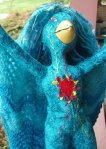
I used embroidery stitches of red and blue on the outside of the body and used the Indian shisha stitch to attach stones to the nerve damaged parts of my body.  I knitted lacy wings that weren’t strong enough to fly and a closed beak not yet ready to sing.  It looked a lot like this one, made shortly after in all white.  I made these wings out of sheer fabric.
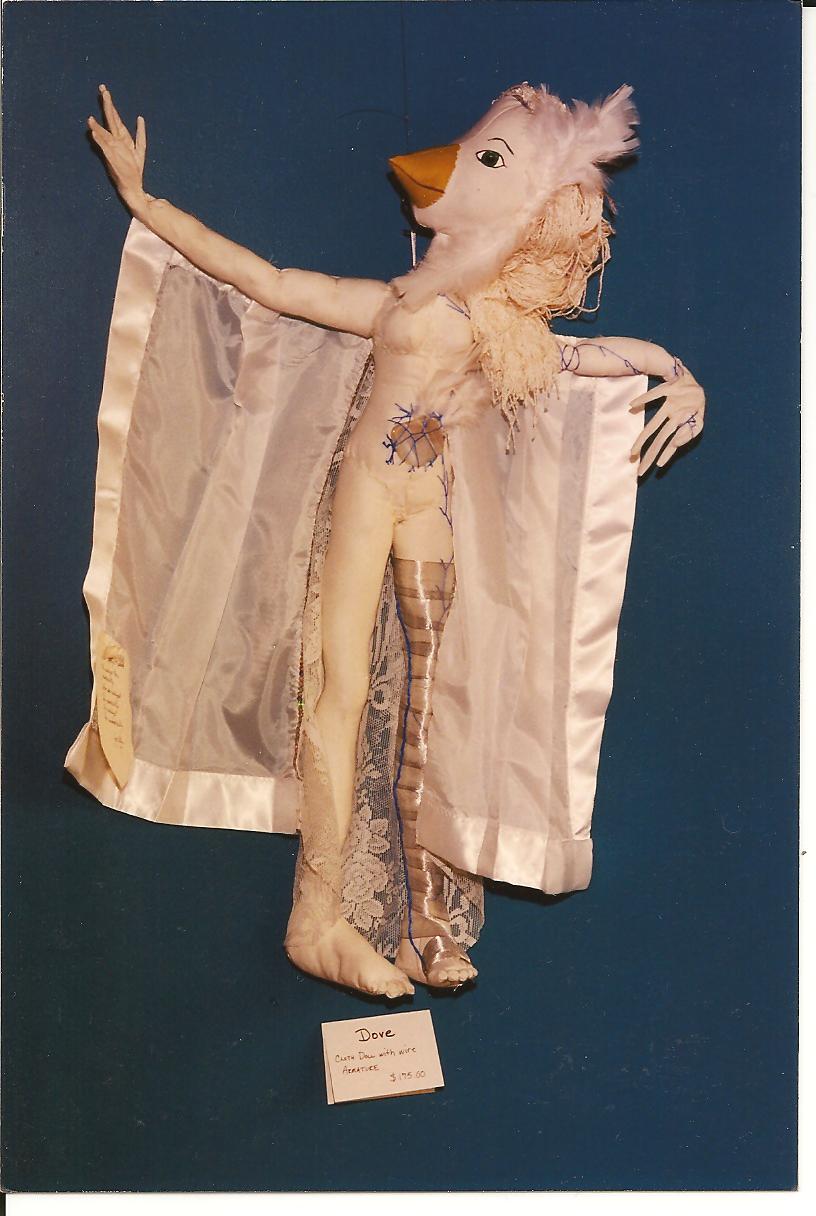
Dove

I was preparing my first solo art show in the lobby of  Memphis TheaterWorks.  I was afraid this doll was too personal to show, but I also needed it to fill up space – that piece was about 3’ by 4’.  Friends and family urged me to put in the show and I did.

At the opening, a woman kept coming back to it and looking at it so intently, I went over and told her the story of why I made it, what the embroidery and stones meant, why the wings were so frail and how I was trying to use mythological and whimsical interpretations of my struggle with a weakening body.

She listened patiently then looked me in the eye and said, “No, that’s not what this doll is about.”  She then proceeded to tell me that the doll was about her struggles as a single Black mother who had to finish high school and while raising a child, who tried to make a better life for her self and her son, who never quite fit in her family and community.  The stitches show how her battles in life left scars, but the gold in the fabric and the stones show how she had become strong and beautiful, even if people laughed at her.

My jaw dropped.  I am mostly a self taught artist and never really expected people to respond to my work.  It was only the great urging of friends that got me to show it publicly.  And this wonderful woman gave me the gift of a completely different interpretation of my work.  She validated my flight of fancy.

The doll was not for sale, but she convinced me it belonged to her.  “You can make another one for you,” she said.  She gave me a generous price for it, but had to pay in installments.  My impulse was to let her have it for a lower price, but she didn’t want it for a lower price, she wanted it to have a high value in her life, at least as high as the other things she had to make payments on.

Since then I’ve made a series of birds.  Each time I think, ‘I’m keeping this one for myself,’ and each time, they fly off to another home.   Some were made on commission so I knew they were going.  But when I make one for myself, they always want to be shown and they always make a connection with someone.  I love how the personal becomes universal.  I love that my birds who can’t quite walk right and don’t have strong wings still make their way in the world.

Tree People

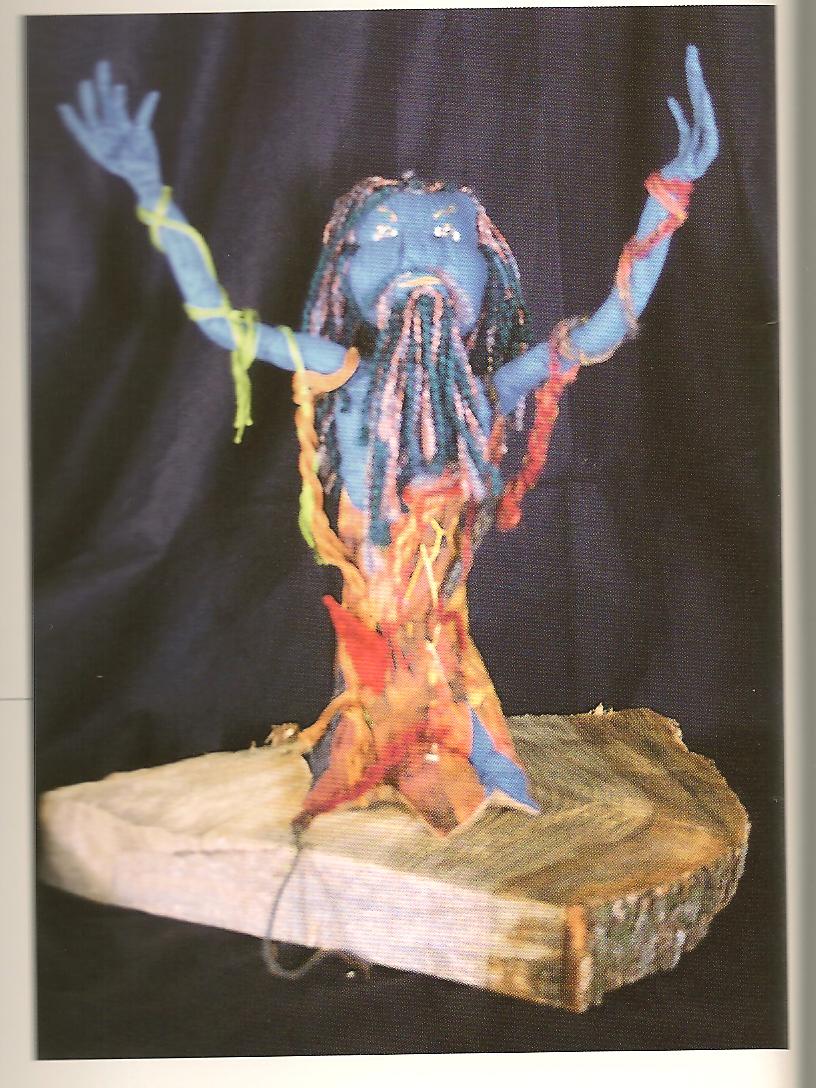
I don’t have a really good image of the first tree person I made, only this scan from a from a group art show catalog.  I made it after I had an encounter with a veteran who had lost his legs.   He was a social misfit and often homeless.  When I met him, he lived in a boarding house housed mostly by drug addicts and alcoholic men.   He had some paranoia and had no faith in the medical system.  He had a tremendous amount of faith in himself, though.  He made his way about on a pallet he’d fitted out with wheels.  “I was a tall man once.  War did this to me.  I’m not going to sit in a chair and pretend they didn’t take my legs.”

He had a sinewy hard torso that ended abruptly.  He knotted the legs of his trousers around his groin, the fabric of the empty pant legs padding his simple launch pad.  His arms were like oak limbs and his hand were huge.  He’d been scooting around on the wheeled pallet for decades when I met him.  His hands had grown into magnificent sculptures of the callous world through which he made his solitary way.

I didn’t get to know him well.  I don’t know if anyone did.  He repelled any efforts I made to understand or connect and my own life was busy.  His strong image and deep rooted emotions stuck with me.  I had just started using dolls as a medium for communicating about bodies in transition and this was the result.  My cloth sculpting skills were not as developed then but I still think this piece had a lot of power.

When Soldier Lost His Legs He Grew Strong as a Tree

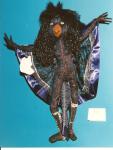
This other tree person I made only a few years ago.  It’s based both on the myth of Daphne who was turned into a tree to preserve her virginity and individuality, and the myth that the spirits of the trees roam freely and in beauty until their trees are cut down.

I used these as a metaphor for the strong, spirited women I have known who have quadriplegia.  It’s such a nightmare to think of loosing all body movement, but these women had managed to find the power to organize complicated lives and let their spirits take root and reach toward the sky.

When the movie star Christopher Reeve became quadriplegic, one of the comments he made as he recovered, was that for the first time he’d learned to “just be.”  There’s so much power in that.  Almost all cultures use trees as a metaphor for wisdom.  How wise can the stilled body become?  As we learn to exist in these transformed physical states, what fruits and leaves of wisdom will we sprout and share?

Tree Woman

The Amateur Ear: Listening to Live Jazz

Listening to live instrumental jazz you get a feeling that the music is coming up through the shoes of the musicians and they are standing on portals directly linked to the universal soul.  A wave of rhythms and notes rushes through them and you’re swimming in music.

Many of my friends are jazz experts and scholars, but I’m not.  I’m an amateur listener, I have no capacity for learning all the nuances and history of each riff that floats by me in the fertile ocean of sound.  I listen for pleasure, for inspiration, for love – the true definition of an amateur.

At times I’ve tried to approach it more studiously, to train my ear a little better, to listen for structure, but I never really learn.  My husband can determine every fine aspect, every skill the musicians have honed as well as the little thematic nuances and tributes they make.  He knows the musicians’ names, their histories and their influences.  He can tell me stories of the origin and evolution of standards and the merits of newly developed arrangements.  Anything I want to know, I can ask – he’s the jazzernet.

He’s helped me understand a lot, and I have a fair knowledge of Dixieland, and traditional jazz of the 20s and thirties.  But I somehow can’t retain knowledge of the improvisational complexities of post 50s jazz.

What I retain is an experiential memory that lifts me out of whatever little club we’re in and into a world of pure exuberance.  I just listen like I did as a teenage girl when I stumbled into a bar where jazz was being performed live.  It was a Thursday night at the South End in Memphis and for half a decade I spent as many Thursday night’s there as I could.

I also got into the habit of attending jazz brunches on Sunday which usually featured a singer.  Vocal jazz is a different animal that I relate to and retain much easier.  Words, poems and lyrics stick with me.  Also, when I was 19 in the late 1970s, I volunteered for Memphis’s community radio station and there were a few old jazz guys there with their vinyl collections of the 78s and first albums of Armstrong, Waller, Beiderbecke and Shaw.  God bless the day I first heard Billie Holiday.   The jazz guys talked deep and knew everything about their music and imprinted a lot on my music hungry brain.

The fine instrumental jazz that exploded in the 50s and has grown since is so varied and spontaneous I can’t quite weave it into my accessible memory.  But that’s okay.  I don’t need to enjoy it based on what I know.  I love this music because it takes me somewhere I haven’t been before.  It’s wonderful in its immediacy, lack of predictability and spontaneity.   I swear I feel it shaping my own soul as it comes up through the earth and out the musicians.

The musicians work hard to seem so fluid.  They practice continuously, they learn how to communicate in the language of hundreds of different musical arrangements, and are experts on their instruments.  Otherwise, the spontaneity would dissipate into discord – dis-chord.  They never diss a chord or miss a chord.  More likely, they add more chords, leaving little room for anything but music in your ears or your heart.

They play mostly for love, because I don’t think even the most commercial of jazz musicians makes the kind of money that a rock star would.  They play first class music as a backdrop in bars and restaurants, often ignored by the patrons.

I was listening to Portland saxophonist David Evans in a combo at wine bar.   In the middle of his solo, a patron’s phone suddenly emitted this loud obnoxious musical ring.  Instead of turning off the phone, the guy walked across the bar, in front of the band and out the door to answer it.  David took up the melody of the ring and blended it in with his solo.  It was sublime and hilarious.

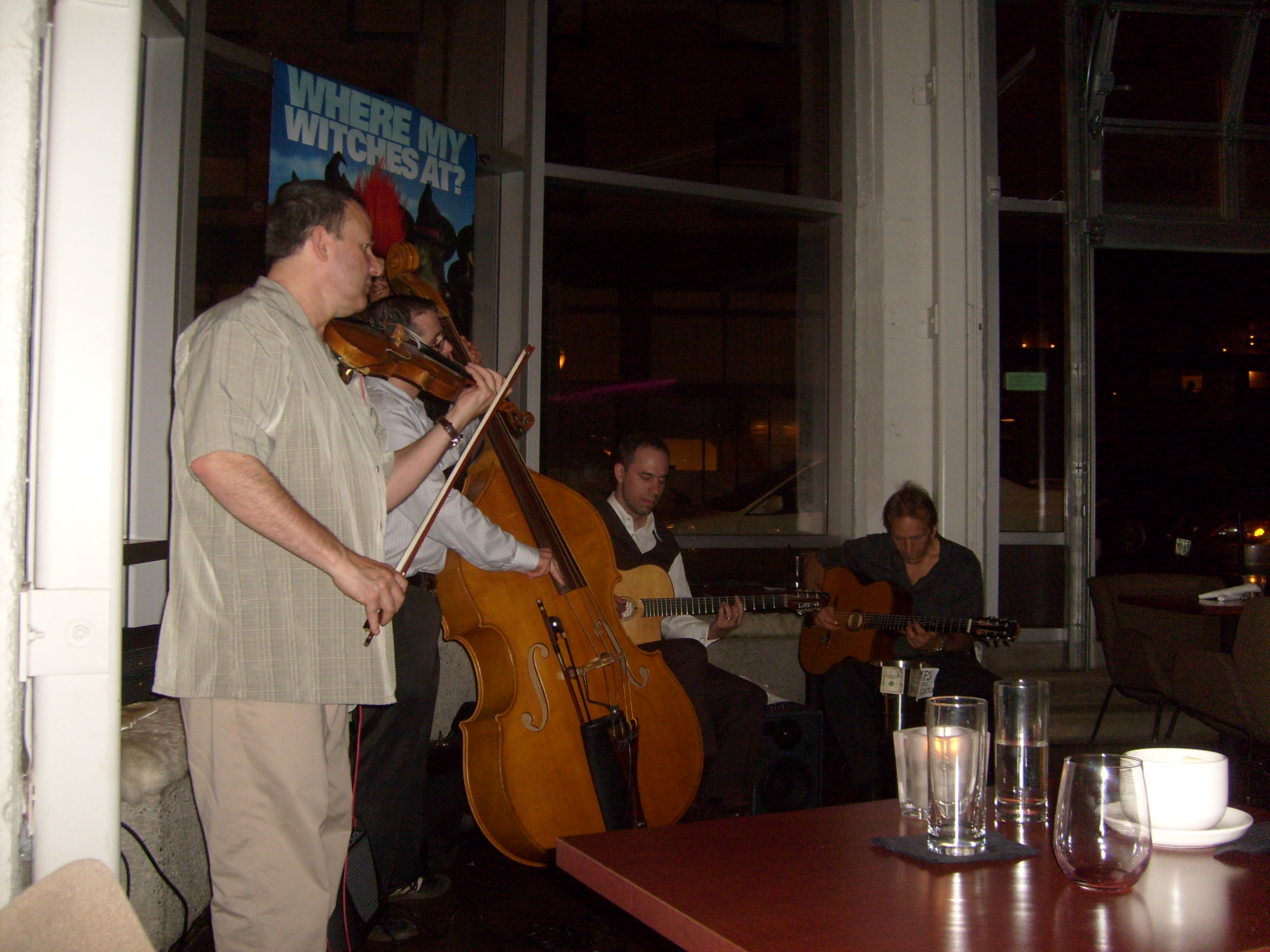
Only a few weeks ago, I got to hear the Djangophiles.  It was a perfect warm summer evening with a river breeze cooling off the night and the doors were open at the Living Room lounge.  A scruffy citizen of the street came in and danced in front of the band, swirling and snapping his fingers.  Then he sat down exhausted and demanded water.  While the flustered young waiter hurried off to get it, the dancer shouted, “And no ice!”  After he was served and drank his water, he began dancing again weaving through the bar when his pants fell down and he tripped over them.

I gave a little prayer of thanks he wore boxers, and burst out laughing.   The guy stood up, pulled up his pants and proceeded into the Living Room Theaters to dance for them.  He emerged not two minutes later, firmly escorted out by an usher half his size.  A few cuss words were directed at the door but the dancer disappeared into the downtown night.  The band never skipped a beat, but finished in fine form and went right into another gypsy swing.

I marvel at the finesse and grace some of our finest jazz musicians achieve as they strive to bring some bit of musical clarity into our lives.  I wish they had it easier, but perhaps it’s playing in these edgy and obscure situations that gives them the freedom to create such aural abundance.

I like it best when the bass player does a solo.  Everything quiets down, a bit of drum and other instrumental support, then deep chords beat straight along with my heart.  I always thought blues and rock had the beat of the human heart, but jazz has the beat of the happy heart.  Even when it’s a heart broken song, there’s something of the gladness of life in it’s message.  If you’re not listening to live jazz, you don’t know what you’re missing.

At Kogi’s, listening to the John Stowell Quartet, my husband asked if I noticed how tight the drum, bass and guitar played the last movement.  I did and I didn’t.  I did because I was lost in it.  I didn’t because I couldn’t define how I got lost and the question jarred me back, out of instinctive listening and into analytical listening.

I tried very hard after that to listen more intelligently, but fortunately the on-going musical movements were just as tight and I got lost again, my weak analytic mind left behind as I floated on a sea of pure musical pleasure.

The Djangophiles at the Living Room in Portland, OR

Wish Fish Part II

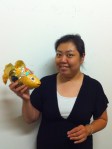
I wanted to report on the little Wish Fish I made for my friend who has Lupus.  She was in pretty bad shape and spent over a  month in the hospital.  I don’t believe the fish itself had anything to do with her healing.  It was her own determination and fate that saw her through, but the fish, commissioned by a mutual friend, gave her a feeling of love and inclusion.  She knew we cared about her and wanted her to keep swimming with us in this mysterious ocean of life.  She’s back at work now and her fish is at her desk!