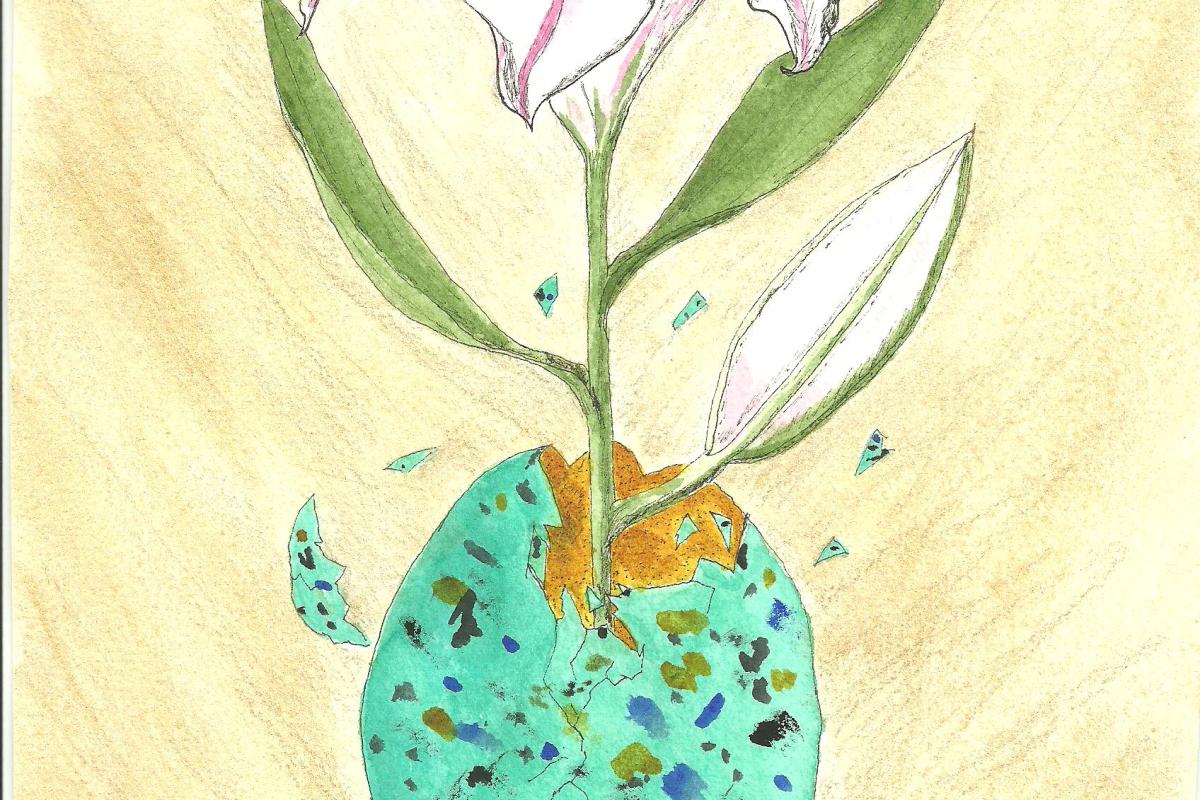
Spring Lily

Last year for my Easter greeting, I drew a lily bursting out of an egg.  This year, I decided to make it a tradition and draw it again.  And like last year, I waited til the last minute — a traditional thing for me.

Last year, I did a collage drawing with markers and ink:

Easter

This year I used ink, watercolor, gouache, and colored pencils.  I was inspired by a crow’s egg because crows are the birds I see most often and they fuss at me if I don’t write or draw.  They fuss at me if I do, but that’s another story.
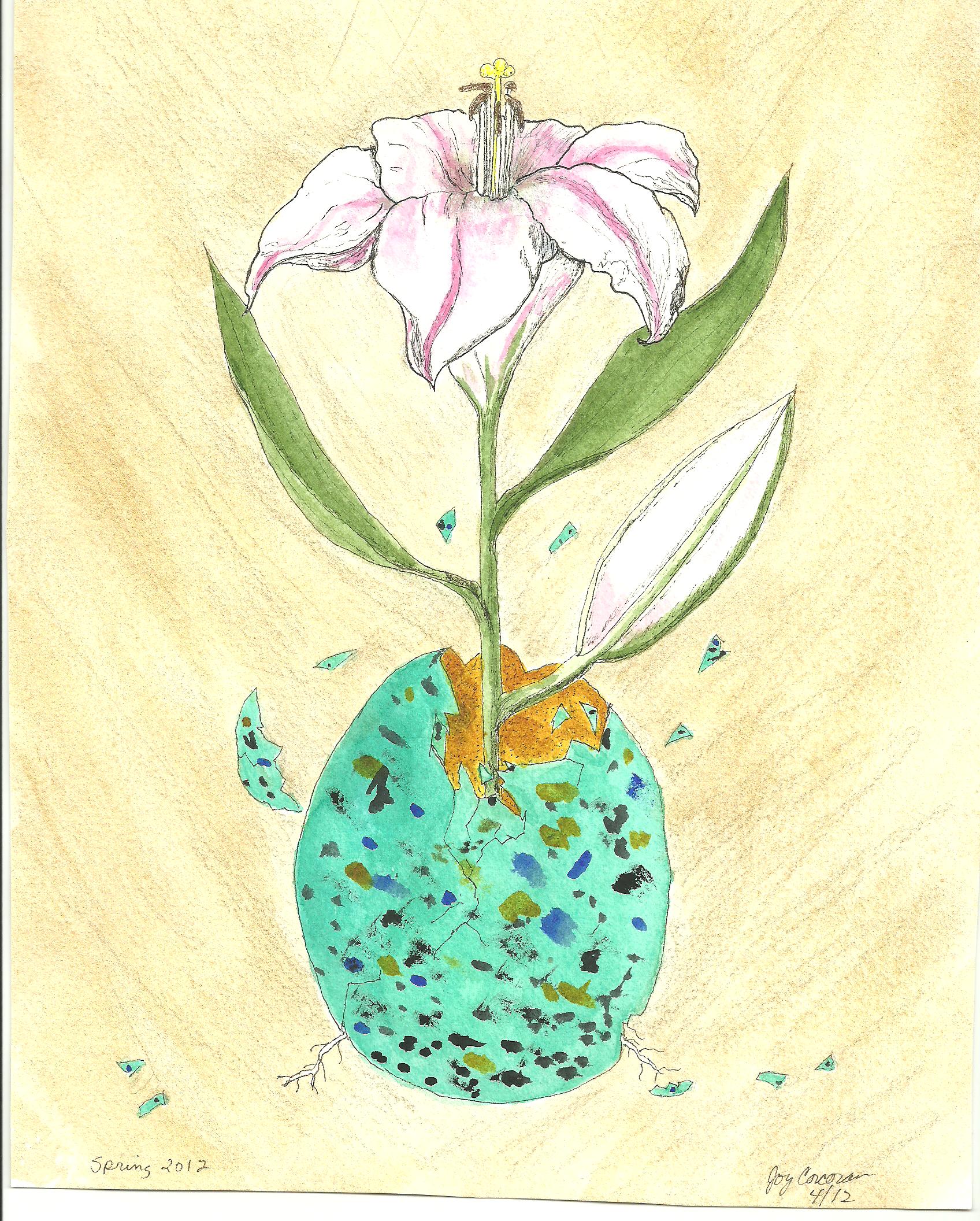
Have a happy Easter, and I hope something magnificent breaks open for you this year.
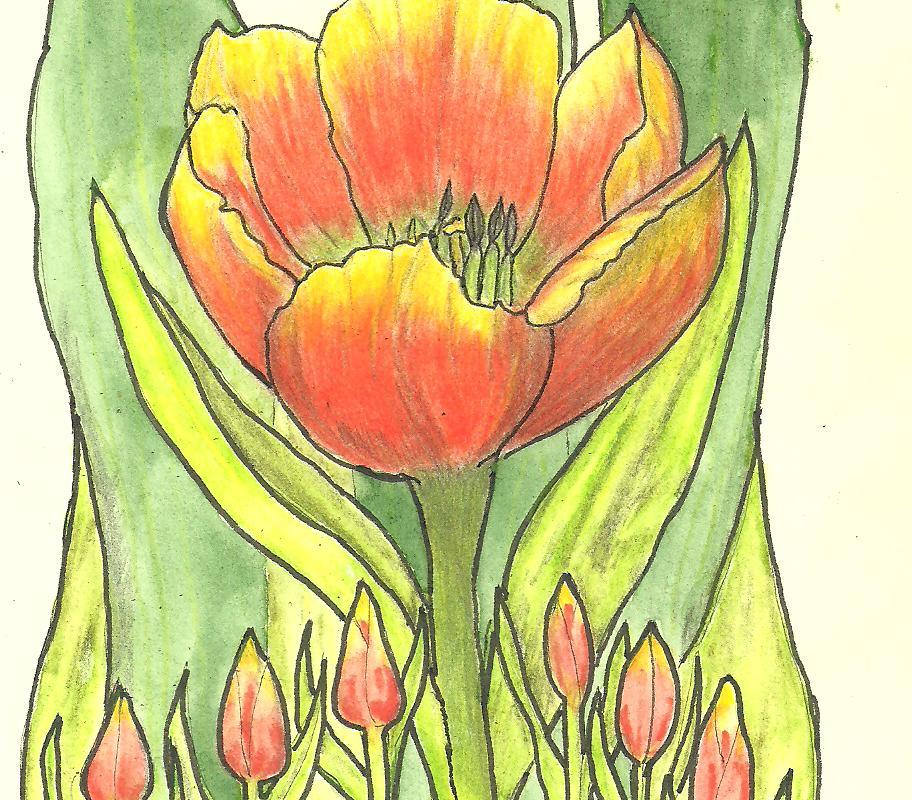


First Tulip Drawing

When I see a flower, tree, plant or person I particularly like, it always seems to dwarf and blur everything around it.

I did this watercolor, ink and colored pencil sketch to illustrate that idea.  I did some less vibrant drawings, trying to get away from using line, then I realized when I really like something, I kind of put a visual line around it, emphasize it, so my drawing will have to reflect my visual quirks and preferences.  The original is the size of a postcard and it’s instructive to see all the lines and blobs in full digital detail: I can see a dozen places I wish were more refined, but it’s time to move on.

Look around you in delight!


I don’t regard limitation strictly as a negative either. Wonderful quote from Ai Wei Wei.

elsaloftis's avatarOregon College of Art and Craft Library

CAMILLE: How are you coping with the situation?

AI: There is always going to be some limitation, good or bad. Under any kind of regulation, an artist can always find his creative space. Creativity itself grows out of a restricted condition. I don’t regard limitation strictly as a negative. When one is denied an immediate sharing of artwork and public commentary, the silence voice becomes another kind of creative form. Silence itself has its own critical force” (67-68).

Camille, J.J. “At Home with Ai Wei Wei: an interview by J.J. Camille.” Art in America. January 2012, No. 1, pgs 66 – 69.

View original post