Plant Hunters and Botanical Art

As winter sets in and my outdoor time is limited by bad weather and short days, I find myself enjoying a wonderful range of books on botany.

Two of the books I just read have the same name.  I looked for The Plant Hunters by Anita Silvey, which came out this year, at the library and also found The Plant Hunters by Carolyn Fry, which was published in 2009.  In fact, there are quite a few books with plant hunters in the title, and they all seem to promise great reading on a rainy or snowy day.

In the calm of a park or garden, one can hardly imagine the tumultuous history of the relationship between humans and plants.

The Plant Hunters: True Stories of Their Daring Adventures to the Far Corners of the Earth, by Anita Silvey, Farrar Straus Giroux, 2012, is aimed at children and young adults, but it’s a great read and visual feast for anyone interested in botany, gardening and the natural world. It is generously illustrated with botanical art, old maps and photographs.  Silvey works from primary sources — journals, letters, notes from the field — to bring the stories to life.

“One got eaten by tigers in the Phillipines; one died of fever in Ecuador; one fell to his death in Sierra Leone.  Another survived rheumatism, pleurisy, and dysentary while sailing the Yangtze River in China, only to be murdered later.  A few ended their days in lunatic asylums; many simply vanished into thin air.”

Collecting plants from all corners of the world became something of a mania, especially from 1700 to 1900, when Europeans were besotted not only with gardening, but with ideas of finding hardy food crops, medical plants and exploitable cash crops. I wonder sometimes who is in control of this evolution of plants — is mankind their servant?  Through our explorations and cultivation, plants like coffee, tea, tulips, corn, and potatoes have spread far beyond their original territory.  People have in turn reaped better food crops and been given the great gift of ornamental trees, shrubs and flowers.

Silvey’s writing is crisp and compelling.  The prose never gets bogged down but still provides a lot of information and history. The book briskly covers the time when Queen Hatshepsut of Ancient Egypt sent a convoy to Africa for frankincense trees up to modern times and the building of the Svalbard Global Seed Vault, in Norway, in 2006.  I loved reading about modern plant geeks and the surprising fact that hundreds of new plants are still being discovered every year.

This is an informative, fun and beautiful book for plant lovers of any age.

The Plant Hunters: The Adventures of the World’s Greatest Botanical Explorers, by Carolyn Fry, was published by Andre Deutsch, in 2009.  It’s in an album type binding and contains fold-outs and enclosures of  documents, journal entries, sketches and drawings.  Vellum and paper envelopes are attached throughout the book so you can handle facsimiles of  herbal manuals and Dutch tulip catalogs from the 17th century,  the oldest known map of the Kew Gardens, pages from Linnaeus’s Lapland journal and dozen more pieces of historical ephemera.  Here again are examples of botanical art that are just breathtaking.

Fry’s narrative is a bit more dense and detailed than Silvey’s.  Every turn of the page tells a new story and it feels like I’m touring a natural museum from my chair.  This book also delves more deeply into how the history of  plants is tied to imperialism and slavery.  However, most botanical adventurers were driven more by a love of nature, travel and adventure.

These books make the simple act of planting a tulip bulb or buying an orchid at the grocery store seem a little more miraculous.

I can’t let this opportunity to go by without promoting a favorite book of mine, Cultivating Delight, A Natural History of My Garden, by Diane Ackerman.  She takes us through her gardening process by season.  A poetic and discursive writer and natural historian, Ackerman’s book has been a huge comfort to me since I can no longer garden.  I let her do the gardening and enjoy the lush descriptions of flowers, wildlife and the antics of that most peculiar of species, the human gardener.

Since Ackerman has spent her life studying and writing about natural history, and is, as she states, an “earth-ecstatic,” I always get a deep appreciation for life on Earth whenever I read her work. Even something as seemingly simple as a backyard garden has a wealth of intricate beauty that she brings to light — although hers is a huge garden, with hundreds of roses and dozens of other plants.   Here is one of my favorite descriptions of rain, which shows her style of taking a detail and making it a whole universe:

“I’d call this a gentle rain, but no rain is gentle.  The shape of rain changes as it falls. Raindrops are never round for long; they’re high-speed shape-shifters.  Pulsating wildly 300 times a second, they become domed, flat-bottomed, elongated, egg-shaped, swollen, skinny, flat, pill-like, tall. Watching a raindrop fall in slow motion, I see the well-rounded peace of a tiny world, not furious crack-ups and mutations.  It reminds me of the gradualness of growth, biological or personal.  People appear to be whole, and yet they are countless small processes holding one another in equilibrium. Wishing to move beyond some outworn behavior, one might lament, “I’m not there yet,” without realizing that there isn’t a there there, since growth happens in minute increments.  A time may come when one says, apropos of an awkward incident, “Oh, I feel like I’m reacting differently than I used to,” but one never knows how one got there.  A thousand tiny oscillations were happening in every round moment.  It’s like the shape of rain, which is constantly changing, yet staying recognizably the same, though at times it may have assumed opposite forms.”

I read this book whenever I feel out of touch with the marvelous.

All this reading about plant hunters with their beautiful illustrations made me hungry for more botanical art, which I’ve always loved.  Luckily, there are great books out there for any botany-maniac that show the exquisite structures and colors of plants.

The Art of Instruction, Vintage Educational Charts from the 19th and 20th Century, Introduction by Katrien Van Der Schueren, Chronicle Books, 2011, has reproductions of amazing botanical and zoological anatomy charts.  I don’t think there were any like it in my schools — they are from Europe, mostly French and German publishers.  This oversize volume inspires a sense of wonder at the diversity of life — from the cross section of a tulip to the anatomy of a kangaroo.  This is a captivating look at the history of science, art, education and design.

David Attenborough’s Amazing Rare Things: The Art of Natural History in the Age of Discovery, with Susan Owens, Martin Clayton and Rea Alexandratos, Yale University Press, 2007, focuses on the natural history drawings of Leonardo Da Vinci, Alexander Marshal, Maria Sibylla Merian, and Mark Catesby from the Royal Library at Windsor Castle.  Practically every page has fantastic illustrations and insightful commentary on mankind’s desire to illustrate the natural world. It’s so interesting to see the way the styles and sense of perspective change with each artist.  The writing is as rich as the material presented.  From the precise chalk drawings of Leonardo Da Vinci to the almost surreal rich watercolors of Maria Merian, this book is a delightful journey and gives me a sense of what people thought about plant and animal life throughout history.

A New Flowering, 1000 Years of Botanical Art by Shirley Sherwood, Ashmolean Museum, 2005, is a book cataloging Sherwood’s collection of botanical art as they were exhibited by the Ashmolean Museum in Oxford, England.  Sherwood’s comprehensive collection contains work beginning with illuminated volumes from the 15th century to the present day.  Older works are published alongside the newer ones and it gives great perspective on the history of the art.  It’s amazing to me how drawings of the same plant can be rendered so differently and still be accurate.  Part of the delight of seeing all this work is the underlying insight it gives into how we see.  The reproduction are very clear and beautifully printed.

If you are missing the flowering of summer, any of these books will be a feast for your eyes.  And I got copies at that most marvelous of institutions, the Multnomah County public library.


Art Journals

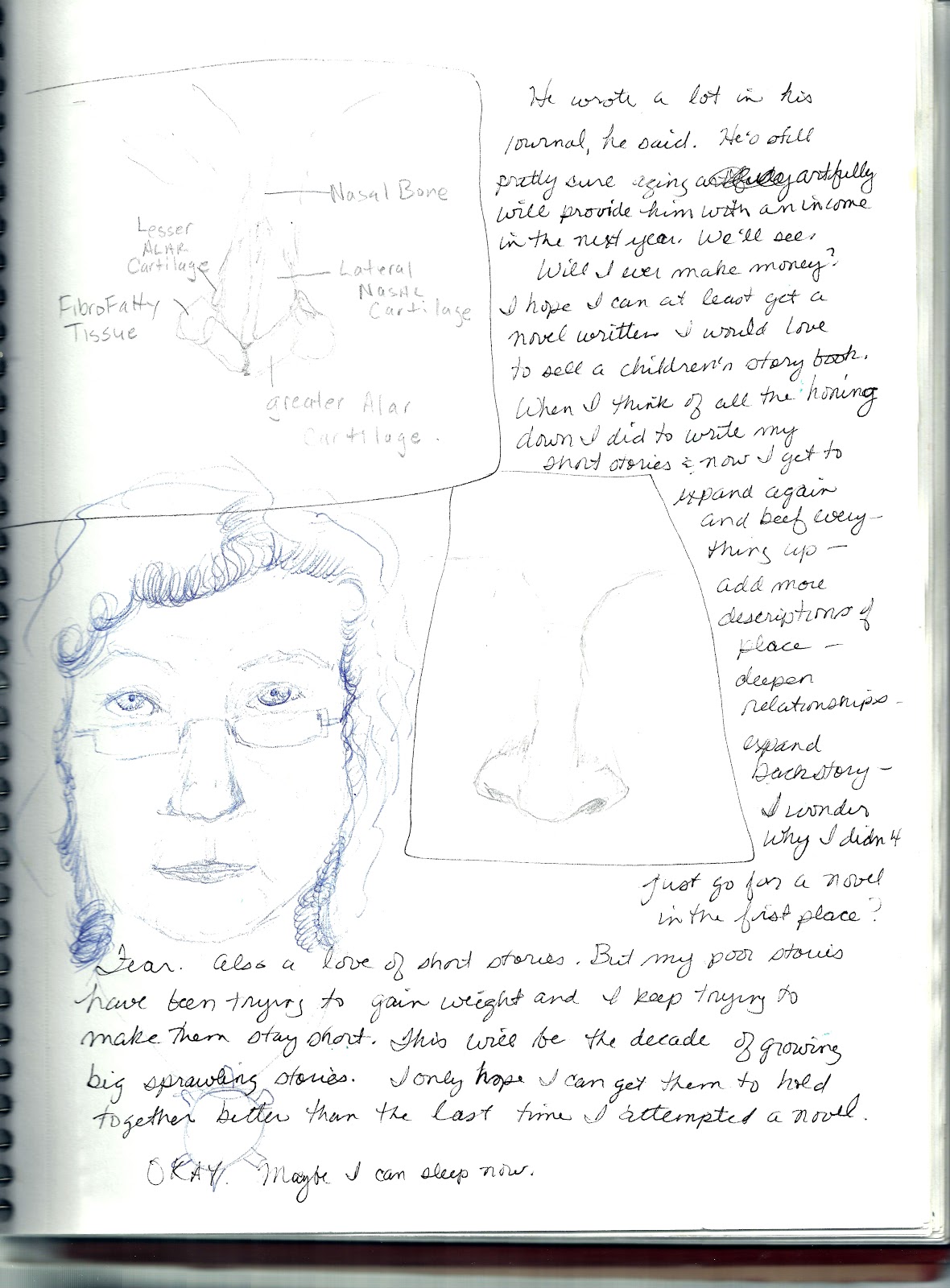
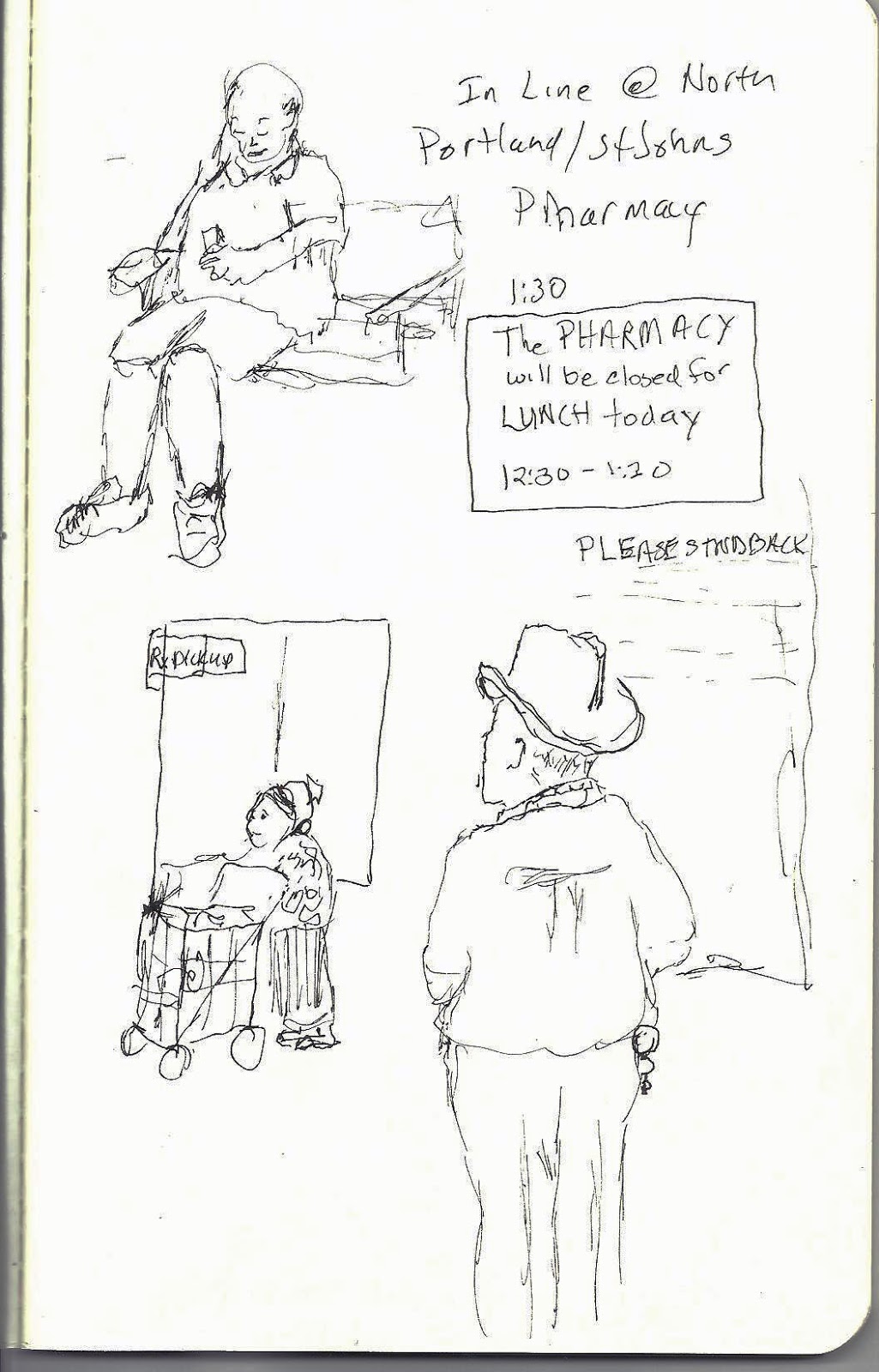
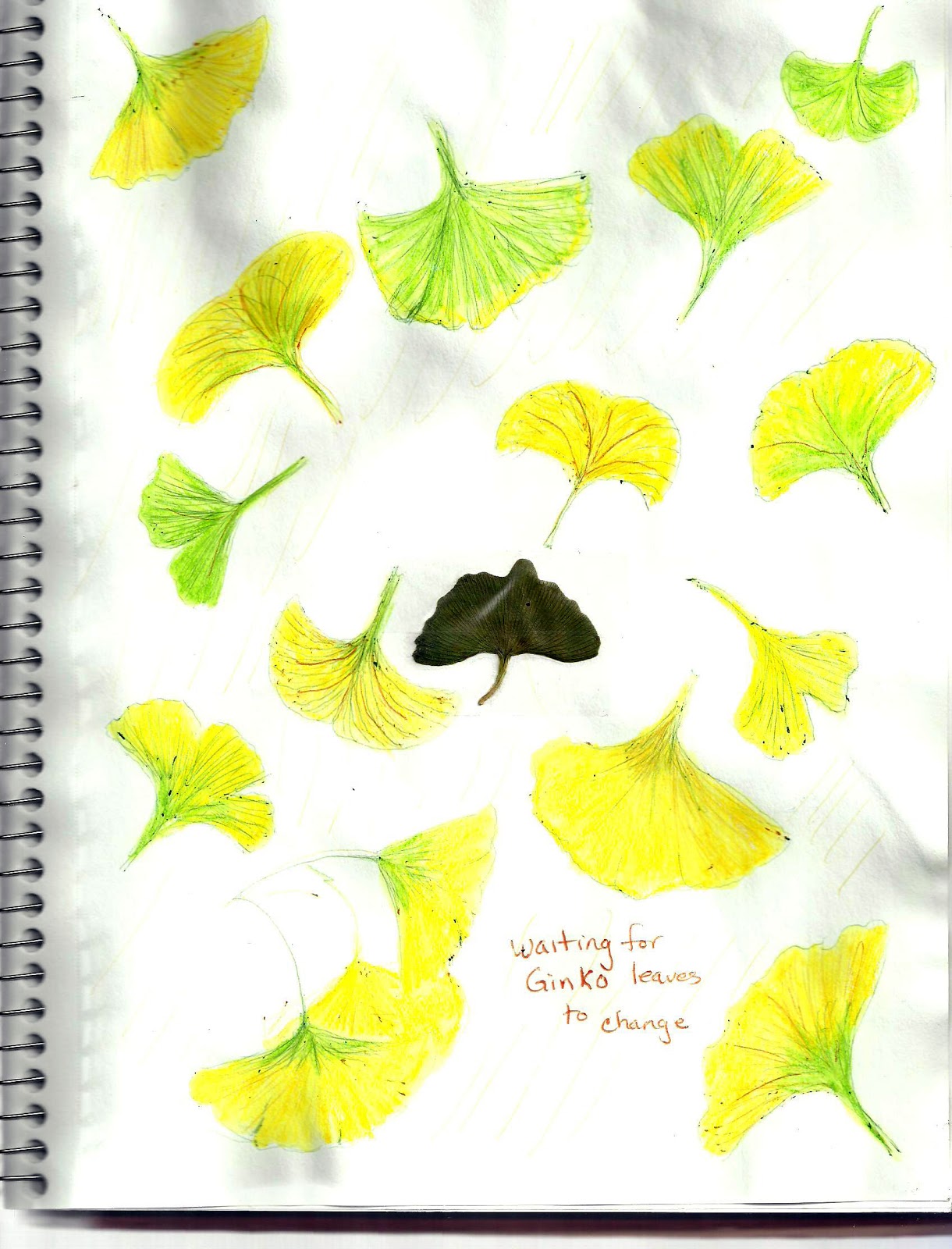
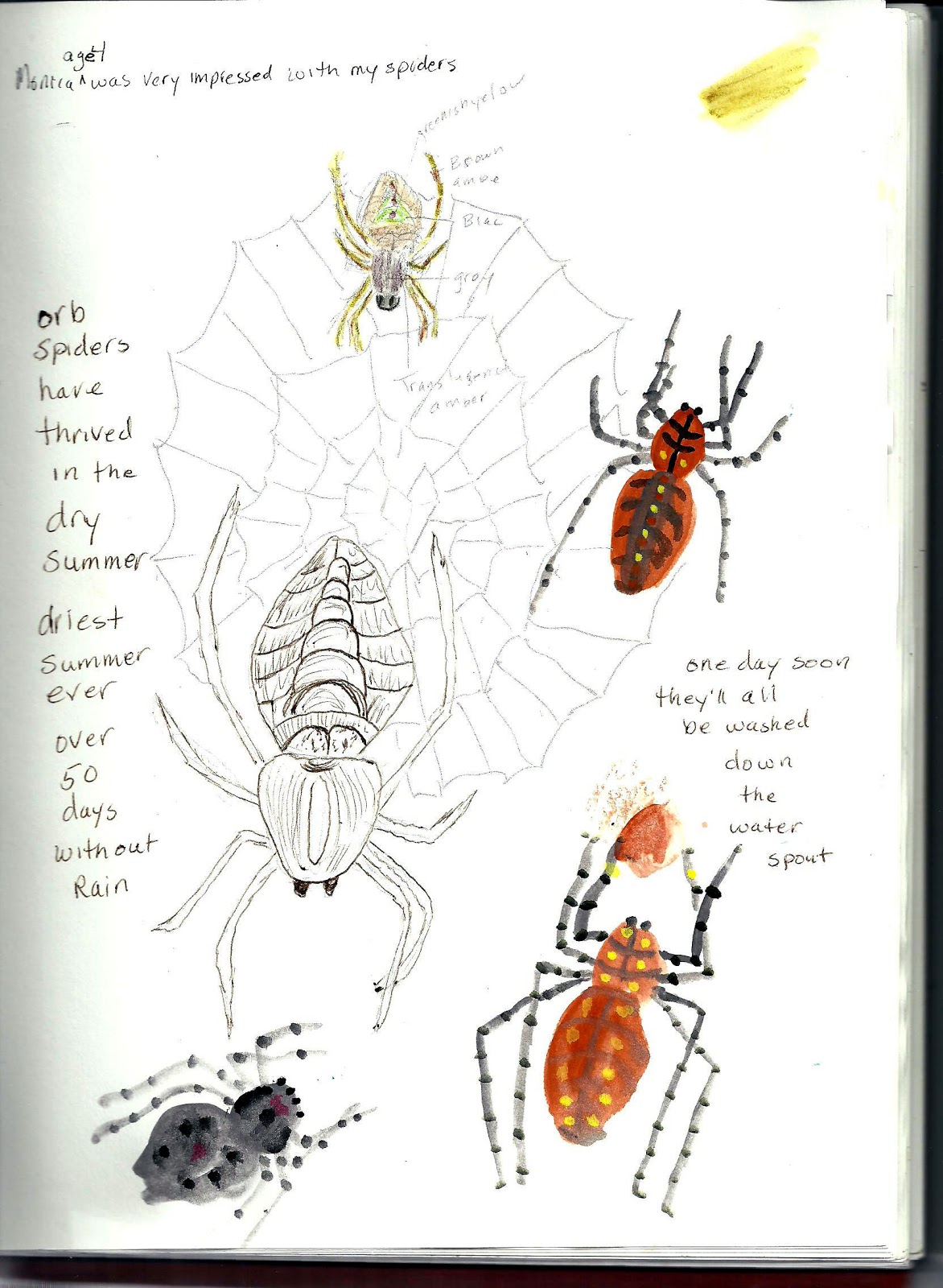
Here’s some notes from the past 2 months of art journaling.
I keep a big spiral bound journal and a little Moleskine for the road.  A typical entry is doodles and writing:

Page 2 of an entry after starting an Advanced Fiction Class

Most the past month have been more doodle than writing:

Never wait til you have the proper tools – bloom where planted
From the Moleskine
Play often
Real green ginkgo leaf taped to painted drawing page
At one point there were seven big orb spiders just outside my patio
Meeting notes
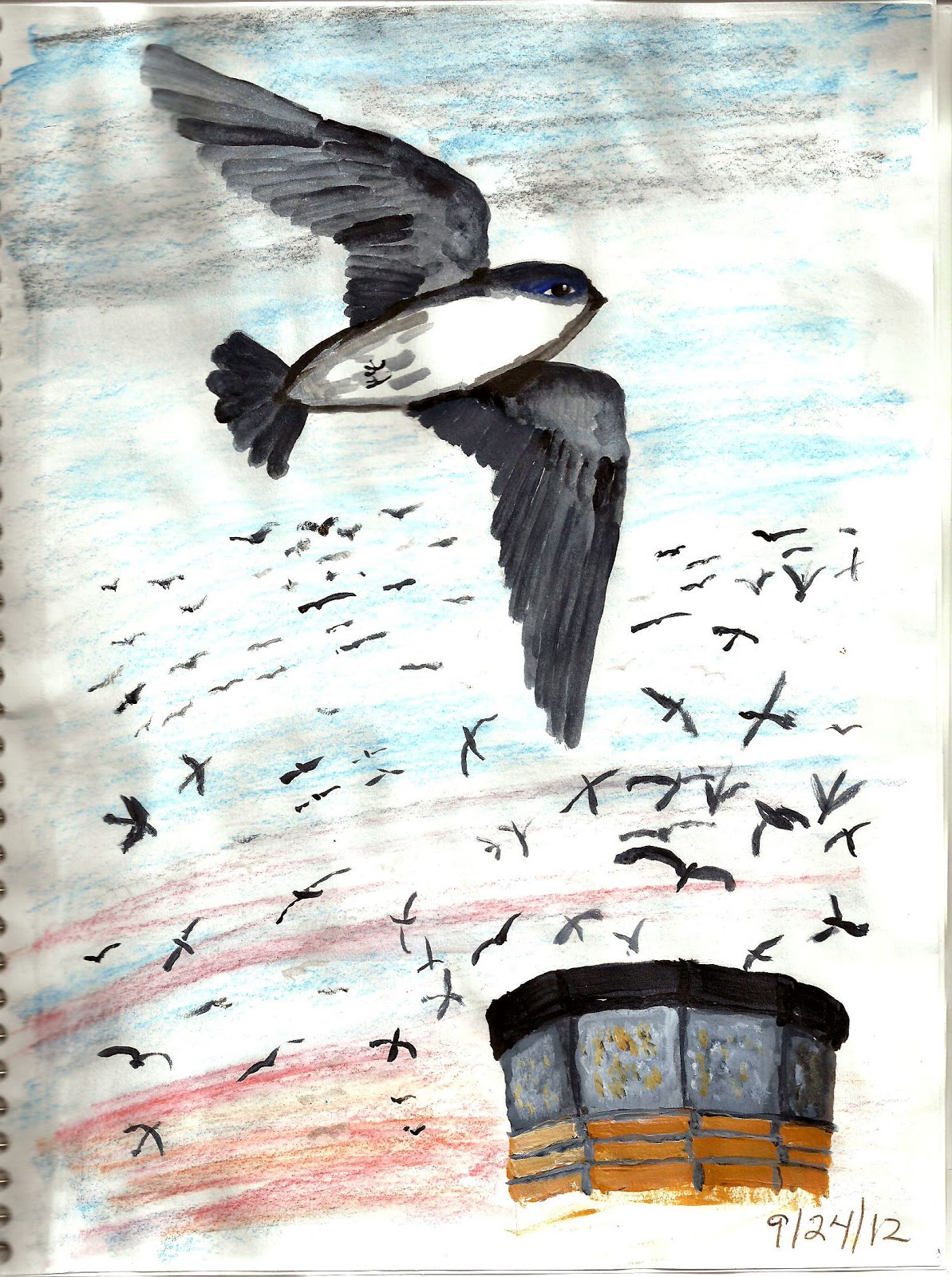
We got to see about 30,000 swifts roost in the chimney of Chapman school
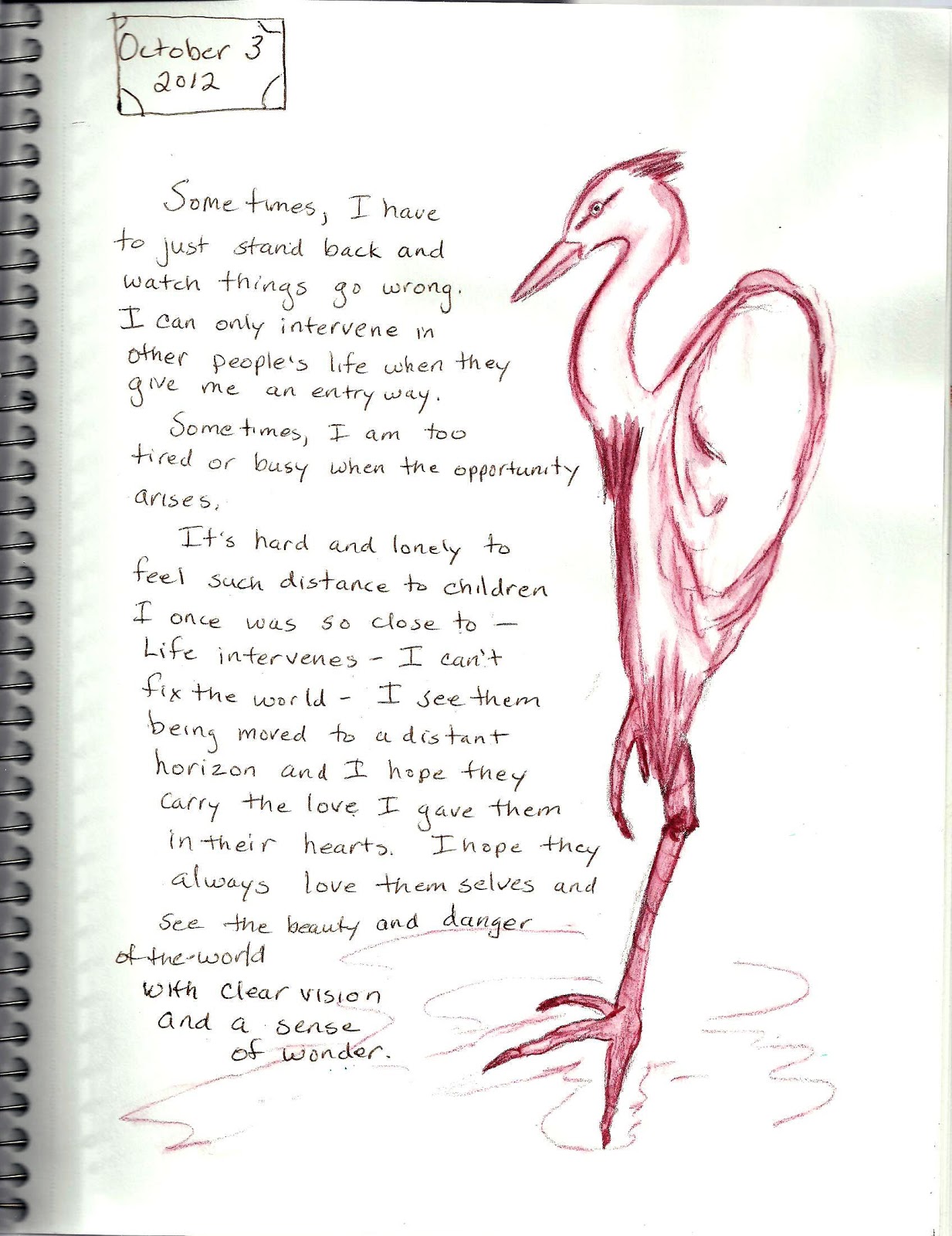
Watching
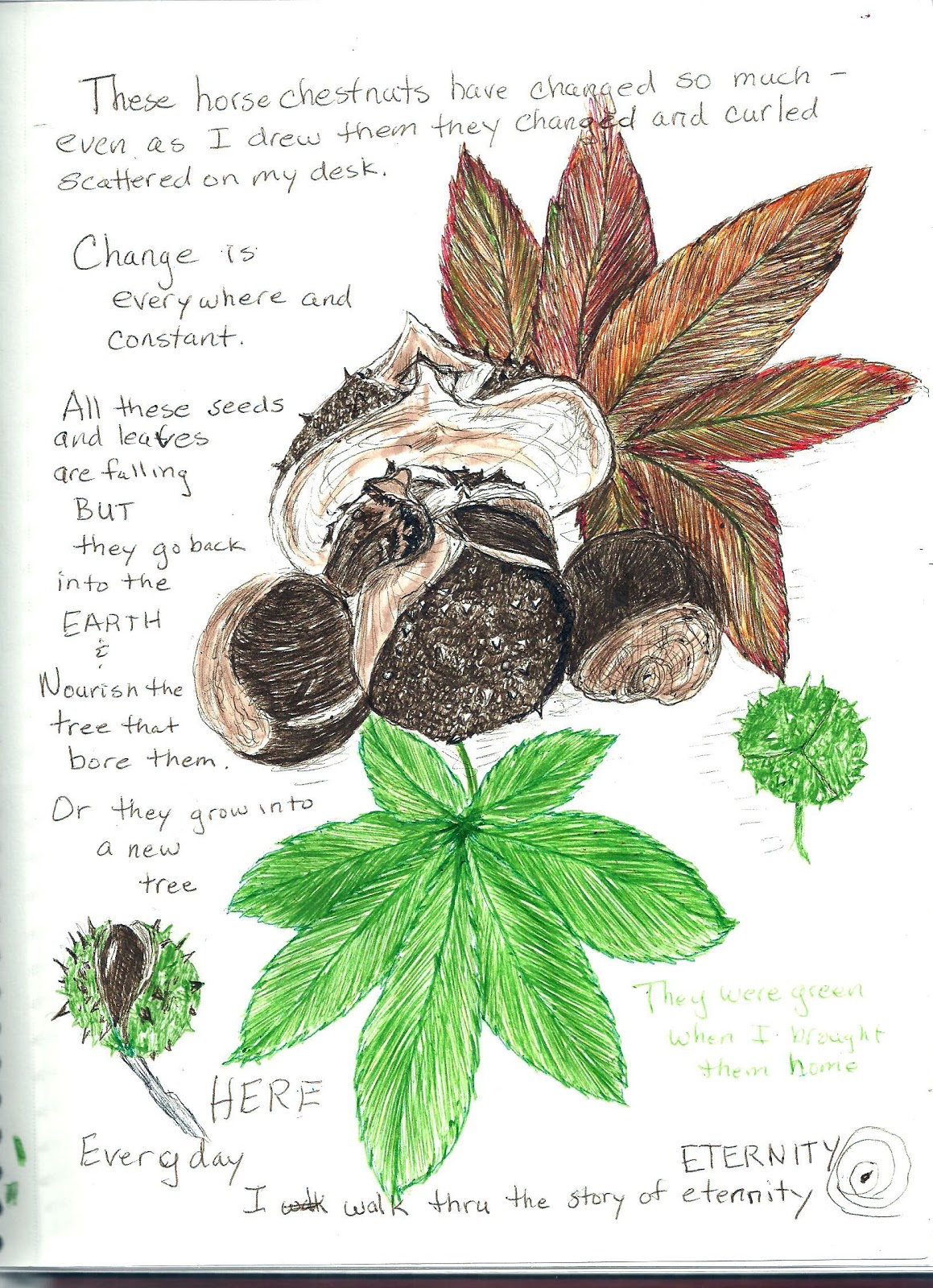
October 21 — horse chestnuts

Journaling helps keep the chaos of life at bay for me.  Try it, you’ll like it.

International Literacy Day 2012

I’m reposting a story I wrote for International Literacy day a few years ago, which was September 8, this year.  I didn’t get a chance to post it then because I was involved in a writer’s workshop, which is one of the wonderful places that literacy leads you.  Once you realize the beauty and power of words, how can you resist writing your own story?  I read an article recently that talked about how readers develop a stronger sense of empathy, fiction readers in particular.  I’ve always thought reading fiction and poetry was the best and most accurate way of gaining the perspective of someone completely different than myself.  It’s like living in someone else’s head.

International Literacy Day is a cause that’s very close to my heart because I know that if I hadn’t learned to read, I probably wouldn’t be alive right now.  Just about everything I know, I learned at the library. 

The following story was written for a performance at the Central Library in 2010. I got to tell a 5 minute story.  In my enthusiasm for the subject, I wrote a 20 minute story and had to edit edit edit.  I think it’s a good idea to edit, but sometimes I just like to take my time, go off on tangents and be discursive and inclusive, so here is the long version of that story.    I hope you enjoy it! And if you find yourself hankering for something more — visit the library where a whole worlds are available in neatly bound books.

Love at the Library
The library has always been my favorite place, ever since first grade.  My interest in books came before I can remember.  It was kind of an odd way of learning to love them:
My earliest exposure to books was through punishment.  My father had two children’s books.  One was a book about all the terrible fates awaiting bad children.  I hated that book.  The pictures were graphic and awful – the girl who cried too much had her eyes fall out, the boy wouldn’t stop sliding down the stair banister came completely apart and his head, arms and legs went flying off his fat torso.  Spoiled children who played with matches, didn’t eat their vegetables or  didn’t comb their hair had all kinds of terrible things happen to them.  We knew we’d been bad anytime my father came armed with that book.

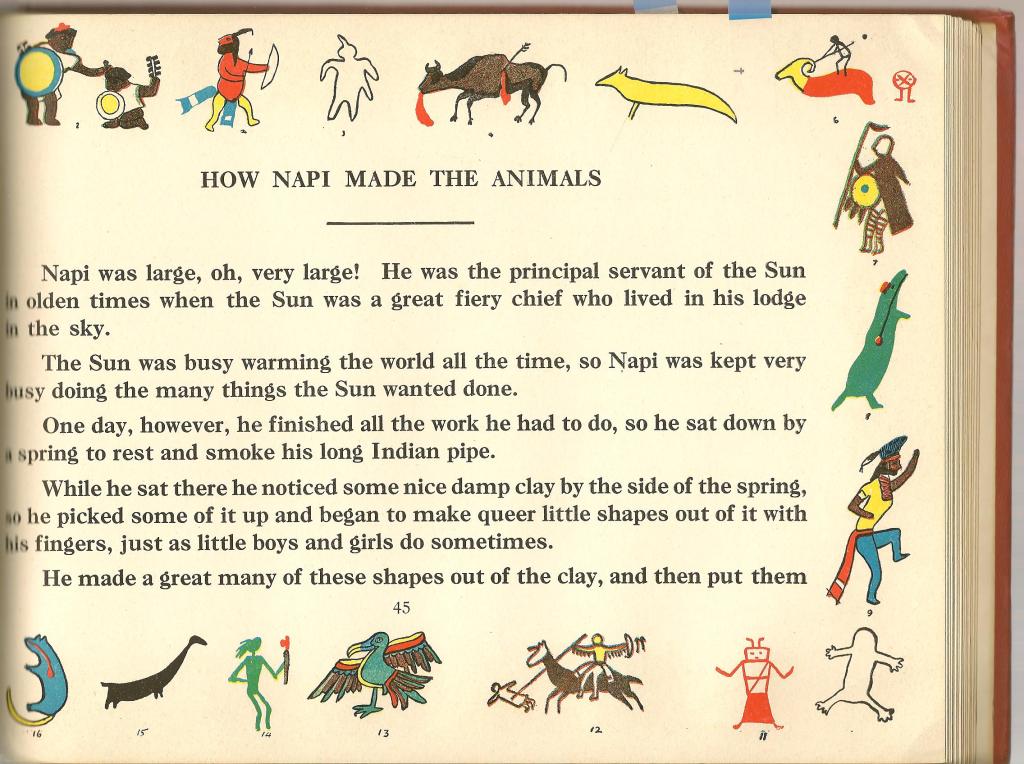
The other children’s book was Indian Tales for Little Folks by El Comancho.  I liked it much better, although I didn’t get to hear the stories as often.  It had some pretty scary pictures, too.  But they were about animals and Indians, not bad children.  Mysterious words and symbols sparked my imagination almost as much as the great pictures.
Both of these books were antiques and we kids were not to touch them.  They were old and fragile and we were young and wild.  My father kept them tucked away in his room.  If I had only ever seen the book on bad children, I wouldn’t have cared.  But just as soon as my father went to work, I would sneak into his room and find the Indian Tales.  I also discovered he had a collection of world travel and art books.  So while my brothers and sisters were out playing, I was squirreled away with picture books making up stories about them.
I was so happy when I got to school and learned to read.  For one thing, I got introduced to a lot more books, and even though Jane, Dick and Spot seemed rather unadventurous to me, I used what I learned to decipher the much more exciting tales in Indian Tales.  I was delightfully surprised that El Comancho told much better stories than me.  See, I thought this guy was kissing the boo-boos of the animals, and the real story is that he’s a god and breathing life into all the animals in the world, animals he created from clay.

After I learned to read, I found the world was full of places where people did marvelous things like build pyramids and sky scrapers, worshiped all kinds of cool gods, wore beautiful exotic clothes, looked different, ate different food and had different languages.  But they all told stories.
My parents were not really suited for each other and by the time I was reading really well, they were fighting a lot.  I was a little bit unhinged by it all and never quite figured out how to play well with others.  I was shy and nerdy and loved school.  Something about the order of it all made me feel secure.  And at school, you could spend time in the library where there were so many books you could never possibly read them all.  I was not a speed reader, I read slowly but I loved it.  And there were oh so many picture books where the world was bright and beautiful, fluid and often funny. I was never lonely; I always had stacks of books as my friends.

Well, time went by and I started reading books with fewer and fewer pictures.  Also, my mother and father divorced and we went from being poor to being very poor.  The way my mother dealt with it was to move us around a lot.  She always believed there was a neighborhood where rent was cheaper and she’d find a good job.
Where ever we moved, I always tried to find the library as soon as possible.  No matter how little money we had, I could always get a stack of great books at the library for nothing.  And when I read them, I could take them back and get a whole new stack.
Unfortunately, the same wasn’t true of clothes and other necessities of life.  The summer when I was about 12, money was particularly tight.  We lived in a ratty little boarding house in Macon, Georgia.  The library closest to where I lived was an idyllic little spot close to a park.  It was in a grand white building that had a marble entry way and big Greek columns.  You entered on a hot summer day and the first thing you noticed was the cool air conditioning.  Then you saw all the big wooden tables for spreading out your books.  And there were thousands to choose from.
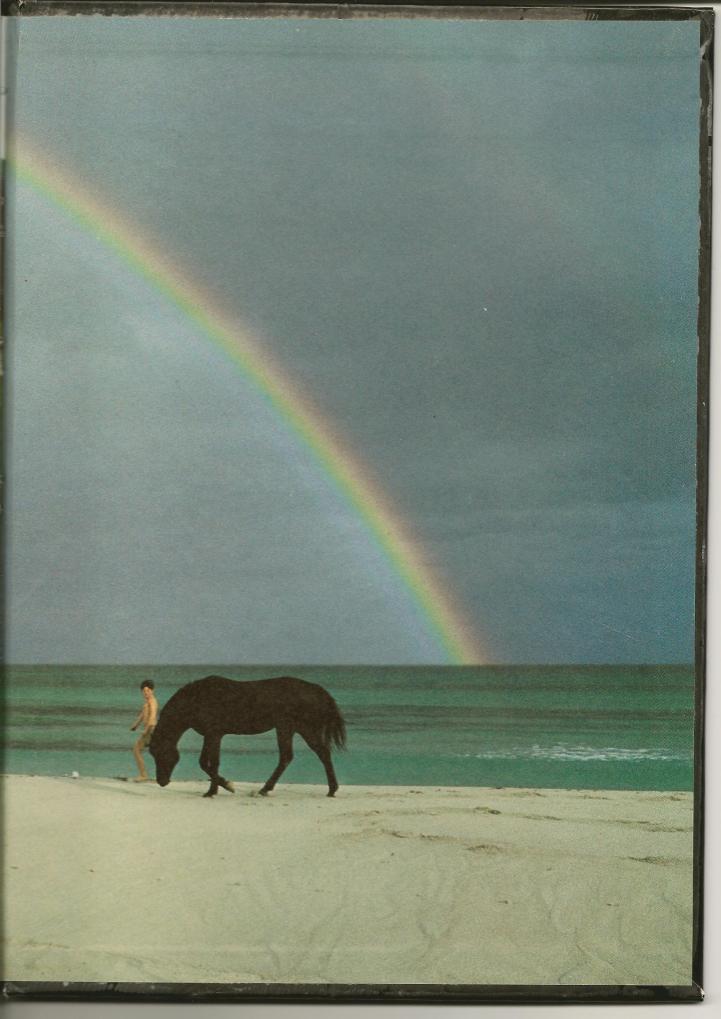
I usually headed straight toward the series books for middle readers and grabbed one of the Black Stallion books by Walter Farley.  I was in love with Black, the beautiful wild Stallion and his children, and Alec his tender but driven owner.  I also had a huge crush on Chris, the teenage boy who was volunteering in the Young Adult section. I believed we were destined ride off into the sunset together, in that way only a twelve year old girl in love can imagine.
I always went to his check-out when he was there, but he was only there part time and I was there almost every day the library was open.  When I finished reading every book in the series, I started it over again.  I loved the world Farley created, there were adventures but all the problems in the novels were clearly answered and the most complex characters were the horses.  I sometimes read most of the volume right in the library and Chris would always make some comment about what a fast reader I was.  It thrilled me pink and he laughed at my blush.
“You want a horse when you grow up, Curly Top?”
I hated that he asked me that way because I thought I was already grown – I was in the young adult section. And my name was not Curly Top!  But I just giggled, “Oh, yes.”
I always wore my best shirt and jeans to the library.  That shirt was the only really nice one I had.  It was a white and lacy with a bit of frill around the buttons, cuffs and neckline.  It had pearlized buttons.  I loved it, wore it every day and washed it every night.
On the days Chris wasn’t there, I went back to the children’s picture book section and feasted on the art and stories.  The children’s librarian there was a lady named Sarah, who insisted everyone call her by her first name.  She was a tall thin Black woman with a short Afro that had a shock of gray hair right around the edges of her face, as if she were framed in silver.   She was always very friendly and always called me by my name, not Curly Top.  She showed me the new books, and since she knew that I like horses, she made sure I saw the ones on how to care for horses, on horse legends and myths.
One day, I was feeling especially despondent that Chris kept calling me Curly Top and told her I wished I could have hair like a horse’s mane, or even better, like Cher.  She very kindly took me into the restroom and took out a little hair oil and brushed it through my wild, humidity shocked mess and turned it into a civilized, wavy hairdo.  “You have pretty hair.  It just needs a little attention.  You’d be surprised how much a little attention to things will make all the difference.”
There were a lot of very poor kids in the neighborhood and I’m sure I wasn’t the first child Sarah had to give a few grooming tips to.  She was very diplomatic and always subtly stressed intelligence over looks.
After that she put me in charge of feeding the library fish. She showed me all the books on caring for fish and all kinds of weird animals like iguanas, snakes and emus.
About that time, the book Black Stallion’s Ghost came in.  I’d been waiting for it for a long time and was thrilled to be the first one in the library to check it out.
It was not the same as the other Black Stallion books.  There was a scary sequence of events and a curse that I wasn’t quite sure was real.  My mother and her latest boyfriend were having a fight and I was ignoring them by reading through dinner.  I was engrossed in the Florida Everglades when Mr. Momma’s Boyfriend slammed his hands down on our flimsy kitchen table to make a point, and my beans and rice bounced up and landed right on my belly–on my beautiful white shirt.
This particular dish of beans and rice was seasoned with neck bones and tomato sauce.  It was pretty awful and awfully greasy.  I screamed out my very first dirty word.  My mother and her boyfriend were shocked, then burst out laughing.  I was furious and ran into the bathroom and began scrubbing my shirt with our little sliver of bath soap.  It took an hour and it seemed like I got it clean.  I continued reading.  I began to see the themes in the book on a deeper level.  I felt I had grown.  I thought of something really grown-up to say to Chris at the library.  I didn’t sleep much.
When it was morning, even though I was groggy and red eyed from lack of sleep, I saw that my shirt had dried with a big globular brown splotch on the front.  I was devastated.  The only other shirts I had were t-shirts in various states of decay.  I scrubbed my beautiful shirt again.  And again.  And again.  I scrubbed it till a little hole opened up where my belly button show.  I think I said my second dirty word.
I knew Chris was going to be at the library from 11 till 2 and I HAD to get there to turn in the book to him and tell him about how the ghost represented two things, real fears and imaginary fears.  I knew he would be astounded and ask me what I meant and he’d never call me Curly Top again.  He’d probably ask me for a date and I’d say, “After you read this book.”  I’d be so cool.

The shirt was still damp and stained when it was time to go the library, but I thought it was the best looking of all my shirts.  I decided if I held the book against my shirt just so, he’d never see the stain, only the pretty cuffs and neck line and pearl buttons.  I put it on and dashed away to the library.
It didn’t occur to me that when I turned in the book I’d expose myself, stain, hole and all.  It didn’t occur to me until I placed the book on his counter and pronounced “This is the most mature book Walter Farley has ever written.”  And that boy laughed out loud.
“Good Lord, Curly Top, who you been fighting today?   I’d hate to see the other girl, or did you beat up some poor boy?”  He could have stopped right there, but there was a gaggle of teenagers around and they laughed so he just had to go on.  “Don’t you have another shirt?  You wear that old raggedy thing everyday.  You’d be pretty cute if you’d change your clothes once in a while.”
I turned pink, then red then ran out of the library.
I got all the way to the edge of the park before I collapsed into tears.  It didn’t take me long to realize that I was going to have to blow my nose, and I didn’t have a Kleenex.  I was going to have to blow on my shirt.  My favorite shirt.  My favorite stupid raggedy shirt.  I was just getting ready to blow, when a Kleenex appeared before my eyes.
From Sarah.
 I took the offered gift and blew.  I knew I would have to explain everything, my tears, my shirt — and no I didn’t have another one — and my whole miserable life.  I took a deep breath but before I could get out word one, Sarah said.  “I think you forgot it’s your day to feed the fish.”
“I didn’t forget,” I sniffed.  “I’ll do it after Chris leaves.  He…”
“He’s a trifling little fool is what he is.  You know he can’t even understand the Dewey decimal system?  I have to write out where the books go every time.  I swear that boy needs a map to find his own head.  I’m glad we’ve got smart girls like you coming in to help with the fish.  If he had to feed them, they’d all be fish sticks by now.  He’s just jealous because you’re smarter than he’ll ever be.  And those fish are hungry now.  They’ve been asking for you.”
I rolled my eyes.  “Fish can’t talk.”
“I didn’t say they talked.  They just keep coming to the front of the aquarium and looking.  You should have seen them light up when you walked in.  Now they’re all depressed and sulking down by the sunken treasure chest.”
I laughed.
“You don’t believe me?  Why don’t you come see for yourself.”  She took another Kleenex out of her pocket and wiped my face and stroked my hair.  “You look real sweet today.”
I followed her back in the library and as I did I told her about the Black Stallion’s Ghost.  She said she thought the same thing when she read it.  She got me a book of African American Myths and Legends.  “Tell me what you think about these stories.”
She never said word one about my shirt.  It just wasn’t as important to her as what was going on in my mind.
The rest of the summer I stayed in the children’s library and Sarah always had some magical mythical book for me to read and would always ask me what they meant to me.   I read tales from exotic places like Brazil, Mexico, Japan, China and even far away Canada. I felt like a librarian by the end of the summer.
The first Saturday after my first week in 7th grade, I went to the library in my brand new back-to-school clothes and that boy was there.
He said, “Hey Curly Top, looking sharp.”  But I had no time to talk to him, I had to show Sarah my reading list and all the grown up books I’d get to read.  She didn’t say anything about my clothes.   She said, “I want you to come here every Saturday and tell me what you think of each one of those books.”
Unfortunately, right after that, we had to move again.  I used to feel really bad that my mom didn’t give me a chance to say good-bye to Sarah.  However, when my momma got it in her head it was time to move, she just packed us all up and we were gone.  Now that I’m older and a life-long reader, I know it wasn’t as important to say good-bye to Sarah as it was to spend the time there with her in first place.
Like so many librarians, she was there to help out kids when she could and encourage the love of books.  And her help stayed with me all my life.  Just like the stories stayed with me, the words I read, the meaning I found.  The meaning I find in every book remains with me.  And the librarian’s spirit stays with me so that no matter how poor I am or what troubles I have, I know there are books at the library to help me, delight me and make every day an adventure.

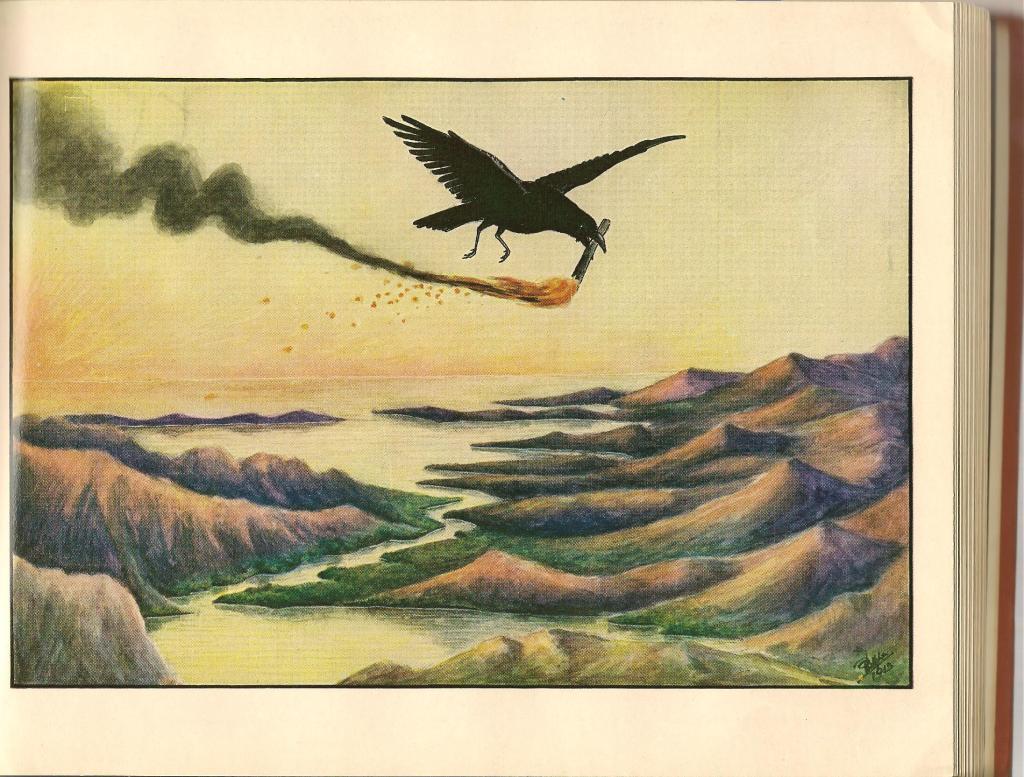
How Fire Got into the Rocks and Trees

Older but No Wiser

Oh my friends we’re older but no wiser
For in our hearts our dreams are still the same.
–Gene Raskin


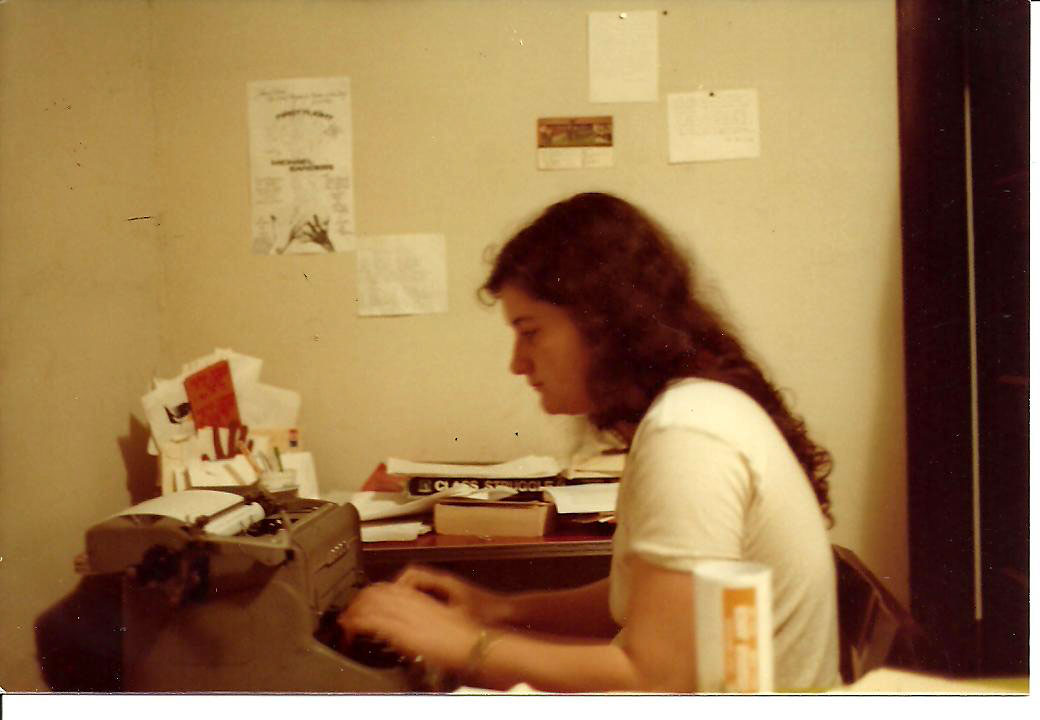
50 years ago
On September the 9th, I get to turn 52.  I say it that way because when I was about 16, I developed a mysterious neurological condition and my neurologist told me I might not live past 30.  I remained a medical enigma for most of my life, but my enigma didn’t develop into anything life shortening (so far).  When I was in my 40s, I found out I had an almost microscopic lesion on my spinal cord that was the cause of some of the major mystery, but my medical history still has many pages of studies that all conclude with the word “abnormal”.
One abnormality is that I’m extremely happy about getting older.  Every year after 30 is a gift.  I admit, there are dark days when life seems an overwhelming burden.  Wars, natural disasters, ongoing health problems, heart breaks, pain, violence, rudeness, grammar rules, bureaucracy, poverty, calories, politics — sometimes I just want to lie down and die – take that sweet eternal nap.  But I haven’t yet.  And I still get a huge sense of gratitude and wonder that I’m celebrating another year.  52!  Whee!
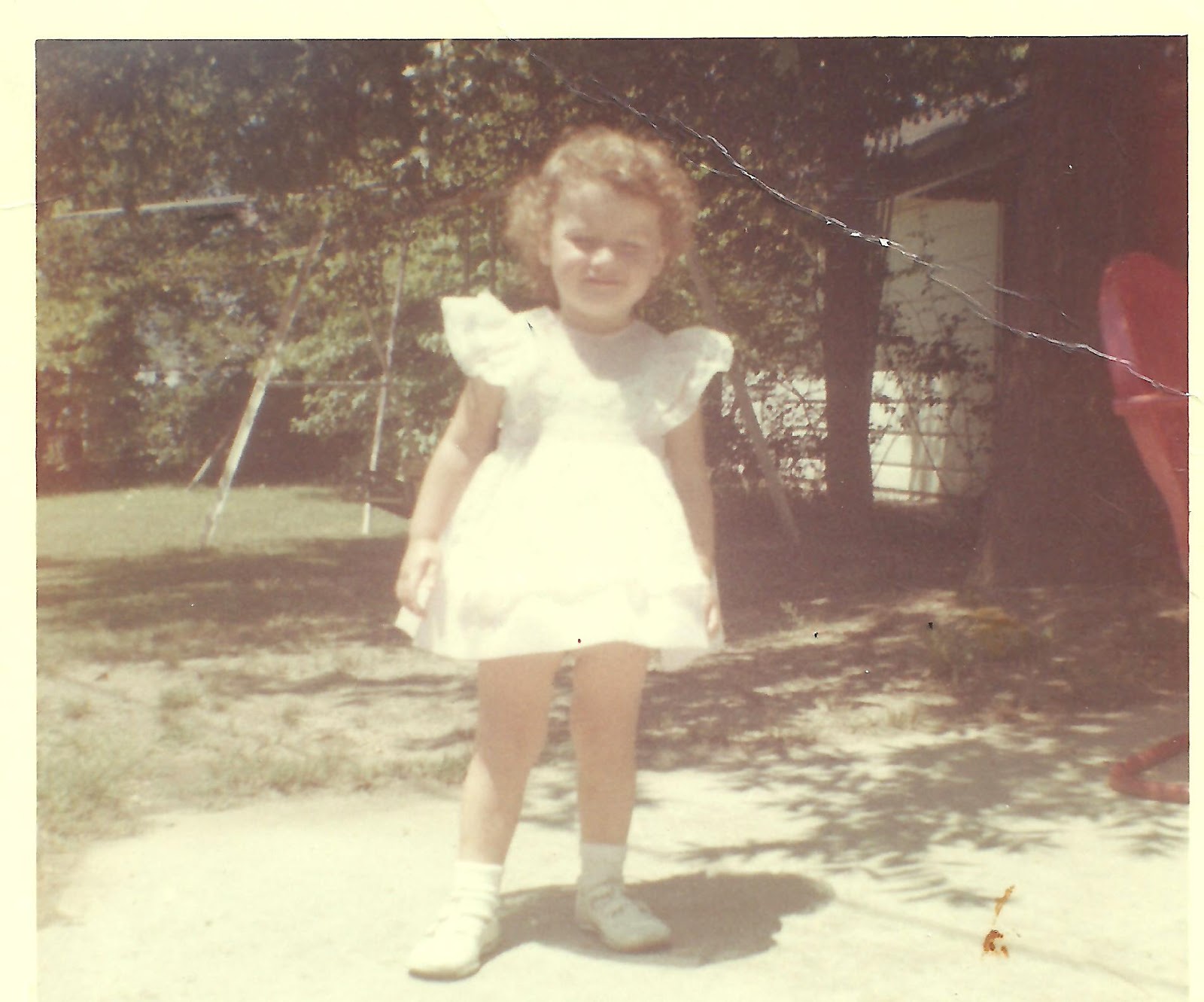
22? years ago
I’ve gotten to see my children grow up.  They are both approaching 30 and my life continues beyond me.  It was so very important me to have children and have that faith that life could go on.  It has and it does.  Imagine.  My life has been a roller coaster ride like everyone else’s, but I feel very fortunate each time I hit a peak, when life is full of potential and is as cool as an early Autumn day.
I LOVE getting older.  When I was younger, I was so worried about everything.  One worry I’ve noticed I’ve outgrown is how I look.  I used to cringe at pictures of myself.  I never felt like I looked good, to much face, too curly, too fat.  I had a very limited vocabulary for myself.  On the other hand, as a writer, I wanted a more expansive vocabulary for describing people, something outside the limits of beauty.  I wanted a language that didn’t include the word “ugly” as an option of describing a human being.
Because I had epilepsy at 16, I got involved with a lot of people who had disabilities and they were astonishingly strong and vibrant people.  A lot of us considered ourselves outsiders and visually unattractive.  But a lot of people who were healthy and practically “flawless”, especially girls and women, thought they were ugly.
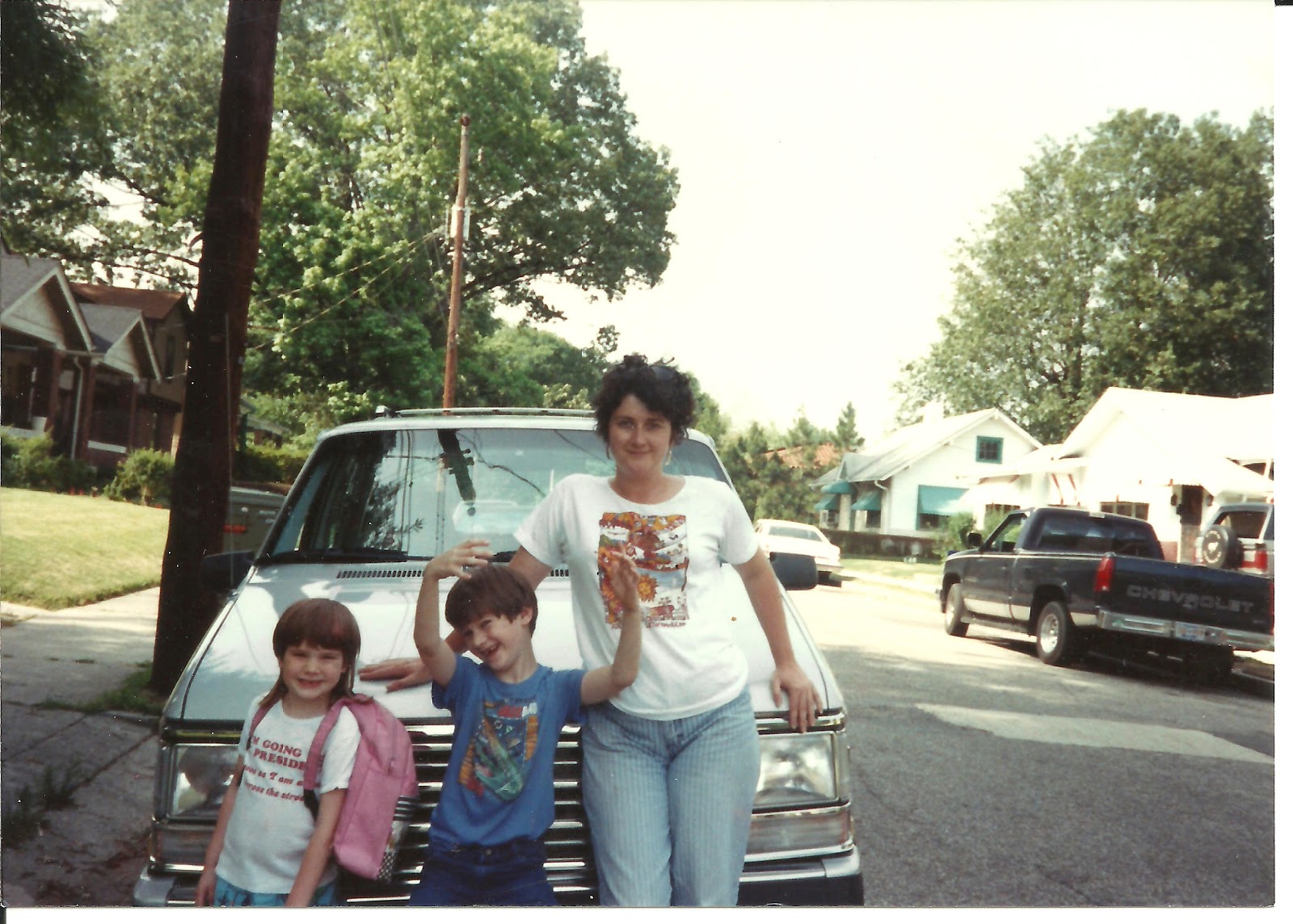
30 years ago
I began to write in a way that didn’t describe physical characteristics, to the point where, sometimes I would be asked what race my characters were.  I wrote a lot about people who lived in poverty and it was amazing to me what racial characteristics people attached to universal behaviors.  I began to describe more directly, but I still wanted to write stories about the essential person, not their looks.
A map of wrinkles that enlivened his face, a scar that burst like a star on the dark sky of her face, a pillowy body that promised comfort, eyes that sparked beneath heavy lids – there were many ways words could be use to compassionately describe people without resorting to the stark concepts of beauty and ugliness.
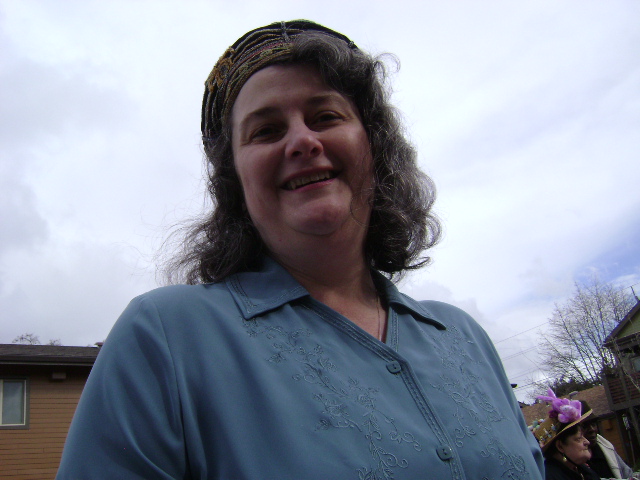
In the last few years, this way with words has come back to haunt me.  For the first time in my life I feel good about the way I look – even though, conventionally speaking, I probably look worse than ever.  I’m particularly astonished to find that I no longer cringe at pictures that show my goddess belly or my bonus chin.
or my cat scan
Does this walker make me look fat?
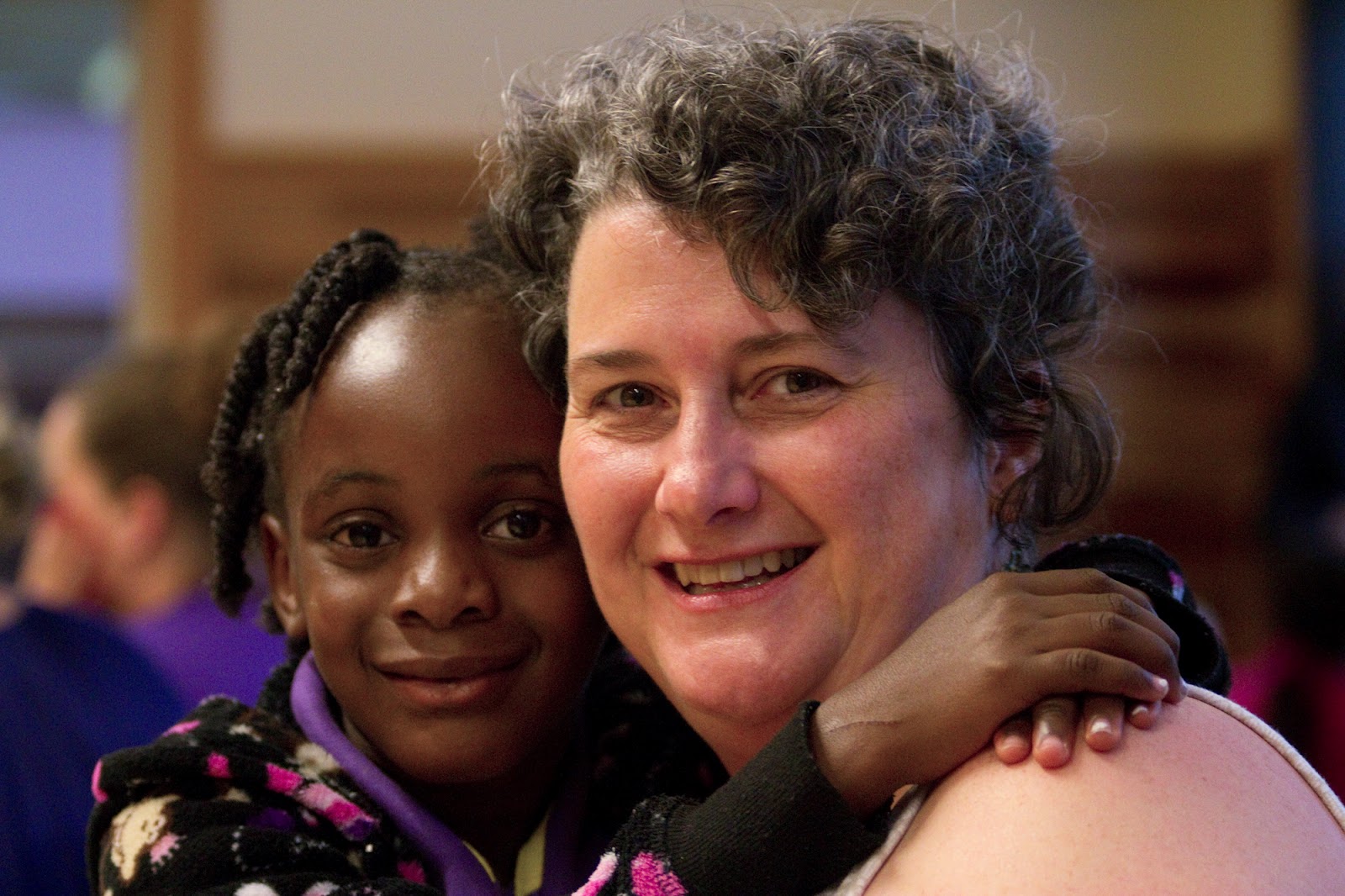
I let the kids here at Bridge Meadows take my picture with my camera, and they always catch me at my worst angle, under the chin.  Which is how they usually see me and they like me anyway.  I’ve let them take pictures of me with my glasses crooked and my hair a fright.  Last week, the United Way was filming stories of people here, and I let them film me after exercise class with my hair a wreck and every ice cream induced lump showing in my leggings and tank top.


I still hear my younger hysterical self trying to stop me from these activities, but I tell her it’s alright and give her a pat and let the camera roll.  I love to dress up and accentuate myself, but I find I am compassionate and practically even loving with all of me now.
If I never get another present and don’t grow in any other way, this sense of self acceptance will be enough.  Life is too short not to enjoy one’s self or to waste time trying to live up to a concept of beauty so vague and tenuous we are all bound to fail.
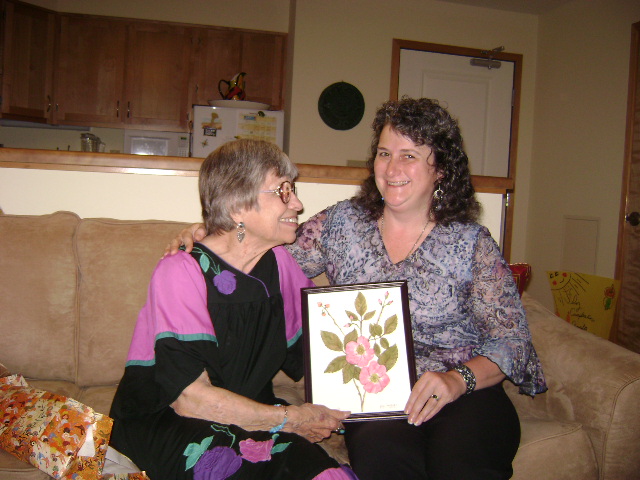
I gave a painting to my 89 year old friend Juanita last night.  That negative voice popped up – we should stand up, I’ll look thinner.  Then I thought, why should I look thinner.  I am with a woman I love and admire who has lived 89 years.  I just smiled at the thought and let the camera click.
 I opened this essay with a quote from the song Those Were the Days.  I don’t know if self-acceptance is a part of being wise, to me it seems more about being happy — and that will do until some wisdom comes along.  Meanwhile, I plan to spend this year getting as many happy hugs as possible.
by photographer J E Underwood