I’ve been on a medication for Bi-Polar disorder for a month. It was one of several I’ve tried over the past few months, but this one seems to be keeping me steady, has few side effects, and gotten me to feel like myself again. It’s a quite wonderful feeling.
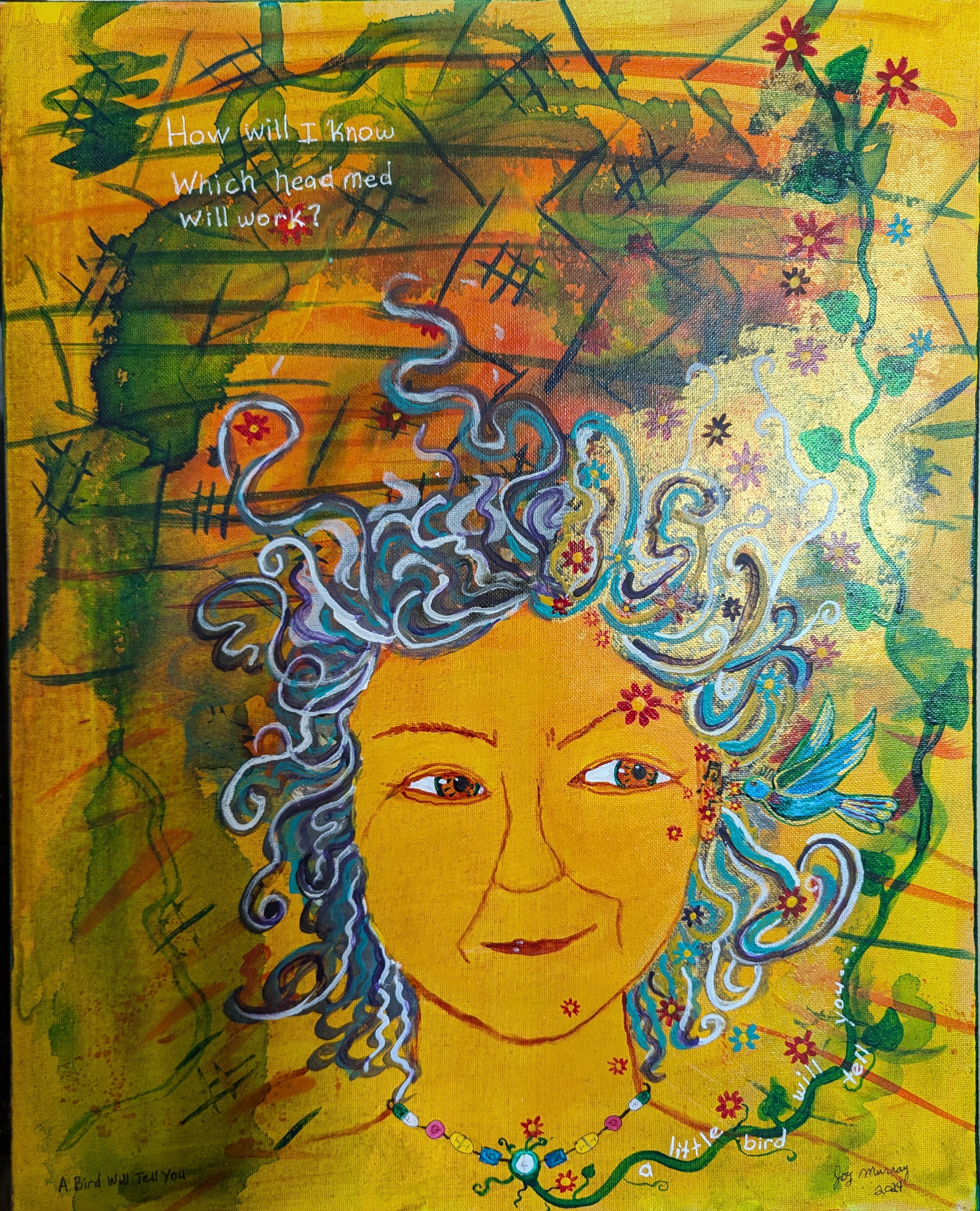
I started this journey years ago, really, but this most recent bout of depression started in October. Then it was hard to be creative or to see any point to painting, writing or anything. I’ve done some work, but getting into a routine, finishing things – it’s been next to impossible. For this painting, I just started splashing paint on a canvas, cleaning brushes by smearing leftover paint on it, and letting it collect color.
But since I started this medication, I found some direction and a composition emerged. It became a sort of journal of my recovery. And then, one day, it was a finished painting. I hope it captures the way the treatment of a mental disorder, and the journey to brain health, is a process.
What do you think?
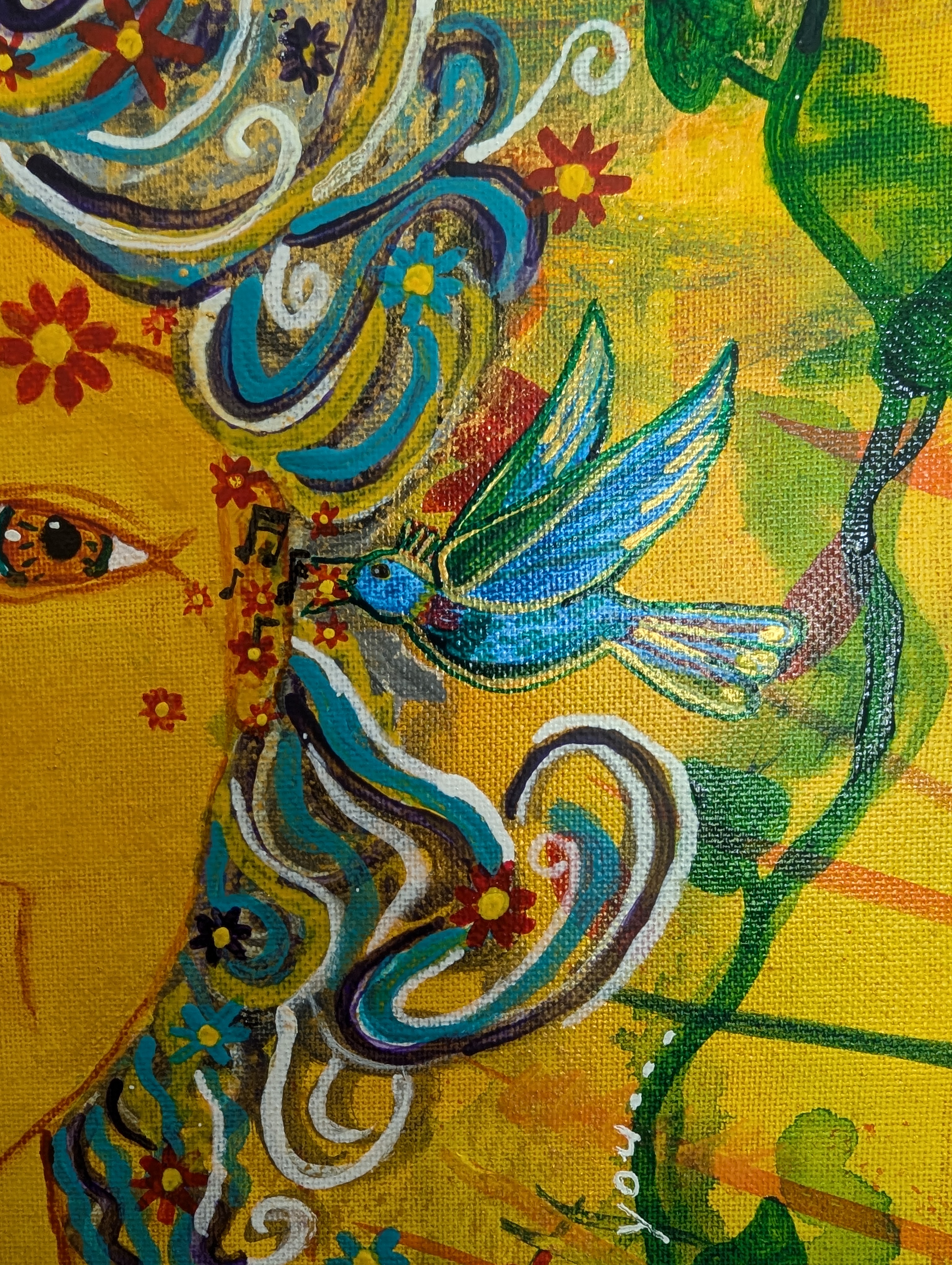
A Bird Will Tell You, by Joy Murray, 16×20″, acrylic and ink,
I hope to continue to be inspired to paint. I have already come up with ideas for two more. Getting back to a creative state of mind is a pure delight. I really appreciate my doctors and therapists who have helped me during this bout of dysfunction, who helped guide me back to good brain health. I also did a lot of reading on mindfulness and ways of maintaining brain health in a world that seems fragmented and in a constant state of mania.
If you’re having struggles yourself, I hope you find the kind of help you need. And remember it’s a journey. Just because one treatment doesn’t work for you, don’t give up. There are lots of options for our complicated brains. Keep searching for a doctor you trust, keep trying different treatments, until you find your way back to yourself.
~~~
Thanks for reading my blog. Feel free to share it, if you’d like.
This blog is brought to you by the generosity of people who support me on Patreon , buy my art, and who support me in so many different ways.
If you’d like to make a one time donation, you can do so at paypal
Cards and prints of some of my art is available on Redbubble. Also T-shirts and stickers and other odds and ends. When you click an image, in the lower right hand corner you’ll find a link to all the various products that these are printed on. If you have any trouble finding what you’re looking for, let me know. joyzmailbox@gmail.com
You can subscribe to this blog by email in the link below this post.
If you find a typo, let me know, and I’ll send you a postcard.
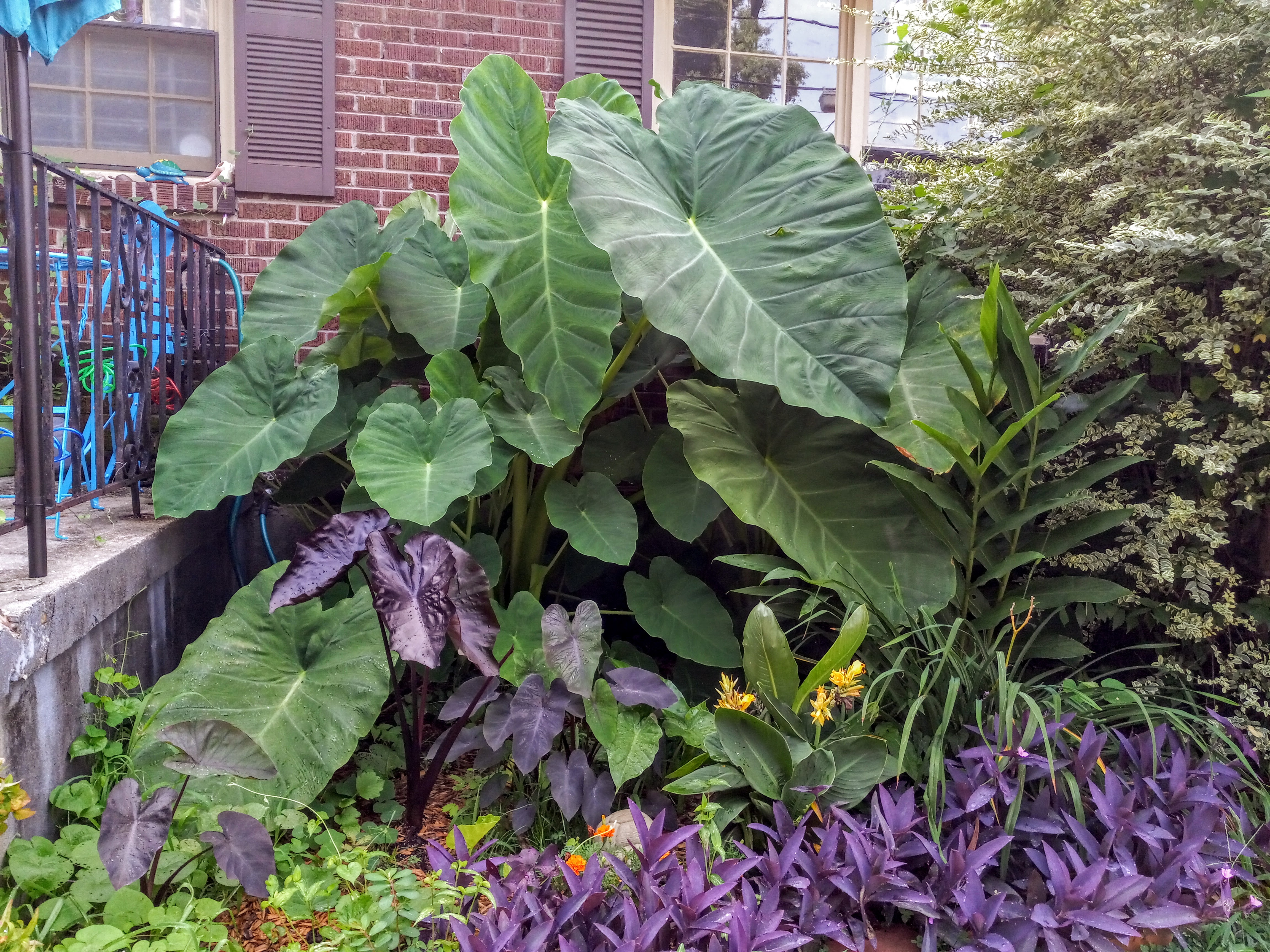
Last summer, my elephant ear garden looked like this:
This year, it looks like this:
We had an abnormally cold winter and it killed off many of the bulbs. Elephant Ears make new bulbs every summer, often along the bottom of the old bulbs. I think these are all newly made bulbs that grew from underneath their frozen parents.
I love my elephant ears when they get dramatically big. I like seeing the slender stalks of the first small leaves divide into larger and larger leaves until they are nearly as big as me. I get cocky about them. I see other people’s plants and think, mine are bigger. It’s a bit of delusion that I have anything to do with how big they get. I do my part, of course: making sure they’re watered and have enough room to grow by weeding and tending the ground around them.
Or I used to. Now, I get other people to help me with it. Now that I’m a full time wheelchair user, I can’t get to the weeds, I can’t divide the bulbs, I can’t do all the little fussy things an urban gardener does to get credit for beautiful plants. I appreciate those who’ve helped me weed and keep some order in the small patch by my porch. I’m not totally happy about having to give up the responsibilities I enjoyed, but I’m happy that the garden grows.
I’ve also had struggles cultivating creativity over the past few years. I don’t get as many paintings done. I don’t have the energy to organize shows or to participate in groups. I don’t write as much. I don’t even go to art shows as much – transportation and fatigue issues. Like so many of us, I was changed by the arrival of COVID in our lives. Also the continuing fragmentation of our country and a seeming inability for us to build working bridges to help each other out. In my personal life, I’ve aged enough to have to deal with death more often (also a COVID factor), and my own disability takes its share of my energy. I’ve often felt as if my well was empty and I couldn’t tap into a new source of flow.
But watching these scrappy plants emerge and grow after a hostile winter, has inspired me. Slowly I am writing more, drawing again, painting again. Since I have no deadlines, I can set my own pace. I don’t have to create things at the same rate. And as I look back over all that I’ve done in previous years, I realize that I’m a productive person, even if I never actually create anything tangible ever again.
There is a form of art called “social practice.” It “focuses on engagement through human interaction and social discourse.” If I’m feeling small and insecure, I can always say I do social practice art (though no one will know what I’m talking about). To me, in its simplest form, social practice art is a way of living creatively, sharing ideas with others, contributing to a better, more peaceful and beautiful world. The goal is not necessarily a finished object or project. Living is an art. The creative ways we deal with life’s challenges are an art form.
I may just be trying to give a label to my fallow periods to feel better about them. These periods are a part of the process. Are they an art in themselves? It’s not like I’ve stopped thinking about creativity, or living creatively for even one day while I’ve navigated these past few years. I’ve been helped a lot by others, and had lots of conversations with them about the world at large, and the small world that I occupy.
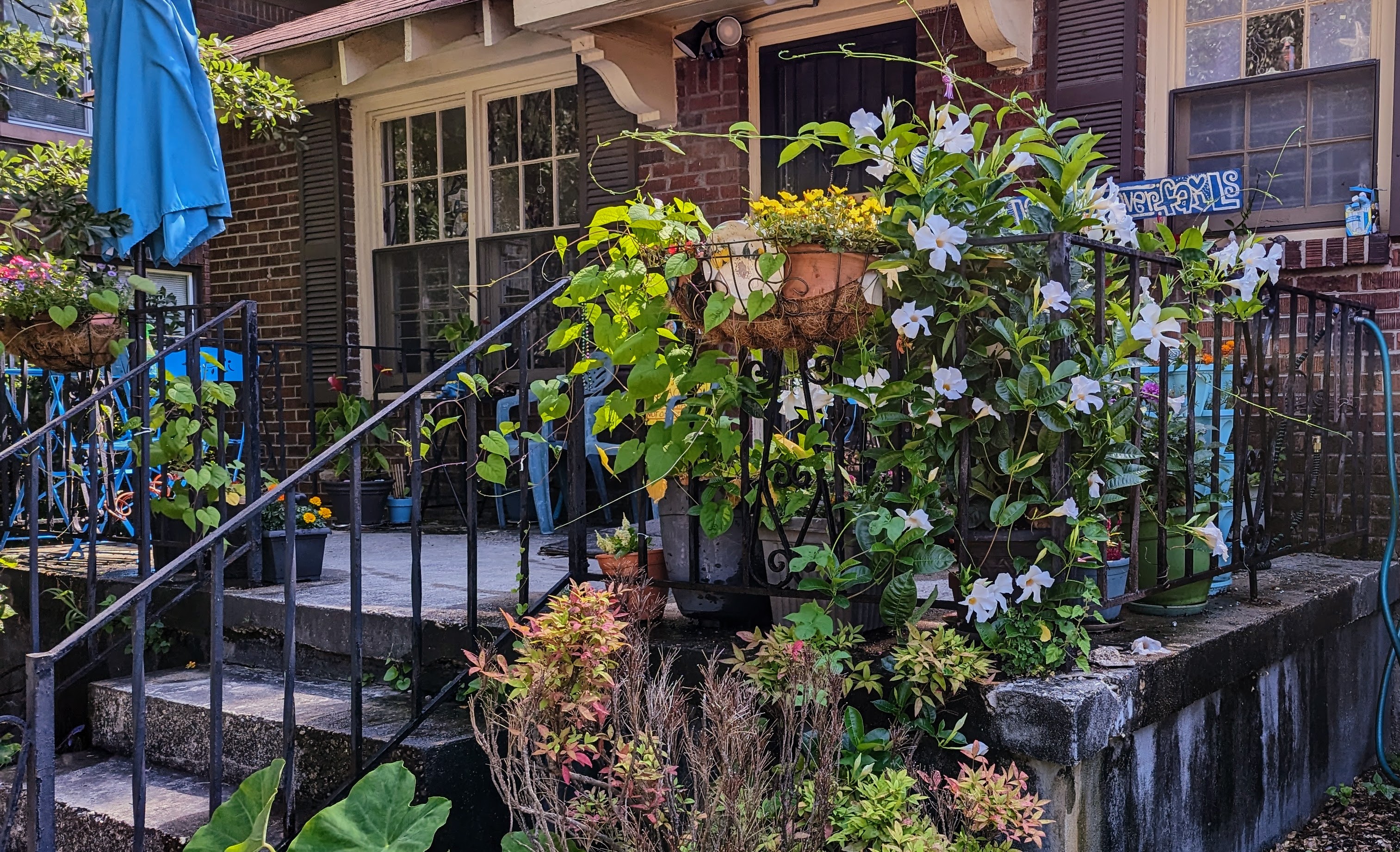
And now this little garden is growing back. The plants on my porch that I can tend to are thriving. Whenever someone walks by – and looks up from their phone – they see growth and blooms. I don’t actually create it, but I facilitate it.
I once led an art workshop and one of the young participants asked if you could make a good living as an artist. I said it’s difficult. But you can make a good life.
If we survive a brutal winter and grow a little slower afterwards, there’s a lot of beauty in that. Noticing gardens is being creative. Carrying sorrow, but living with delight, that’s a good life.
Joy At the Memphis Brook Museum – living a good life
~~~
Thanks for reading my blog. Feel free to share it, if you’d like.This blog is brought to you by the generosity of people who support me on Patreon , buy my art, and who support me in so many different ways. If you’d like to make a one time donation, you can do so at paypalCards and prints on some of my art is available on Redbubble. You can subscribe to this blog by email in the link below this post.If you find a typo, let me know, and I’ll send you a postcard.
My friend Billy, in his mid 70s, had a stroke last summer. It was pretty severe. He went from being an active man, to being dependent on caregivers for practically everything. I’ve known him off and on since I was in my 20s. He’d been a master bricklayer and artist, drawing, painting, and making concrete sculptures with Egyptian mythological themes.
He’d always been a philosophical man, and we often spend hours talking about life. He believed we’re all cells, the planet is a cell, the universe is a cell. He did paintings of the light spectrum that included not just the colors of the rainbow but black, too. He didn’t fear death. He talked a lot about how human unity could be achieved through an understanding of prokaryotic cells, and he was inspired by the work of Bruce Lipton, author of the Biology of Belief. He talked a lot about toxic masculinity and about how to heal racism. He talked a lot. Often to an unnerving extent.
Still, he is a kind man and would help me winterize my apartment and spread sand on my ramp when icy weather was predicted without me having to ask. He built a ramp on his house so people in wheelchairs could visit, but he was a bit of a hoarder, so it was impossible to move around once I got into his house.
He used to visit me to watch science lectures on the computer. He never could quite figure out how to connect to certain sites. Some of what he liked I felt was pretty shaky science-wise, especially things about healing the body through mind power. So while he watched, I sketched him or participants in the lectures.
After he had his stroke, I wanted to give him a mixed media collage I did of him in 2018. I searched and searched for the sketchbook it was in, but I couldn’t find it. I think I got rid of it in my great journal purge this winter. I had a scan of it, but when I tried to print it, it didn’t look “right” to me.
Billy, 10×7, mixed media, December 19, 2018
A mutual friend of ours has been keeping me posted about Billy’s progress. His partner and caregiver has cleared out his house somewhat and has been helping him get better. This last week we were able to visit him. I wanted us to all sing to him (our mutual friend is an excellent singer and I can make a joyful noise, even if I’m off key).
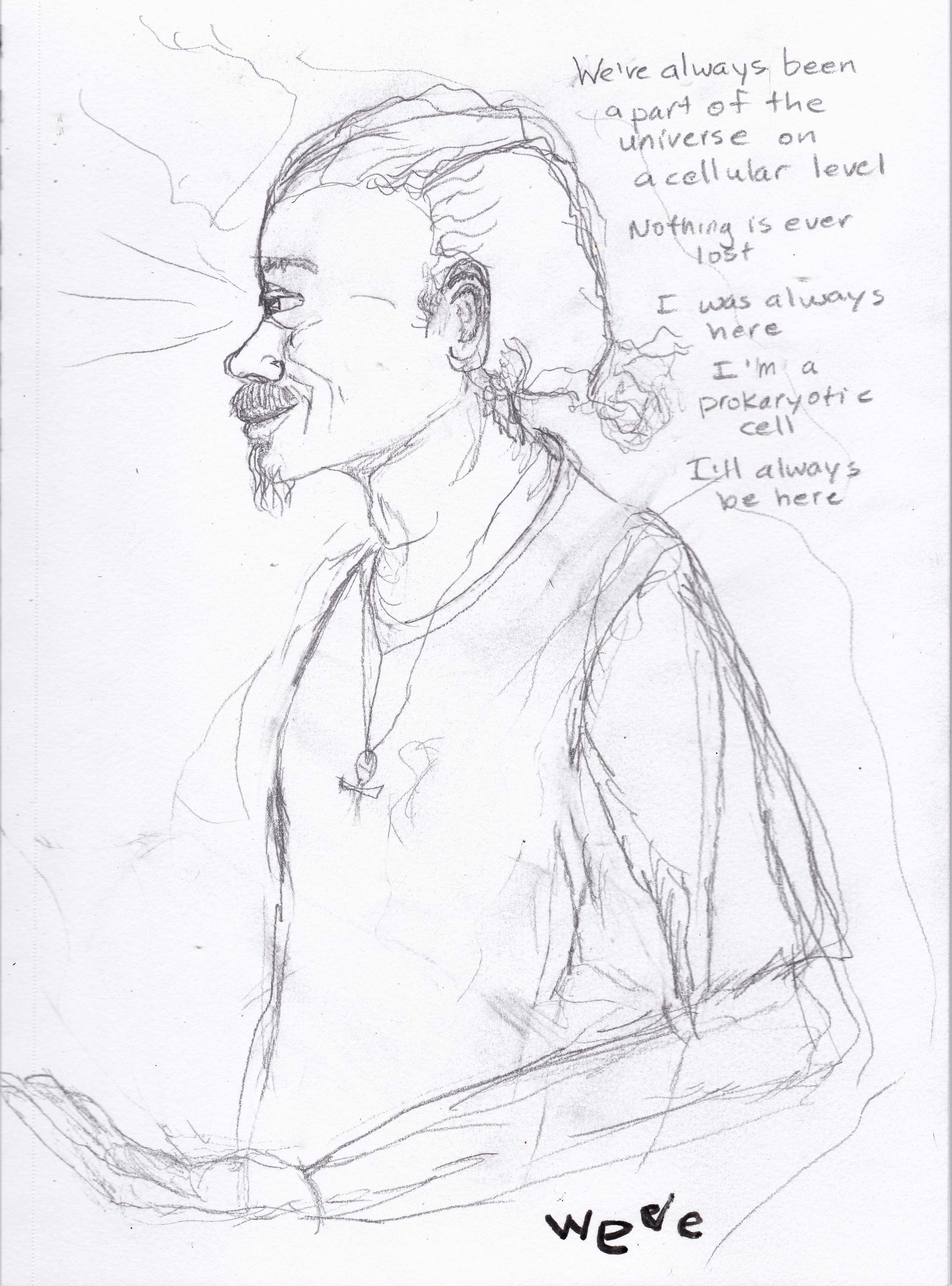
While we were coordinating schedules, transportation, and health considerations, I decided to do another portrait of Billy. I discovered I had very few clear photos of him. I am also out of shape for portraits from not practicing much over the winter. I finally got a couple of nice sketches of him done:
When I started working on canvas, I painted one portrait that was such a disaster I couldn’t bear to look at it, and painted it white the day after I finished it. And I’m glad I did. I changed the composition and decided to add some of his prokaryotic philosophy in the painting. And lots of color.
Billy by Joy Murray, 2022, 8×10″ acrylic and ankh charm (he always wore an ankh necklace on a leather cord
Billy’s motor and communication skills have improved greatly. And though he couldn’t always keep focused or remember song lyrics, we had a blast singing. Both he and his partner really enjoyed themselves, and it was great for all of us to connect through music and art. Part of what happens when you have a stroke or some other physical change is that you get isolated. It’s hard for me to help out because I am limited in buildings I can access, and in mobility. And we’ve all been isolated by COVID. But talking and singing, it rekindles and reconnects thoughts and memories.
When we were leaving Billy’s place, a winter rainy mix had started falling. Billy, without anyone asking, got out the sand and covered the ramp. Then he helped guide my manual wheelchair through the gravelly and cracked driveway. I commented to everyone about “interdependence.” Billy repeated the word and his eyes lit up. Yes! he said, delighting in hearing that word again.
On the drive home, my friend was amazed at how Billy had responded. He said he hadn’t seen Billy that lively since the stroke. People had been putting pressure on Billy’s partner to get him into a nursing home, so she was so pleased to see how much a bit of socializing and music did for us all.
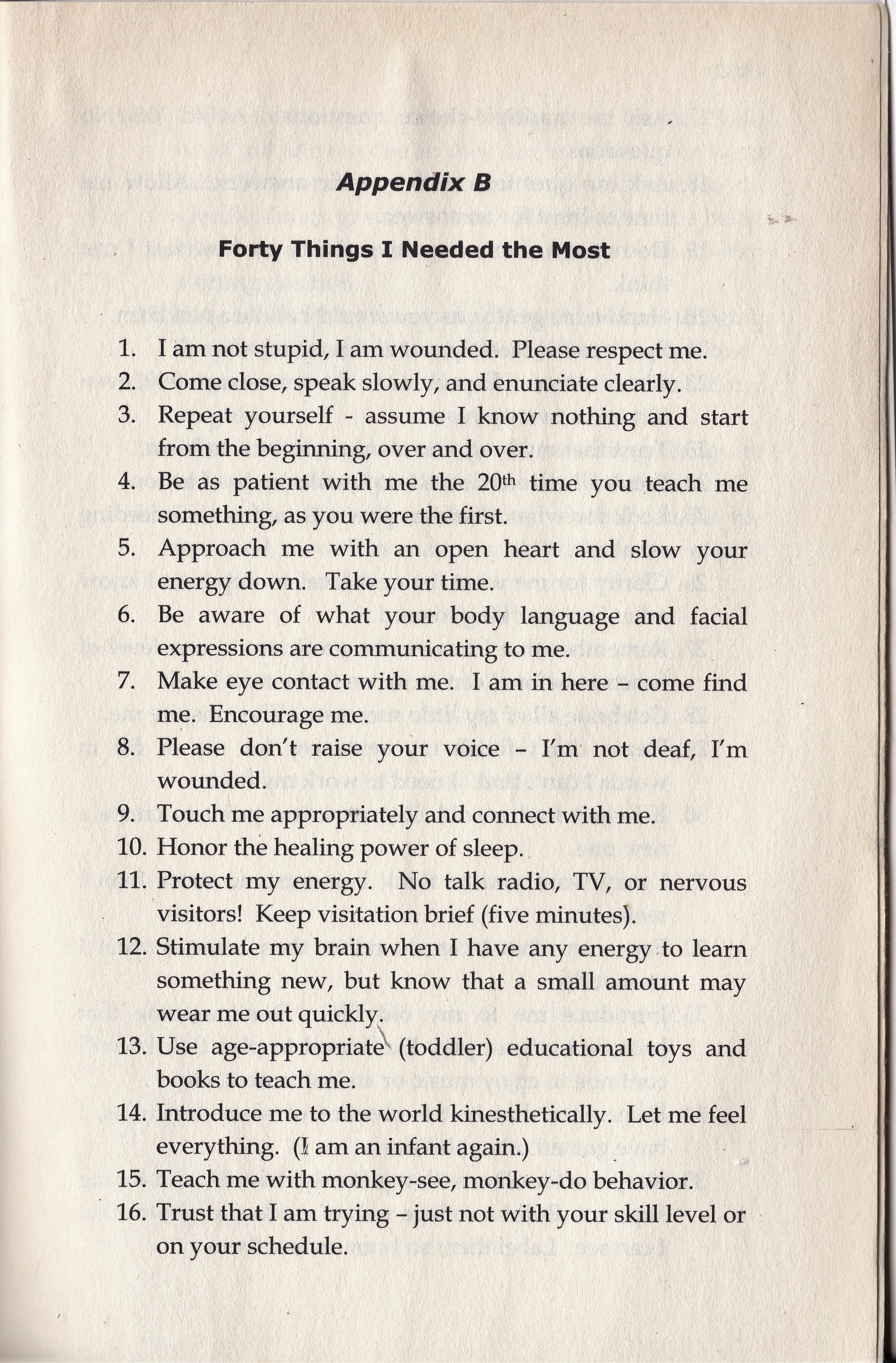
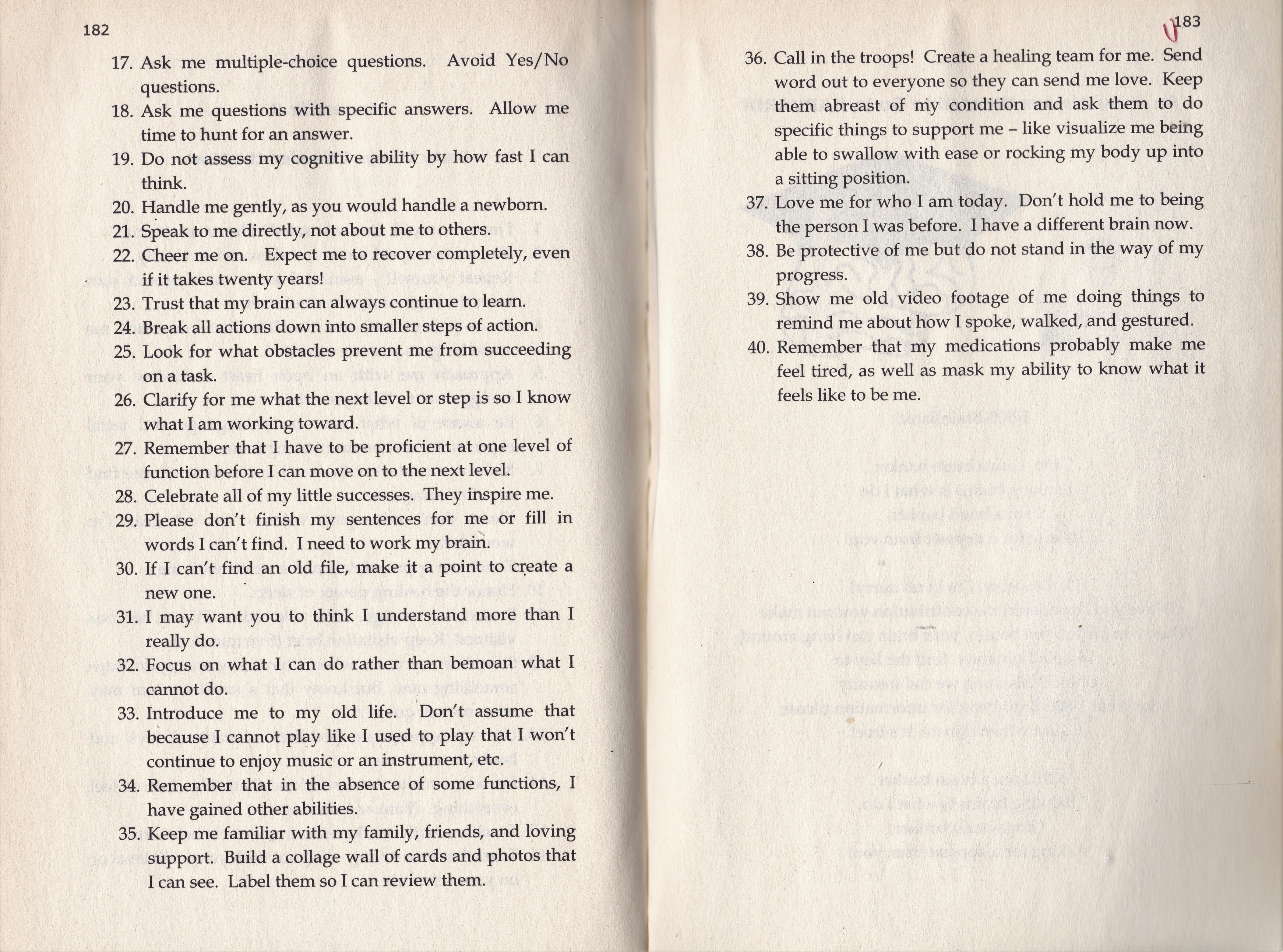
Since Billy’s stroke, I’ve reread Jill Bolte Taylor’s, My Stroke of Insight. She’s a brain scientist who had a major stroke at age 37. Her book about it was published in 2008, and is a great guide for understanding strokes, for how the brain works, and for how to help people who have had strokes. She also talks about the emotional growth she experienced post-stroke. She published a list of what she needed the most after her stroke:
Musicophilia by Oliver Sacks, and One Hundred Names for Love by Diane Ackerman are also great reads for understanding strokes, the brain, and how to accept changes in life.
Art, music and love. They don’t do all the healing, but they help in the process.
~~~
Thanks for reading my blog. Feel free to share it, if you’d like.
This blog is brought to you by the generosity of people who support me on Patreon , buy my art, and who support me in so many different ways.
If you’d like to make a one time donation, you can do so at paypal
Cards and prints on some of my art is available on Redbubble.
You can subscribe to this blog by email in the link below this post.
If you find a typo, let me know at joyzmailbox@gmail.com, and I’ll send you a postcard.








 joy murray art~stories~life