They are launching this extraordinary book on September 23. It’s such a wonderful project, I can’t wait!
Our Portland Story | 77 authors, 68 designers, one book all about Portland by Portlanders.
Joy Murray
They are launching this extraordinary book on September 23. It’s such a wonderful project, I can’t wait!
Our Portland Story | 77 authors, 68 designers, one book all about Portland by Portlanders.
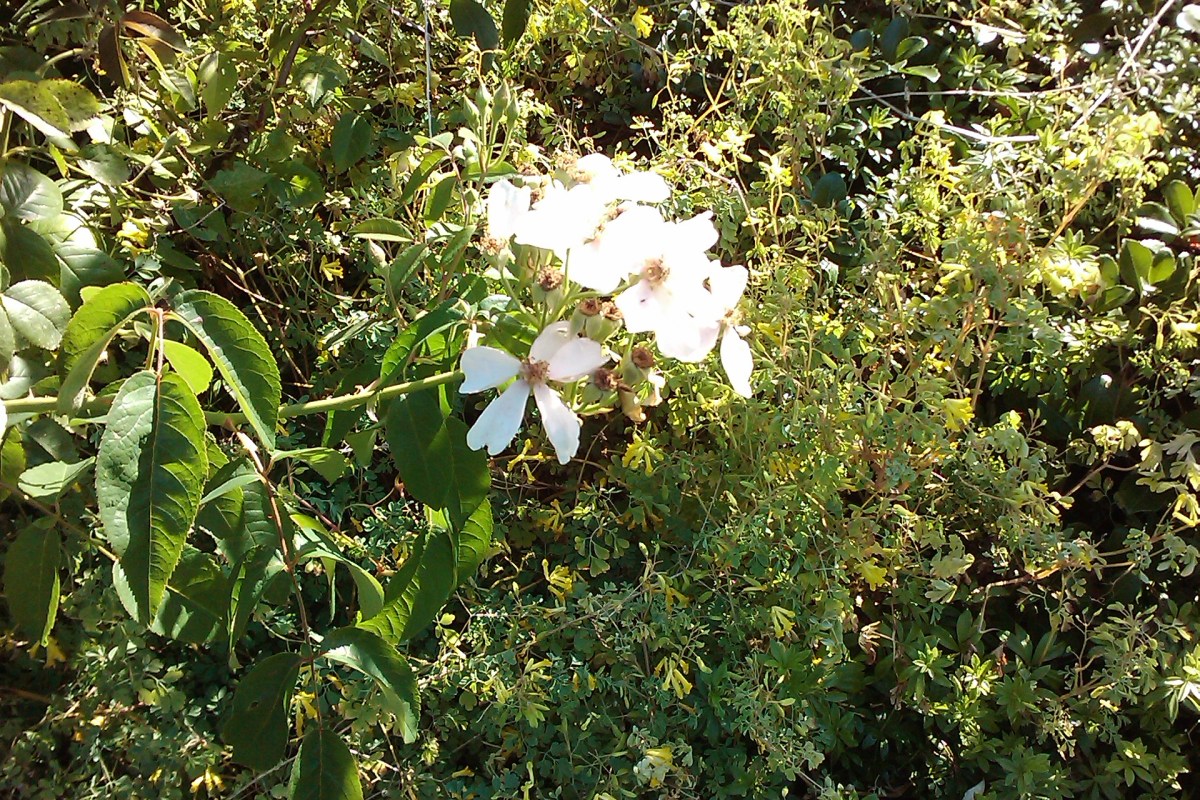
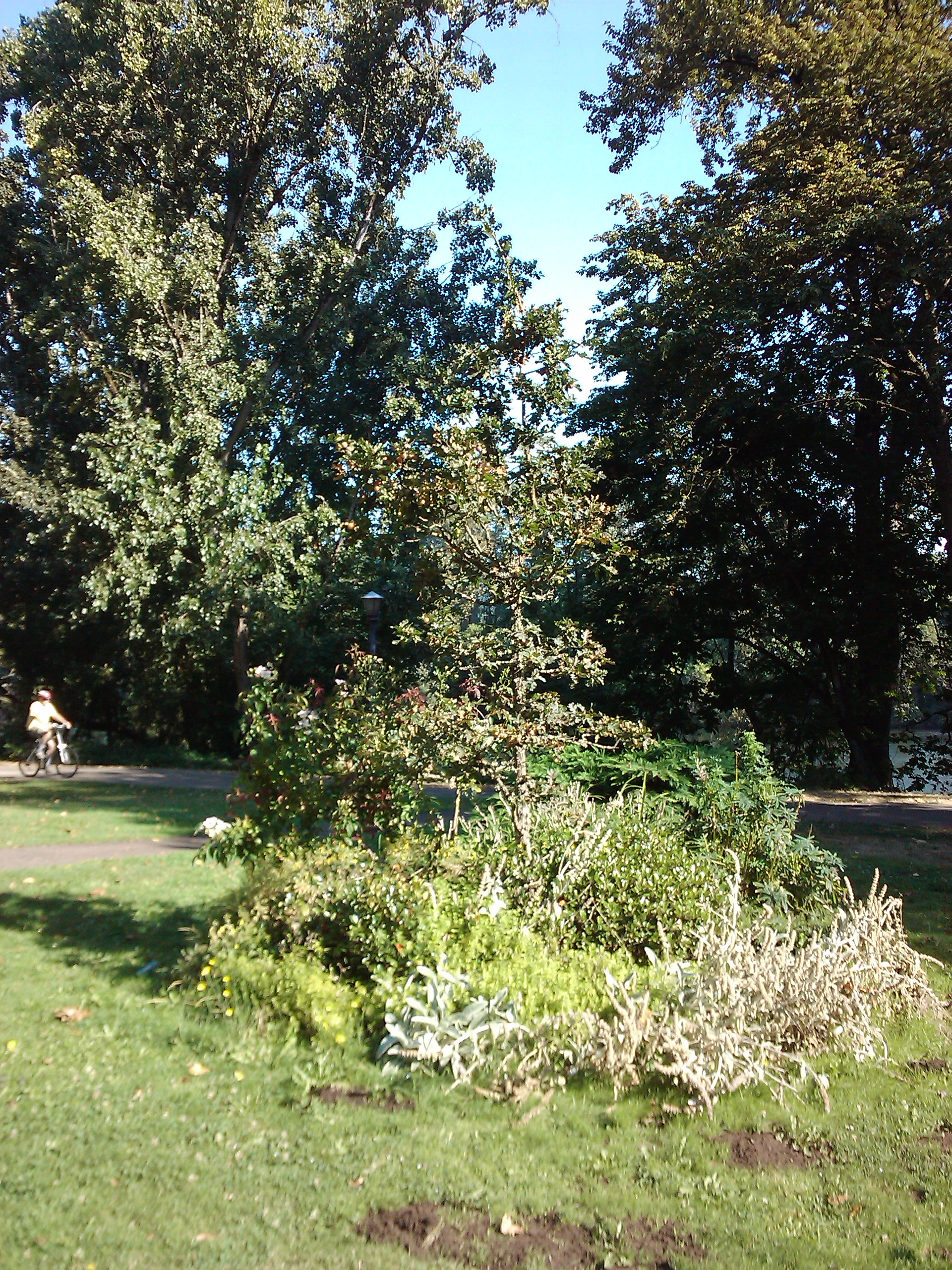
When you marry a widower, you’re always aware that if his late wife had not passed, you would not be married. And if you are even slightly insecure, the specter of the sainted late wife can be a challenge. When I fell in love with my husband, Jim, one of the things that attracted me to him was his reverence for his late wife. He wasn’t maudlin about it. He felt profoundly blessed by having her in his life and always imagined they would be together forever. And they are; only she is a spirit now and he is a living man capable of loving and in need of the companionship of more than spirits.
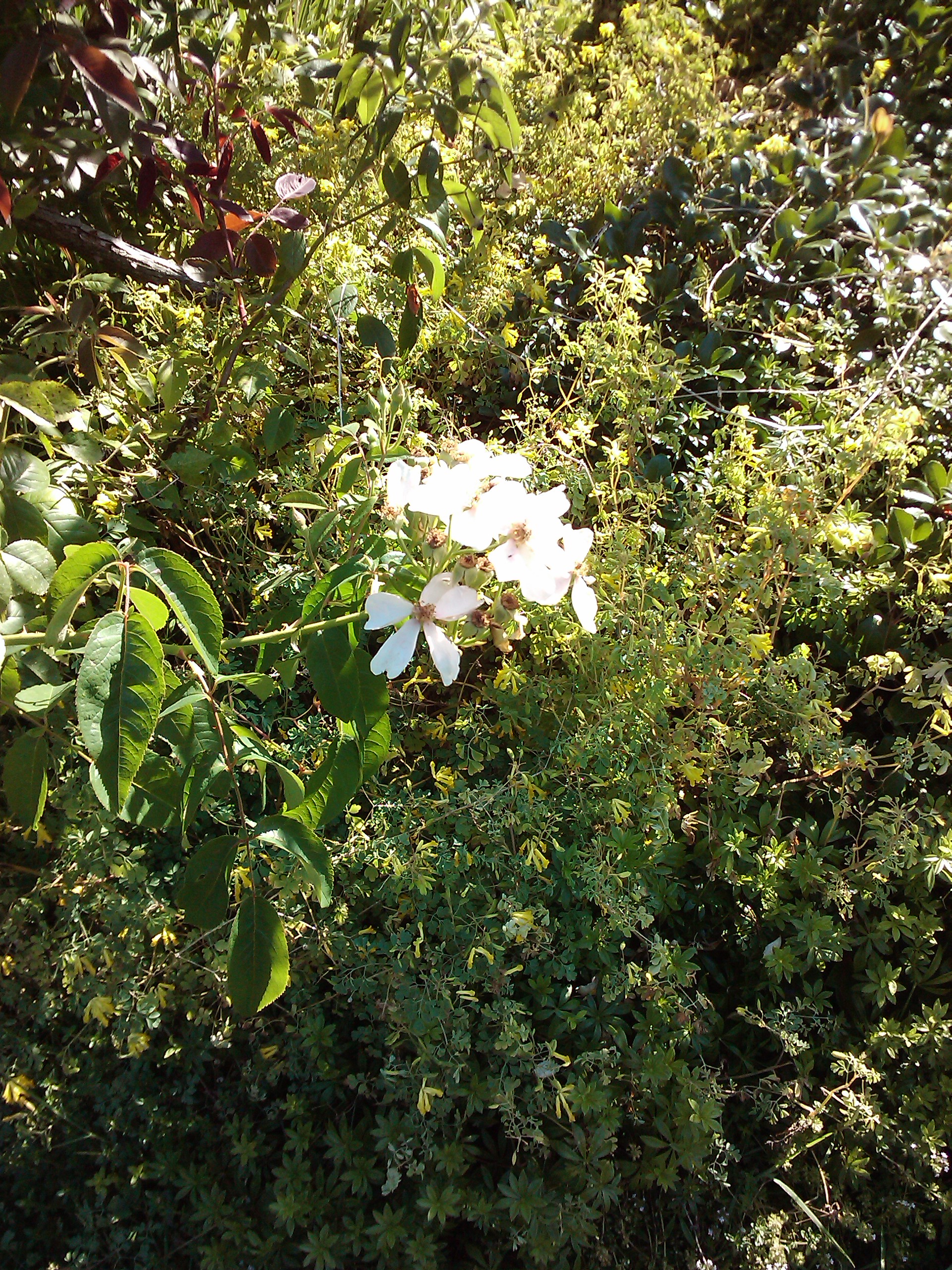
Kathleen O’Conell Corcoran was a well respected Family Mediator in Eugene, Oregon, who strived to protect children during the divorce process. She help so many people that when she succumbed to cancer at age 50, the community built a memorial garden for her in Skinner Butte Park along the Willamette River, next to Lamb Cottage where she and Jim were married.

Jim met me 11 years later at a Jazz storytelling event at the library. It‘s odd that we found each other and connected so deeply. He is a firm believer in the monogamous predestined soul-mate kind of love. I came from a shattered family, my parents marrying and divorcing so many times I lost all count. I was pretty hard-headed in my first marriage in my belief that relationships don’t last forever, although, as it turned out, my first marriage was a long, mostly happy one that lasted 20 years and gave us both a lot, including two wonderful children who are my pride and joy.
But I had a restless spirit and had to strike out on my own once the kids had grown. It was a rough time and I learned a lot about myself. The Indigo Girls have a lyric that says, “The hardest to learn is the least complicated.” I began to see monogamous, long term relationships for their elegant simplicity and promise of security.
Jim and I began to talk about these things within hours of meeting – along with love of jazz, poetry, philosophy and art. We talked about my disabilities. In the first month of knowing him I took him shopping with me for my “embarrassing” supplies. He didn’t wait in the car or flinch when we went down the aisles no one treads easily.
After that, I was in this kind of dotty state of love-at-first-sight. Still, there was the fear that I wouldn’t live up to the late wife. I was the compromise relationship.
After we moved in together and I was living amongst their furniture and our table was set with her beautiful hand woven placemats, I would have these unexpected bouts of jealousy, as if this presence was nudging me out of the picture. But as time went by, I realized that he was dealing with insecurities of his own. I have a living ex, I am still friends with old lovers. He has a relationship now with my adult kids who love their father, and we all have a bond that he can’t really ever penetrate.
We navigated through these insecurities with a tenderness and understanding that age has blessed us with. We’ve witnessed unexpected tragedies, experienced unimagined changes and found ourselves both alive and unwilling to sink into bitterness. We’ve developed a sense of wonder and delight, a willingness to let the past interact with the present and not let fear limit our lives. In return, at several crucial times we’ve both felt Kathleen’s loving spirit in our lives.
This recently culminated, as all idyllic adventures should, in a garden. We have been married 6 months now and he felt it was time for me to make a contribution to Kathleen’s memorial garden. I had visited before, enjoyed it and taken pictures, but I felt that was a private place for him to commune with her and his past.
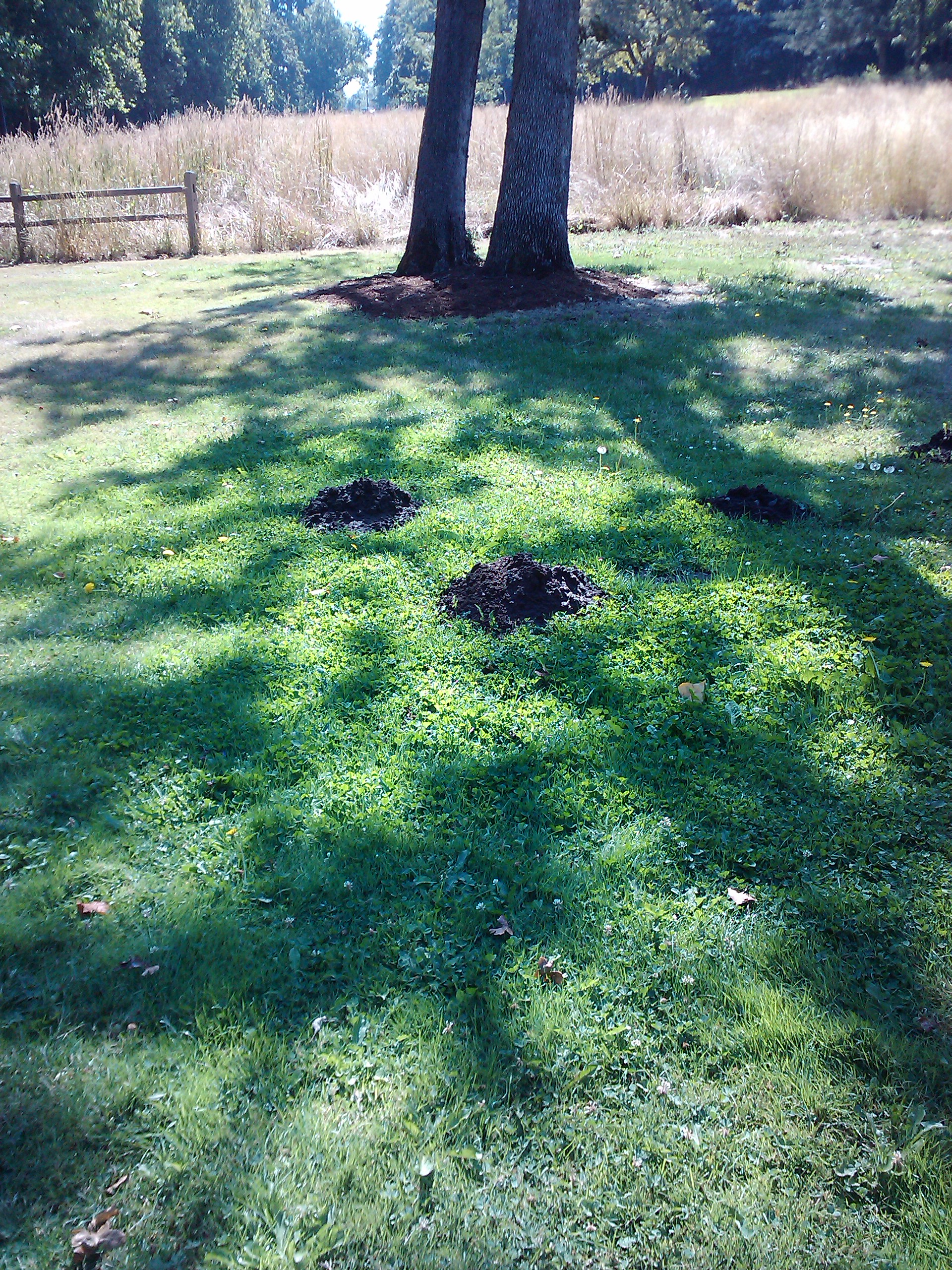
He convinced me that it was a good place for us both to commune with the past and the passing of all life. We hear we are ashes to ashes and dust to dust, but when you get your hand in soil that becomes a more fertile metaphor. Soil is made of the bits of all life that has gone on before and is where all life begins it bloom. All our ancestors and all the forests and cities and lakes and rivers and oceans are in the clumps of dirt in which we grow our sustenance. It’s good basic magic.
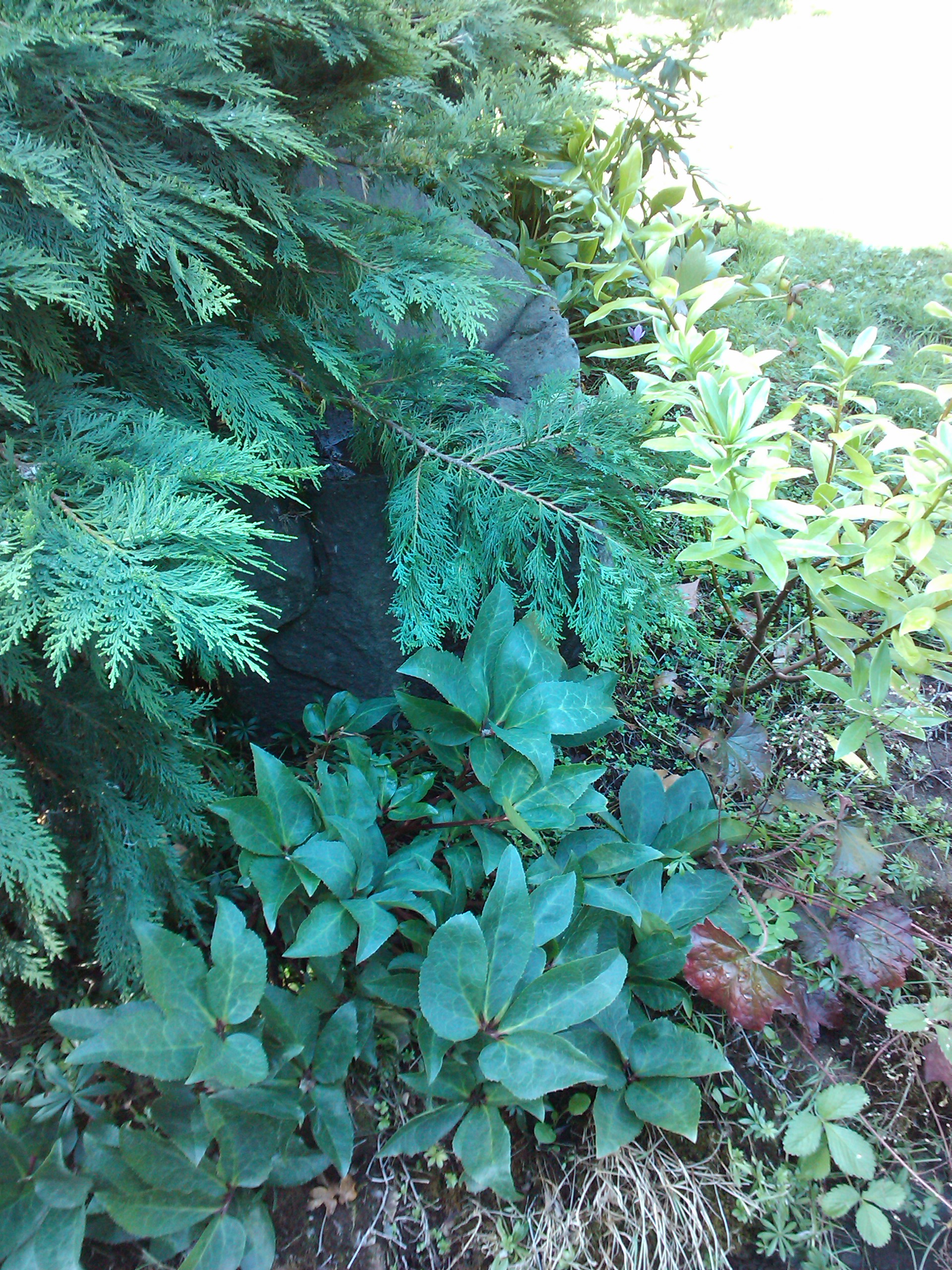
Still, it was hard not to feel like an interloper. We went to the Portland Nursery and I wasn’t sure I’d be able to pick out something. Both he and his late wife were expert gardeners. Both loved Mission style furniture and architecture. I was a city girl from the poorest part of Memphis. I had a brief burst of gardening fever in early life, but my various aches had kept me from it for over 20 years. I had no discernment or arrangement skills. If it was pretty, I tried to grow it.
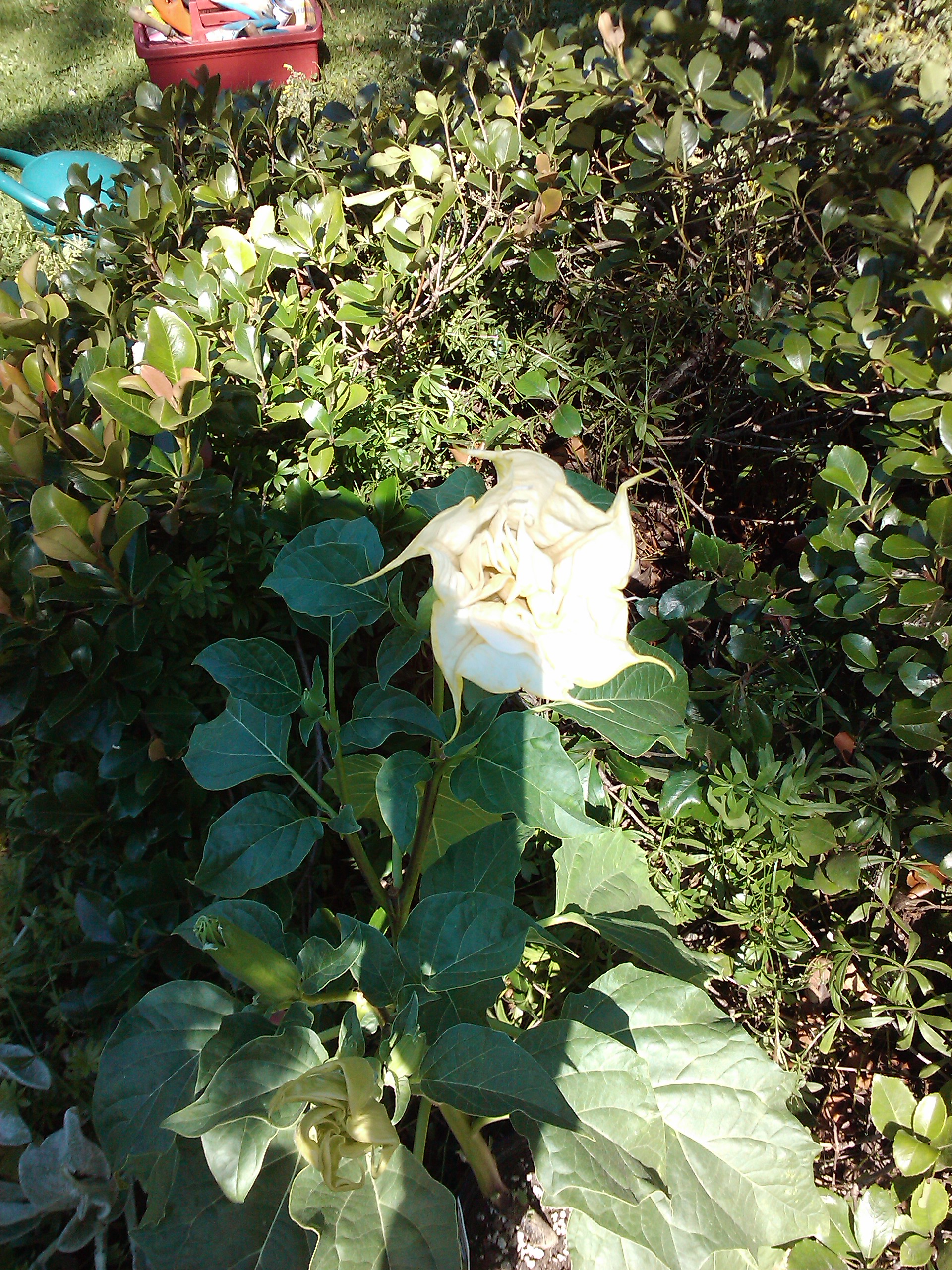
What would I choose for this very special memorial garden? I didn’t commit to actually doing it, only committed to try. It was a rare 90 degree day and when we walked in a datura was in bloom. My neighbor in Memphis, Miss Lillian, an expert gardener, grew them in her front yard. The glorious trumpet shaped blooms perfumed the evening air. I used to marvel at its shape shifting nature – the flowers were pale green, then parchment colored, then creamy white, then as they faded blushed with pink and turned into parchment again. They’re like a moon flower that’s gone to drama school.
I had to touch it and bury my nose in the cool bloom. Jim loved it. “It’s flamboyant, like you.” It met all the requirements – heat and drought tolerant, a late summer bloom, a textured leaf. The flower chose itself.
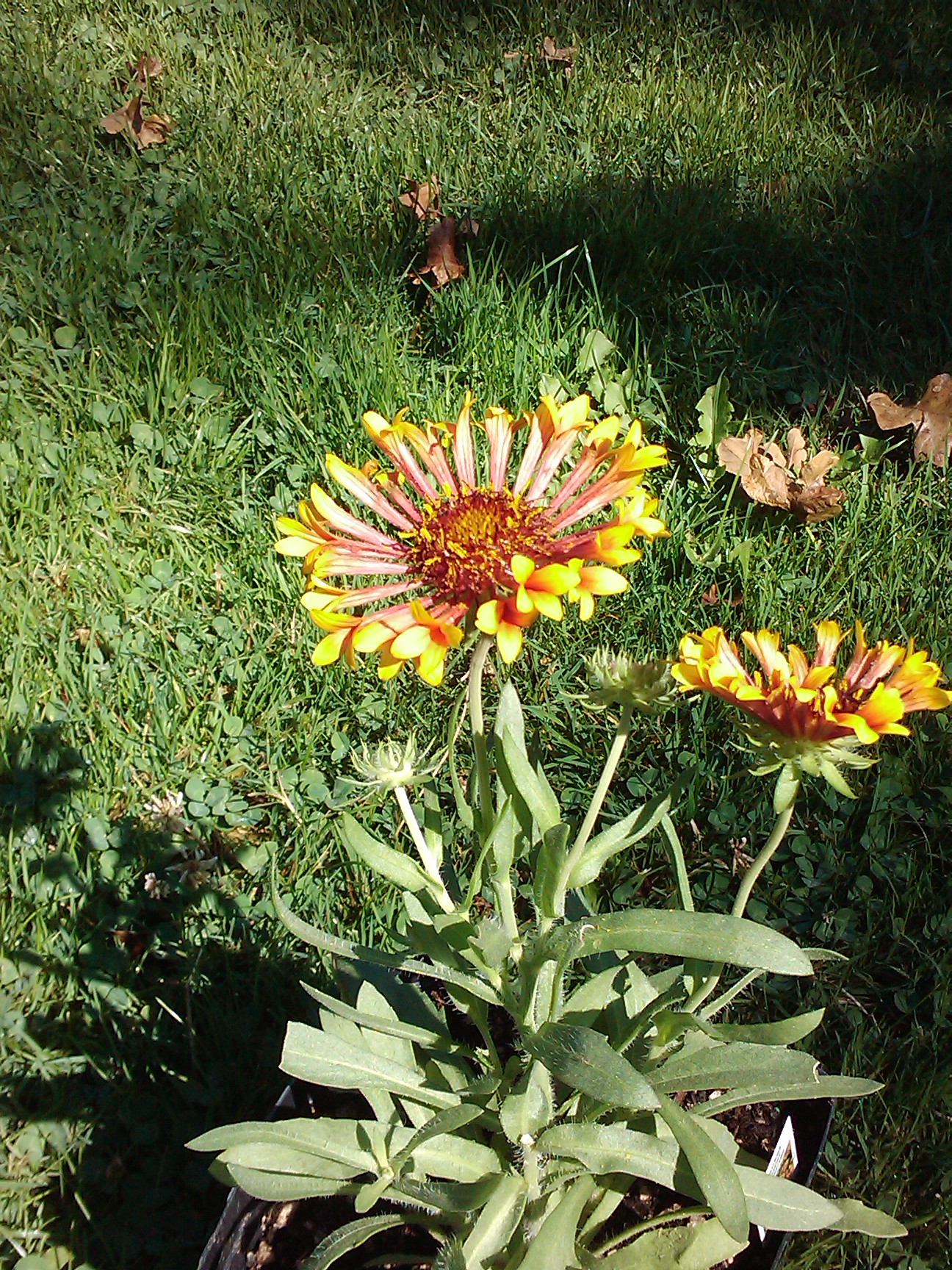
Jim chose a blanket flower, with a red and yellow bloom that looks like petals on a daisy but when you get closer, you see that it’s composed of tiny individual flowers. Jim’s a little flamboyant, too.
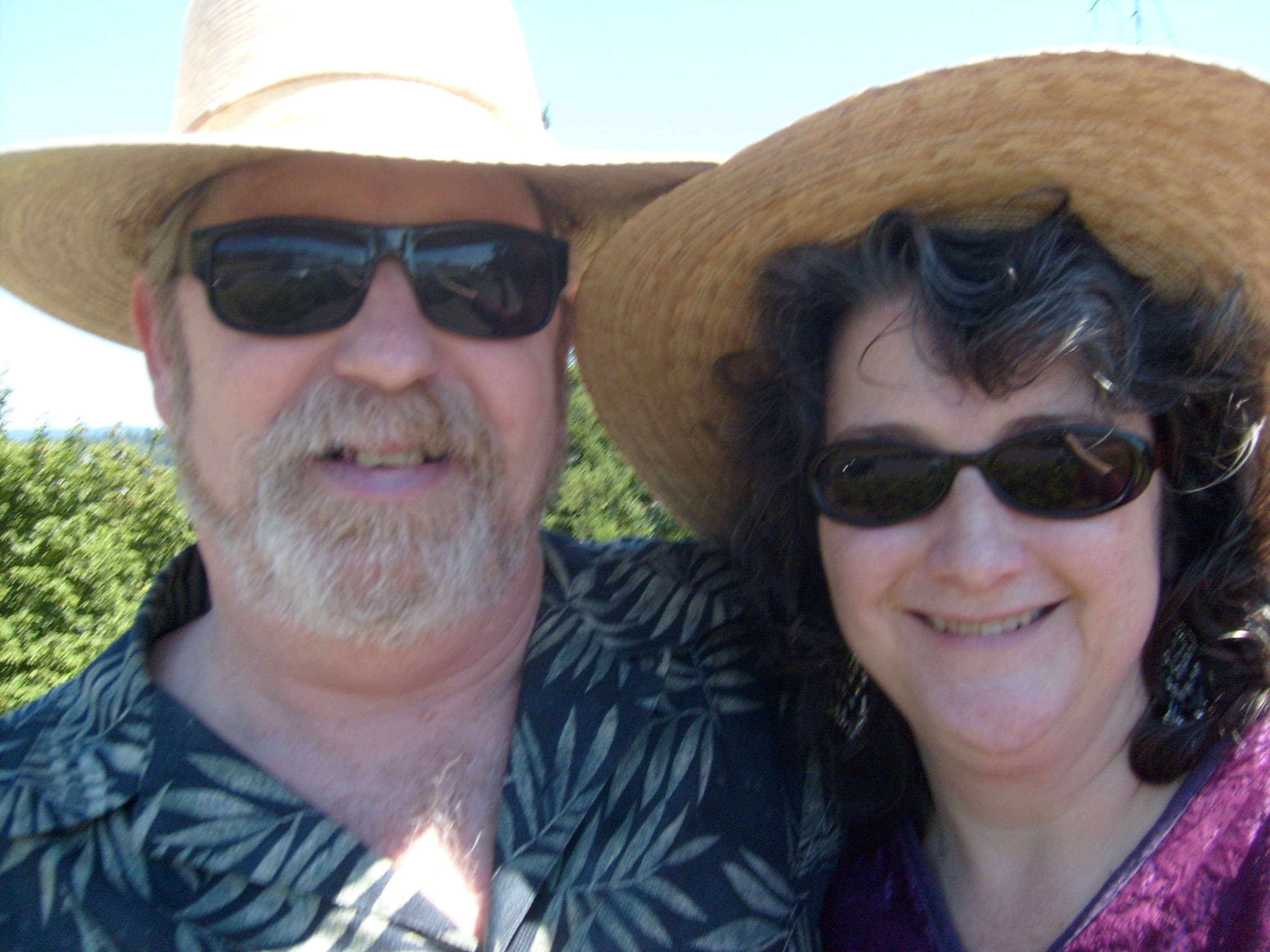
The next morning we drove to Eugene for the planting. My knee and back were inflamed, so I sat, wrote and took pictures while he did the weeding and pruning. Skinner Butte Park is gorgeous and well used. In a section by where we parked, a group of citizens-of-the-street congregated. Close to us a group was putting their dogs through show training. A couple was having their wedding photos taken. Bicyclists, walkers and runners were enjoying the path along the Willamette.

As he was working, we heard a strange bird call. In the trees by the Willamette, two eagles were calling to each other. We found out later they had a nest close by and had been the highlight of summer visits to the park.
Since we are both sensitive to symbolism, we saw it as a visitation and blessing from Kathleen, whose spirit has been a grand and inspiring presence in our lives. Later, when we finished the planting, a lone humming bird buzzed around the garden and sipped from several of the flowers – the wild geranium and the Kathleen rose.
I held my breath, hoping it would sip from the datura, but it didn’t take to either of the new flowers. Instead it hovered right above the garden and looked at us both for what seemed like a long minute and then flew away, disappeared into the vast blue sky.

 These images we share, these memories and the time we take to honor the past make us more than a couple but a family. The more we tell stories to each other about those who have helped form us, the more we grow together. If someday we are spirits and are flying together around the rivers and gardens of our mortal life, I hope we influence some gardener to look forward and backward with the same vision of delight that we shared in this small memorial garden.


One of my great pleasures when I wander through the library is to go to the staff picks display in the children’s section. I still feel the same delight as I did when I was a child and faced a shelf of face-out picture books. I used to tease my kids that I only had them so I could keep reading “children’s” books. The truth is I had kids to prove to myself that some of the contentment that eluded my family of origin, but I found in books, could be replicated in real life. Through a series of fortunate events, I was able to do that by having two extraordinary children.
Now that they are in their mid to late 20s, I can no longer use them as excuse to read children’s books. I’ve aged enough to realize I don’t even need an excuse, the stories, the pictures and the windows into the wondrous world are good enough reasons. If you haven’t picked up a picture book, a fairy tale or a young adult novel since you were “age appropriate,” I strongly suggest you rush over to the children’s section of your library and reacquaint yourself with happy endings.
I’ve felt for years that some of our best artists and illustrators are in the children’s section. From simple pen and ink drawings to gorgeous paintings to illustrations that rival the illuminated manuscripts of ancient books, the art available for us in these books is truly inspiring and uplifting.
My favorite book of the moment is Cloud Tea Monkeys by Mal Peet and Elspeth Graham, illustrated by Juan Wijngaard (Candlewick Press, 2010).

This story is based on the many tea picking stories and legends from the Himalayan region, but is a new tale all its own. There’s a fine modern sensibility that gives you a sense of how we are all connected, but it has an ancient feel to it. A mother earns her living for herself and her young daughter picking tea under the watchful eye of a cruel overseer. The daughter, Tashi, accompanies her mother to the tea plantation but she passes the day with a friendly group of monkeys who live on the fringes of the plantation. Tea picking is a delicate business that requires strong tall women who can bear the weight of giant baskets and know how to discern the best leaves:
“…they found their places and began plucking the tender leaves and buds and tossing them over their shoulders into their big wicker baskets. The rows of glossy green tea bushes curved into the distance like waves. Tashi had never seen the end of the plantation. Perhaps is had no end. Perhaps it went right around the world.
Within an hour, the sun had sucked the mist up out of the valleys and hung it like a great gray curtain over the tops of the mountains. Up there, on those wild mountaintops above the clouds, were things Tashi was afraid of: big cats with jade green eyes and snakes like yellow whips.”
This is the kind of mesmerizing writing that elevates Tashi’s tale to the realm of myth, although it’s a fairly grounded tale of a child having to rescue her parent with the help of the natural world. Tashi’s mother becomes ill and can’t work.
“Tashi knew that if her mother could not work, there would be no money. With no money to pay the doctor, her mother would not get well. If her mother did not get well, she could not work and there would be no money. The problem went around and around. It was like a snake with a tale in its mouth, and Tashi was frightened of it.”
Though the basket is bigger than her, she drags it the long distance to the plantation and begins to pick leaves, only to be mocked to tears by the plantation overseer. She seeks solace with her monkey friends and that friendship proves to have more magic in it than Tashi can imagine. Her simple acts of kindness and friendship with the animals result in a miracle for her and her mother.

Mal Peet and Elspeth Graham are a husband and wife team. One writes in the attic and one in the basement, but they meet in the middle to turn out tales like this, the seed of which was planted when Graham was researching tea.
The book is elevated further by the stunning illustrations by Juan Wijngaard, an illustrator from New Mexico, who has illustrated more than 30 books. The use of full color plates with pen and ink insets in the text give the book wonderful charm. His skill with expressions is precise and moving – from the pensive face of Tashi as she contemplates her mother’s illness to the wonderfully funny faces of the Royal Tea Taster when he discovers the Cloud Tea.
I check lots of books out of the library and one’s that I find especially beautiful or touching, I buy for my own personal library. This goes on the buy list. I can’t wait to share it.
I also checked out Stand Straight Ella Kate: The True Story of a Real Giant by Kate Klise and illustrated by M. Sarah Klise (Dial Books for Young Readers, 2010).

It’s a great book about Ella Kate Ewing who lived from 1872 until 1913, and reached a height of 8’4”. What caused her lots of grief in her early life became a way for her to prosper as an adult. She was part of traveling shows and circuses. She became wealthy and autonomous at a time when few women enjoyed such freedom.

There are fascinating statistics and illustrations on the end papers. My favorite is an “actual size” drawing of her hand. This is a great book for anyone of any age feeling awkward about their size and it made me want to read a more detailed biography of the lady who is still known in Scotland County, Missouri, as the Gentle Giantess, and has a large, reflective lake named in her honor.
Keep reading!

Bird Women
I don’t have a picture of the first Bird Woman I made. It was made from a metallic gold and yellow print. I had been struggling with the adjustments to a brace for my nerve damaged leg and drop-foot. This was the second of 4 times I’ve tried different braces and haven’t been able to cope with the pain of wearing them.
I always go into these physical therapy programs with a great deal of hope and try very hard to work through the pain but what happens is I start to walk less. It doesn’t make any sense to me to walk “better” but walk less. Eventually I go back to my own galumphing stumbly limp. I always go through low periods and depression when I have to make these adjustments. I had to start using a cane in my 30s and stop riding my bicycle. I had to start using a quad cane because a cane just falls with you and a quad cane actually helps stabilize you. Then the walker for long distances. Sigh.
But when I work through the adjustment, I get this kind of soaring feeling. “Hey I can live with this!” I had been making art dolls for about half a year and decided to make a doll that told a narrative about learning to limp. I imagined myself caught between forms – I was not walking well anymore, but one day I’d be free and fly off this planet. I was becoming a bird, but I couldn’t quite fly and I couldn’t quite sing yet. I was caught in this absurd place with a beauty all its own.
I used embroidery stitches of red and blue on the outside of the body and used the Indian shisha stitch to attach stones to the nerve damaged parts of my body. I knitted lacy wings that weren’t strong enough to fly and a closed beak not yet ready to sing. It looked a lot like this one, made shortly after in all white. I made these wings out of sheer fabric.
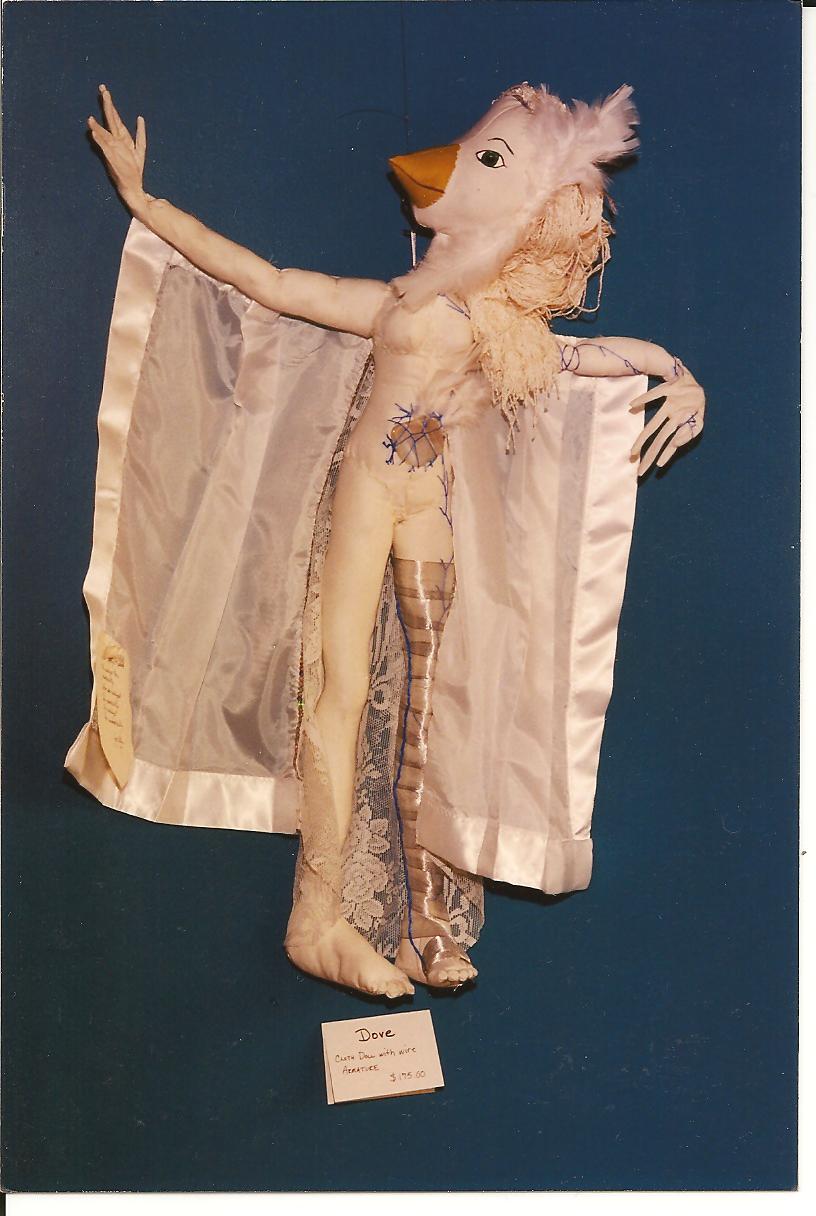
I was preparing my first solo art show in the lobby of Memphis TheaterWorks. I was afraid this doll was too personal to show, but I also needed it to fill up space – that piece was about 3’ by 4’. Friends and family urged me to put in the show and I did.
At the opening, a woman kept coming back to it and looking at it so intently, I went over and told her the story of why I made it, what the embroidery and stones meant, why the wings were so frail and how I was trying to use mythological and whimsical interpretations of my struggle with a weakening body.
She listened patiently then looked me in the eye and said, “No, that’s not what this doll is about.” She then proceeded to tell me that the doll was about her struggles as a single Black mother who had to finish high school and while raising a child, who tried to make a better life for her self and her son, who never quite fit in her family and community. The stitches show how her battles in life left scars, but the gold in the fabric and the stones show how she had become strong and beautiful, even if people laughed at her.
My jaw dropped. I am mostly a self taught artist and never really expected people to respond to my work. It was only the great urging of friends that got me to show it publicly. And this wonderful woman gave me the gift of a completely different interpretation of my work. She validated my flight of fancy.
The doll was not for sale, but she convinced me it belonged to her. “You can make another one for you,” she said. She gave me a generous price for it, but had to pay in installments. My impulse was to let her have it for a lower price, but she didn’t want it for a lower price, she wanted it to have a high value in her life, at least as high as the other things she had to make payments on.
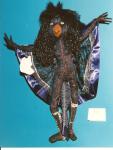
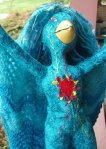
Since then I’ve made a series of birds. Each time I think, ‘I’m keeping this one for myself,’ and each time, they fly off to another home. Some were made on commission so I knew they were going. But when I make one for myself, they always want to be shown and they always make a connection with someone. I love how the personal becomes universal. I love that my birds who can’t quite walk right and don’t have strong wings still make their way in the world.




 joy murray art~stories~life