Wheelchair Mermaids

I wanted to show a few more pieces from when I was working in fabric.  

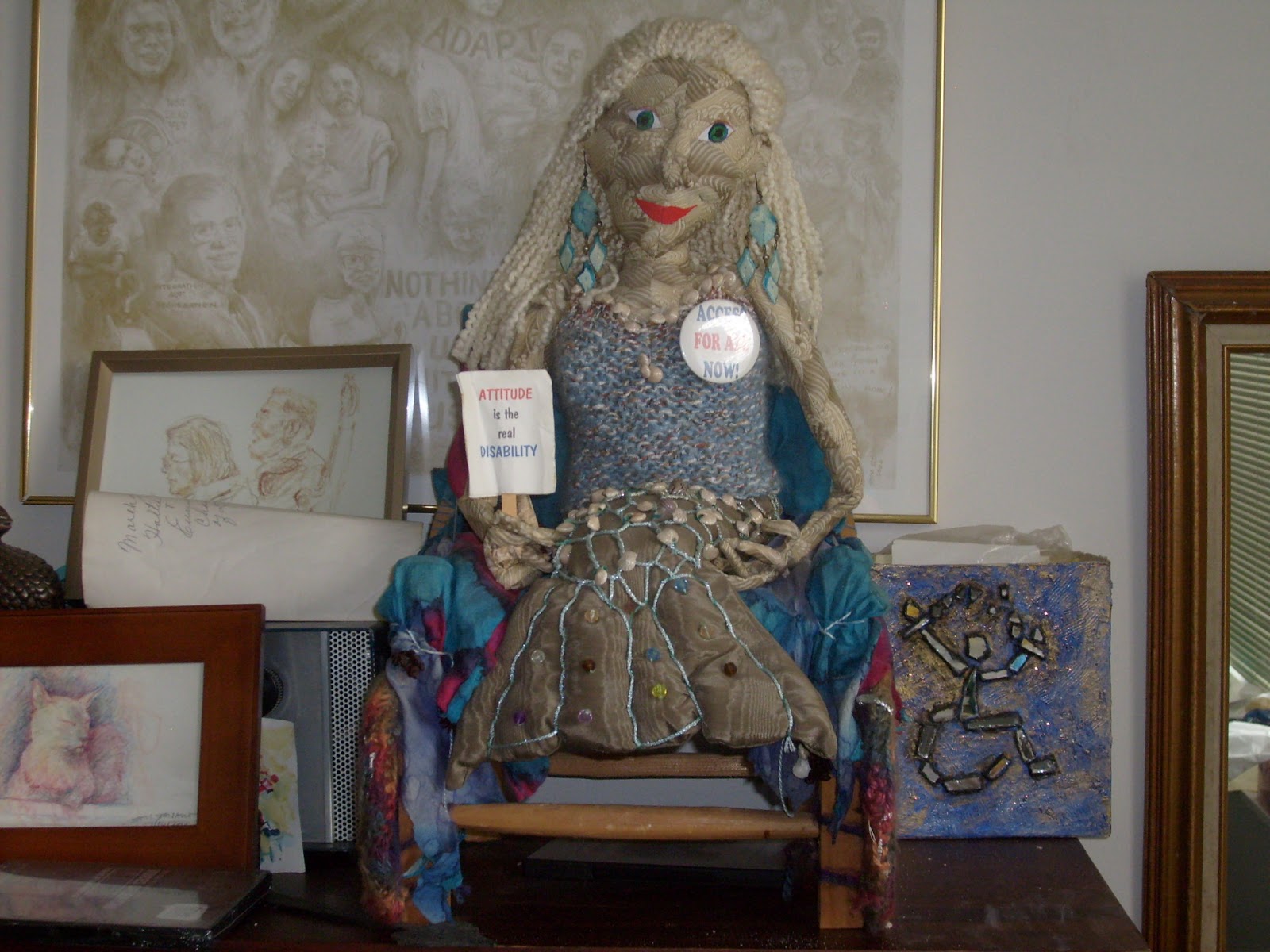
Many years ago, I saw a film about a woman who was a wheelchair user, called Tell Them I’m A Mermaid.  From what I remember, it was her response to when children asked what was wrong with her.  It was an enchanting image for me.  When I was making fabric art and dolls, I had to make mermaids.  Unlike the Little Mermaid, mine would refuse to give up their voices.  They’d be vocal and bold, like so many of the women I new who used wheelchairs.   I was especially inspired by the director of the Memphis Center for Independent Living, Deborah Cunningham, a woman who has done great work for people with disabilities.  She is the owner of one of my first mermaids.
I’ve read that both Bette Midlar and Lady Gaga have performed as wheelchair mermaids, but mine are based solely on the folktale and the women I’ve met and admired.
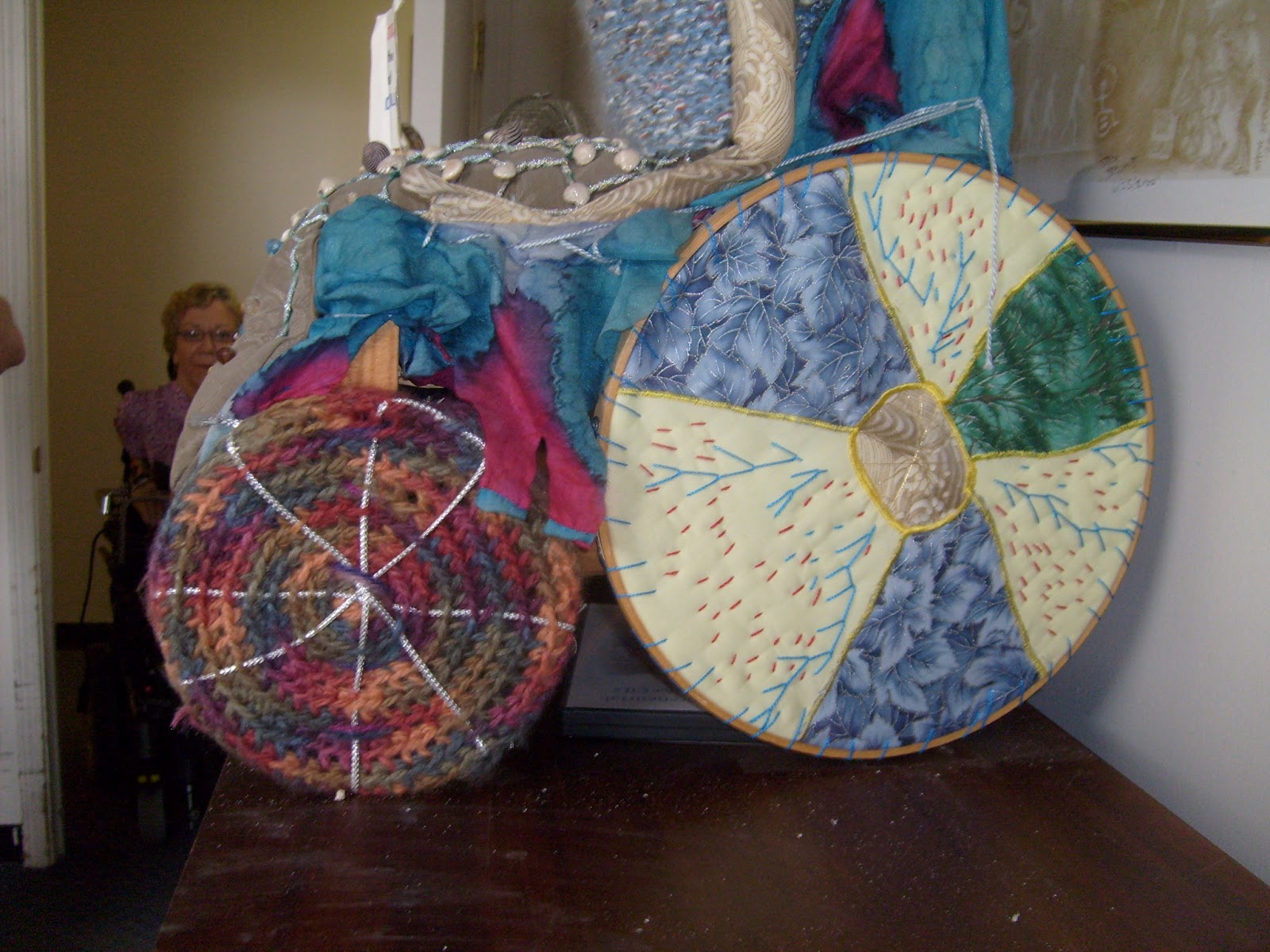
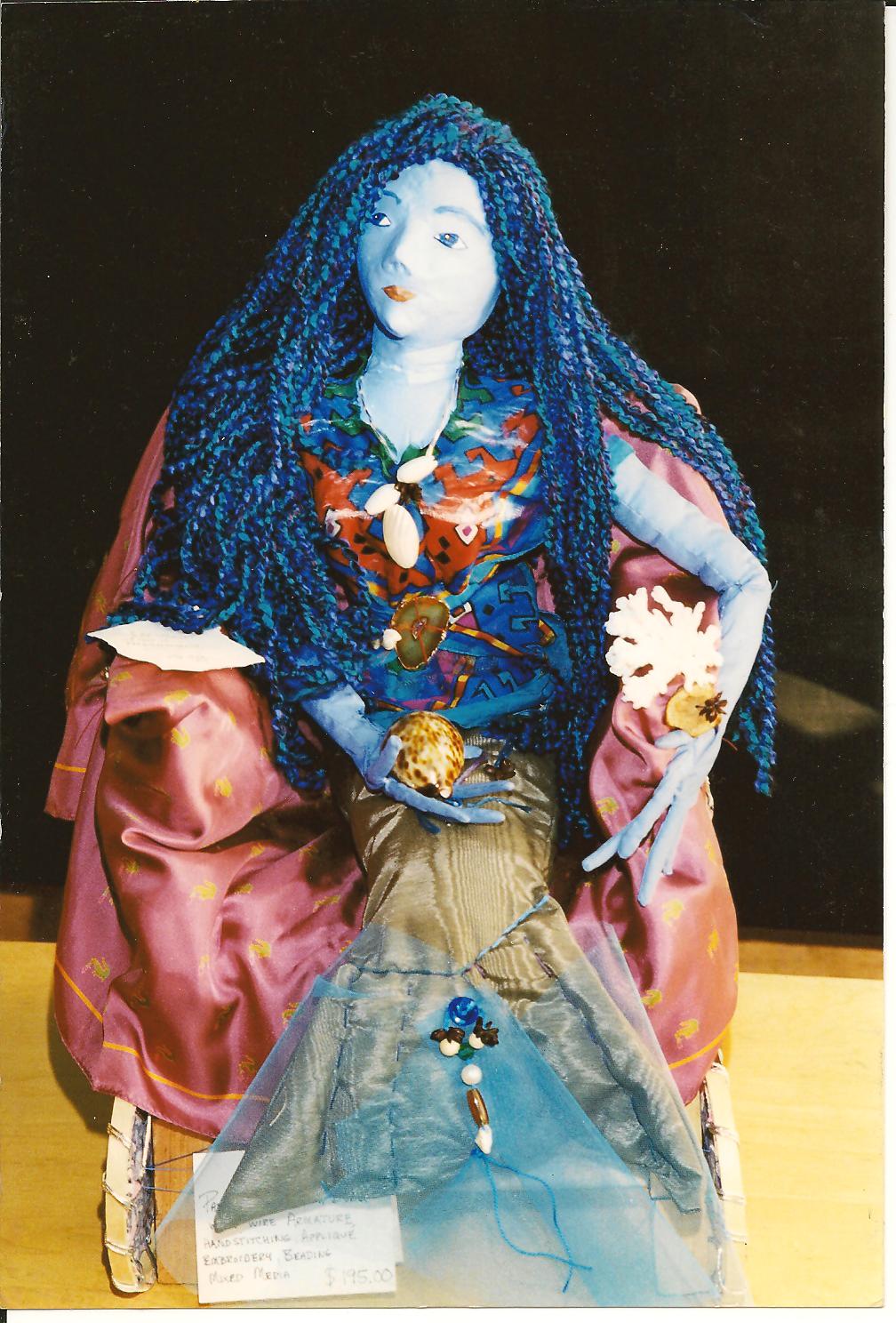
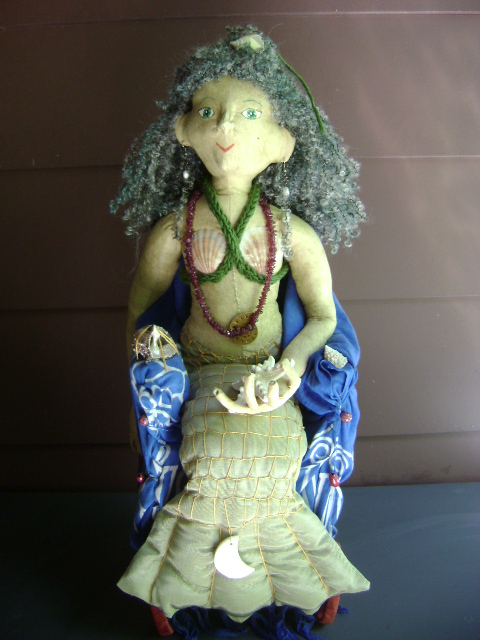
So here is a parade of 4 of the mermaids I made over a period of about 10 years, with the last one made in 2011.  I don’t have pictures of all of them.  I think I made about 8 altogether.  They are all made of fabric with wire armatures.  The wheels are made from embroidery hoops.  They include embroidery, quilting and painting. 

This one’s at the Memphis Center for Independent Living — Deborah Cunningham is in the background
This one I used paperclay to get more detail on the face.  I only have this one shot of her.
Lots of stitching on these wheels

Lots of stitching and netting on her tail.
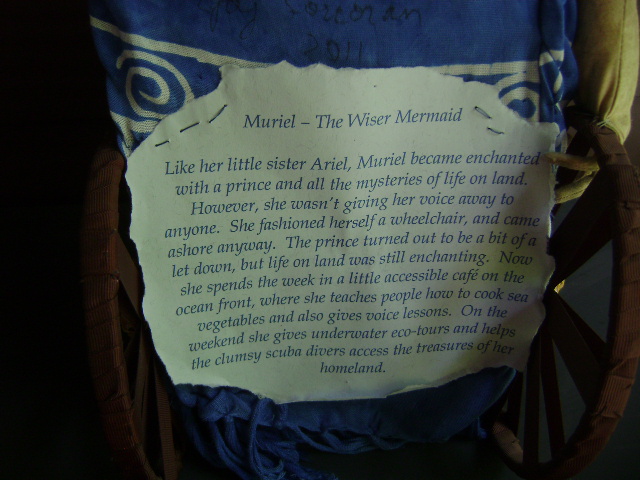
This is the last one I made in 2011 and it just sold last week.  She came with her own folktale on the back.

Muriel-The Wiser Mermaid

Next time, I’ll show my bird women series.

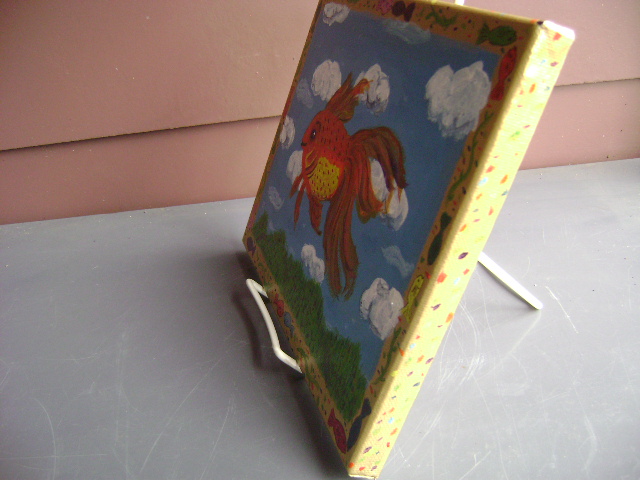
This week, I took a journal idea and turned it into a painting.  If you remember my fish out of water post from a few weeks ago, you’ll recognize the composition here. I painted this in acrylic with lots of gold.  It’s for sale in my Etsy shop, if you’re interested.

Fish Out of Water, Acrylic, 8×10″

So it’s all about movement — if you can’t walk, roll.  If you can’t stay in your pond, fly on out.  What we imagine keeps us floating.

I’m linking this to Paint Party Friday.  Thanks for stopping by.

Robot Cat

When I was 22, I gave birth to a healthy spirited boy.  At the time, I still had a “mystery” disorder, which included lower body muscle atrophy, seizures, fatigue and weakness.  It had started when I was 16 and I was told by my neurologist that I  might not live til I was 30.  But I am lucky and I am hard-headed, although my diagnosis is transverse myelitis abnormal.  (I love that it’s in my medical records that I’m abnormal.)

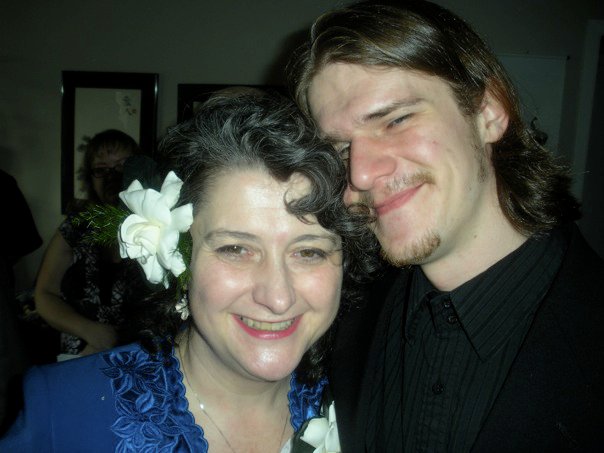
Now some 30 years later, I am celebrating my son’s 30th.  Can you imagine how sweet that is?

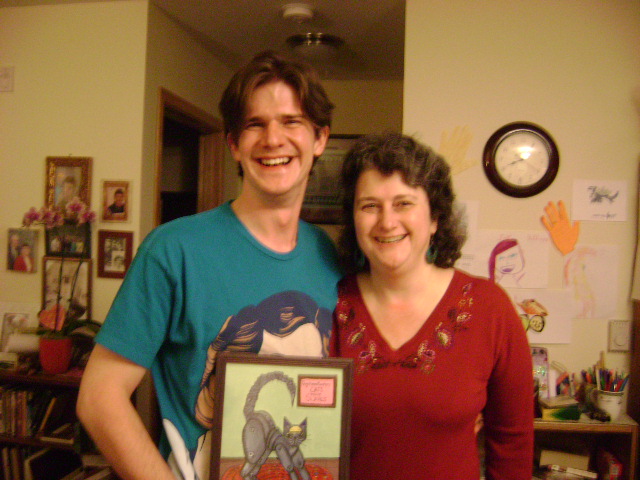
I wanted to make him something special, so I asked him if he had any kind of animal totem or symbol or spirit that he identified with.  Nope.  He’s much more grounded and practical than I am.  After a few more questions, he said, “Well, I’ve always liked cats.  And robots.”

We had cats the whole time he was growing up and when he was still a crawler, I believe he thought he was a cat.  Now we both live in apartments where we don’t want to pay the pet deposit so we have no cats. 

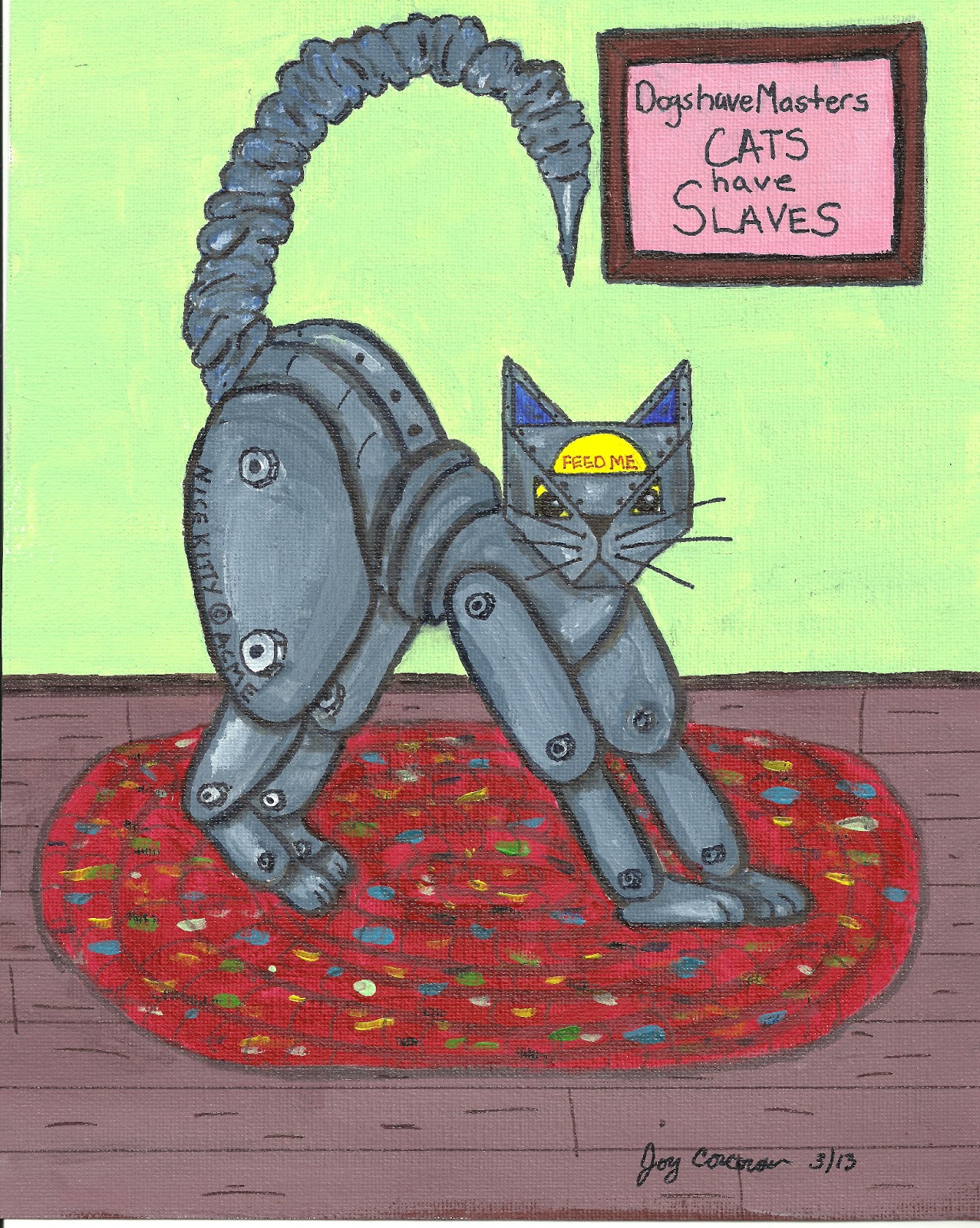
So I went into my laboratory and created a cat robot for him.  This is painted with acrylics on 8.5 by 11″ canvas pad.  On the cat’s thigh, it says “Nice Kitty (c) Acme.” — my nod to all the Looney Toons we enjoyed together.   My son has done more for my sense of humor than anything else in life.  He also has a keen appreciation for dark stories.  So I hope this appeals to all of that.  And like me, it lacks proper perspective and is slightly off-kilter. 

Nice Kitty

Art and love will take you amazing places.

For more art in the blog world, go to Paint Party Friday. 

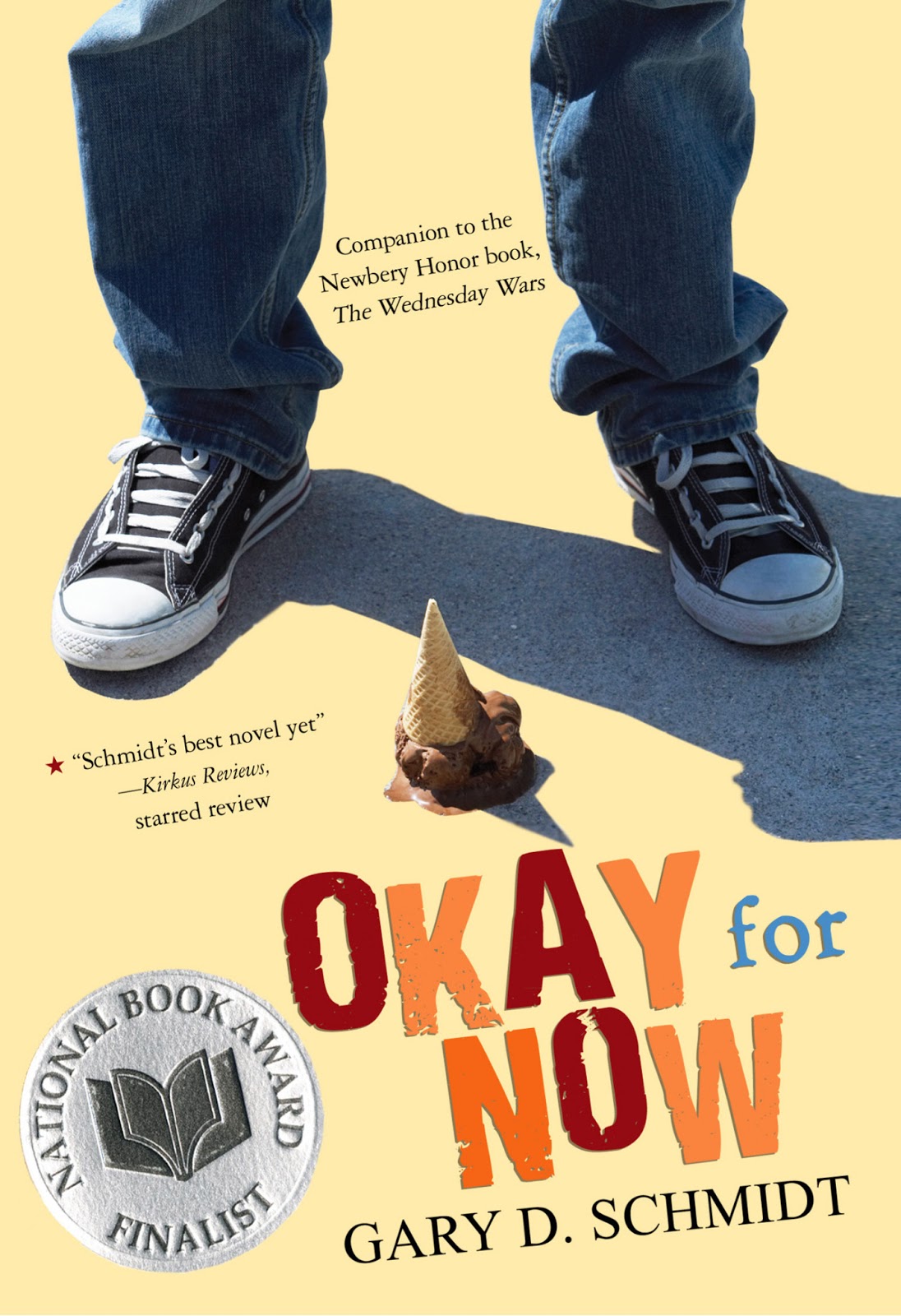
Review: Okay for Now


<!–[if !mso]>st1\:*{behavior:url(#ieooui) } <![endif]–>

I remember when I first heard of John James Audubon’s hunting skills and how he killed hundreds of birds to get the right specimens to make his beautiful drawings.  I was stunned.  His work was always so alive to me, it never occurred to me he had to kill the birds first to study and draw them.  Of course, I grew up in the city, in the 1960s and there was a completely different ethic around conservation than when Audubon was hunting and creating timeless art.  He did immortalize the birds and gave us all a sense of conservation, in that clumsy way that history has of moving forward. 
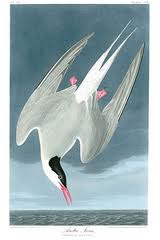
I first saw his prints when I was child, copies of prints.  I remember gazing at them and being amazed.  But not like Doug Swieter in Gary D. Schmidt’s book, Okay for Now (Clarion Books, 2011), when he first sees the full size plate of the Arctic Tern in Marysville library, in 1968.  To him, the bird is falling into the sea and it’s the most terrifying and beautiful image he as ever seen.
          “I leaned down onto the glass, close to the bird.  I think I started to breathe a little bit more quickly since the glass fogged up and I had to wipe the wet away.  But I couldn’t help it.  Dang, he was so alone.  He was so scared. 
          ”The wings were wide and white, and they swooped back into sharp rays.  And between these, the tail feathers were even sharper, and they narrowed and narrowed, like scissors.  All the layers of his feathers trembled and I could almost see the air rushing past them.  I held my hand as if I had a pencil in it and drew on the glass case, over the tail feathers.  They were so sharp.  If my hand had shaken even a tiny bit, it would have ruined the whole picture.  I drew over the ridges of the wings, and the neck, and the long beak.  And then, at the end, I drew the round and terrified eye.”
          Doug’s fascination with the Arctic tern becomes a turning point in his life.  At 14, he is already falling into a sea of despair.  His family has just moved to “stupid Marysville” to live in the “dump” after his father gets fired for assaulting his boss.  The father gets a job through an old friend and moves them to a horrid little shack.  His father is a mean and abusive man, his mother is long suffering woman.  One of his brother’s is in Vietnam; the other brother uses Doug as a punching bag. 
          No one, in his young life, has allowed him to keep anything of value.  Not his signed Joe Pepitone Yankees baseball cap.  Not his sense of self.  Not his sense of safety.
          Doug finds the library quite by chance, he’s not a fan of books, and it only opens on Saturday.  His fascination with the bird attracts the attention of a library volunteer who offers to teach Doug how to draw.  Doug resists, but he’s obsessed with that bird’s fall, the shape of it, the feeling in it.  He begins a secret life as an art student.  Doug also attracts the attention of a girl named Lil, who likes Doug’s wit and gets him delivery job with her father’s store. 
          What follows is a multi-faceted story of the redemptive nature of human kindness and the power of art over disaster.  Help comes to Doug in a lot of different directions, but so does trouble.  Each problem is worked out in balanced ways by a masterful writer who refuses to let Doug either give up or get his redemption easily.   
          Each chapter opens with a reprint of one of Audubon’s birds.  Doug learns that the Marysville library is selling the prints whenever the city needs a little cash.  Doug can hardly believe it and wants to see the book restored.  He wants one thing in his world to be whole.  Getting one plate returned to the library gives him a sense of his own strength.  Although he catches himself behaving like his thug brother, he finds that adopting a different formula gets him closer to what he needs. 
There are magical moments when lessons from art and mathematics (he’s a natural) bleed over into the rest of life.  When he learns the composition of the Forked-Tailed Petrels, he says, “The two winds were pushing them in different directions, but the petrels were using them to meet in the center of the picture.  That’s what the picture was about:  meeting, even though you might be headed in different directions.
“All movement relies on that kind of tension, you know.”
I found this book deeply moving and gratifying.  It’s the best one I’ve read on how art and kindness can send out ripples of change.  It’s not preachy and is often funny. It doesn’t indulge in gratuitous descriptions of suffering.  It does describe real human hardship, cruelty and suffering.  It is quite frank about how terrible one’s own family can be. 
Schmidt deftly handles the development of the monstrous characters in this book – they don’t become monsters on their own.  But he doesn’t over-sympathize or ask the reader to forgive brutalities.
 There are not too many things around that are whole, you know.  You look hard at most anything, and it’s probably beat up somewhere or other.  Beat up, or dinged up, or missing a piece, or tattooed.  Or maybe something starts out whole and then it turns into junk….
“When you find something that’s whole, you do what you can to keep it that way
“And when you find something that isn’t, then maybe it’s not a bad idea to try to make it whole again.  Maybe.”
Maybe the thing made out of the many different tensions of Doug’s life portrays all the upward motion needed to avert a plunge into the dark sea.
Doug D Schmidt is the author of many books, including two Newberry winners. 
For an interview with him about Okay for Now listen to this story on NPR:

I used to be a sewer; now I’m a drawer

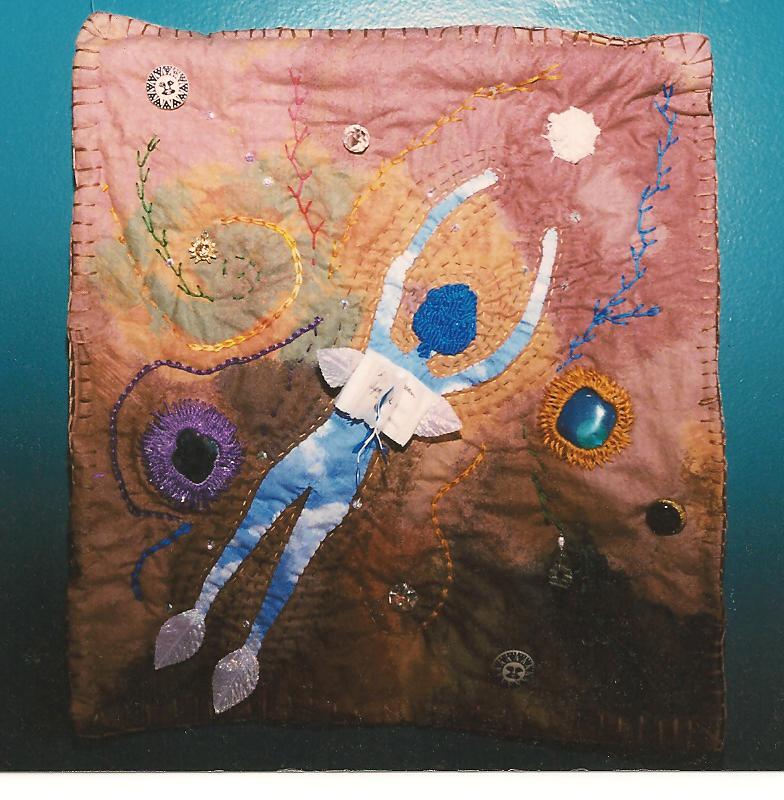
Flying dream (the wings are a little book)

I started creating visual art when I was in my 30s.  After treatment for major depression/mild bi-polar disorder, I became hungry for color. Depression is a common side effect of having a long term disability, but I think it runs in my family.  Fortunately, since I had a disability that included seizures, self medicating with alcohol was not an option for me.  I found other outlets.

I’d always written poetry and stories, and I was a chronic doodler.  But after actual medical treatment for depression, I felt like a veil had been lifted from my sight and I was enchanted with the color of everything.    I started embroidering, something I hadn’t done since I was teenager.  It became a wonderful introduction to the healing power of handwork.

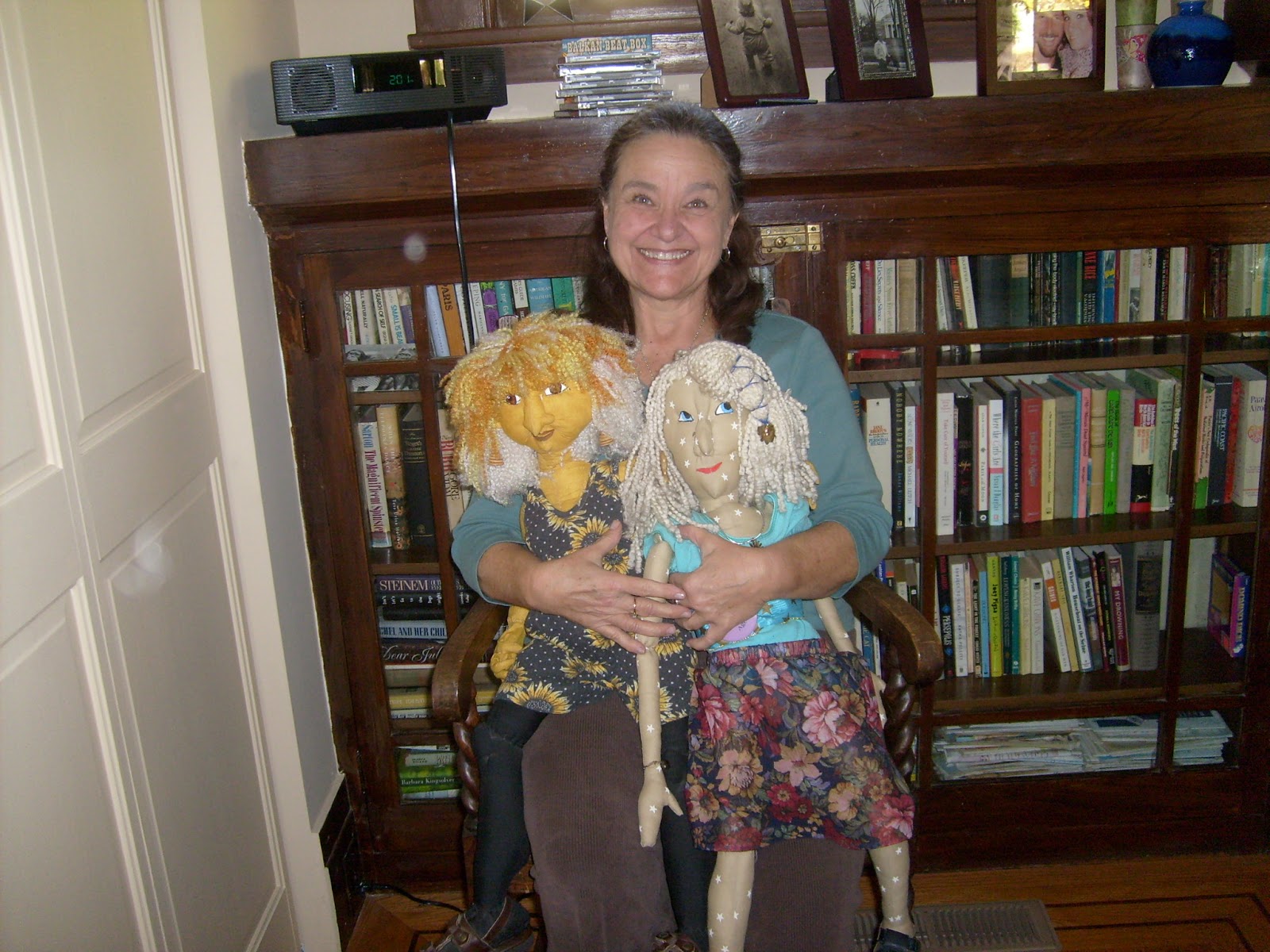
I started exploring the vast world of fabric art and branched out a bit with art quilts and wall hangings.   One day I came home and my 10 year old daughter had made a little doll out of my fabric scraps.  I wanted to make one, too.  So I did — and a whole city of dolls and fabric sculptures popped into my imagination and out of my hands.  I was self taught — well, I read a lot of books on cloth dolls and hand sewing techniques.  I learned to crochet and knit.   I combined forms and had a great time.  My work got more and more complex.

a bird told me

During the same time, I went through a lot of life changes and moved from Memphis, TN, to Portland, OR, at age 46.  At one point, I took a job that just exhausted me and I thought I’d never get back into art and creative work.  Then, I  got married, had to quit that job, and started making dolls and writing again.

At the end of 2010, though, we had to move to a one bedroom apartment and I no longer had the room to store the stuff  for making the elaborate dolls.  I’d always wanted to hone my drawing skills, so I decided to put my creative energy into drawing, writing and working with watercolors.  Now I rarely sew, but I draw a LOT.  I think one of my problems with watercolor is that I still imagine I can just layer one color on top of another — I have an opaque imagination.  Still, I love the way watercolor works — and pencils, pens, acrylics — ahh, art offers so many possibilities.

Since I’ve not posted my fabric work on this blog yet and I have lots of new readers and followers, I thought I’d post some of my past work over the next few weeks. It’s a lot.  I worked in fabric for almost 15 years!

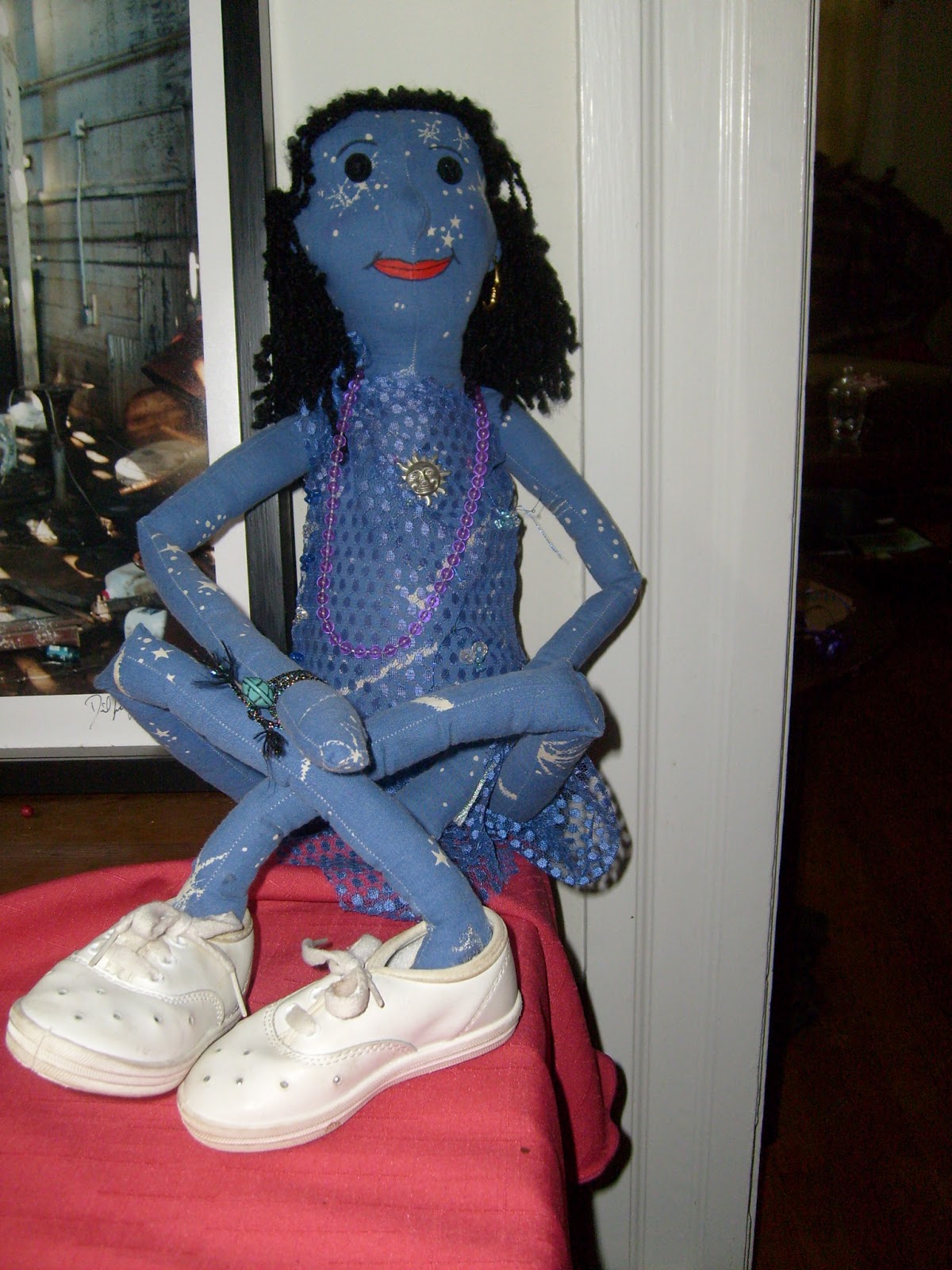
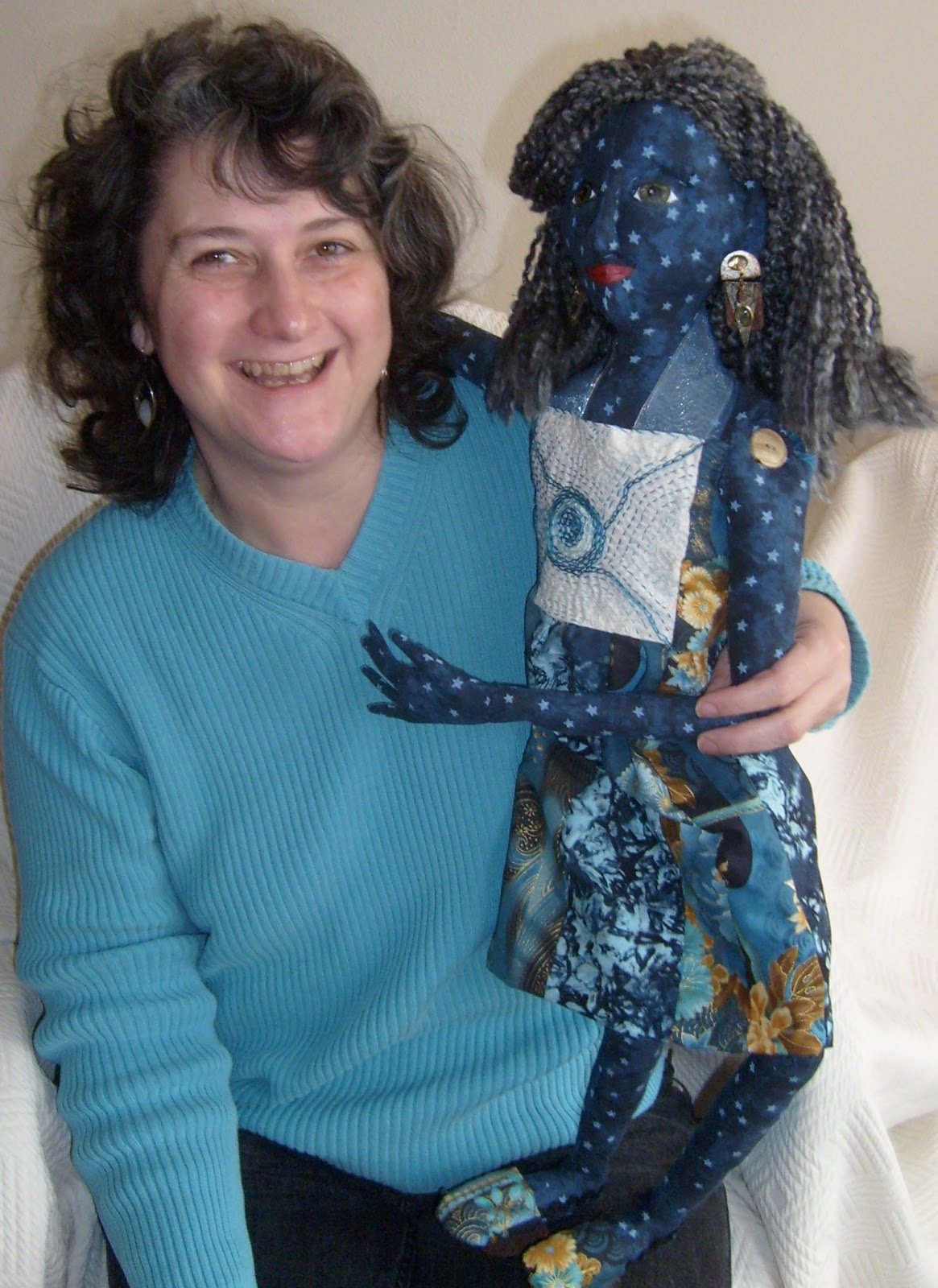
One of my first dolls:  Desdemona Stargazer who lives with my sister/friend in Memphis

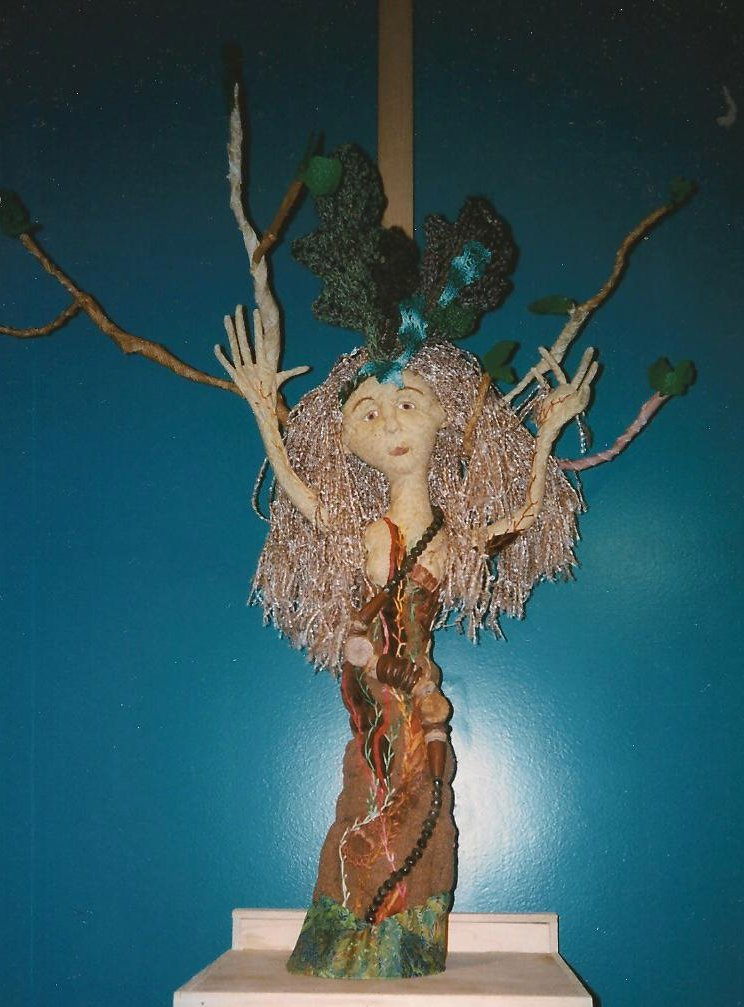
I chose to use my dolls to express ideas about bodies in transformation.  Because my neurological disorder  makes me walk funny, I made bird women who were half bird and half human — they wore braces and had weak wings.  I made tree people, who couldn’t move but bloomed anyway.  In mythology, gods and goddesses go through all kinds of transformations, they become trees, they sprout wings, they lose one identity and shape shift into another powerful being. This imagery fit how I wanted to feel about my own body’s transformation.

Hathor, the Egyptian Goddess had her head replaced by a cow’s head — she was a goddess of humor

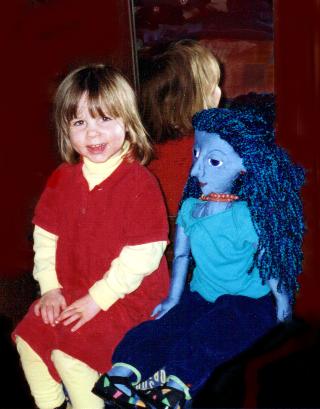
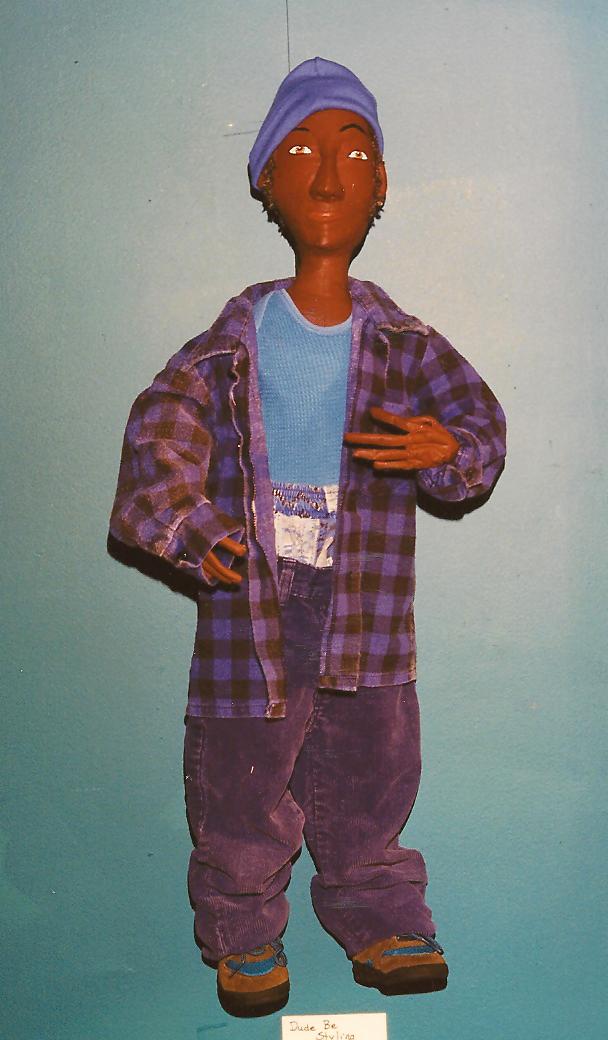
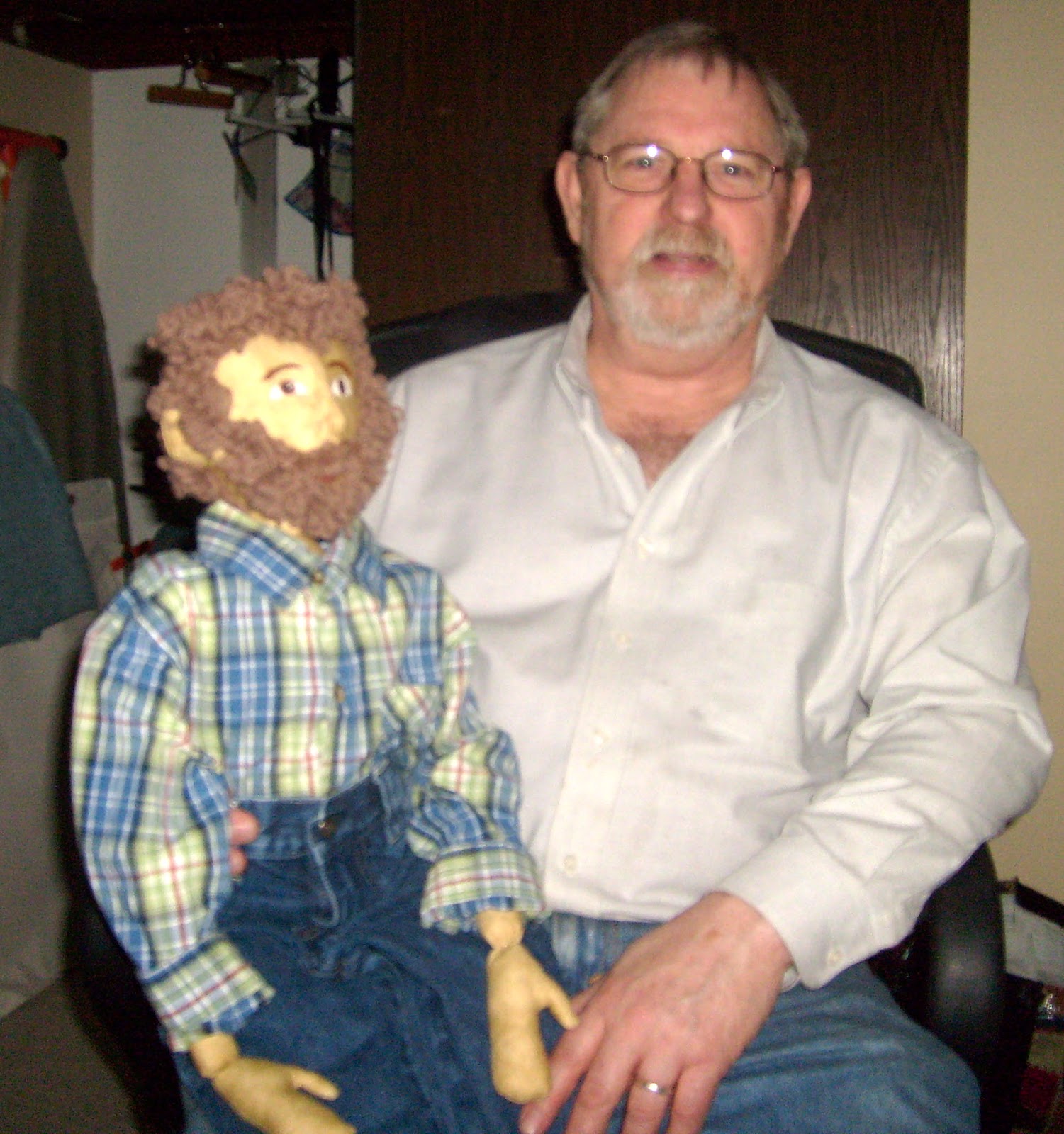
I also loved making characters & dolls for children of all ages:

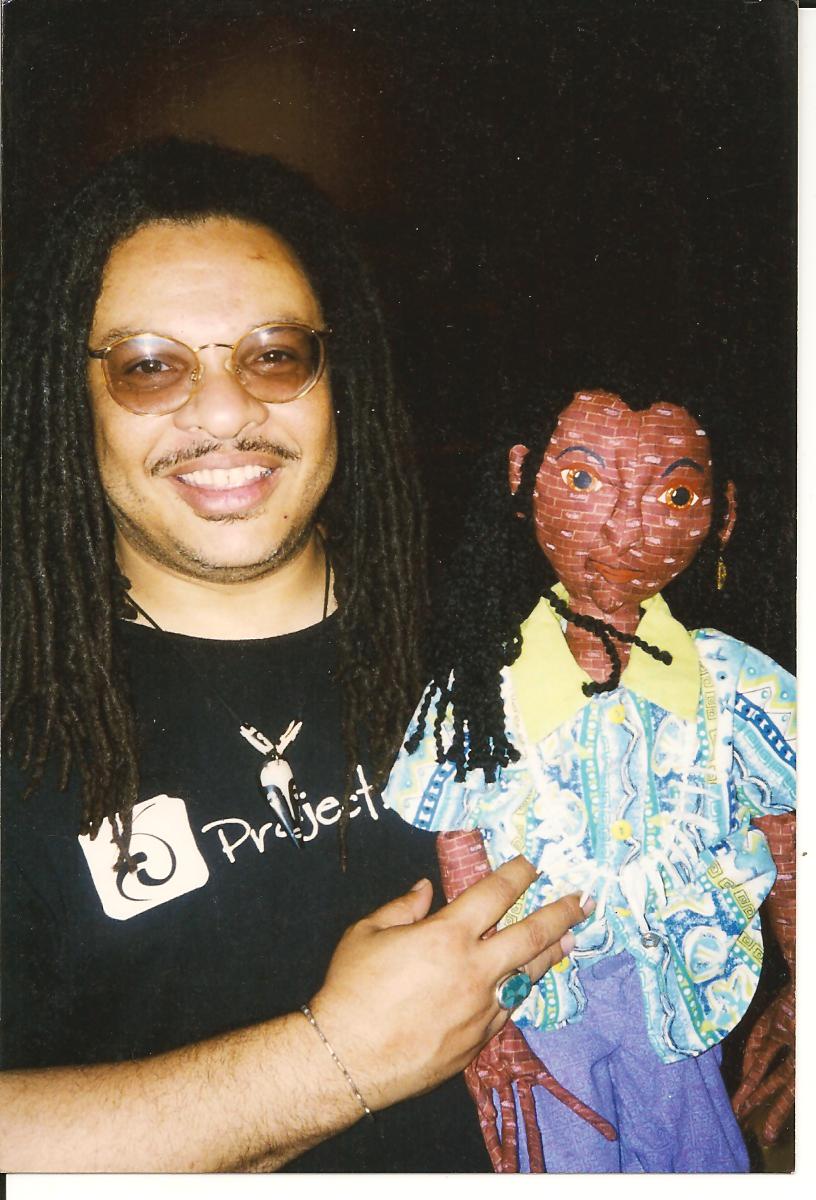
Dude be stylin’

That’s enough for now.  I’ll post more over the next few weeks.

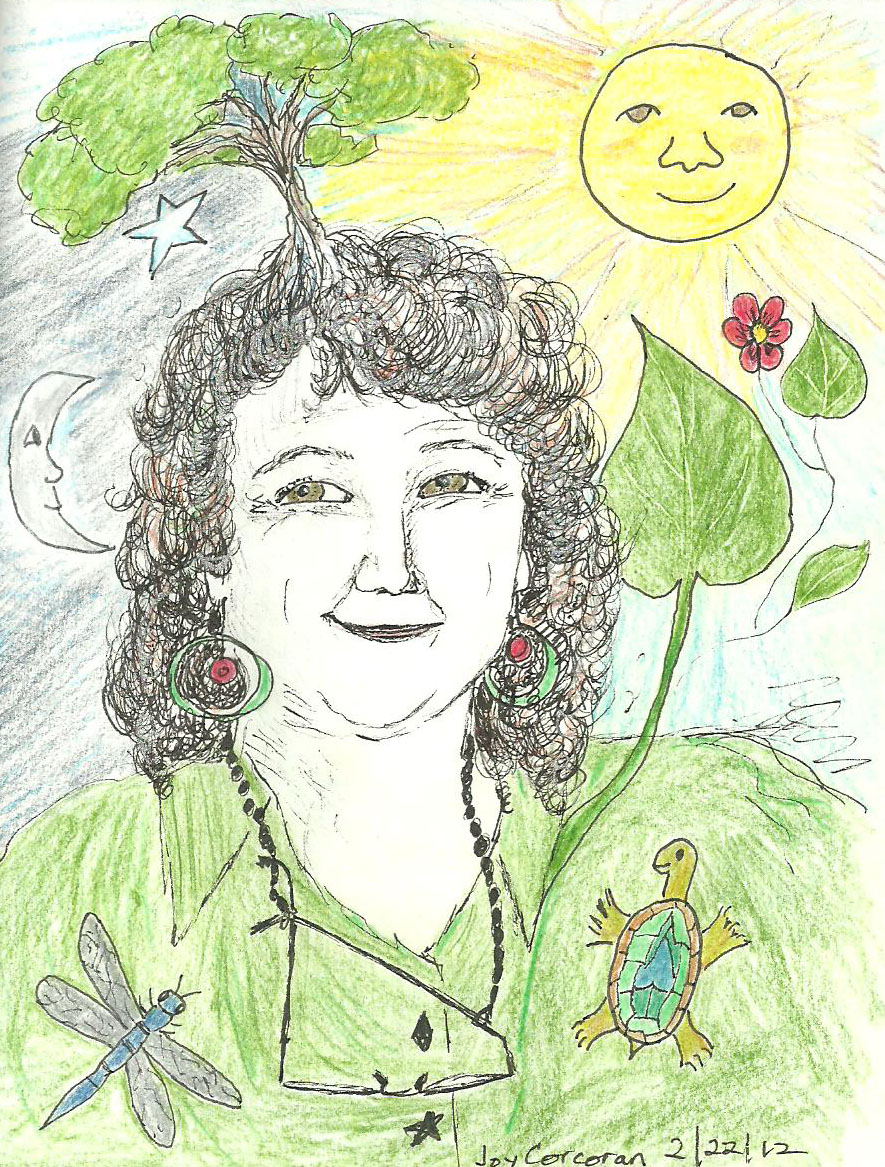
Meanwhile, here’s a self portrait I did about a year ago:

51 and still playing around

Remember, if your life changes, don’t give up your creative impulses.  Let them evolve — you’ll surprise yourself!

Paint Party Friday is having a Auction Blog Hop to Benefit Sandy Hook Elementary, plus they’re having their usual blog art tour, so stop by and see the creativity blooming there.

Keep doodling.