No Girl is an Island: Moonpenny Island by Patricia Springstubb

There are times when I think it would be wonderful to live on an island in a small community, surrounded by water, abundant nature around me.  Tranquility and comfort would envelop me as surely as the waters caress the island’s shore.  In Tricia Springstubb’s novel, Moonpenny Island, the island seems like that idyllic place.  But every place has its mysterious and sometimes dangerous undergrowth.
Moonpenny is in the middle of Lake Michigan.  It’s bustling with tourists in the summer, but once tourist season is over, it’s 11 year old Flor’s beloved home.  She knows everyone.  She’s the daughter of the one island police officer.  She’s best friends with Sylvie, the island’s only other 11 year old.  The book opens:
Transparent.  That’s how Flor and Sylvie are to each other.  See-through.  Flor knows everything about Sylvie, and Sylvie?  She knows things about Flor before Flor knows them herself.
Sylvie cheers Flor up or calms her down.  Considers the same stuff funny or annoying.  Won’t tease her for still being scared of the dark, not to mention those spiders with hairy legs, and loves pretending their bikes are wild horses only they can tame….”Best friends” does not cover it.  They are each other’s perfect friend.

But Flor’s perception of this transparent and perfect friendship is suddenly altered when at the end of summer, Sylvie is sent to a boarding school on the mainland.  Then Flor’s mother leaves to take care of her sick mother and doesn’t come back.  Flor’s big sister is acting strange, sneaking out, and perhaps involved in something dangerous.  All that Flor thought she knew and could see clearly has become opaque.
 
There’s tension everywhere.  She discovers the home she thinks of as paradise is seen as a prison by many she loves.  She’s angry.  She’s confused.  Yet she can see the limits of the island community, where the town clock has been stuck at 11:16 for years.  “Flor quit paying attention to that clock long ago, but today it makes her depressed.  Time can’t stop – things are too messed up.  Time needs to get going, move along and make things better.  But the stubborn hands refuse to move.  They haven’t moved in so long, some bird made her nest behind the hour hand.”

Moonpenny Island has a wealth of fossils.  A geologist, Dr. Fife, and his daughter, Jasper, arrive to excavate trilobites.  He is a fountain of knowledge and good will, and she is shy but full of information about fossils and trilobites, one of the first creatures to develop sight.  She also knows a lot about divorce and loneliness.
As the book progresses, it becomes more and more a metaphor about sight and vision.  How we see things is based not so much on what is there, but what we need and what we want to see.  Flor can’t stop the changes that life is bringing her way.  She can’t stop her own growth. 
Springstubb writes in crisp sentences that perfectly match Flor’s state of mind.  There’s a lot of depth in how Springstubb describes things and makes clear the need for adaptations even if you’re never going to leave your own island.  She has a wry sense of humor and a great eye for detail.  Here are some jewels from the book:
Flor never has bad dreams, but it’s possible she does that night.  When she wakes up, her legs feel week and crumply.  Like she’s spent hours balancing on a narrow sliver of something, and not just her own mattress.
Get used to it!  How can adults say these heartless things?  “Get used to it” belongs in the same infuriating category as “Life isn’t fair” and “Someday you’ll laugh over this.”  A horrifying thing must happen to your brain as you age.  It must grow tough and rubbery, like an old pork chop left in the back of the refrigerator.
Blindness was once a natural state.  Dr. Fife says the first eye was little more than an optic nerve.  Whatever that is.  Eyes had to develop.  Can some people’s eyes still be a more primitive variety?  Can eyes still be evolving?  Will future humans be able to see stuff we can’t? Like the insides of things?  The hidden, secret parts?
Mama says prayer isn’t asking for things.  That’s wishing, she says.  Mama!  Put all her opinions together, you’d get a book fatter than the Bible.  Real prayer is simply talking to God, Mama says.  It’s opening wide your reverent, humble heart.
Sitting on the porch swing, eyes closed and hands folded, Flor tries.  But within three seconds, she’s reverently humbly begging.
People think that evolution is all about getting stronger and bigger and faster.  But no.  Species evolve according to what they need.  Not everyone needs to be big and powerful.
Moonpenny Islandis published by Balzer & Bray of HarperCollins Publishers.  It’s marketed as a middle grade novel, but it’s a touching insightful read for anyone seeking stories that give them insight into the mysteries of growing up.

Tricia Springstubb is the author of What Happened on Fox Street, Mo Wren, Lost and Found, and Cody and The Fountain of Happiness.  You can visit her online at triciaspringstubb.com
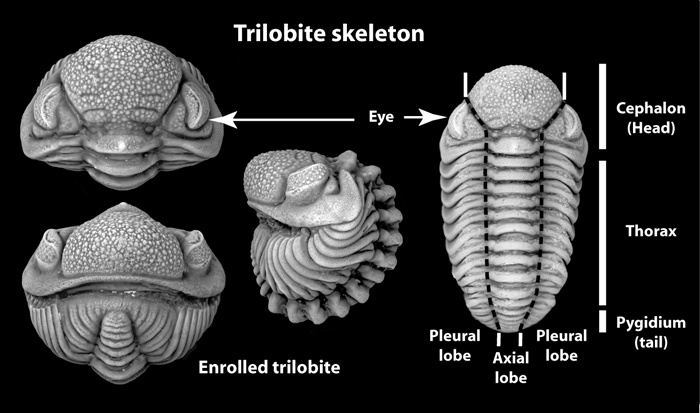
From Common Fossils of Oklahoma — trilobites are everywhere

Thanks for reading my blog.  If you’d like, you can have this blog delivered to your email by using the form in the right hand corner of this page.  I’d love to hear any questions or comments you have.

In the Deep Woods: Our Endless Numbered Days

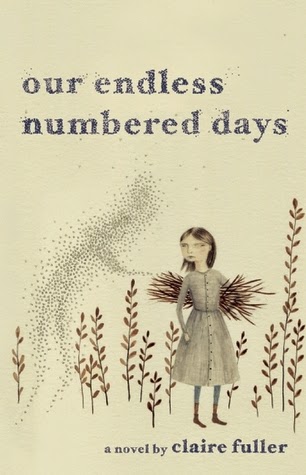
I was a little afraid to read Our Endless Numbered Days by Claire Full (Tin House Books, 2015), because I thought it might bring up bad childhood memories.  I was also serving on a grand jury at the time and felt like I was hearing an over-abundance of traumatic family stories.  I decided to give it a go one morning as I rushed to catch a bus.  I had about 30 minutes of reading time on the ride and if it was too disturbing, I could pass it on to someone else.  Instead, I was gripped by it.  When I got out of court that day, I was grateful that I’d just missed a bus home so I had an extra 20 minutes to read what proved to a compelling novel so skillfully written that I missed my home stop twice while lost in the story.
The narrator, Peggy, was lured at age 8 by her survivalist father from their home in London for a holiday at Die Hutte, a place he’s described to her often as a perfect place to live.  Her mother, a German concert pianist, was away on tour. 
The holiday turns into an arduous journey.  Peggy wants to go home, but her father tells her his worst fears have come true.  Peggy’s mother is dead.  The whole world has been destroyed.  They are the last living humans.
Peggy, her doll and her father arrive at a decrepit cabin deep in the Bavarian woods.  It wasn’t the gingerbread house Peggy had been led to expect:
“Its wall hung with wooden shingles, and where they were missing, dark gaps grimaced like a mouth with knocked out teeth.  The front door hung open at an angle, and the single window had warped and popped its glass.  The only thing to remind me of home was the bramble that scrambled across the roof and dropped in loops through the gaps in the shingles that were nailed there too.  Searching for light, the bramble had reached the window and now stuck its blind tendrils out, beckoning us to join it inside.
“Saplings sprouted unchecked against the walls, so it appeared as if Die Hutte, ashamed of its disheveled appearance, was trying, and failing, to hide behind them.  I half expected a trail of breadcrumbs to lead off into the trees that pressed in from both sides.”

The book opens when she is back home, at age 17, trying to adjust to the fact that the world is very much alive, her mother loves her, and her father had lied.  Fuller braids past and present together in a vivid, harrowing narrative that wears the grim beauty of a fairy tale.  Peggy even changes her name to Rapunzel, or Punzel, as she and her father make their way to Die Hutte. 
Life in the woods is brutal.  Her father had already groomed her for a survivalist life – taught her how to find edible plants and mushrooms, how to trap and skin animals.  His introduction to daily life in the wild is brutal, but he also made her a piano:
“The piano was clunky and crude, but I thought that maybe it was the most beautiful thing.  Despite all the whittling, many of the keys stuck together and continual playing gave me blisters and splinters.  Several times my father took it apart to shave off a sliver and pack it all together again.  And yet I could press a key and hear the note it made, release and the key would pivot back to a resting position and the sound would stop.
“The creation of the piano had taken the summer and the best days of the autumn.  We should have been gathering and storing food and wood for the winter and, too late, we discovered that music could not sustain us.”

They come close to starvation, but they subsist.  And years pass, their sense of time reverts to sense of season.  Their teeth rot.  Punzel’s long hair becomes a mat of tangles.  One day, she finds a pair of boots and her search for the owner ultimately leads her back into civilized life.  Fuller’s plotting kept me enthralled through to the end.
As I read the book, I reflected on the human need for story, for illusion, for making sense of what may ultimately be unfathomable.  The characterization of story and music, the way Peggy uses them to make life more manageable, is part of the magic of this book.  The magic is old and not necessarily kind – more of what the old original Grimm tales were like.  They enchant and mesmerize but are frightening and troubling, too.
And as her story progresses, you see and feel how the way Peggy/Punzel has made a story for herself that has lightened her unbearable burdens. 
This is not meant to be a settling or calming book, but it’s deep and thoughtful, alive and haunting.  It captivated me as I pondered the especially challenging cases I was hearing on the grand jury, the stories people told, how a loved family member can suddenly become an abuser.  People and families are so complicated.  If we couldn’t create stories, how would we survive? 
Claire Fuller is an artist and writer who lives in Winchester, England.  This is her first novel.  You can read more about her by clicking here.

Thanks for reading my blog.  If you’d like, you subscribe and have it delivered to your email in the upper right hand corner.  Your comments and suggestions are greatly appreciated.

Some Notes on Grand Jury Duty

When I started my month of grand jury duty, the spring allergy season was fully upon us.  The jury room was stocked with utilitarian boxes of tissues that were thin and hard to pull out of the box.  They were grainy and flimsy.  After using them for a few days I got a chapped nose.
Seven of us started our jury service to county courthouse on a Wednesday.  We heard a lot of identity theft and car theft cases.  Then we heard a few difficult testimonies where victims cried – a slight woman with translucent skin whose husband beat her.  A homeless rape victim told her story in a hardened smoky voice.  I could hardly bear to watch them struggle with the damned tissue box only to dry their eyes with scratchy paper. 
When I went to get my medicine at the pharmacy that week-end, I bought two boxes of super soft luxury tissues.  I never buy that.  I’m happy with what I get at the Dollar Tree, and even that was better than what was in the jury room.  The ones I bought were labeled soothing and healing.  They released easily and felt velvety against my skin.  One of the allergy sufferers in the room practically danced with delight when I’d brought them in.
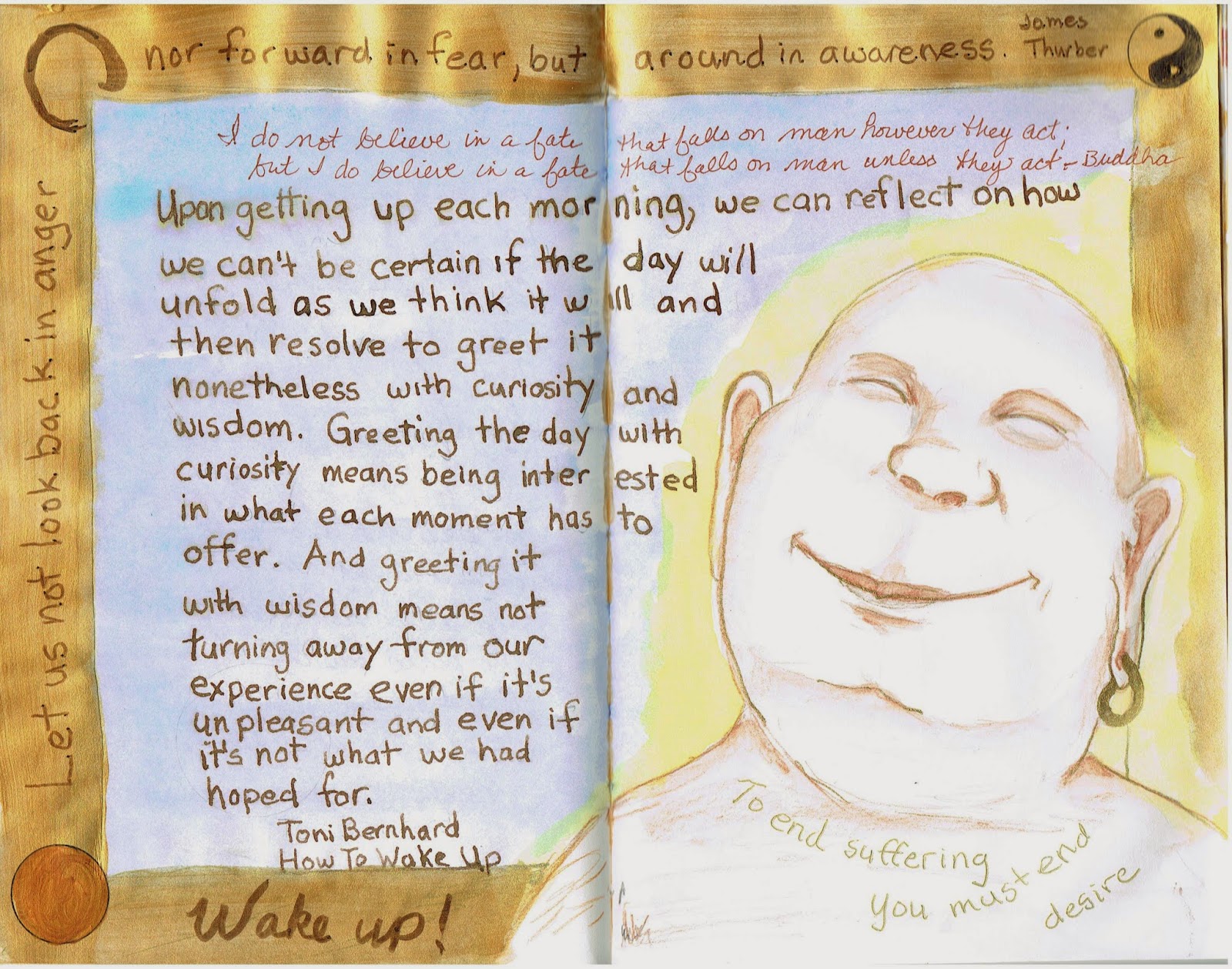
I put together this journal entry during jury service to help keep in tact my sense of balance and compassion.  Toni Bernhad writes beautifully about dealing with chronic illness, and while I served I got the feeling that the whole world has a chronic illness .
Each morning I saw the chaotic entry way, where everyone had to take off jewelry, belts and shoes.  I got a pass to get in without being searched.  I use a wheelchair, though, so I had to go in through the back accessible entrance way.  It was also the prisoner entrance.  If a prisoner was being taken in or out of the courthouse, I had to stand aside while armed sheriff’s deputies came out and stopped pedestrian traffic. 
Once a woman walking by was so lost in thought that the deputy had to stand directly in front of her and wave his arms in her face.  She seemed irritated that something blocked her path.  She argued with the deputy for a while, but eventually waited like the rest of us while the shackled man was transported from the sheriff’s car to the courthouse.
The sidewalk traffic went back to normal, as if nothing happened, and I waited for the courthouse security guard to let me in the building.
It’s an older building.  Many tears have been shed in the somber halls and courtrooms.  In the grand jury, you don’t hear a full case, only what the prosecutor presents.  I heard from police on the scene, witnesses, and victims.  We had to decide if there was enough evidence to indict the person arrested for the crime.  Then they’d start the process for either a plea bargain or a trial. 
We heard one rape case with a juvenile victim.  She was shaky and cried a lot.  She wiped her face over and over, then worried the tissue in her hands, knotting and rolling it as she testified. 
It made no real difference that I’d bought good tissues, but it was the one piece of the process I could soften.  For myself, too.  I can’t watch the victims cry and not cry myself.  
I thought about the thin tissue layer between a blessed day and a cursed one — how one cursed day changes the course of your life.
But we have to breathe, even when there are irritants in the air. 
Often we don’t see them, but they make our eyes water nonetheless. 
~~~
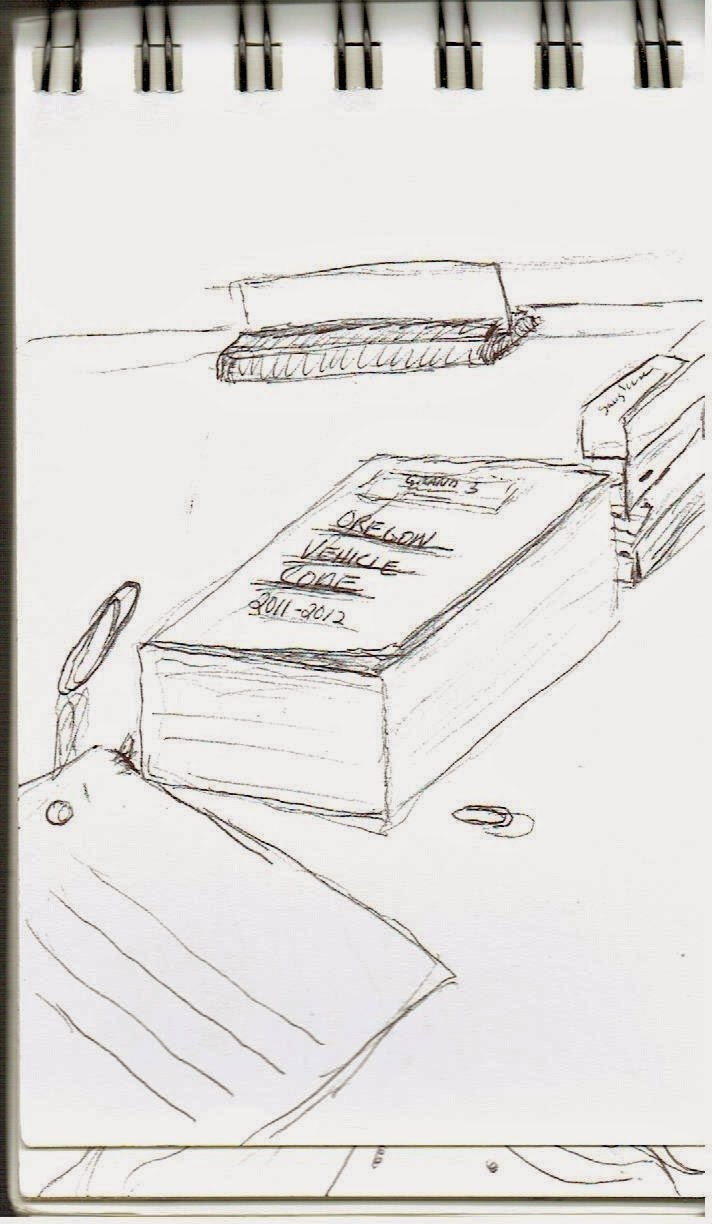
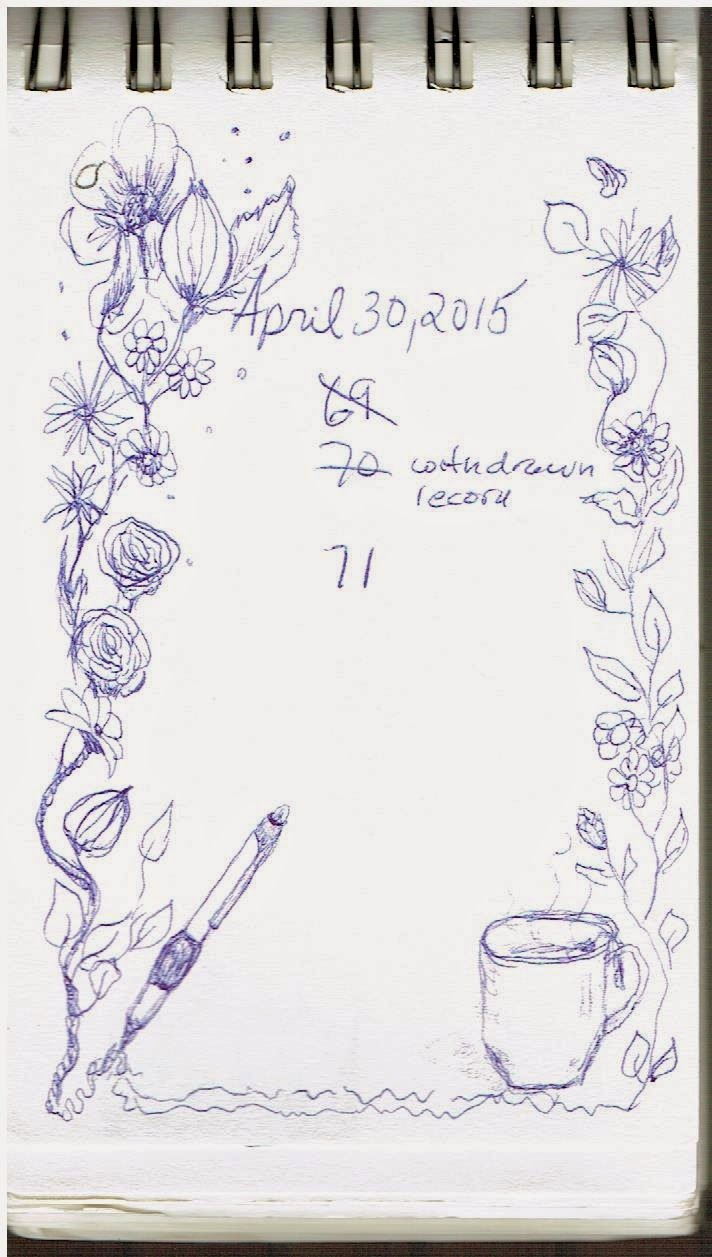
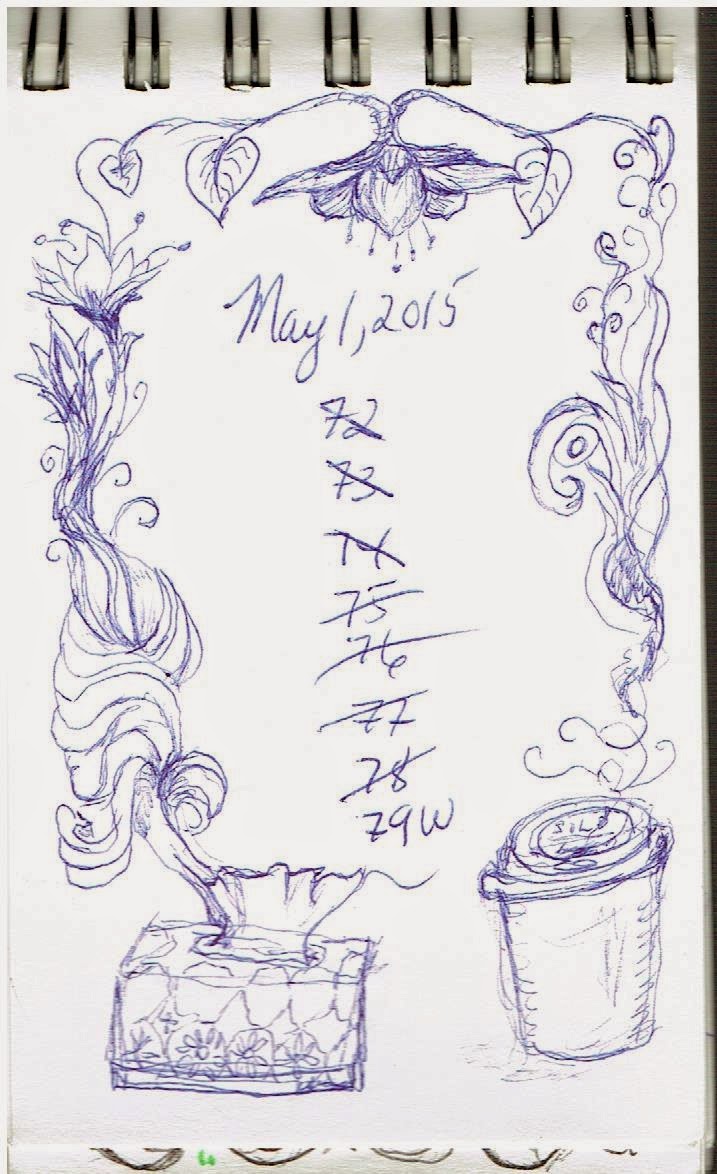
All of my notes became part of the court record and I wasn’t allowed to doodle on those, but I kept a small 3.5 x 5 inch sketch book to keep track of the case numbers and got to doodle a bit on those.  Ii couldn’t sketch any of the people that testified or the jury members, so I stuck to borders and a few quick sketches of things in the jury room.

Our break area

Vehicle code tome

On the last day we had the world’s most boring Skype testimony
Thanks for reading my blog.  If you’d like you can get it delivered to your email box by signing up in the upper right corner.  Please feel free to leave comments and suggestions.

Beautiful Passage of the Week: Girl in the Dark

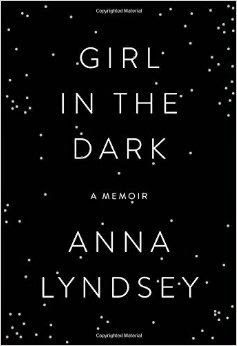
This passage is from the book Girl in the Dark by Anna Lyndsey, 2015, a memoir of a woman with such extreme light sensitivity that she must stay in absolute darkness most of the time or she suffers from extreme pain.  She developed it later in life, just as she was developing a new relationship.  It’s a story of chronic illness, and a bit of a love story, too.  This short passage is a reflection on lost friendships:

“Friendship plants itself as a small unobtrusive seed; over time, it grows thick roots that wrap around your heart.  When a love affair ends, the tree is torn out quickly, the operation painful but clean.  Friendship withers quietly, there is always hope of revival.  Only after time has passed do you recognize that it is dead, and you are left, for years afterwards, pulling dry brown fibers from your chest.”

If you’d like to see more of it, here’s a link to NPR’s first read. http://www.npr.org/2015/02/17/386953005/exclusive-first-read-anna-lyndseys-girl-in-the-dark