Flying in our Imagination

DSC05868I’ve been reading with my neighbor Karishma since she was about 4. She’s now 7 and reading on her own, but she still likes it when I read to her — and now, she likes to read to me, too.

She came over recently and grabbed all her favorite books off the shelf and sorted through them, trying to decide which one to read first.

20160406_153926

She stopped and asked me, “How come all these books have Flying Eye on them?”

icon-feb

“That’s the name of the publisher,” I said.

“What’s a publisher?”

So I got to explain to her how books were made and a little bit on the publishing industry.  I explained to her why I liked independent publishers.  You can pretty much be assured that if you like one of their books, you’re going to like others.  They often bring in new writers and publish books that some bigger publishers won’t take a risk on, since publishing books is very expensive.

We looked at all our favorite picture books and found they were published either by Flying Eye or Enchanted Lion, (except Arnie the Doughnut by Laurie Keller, which was published by Henry Holt.)

“But why do they call it Flying Eye?” she asked.

“I’m not sure.  What do you think?”

She thought for a minute and shuffled through the books.  “I think it means the stories help our eyes fly into our imagination and follow stories. ”

“I think you’re right.”

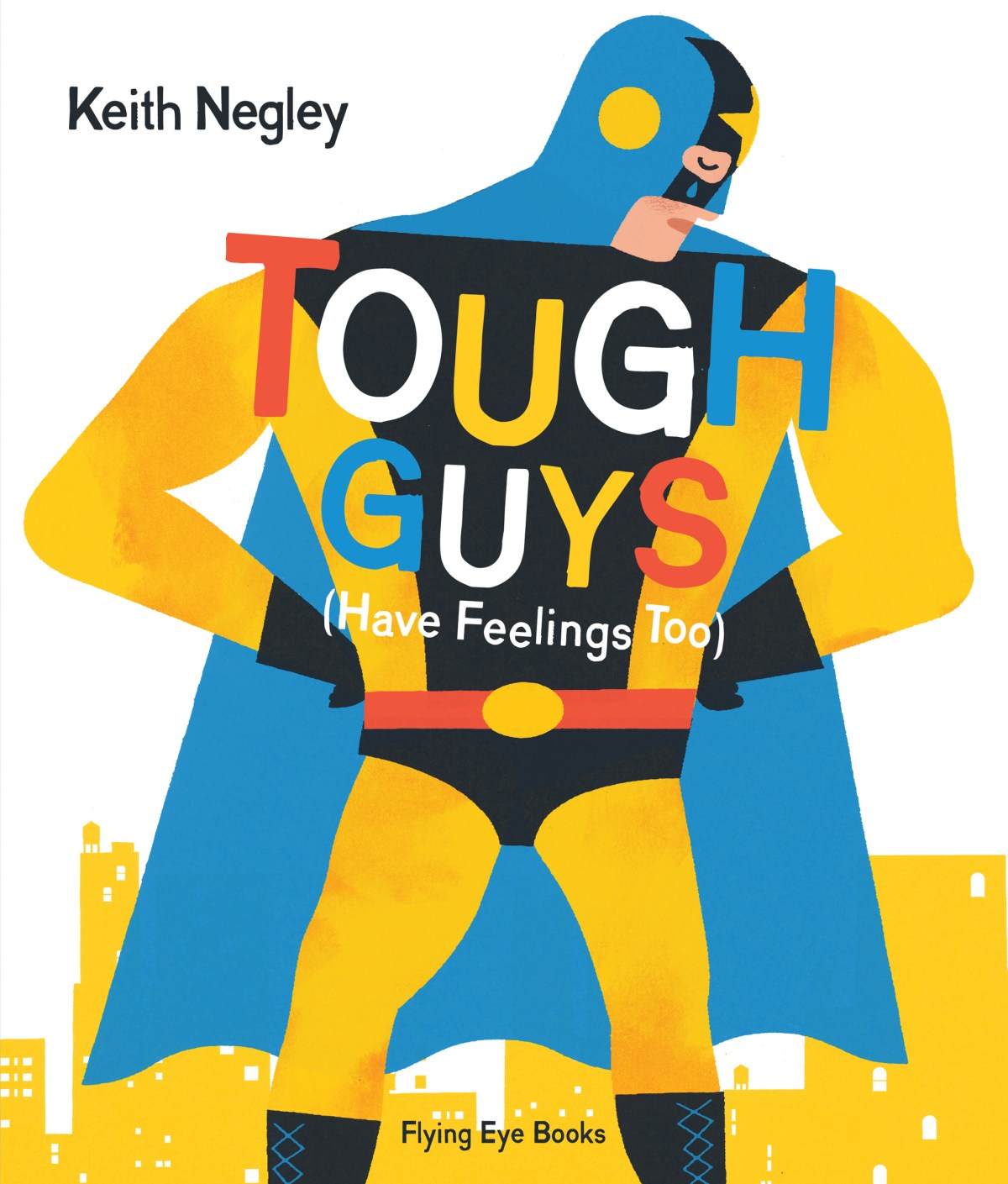
So we let our imagination fly into our latest Flying Eye book, Tough Guys Have Feelings, Too, by Keith Negly.
ToughGuysHaveFeelingsToo

I was a little reluctant to share this one because Karishma’s family is all girls, but she loved it.

Negley’s vivid illustrations show very tough looking guys having emotions, even, tears.

ToughGuys_preview_002

We sometimes see little boys cry, but we never see grown men of any sort cry –  not in books, movies, or even real life. In short but poignant text, this fun book gave us a chance to empathize with men.

ToughGuys_preview_001

I’ve had a chance to read Tough Guys to several children, now,  and often the first reaction is laughter.  Then, there’s lots of room for discussion on why it seems funny for bikers to cry, and how hard it must be for tough guys to be tough all the time.

ToughGuys_preview_003

Karishma felt that she, too, had to be tough. When she has trouble in school, when she’s being pestered by sisters or cousins, when she’s having a blue day – she has to act tough.  She also thinks she’d make a great superhero.

20160406_150033

Karishma is also a budding toy doctor.

20150714_160857

I had a toy tough guy, who she decided needed work.

20160316_160039

She diagnosed him with a hard head, and proceed to tattoo hearts on him, especially his head, with a pink sharpie.  “He’s a heart-headed guy now,” she said.  Unfortunately she ran off with him to show her mom before I got a picture of the new and improved toy.

Keith Negly is a nationally recognized editorial and children’s book illustrator with 15 years experience working for major newspapers, magazines and publishers. Tough Guys is his debut children’s book


Flying Eye books always have great endpapers, are well-bound and put up with a lot of kid-handling without showing wear on their hard covers.

For other Flying Eye Book reviews check out the following posts.  And check out their website, too.

https://joycorcoran.com/2014/11/06/how-to-build-a-robot/

https://joycorcoran.com/2015/01/16/personal-space-and-the-need-for-a-hug/

https://joycorcoran.com/2015/03/13/wild-and-happy/

https://joycorcoran.com/2015/05/20/rilla-alexander-and-her-idea/

https://joycorcoran.com/2015/07/21/a-gardener-of-delight/

https://joycorcoran.com/2015/08/17/monkey-business/

https://joycorcoran.com/2015/10/10/into-the-monster-dimension/

https://joycorcoran.com/2015/12/14/change-happens-simona-cirolos-whatever-happened-to-my-sister/

https://joycorcoran.com/2016/03/07/our-blue-planet-series-by-ella-bailey/

This post is a part of Children’s Book Week, May 2 – 8.  I’m posting on children’s books every day this week.  To find more great children’s books, check out the Children’s Book Week website.  They have a list of events going on all over the country, maybe one near you.  You can find links to their facebook and twitter pages there, too.

Here are links to the first two posts of the week:

Monday: The Thing About Jellyfish by Ali Benjamin

Tuesday:  I’m Trying to Love Spiders by Bethany Barton

If you meet a guy today that seems too tough, just remember he has feelings, too, and one day, he may be lucky enough to show them.

Thanks for reading my blog.

The Spider Incident

20160503_100159I went out into the Bridge Meadows community courtyard last week and found a crowd of kids clustered  about 6 feet away from the bike rack.  They would shuffle towards it in a pack, then scream and run away from it.  It turns out a black and white spider with green spots was on one of the racks.

“It’s a wolf spider, the most poisonous spider in the world,” one of the kids said.

I couldn’t remember, but I thought a wolf spider was brown.  As I got closer to the spider, one of the kids got hysterical and screamed, “Stay away, it’ll bite you and kill you.”  He was in tears.  I took a minute to comfort him and tell him I wasn’t going to touch it.

“The spider’s probably more scared than we are.  Look how big we are compared to it.  We’re like monsters to it.”

Another boy took this as a cue to advance with a toy and say he was going to kill it.  He didn’t get within arm’s reach of it though.

I asked them all to leave it alone.  I would get a container and take it far away from them.

I went in, came back with a plastic container.  I wore a leather glove and guided the spider into the container and sealed it.

Then the children all gathered around and we looked at it closer.  It was a pretty spider.  I suggested we look it up on the internet, but most of the children were bored of it by then.  Two of the girls, ages 8 and 10, who are budding naturalists, wanted to learn more, so they followed me into my apartment and we googled the spider.

We think it was a jumping spider, and that the green spots were its eyes.  Jumping spiders can bite, and that can irritate, but no more so than a mosquito bite.

phidippus_aud1

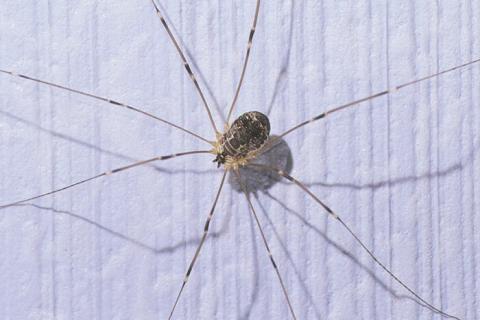
We looked up wolf spiders, and the most venomous spiders.  We also looked up whether or not the bug known as the Daddy Long Legs is the most poisonous spider, but its teeth are too small to bite humans, since one of the girls had heard that at school.

28-rupestre_1

It’s not true.  It’s not a spider, it has no venom, and it has no teeth.

Then we let our jumping spider go in the greenway that surrounds my apartment building.

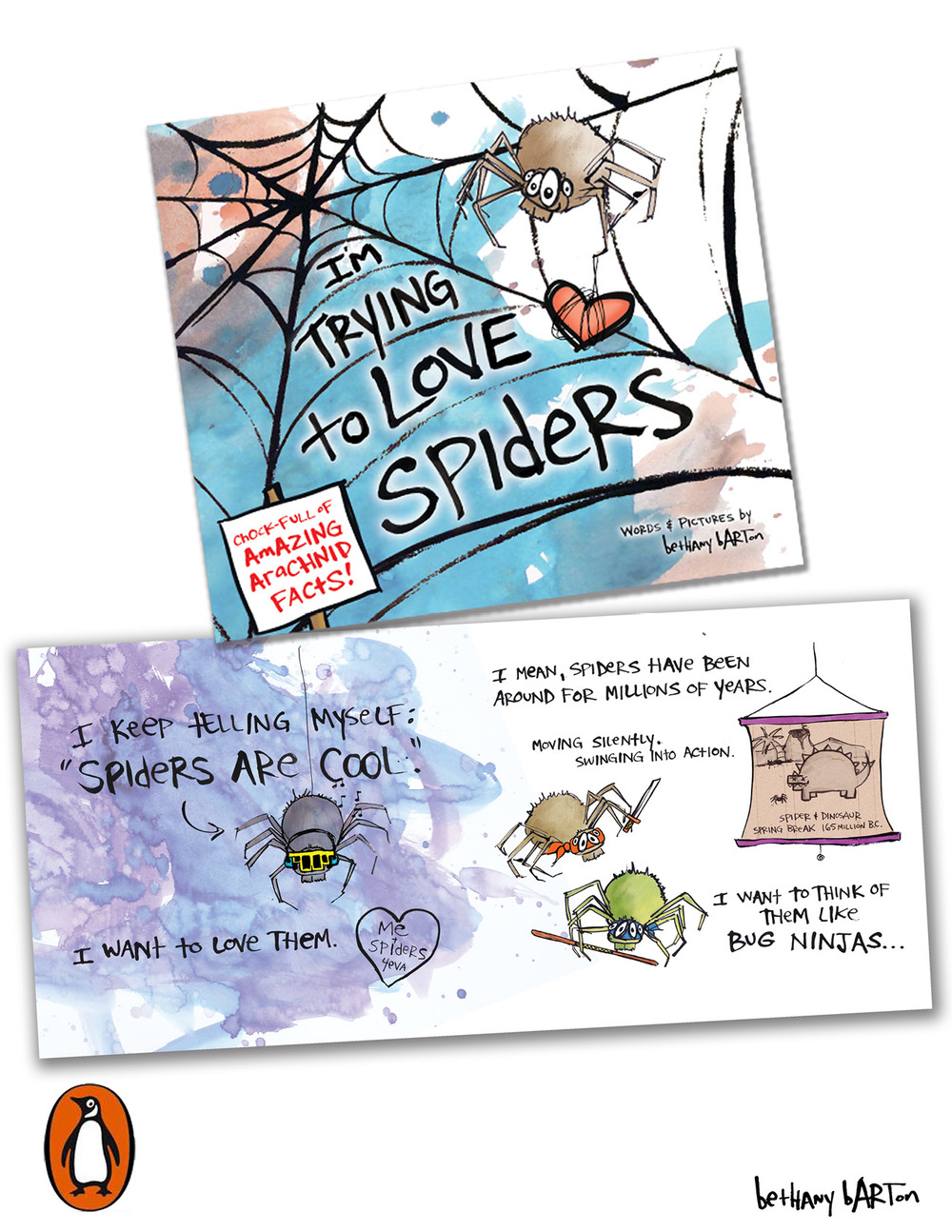
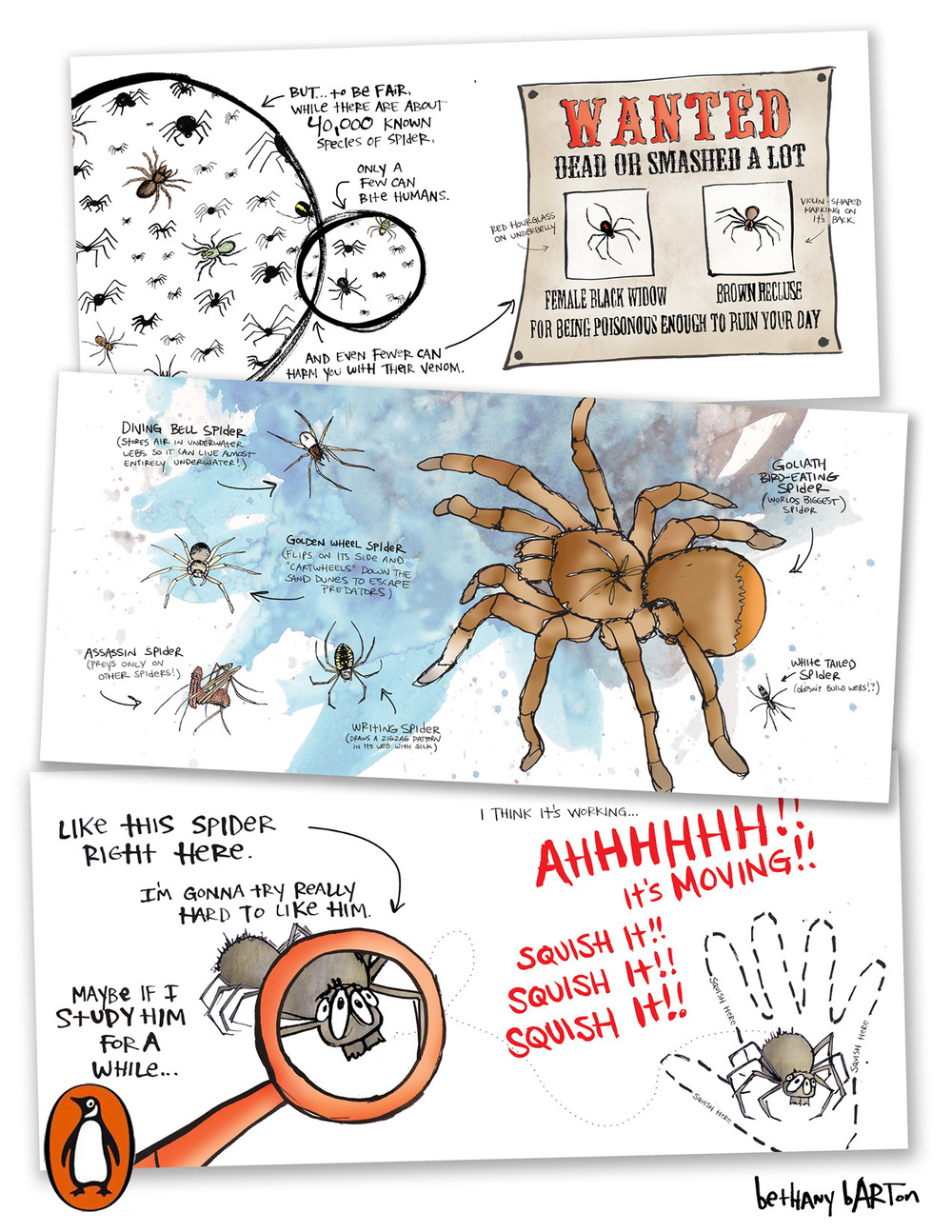
The next day, I got a copy of I’m Trying to Love Spiders by Bethany Barton, (Viking, 2015) a delightful picture book that introduces young kids to spiders in a playful way.

SPIDERS1

Barton acknowledges her fear of spiders right away and it’s a natural fear.  Insects and spiders of all kinds can be quite toxic.  A fear of them is probably good for us, but it needn’t be a paralyzing fear.

20160503_100737

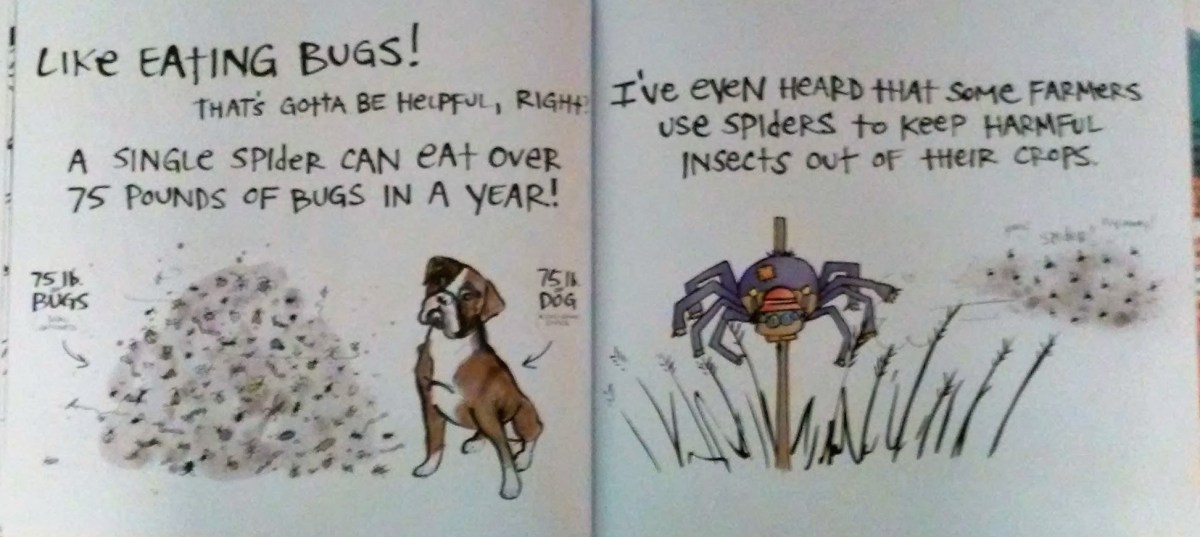
Many spiders are friends to us – they eat insects that destroy our gardens and invade our homes.  I especially like that they eat one of the most dangerous of insects in the world, the mosquito.  (Through the diseases it carries, the mosquito is responsible for 725,000 deaths a year – almost as many as that most dangerous of animals, humans.)

001I loved reading this book to the boy, age 5, who had such a fear of spiders.  It’s so honest, and several spiders get smushed.  I got a few “eeewws” and a lot of laughter.
 

SPIDERS12

It helped him understand spiders a bit more and fear a bit more.  He liked that Barton didn’t actually conquer her fears but learned to like spiders – mostly.  We’re going to respect them from a distance.

Barton’s style is splashy, inky, and friendly.  She invites touch and her watercolor is charge with energy.  This book is part of her own desire to understand spiders.

002You can find more about her and her books here.
This book was one of the finalists for the Children’s Choice Third – Fourth Grade Book of the Year.  I found it to be a great book for much younger children.  In fact, my 3rd grade budding naturalist likes reading it to younger children.  It doesn’t get better than that!

You can see all the finalists for the Children’s Choice Book Awards here:  http://www.cbcbooks.org/ninth-annual-childrens-choice-book-awards-finalists-announced/#.VyfJ5jArKM-

This post is a part of Children’s Book Week, May 2 – 8.  I’ll post on children’s books every day this week.  To find more great children’s books, check out the Children’s Book Week website.  They have a list of events going on all over the country, maybe one near you.  You can find links to their facebook and twitter pages there, too.

If you missed yesterday’s post on The Thing About Jellyfish by Ali Benjamin, give it a read here.

If you see a spider today, don’t smash it.  Give it a little nod of respect, and congratulate yourself for appreciating all of nature’s wonders.

The Thing About Jellyfish by Ali Benjamin

“If people were silent, they could hear the noise of their own lives better.  If people were silent, it would make what they did say, whenever they chose to say it, more important.  If people were silent, they could read one another’s signals, the way underwater creatures flash lights at one another, or turn their skin different colors.

“Humans are so bad at reading one another’s signals.  I knew this by now.”

Some children cope with difficulties by going quiet.  They shut down and you just can’t reach them or get them to respond.  I’ve mentored a child who does this.  She was in foster care but now is adopted and has been in a stable loving home for over 4 years now.  It was only a month ago when she got upset over a small thing that she cried in front of me.  I was shocked, and though I commiserated with her, I felt pretty happy that she finally felt safe enough to open up and cry.  Then she talked about what was actually upsetting her.  It was a golden moment.

As adults, we often forget how hard it is to be a child.  We tend to remember what’s good about childhood, especially if we have safe places to grow up.  But even if a child does have a safe home life, growing up is still extremely difficult.  I’ve seen smart children who’ve had wonderful lives completely undone by the pressures and changes of adolescence.  Often, it’s girls who suddenly become objects of ridicule because their interests and intelligence make them stand out.  I see girls dumb themselves down to fit in and be “cute.”

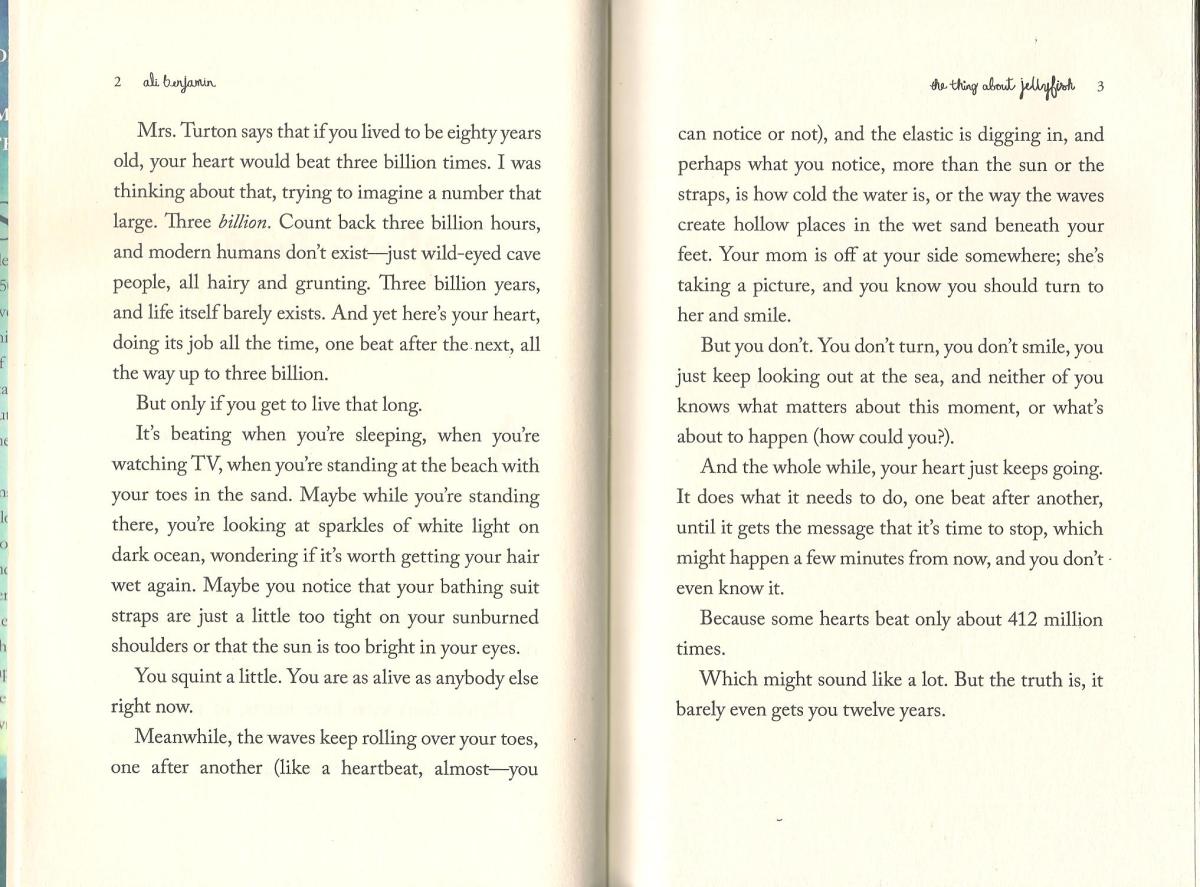
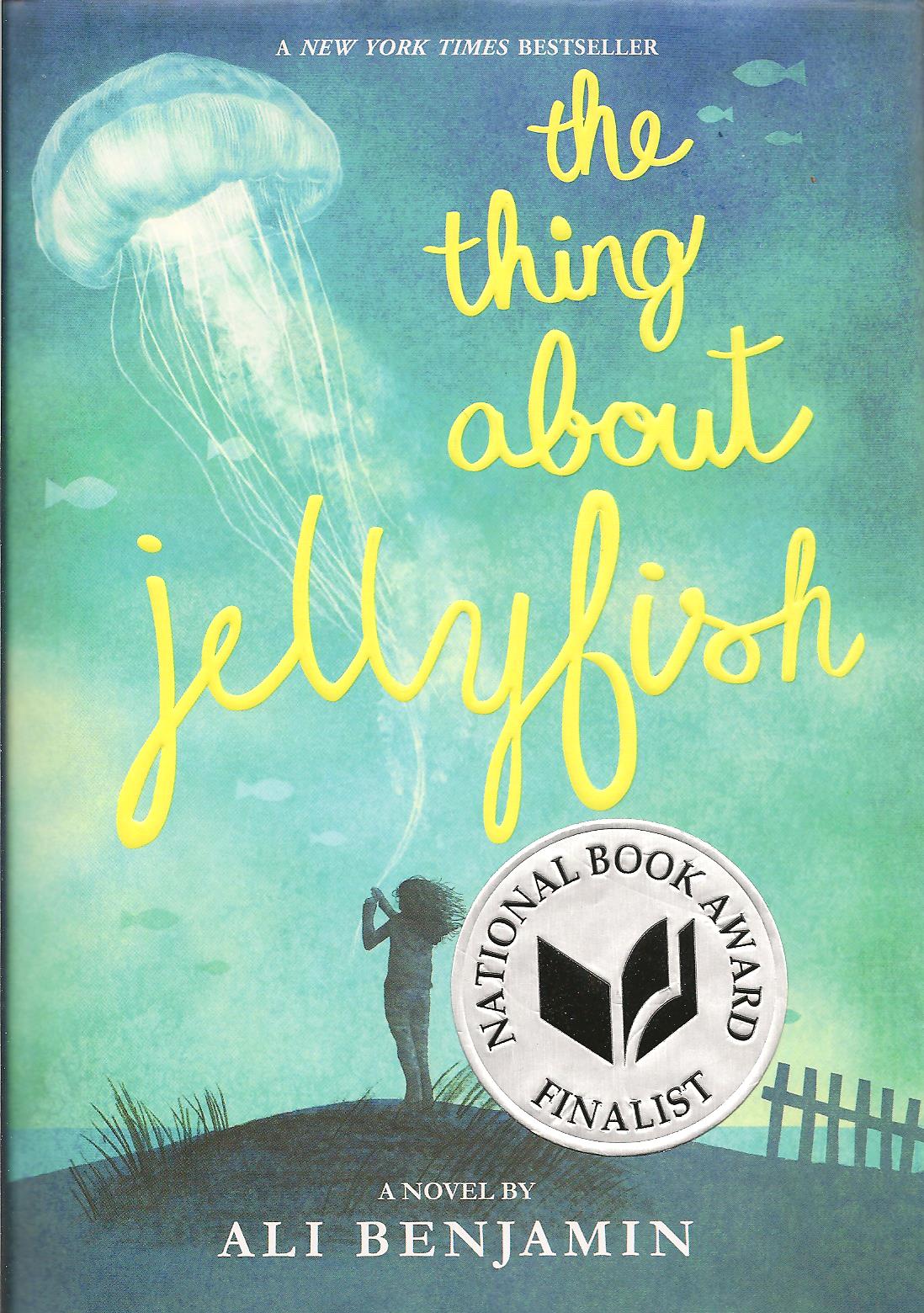
001So I’m extremely glad to have the book The Thing About Jellyfish, by Ali Benjamin, (Little, Brown, and Company, 2015) to share with kids who are hitting that hard phase in life.

Suzy Swanson is a very smart, somewhat obsessive girl who loves science and the natural world.  She has a best friend, Franny, who has always bolstered her and listened to her, even though everyone else thinks Suzy is a chatterbox.  In a letter to Franny, Suzy writes:

“My parents have a word for what I do – constant-talking, like that is a single word – and they explain to me that it is important to let others talk, too.  …But you like it when I tell you things.  You don’t need me to ask questions.  You have never once called what I do constant-talking.” 

Then sixth grade and middle school happens.  Franny becomes infatuated with the pretty, popular girls.  She tries to bring Suzy along, but Suzy has no interest in make-up, or trying to tame her frizzy hair, or boys, or being cute.  She wants Franny to stay the same, but Franny is growing away from her.  Their relationship becomes contentious and cruel.  Suzy one-ups Franny after she plays a prank on her.

And then the unthinkable happens.  Franny drowns while on summer vacation.  Suzy’s last memory of Franny is the horrible thing Suzy did to Franny.  The fact of her death, the fact of Suzy’s own cruelty, the inability to undo any of it, shuts Suzy up.

She retreats into silence to escape her grief.  She stops talking for months and has to go to counseling, where she never talks.  Her mind, though, is still working away.  She becomes obsessed with jellyfish.  She’s convinced that Franny succumbed to a jellyfish sting.  She becomes obsessed with how many people are stung by jellyfish every minute, how jellyfish are taking over the oceans as temperatures warm.  But she also finds a great deal of wonder in how jelly fish live, of how one is deadly, but another is immortal.

Suzy is such a well-developed character.  She is flawed.  She uses silence, deceit, and theft to further what she sees as a mission to find a way to prove a jellyfish was responsible for Franny’s death.  She is also still grieving the break-up of her parents’ marriage.

“I know everything exists because tiny specks, too small to see, move through an invisible field the way a pair of boots moves through mud, getting heavier as they go.

“And since my parents split up, I have begun to wonder if this is happening to me, too:  if I am getting more weighed down, harder to lift, as I move through the world.”

But because she remains connected to the wonders of the world through her studies of nature, and an exceptionally smart and kind science teacher, she finds her way to acceptance and redemption.

002
Mrs. Turton’s kindness and intelligence helps Suzy regain her buoyancy.  

In her silence she learns all the tentacles of forgiveness, mortality, and compassion.  You don’t get the feeling that Suzy will ever be an average girl, but that she will be a multi-faceted and amazing person.

I spent a day with this book and read it until the end.  I look forward to a second reading to savor it more.  Benjamin’s writing is engaging, compelling, and poetic.  Suzy tells her story in different perspectives which Benjamin handles with ease.  Her sense of wonder is apparent in the way the story unfolds.

heart beats

Ali Benjamin grew up outside New York City, in a rickety house that neighbors thought was haunted.  As a child, she caught bugs and frogs.  The Thing About Jellyfish emerged from her fascination with the natural world.  She is the co-writer of HIV-positive teen Paige Rawl’s coming of age memoir Positive.  She also co-wrote Tim Howard’s bestseller, The Keeper.  She’s a member of the New England Science Writers and lives in rural Massachusetts.

Here’s a video of Benjamin talking about the book:

This book was one of the finalists for the Children’s Choice Book Debut Author Award.  You can see all the finalists for the Children’s Choice Book Awards here:  http://www.cbcbooks.org/ninth-annual-childrens-choice-book-awards-finalists-announced/#.VyfJ5jArKM-

This post is a part of Children’s Book Week, May 2 – 8.  I’ll post on children’s books every day this week.  To find more great children’s books, check out their website.  They have a list of events going on all over the country, maybe one near you.  You can find links to their facebook and twitter pages.

May you find a children’s book to celebrate today.


enormous Smallness by Matthew Burgess

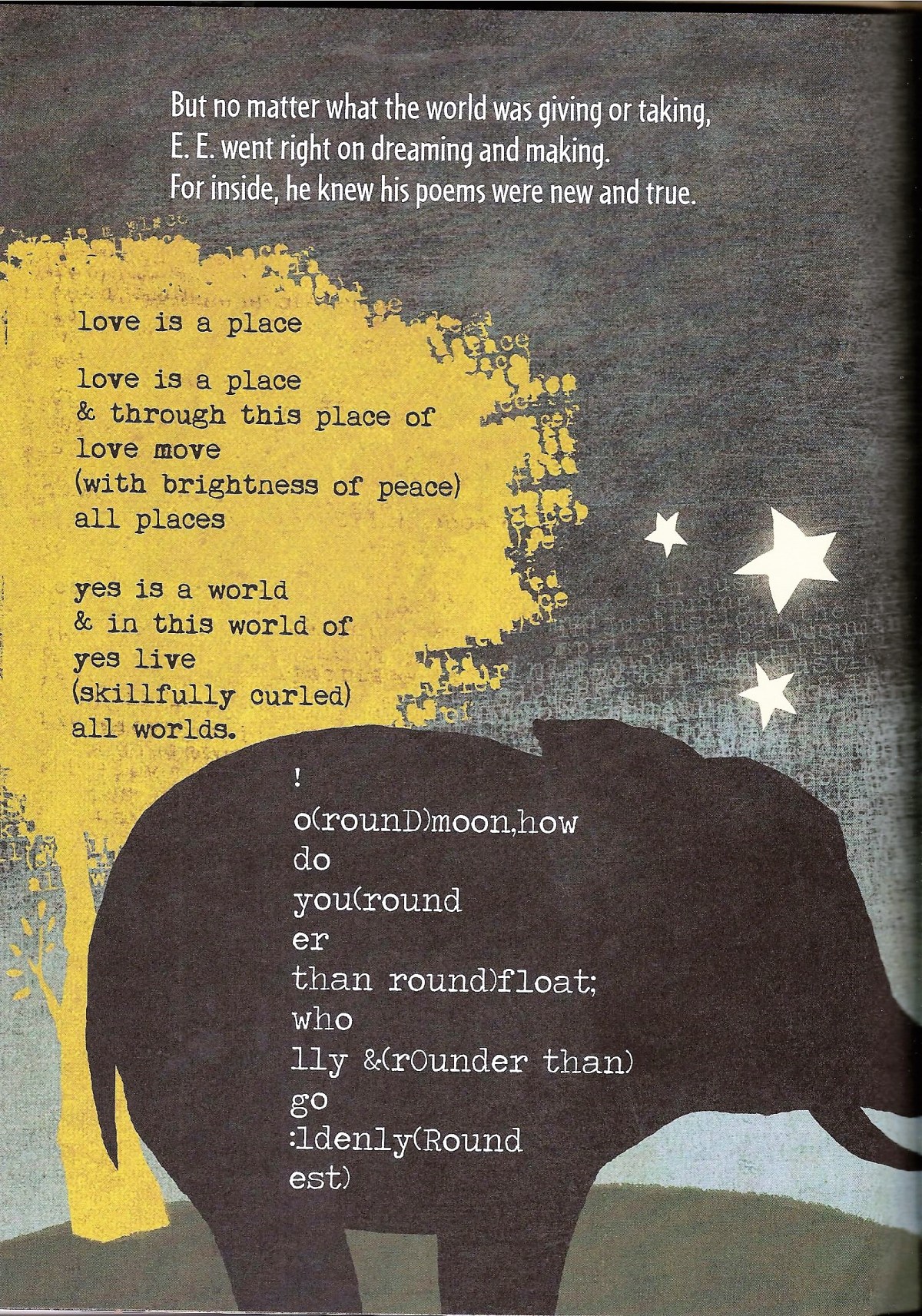
In talking to children about poetry, it’s often hard to explain exactly what poetry is. In fact, modern poetry has such a breadth and range, it’s hard to define it anyone.  In the 20th century, poetry evolved out of rhyming and structure and became free – a way of expressing what rhyme can’t, what prose can’t, and what other written forms can’t quite capture.  And there’s a branch on the poet-tree where the shape of the words and the way words are placed on the page are as much a part of the poem as the meaning and metaphors.

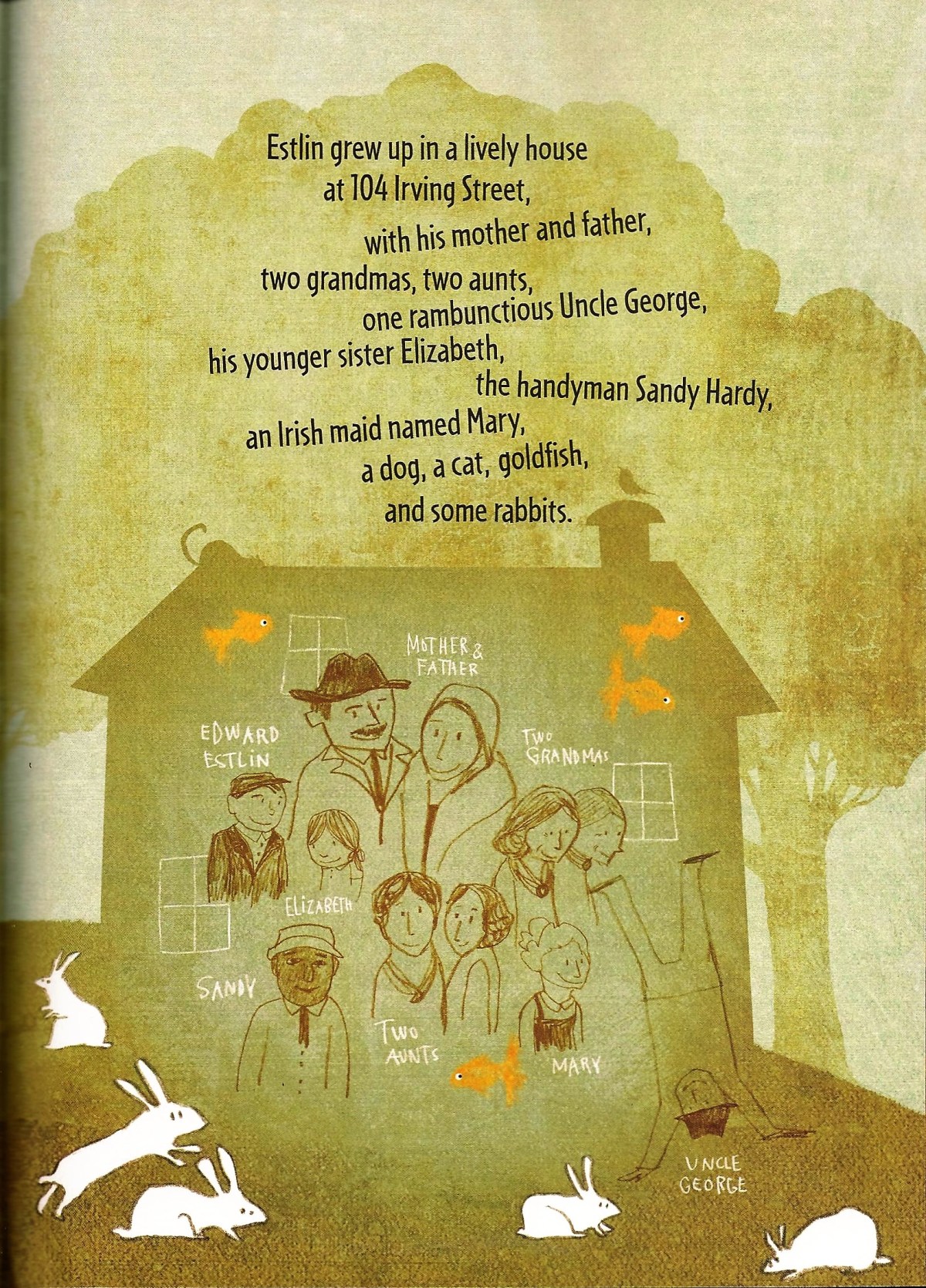
I’m glad to have the book enormous Smallness: A Story of E. E. Cummings by Mathew Burgess and illustrated by Kris Di Giacomo, (Enchanted Lion Books, 2015) to help me explain the more intriguing aspects of poetry to children.  The book gently introduces the way e. e. cummings poetry evolved from his word play as a child.

The author, Matthew Burgess, teaches creative writing and composition at Brooklyn College, and has been a poet-in-residence in New York City public schools since 2001, and his sensitivity to language and story has made this book a delight to read.  The children I’ve read it to are drawn into the book and press in close to see the way the words take shape on the page, to see how words create shapes and are like a painting as well as a poem.

005

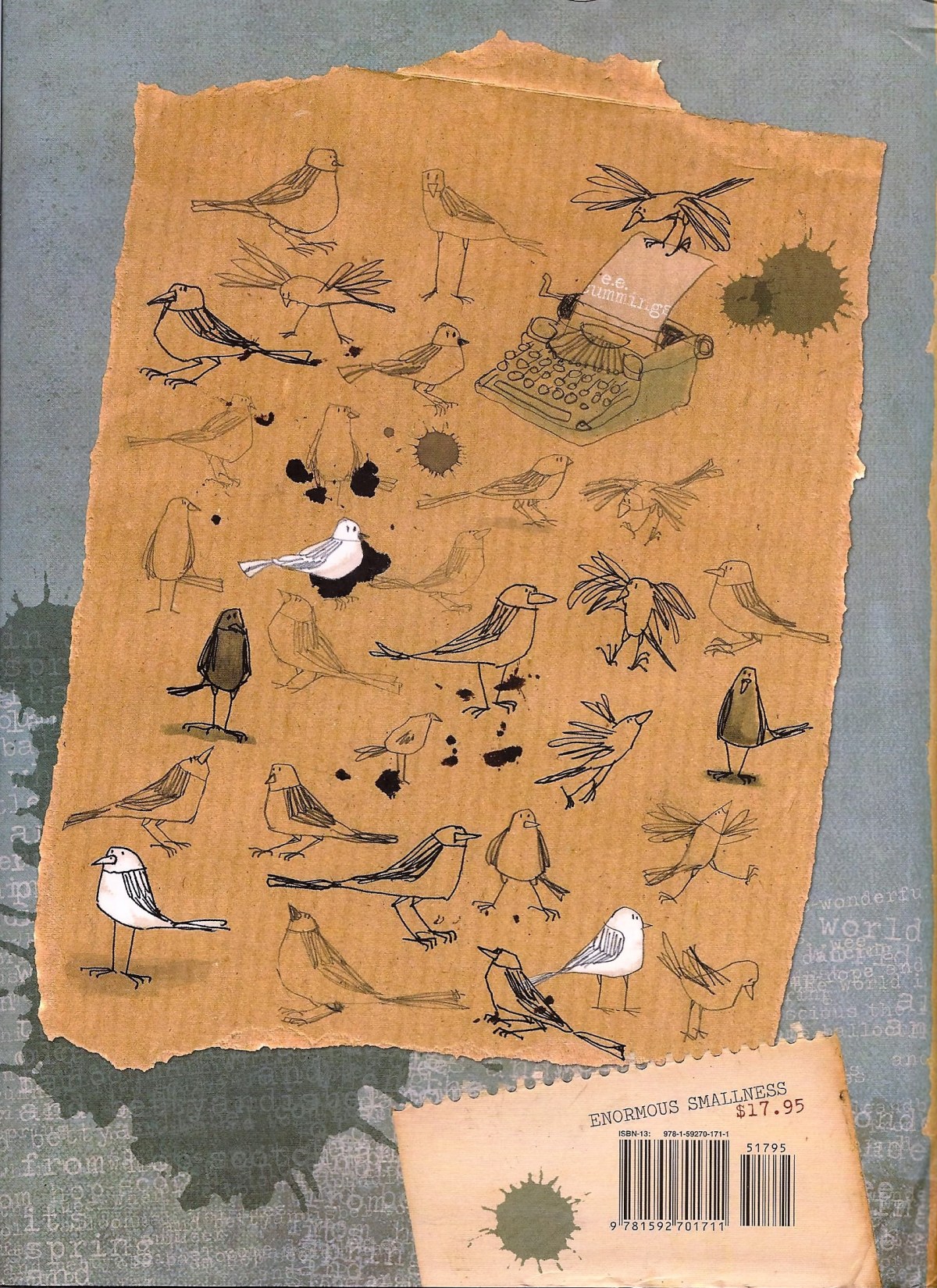
Kris Di Giacomo’s illustrations are textured and playful, bringing themes of Cummings work and life into the narrative.  There are birds, elephants, and bunnies cavorting throughout the book.  Di Giacomo used words in her layered work so that they fall like leaves from trees, swirl in snowflakes, and fly up on kite strings.

001

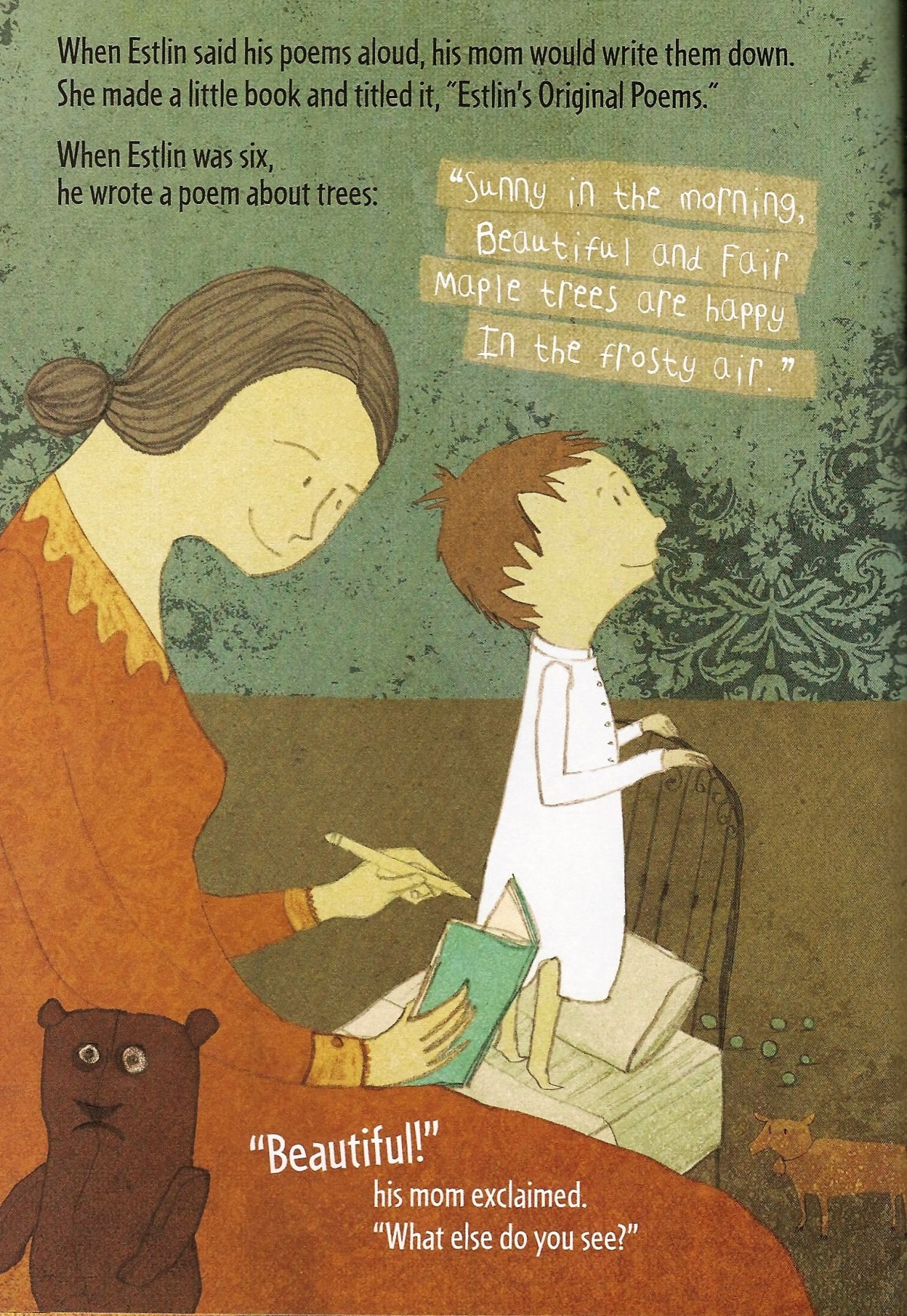
enormous Smallness shows how the loving support of Cummings’ family helped spur his creativity.  His father built him a treehouse, a little room of his own, where he could let his imagination run wild.  Father also spent time being an elephant for young Cummings to ride on.  His mother would transcribe poems Cummings imagined when he started reciting at age three.

006

Extended family, teachers, and classmates encouraged and inspired him.  He grew up secure in his own creativity.

And though he spent time as a prisoner of war during World War I, he kept his exuberance for life and language alive throughout his life.

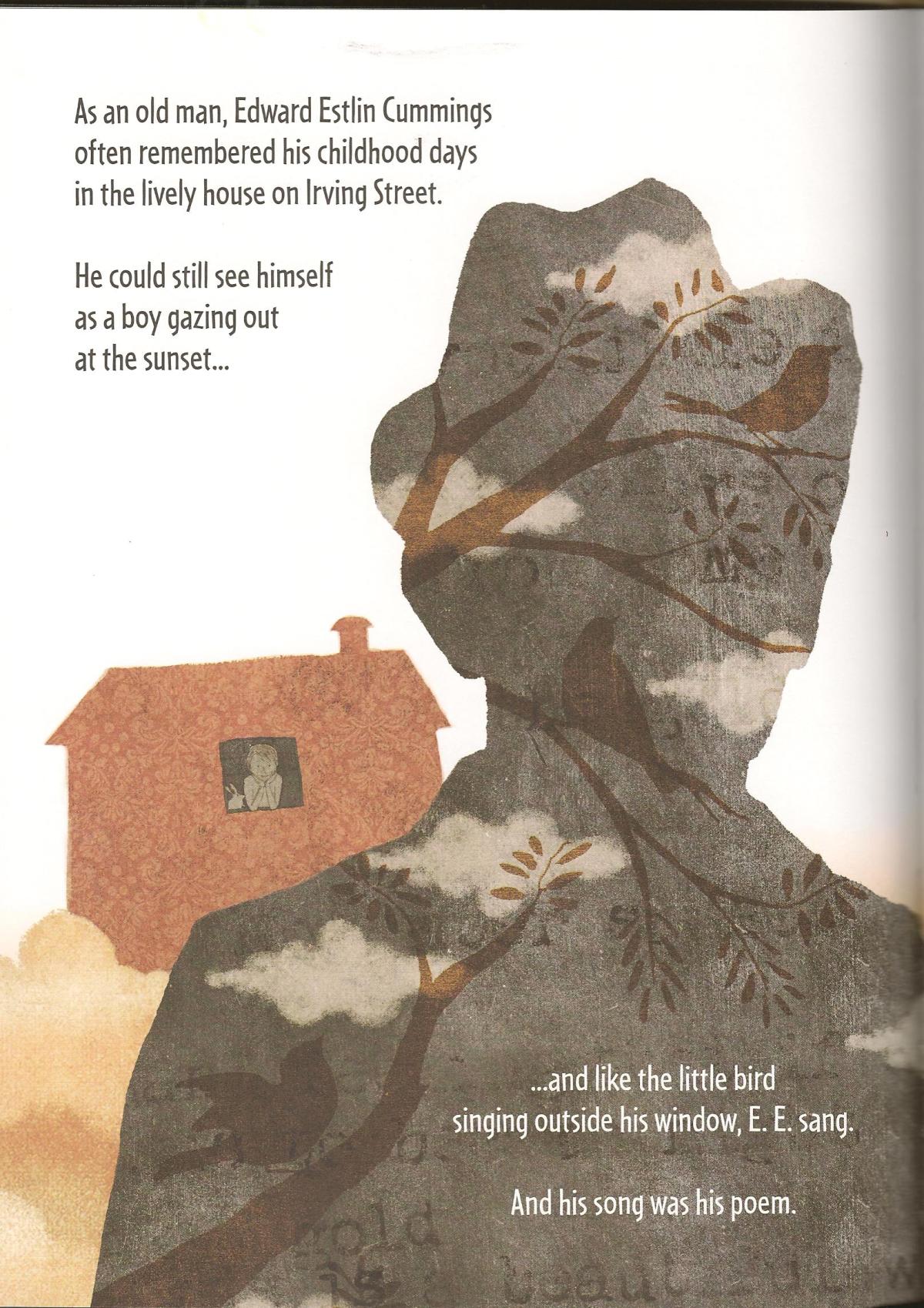
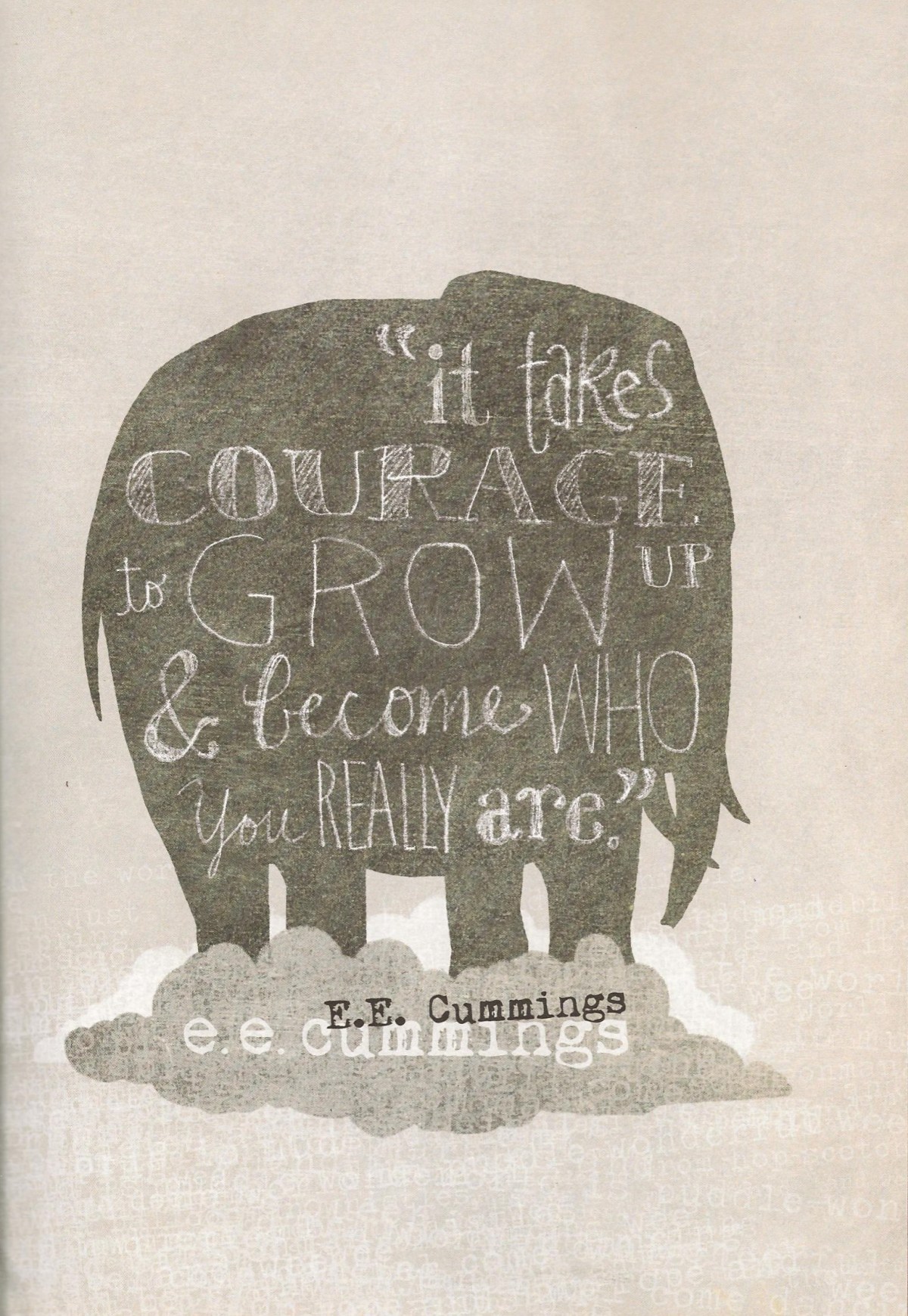
The arc of this book curves around how Cummings became himself, held onto his sense of wonder through his life’s journey.

010

This is such a wonderful story for the kids I work with to hear.  Most of them have had childhood trauma but still retain that sense of wonder that is the birthright of every child.  Hanging on to it through life’s challenges can be hard.

011

012

The more books I can share with them on the many ways of keeping their exuberance for life alive, the better their chances of valuing the good things that are happening in their lives — not letting the good be overshadowed by the bad.

courage

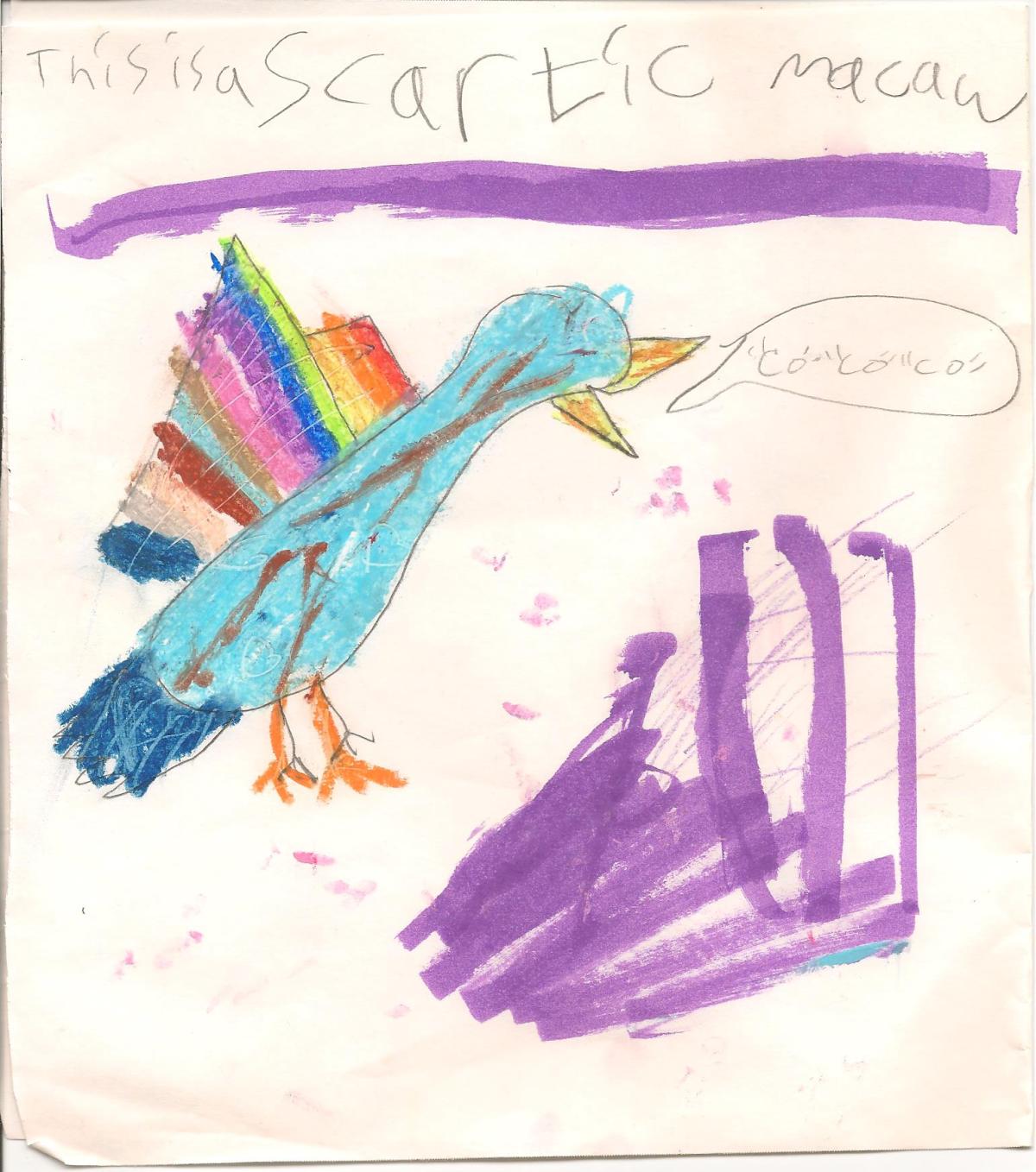
This picture was drawn by Reba, age 9 who loves birds:

reba

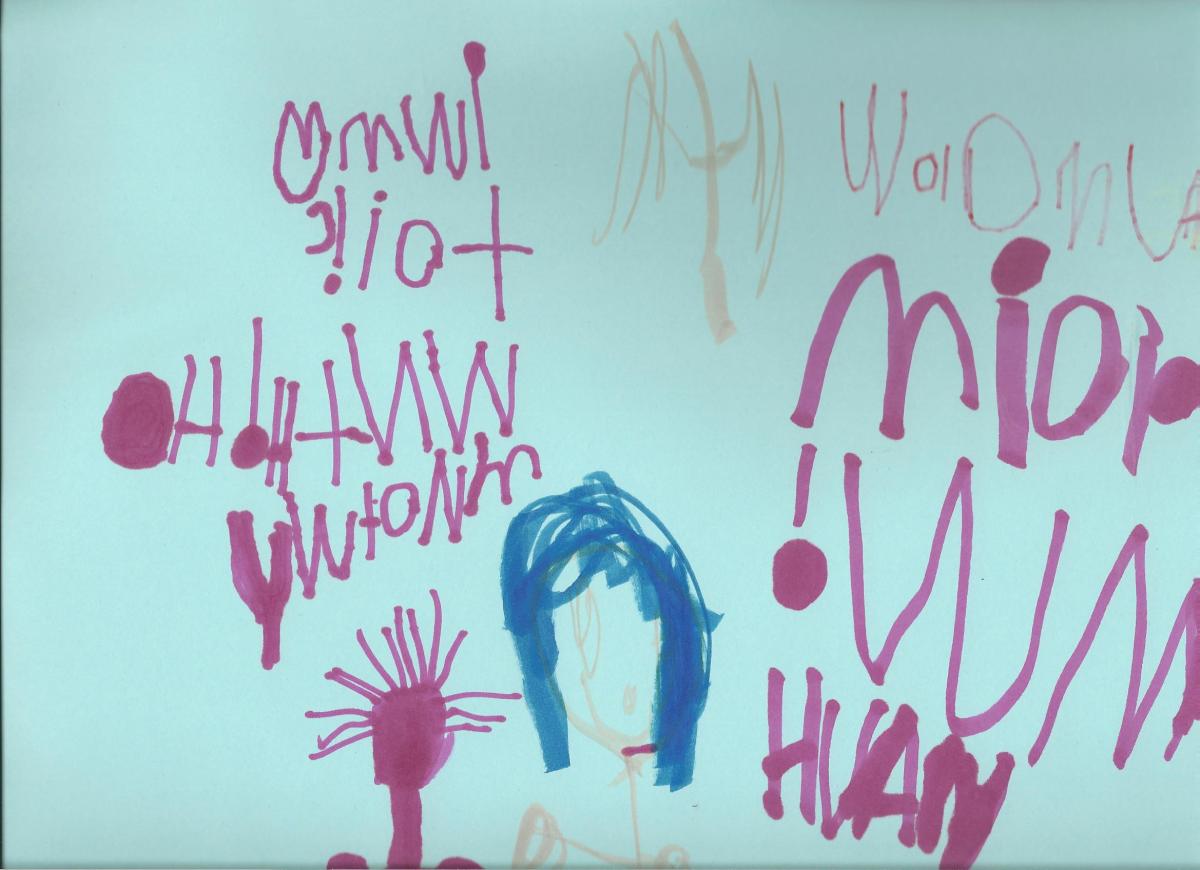
And this one by Tomas age 5, who loved the story, and wanted to write me a letter about it.  He spent quite a long time creating his own imaginary letters and words and illustrations.  When I asked him what the words meant, he said in an exasperated tone, “I wrote it, you’re the one who’s supposed to read it.”

tomas

Well, the exact meaning is open to interpretation, but I know it tells a story of delight.  And if you’d like a longer story of delight, enormous Smallness is the book to read.

You can read more about Mathew Burgess here.  On his website, check out the book he recently edited, Dream Closet, which I’ll be reviewing soon.

Kris Di Giacomo has illustrated over 25 books.  You can find out more about her here.  And check out my review of the book she illustrated The Day I Lost My Superpowers.

Also, for another great book on the power of poetry, check out my post on the book Poet: the Remarkable Story of George Moses Horton by Don Tate.

Thanks for reading my blog.  May a little bird lift your spirits today.

003

~~~

CBW 2016 poster front

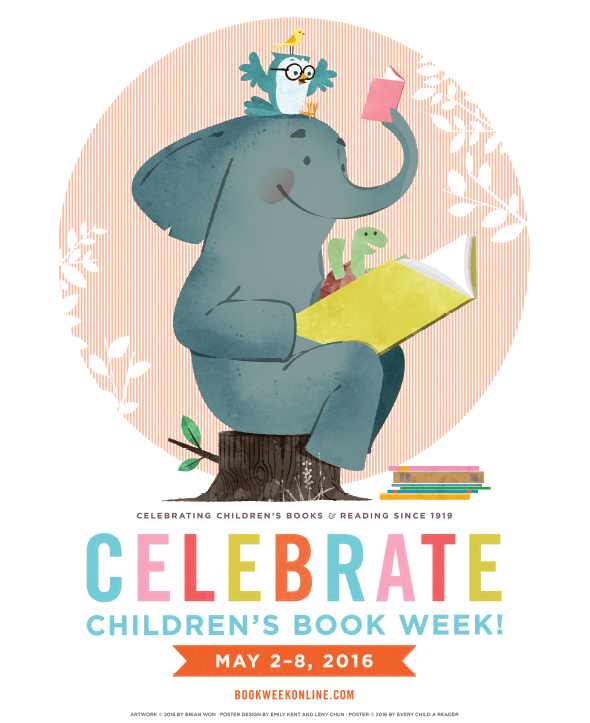
This Blog is a Children’s Book Week Champion.  Children’s Book Week is May 2 – 8, 2016.  During that week I’ll be posting reviews of books voted “the best” by young readers, as well as special books for reluctant readers, and innovative new publications for children of all ages.  Plus, I’ll be re-posting book reviews of my favorites.  

Established in 1919, Children’s Book Week is the longest-running national literacy initiative in the country. Every year, commemorative events are held nationwide at schools, libraries, bookstores, homes — wherever young readers and books connect!


Children’s Book Week is administered by Every Child A Reader, a 501(c)(3) literacy organization dedicated to instilling a lifelong love of reading in children. The Children’s Book Council, the national non-profit trade association for children’s book publishers, is an anchor sponsor.

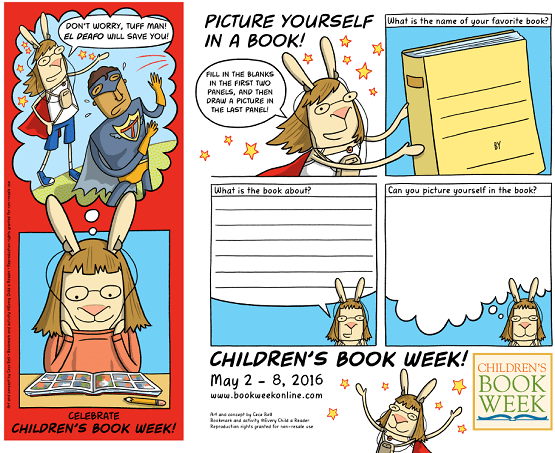
You can get free downloads of both the poster and the new bookmark on their website:

http://www.bookweekonline.com/ 

CBW-16-bookmark