Biophilia

I frequently visit a shop here in Portland, Oregon, called Paxton Gate, “a store known for its magical mix of neo-Victorian delights, eclectic animal and plant ephemera, taxidermy, exotic plants—including the carnivorous variety—framed and mounted insects, jewelry, unique gardening tools, affordable art, vintage scientific instruments and more.”  
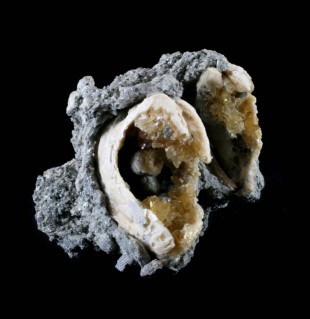
from Paxton Gate Website
I love looking at the shells, insect specimens, plants, fossils and rocks.  They also have a collection of animal taxidermy.  I’ve asked about them and found that they are part of modern ecological ethics and taxidermists use reclamation from institutions and zoos as a way of keeping dead creatures around for study and aesthetic pleasure.  I’m not drawn to it, but I was glad to hear that there are standards for such things.
I took some friends there once to show them the great collection of plants, science toys, and weird art — they have knitted dissected frogs and animal skeletons in Victorian dress.  I think of this as typical Portland weirdness, but they also have splendid scientific prints, books, inks and journals. 
Both of my friends expressed some distress at the taxidermy.  They thought I was naïve to think that the taxidermy didn’t come from thoughtless killing of animals. 
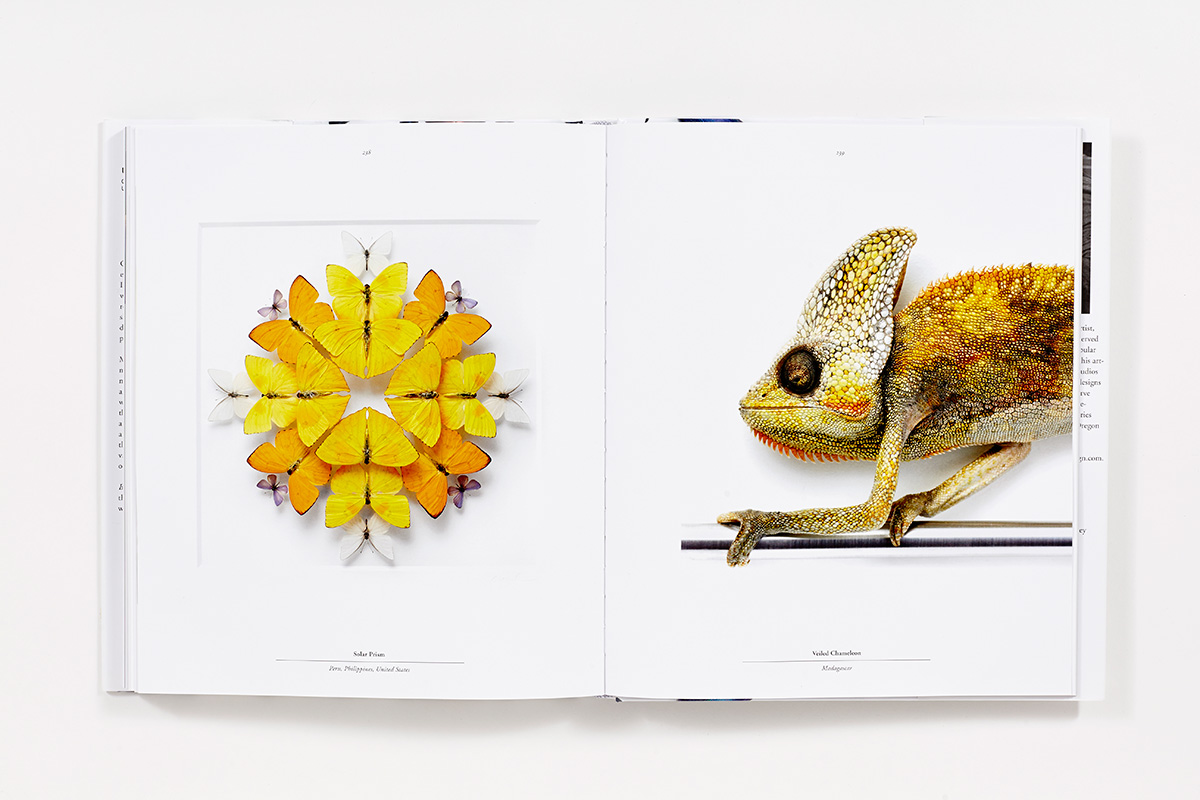
So I was much relieved, when I got the beautiful book Biophilia, the art of Christopher Marley, published this year by Abrams Books, to find a few page dedicated to “Reclamation and the Pursuit of Karma-Friendly Taxidermic Experience.”   His father was a breeder of Australian parrots.  He began to use specimens from his father’s collection that had died of natural causes.  Then:
“I suddenly realized that my dilemma of wanting desperately to work with organisms of all kinds but not being willing to kill them had found a limited solution….After months of methodically working through all of my years of accumulated contacts, I was over joyed to find that there were other individuals and institutions, breeders, aviaries, aquariums, sanctuaries, and zoos that had similar practices.  The opportunity to preserve rare and exotic birds, reptiles, and other vertebrates was suddenly becoming a reality.  I was ecstatic.”


From Christopher Marley’s website:
“Specimens are reclaimed, bred or harvested from dozens of countries on every inhabited continent. Our vertebrates are always reclaimed organisms that come from institutions and breeders here in the U.S. after they die of natural or incidental causes.   My work preserves for generations what would otherwise be discarded and lost forever.  The invertebrates are sustainably collected in their various countries of origin – offering local catchers a powerful financial incentive to protect and guard their habitats to ensure the continued survival of the very species they collect.”
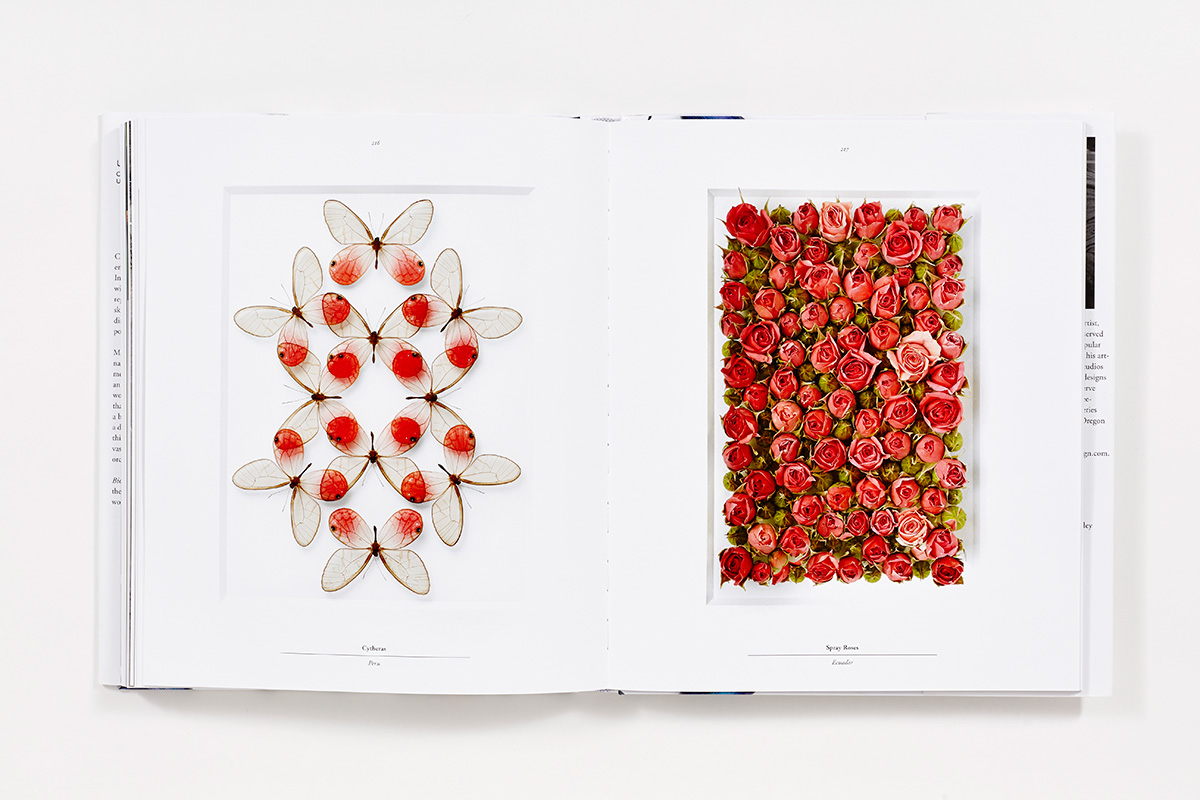


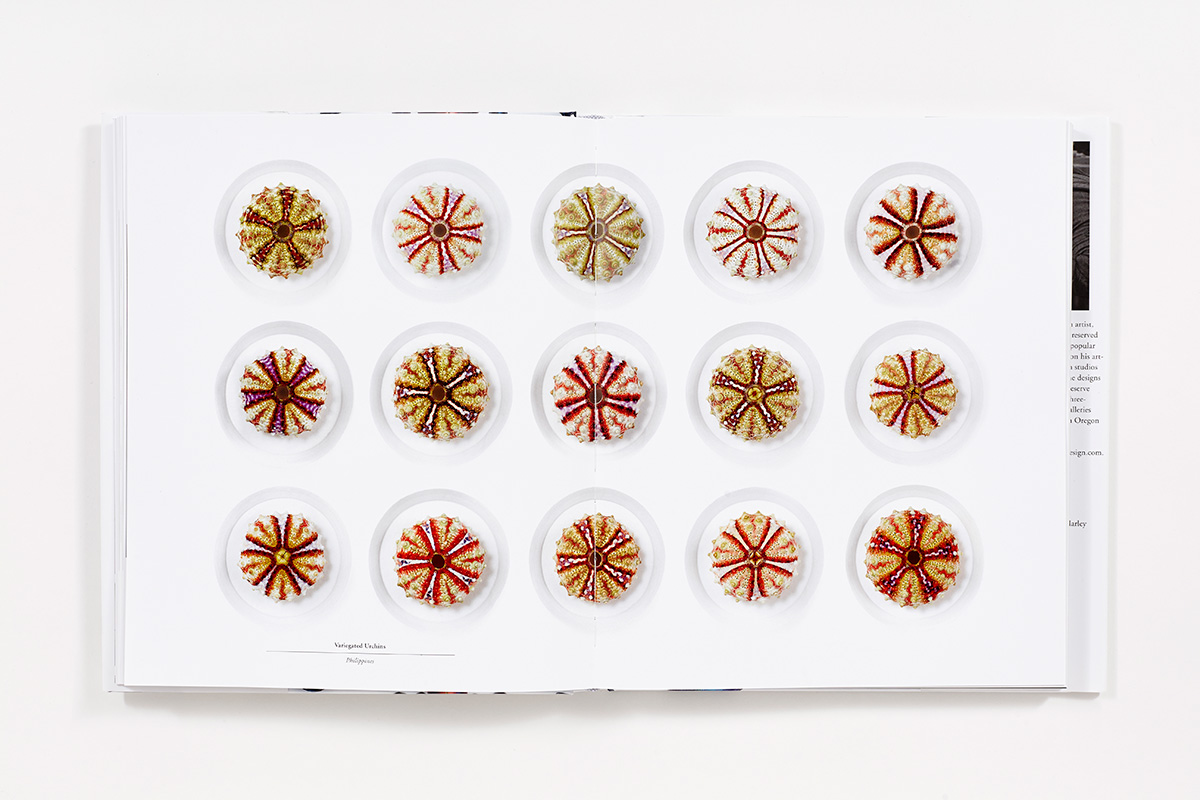
Whether I’m naïve or not, the artwork of Marley is exquisite and inviting, it honors nature in a way I’ve never seen before.  He uses actual specimens, preserves their structure and color, arranges them, frames them and brings them back to life in a way that only art can.  Though he is working with their bodies, he captures their spirit.  And like when I spend time at a natural history museum, or in a garden, I always come away from his art wanting to draw.  
Biophilia means love of life, “an instinctive kinship with the rest of the living, breathing world.”  Marley says: 
“As human beings, we are at the top of the food chain in every ecosystem that we inhabit, yet we retain an innate affection for the rest of creation.  I have never met – indeed, I cannot imagine – a person who does not derive stimulation and fulfillment from some form of life apart from our own species, one who cannot and does not appreciate a single plant or single nonhuman animal species.”

I like that he works with bugs, spiders, and reptiles, because so many of us find them creepy.  We’re afraid of them.  In Marley’s art, they are presented like jewels and a sense of awe over takes fear.  He has work that combines the colors of insects with the colors of minerals and gems.  I realize how fear interferes with our ability to see the beauty around us. 
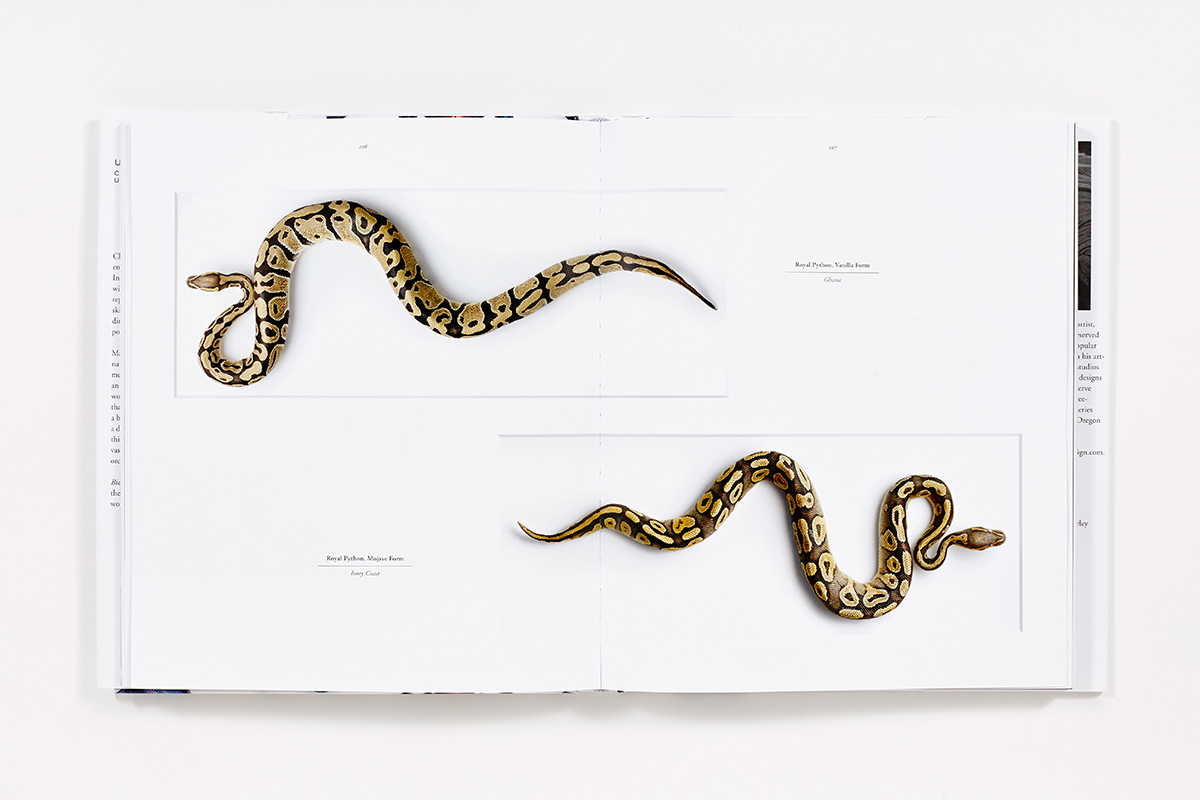
I think as we teeter toward our own extinction, we’re learning that we’re part of a larger ecosystem and even these humble creatures like beetles and urchins are a part of the health of our planet, the health of each of us.  We need ways of being less fearful.  In Biophilia, Marley frames a new way for us to see beyond fear and find wonder.
Christopher Marley is an artist, designer and photographer.  His first book, Pheromone, focused on his artwork with insects.  He maintains design studios in Oregon and Kuala Lumpur.  You can see more of Marley’s work at his website:  http://www.pheromonedesign.com/
You can see more about Paxton Gate by clicking here; http://paxtongate.com/paxton/portland
You can see more of Abrams wonderful books here: http://www.abramsbooks.com/ 
And remember, as Bill Waterson said, “There’s treasure everywhere.” 
Beetle Planet

One of the 10 year old boys in my neighborhood came over for an art lesson recently.  He was a little glum.  At first he said he was fine but then he said he’d had a fight with his older brother and lost.  He really just wanted to play on his game device.  I asked if he’d like to see the new book I got first, The Book of Beetles.  Then he could play on his game device if he wanted.
Much to my delight, we spent the next hour looking at beetles and marveling at their strange shapes and beautiful colors.   
I remember seeing such collections at the natural history museum when I was a child
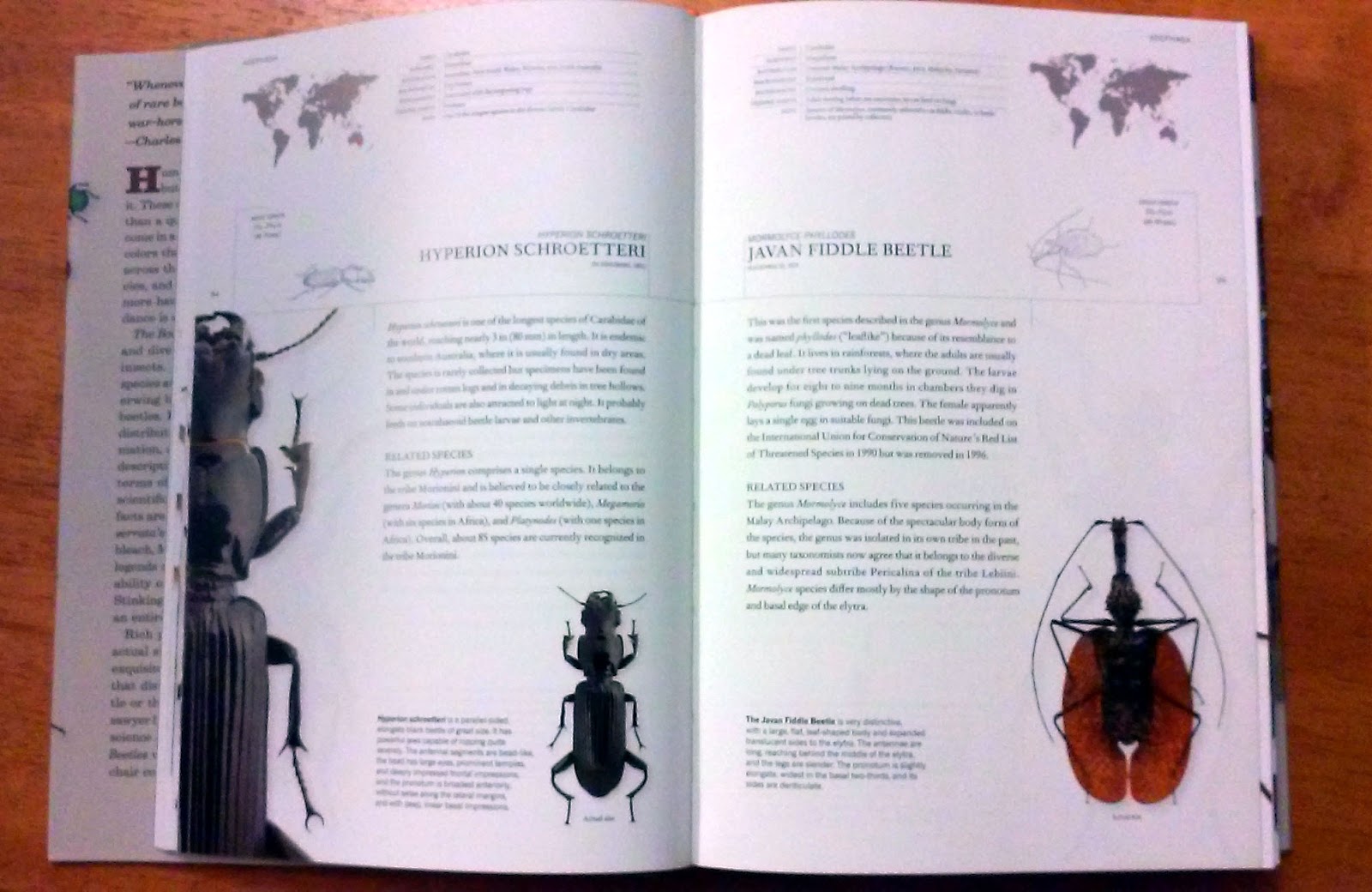
Did you know that one out of every five creatures on earth is a beetle?  There are over 400,000 known species and it’s estimated that there millions more to be identified.  The Book of Beetles, edited by Patrice Bouchard, published by the University of Chicago Press, presents 600 beetles in all their glory.  The beetle family, Coleoptera, includes all sorts of bugs, from the firefly to the aptly named Goliath beetle. 
Each entry features a distribution map, basic biology and information on the cultural significance of each beetle.  Crisp, beautiful photographs show the actual size of the beetles and enlargements show the exquisite details.
This book isn’t written for children, it’s for anyone who is interested in beetles, science, and the natural world.   It’s a beautiful book, with care taken with the binding.  
The title page
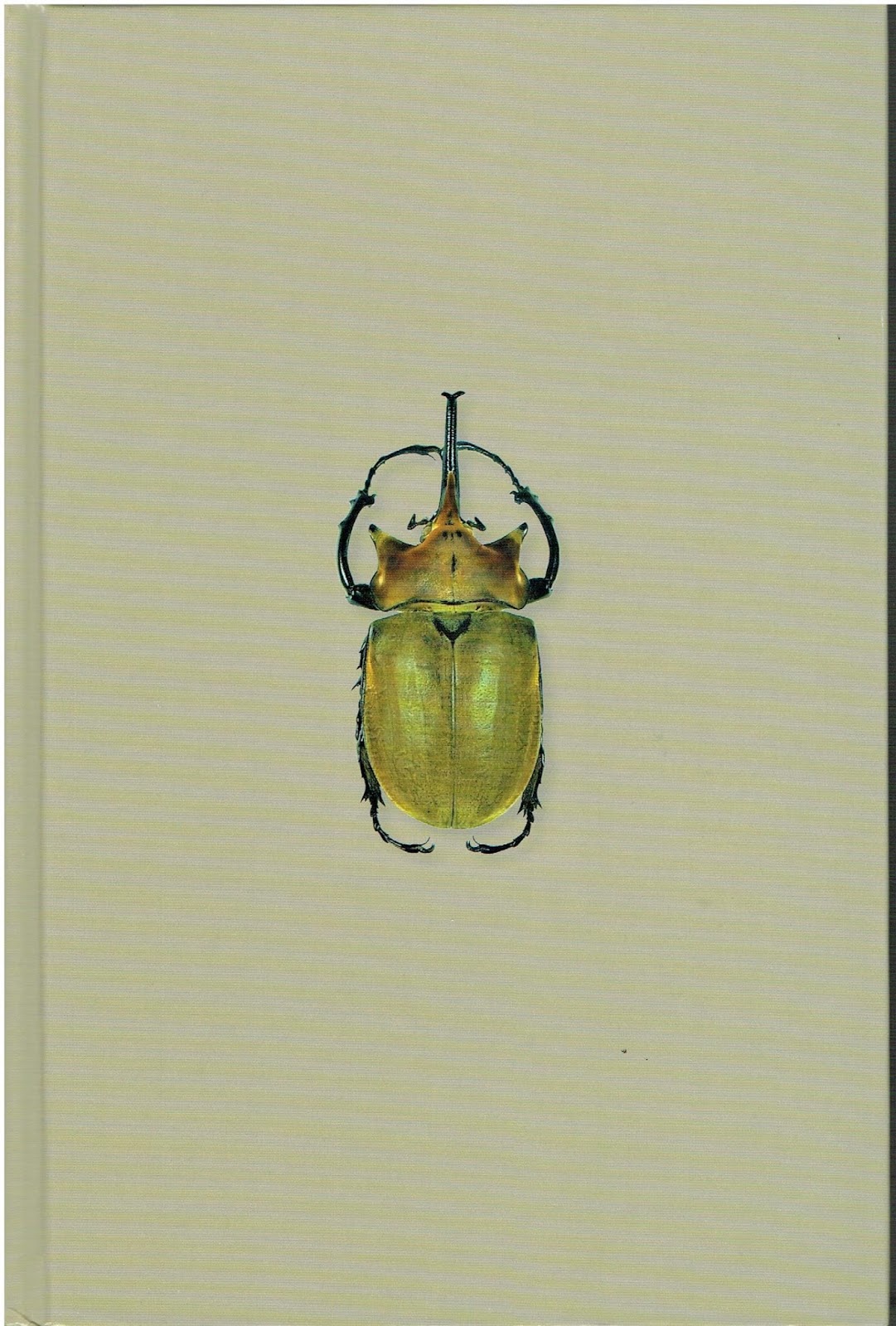
Front of the book, under the jacket
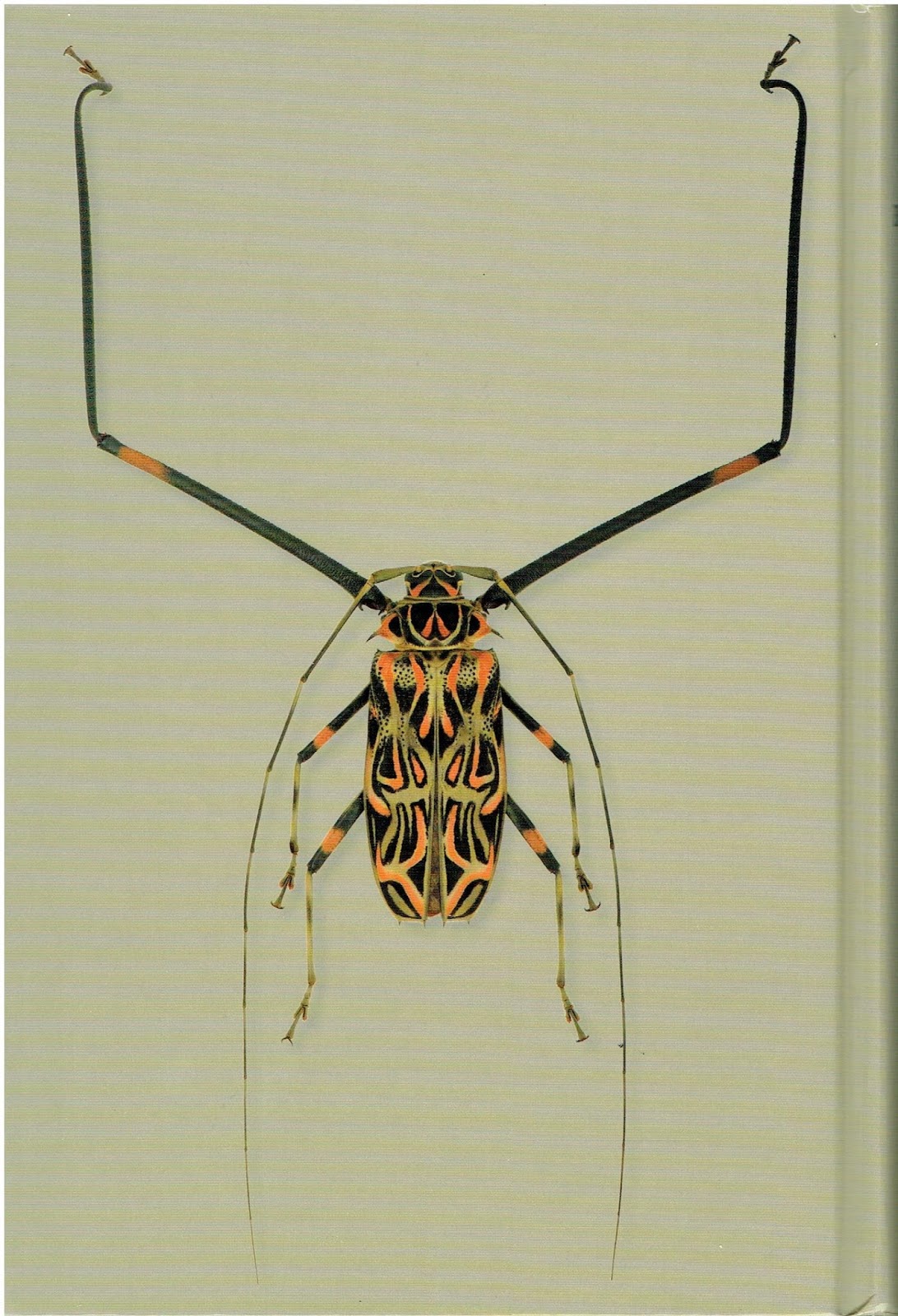
Back of the book

I know not every child is going to choose browsing through such a book to a video game, but for some, at a certain age, a book like this can open eyes to the wonders and dramas of the natural world. It’s a good book to have around the house for just such a day.  And for me, it’s a reminder of the strange beauty that exists on this planet.  We are finding out more and more that all species are interconnected.  Developing a respect and understanding of insects is important in understanding the complex web of life.   

On the University of Chicago Press website, they say:
When renowned British geneticist J. B. S. Haldane was asked what could be inferred about God from a study of his works, Haldane replied, “An inordinate fondness for beetles.”

You may find yourself with this same inordinate fondness, too, after reading this amazing book.  My young friend and I are both now hoping to one day see the Western banded glow worm and we’re keeping our eyes open for any interesting beetle that may scurry through our lives. 
Patrice Bouchard is research scientist and curator of Coleoptera at the Canadian National Collection of Insects, Arachnids, and Nematodes. He is the coauthor of Family-Group Names in Coleoptera and the award-winning Tenebrionid Beetles of Australia. Bouchard serves on the editorial boards of The Canadian Entomologist, ZooKeys, and Zoological Bibliography.
The University of Chicago Press is printing a wide variety of great books.  You can read more about them here.

Thanks for reading my blog.  Keep your eyes open. There’s wonder all around.
Beautiful endpapers, too.

A Gardener of Delight

Karishma, my 6 year old neighbor at Bridge Meadows, was delighted when The Little Gardner by Emily Hughes was published.  Hughes’ book Wild is one of Karishma’s favorite and she helped me review it here.  Now she has another favorite book.

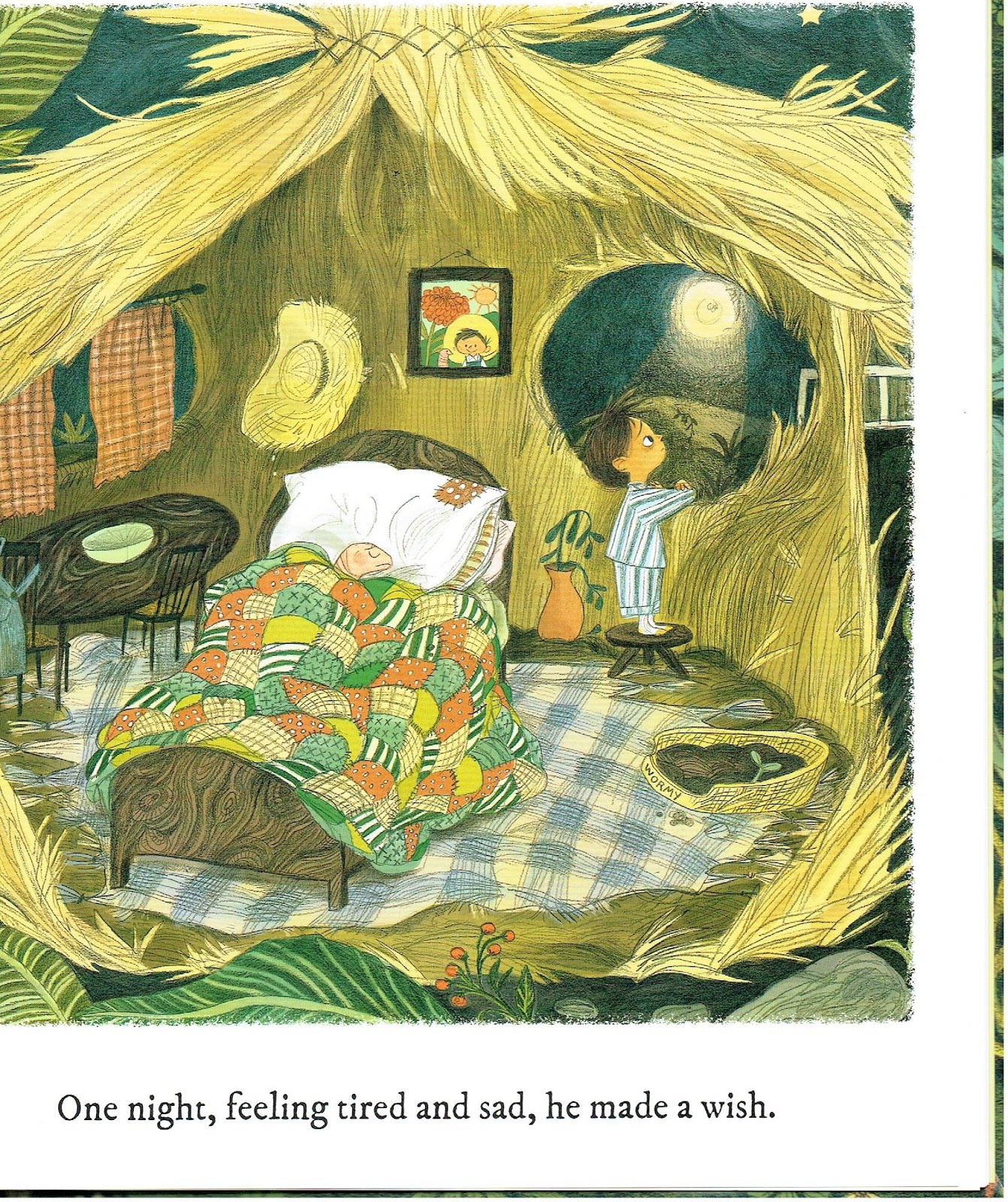
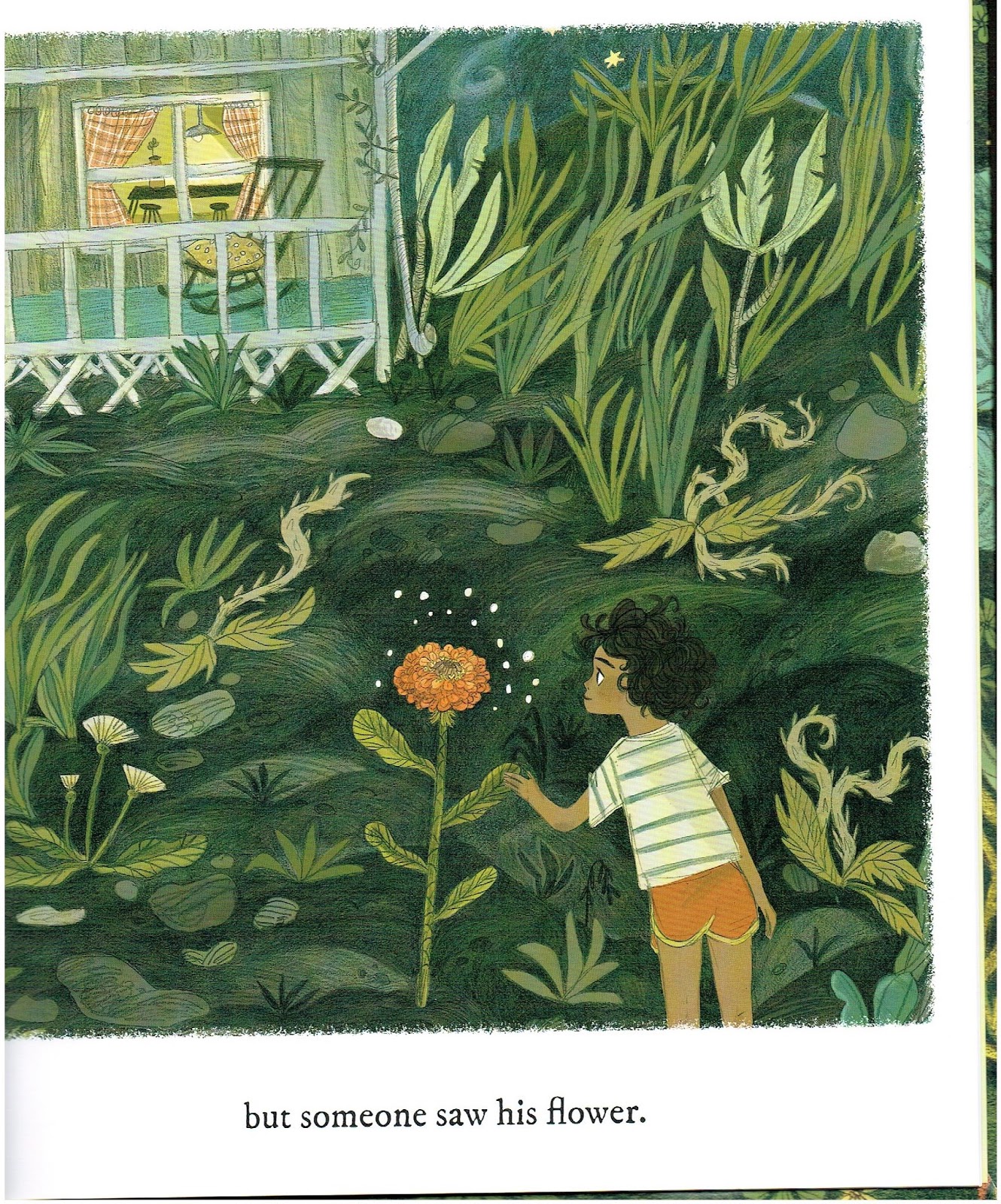
The Little Gardneris different from Wild on the surface, but it still shows the affinity children have with nature and wild things. It features a very small boy who lives in a very big garden.  He works and works in the garden.  
It’s his home and from the garden he gets everything he needs.  He is friends with worms and snails.  He tries to tend to his beloved plants and they depend on him, but he can’t manage on his own. 
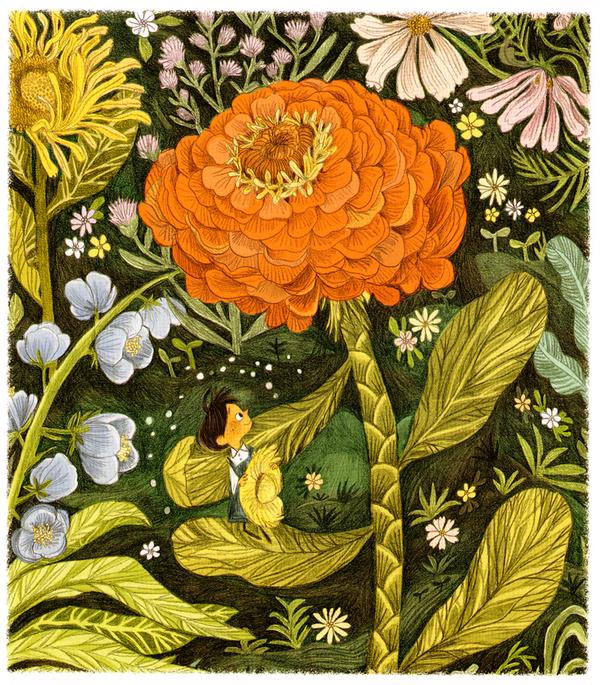
The one thing he seems to have the most success with is a flower, a magnificent zinnia, which isn’t something he can eat, but it brings him happiness and gives him hope.  It means everything to the little gardener.
A big girl notices this flower.  She lives on the edge of the garden and she sees that the garden needs help.  Inspired by the beauty of the zinnia, she begins to tend to the garden, too.  This help is the bit of magic that the garden needs to flourish.   
Children are often faced with tasks that are too difficult for them, no matter how hard they try.  This story subtly validates the experience of failure while keeping a sense of hope blooming.  I’m very impressed at how Hughes addresses the deep feelings of insecurity children have.  In The Little Gardner, she shows how the efforts little ones make, even if they don’t entirely succeed, inspire those bigger than they are. 
In her book Wild, Hughes brought out the idea that keeping a bit of wildness in your soul may not be such a bad thing.  In The Little Gardner, she shows how befriending nature and tending to a garden keeps hope in your heart. 
Karishma and I both loved this book.  The illustrations are of dense and we notice something new each time we read it.  We like that the girl who helps save the garden has dark skin.  As in Wild, Karishma likes to read the last line of the book first, and see how important a little gardener, or any little person can be.  It helps her navigate a sometimes confusing world.  It’s also inspired her to water and talk to plants during this hot summer.   She can’t wait to see the next book by Emily Hughes.
This book was published by Flying Eye Books and is beautifully bound, with a flower printed in white on the red binding.  You can see more of their books here.  
Here’s a video about my community Bridge Meadows in Portland, Oregon, which is set up to help children get adopted out of foster care: 
Thanks for reading my blog.  Now go read a book – in a garden if at all possible.

A Carnival Book

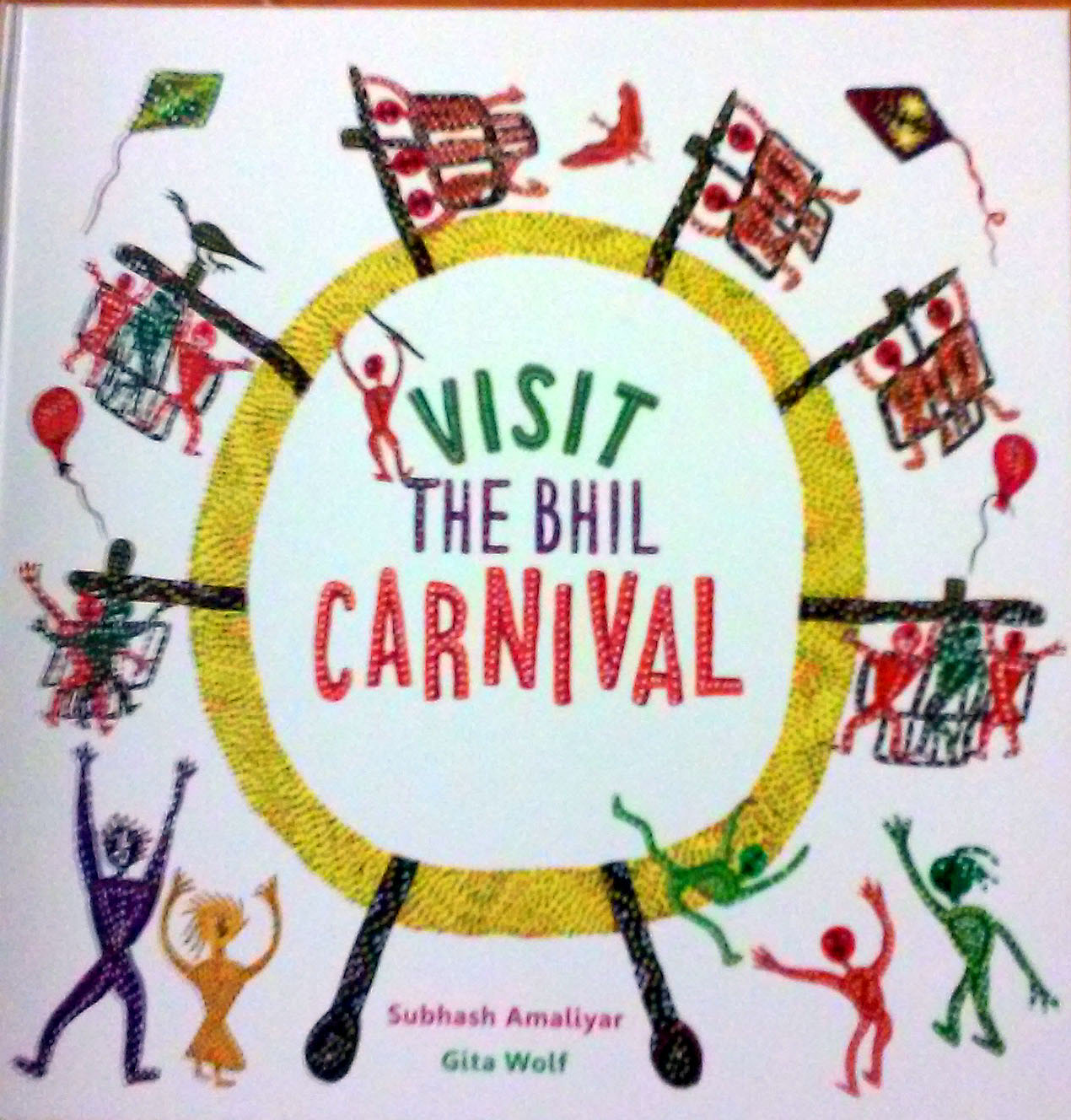
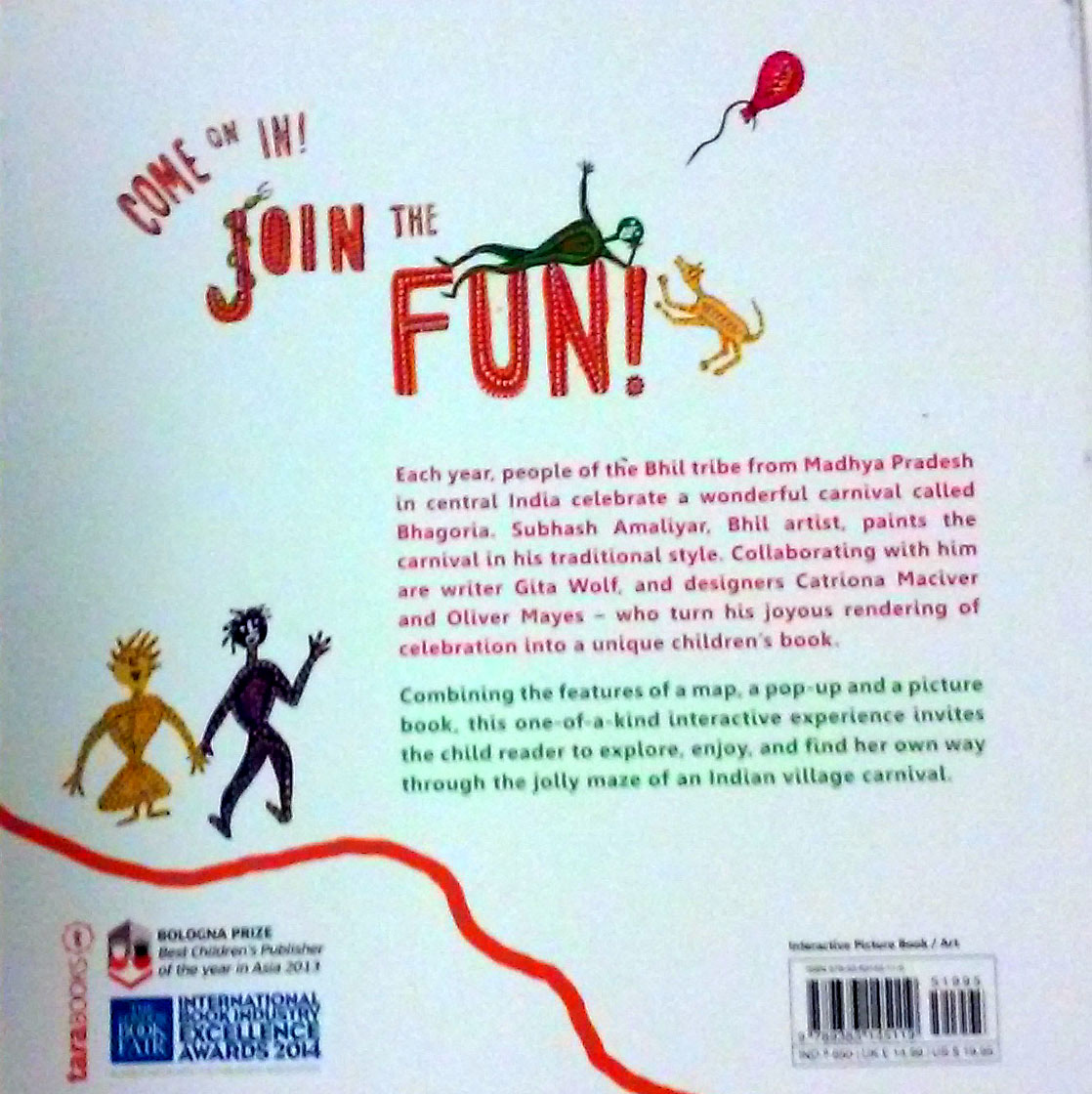
I love it when I find a book that pushes the book form in a new direction.  I love pop-up, accordion, lift-the-flap, die cut and all manner of interactive books.  I also love books that introduce different cultures.  Visit the Bhil Carnival by Subhash Amaliyar and Gita Wolf satisfy both loves and is a pure delight.    My pictures do it no justice, but you can get an idea of how much fun it is.
The book opens to a folded page.

We’re in invited in.
When I read it to one of my 6 year old foster grandkids, she was amazed that so much story and so many illustrations could be found in the one fold out page.  It sparked conversation about when she went to a fair and helped her remember all the fun she had.  We also talked about the many ways stories can be presented.
This fold out ferris wheel pops out when you lift the top part of the page.
The distinct nature of the illustrations are bright and inviting.  Everyone is lit up like a carnival ride.
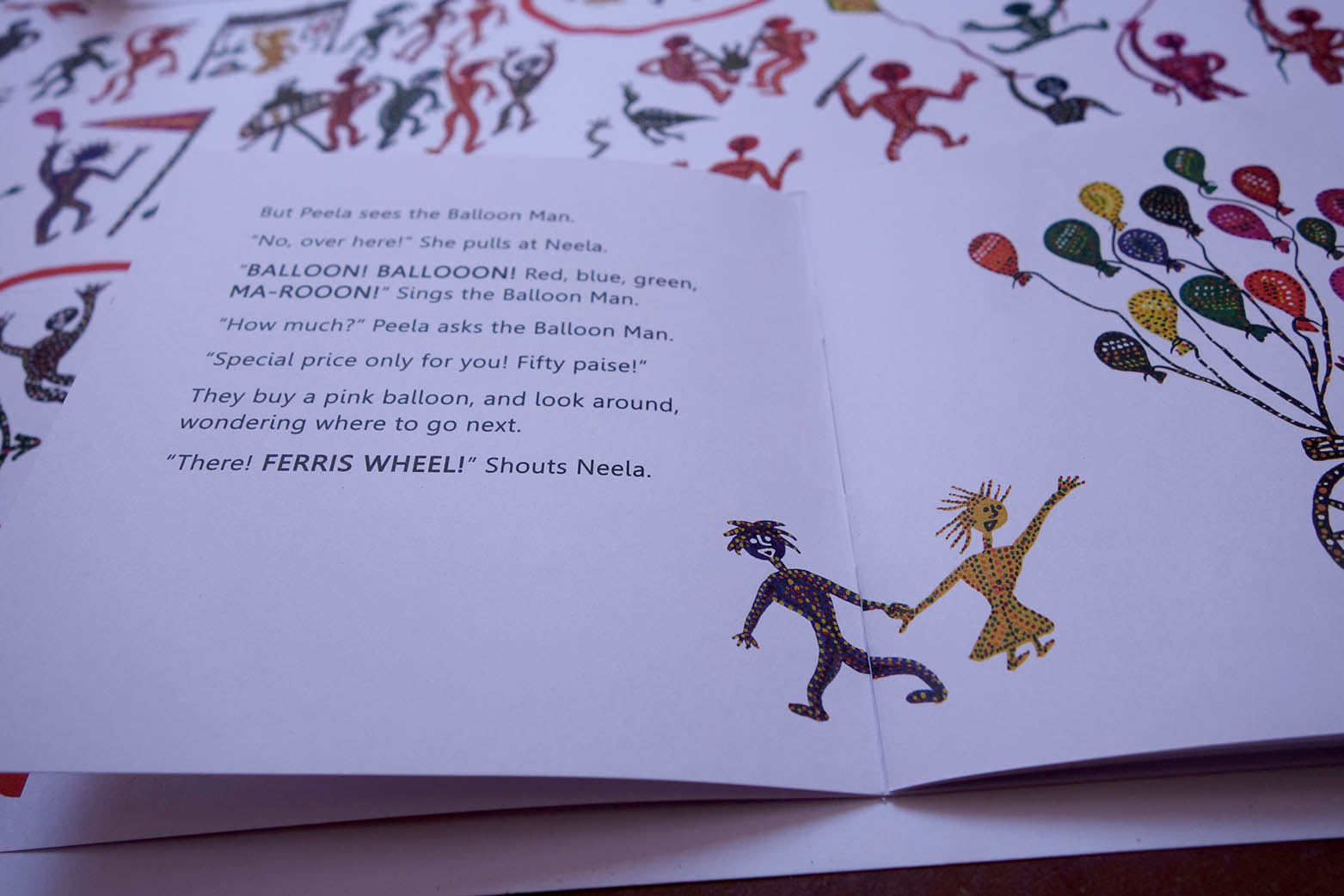
The exuberant art by Subhash Amaliyar is created in the style of the Bhil people of central India.  The Bhils live on the edge of the forest and work hard at farming, fishing, and gathering firewood.  The Bhagoria carnival takes place in July.  It’s a time to celebrate, connect with friends and family from other villages, and have fun.  Two children, Neela and Peela, are at the fair on their own for the first time.  Everything tempts them, they buy balloons, ice cream, and ride the ferris wheel. 
Tara Books has always been a stellar book publisher, introducing the world to the traditional art of India.  Many of their books use handmade papers, traditional printing techniques and hand sewn bindings. 
This book combines the features of a map, a pop-up and a secret story book, with the text in a little book in the corner of the fold-out adventure. 

You can read more about Tara books on a post I wrote on them here.  Their books are like art galleries that fit on the bookshelf.  You can visit their website here
This book is a delight in every way both for children and adults, for anyone who celebrates life, stories, and books.  Join the fun!