Older but No Wiser

Oh my friends we’re older but no wiser
For in our hearts our dreams are still the same.
–Gene Raskin
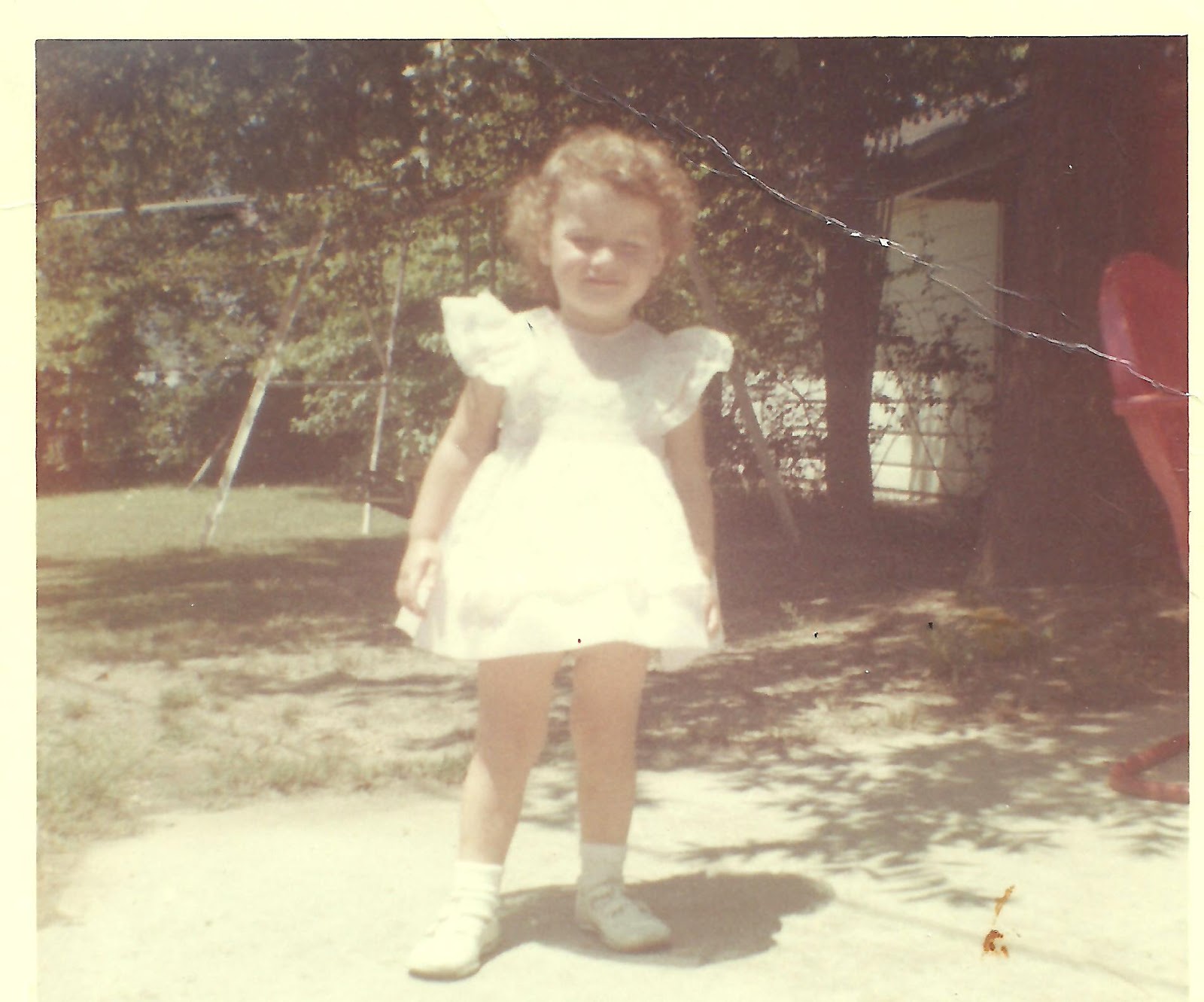
 

50 years ago
On September the 9th, I get to turn 52.  I say it that way because when I was about 16, I developed a mysterious neurological condition and my neurologist told me I might not live past 30.  I remained a medical enigma for most of my life, but my enigma didn’t develop into anything life shortening (so far).  When I was in my 40s, I found out I had an almost microscopic lesion on my spinal cord that was the cause of some of the major mystery, but my medical history still has many pages of studies that all conclude with the word “abnormal”.
One abnormality is that I’m extremely happy about getting older.  Every year after 30 is a gift.  I admit, there are dark days when life seems an overwhelming burden.  Wars, natural disasters, ongoing health problems, heart breaks, pain, violence, rudeness, grammar rules, bureaucracy, poverty, calories, politics — sometimes I just want to lie down and die – take that sweet eternal nap.  But I haven’t yet.  And I still get a huge sense of gratitude and wonder that I’m celebrating another year.  52!  Whee!
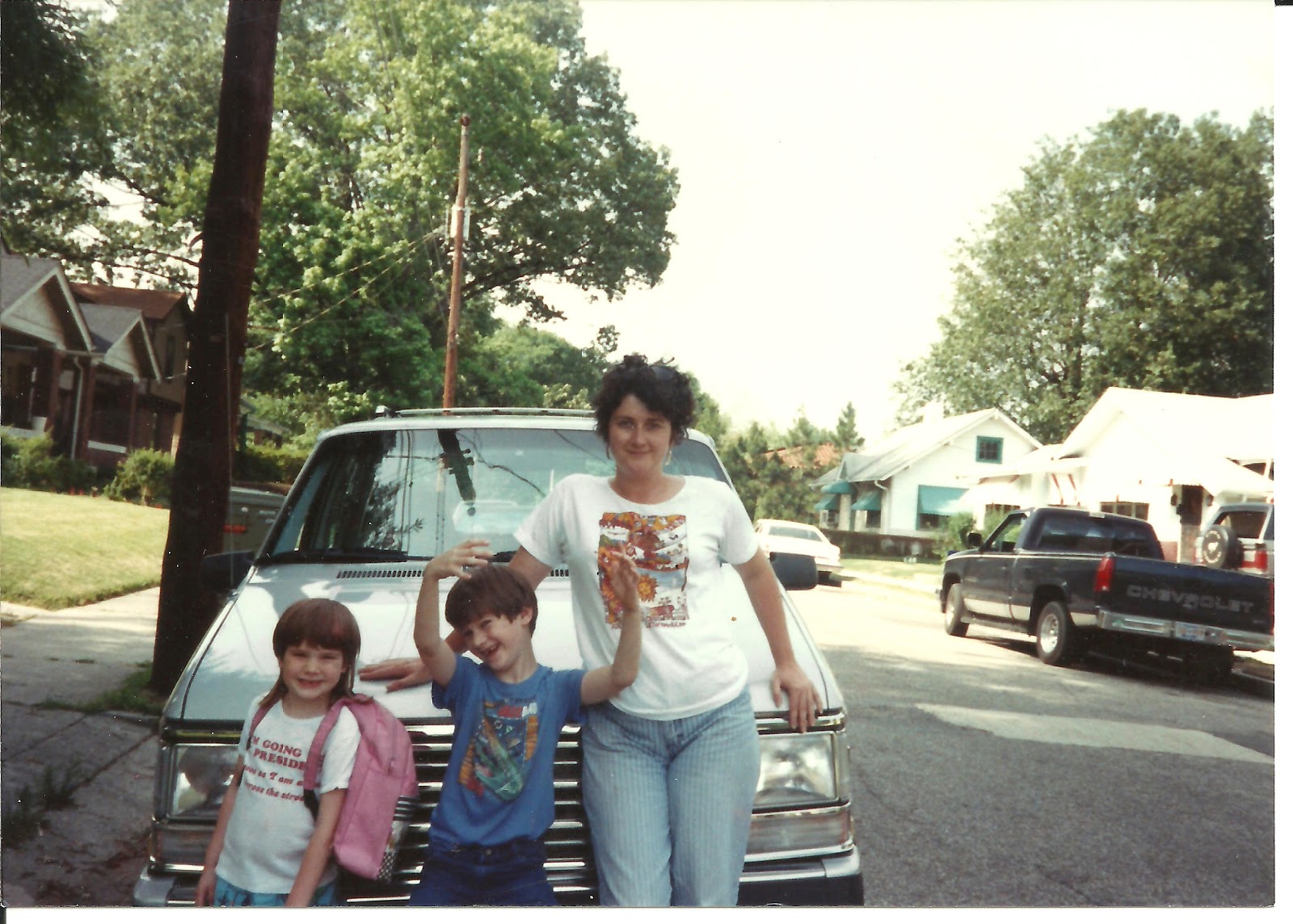
22? years ago
I’ve gotten to see my children grow up.  They are both approaching 30 and my life continues beyond me.  It was so very important me to have children and have that faith that life could go on.  It has and it does.  Imagine.  My life has been a roller coaster ride like everyone else’s, but I feel very fortunate each time I hit a peak, when life is full of potential and is as cool as an early Autumn day.
I LOVE getting older.  When I was younger, I was so worried about everything.  One worry I’ve noticed I’ve outgrown is how I look.  I used to cringe at pictures of myself.  I never felt like I looked good, to much face, too curly, too fat.  I had a very limited vocabulary for myself.  On the other hand, as a writer, I wanted a more expansive vocabulary for describing people, something outside the limits of beauty.  I wanted a language that didn’t include the word “ugly” as an option of describing a human being.
Because I had epilepsy at 16, I got involved with a lot of people who had disabilities and they were astonishingly strong and vibrant people.  A lot of us considered ourselves outsiders and visually unattractive.  But a lot of people who were healthy and practically “flawless”, especially girls and women, thought they were ugly.
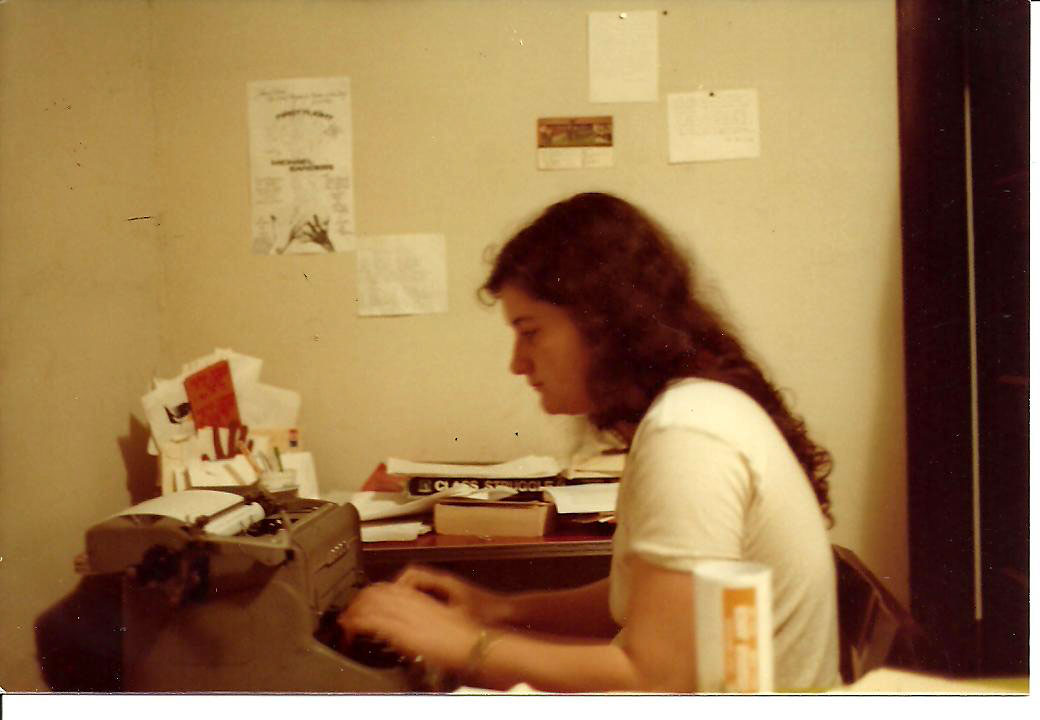
30 years ago
I began to write in a way that didn’t describe physical characteristics, to the point where, sometimes I would be asked what race my characters were.  I wrote a lot about people who lived in poverty and it was amazing to me what racial characteristics people attached to universal behaviors.  I began to describe more directly, but I still wanted to write stories about the essential person, not their looks.
A map of wrinkles that enlivened his face, a scar that burst like a star on the dark sky of her face, a pillowy body that promised comfort, eyes that sparked beneath heavy lids – there were many ways words could be use to compassionately describe people without resorting to the stark concepts of beauty and ugliness.
In the last few years, this way with words has come back to haunt me.  For the first time in my life I feel good about the way I look – even though, conventionally speaking, I probably look worse than ever.  I’m particularly astonished to find that I no longer cringe at pictures that show my goddess belly or my bonus chin.
or my cat scan
Does this walker make me look fat?
I let the kids here at Bridge Meadows take my picture with my camera, and they always catch me at my worst angle, under the chin.  Which is how they usually see me and they like me anyway.  I’ve let them take pictures of me with my glasses crooked and my hair a fright.  Last week, the United Way was filming stories of people here, and I let them film me after exercise class with my hair a wreck and every ice cream induced lump showing in my leggings and tank top.
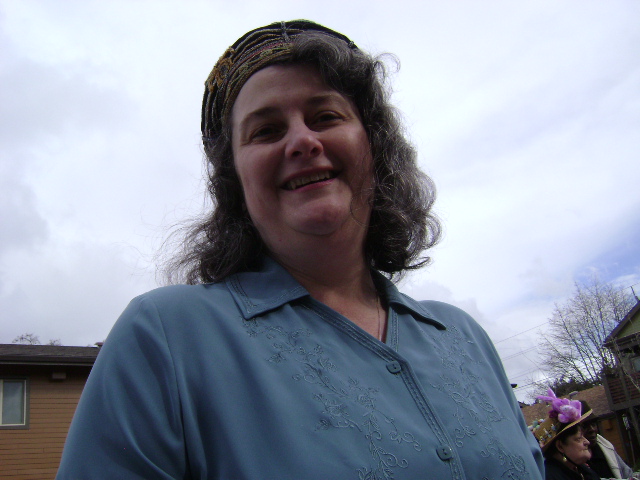
 

I still hear my younger hysterical self trying to stop me from these activities, but I tell her it’s alright and give her a pat and let the camera roll.  I love to dress up and accentuate myself, but I find I am compassionate and practically even loving with all of me now.
If I never get another present and don’t grow in any other way, this sense of self acceptance will be enough.  Life is too short not to enjoy one’s self or to waste time trying to live up to a concept of beauty so vague and tenuous we are all bound to fail.
I gave a painting to my 89 year old friend Juanita last night.  That negative voice popped up – we should stand up, I’ll look thinner.  Then I thought, why should I look thinner.  I am with a woman I love and admire who has lived 89 years.  I just smiled at the thought and let the camera click.
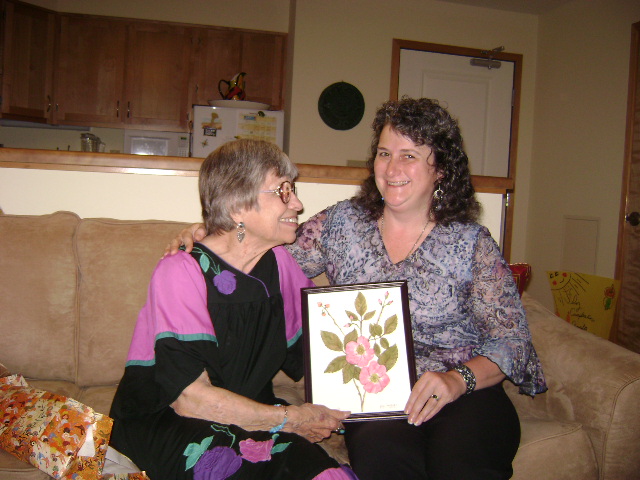
 I opened this essay with a quote from the song Those Were the Days.  I don’t know if self-acceptance is a part of being wise, to me it seems more about being happy — and that will do until some wisdom comes along.  Meanwhile, I plan to spend this year getting as many happy hugs as possible.
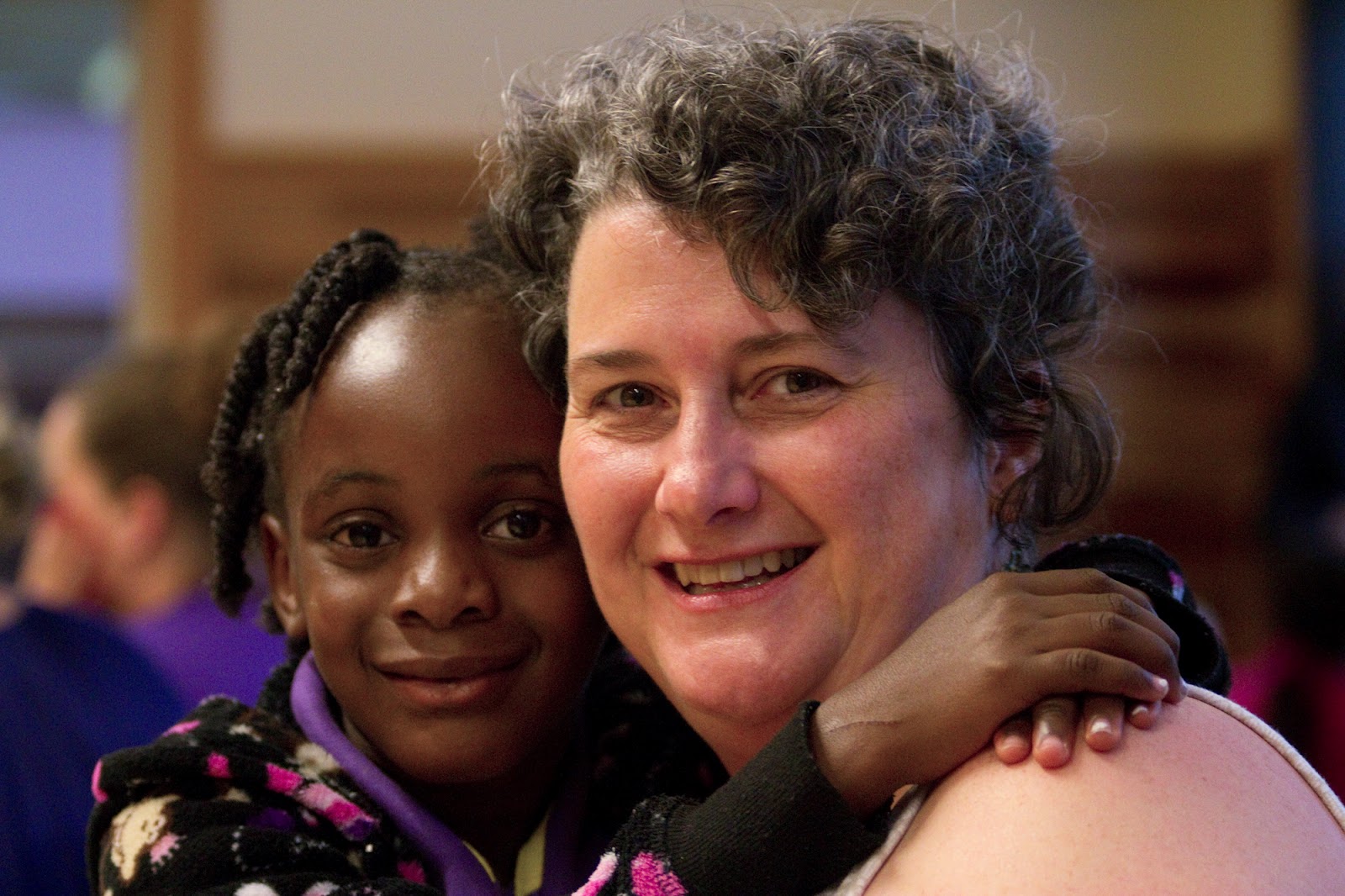
by photographer J E Underwood

Songs that Rise Above it All

I got word from Dean Brantley Taylor  that he’s got a new song out on the Chronic Fatigue Songs site. This is a site for songs he wrote and produced specifically for CFS/FM/Lyme suffers and chronically ill people in general.  The rest of ya’ll can enjoy them, too, because life is difficult and sometimes a good song about difficulties lightens the weight of it all.  The new song is called “Take Off.”

I’ve enjoyed Taylor’s music for a few years now and am happy to pass on this link to the new song.  He wrote it with Morgen La Civita, whose strong voice gives no hint that she suffers from Fibromyalgia.  She says,  “While I was only diagnosed with Fibromyalgia in the summer of 2011, like most people with chronic pain conditions, I suspect I’ve had it for much longer than that. I got the usual “You’re just a worrier” or “You just need more sleep” to the ever popular, yet unhelpful “Are you sure this isn’t all in your mind?”  I grew up with a mother that suffered from chronic conditions like CFS and Fibromyalgia and as a mother myself, I now see all the challenges that she had to cope with. People like us live for those rare and all too brief, pain free moments. And for me, music makes the time in between go by a little faster.” (Morgen La Civita)

The song represents the dream of Morgen and Dean to… untie the ropes of this illness so we can all “Take Off”  I think it speaks to a universal  yearning to be freed from the things that bind us in life.

 
There are now 10 songs on the Chronic Fatigue Songs site. 
 

I thought this was a great opportunity not only to share the new song, but re-post two earlier reviews of Taylor’s music that were posted on my old blog Chronically Inspired, and a guest blog he wrote himself.   

I am not a music reviewer, but I know what I like, and I always enjoy these songs. I’m also deeply grateful that we have the technology to share our music without having to be financed by music corporations.  If these songs move you, consider buying them and supporting the people who are so generously bringing music to us.  Enjoy the song and read on.

From January 2011:

Here’s a new video called “800 Yards Around,” written by Dean Brantley Taylor and performed by Bill Guance.  Taylor is going to write a guest post for Chronically Inspired next month on remaining creative and capturing the life that is given.  I find this song amusing and sad; there’s a little love and a bit of zen acceptance.  There’s a great epilogue where Taylor talks about the simple grace of his 5% capacity.
Enjoy! (I recognize several of the medication bottles that are featured.)
http://www.youtube.com/watch?v=1kWBH2qYiyE

From February 2011

Dean Taylor writes songs about life — his life happens to include chronic illness and fatigue.  That’s the material he uses for his soulful songs. I asked him to do a guest blog and share some of his creative process.  I love that he works on scrap paper — my whole creative life is on post-it notes and notebooks scattered around the house.  His song 800 yards around is a wonderful song of how we have to live within our limits, but within them, there is time for music.  We all need songs like these.   There should be more songs about our struggles with illness — perhaps with song writers like Dean around, there will be. ~Joy

Hi. It is an honor to write this guest blog. My name is Dean Brantley Taylor. I am a songwriter who has had Chronic Fatigue Syndrome (CFS-ME-Lyme) since 1993. By 1999, I became too fatigued to work. I had to quit most everything and severely limit everything else: walking, standing, talking, typing, reading, watching TV … everything.

I even tried to stop listening to music because listening makes my symptoms worse. Apparently, my subconscious mind didn’t like this, because it started creating music in my head, and I became a songwriter. It’s funny but CFS created something that actually helps me deal with my CFS. Here are a few ways that songwriting helps:

1.      Gets the emotions out. A lot of my songwriting is influenced by my CFS experiences. The words, the melodies and singing the songs in my head all help me to express the emotions, the frustration, the confinement, etc. Some of the songs I sing in my head are streaming here: www.cfssongs.bandcamp.com . “Fragile,” “Faith” and “800 Yards Around” are good examples of songs that get my emotions out. “800 Yards Around” is particularly cathartic for me. I’ve sung it thousands of times in my head. It’s strangely fun to sing. I even did a video for it .. www.youtube.com/ChronicFatigueSongs .

2.      Makes me feel productive, passes the time. I have to sit alone, quiet, doing nothing for hours every day. As you know, that can get very boring and very hard to do. Writing songs in my head helps me pass the time and makes me feel productive. Over the years I have scribbled down lyric ideas on lots of scrap paper .. lol. I’ve got a lot of melodies in my head.
3.      It’s a work substitute. By taking baby step after baby step over the past decade, I’ve been able to put together a pretty nice song catalog and have established internet working relationships with co-writers, as well as producers, vocalists and musicians. Working on songs gives me the teamwork feeling that I used to get from my job or playing sports. We all have a common goal and work toward it, supporting each other and sharing in the successes, failures, fun and frustration along the way. Our songs are even starting to make it onto CDs and into films and TV shows. Here are some songs I co-wrote with Marc Blackwell; we put together a CD .. www.marcblackwell.bandcamp.com. It’s even on iTunes and Amazon. I think that’s pretty cool! Most of my other co-writes stream here: www.soundclick.com/DeanBrantleyTaylor .

4.      Meeting friends. Since I got CFS, I haven’t made many new friends in person. It’s too tiring to go outside my apartment or talk (in person or on the phone). But over the years, I’ve made quite a few good friends on the internet by working on songs with them.
Well, that’s all for now. Thanks for letting me blog at you.
Dean Brantley Taylor
***

From December 2011- Holiday Help
 

I got an email a few days ago from Dean Brantley Taylor, a songwriter with Chronic Fatigue Syndrome, Myalgic Encephelomyelitis, Fibromyalgia, Lyme, Multiple Chemical Sensitivity and Gulf War Syndrome, with a link to a new video of his song Fragile, performed by Lee Johnson.  It’s a tender, mournful song and a nice respite from the overly bright manic music of the season.

The holidays are the time when it’s easiest to fall into depression and to over-extend ourselves.  Perfectly healthy people are vulnerable, but those of us with chronic health problems, pain and fatigue are even more susceptible.

Even though we can be sane and thoughtful and careful all year long, this is the time when it really hurts not to be able to keep up with our healthier family members and friends.  So today is a good day to sit back, rest and listen to a song that honors fragility.  Think of how carefully you might treat a family heirloom ornament, or a delicate paperwhite narcissus.  Appreciate your own fragile beauty.  You are a gift to the world — your insights, your survival, your very being are all gifts to the world.  Take good care of yourself this season.
http://www.youtube.com/watch?v=kQbdPF4VJkA

Lee Johnson

Visionary Artist Dan Rhema

I just got word that Dan Rhema is posting his autobiography, When I Was A Ghost, My Journey Back from the Other Side on his website Danrhema.com.  He’s just posted the first chapter and will be post them regularly.  I reviewed his ebook I Close My Eyes to See last October on my ChronicallyInspired blog.  I thought this would be a good time to re-post hereIt’s a gorgeous book filled with color and hope.  Illness can be a devastating life changing event — or it can be a metamorphosis into a new life.  I love how art in its many forms became the saving grace for Rhema and I look forward to reading his bio.


 (Told through a unique pairing of Dan’s words with over one hundred pieces of his art, I Close My Eyes To See is the story of Dan’s extraordinary journey from near death to new life.  I Close My Eyes To See is designed for the ipad and color tablet format and is best viewed in the vertical mode. It can be read on NOOKcolor, Nook for ipad, Nook for PC and, on iphones and android phones. It is now available on barnesandnoble.com, amazon.com and will soon be released on the itunes bookstore)

I Close My Eyes to See:  The Dan Rhema Story as told to Kevin Wilson

Dan Rhema contacted me over a month ago to ask if I would review his ebook, I Close My Eyes to See.  Unfortunately I didn’t have time at the moment.  And from first glance, I knew that it would be a very interesting read so I wanted to make sure I could read it on a calm day when I wouldn’t be distracted.  Now that I’ve read – or I should say experienced the whole book — I wish I’d had time sooner.
Dan Rhema is an extraordinary artist and storyteller who suffered a life altering illness and near-death experience.  In 1991, he was living with his wife and 3 daughters in Mexico, directing an international training center.  An epidemic of Dengue fever spread through the town and he contracted 3 different strains of fever, which deteriorated into meningitis and encephalitis.
He says, “I traveled out of my body and began journeying down a long dark tunnel. As I progressed down the tunnel, I remember thinking that I did not want to die without my wife and children being with me. My progress down the tunnel ended and I began the long struggle back to consciousness, one level at a time.”

His illnesses ravaged his memory, which became “like swiss cheese,” with holes and detours.  Things he remembered were out of context and disjointed.  He felt like his head was on fire.  He felt like he was floating and had to grip the headboard of his bed to rest.
Before the fever he was very minimalist in his possessions, afterwards he was compelled to collect objects all the time.  At a family reunion, he discovered he could remember things if he put them in a story.

He began to keep a dream journal.  Although before the fever he never did art work, he began to create assemblages that took on a life of their own.  He began to paint – with his fingers like a child.  These compulsions made him fear he was going crazy, but through them he began to be able to reconnect aspects of his life and mind and soul.
He had created 15 sculptures before Susan found an article on outsider and visionary art and it gave him hope that he wasn’t going insane.

He was re-creating himself.  And this book is a beautiful telling of how he did so.  The text is minimalist and the story unfolds through the art.
This is the first “art” book I’ve read on the computer.  I don’t have a Kindle, or Nook or any kind of eReader.  I read this on my computer with Adobe Reader and the images came through beautifully.

The sculptures are muted and have a floating quality; the paintings are bright and imbued with intense energy.  There is a narrative quality to each, and a mystery.  The art tells the story not so much of survival but of rebirth.  There are deep spiritual overtones.  Dan seems to have a firm foot in this world and that world beyond mortal life.  I know I will read and look at this beautiful book again.  I am especially grateful to have experienced this book as we go rushing into the holiday season and are inundated with mixed messages about rebirth and gift giving.  This book is a real gift, unique and hard-won, that floats between reality and unreality; that celebrates the mystery of the future and the divinity of the present.
And I’m really looking forward to reading his children’s books.
You read more about Dan Rhema at danrhema.com.