The Delights of Pettson and Findus

There’s nothing more delightful than finding a storybook that is visually engaging, tells a funny story, has great characters and a good plot.  Findus Disappears! (The Adventures of Pettson and Findus) by Sven Nordqvist, published by NorthSouth Books, 2014, is that book.  Nordqvist is a Swedish writer who wrote and illustrated a series of books about Pettson, a forgetful and eccentric old farmer and his cat, Findus. 
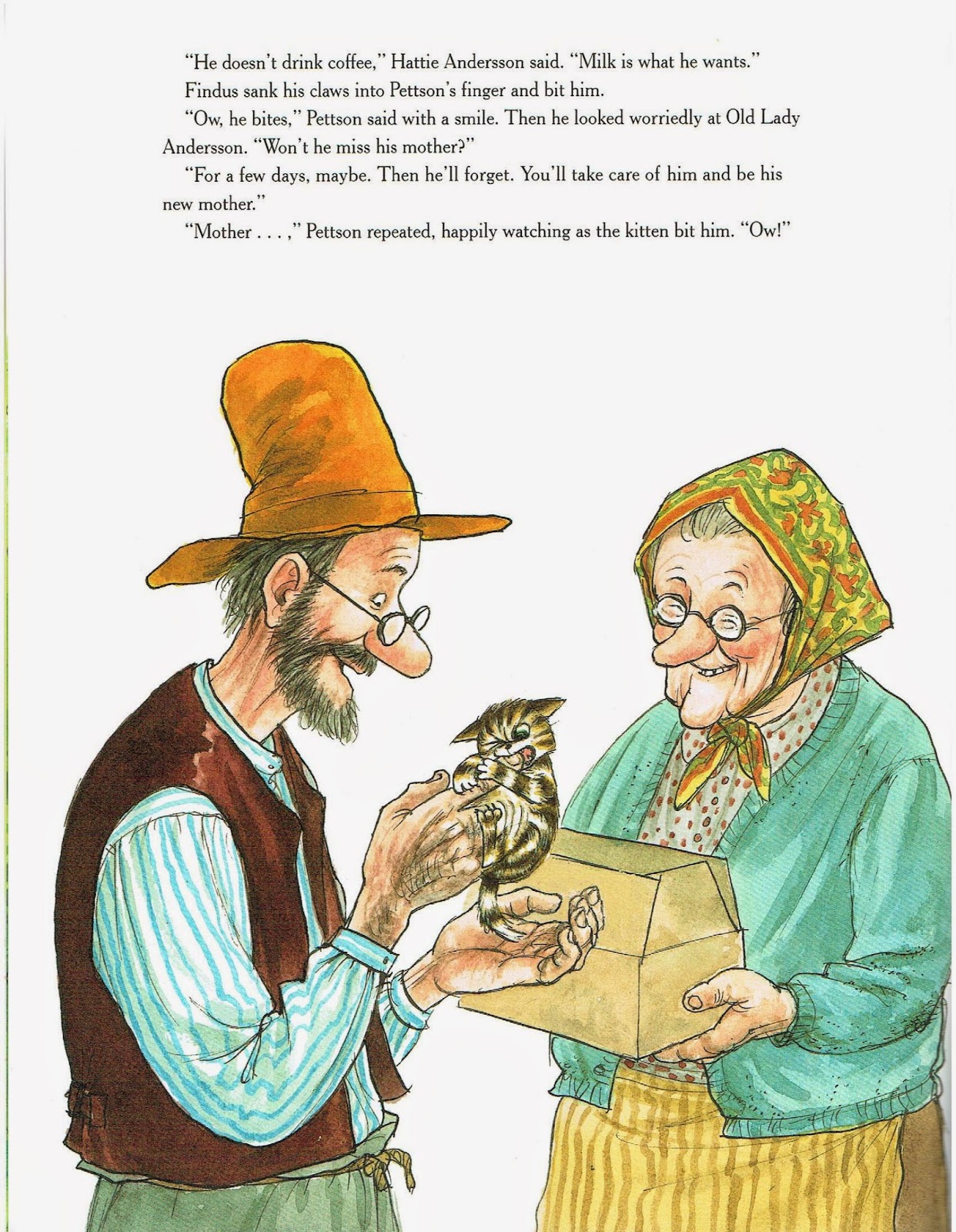
Findus Disappears!tells the story of how Findus came to be Pettson’s companion (he’s so much more than a pet.)  Pettson’s a lonely old farmer.   His neighbor suggests he get a wife, but Pettson is daunted by that thought: “I’m too old now.  A whole woman – that would be too much.”  So the neighbor brings him a kitten in a box labeled “Findus Green Peas.”  Pettson names the kitten Findus and thus begins a charming story filled with humor and magic.
The illustrations are astonishingly imaginative and beautifully executed.  In Pettson’s world there are strange creatures peeking out of cups and hanging from lampshades.  His house and farm are furnished with unique objects like nails hanging on a clothes line, melting pencils, giant teapots and tiny teacups.  His bed side table has skis.  Chickens roam the house.  The salt shakers is hung by a rope under the radio. 
Findus seems like a normal enough kitten until he sees a clown in the newspaper that Pettson is reading.
Findus looked for a long time at a picture of a clown in big striped pants.
“’I want pants like that,” Findus said.
Pettson stared at him.  These were the cat’s first words. 
“Then you shall have some,” the old man said.  “I’ll sew you a pair of pants right away.”

These were the kitten’s first words but not his last.  He becomes a chatty, playful friend to Pettson and fills the emptiness in his life.
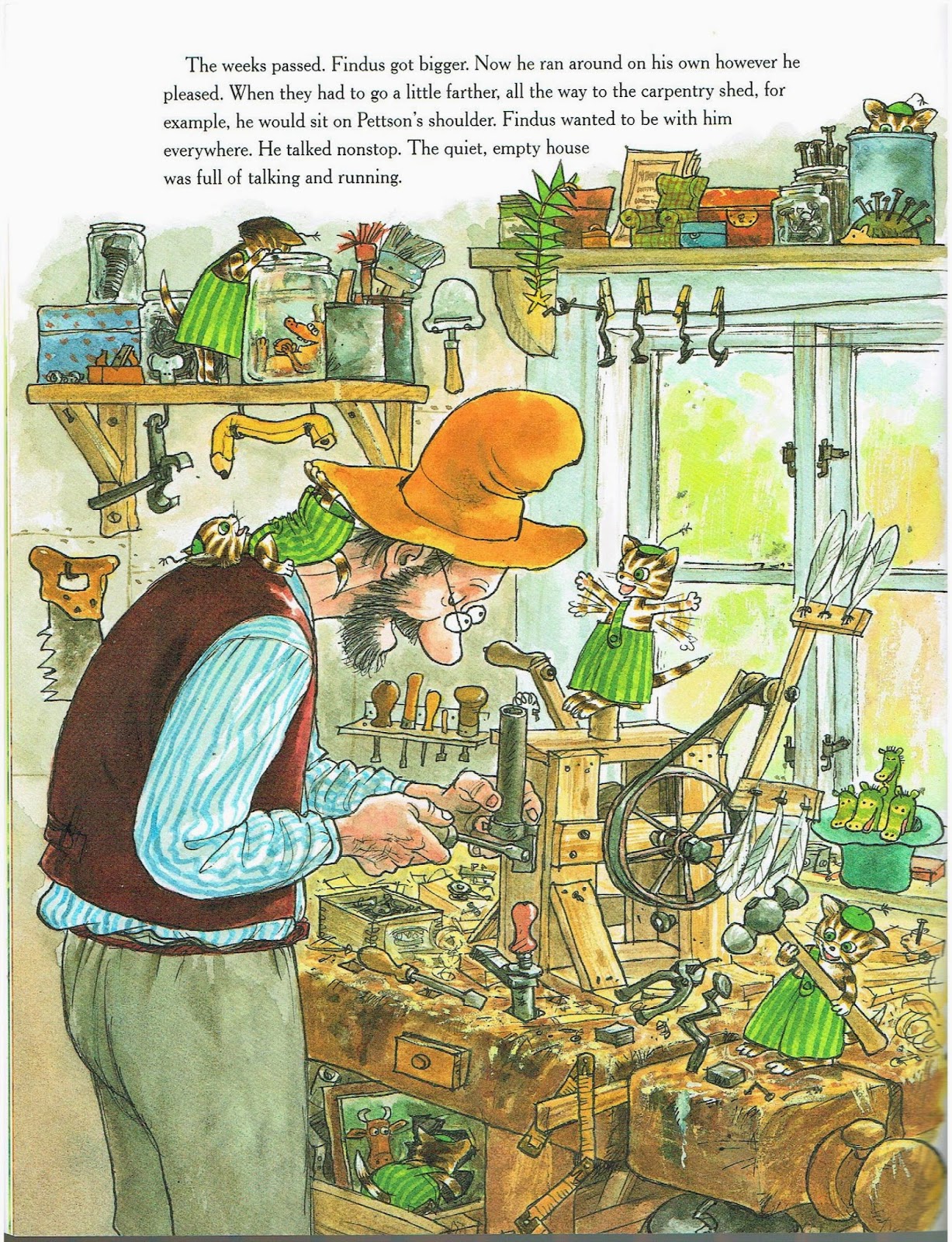
That kitten is everywhere!
Findus explores the house and sees creatures — mumbles, they’re called — that Pettson can’t see.  (The mumbles hide Pettson’s socks and move things around.)  Findus gets more and more brave about exploring the farm, but one day he gets frightened by a creature he’s sure is looking for kittens to eat.  He has to hide, and then he gets lost.
When I read this story to kids at my community center, they kept scooting closer and closer to me, they wanted to see everything and they wanted to know what was going to happened next.  They asked that the book be passed around so they could see it up close because the illustrations are so compelling.
A tender and expressive illustration of  Findus’s fear 
Nordqvist’s said he is inspired by the delights of everyday life and that delight is very present in the details of each page.  Each time you look at one, you’ll find a hidden world – steps going up the stem of a plant, giant apples, and mumbles hiding everywhere. 
Nordqvist also said these stories were inspired by his loving observations of his two sons when they were younger.  His appreciation for childlike antics and nature and imagination all shine forth in his work.  
NorthSouth Books plans to publish a whole series and I look forward to reading them.  And so do the kids I read to.  This story is a pleasure in all regards.
NorthSouth Books publishes beautiful books by international authors and illustrators.  Check out their catalog here.

Thanks for reading my blog.  I appreciate any comments.

First Comes Love, When Comes Marriage?

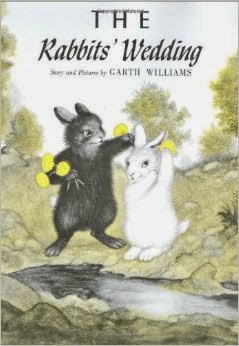
In 1959, Alabama Senator E.O. Eddins tried to ban the book The Rabbits’ Wedding by Garth Williams in his state’s libraries and schools.  Garth Williams was the beloved illustrator of such books as Charlotte’s Web, Stuart Little and the Little House series.  His book The Rabbits’ Wedding, written for children ages 3-7, showed the marriage of a white rabbit to a black rabbit.  Senator Eddins and the White Citizens’ Council of Alabama were outraged that it promoted interracial marriage.  Librarians, great heroes all throughout history, fought this.  While the fear mongers didn’t succeed in an outright ban, the book was put on special reserve shelves.  Williams was surprised by the controversy and said, I was only aware that a white horse next to a black horse looks very picturesque. 
At the time, there were 17 states where it was illegal for people of different races to marry.  
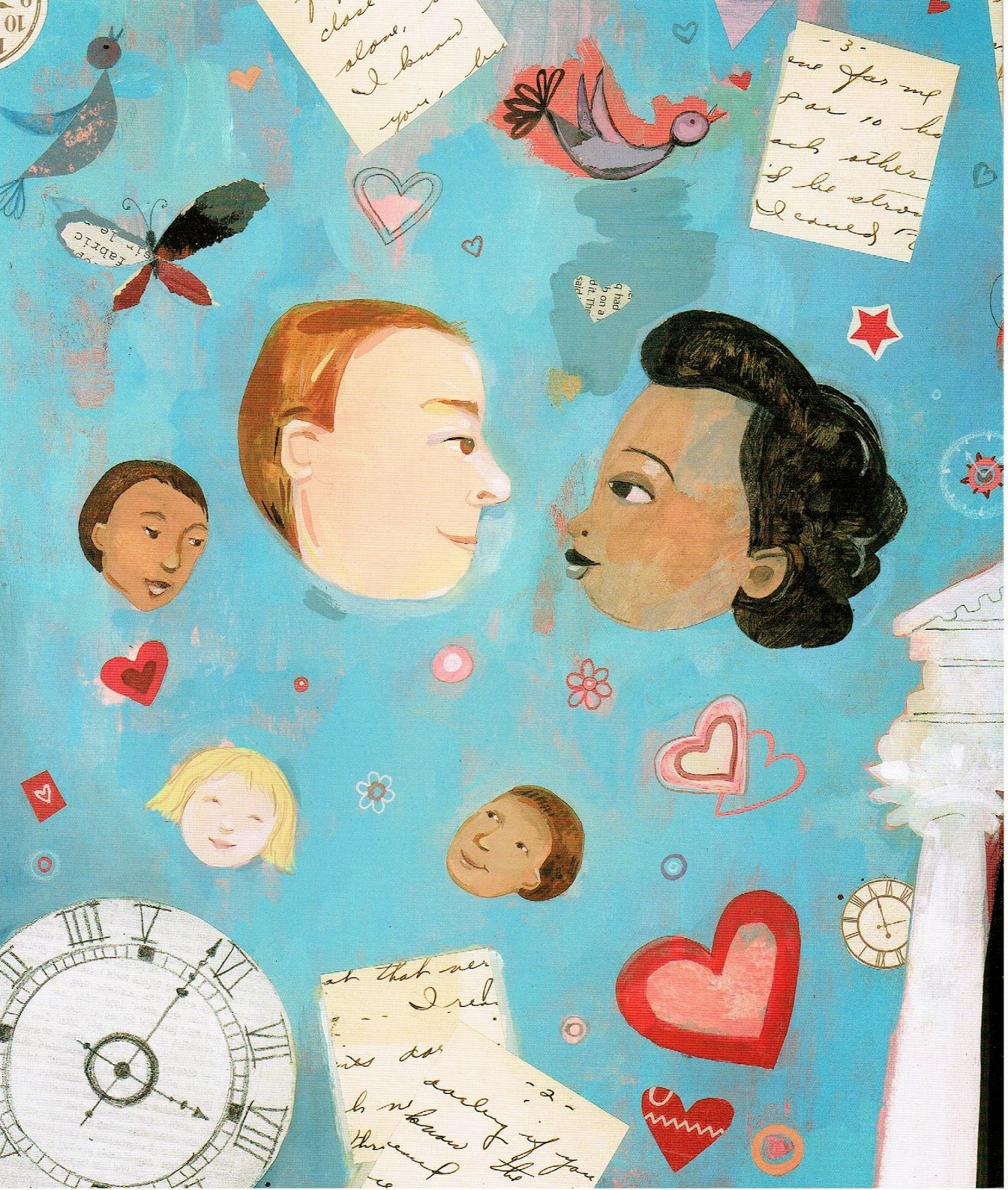
Nevertheless people of different races were falling in love.  In 1958, Richard Loving and Mildred Jeter did so in the little town of Central Point, Virginia, one of those 17 states.
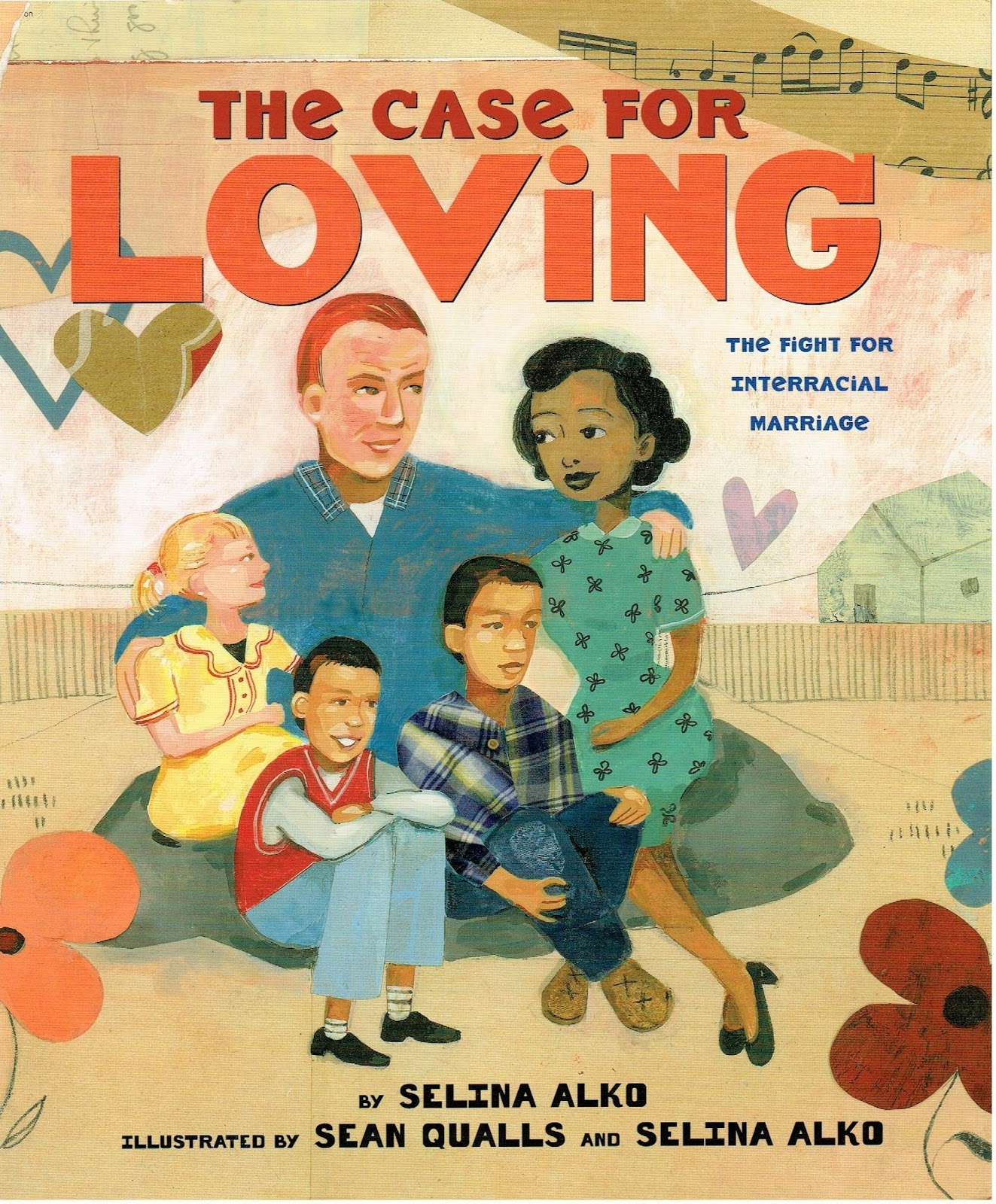
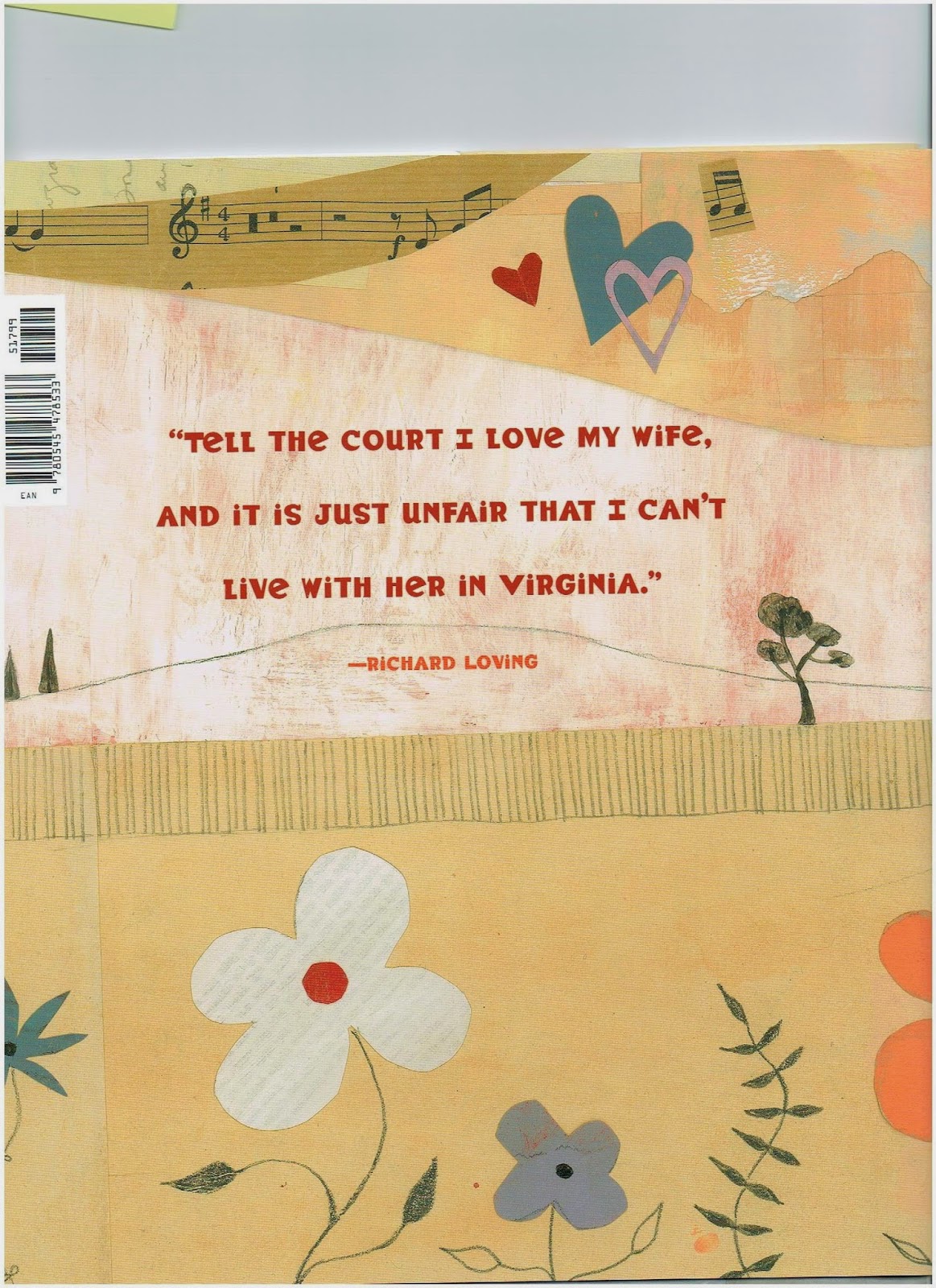
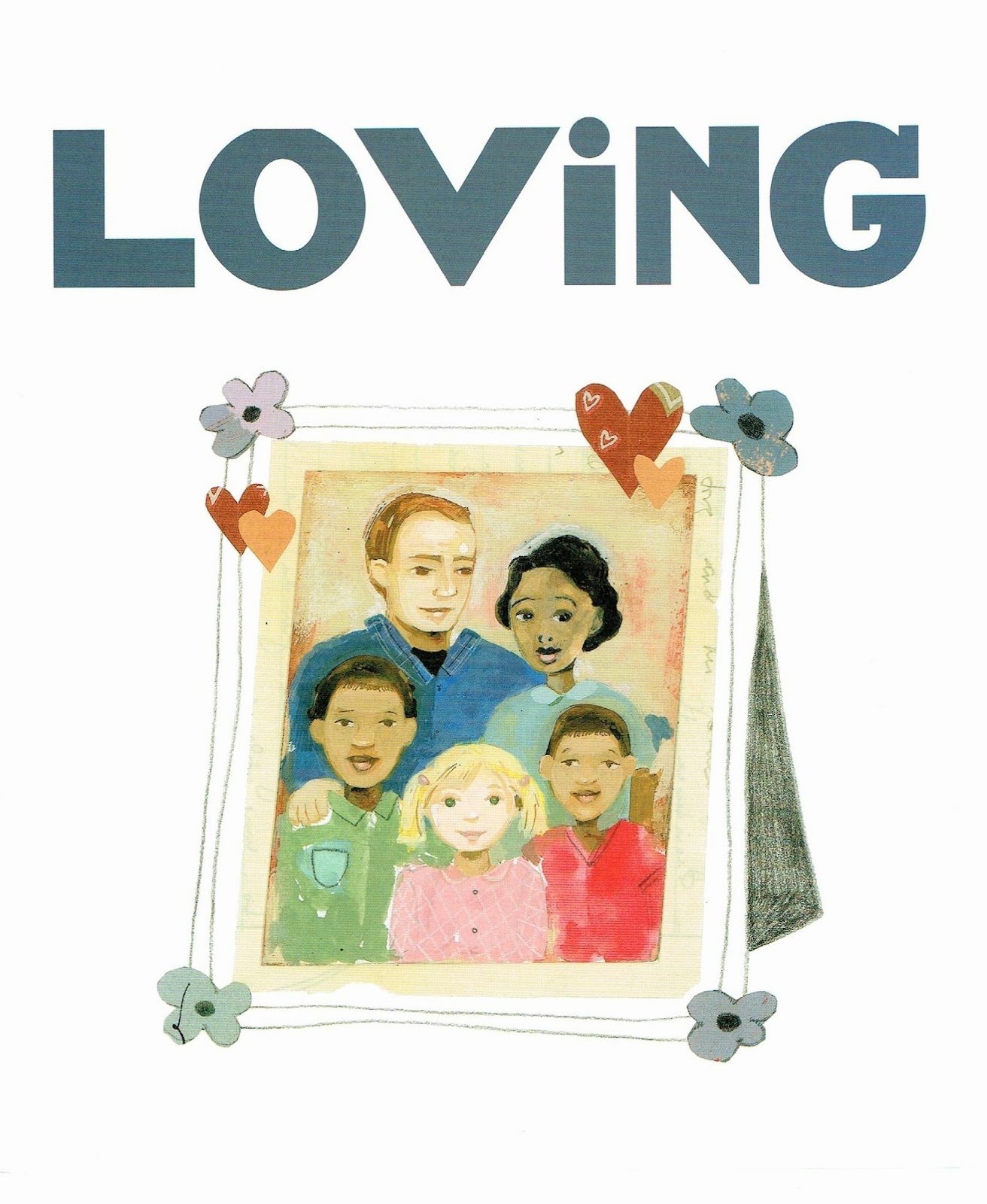
Their marriage and their determination to live in Virginia as husband and wife is the subject of The Case for Loving: The Fight for Interracial Marriage by Selina Alko, illustrated by Sean Qualls and Selina Alko.  It will be released for by Arthur A. Levine/Scholastic books on January 27th, but many booksellers are taking pre-orders for it.  Everything about this book is compelling.  It’s marketed to ages 4 to 8, but it’s really appropriate for all ages. 
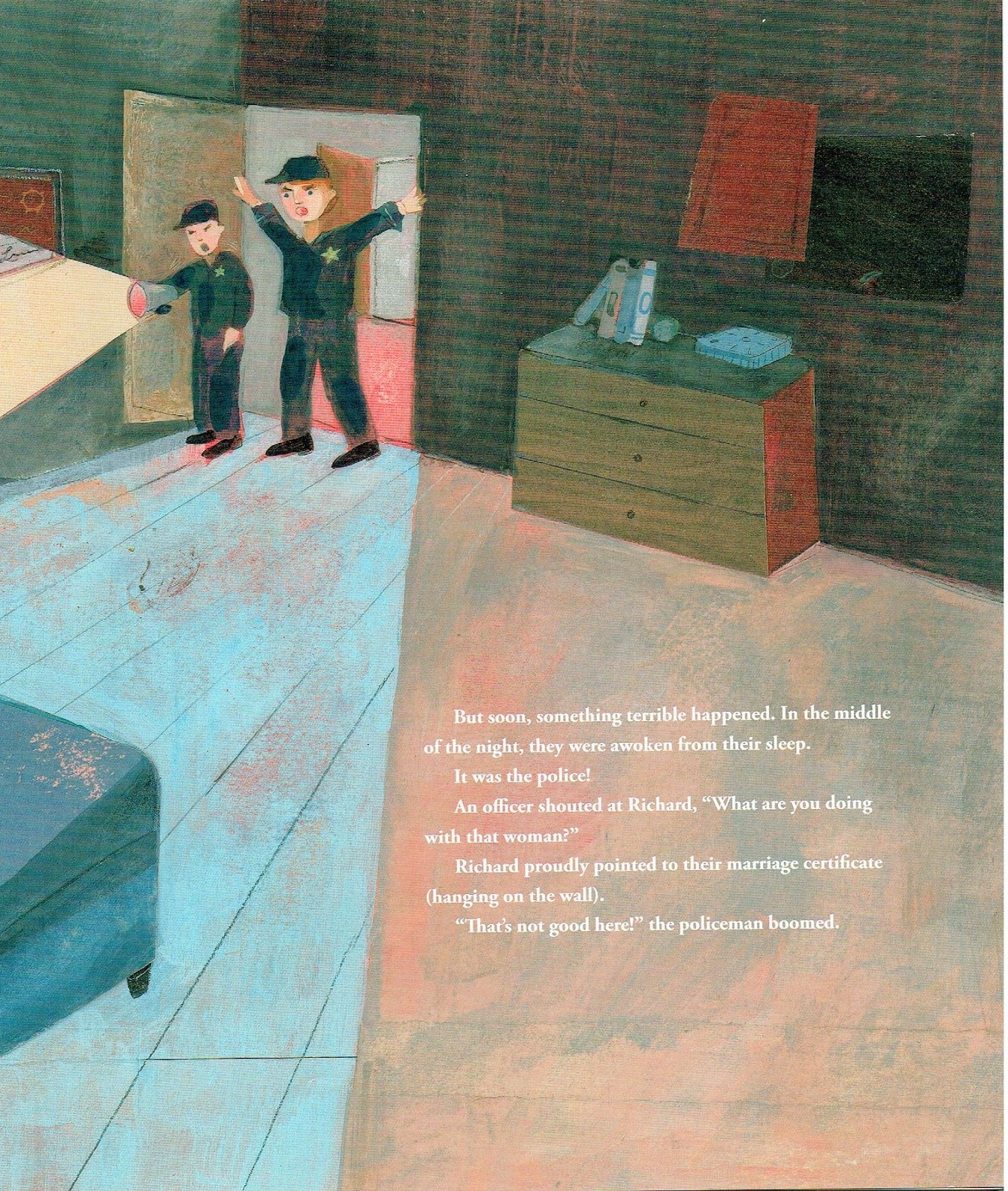
Richard and Mildred got married in Washington, D.C., but when they came back to their hometown to live, they were arrested – pulled from their bed – for violating the state’s law against interracial marriage. 
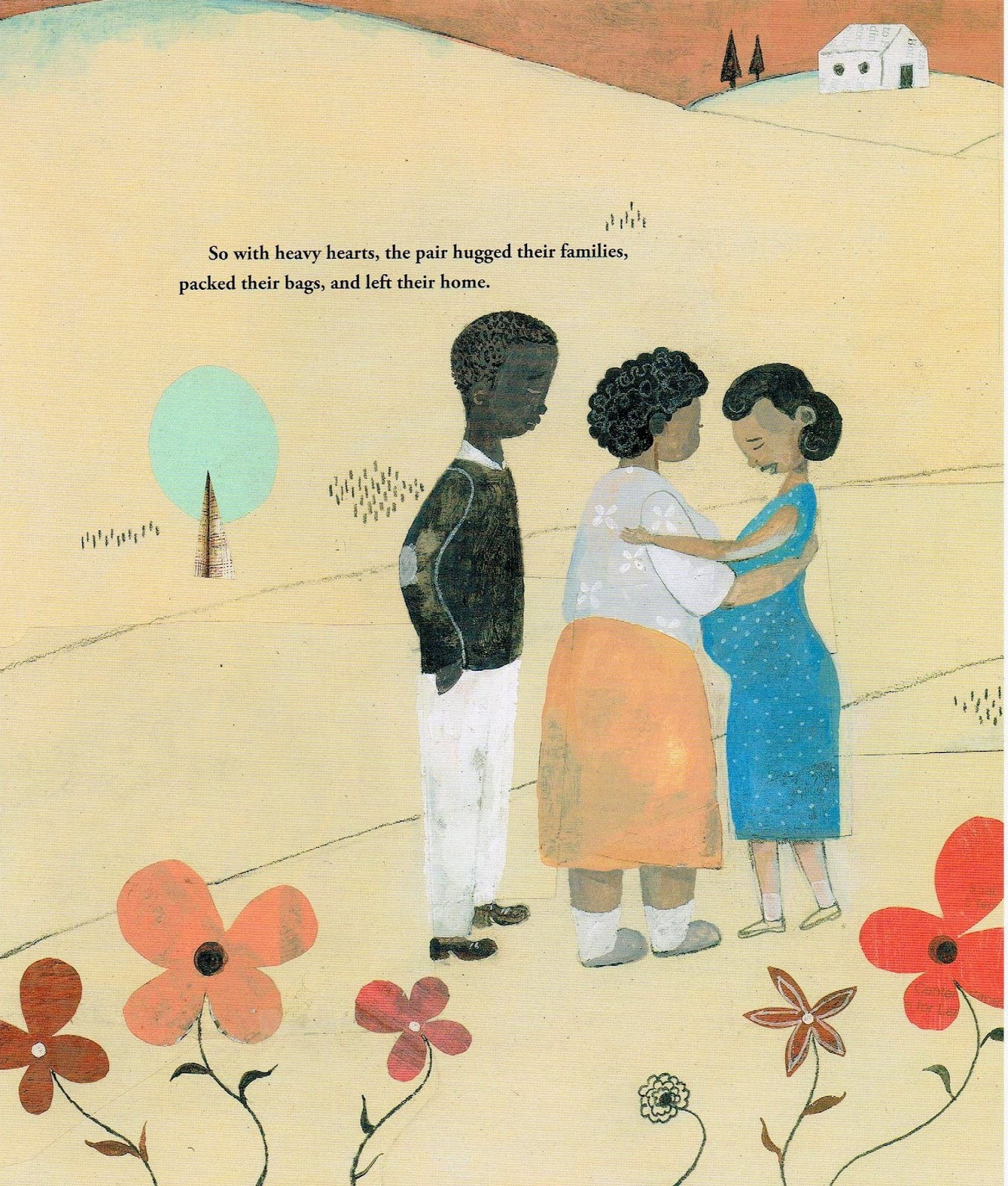
They moved back to D.C. and took the state of Virginia to court.  The case went all the way to the Supreme Court before Virginia’s law, 9 years later, was found to be unconstitutional.
I think, as a nation, we don’t like to acknowledge the more troubling aspects of our history.  But the stories therein are full of heroics.  A clearer picture of who we are as Americans is buried in the places we’re afraid to bring to light.  The more we know about and talk about our history, the more we understand the problems and tensions we see around us.  Only then can we appreciate the true beauty and complexity of life.
The Case for Lovingis a celebratory story of a strong family.  The expressive illustrations are strewn with hearts and flowers.  The power of love, kinship and family comes through in every page.  Racism shows itself to be strange and alien and unfair.  The writing is subtle, but you can tell what a strain the fight was on the Lovings, because they were so afraid they would lose the case, they stayed home when it was presented to the Supreme Court.  
But they did win.  And although there are still people who talk about the need for “the purity of the white race,” cases of love keep breaking out everywhere.
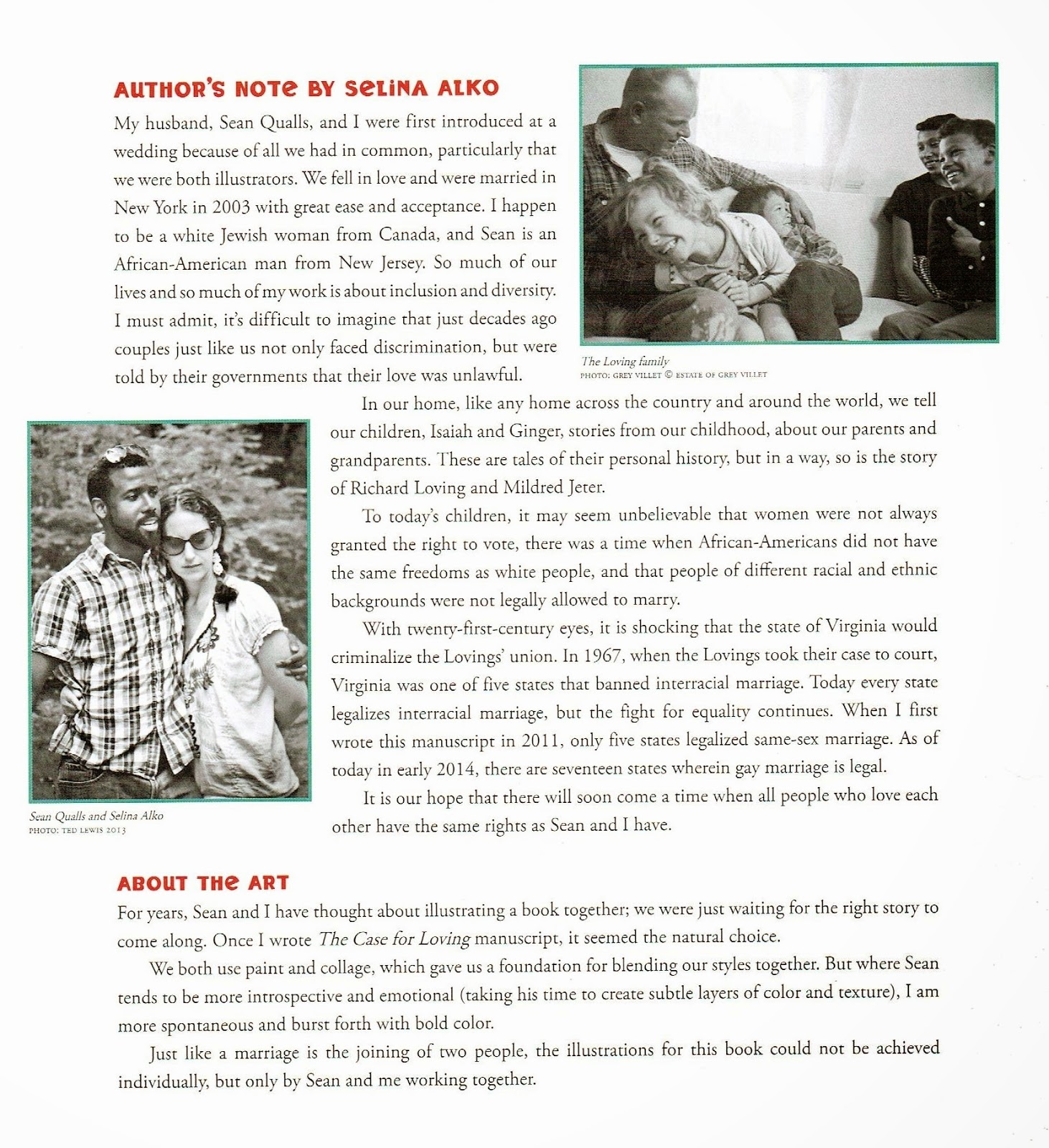
The author and illustrator, in fact, are an interracial couple. 
I wanted to review this book on Martin Luther King, Jr. Day, because it speaks so eloquently to King’s dream.  I’m a white woman who was born in Memphis in 1960 and saw the changes that took place in our divided city because of King and the people who believed in his dream.  His assassination didn’t stop that dream.  In 1972, I was bused to an all Black junior high school.  I had amazing teachers, wonderful friends, and learned a lot of new dances.  It was such a liberating thing.  I heard lot of racist talk from my white relatives, but NONE of it was true.  I know we have a long way to go until people are willing to see across the colorline, but I’m not caught in that kind of fear. 
I’ve been helped so much by African American doctors, teachers and friends.  And I know it’s because every day heroic people like the Lovings helped move our legal system forward.  And heroic leaders like King gave us all a dream.  And people like Alko and Quall are celebrating stories and illustrating how we can all learn to live and love together. 
Back in 1959, in the midst of the storm over the book The Rabbit’s Wedding, Garth Williams said, his story was not written for adults, who “will not understand it, because it is only about a soft furry love and has no hidden message of hate.”


Both children and adults will understand The Case for Loving’s strong message of hope.  It’s a book that makes it easier to understand the world as it is, and the power of love.
Selina Alko is the author and illustrator of several acclaimed books for children, including Daddy Christmas & Hanukka Mama and B is for Brooklyn.  Sean Qualls has illustrated many celebrated books for children, including Giant Steps to Change the World by Spike Lee and Tonya Lewis Lee, Little Cloud and Lady Windby Toni Morrison and her son Slade.  He received a Coretta Scott King Illustrator Honor for Before John was a Jazz Giant by Carole Boston Weatherford.  They live in Brooklyn with their two children.
You can find Alko’s website here.  And Qualls website here.  You can read a Publisher’s Weekly interview with them about the book here.
Thanks for reading my blog and let me know what you think. 

Personal Space and the Need for a Hug

A few days ago, my 6 year old neighbor, Karishma, wanted me to help her with her homework.  We did a little math, a little letter and word recognition, and a little reading.  She wanted to read her new favorite book, Hug Me, by Simona Ciraolo, published by Flying Eye Books, 2014.
I read it to her a few weeks ago when she was here with her 12 year old sister.  The sister didn’t think she’d be interested, but as I started reading, she sat beside us and wanted to see the pictures, too.  She was moved enough by it to say, “Awww,” more than once.
Hug Me is a remarkable book that tells a complex tale in charming drawings and poetic prose. “Felipe was descended from an old and famous family who liked to look good and always behaved properly.”
It’s the story of the universal need for affection and friendship, even if we are somewhat prickly.  Using a little cactus as the main character puts an interesting spin on it.  He’s prickly because of he descended from a prickly family.  Who hasn’t felt estranged from their family of origin?  Who hasn’t felt at least somewhat trapped by their ancestry?
I live in Bridge Meadows, a community made up of blended families that are adopting children out of the foster care system.  Some families have all adopted children.  Some have adopted children in addition to their birth children.  I live in the senior housing component, and we elders serve as helpers to the families.  I mentor kids, teach them art, and read with them. 
She sounds out all the words, even “uaahhh.”
I’ve read this story over a dozen times in the past few weeks to kids from ages 2 to 12, and they’re all gripped by it.  I now keep it in the book-bag I carry with me when I’m in the community center or else I’m chastised for not having it.  
Since many of the kids have been in foster care and counselling, they love that the Ciraolo uses the term “personal space.”  Many have had their personal space violated in the past, but they still want to be close to family and friends.
They love that in the end, Felipe knows exactly what to do.  His past loneliness has made him a better person.  (In his honor, a few of the kids and I may start a cactus and rock  garden this summer.)   They also LOVE the pictures.  It’s amazing to me, too, how much expression Ciraolo creates in her characters.  Even a simple dandelion has a personality in this story.
Karishma happens to be one of the children who has been with her birth family for her whole life.  She has foster sisters and her mom had a baby a little over a year ago.  When we read the book together, I asked her if she ever felt like she needed a hug and didn’t get one.  She first said no.  Then she flipped through the book again, and said, “Well, since my sister was born.  Sometimes she won’t hug me and sometimes everyone hugs her and forgets me.”
I told her the same thing happened to me when my little brother was born.  Now I know how important hugs are. 
“Me, too,” Karishma said.  “That’s why we’re so happy.”
I’m pretty sure if you read Hug Me, you’ll be happy, too.
Hug Me has been on numerous best book lists of 2014. You can read more about Simona Ciraolo on her website here

Flying Eye Books is based in England and publishes innovative books that introduce children to great graphics and compelling stories.  They published the inspiring Welcome to Your Awesome Robot by Viviane Schwarz, which you can read about in this blog post.   

Thanks for reading my blog.  If you’d like, leave a comment.

The Hole Story

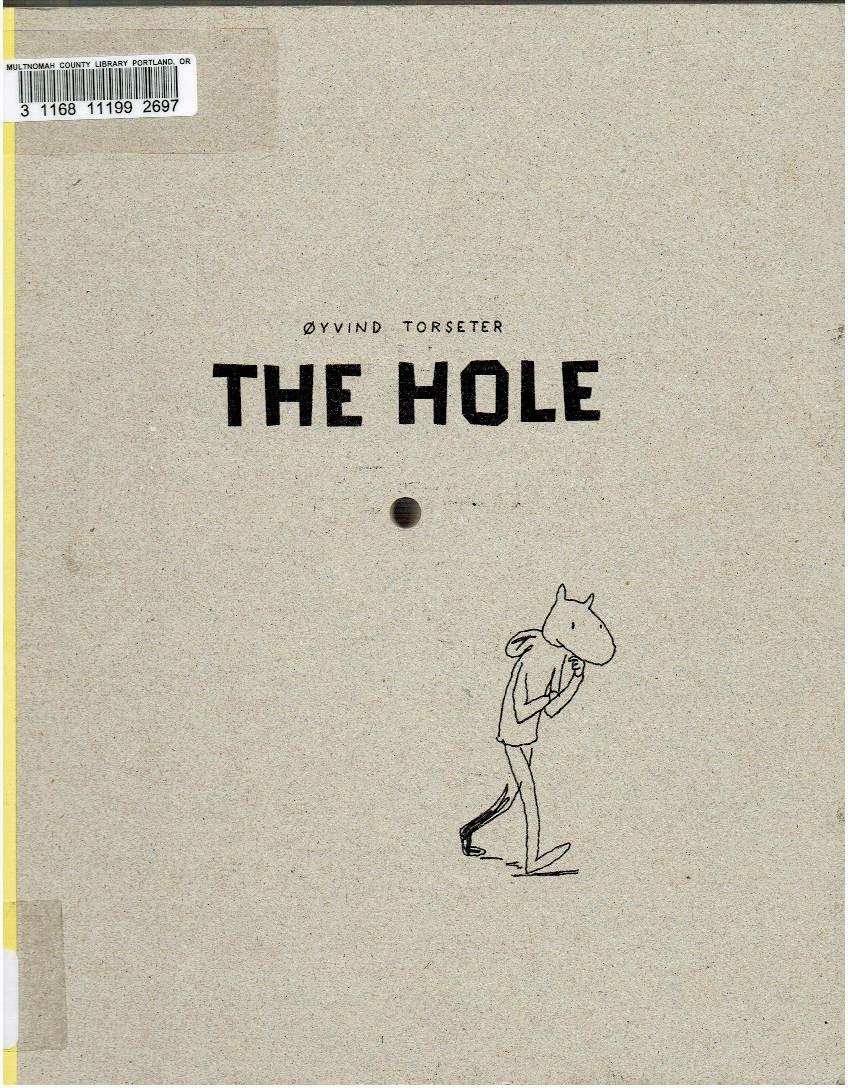
What happens when you drill a hole through your book?  Oyvind Torseter has done a remarkable thing and made a hole a fully developed character in his charming book The Hole, published by EnchantedLion Books (2012).  It’s an almost entirely wordless book, but Torseter’s visual storytelling creates a page turning adventure.  Most of the pleasure is seeing where the hole has got to – because even though it’s in the center of the book, in the illustrations it moves around dramatically.  My scans don’t do it justice, you really want to see this book up close and personal.
In deceptively simple line drawings, Torseter introduces a character moving boxes into an apartment.  When he sits down to dinner he discovers a hole in the wall.


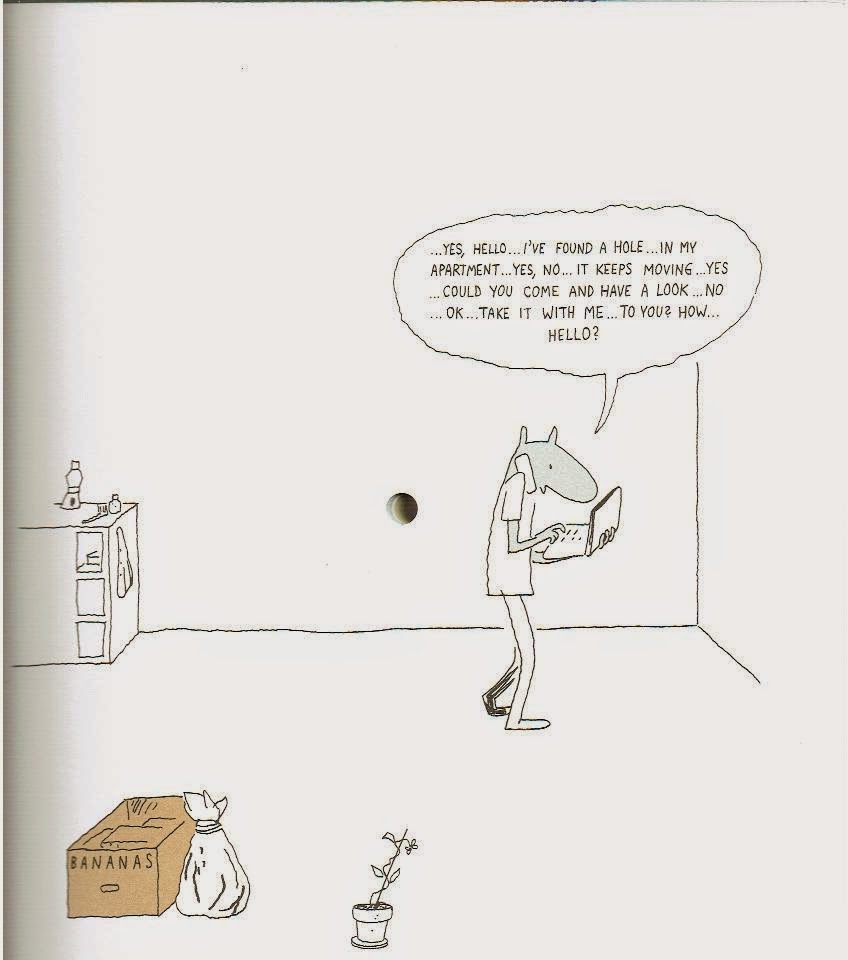
When he investigates further, he finds the hole has moved.  This hole is a little devilish.
Suddenly we’re in a surreal world where there are people who can help with renegade holes.

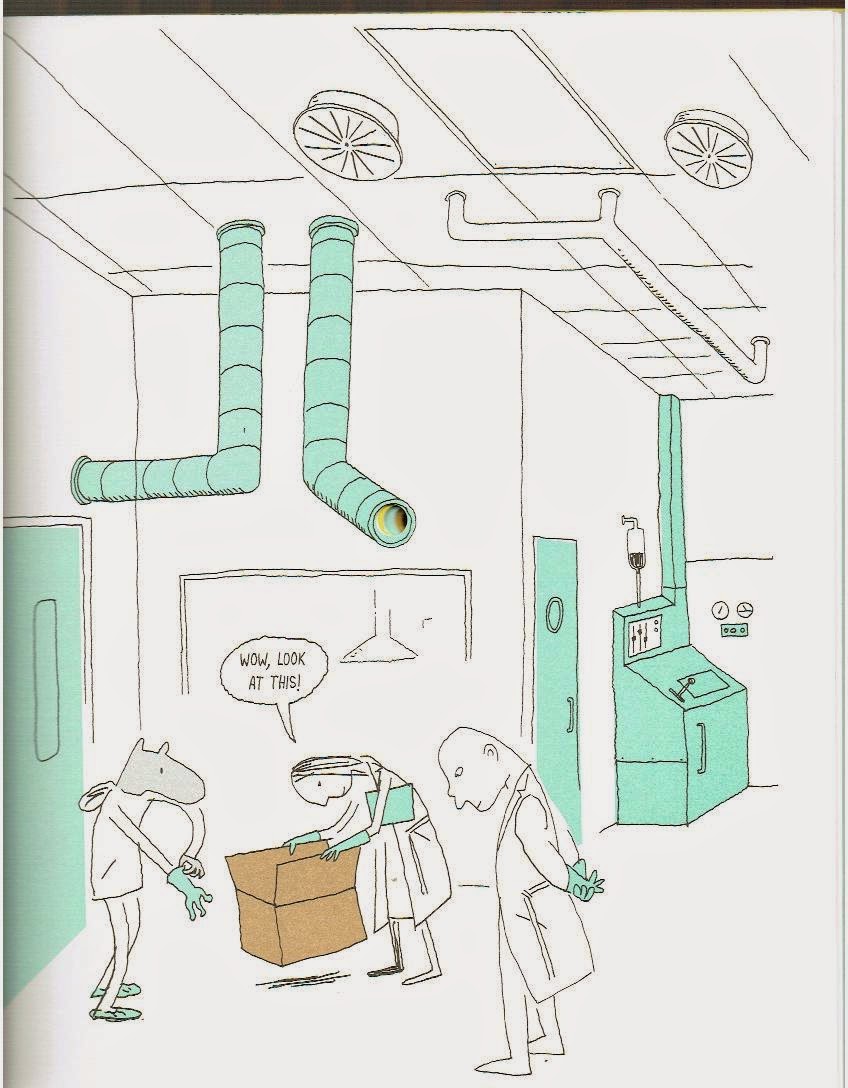
After the hole is captured, it has to be transported to a lab.

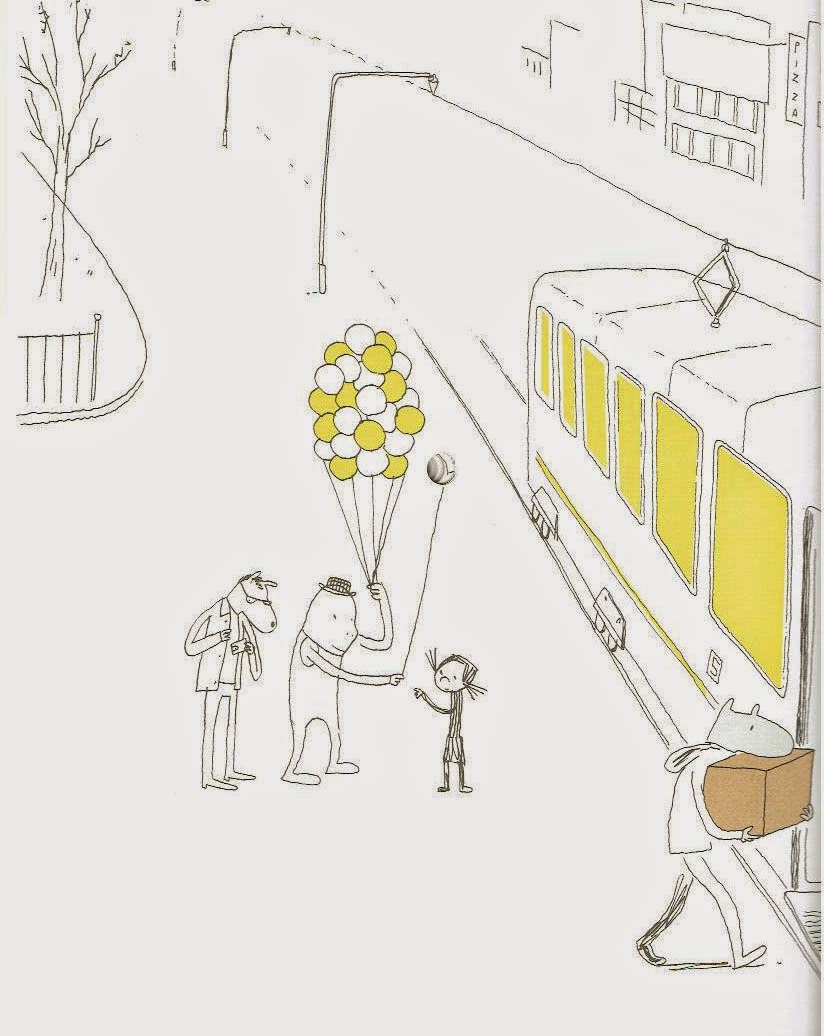
Our innocent man thinks the hole is safe in his box, but the hole is having its own adventure. Page after page shows the hole touring around the city and having a great time.
It continues to do so, even after it’s been studied by experts.
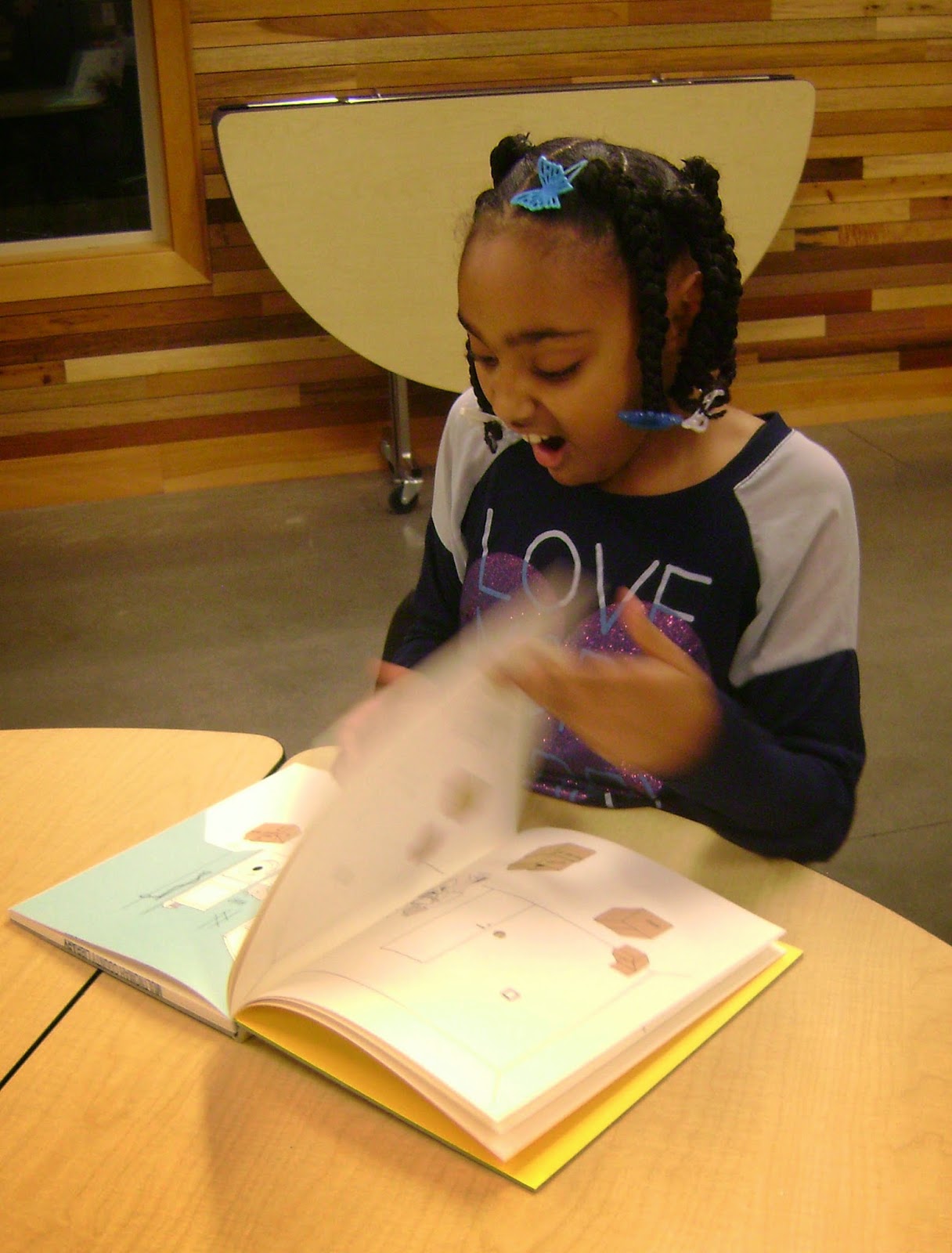
I’ve shared this book with some young friends in the Bridge Meadowscommunity, and they, too, were amazed by the way the hole seemed to move around.  The story is loopy and unique and inspired great conversations about how art can play visual tricks on you.
Reba’s amazed by the hole’s trickery


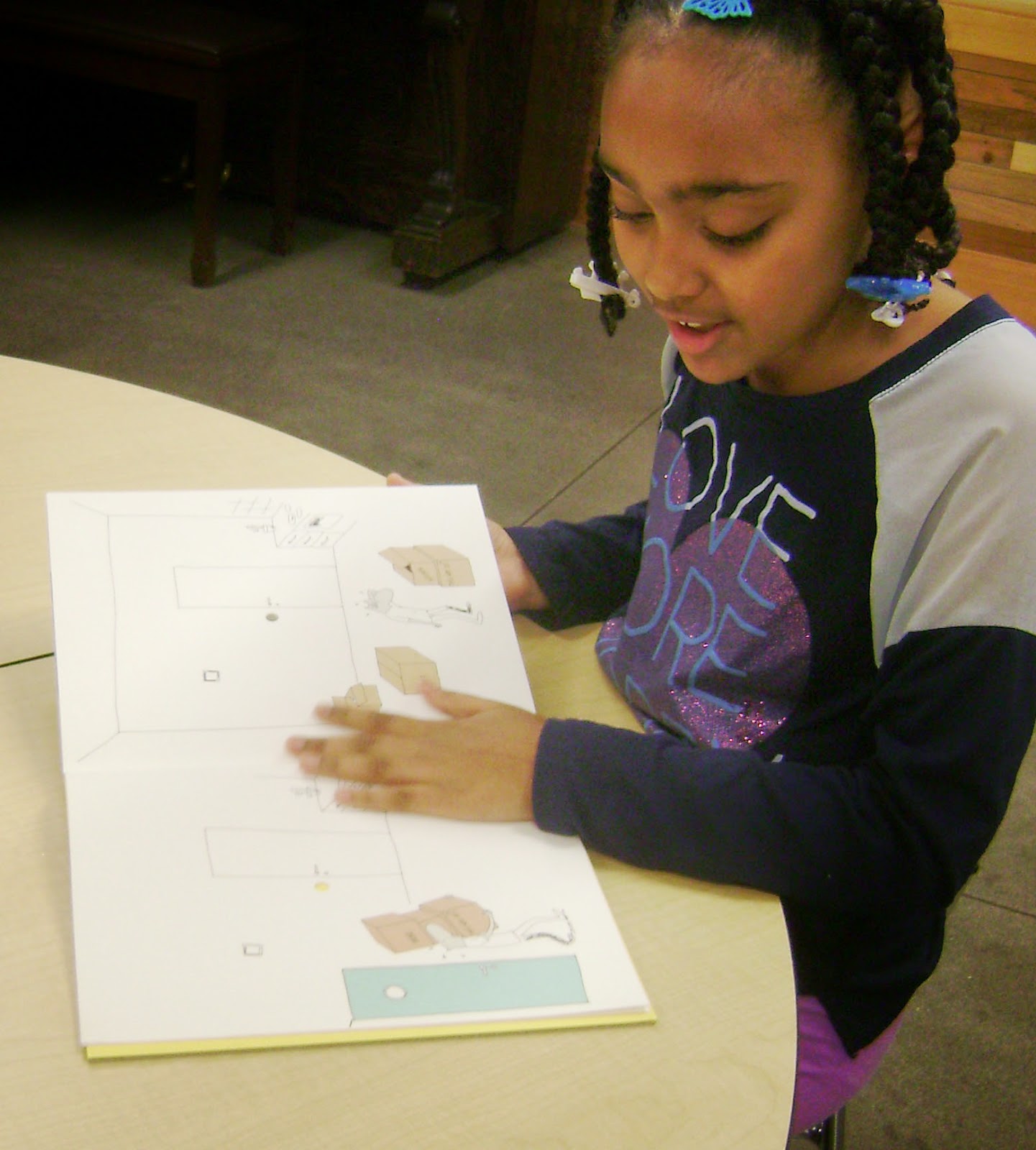
It’s a well bound book that lies flat and invites investigation

This is a great book for all ages – although it’s marketed for children, it’s really a book for anyone who loves illustration. It sparked our imaginations about what the hole would do after the book was closed.

Lydia studies the drawings and tries to figure out how the hole gets around so well

 
Both Lydia and Reba thought it was cool enough to want to read it again.  We loved that a complex story could be told in this unique way.

When I read it, I thought of artist Paul Klee’s statement that “a line is a dot that went for a walk.”   This hole goes for a walk and a ride and it takes flight. My sense of wonder took flight, too.

Øyvind Torseter is a Norwegian artist, illustrator, comic book artist, and author. In addition to his own books, books illustrated by Torseter include the beautiful and poignant My Father’s Arms Are A Boatby Stein Erik Lunde. During his career, Torseter has emerged as one of Norway’s foremost illustrators.   We hope his books keep getting published here in America.
Enchanted Lion publishes unique and amazing books from all over the world.  Check out their website to find great books:  http://www.enchantedlionbooks.com/node/2
The most intriguing hole you’ll ever look through

Thanks for reading my blog.  I welcome any comments.