Poet by Don Tate

It’s April at last – spring and poetry are in the air.  I don’t always stay on top of national month themes but try to integrate all kinds of books by all kinds of authors into my blog.  I did set aside a few books to share for national poetry month, though, because poetry’s one of the reasons I’m the bookaholic I am today.

Poetry is such an organic form of telling our truth.  Not everything we know, see or feel fits neatly into narrative.  A poem can express what is deep and true in our hearts, even when we don’t entirely understand that truth.  Poetry honors and elevates pure emotions and images.  It ranges from highly structured forms to free and fragmented beauty.  It part of oral traditions as well as academic studies.

When I was working in radio years ago, I once asked a poet when he started writing poetry.  His answer was “when did everyone else stop?”

There’s a lot in our education system that inhibits and stops us from feeling free to express our deepest truths.  And there have been times when it was illegal for certain Americans to write poetry, or to write at all.

One of my favorite books published last year is about a poet who wrote in spite of those laws.  Poet: the Remarkable Story of George Moses Horton, by Don Tate, Peachtree, 2015, brings an important American poet out of the shadows and back into our hearts.
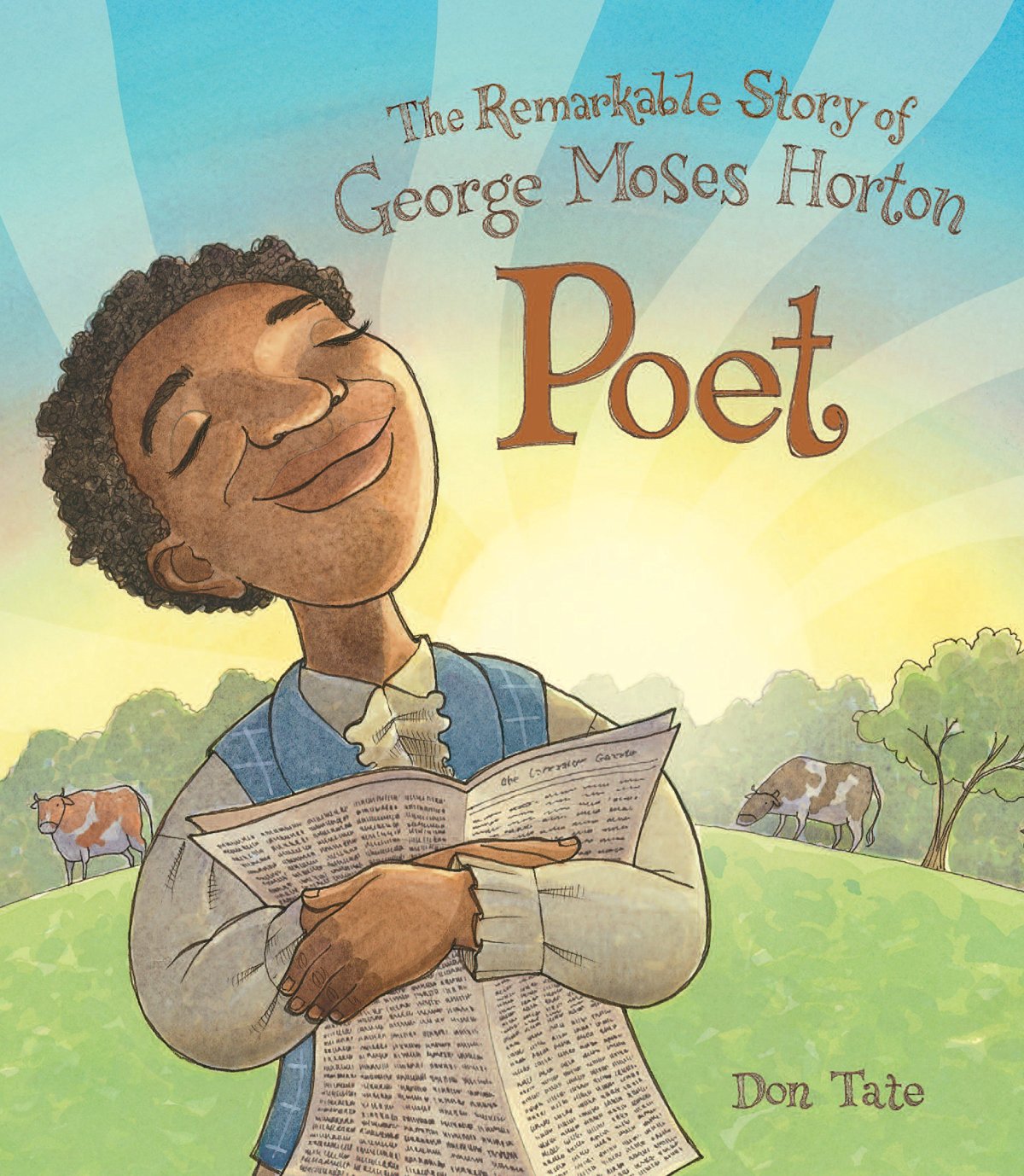
91utqDC9B+L

Horton lived from approximately 1798 – 1883.  He and his family were enslaved on a farm in Chatham County, North Carolina.  Tate’s book starts with the simple sentence:  “George loved words.”
002

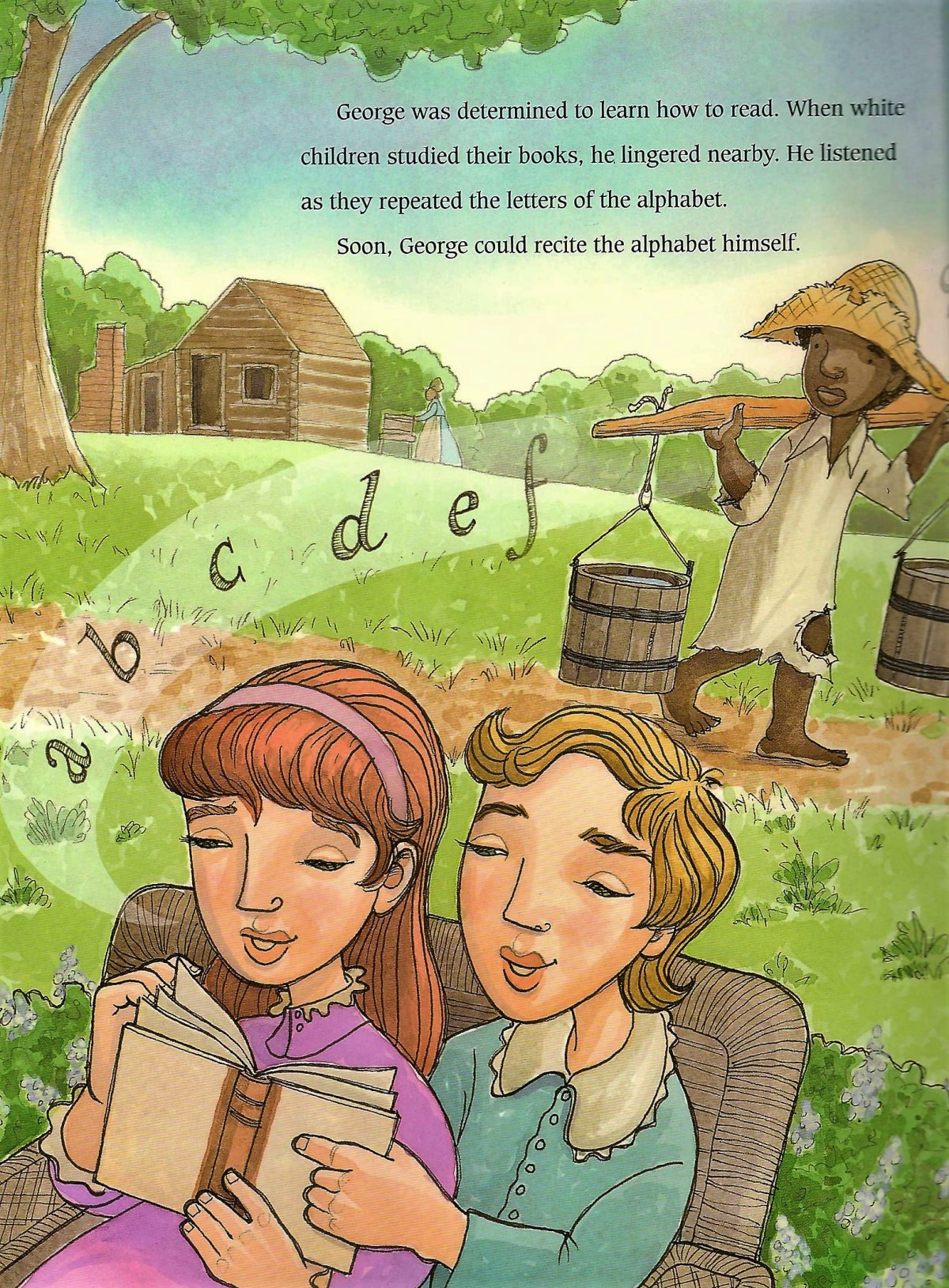
Such a deep love of words is hard to hold back.  George struggled until he taught himself how to read.

He loved poetry best.  While he went about his work and tended his master’s cattle, he composed verses in his head.
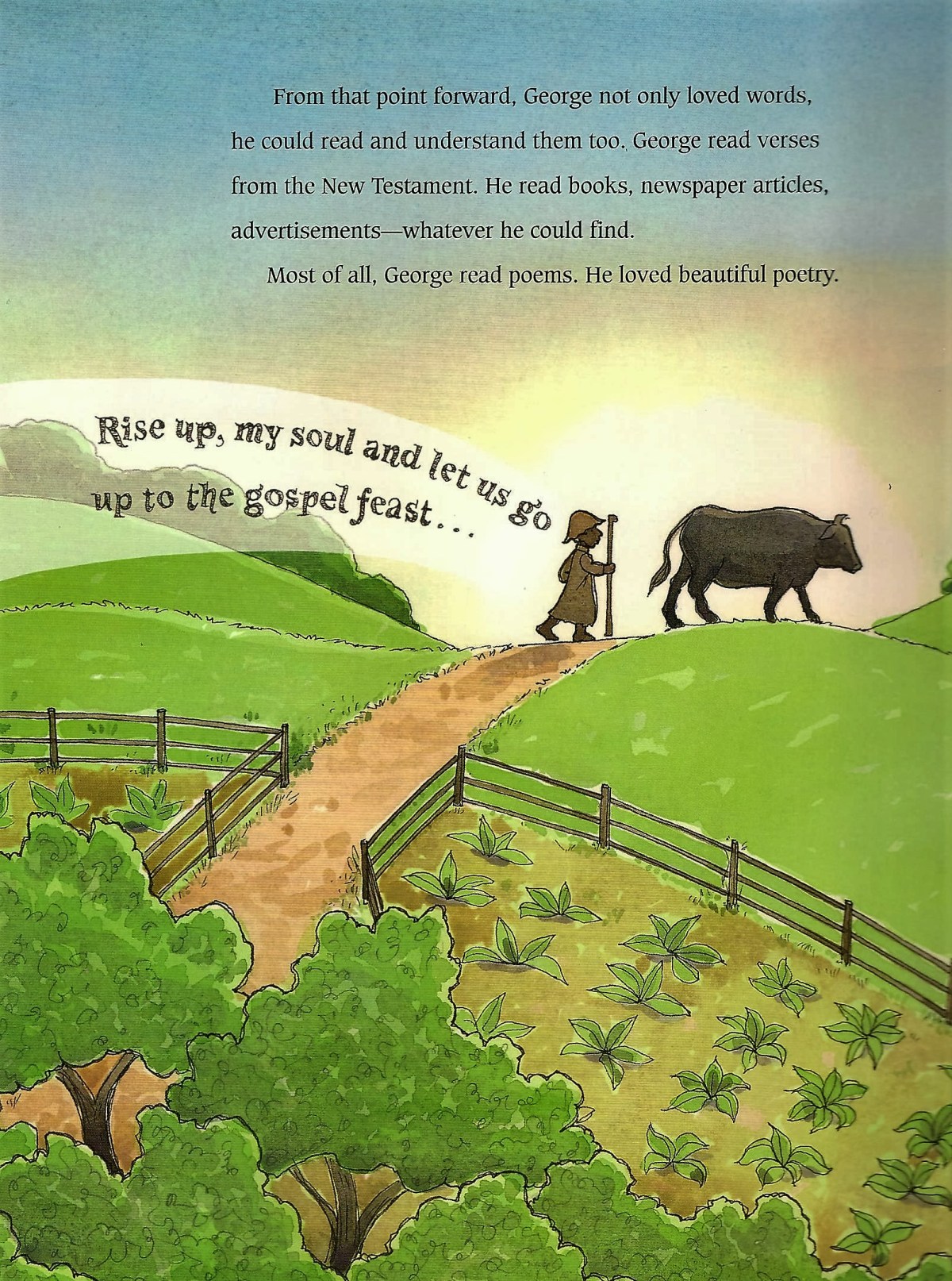
001

Then tragedy struck.  His master sent him away from his family.

But George found a way to honor his pain and the pain he saw all around him.  He composed poetry in his head.  He sold his master’s fruits and vegetables at the University of North Carolina.  The students teased his shabby appearance and to soothe himself, he recited his poetry.

“Every eye grew wide and every mouth fell open at the sound of George’s voice, uttering beautiful verses.  Students were awestruck when they found out that he had composed them himself.”
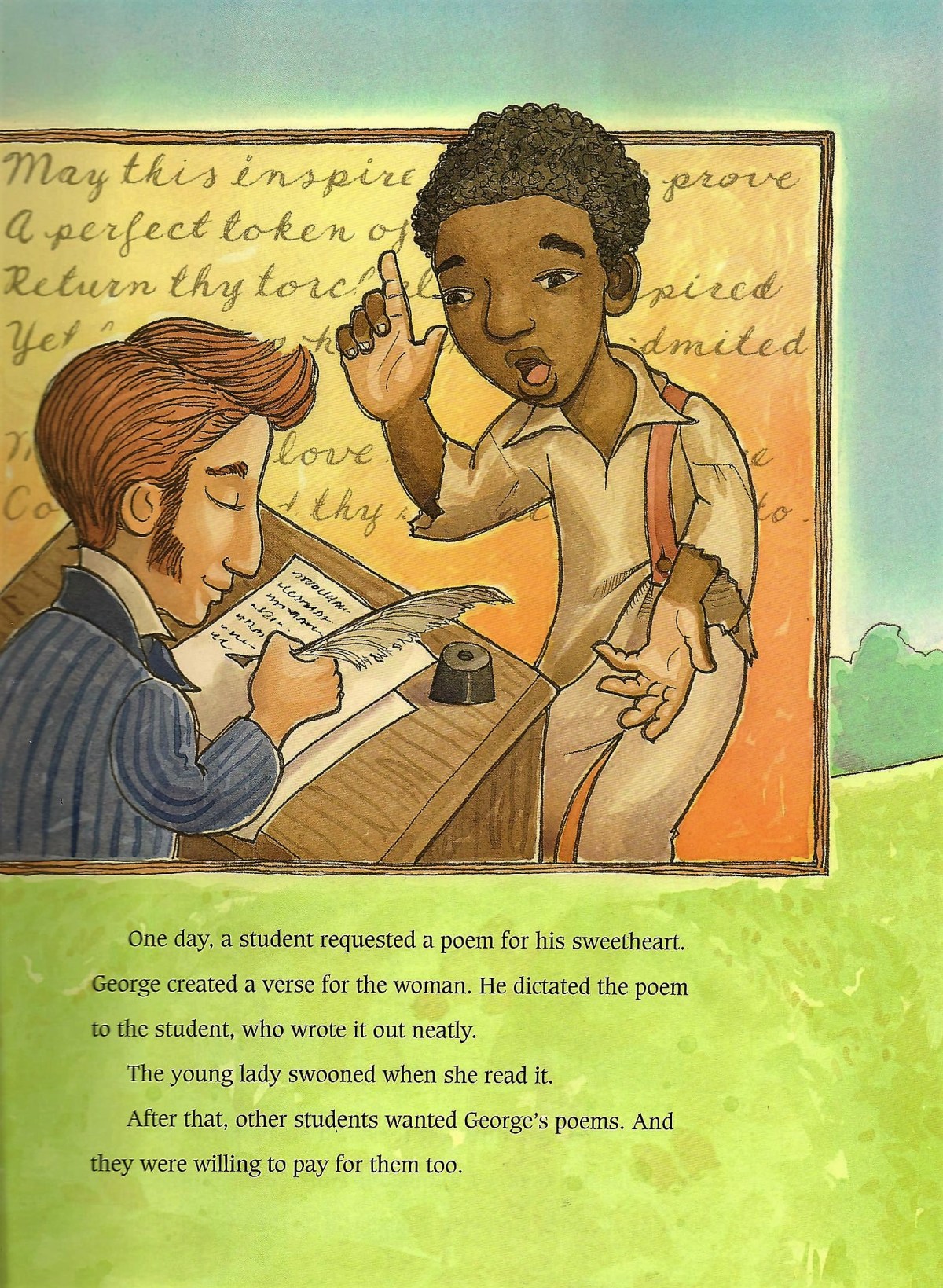
005

006

He was then helped by the wife of a professor to learn to write.  He wrote poems that protested slavery.

In the afterword, Tate talks about the unique characteristics of slavery in North Carolina:

“North Carolina was home to one of the largest free black populations in all of the colonies.  Many North Carolinians supported antislavery organizations and the emancipation of slaves.  Plantations were smaller, requiring fewer laborers, and often less affluent farmers worked their land alongside their slaves.  In fact, peculiar as this may sound, slaves were sometimes considered family members.  No doubt, Horton benefited from this more open-minded atmosphere.

                “Life for an enslaved person was still not easy in North Carolina.  Slaves performed daylong, back-breaking work for no pay.  Their diet, provided by their owners, was typically poor, and their clothing inadequate.  Families could be torn apart and sold at any time, never to see each other again – as happened to George.  In the face of these adversities, Horton’s achievements were monumental.”

George was a white man’s property.  For the time George spent writing, he had to pay his master back.  He saved his money to buy his freedom and others tried to help him, but his master refused to sell him.
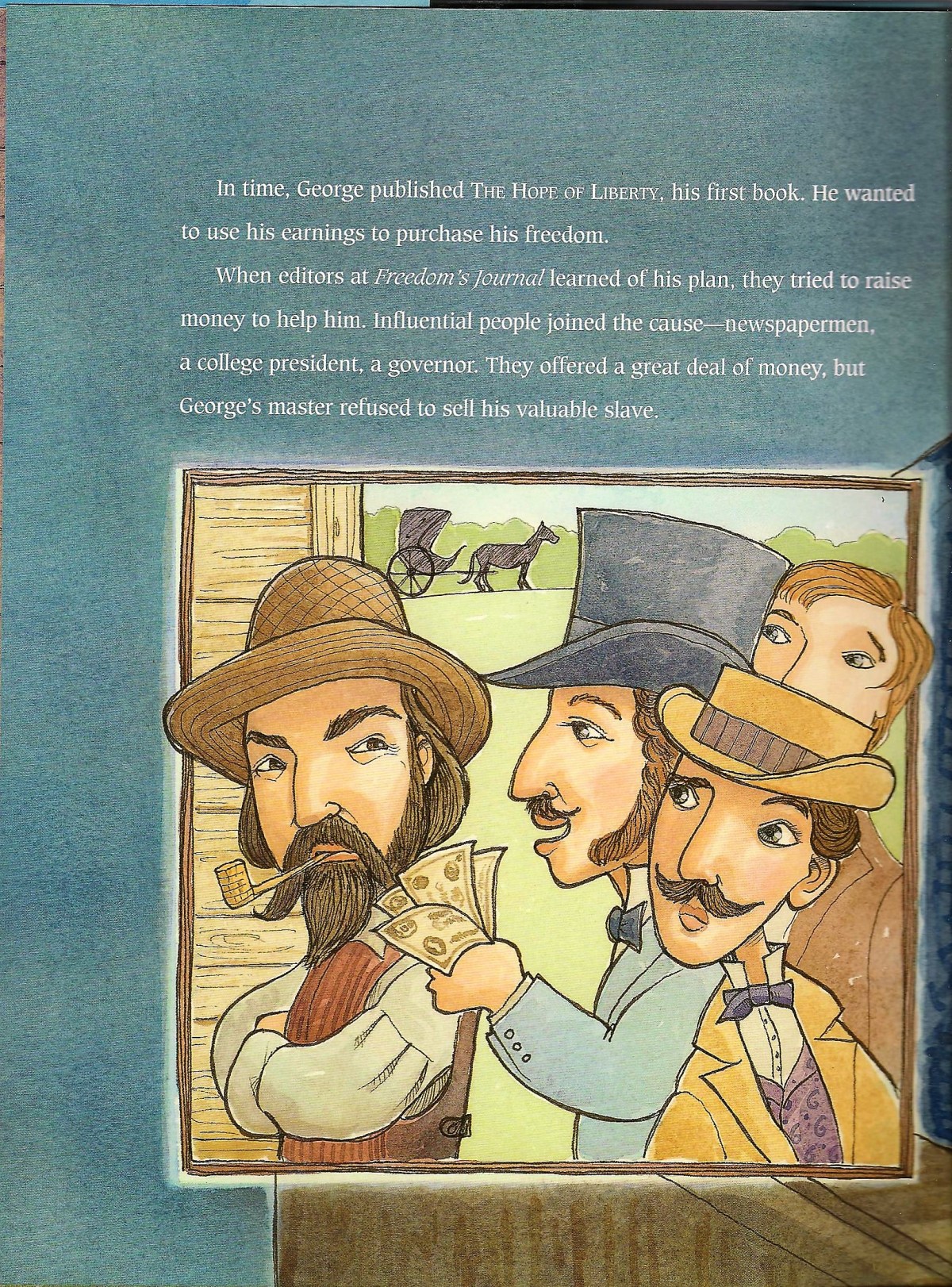
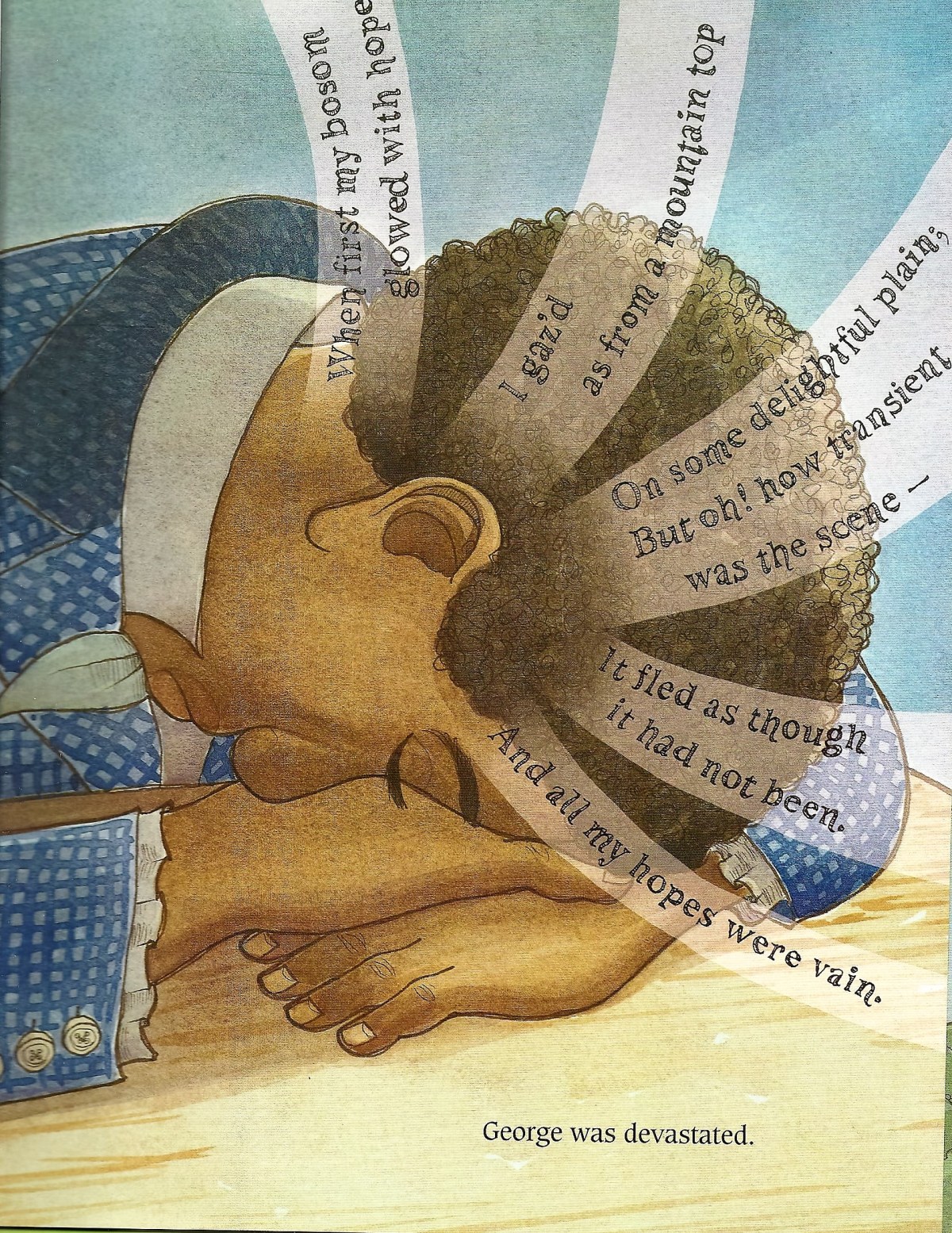
007

008

Then laws became stricter against teaching slaves to read or write.  George returned to slave labor.
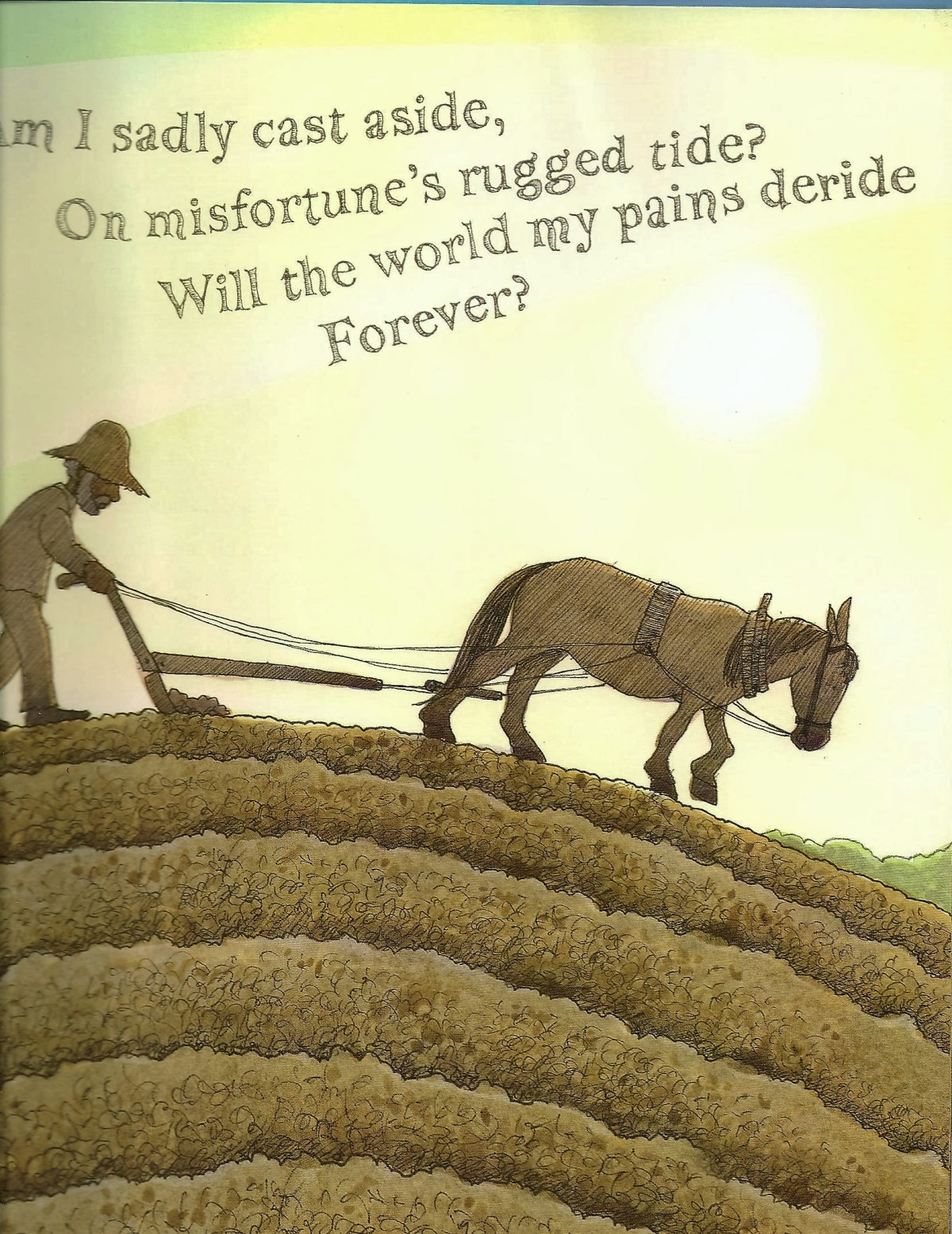
009

George was 67 when the Civil War ended and he was finally free.

I love everything about this book.  It’s a story of coping with extreme hardship through literacy and self-education.  It’s a testament the power of poetry and language.  It explains the brutality of slavery in a way that children can understand.  And even if his story was lost for a while, that he wrote it down, made it available to future generations.

I’ve loved reading this book with children and the ensuing conversations that it provokes.  For several of the children I’ve read it with, this is their first book that discusses slavery or poetry.

I read it to two of the girls I mentor at Bridge Meadows, Monica and Karishma, ages 7 and 8.  When I took out the book, Monica didn’t want to hear it.  She said she hates poetry.  Karishma wanted to hear it, though, so we read it together.  Monica wound up very interested and engaged in it.  After I read it, she told me about Henry Box Brown, whose story she heard at school.

We also talked about poetry – how inter-related music and poetry is, how lyrics are like poetry.  We may even try to write some at our next meeting.

20160406_150321

In the afterword to Poet, Tate tells about his experience writing this book and his hope “young readers will see themselves in the story of George Moses Horton – a person with talents and hopes and dreams, and a desire to be free.  Just like them.”  I think he’s succeeded in every way.  The drawings are engaging and expressive.  He uses strong lines and beautiful washes.  His writing style is clear and compelling.  He handles difficult material with finesse and honesty.

Poet has won numerous awards which you can read about here.  Tate’s website has great activity guides to go along with this book, as well as information on his other remarkable books.  He’s a wonderful writer and his illustrations just beam.
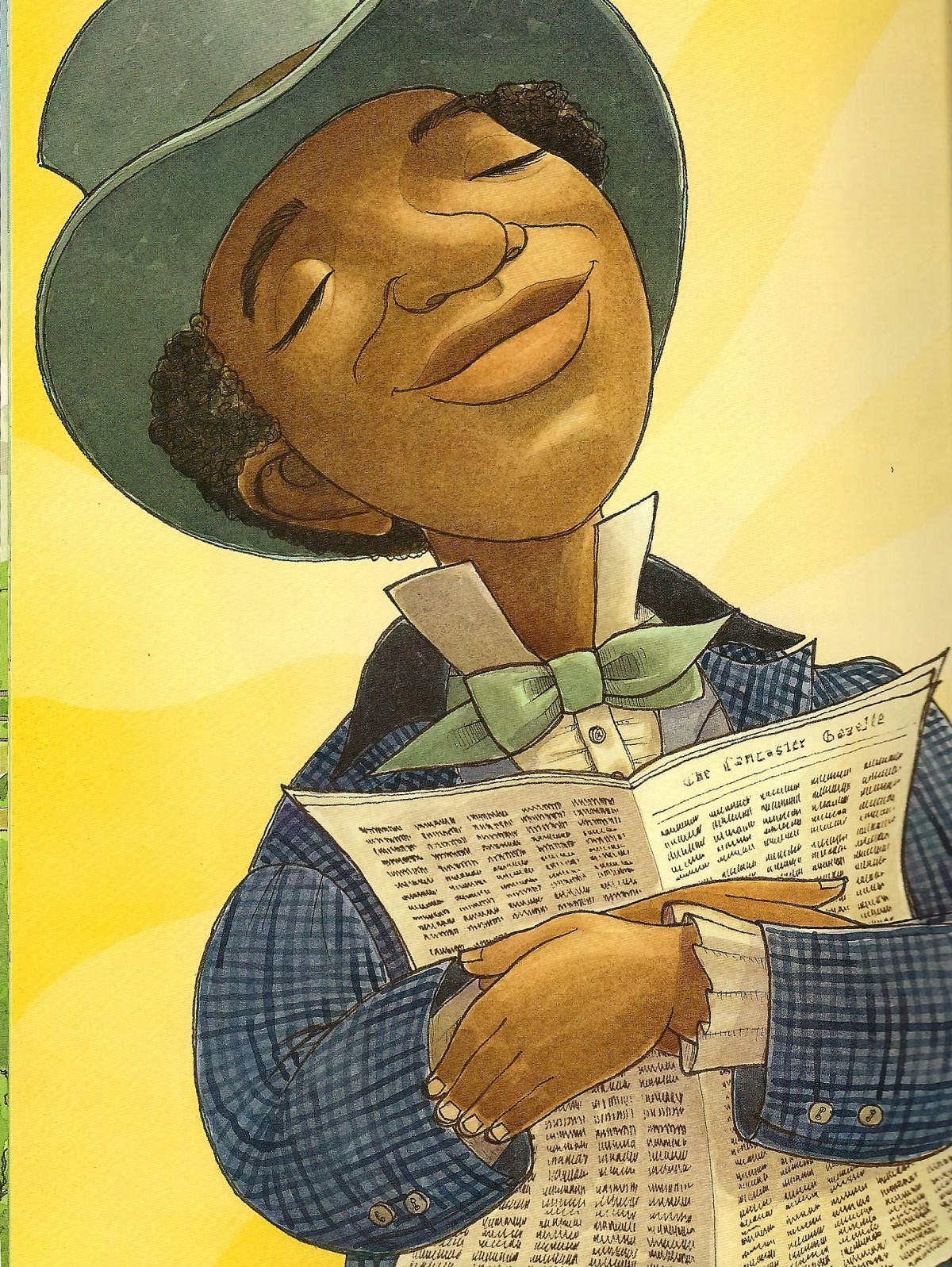
011

You can read an interview with him at the Ezra Jack Keats Award website.  Tate is the 2016 New Writer award recipient.

Here’s one of George Moses Horton’s poems that resonates with me.

George Moses Horton, Myself

I feel myself in need

Of the inspiring strains of ancient lore,

My heart to lift, my empty mind to feed,

And all the world explore.


I know that I am old

And never can recover what is past,

But for the future may some light unfold

And soar from ages blast.


I feel resolved to try,

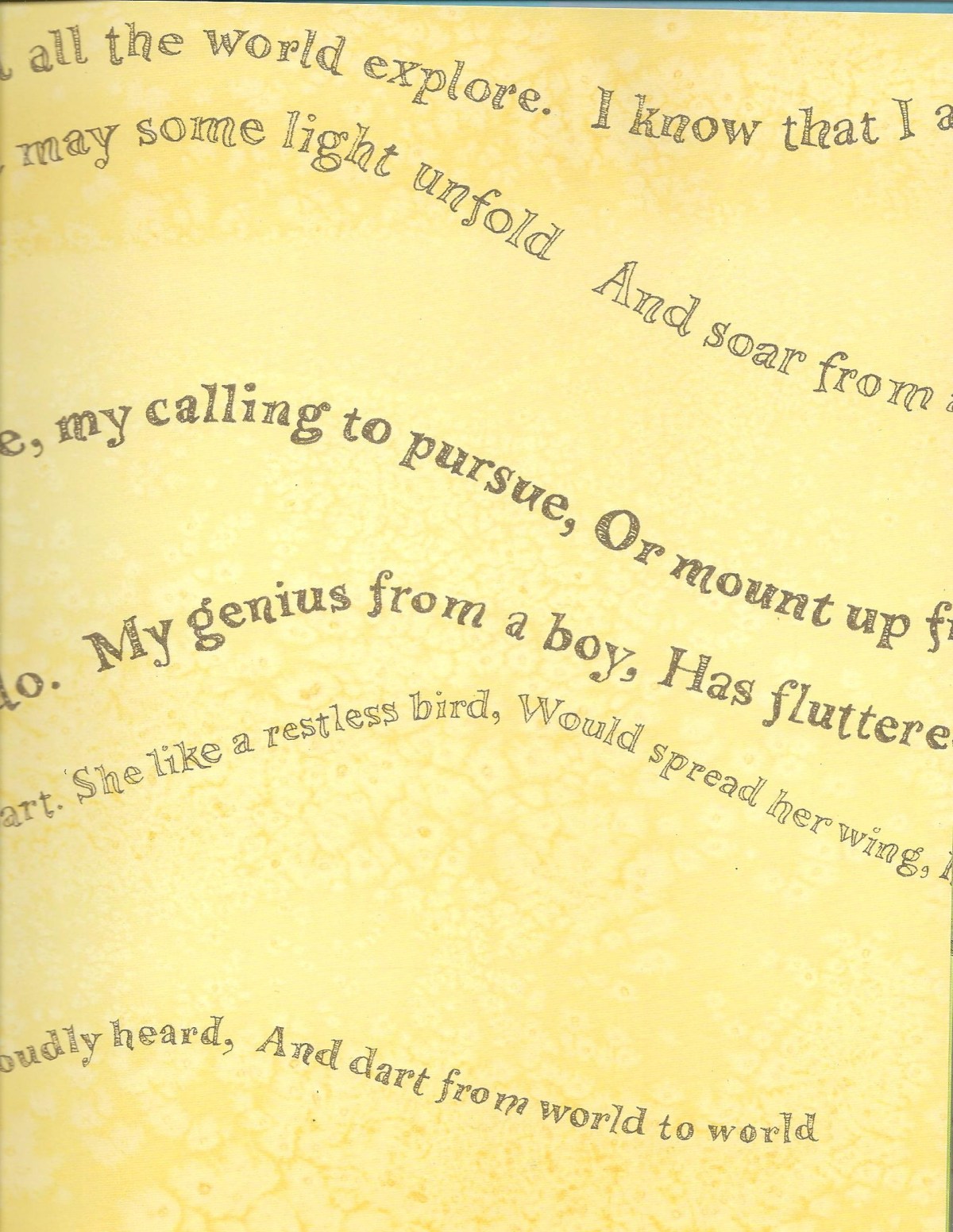
My wish to prove, my calling to pursue,

Or mount up from the earth into the sky,

To show what Heaven can do.


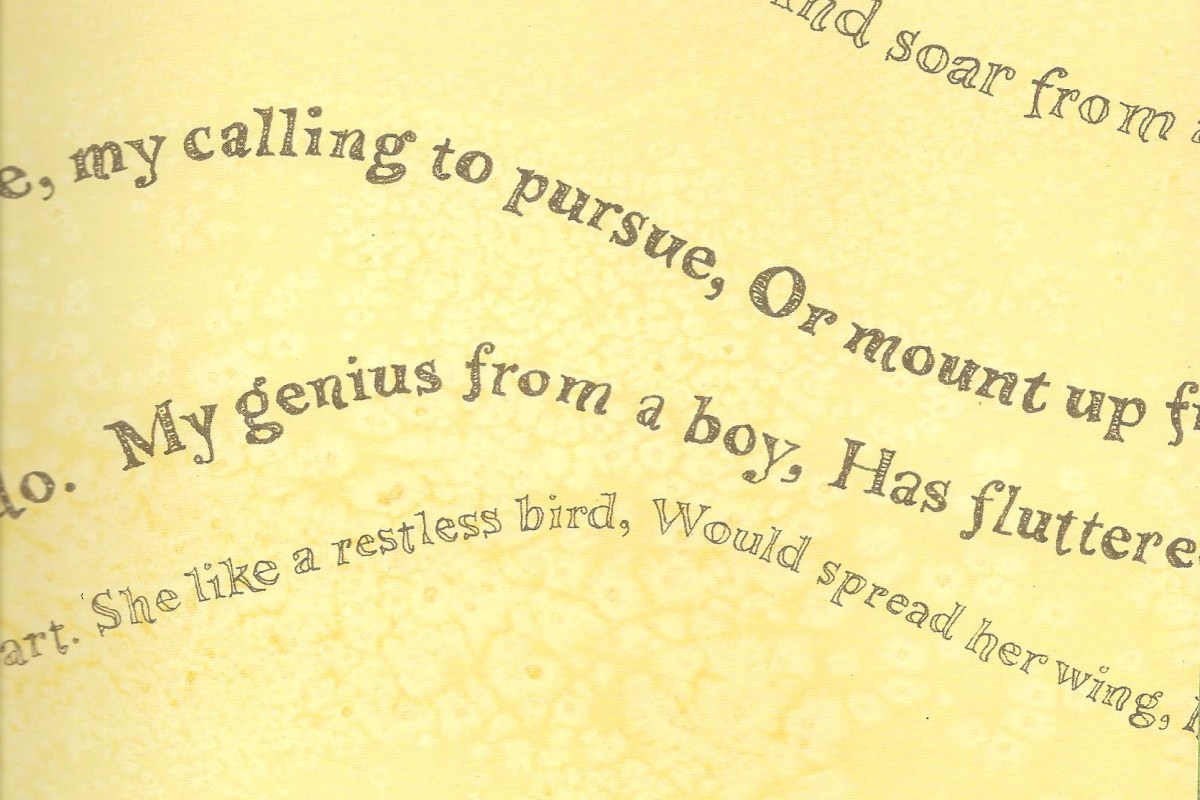
My genius from a boy,

Has fluttered like a bird within my heart;

But could not thus confined her powers employ,

Impatient to depart.


She like a restless bird,

Would spread her wing, her power to be unfurl’d,

And let her songs be loudly heard,

And dart from world to world.

(Source: African-American Poetry of the Nineteenth Century: An Anthology (University of Illinois Press, 1992)

You can read more of Horton’s poetry hereThe Poetical Works of Georg M. Horton, The Colored Bard of North Carolina, To Which is Prefixed The Life of the Author, Written by Himself, George Horton, is available as a free download at Documenting the South, a website of the University of North Carolina, here.

Thanks for reading my blog.  I hope a poem blossoms for you today.
010
Poet endpapers

Convergence: Grief, Books, Life

I belong to a book club where, at 55, I’m the youngest member.  The oldest member is 92 and there is another member who turned 90 this year.  I’m reluctant member of the group because I like to read spontaneously and don’t like having reading deadlines.  I don’t like having to finish a book I’m not immediately drawn into – there are too many other books barking for my attention.  But I go because it’s such an honor to be in the presence of these well-read, spicy, and insightful women.

Our most recent book was Wild by Cheryl Strayed, a book about grief, something everyone in the group is familiar with.  Once you’ve reached a certain age, you’ve survived devastating losses of loved ones.  It’s part of the price you pay for survival.

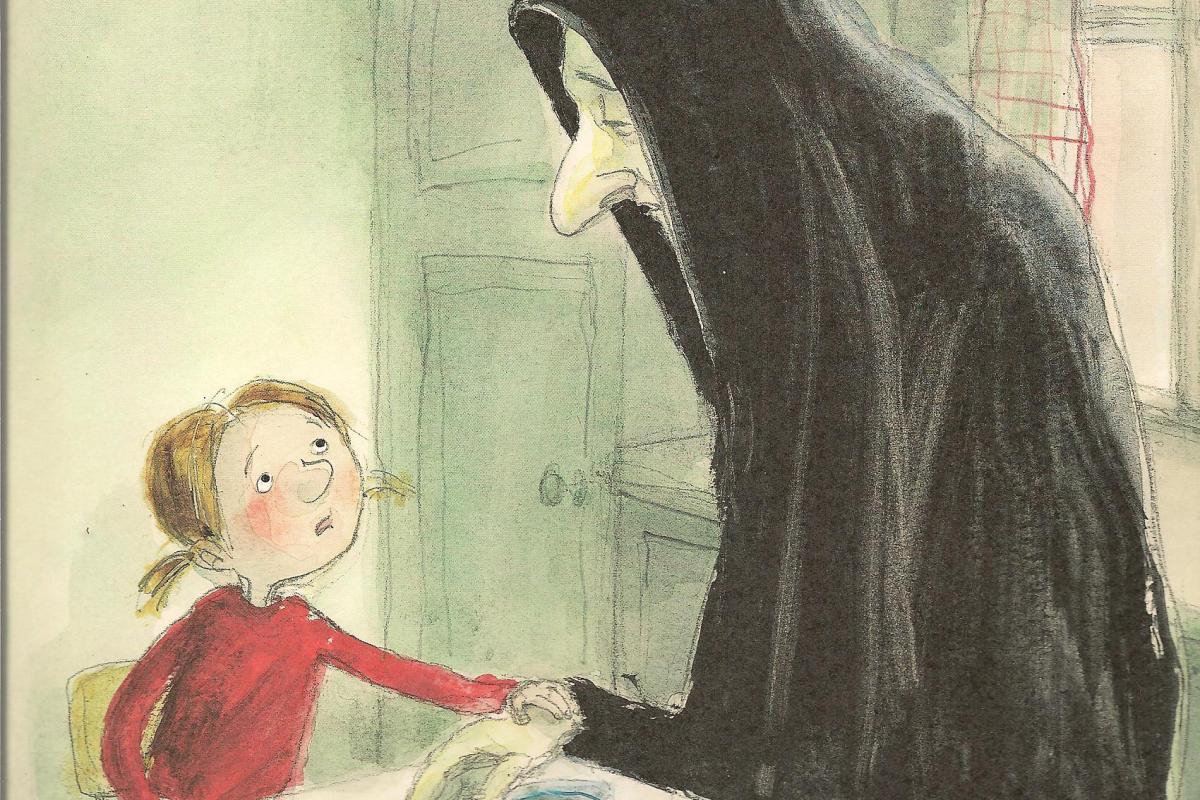
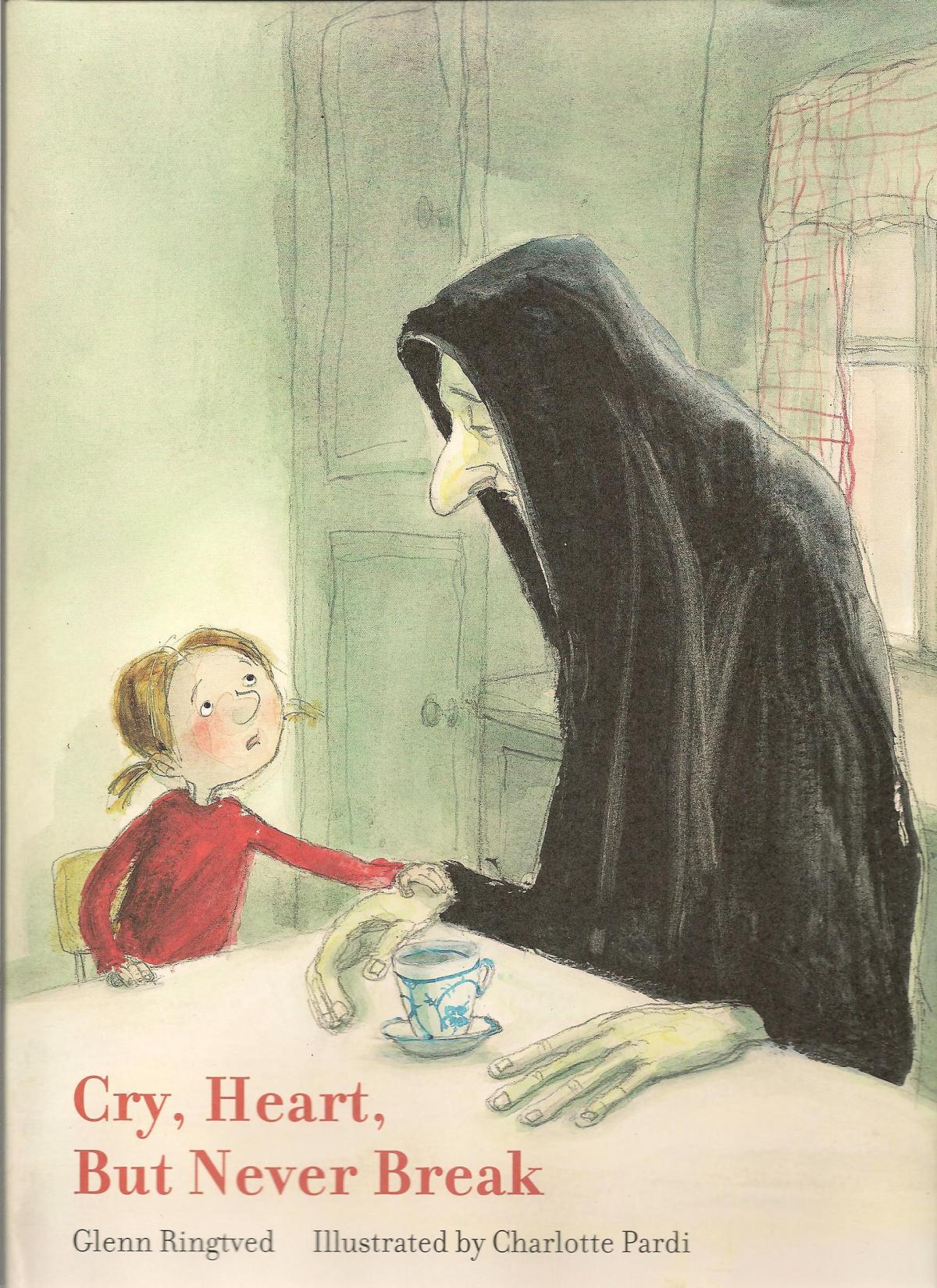
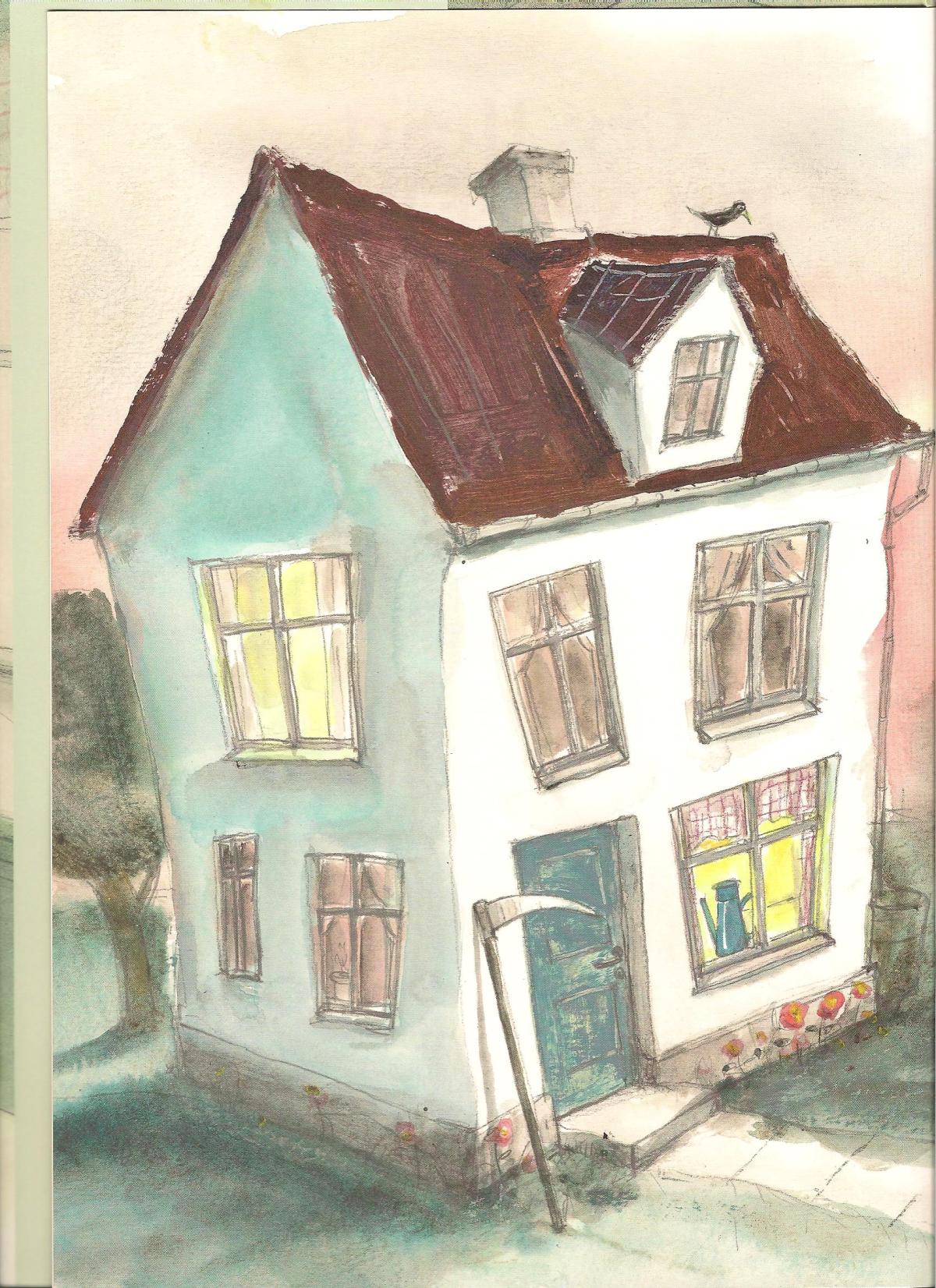
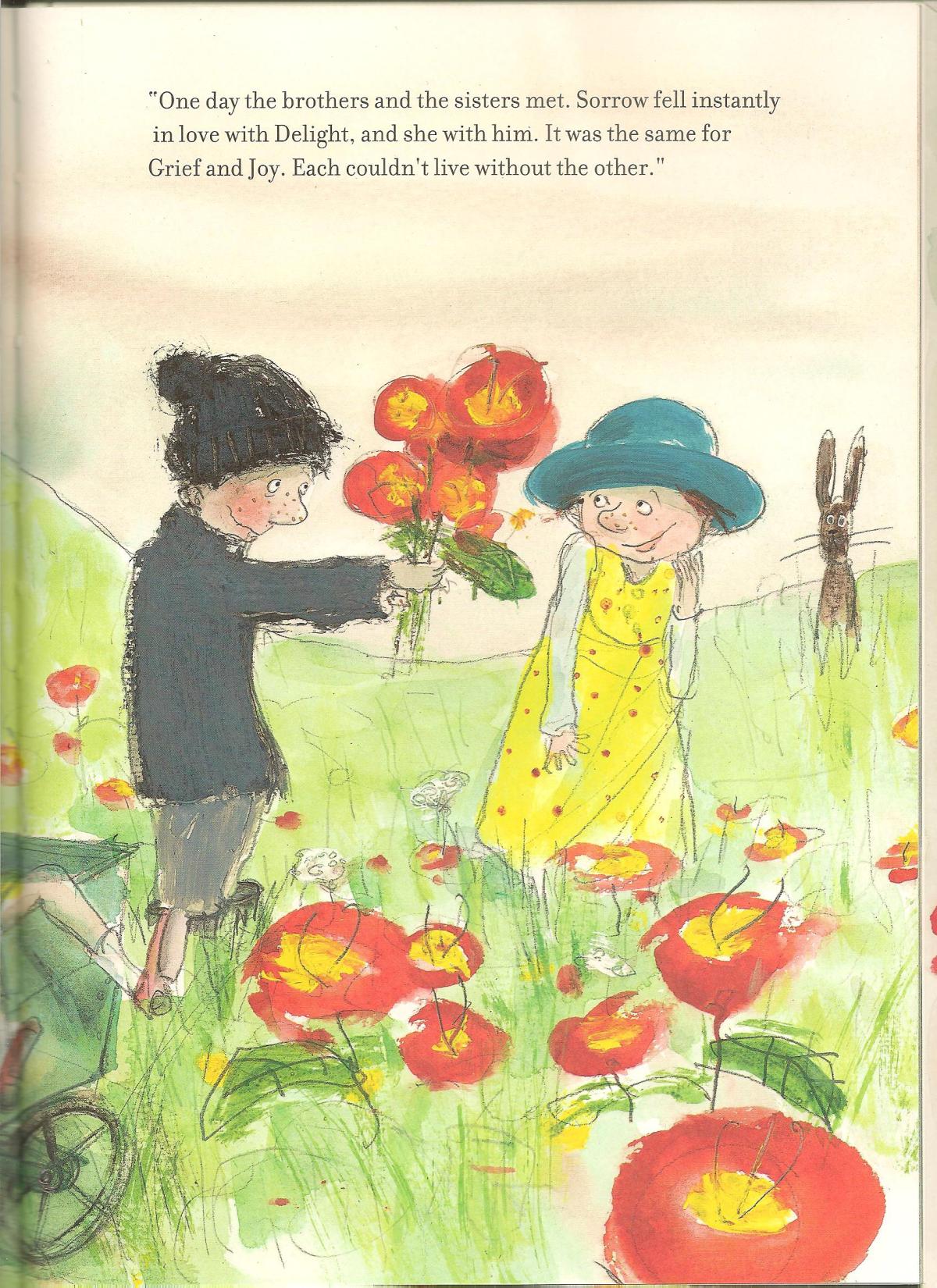
A few days before the group was to meet, I got the story book, Cry, Heart, But Never Break by Danish writer Glenn Ringtved, illustrated by Charlotte Pardi.  Robert Mouthrop translated this English version that was published recently by Enchanted Lion Books.

001

Ringtved has written over 40 books for children, most of them clever and funny.  This one, though, is about death.  He wrote it for his own children when his mother was dying, moved by the words she spoke to him: “Cry, heart, but never break.”  She wanted him to know that it was okay to mourn her loss, but that her time was over.  Life would go on.

Our book club was meeting in the early afternoon.  We meet at Bridge Meadows, the community I live in.  Later in the day, we had a “celebration of life” planned for a member of the community who had recently died at age 80.  She was a member of the book club, too.  Grief and loss were much in my thoughts, and on a lark, I decided to take Cry, Heart, But Never Break to the group and perhaps read it after the book discussion, depending on how it all went.

There was a brilliant discussion on grief.  We talked about the losses in our lives that most devastated us – sisters, brothers, fiancés, parents, spouses.  We talked about the way that we hold grief, how we never really get over it, it becomes a part of us.  We keep the story of the person we grieve alive.  Their story is ours.

One of the members grabbed a tissue and quietly wiped her eyes.  “My daughter is dying now of cancer,” she said.  Her daughter’s breast cancer has metastasized into her bones and other organs.  “It’s the hardest thing I’ve ever been through,” the woman said, though she nursed her husband through 7 years of Alzheimer’s.  Her other daughter is that state of devastation, unable to accept that her sister, in her 50s,  is dying.  She’s always on the internet looking for cures, refusing to “give up.”  It’s exhausting for the mother, loving both of her daughters through this.

But she is taking time for self-care, getting out in nature, coming to our book club, doing tai chi, joining a writing group – and appreciating the time she has with her dying daughter.  The daugher’s lived longer than expected and each day is blessing.

After our condolences and offers of support, a meditative silence settled around us.  So I pulled out Cry, Heart, But Never Break, and asked if they would like to hear it.  They were happy to.

002

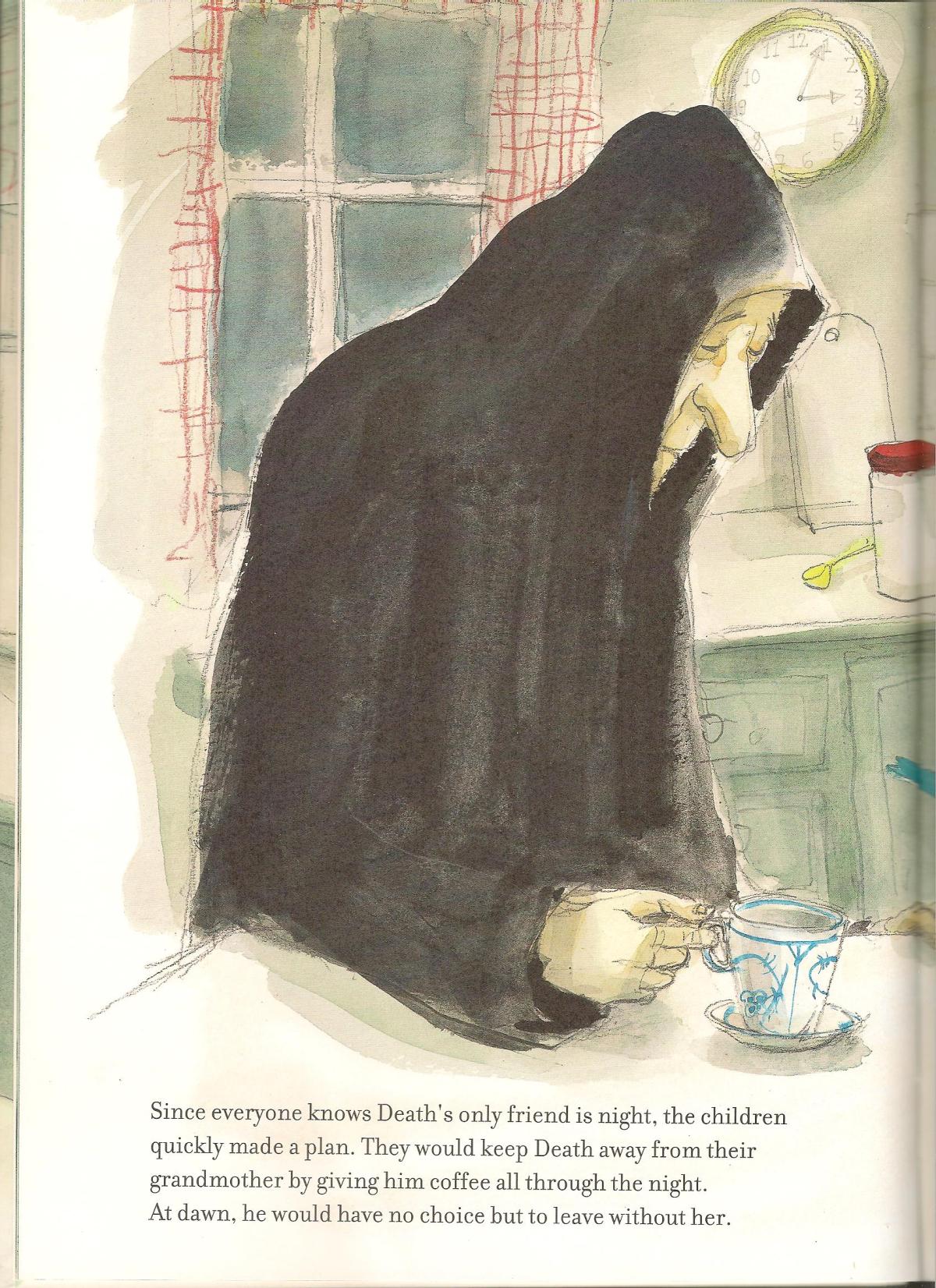
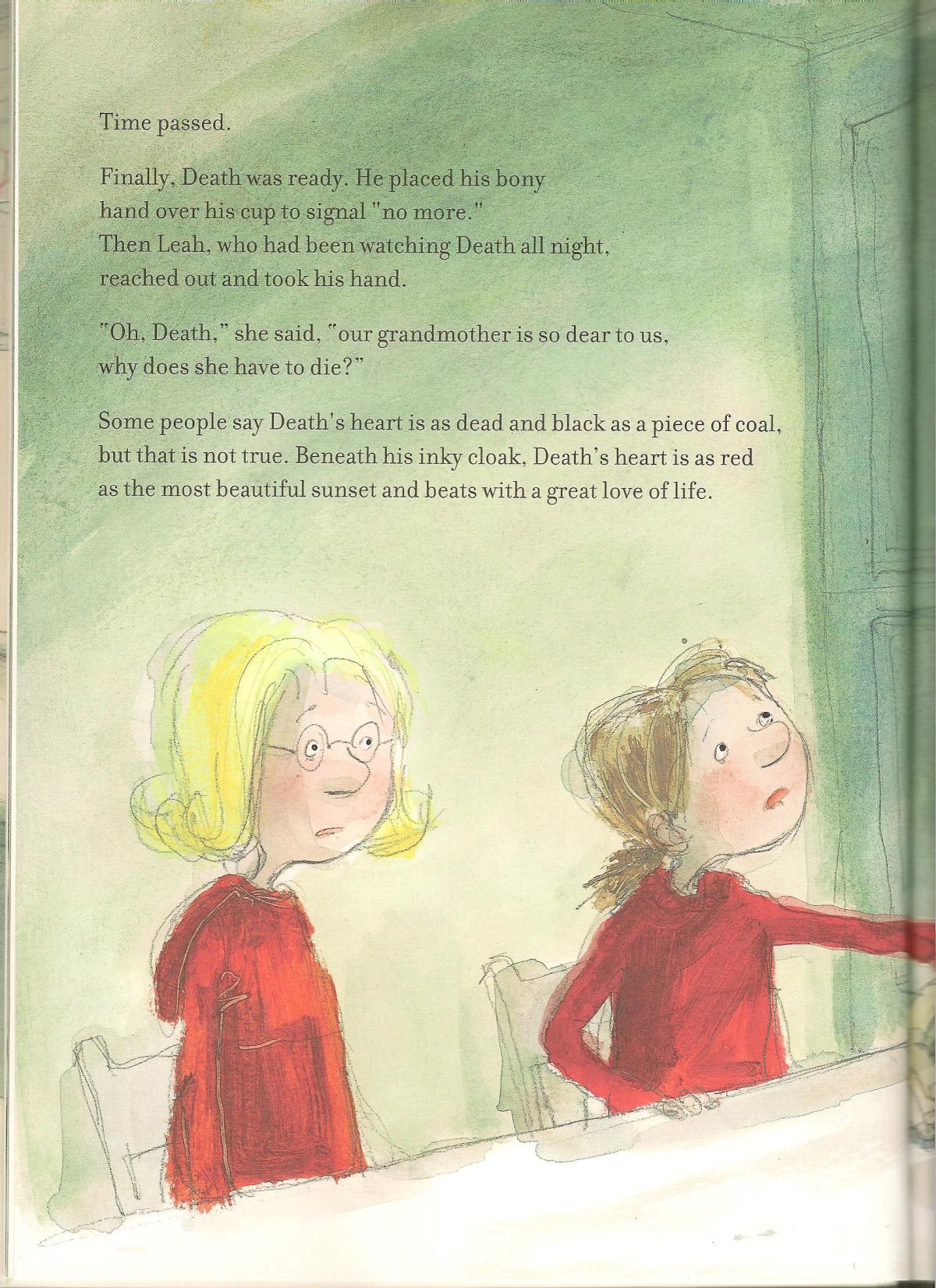
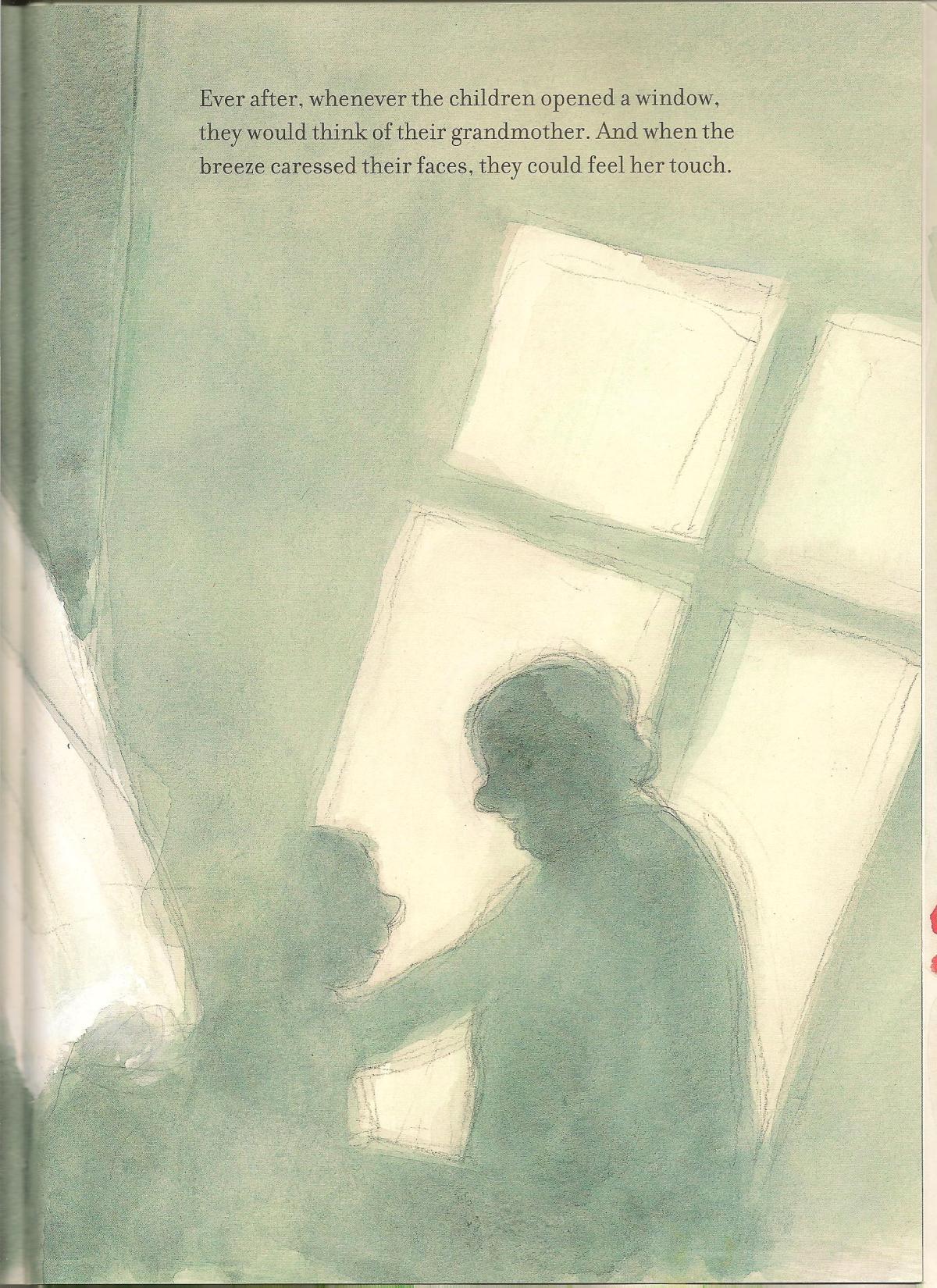
So I read it to them, slowly, holding up the pictures, and pausing for them to absorb both the bright colors and the somber, tender portrait of Death.

Death tells a story to 4 children who are trying to trick him into leaving their grandmother with them.  He wants them understand how necessary his work is.

005


007

“The children weren’t sure they understood Death fully, but somehow they knew he was right.”


006

There was a long pause after I read it.  One of the 90 year old women talked about her fear of death, but her daughter speaks to her of the cycle of life, how death isn’t to be feared so much, it’s part of life.  The book reminded her of that.

Another woman said it was a great book for adults, which is my belief about many children’s books.  We’re all still the children we once were.

They asked if I was going to read it to children.  Of course, but not in a group.  This is a book I think should be read to children one-on-one, with lots of time for discussion.

Later, when I was at the celebration of life for our departed friend, I thought about how sometimes I am blessed with a bit of convergence, where all that seems to be discordant and disconnected in life somehow suddenly flows together.  A bit of redemption washes over me.  I feel the great sorrows of others, of the world, but sorrow becomes an undercurrent to a vast river that quenches and sustains me.

008

Wise women who connect to life at its most painful, writers who bring us together in our grief and joy, life that blossoms all around us — how blessed I am to find such stories.

You can read another insightful review of Cry, Heart, But Never Break by Glenn Rigtved on BrainPickings here.

Enchanted Lion Books publishes books from around the world to expand the imagination of children and adults everywhere.  You can follow them on facebook or twitter.

Another wonderful book for children of all ages to help understand the life cycle and death is Little Bell and the Moon by Giles Paley-Phillips.  You can read about it here.

Life is short.  May you find comfort and perhaps some little flowers on this day.

Thanks for reading my blog.

010


Art Forms from the Abyss by Ernst Haeckel

013There is nothing, Sir, too little for so little a creature as man.  It is by studying little things that we attain the great art of having as little misery and as much happiness as possible. ~~ Samuel Johnson (1709-1784)
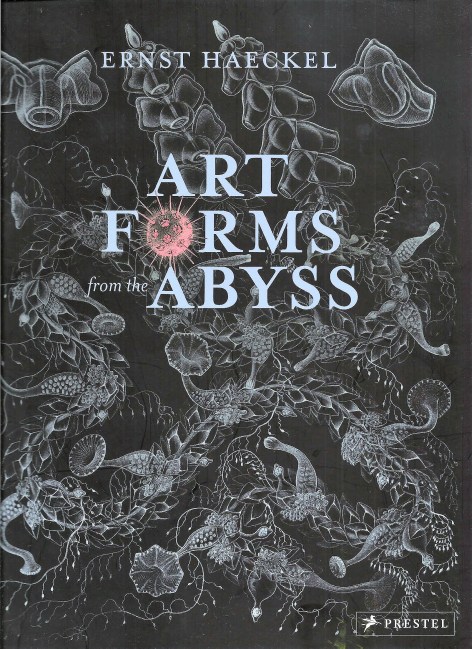
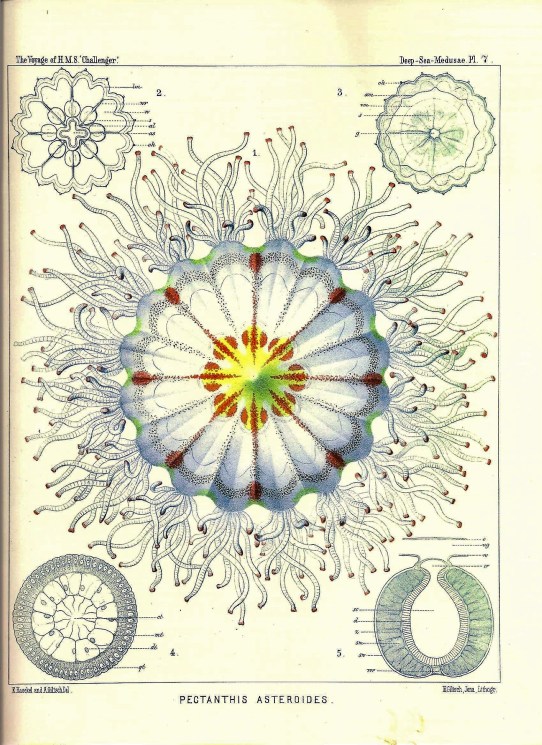
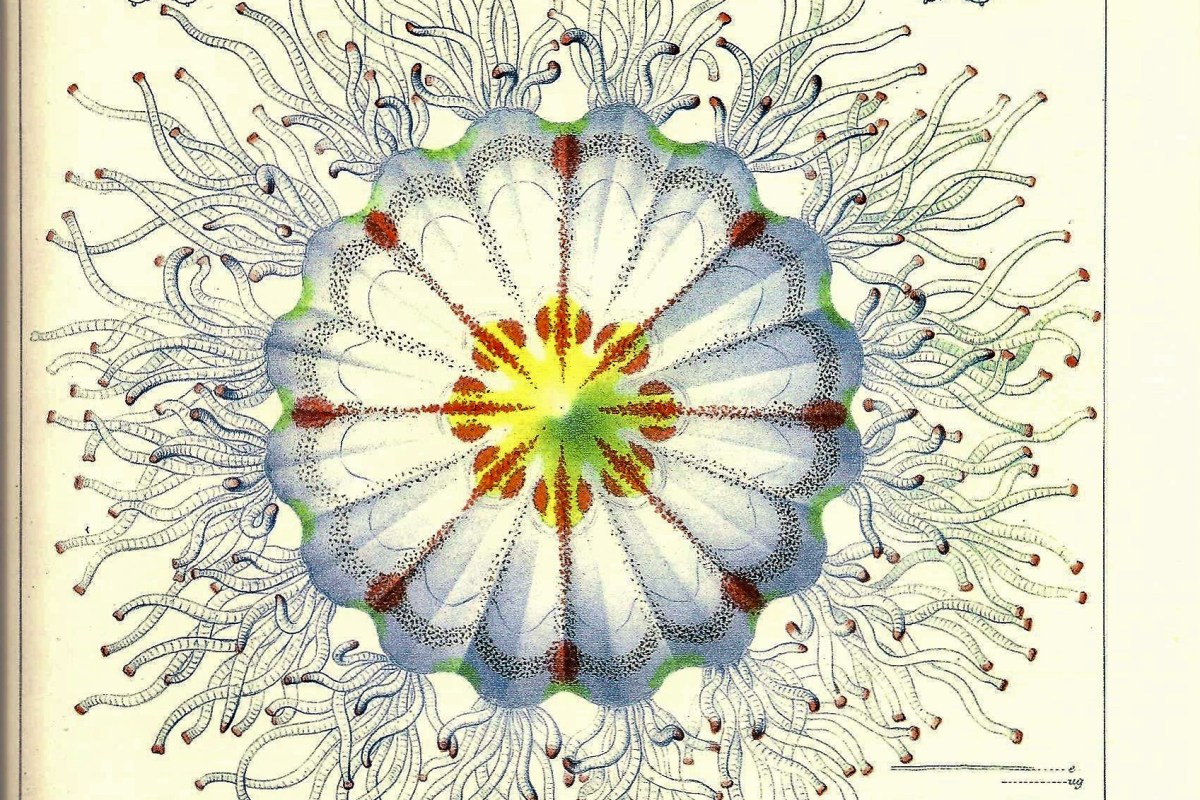
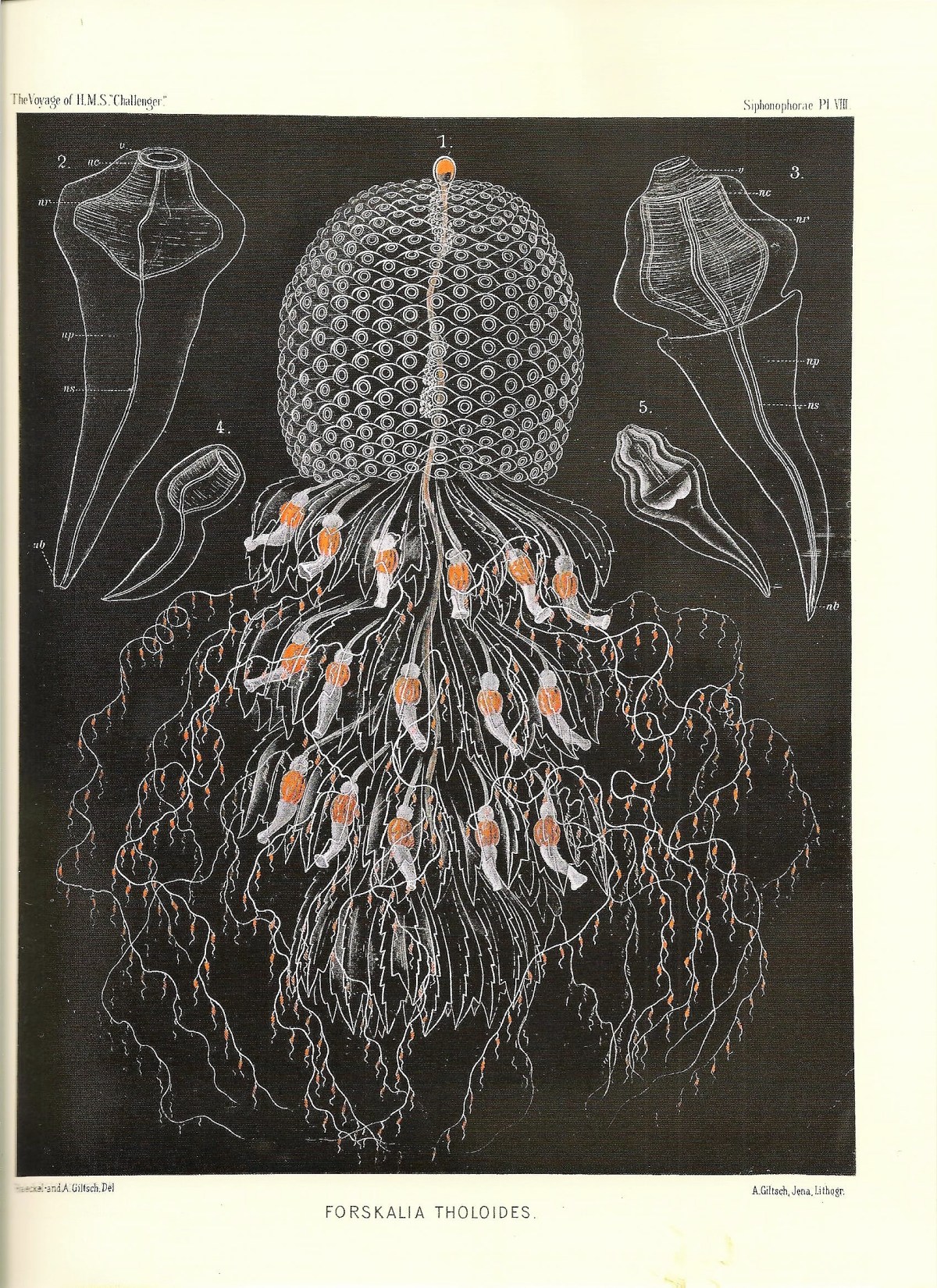
Ernst Haeckel ( 1834 – 1919) was a German biologist, naturalist, philosopher, professor and artist who discovered thousands of new species, mapped a genealogical tree relating all life forms, and coined man biological terms.  He popularized Darwin’s work in Germany and used ilustration to help people visual minute forms of life.

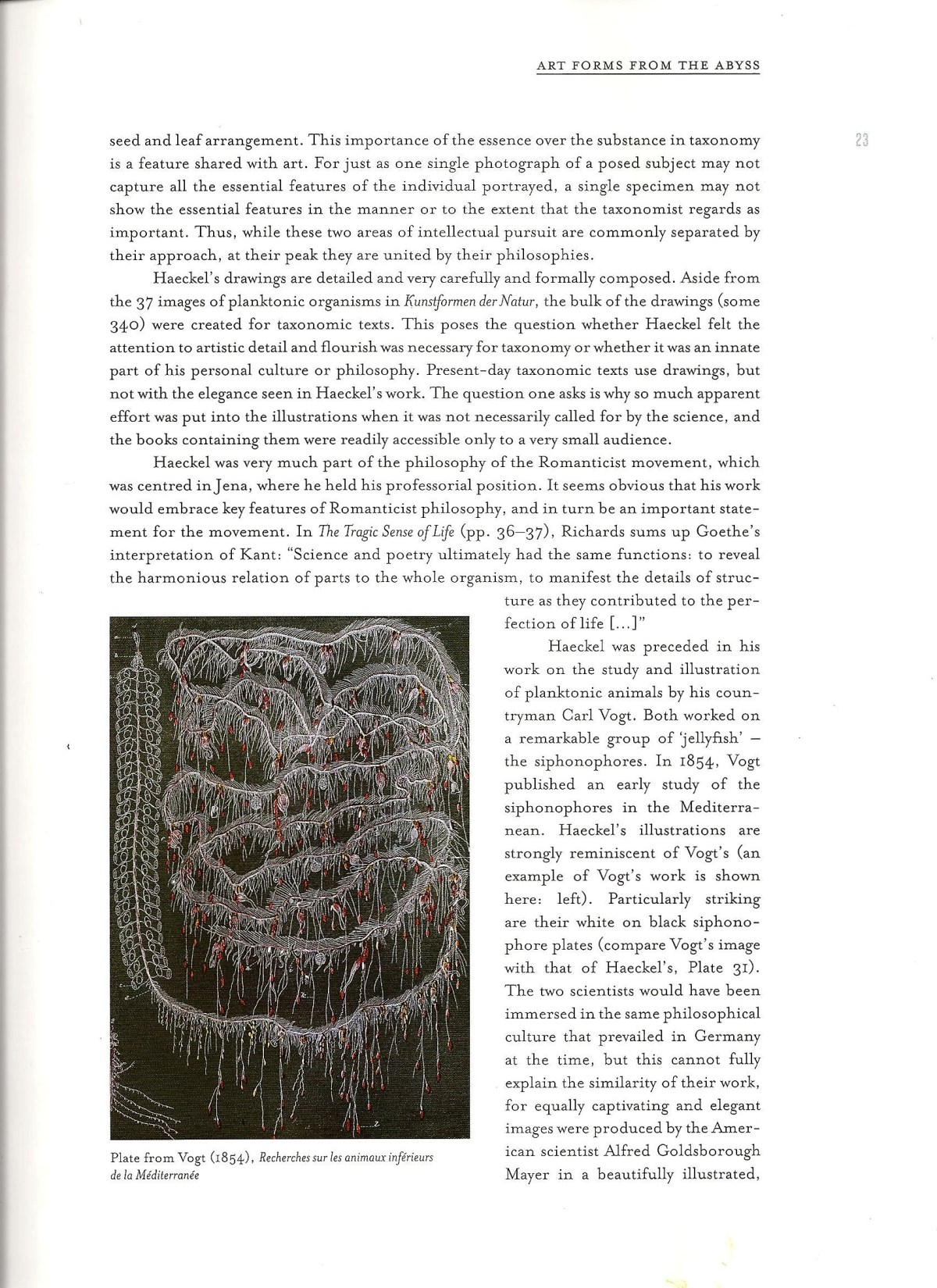
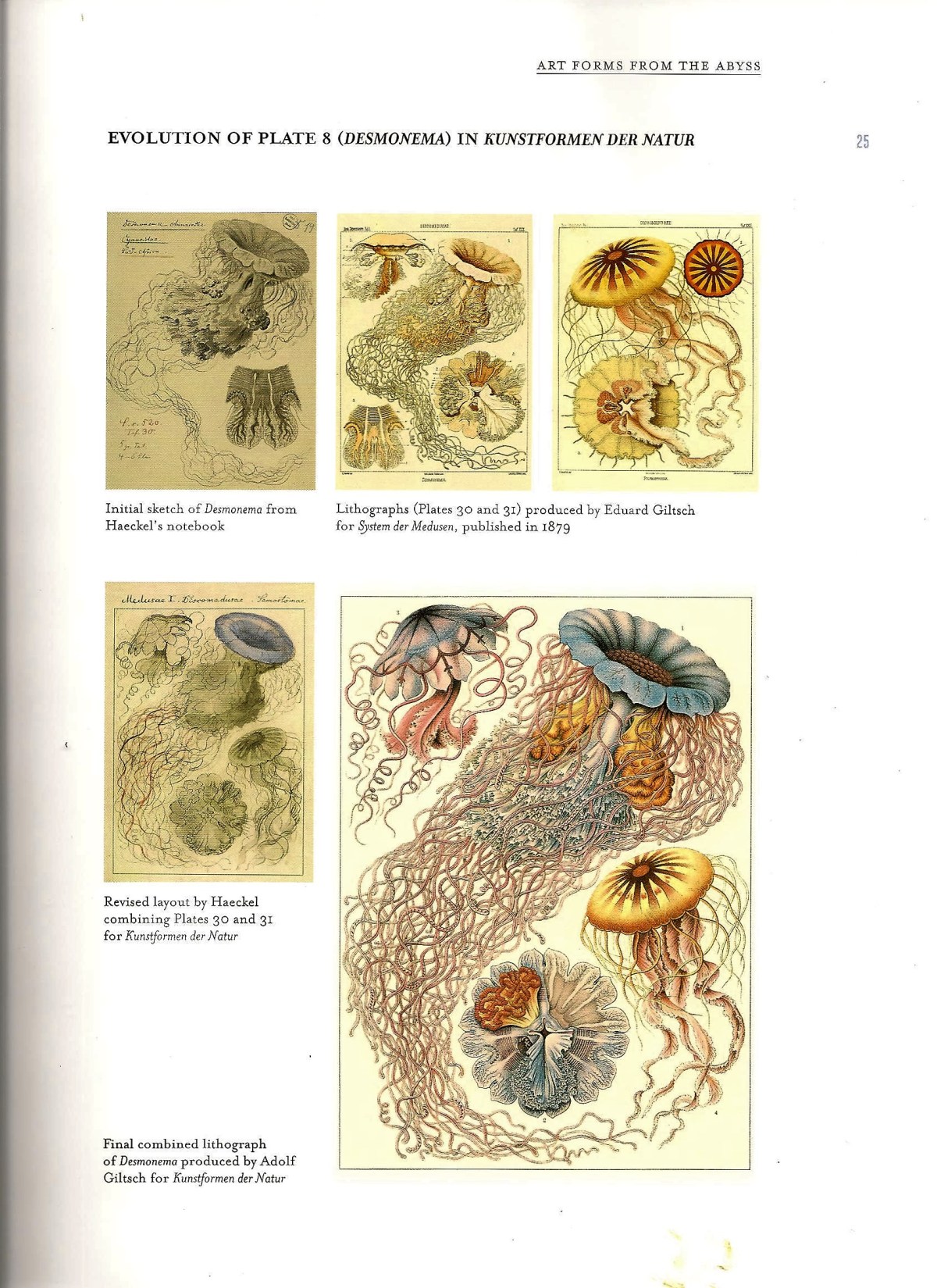
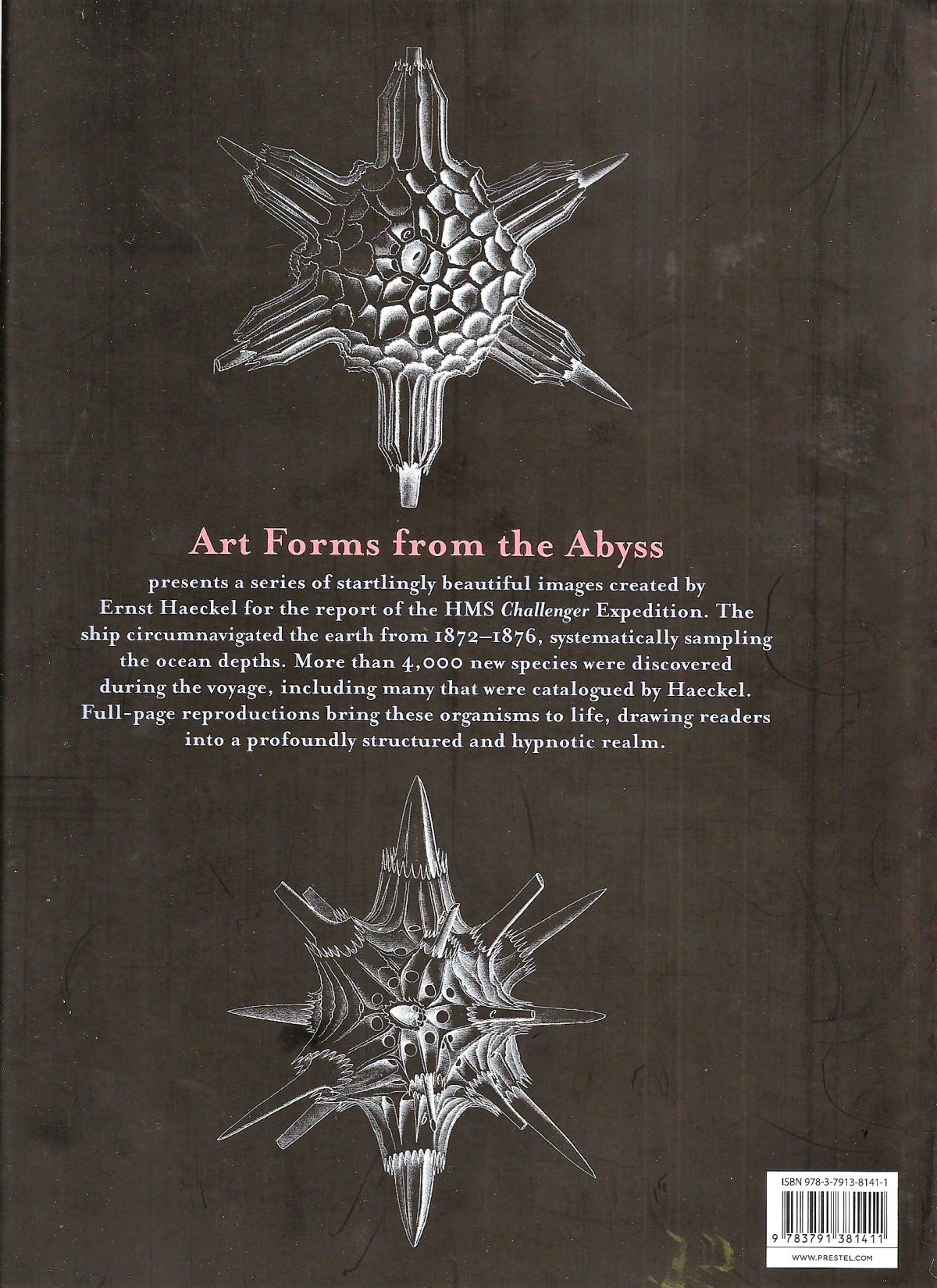
Prestel Books has printed a series of books on his art, the latest of which, Art Forms from the Abyss, feature images from HMS Challenger Expedition.  Compiled and written by Peter J. le B. Williams, Dylan W. Evans, David J. Roberts, and David N Thomas, it aims to keep Haeckel’s artistic legacy alive.

004

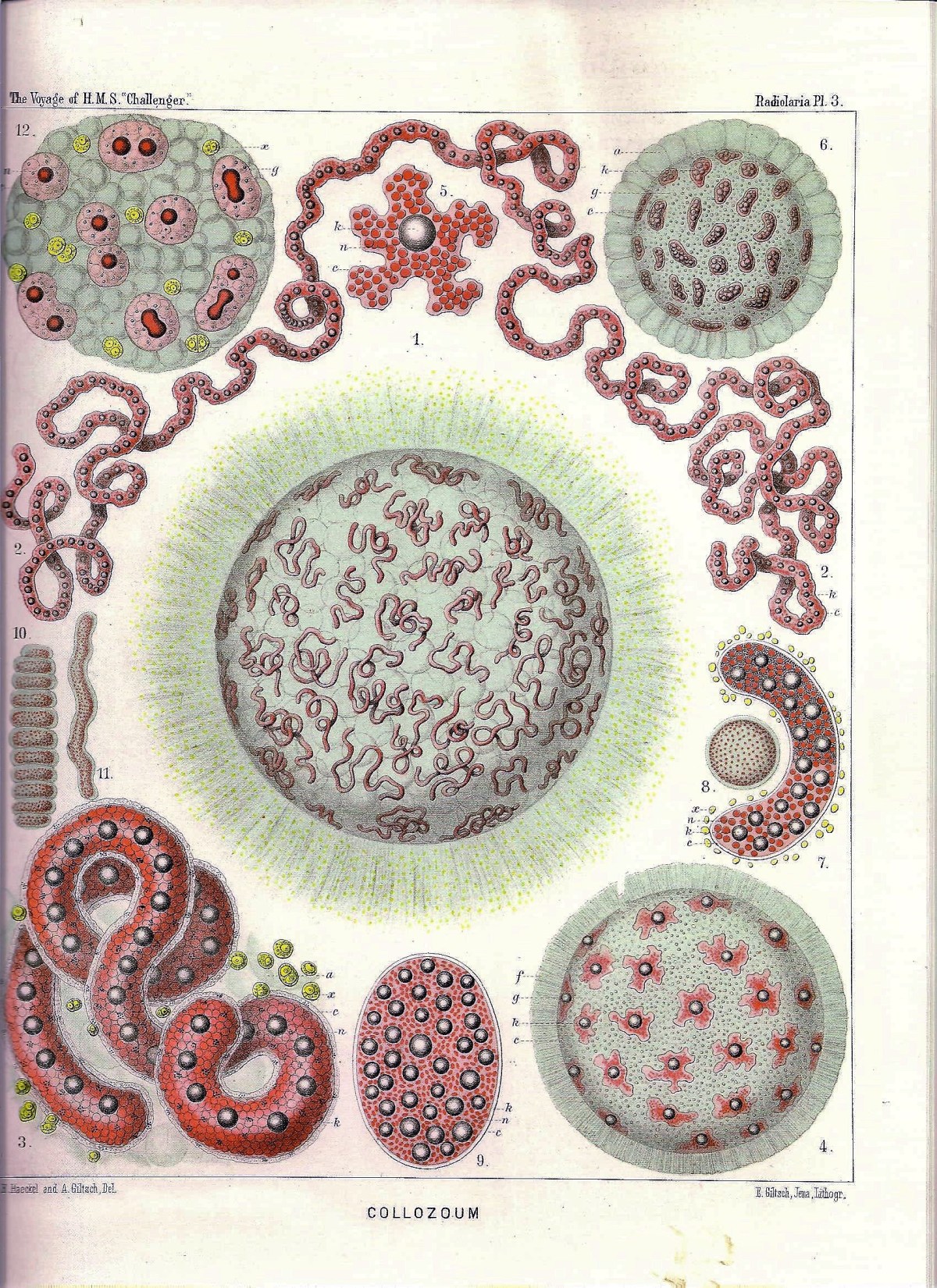
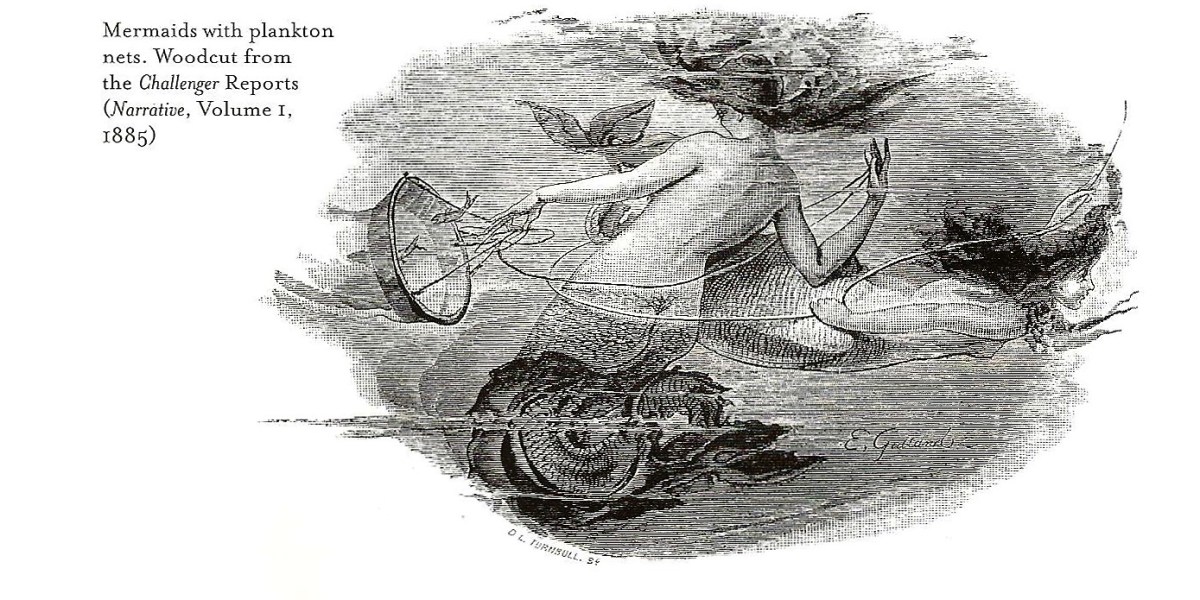
This new collection features startlingly beautiful images created by Haeckel for the report of the HMS Challenger expedition, which circumnavigated the world from 1872–76, discovering and cataloging nearly 5,000 new species from the depths of Earth’s oceans.

009

Divided into three sections— Siphonophores, Medusae, and Radiolarians—these illustrations display Haeckel’s remarkable artistic skill and understanding of the architecture of organic matter.

The authors provide a brief history of the Challenger expedition, background on Haeckel’s scientific and artistic accomplishments, and information on each group of organisms.

011

In Haeckel’s life, there was debate on whether or not there was life in the ocean’s depths.  His work helped dispel that myth and his illustrations gave people a way of understanding the range unseen life.

008

The book’s introduction provides great insight into Haeckel’s life and the times in which he worked.  There’s a discussion of style, and the romanticism that influenced illustration style of the time.  There’s great information on how illustrations were finished and embellished.

007

001

The “wow” factor of this book is over the top.  I spent a lot of time studying the drawings while I was recovering from surgery.  The thought of unseen little creatures living all around us may be a bit scary when you’re sick.

010

But the beauty of these illustrations was so elevating that I rarely related it back to germs that might want to attack me.  This book emphasizes the  wonder of it all.

006

If you ever weary of the big world of strife and politics, or feel devoid of inspiration, spend some time with this book.  Nature’s adaptations and abstractions should help you get your perspective back.

002

003

The authors have a website Silent Plankton that features not only the works of Haeckel, but also contemporary “plankton inspired art.”  It’s fascinating stuff.

012

You can find Prestel’s other collections of Haeckel’s art on their website here.

005

Thanks for reading my blog.


Edmond and the Moonlit Party by Astrid Desbordes

How do you make friends if you’re a shy introvert?  It’s not that you don’t want friends, it’s that you’re never quite sure how to proceed.

edmond 3

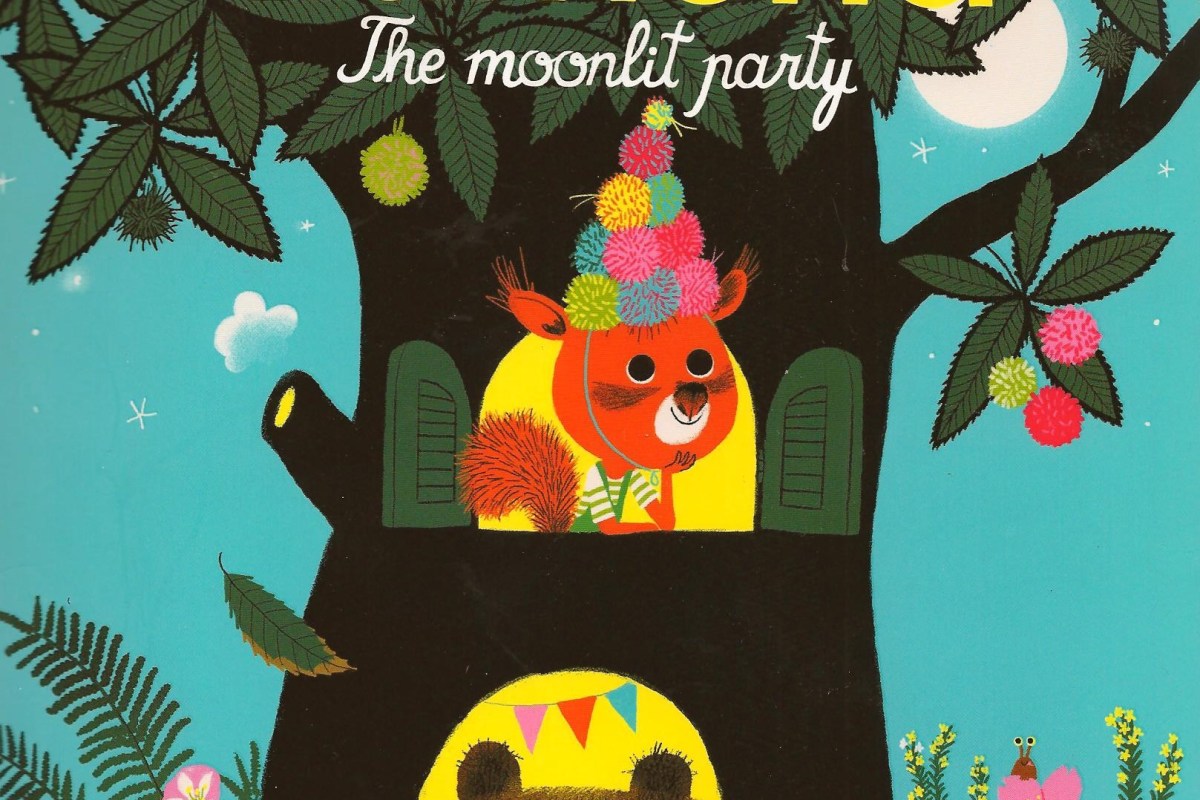
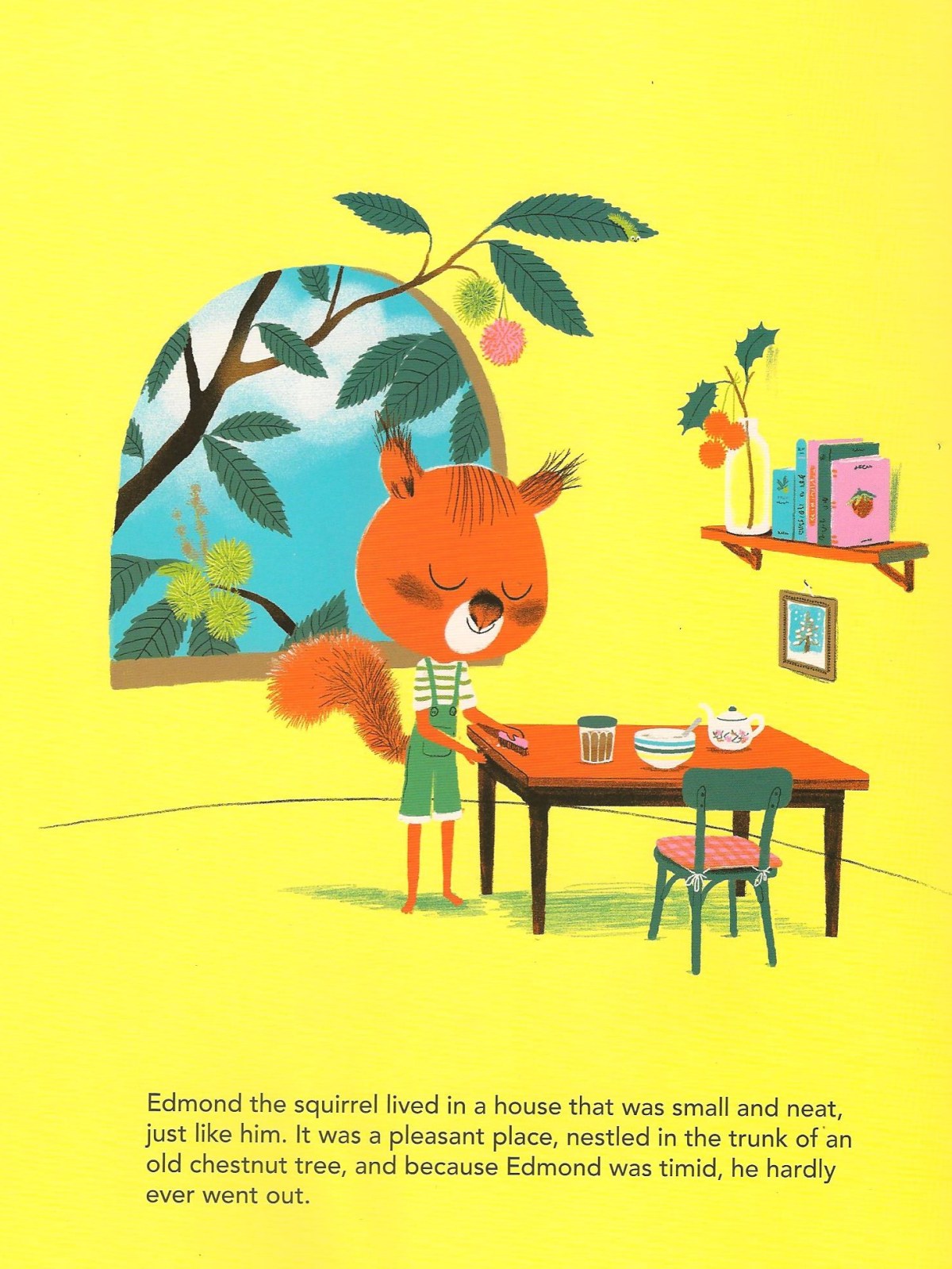
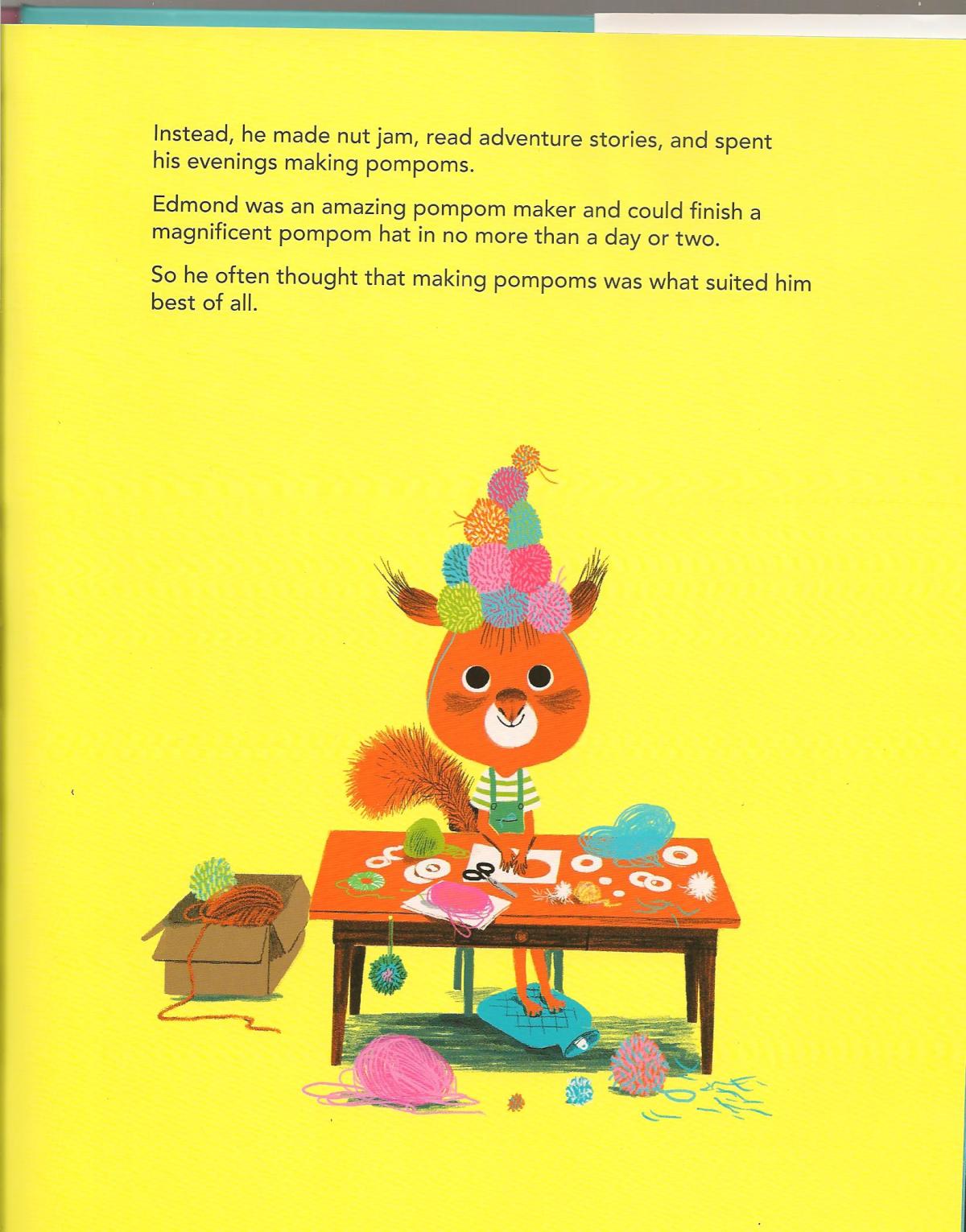
The charming Edmond: The Moonlit Party by Astrid Desbordes and illustrated  by Marc Boutavant (Enchanted Lion Books) tells the tale of how Edmond, a lonely squirrel and pompom hat maker, learns how to make friends.

edmond 2


edmond 4

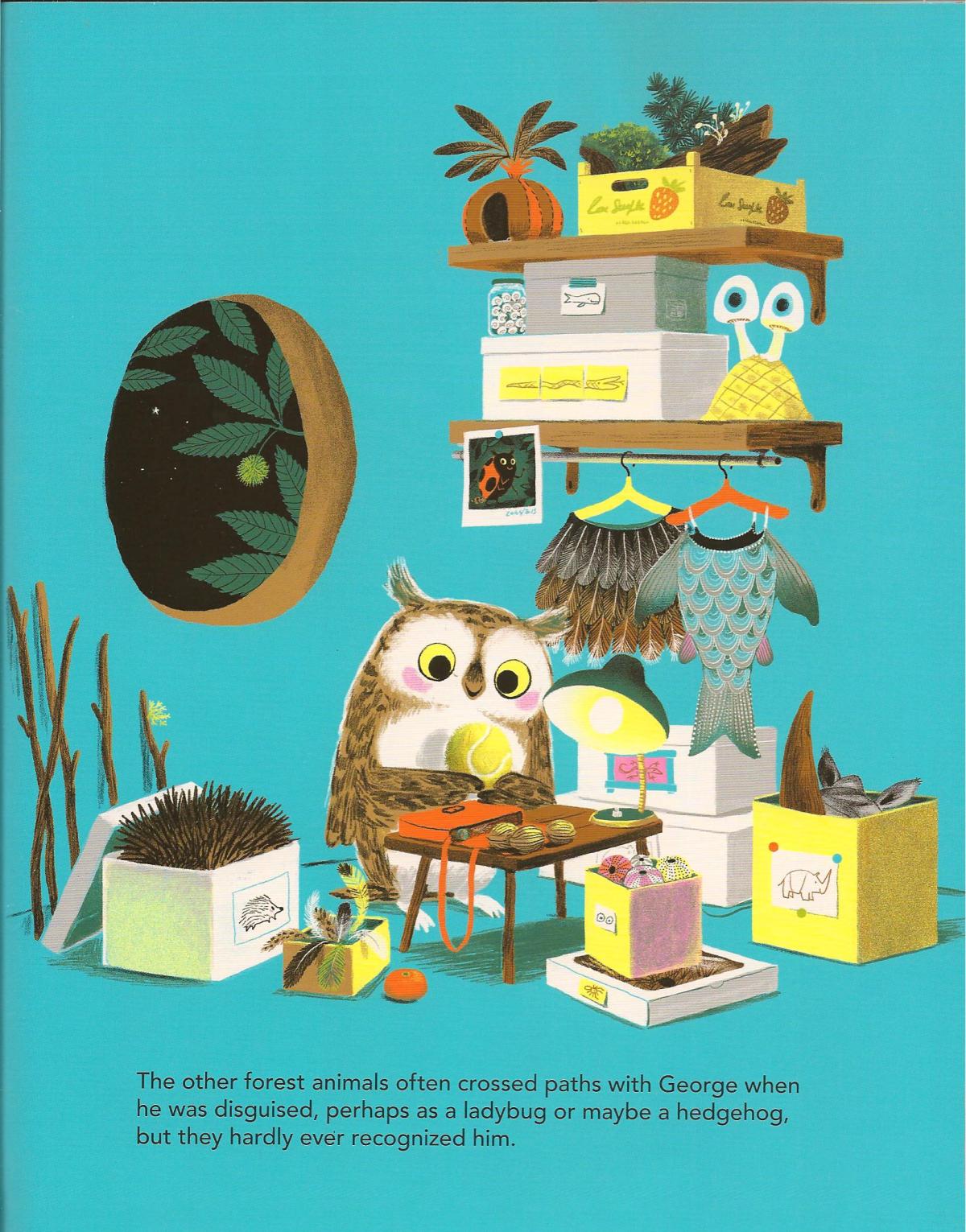
Edmond lives in a tree with George, the owl, who loves to dress up in costumes.

edmond 5

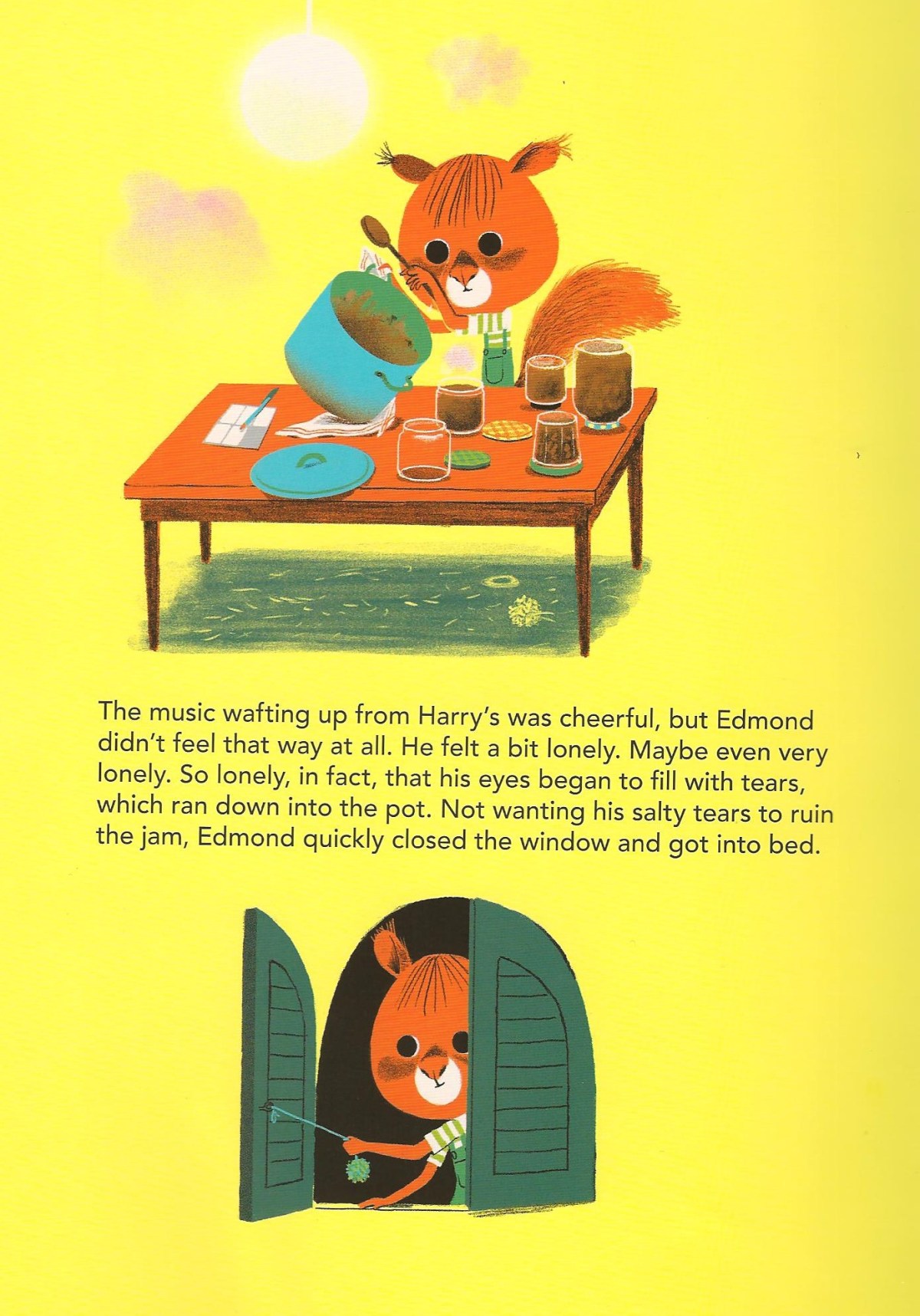
Harry the bear also lives in the tree and he loves to throw parties.  Harry’s parties are THE best in the neighborhood.  Edmond wasn’t invited, and didn’t know what to do, so he makes his famous nut jam.

edmond 7

The aroma attracts the more social George who urges Edmond to go to the party with him.

What I loved most about this book is how it offers a whimsical look at how to live in community, how to create a neighborhood.  All the characters are eccentric in their individual ways, but they accept and celebrate their differences.  The tree is like an apartment building, so even though it’s set in the forest, it has the feel of an urban neighborhood.  It manages to give an organic feel to city living.

edmond 6

I live in the community Bridge Meadows, an intergenerational community that supports families adopting children out of the foster care system.  People here are creative and compassionate, but we all have our own way of being.  This book is as relevant to the adults here as it is to the children.  George reached out to Edmond.  It just takes one person reaching out to another to make life more interesting for everyone.

In a world that’s increasingly impersonal, this story provides a delightful look at how to make friends and inspire conversations.

When I read it to a child, we spend time talking about how each character differs from the other, how each one seems to have a unique way of living.  They are vivid and detailed.  Marc Boutavant uses bright colors and playful drawings to bring an odd assortment of neighbors together in harmony.

Astrid Desbordes received her degree in Philosophy, which is not surprising, since her characters tend to have a philosophical points of view.  She became a book editor in both the humanities and children’s literature.  She’s published work for both adults and children.  One of her most notable other children’s book, Daydreams of a Solitary Hamster was also published by Enchanted Lion Books.

Marc Boutavant is an award-winning author and illustrator. He’s drawn picture books, comics, and editorial illustration.

Enchanted Lion Books is a stellar publisher of children’s books. You can keep up with them through their facebook page: https://www.facebook.com/search/top/?q=enchanted%20lion%20books 

Hope you get to reach out to someone different today — or you have someone reach out to you.

edmond 1

Thanks for reading my blog!

~~~

CBW 2016 poster front
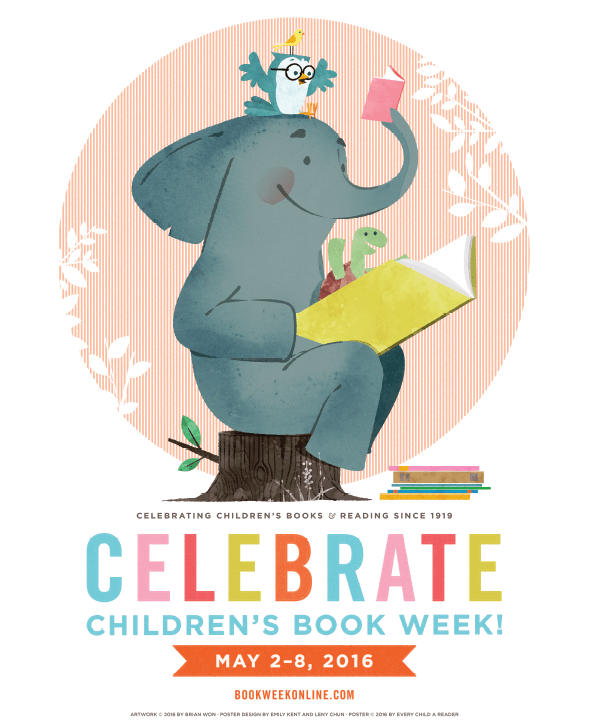
Poster by Brian Won!

This Blog is a Children’s Book Week Champion.  Children’s Book Week is May 2 – 8, 2016.

Established in 1919, Children’s Book Week is the longest-running national literacy initiative in the country. Every year, commemorative events are held nationwide at schools, libraries, bookstores, homes — wherever young readers and books connect!

Voting opened March 8 at ccbookawards.com for the ninth annual Children’s Choice Book Awards, the only national book awards program where the winning titles are selected by kids and teens. Last year over 1.3 million votes were cast.  Let’s see if we can surpass that number in 2016.


Children’s Book Week is administered by Every Child A Reader, a 501(c)(3) literacy organization dedicated to instilling a lifelong love of reading in children. The Children’s Book Council, the national non-profit trade association for children’s book publishers, is an anchor sponsor.

You can get free downloads of both the poster and the new bookmark on their website:

http://www.bookweekonline.com/ 

CBW-16-bookmark
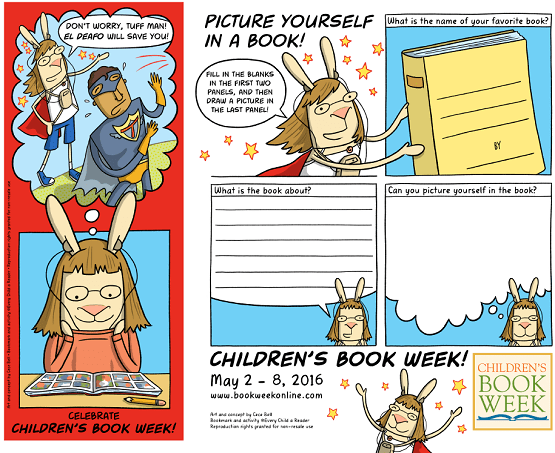
Bookmark by Cece Bell!