My Guerrilla Garden

This summer I’ve spent a lot of time communing with plants.  I’ve had some changes in my life.  My adult daughter moved in with her two cats.  She’s going to help me out around the house while she regains her financial composure after changing careers.  So my studio got smaller, but it’s a good thing for us both.

I planted a lot of flowers in pots on the porch this summer, and if you follow my facebook page, you’ve seen the progress of that enterprise.

This slideshow requires JavaScript.

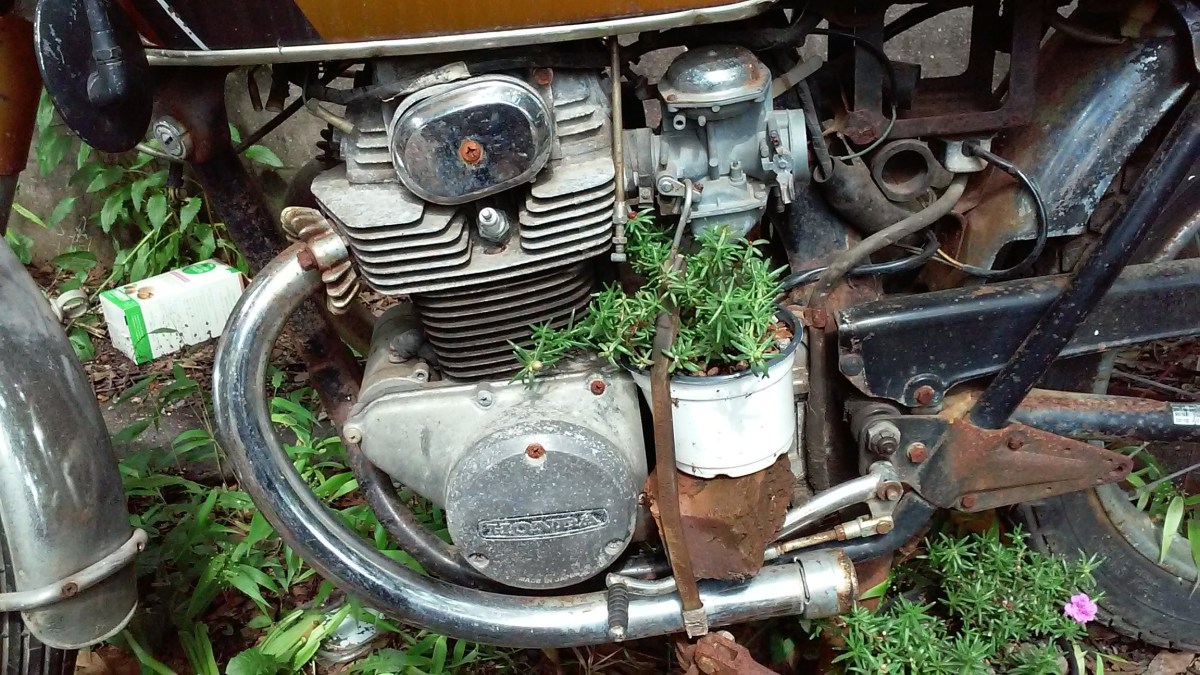
In the back of my house, in the neighbor’s driveway, there’s been an abandoned motorcycle since I moved here over a year ago.

20180518_095442

At least it looked abandoned.

I wanted to take some good close ups of the rusted gears, and the way things that once moved become stationary.  I have transitioned to using a wheelchair for most of my outdoor and indoor activities this year, and I felt a bit of attachment to the rusting old thing that once must have glided with ease through the streets of Memphis.  My photography was limited, however, by the quality of my camera as well as my ability to get in close without my own wheels getting stuck in the gravel pavement of the driveway.

I decided in the spring to use it as a guerrilla garden.  (I sometimes plant left over seeds in abandoned lots and in other people’s property just to see if they grow.)  I started adding pots of plants that might vine into and over the bike.  It’s in an awkward place, not much soil, inconsistent sunlight.  But I know plants strive to grow no matter what, so I went ahead and sneaked plants onto it.

20180521_15365320180521_15370520180521_15371620180521_15373020180531_101228

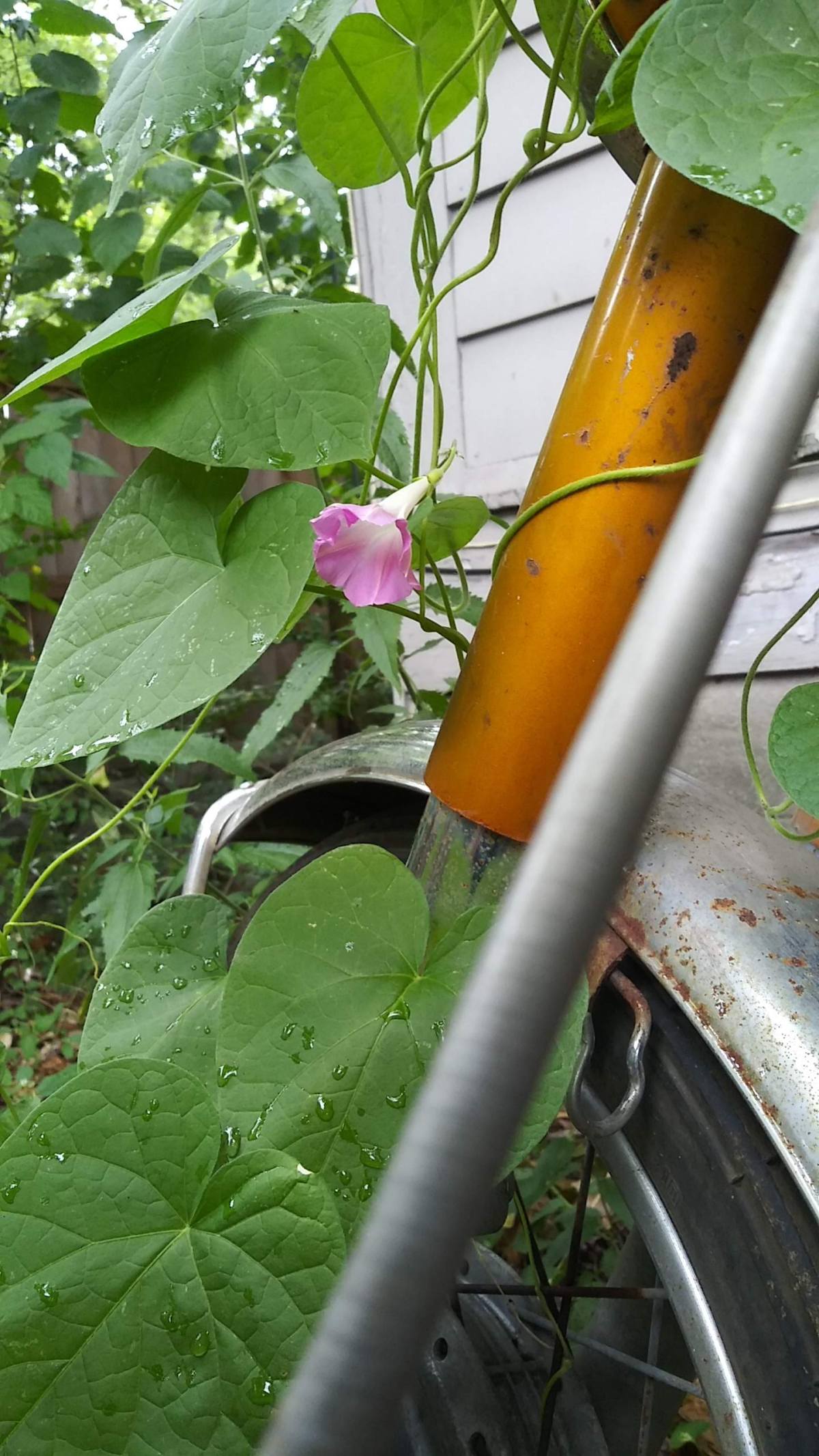
But it didn’t really look right to me.  So I went ahead and planted some purple hearts in the ground around it.  I also planted some morning glory seeds hoping they were strong enough to handle the thin layer of soil under the gravel and dry conditions.  And within a month, things were growing:

And the morning glory was more than prepared to take a ride on those old wheels.
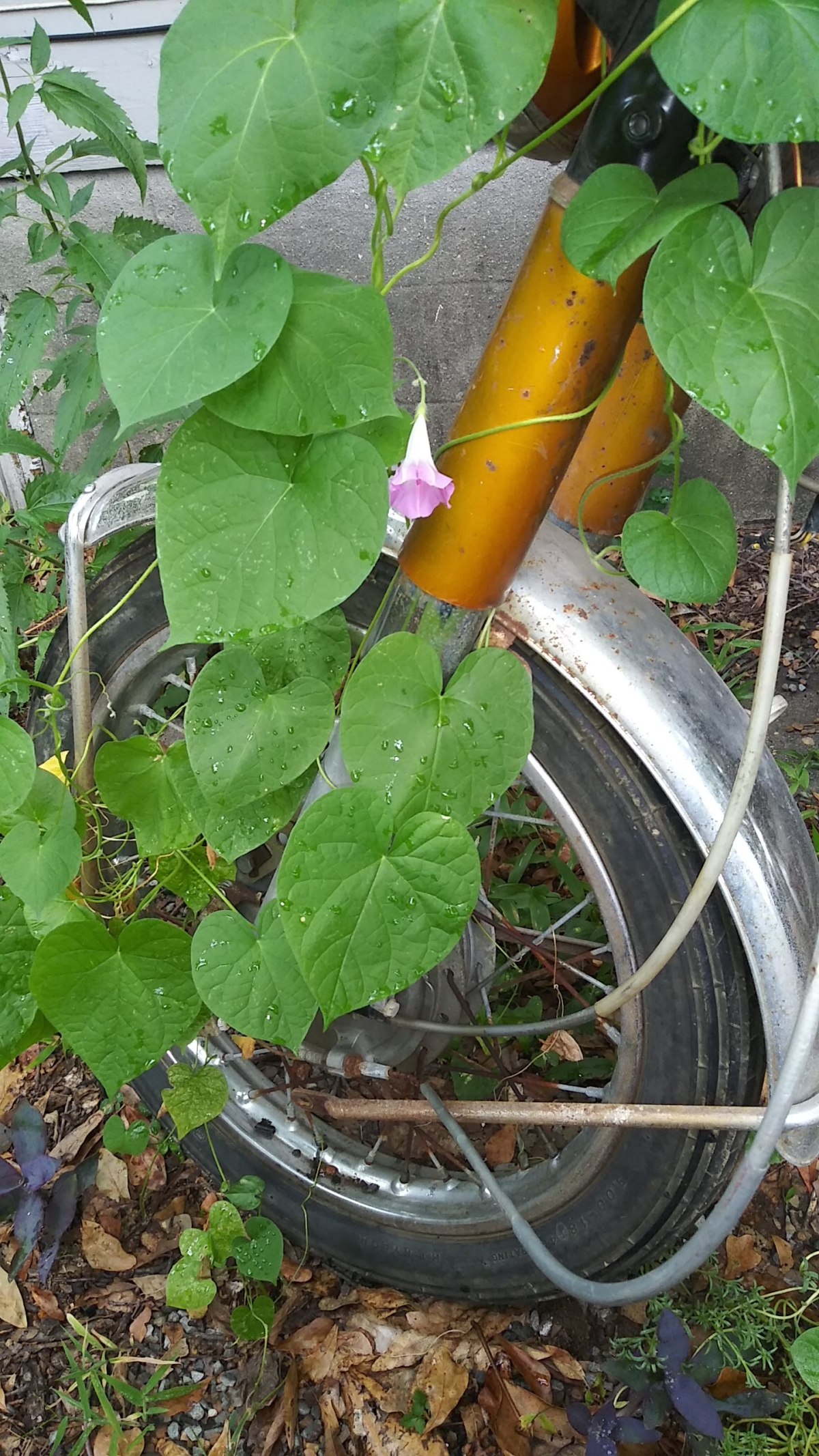
20180808_09481420180808_09481920180808_094830_Burst0120180808_09484320180808_09493020180813_095844

My neighbor told me about mid-project that it was indeed his motorcycle, not really abandoned by some former tenant.  He’d bought it to fix it up, but that he’d never had time to.  He was happy that I was able to create a little garden with it.

Then a few weeks ago, he told me that someone had bought it to fix it, and would pick it up soon.   It’ll be interesting to see if the morning glory will continue to grow even when the support is taken out from under it.   I’m not worried about the purple hearts, they grow and grow.  They don’t let circumstance stop them.

For now, though, the old motorcycle is still there.  Thriving in it’s disrepair.  Rust settling in deeper and deeper and my little bit of wild gardening twining through it.

This summer.  I’ve felt like I’ve been in a fallow period artistically.   I haven’t been painting a lot.  I’d planned to paint the flowers I grew on the porch, but instead, I do brief pencil sketches then just sit back and meditate on color, on growth, on life.  On Change.  I keep thinking things in my life will settle, but sometimes it feels like change keeps knocking me off course.

My morning glories, hibiscus and moonflowers bloom only once and then they fall away, their bright brief task in life carried out with color and grace.  They go to seed and another flower takes it place.  I check the plants each morning for buds and for new flowers.  My marigolds, petunias, celosia blaze out, and will bloom til the end of summer.  It’s mid-August and I’m sure they know their days are numbered as the sun slowly changes angles and they keep growing towards it.  And I am with them, every day, watering, tending and delighting.

So, now as I see my garden’s progress, I don’t feel it’s been a fallow time.  Only a change in season.  All these little growing things are here for the summer, then they will go fallow, and with or without me, they will come back.

I think we all need fallow periods for our roots to grow, so when the time comes, we bloom freely and with whatever color we can muster.

Life is change, but I feel rooted in it nonetheless.

20180813_095745


Thanks for reading my post.  If you like it share it.  If you find a typo, please let me know and I’ll send you a thank-you postcard.  

You can get prints and cards of some of my work on Redbubble.  They also print my work on lots of other items, including phone skins, tote bags, shirts and journals:

https://www.redbubble.com/people/JoyMurray?asc=u

If you’d like to support my art and writing, please consider becoming a donor on Patreon.  If I get enough supporters, I can make this blog ad-free!  Here’s a link to my Patreon page:

https://www.patreon.com/user?u=8001665

If you prefer to make a one time donation, you can do so at paypal.com  Please email me at joyzmailbox@gmail.com if you’d like details.


Madam & Eve: Women Portraying Women — Book Review

Just Wow!

51jqNfA1cjL

I was blown away by the range and depth of this collection of contemporary portrait and figurative art by women.

I’d been looking for a good book on post-1960s portrait art for about a year.  There was nothing in my library about that at all.  The world has become more vibrant and diverse place in the past 60 years.  Art materials have changed, art styles have changed.  More people than ever have access to art materials.  More styles of creativity are seen as art.  We’ve begun to remove blinders and see the world and each other all over again.

I see a lot of contemporary art online, but nothing in depth, or that pulls it all together in a meaningful way.  All the books I could find in my library were histories of portraiture that featured only the classic realistic styles and much art done for wealthy patrons.  Which is fine, but what about what’s happening all over the world now?

814WDmW3XeL

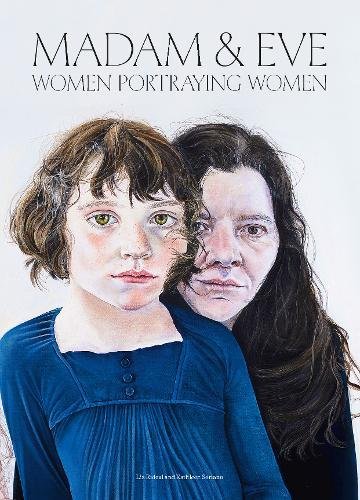
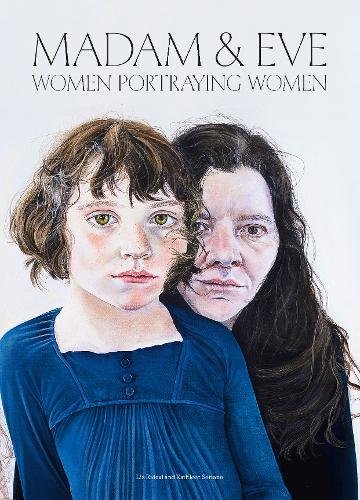
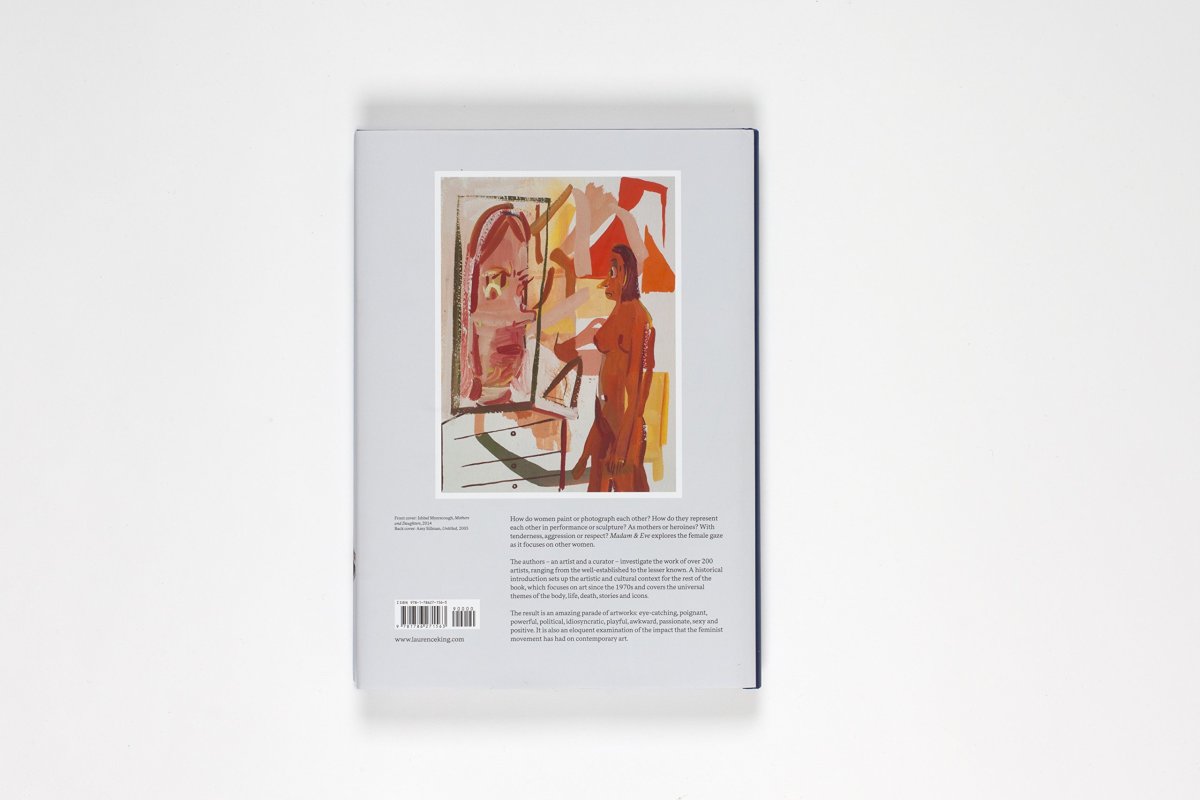
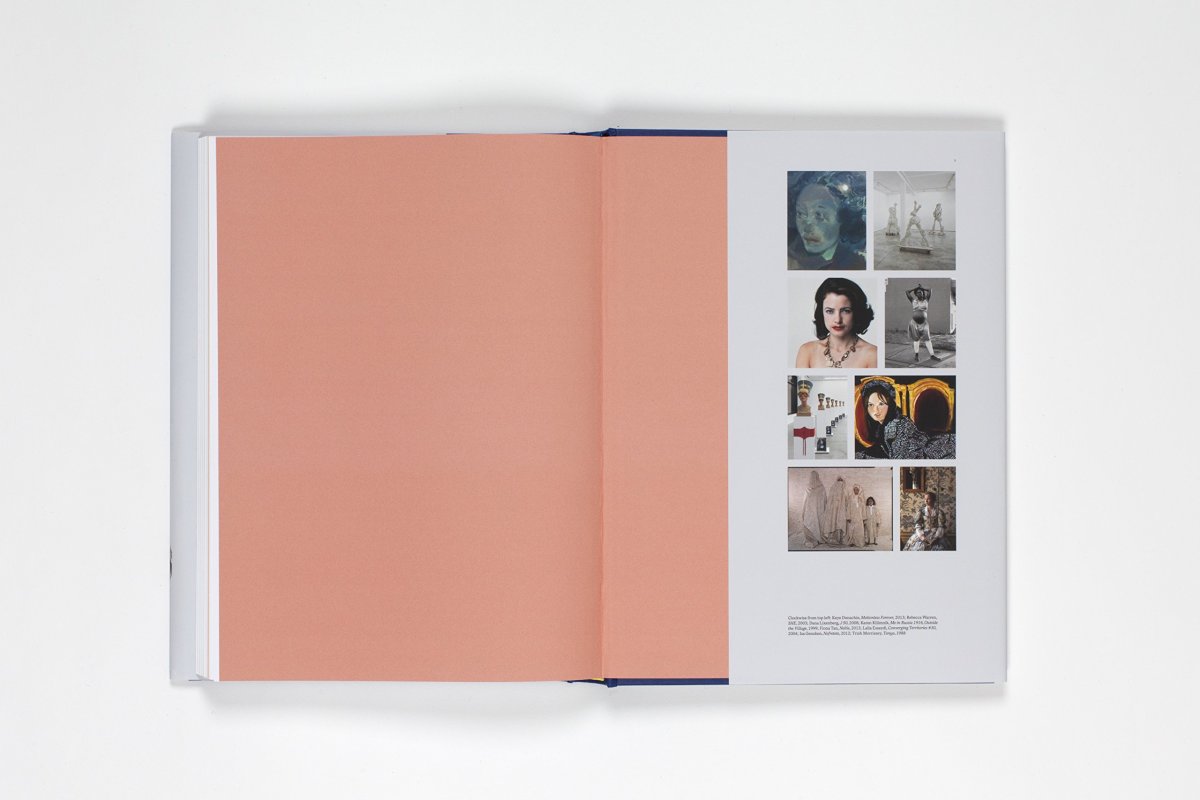
I found the book Madam & Eve: Women Portraying Women by Liz Rideal and Kathleen Soriano about a month ago, and have been consulting it almost daily ever since.  There’s so much to absorb from the paintings, photographs, constructions and performance art represented and discussed here.   Some of it is gorgeous, some of it grotesque but all of it is new and intriguing to me.

81Ej+Mj92fL

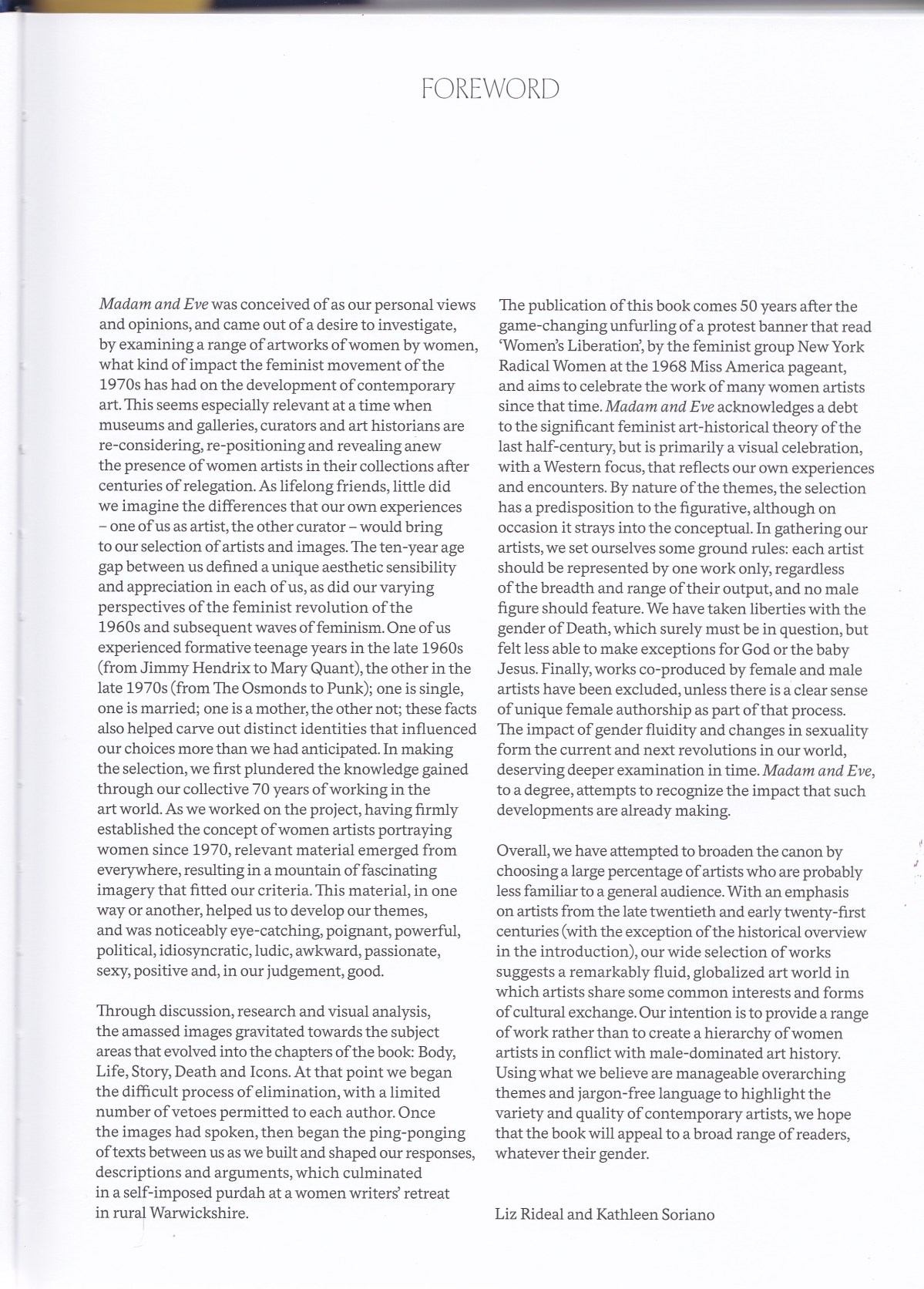
In the Forward, the authors said they conceived of this from their personal views:

intro

What I found in the book seemed a universal view, a wide range of what a portrait can mean in addition to a mere representation of what a person looks like.  And women’s vision, historically, has been ignored, but it’s always been a most powerful view of who we are.

IMG_20180804_0002


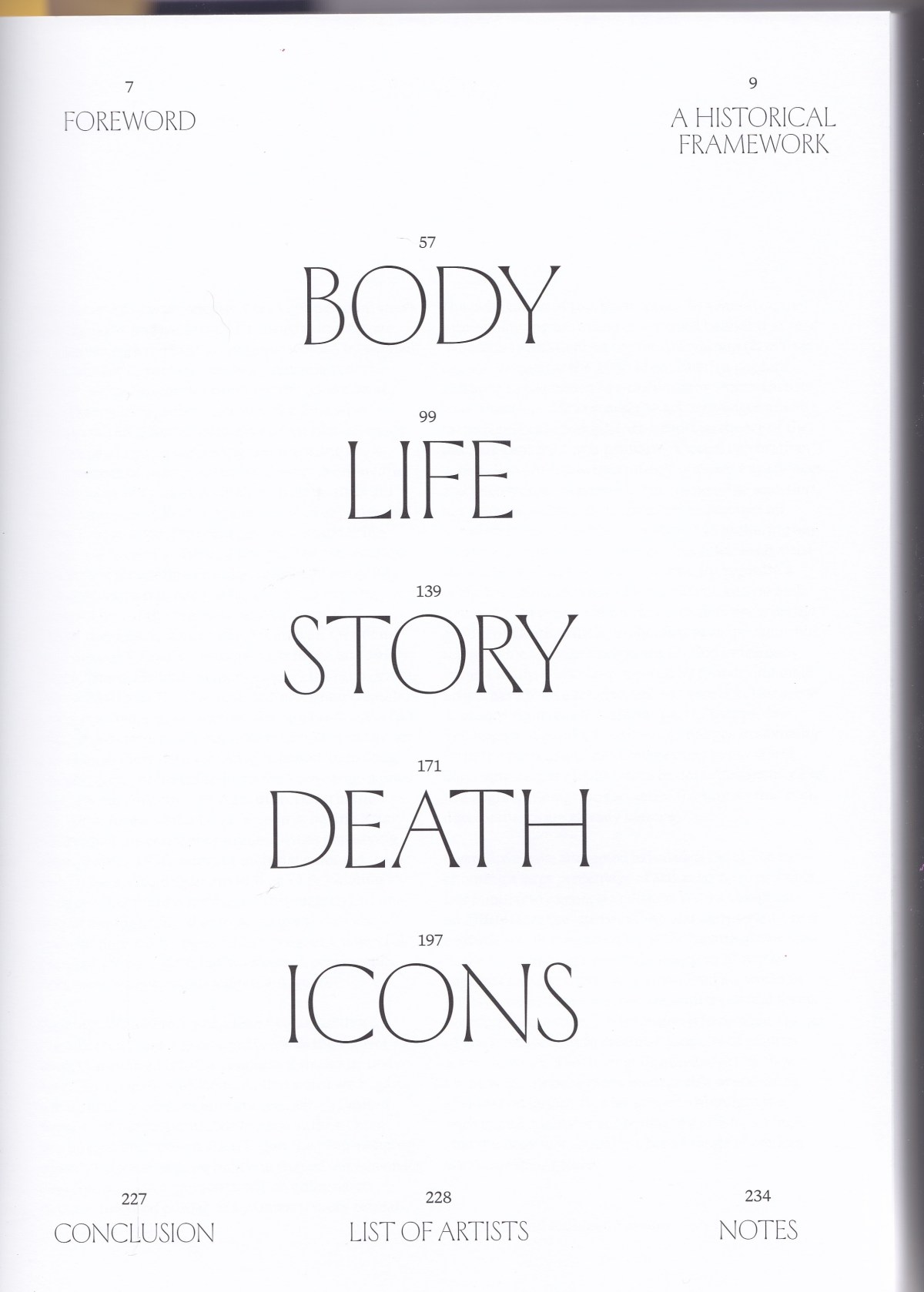
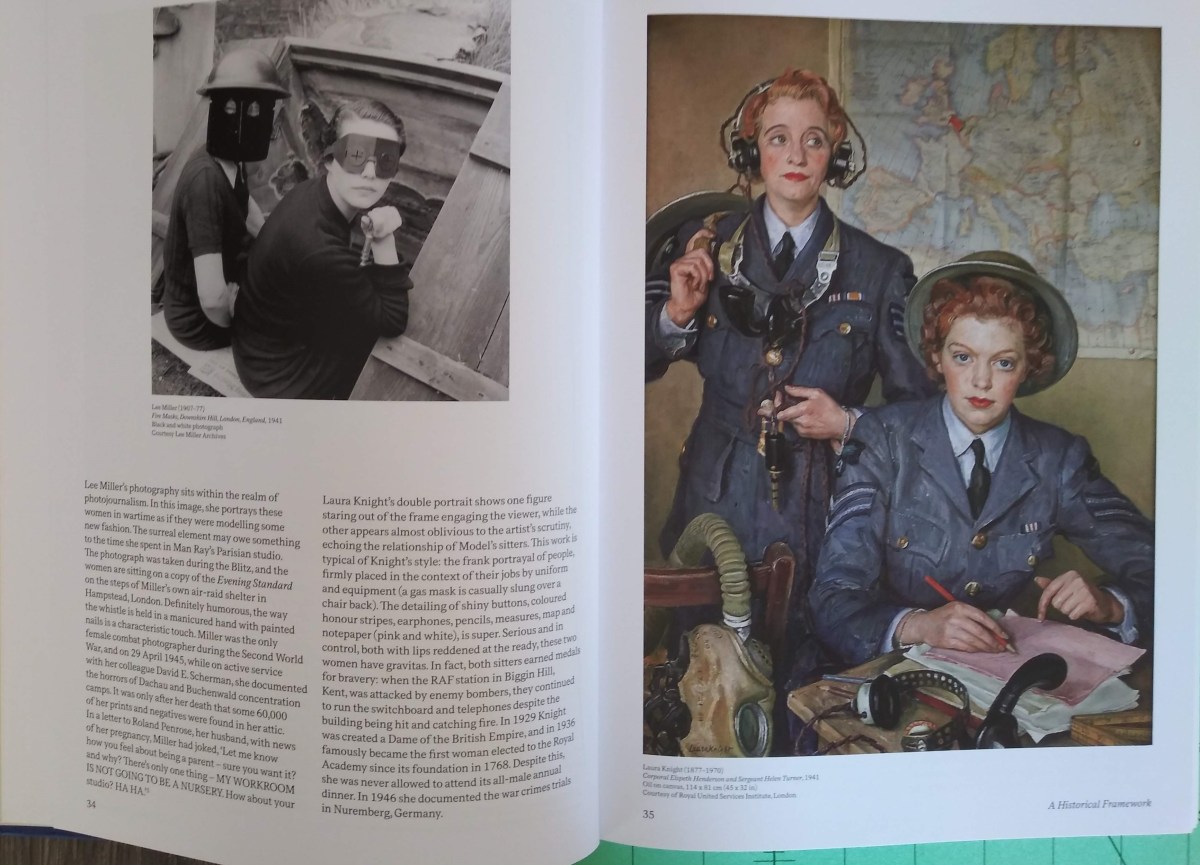
The first section of the book covers some history of women in the arts, beginning with Clara Peters, Still Life with Goblets, 1612,  where her self-portrait is slyly hidden in the reflection on a goblet:

IMG_20180804_0001


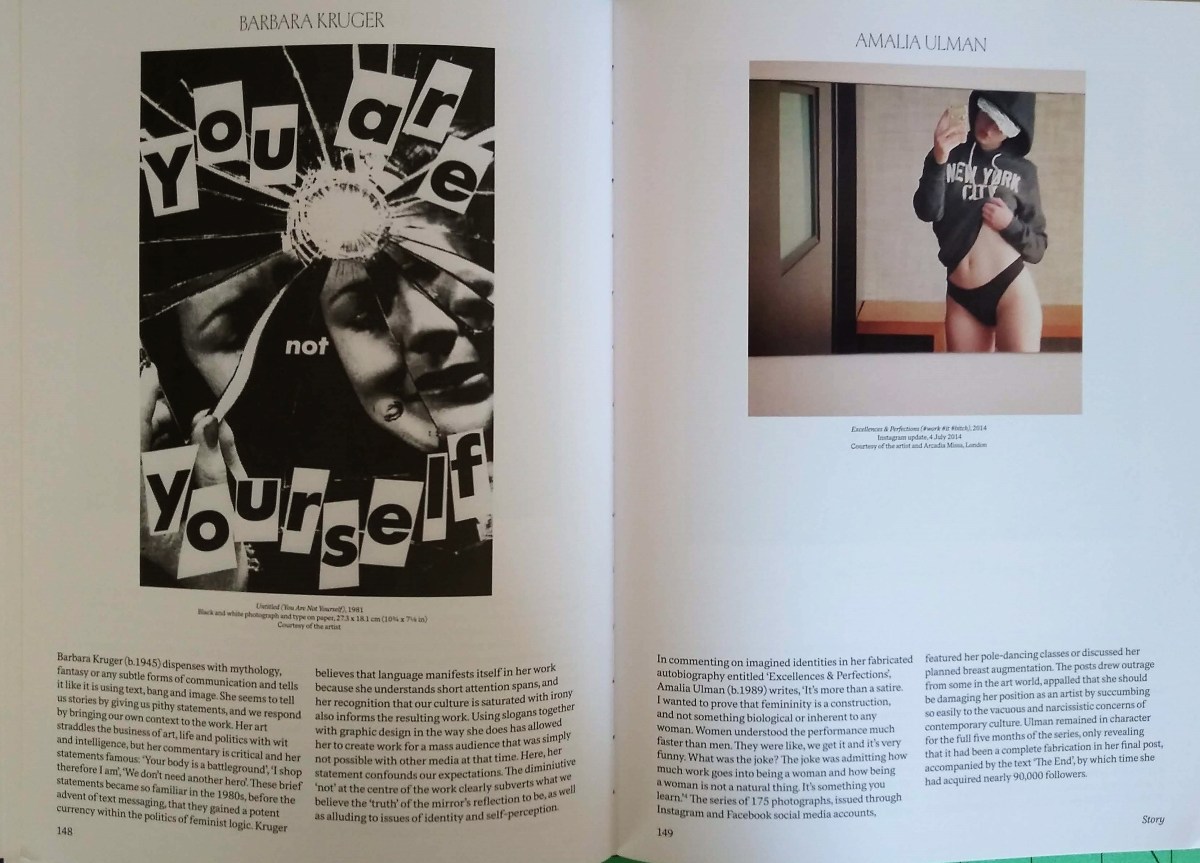
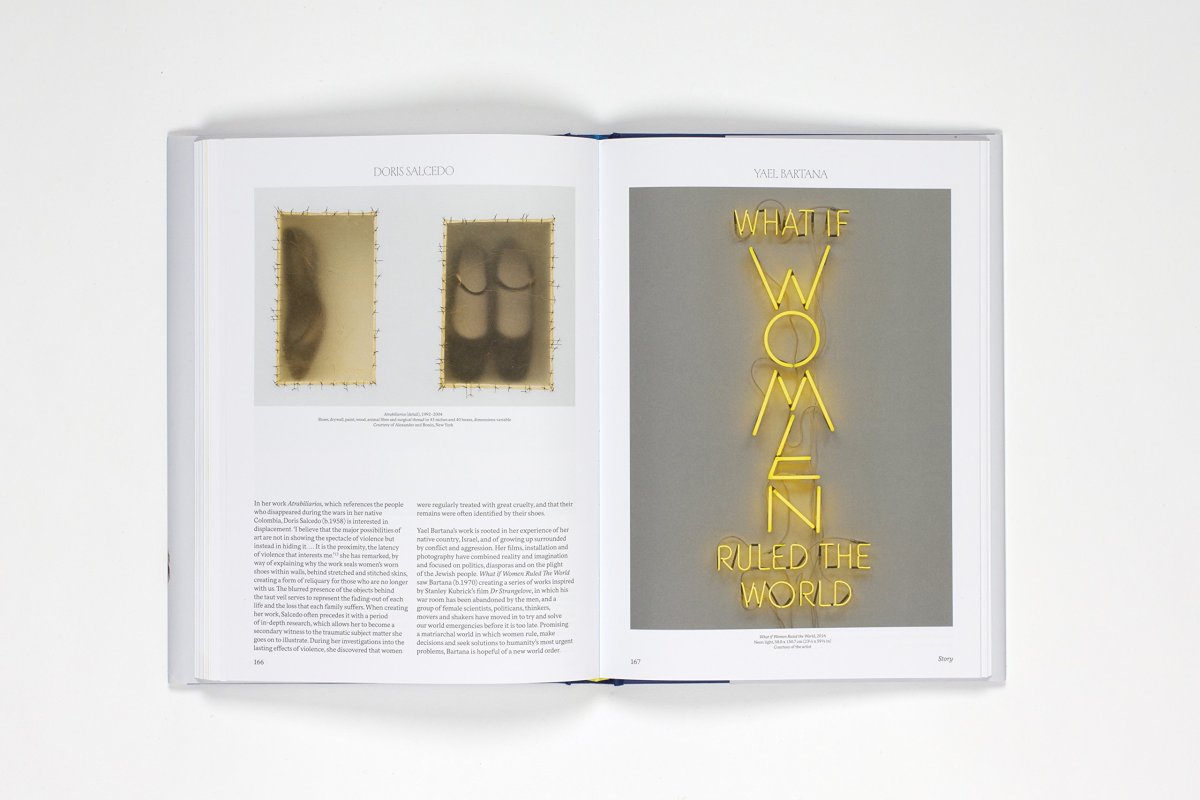
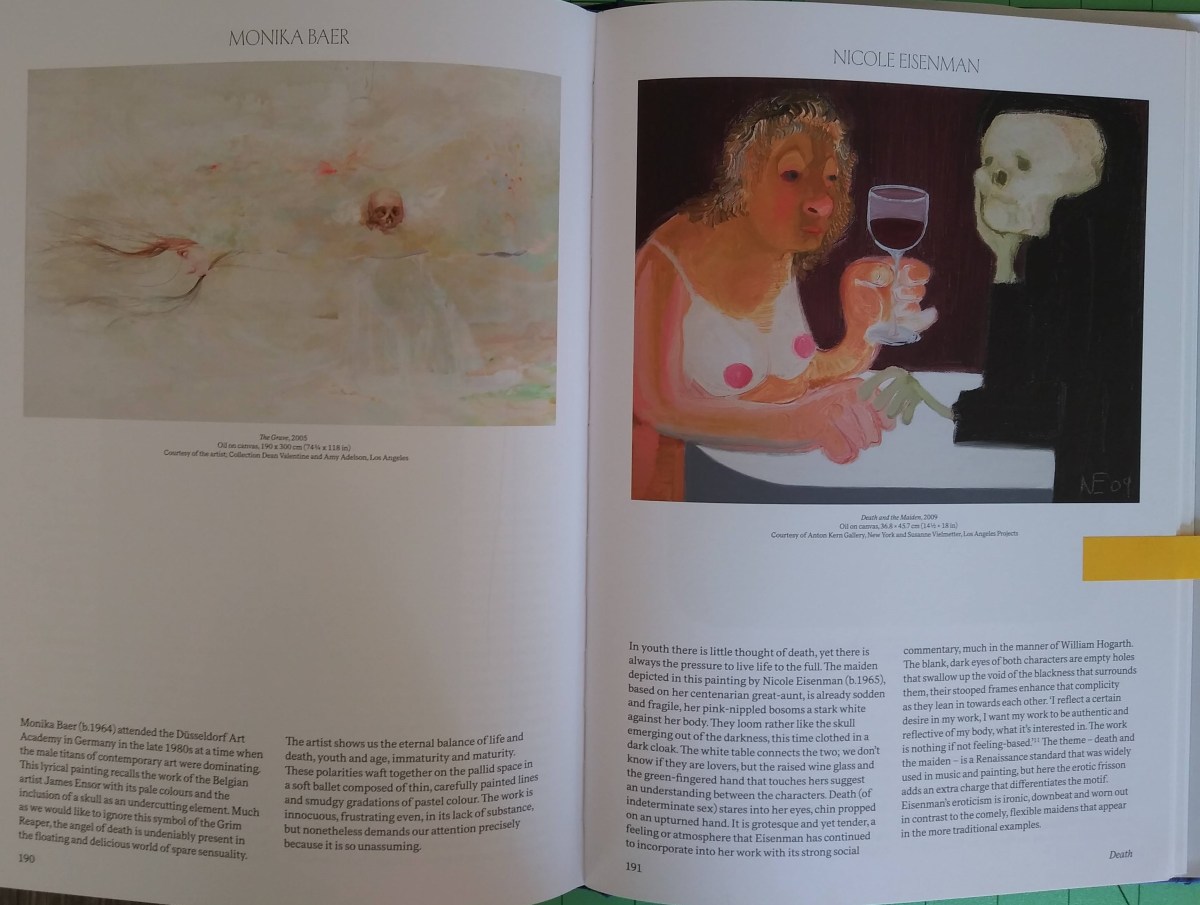
The book features one work by each artist represented, a brief descriptions of her work, and a bit of the story behind the image.  It not only illuminates the particular painting, but gives insight into modern portraiture, and how women fit into the larger issues of the world — both the ideal and the reality:

20180725_165125

It shows how women perceive themselves and each other, but also how we think society perceives us, and the way that distorts how we see ourselves.


IMG_20180804_0004

81zgNYckSiL

IMG_20180804_0003

20180725_165349


IMG_20180725_0001

20180725_165146


20180725_165211

81nYEVx4wqL

20180725_165227

There is such a wide range of work in these 220 odd pages that it’s hard to go through the whole book at once, but it’s easy to come back to it.  It’s also a good book to sit with by the computer and look for more work by the artists.

Liz Rideal is an artist and Reader at Slade School of Fine Art, University College London and has worked for over thirty years with the National Portrait Gallery, London. Her artwork is held in public collections including Tate, V&A and the Yale Centre for British Art, USA. It has been exhibited widely in Europe and the USA. She is the author of Mirror Mirror: Self-portraits by Women Artists, Insights: Self-portraits, and How to Read Paintings.

Kathleen Soriano is an independent curator, broadcaster and Chair of the Liverpool Biennial. Formerly, Director of Exhibitions and Collections, National Portrait Gallery, London; Director, Compton Verney; and Director of Exhibitions at the Royal Academy of Arts, London.

81Ofh0OgrlL

I’ve requested that my library get a copy of this book.  I don’t know how successful it will be since they have a low budget, but it’s worth a try because our libraries should have great books like this available for everyone.

This book was published by Laurence King Publishing in London.  They have an incredible list of up-to-to date art books.  I hope you look at their site and learn more about the art and books that are being produced now.  How living artists see us is illuminating:  we can find new visions of ourselves, new mysteries, and new questions.

Laurence King also published the fun storytelling card set I reviewed, The Mysterious Mansion, which you can read about here.

Thanks for reading my blog!  If you like it, share it.


A Most Mysterious Mouse: Picture Book Review

20180725_162835

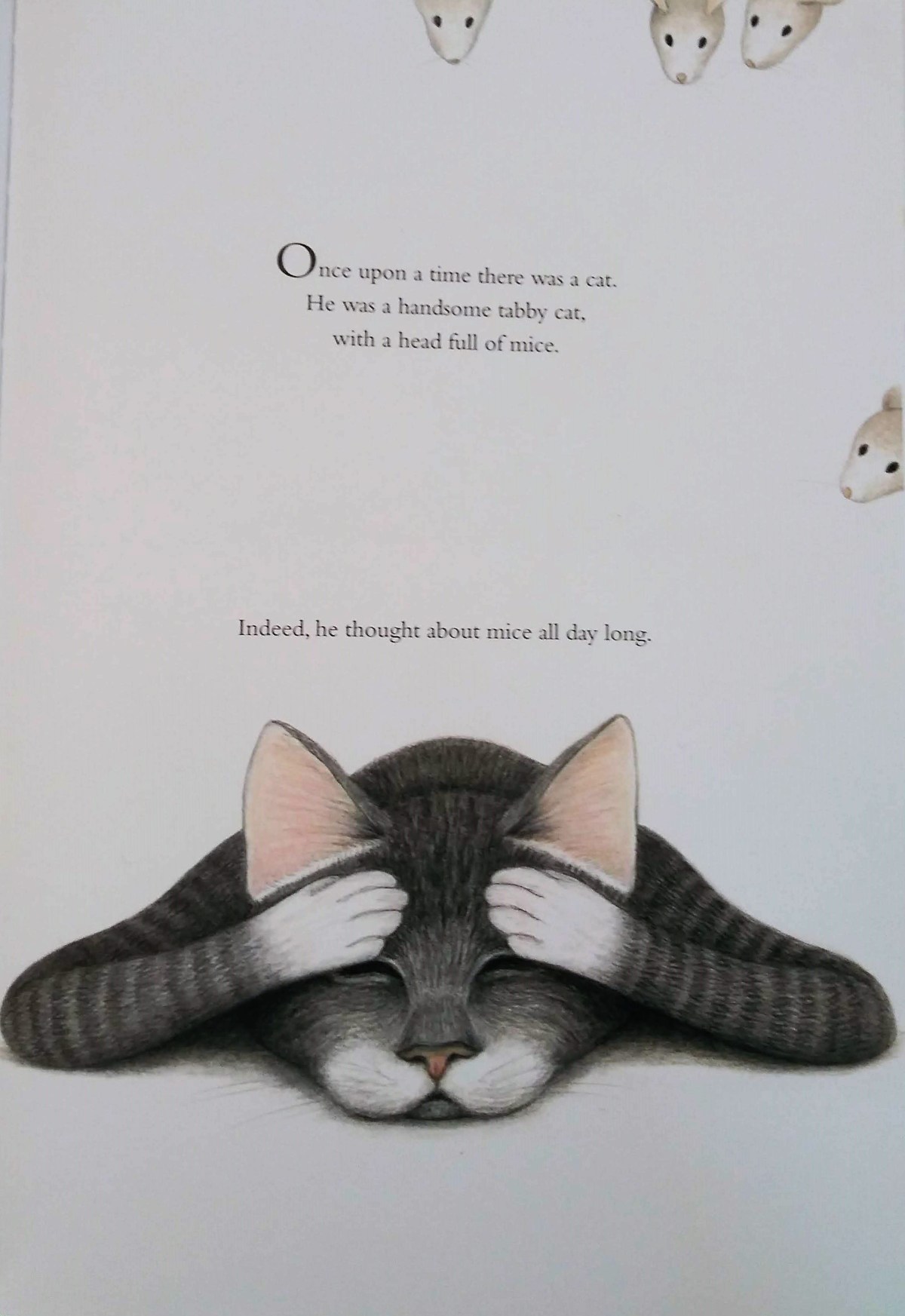
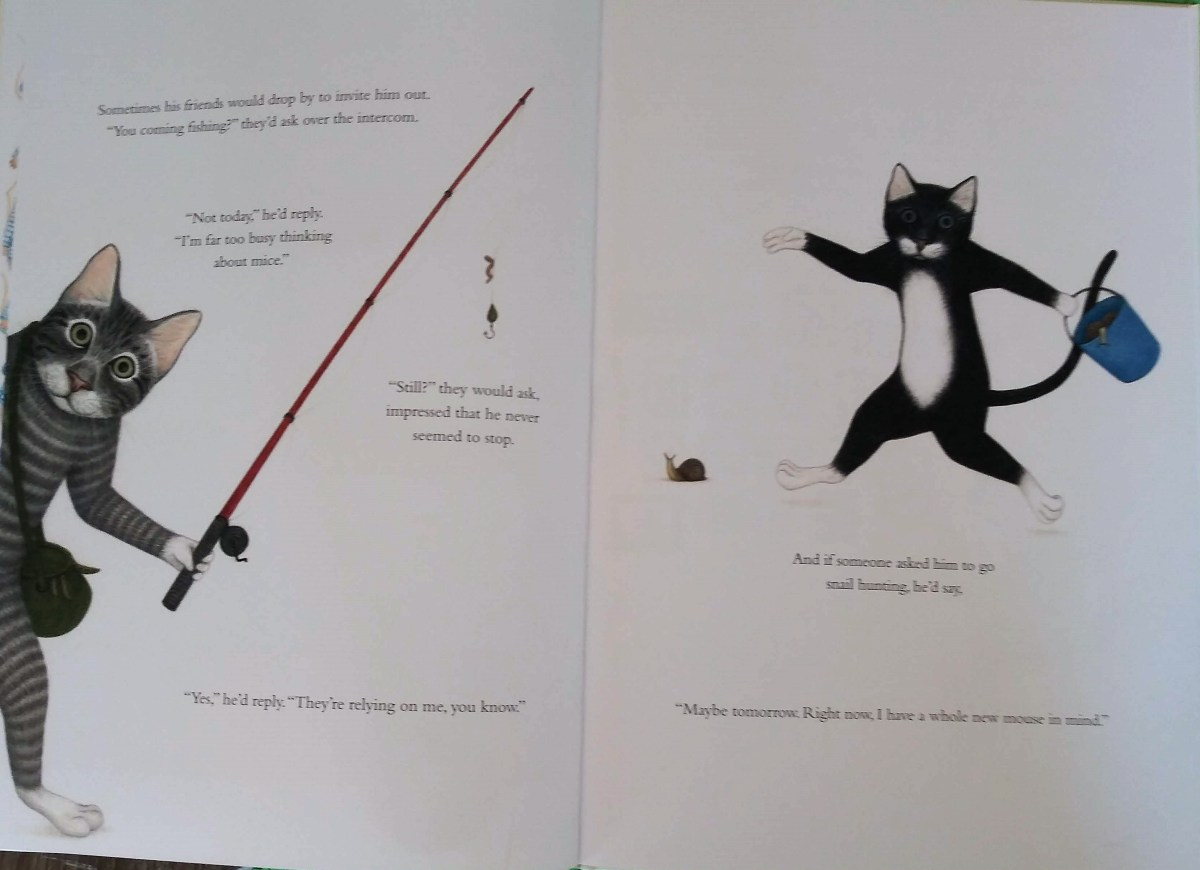
I can’t tell you how much I love this book.  It’s the only picture book I’ve read that really gets to the heart of the creative process, how strong an idea can be, how it can take over your entire imagination until, finally you find what you’re looking for.

20180725_163049

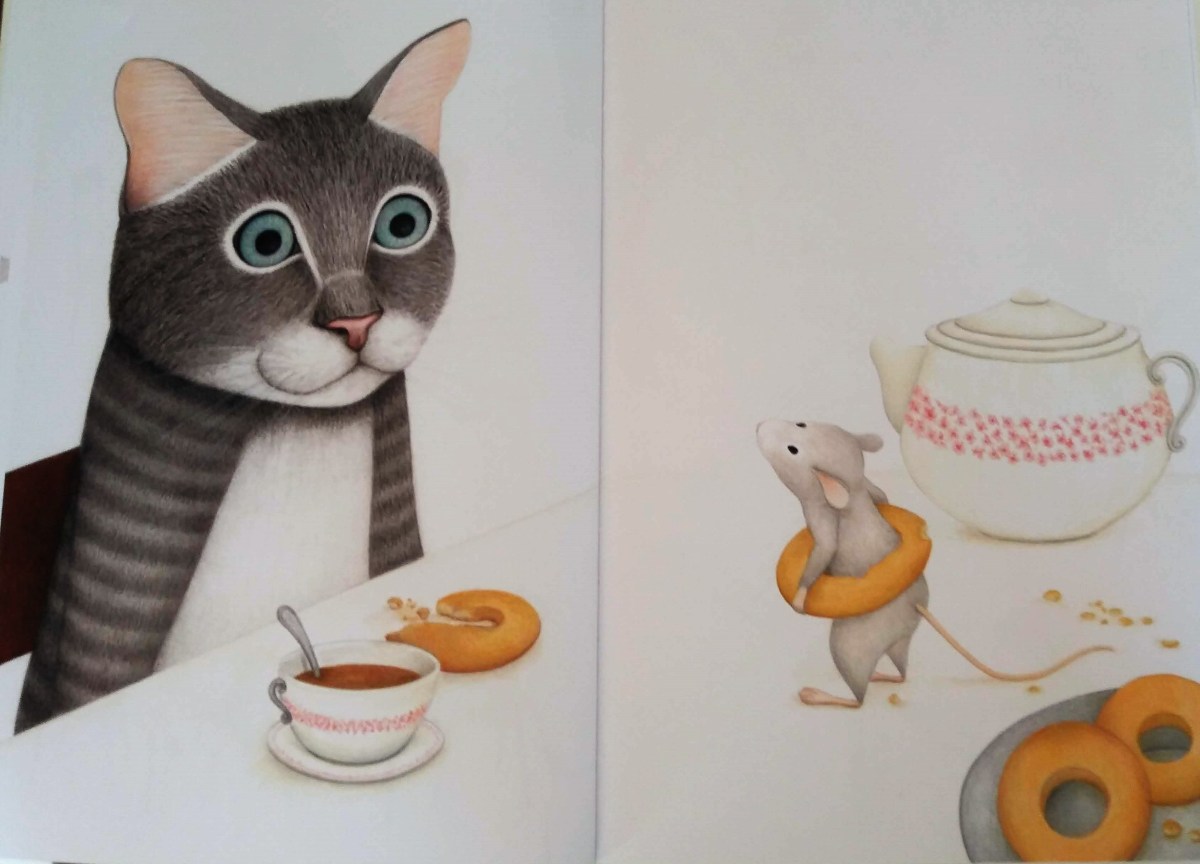
It’s playfully written by Giovanna Zoboli and translated from the Italian by Antony Shuggar.  Lisa D’Andrea illustrated it with the sweetest colored pencil drawings, emphasizing form over splashy colors.  There’s lots of white space in the story — room for imagination and for a fantasy about mice — one hundred mice, one million mice!

20180725_162905

20180725_162933


But especially one mysterious mouse that hides on the edge of a wide eyed tabby cat’s imagination.  A mouse he can’t quite see as well as he’d like, but knows is there, if only he thinks, imagines, spends enough time alone, pondering mice.

20180725_163111

And he’s not doing all this creative work for food — he wants it to understand it, appreciate its particular mouse-ness and bring it fully to life.

What creative person can’t identify with that?  What child, left alone long enough, won’t begin to imagine something wonderful, if only they have time to daydream? Whether it’s an image, a story, a song — we have to sit with our ideas for as long as it takes until the right one comes along.  The one only we can bring to life.

20180725_162946

After I first read this book, I was taking a water aerobics class with a 13 year old girl.  I was staring off into space like I often do, and she asked, “What do you think of when you stare off like that?”  I hadn’t even realized I’d been daydreaming.  I told her, “A most mysterious mouse.”  And when we were back from our exercise class, I read her the book.

Even though she felt she was too old for picture books, I’d been reading to her for years, so she indulged me.  We had a lovely discussion on the need to be alone with our own thoughts, about how all-consuming it was when an idea took over you, and how satisfying it is when you finally figure out what it is you want.

20180725_163019

I had this discussion with much younger kids, too, most who seemed to innately understand the cat’s dilemma.

I like reading picture books from other cultures where the stories are little longer, a little more philosophical and not so plot driven.  This one in particular gives lots of room for discussion and letting our minds drift.

This is Giovanna Zoboli’s first book, but she has been working as a publisher since 2004, when she co-founded Topipittori, an Italian publishing house that specializes in illustrated books for children and young people.

Lisa D’Andrea lives and works in Padua, Italy, and had devoted herself to drawing and painting her entire life.

Antony Shuggar, is a writer and translator, working from Italy and France.

This book was published in 2015 by Enchanted Lion Books, an independent, family-owned children’s book publisher based in Brooklyn, New York.  For reviews of more of their books that I’ve posted, please check the following links:

My Little Small by Ulf Stark

The World in a Second by Isabel Minhos Martin and illustrated by Bernardo P. Carvalho 

The Day I Lost My Superpowers by Michael Escoffier and Kris Di Giacmo. 

The Jacket by Kirsten Hall and illustrated by Dasha Tolstikova

The Hole by Oyvind Torsetter

enormous Smallness: A Story of E. E. Cummings by Mathew Burgess and illustrated by Kris Di Giacomo

Cry, Heart, But Never Breakby Danish writer Glenn Ringtved, illustrated by Charlotte Pardi. 

Edmond: The Moonlit Party by Astrid Desbordes and illustrated  by Marc Boutavant 

~~~

If you like this blog, please share it.

If you’d like to help sustain my reviews, writing and art, please take a look at my Patreon page, where you can help support the work I do.  With your help, I would like to make this a non-commercial site.  Thanks again for reading!

https://www.patreon.com/user