Personal Space and the Need for a Hug

A few days ago, my 6 year old neighbor, Karishma, wanted me to help her with her homework.  We did a little math, a little letter and word recognition, and a little reading.  She wanted to read her new favorite book, Hug Me, by Simona Ciraolo, published by Flying Eye Books, 2014.
I read it to her a few weeks ago when she was here with her 12 year old sister.  The sister didn’t think she’d be interested, but as I started reading, she sat beside us and wanted to see the pictures, too.  She was moved enough by it to say, “Awww,” more than once.
Hug Me is a remarkable book that tells a complex tale in charming drawings and poetic prose. “Felipe was descended from an old and famous family who liked to look good and always behaved properly.”
It’s the story of the universal need for affection and friendship, even if we are somewhat prickly.  Using a little cactus as the main character puts an interesting spin on it.  He’s prickly because of he descended from a prickly family.  Who hasn’t felt estranged from their family of origin?  Who hasn’t felt at least somewhat trapped by their ancestry?
I live in Bridge Meadows, a community made up of blended families that are adopting children out of the foster care system.  Some families have all adopted children.  Some have adopted children in addition to their birth children.  I live in the senior housing component, and we elders serve as helpers to the families.  I mentor kids, teach them art, and read with them. 
She sounds out all the words, even “uaahhh.”
I’ve read this story over a dozen times in the past few weeks to kids from ages 2 to 12, and they’re all gripped by it.  I now keep it in the book-bag I carry with me when I’m in the community center or else I’m chastised for not having it.  
Since many of the kids have been in foster care and counselling, they love that the Ciraolo uses the term “personal space.”  Many have had their personal space violated in the past, but they still want to be close to family and friends.
They love that in the end, Felipe knows exactly what to do.  His past loneliness has made him a better person.  (In his honor, a few of the kids and I may start a cactus and rock  garden this summer.)   They also LOVE the pictures.  It’s amazing to me, too, how much expression Ciraolo creates in her characters.  Even a simple dandelion has a personality in this story.
Karishma happens to be one of the children who has been with her birth family for her whole life.  She has foster sisters and her mom had a baby a little over a year ago.  When we read the book together, I asked her if she ever felt like she needed a hug and didn’t get one.  She first said no.  Then she flipped through the book again, and said, “Well, since my sister was born.  Sometimes she won’t hug me and sometimes everyone hugs her and forgets me.”
I told her the same thing happened to me when my little brother was born.  Now I know how important hugs are. 
“Me, too,” Karishma said.  “That’s why we’re so happy.”
I’m pretty sure if you read Hug Me, you’ll be happy, too.
Hug Me has been on numerous best book lists of 2014. You can read more about Simona Ciraolo on her website here

Flying Eye Books is based in England and publishes innovative books that introduce children to great graphics and compelling stories.  They published the inspiring Welcome to Your Awesome Robot by Viviane Schwarz, which you can read about in this blog post.   

Thanks for reading my blog.  If you’d like, leave a comment.

Journaling Toward The Light


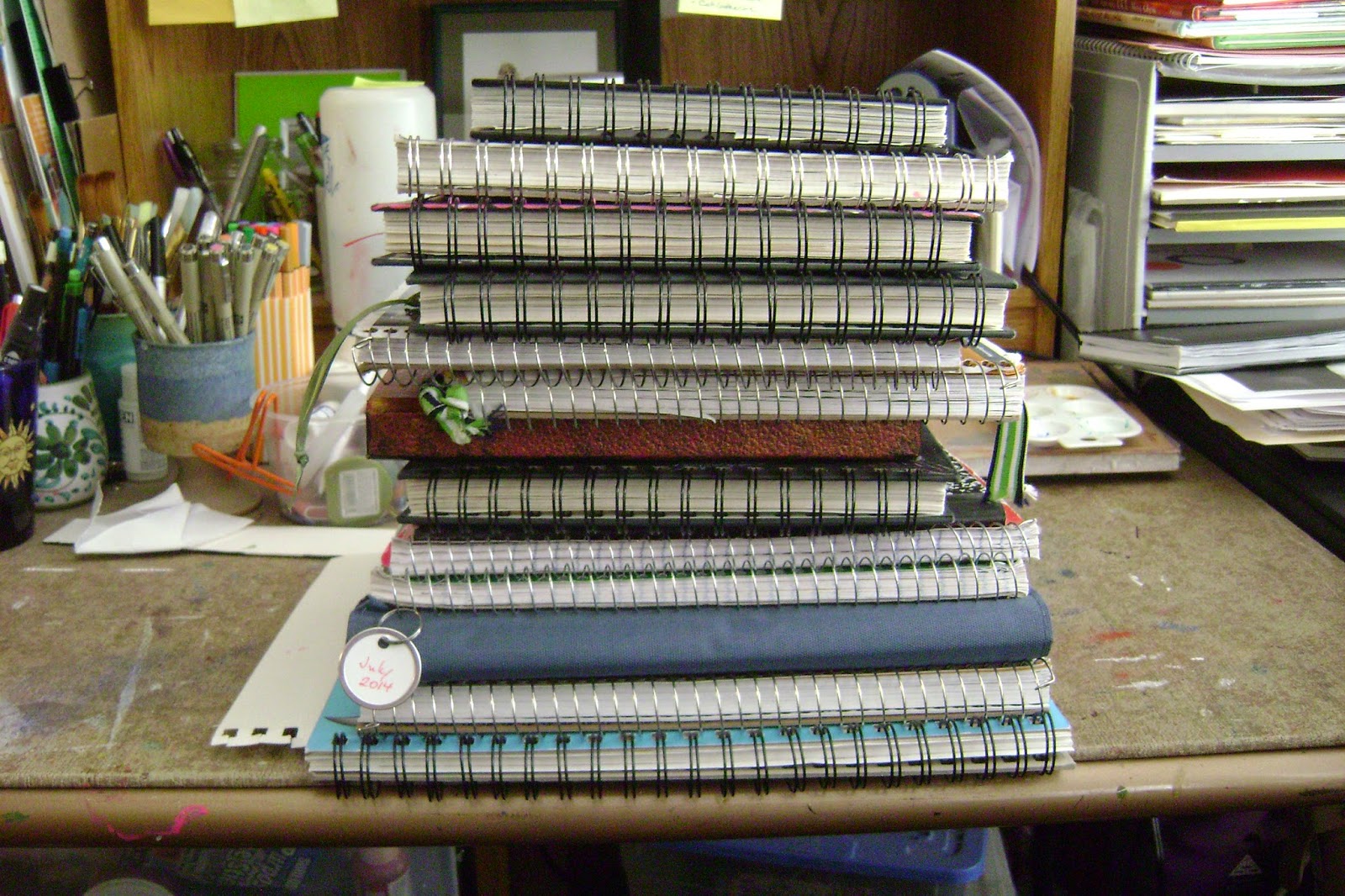
14 Art and Writing Journals of 2014
Last year, I made a resolution to write in my journal every day.  I’m proud to say I succeeded.  I must have written almost 1000 pages.  I began by writing in bed first thing in the morning, before I was truly conscious.  I only wanted to write about 15 minutes, just enough to get access to my imagination and the part of my brain that puts life into language.  It worked pretty well, unless I urgently had to go to the bathroom.  I resolved that by taking my notebook with me to bathroom.  No interruptions there!
I think the key in getting a writing practice started, is aligning it with something that’s already a habit.  I usually wake up.  The notebook’s right there.  It’s easy to pick it up and start.  It took about a month for it to get easy, but now it’s a habit and I feel weird if I don’t get to write first thing.  Luckily, I’ve only had a few days when I didn’t have the time or privacy to get it done in the morning. 
I don’t really do a free write, though sometimes it’s pretty close.  I make a conscious effort to remember stories and events that I want to record in my journal.  In the coming year, I want to use my 15 minute burst of writing to capture more details, and more stories and poems.  Now that the habit is firmly a part of my life, I can start directing the writing energy a bit.  
Around August, I decided I was wasting too much good paper to keep writing in my sketch books, so I switched to cheap lined composition books for the morning write. 
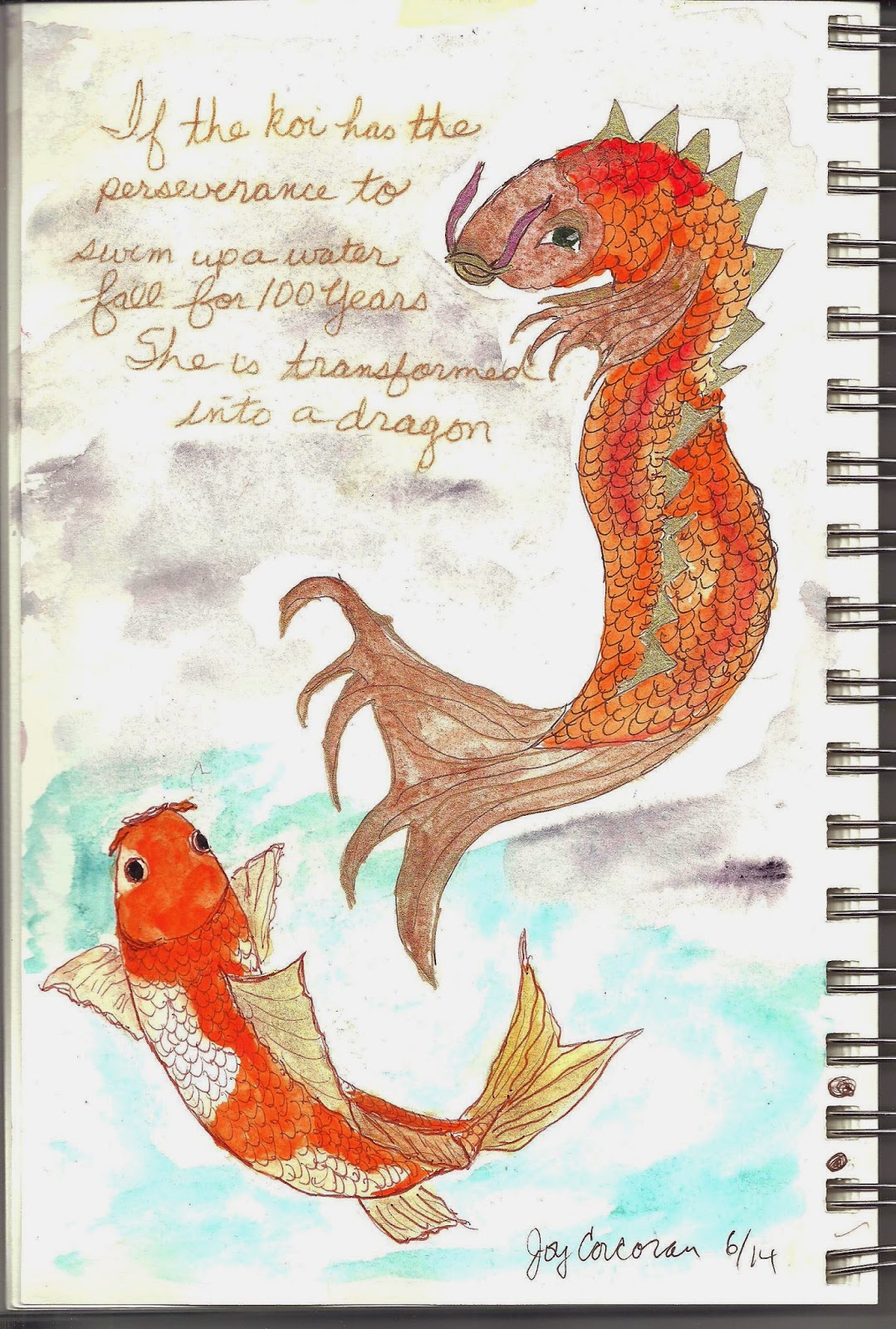
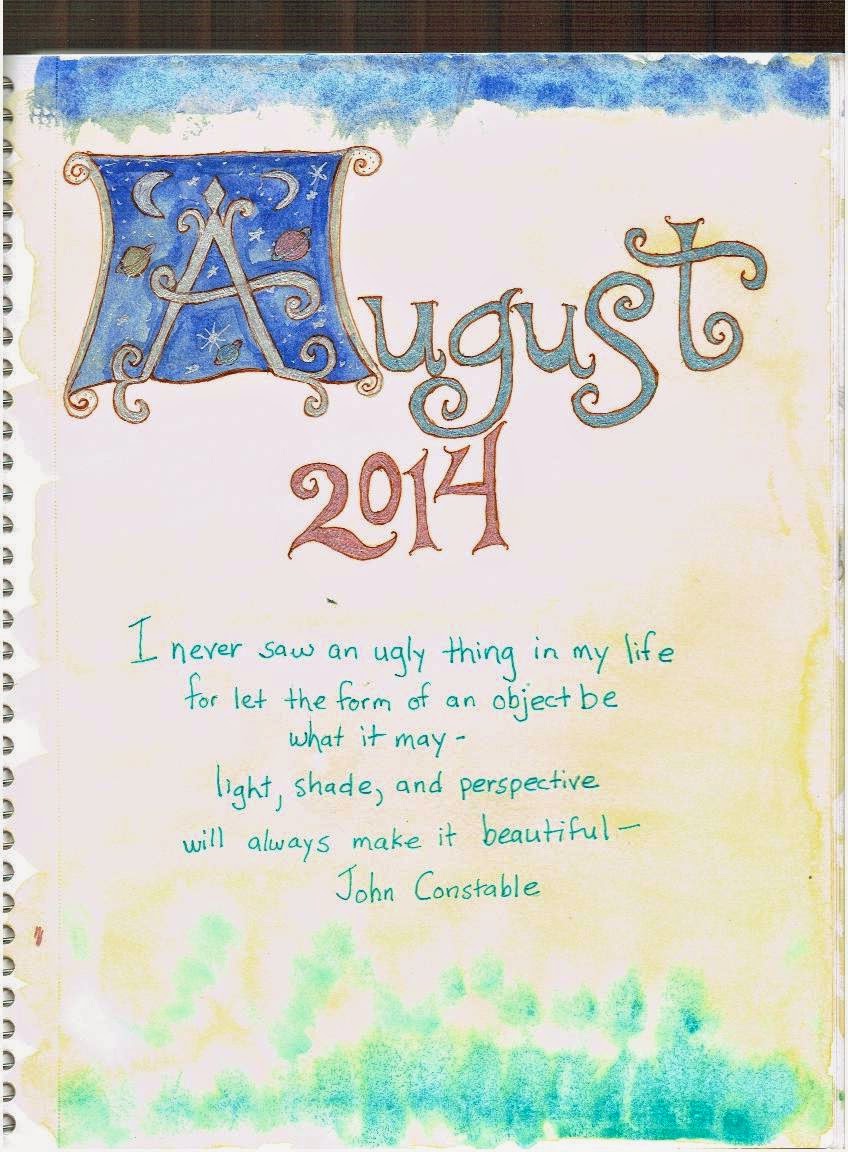
Two things happened.  The first was a good thing.  I was able to write more freely about things I wanted to be private about.  I carry my sketchbook journal with me everywhere and I show it to people, so I didn’t feel as free to write about many things — most of the pictures here are from the sketchbook visual journal. 
The second wasn’t so good.  I felt like I was leaving part of my memory at home.  I’ve used my journals over the years to help me with my inability to remember things consistently.  It took me a few months to get used to keeping two separate kinds of journals, but now, I like it. 
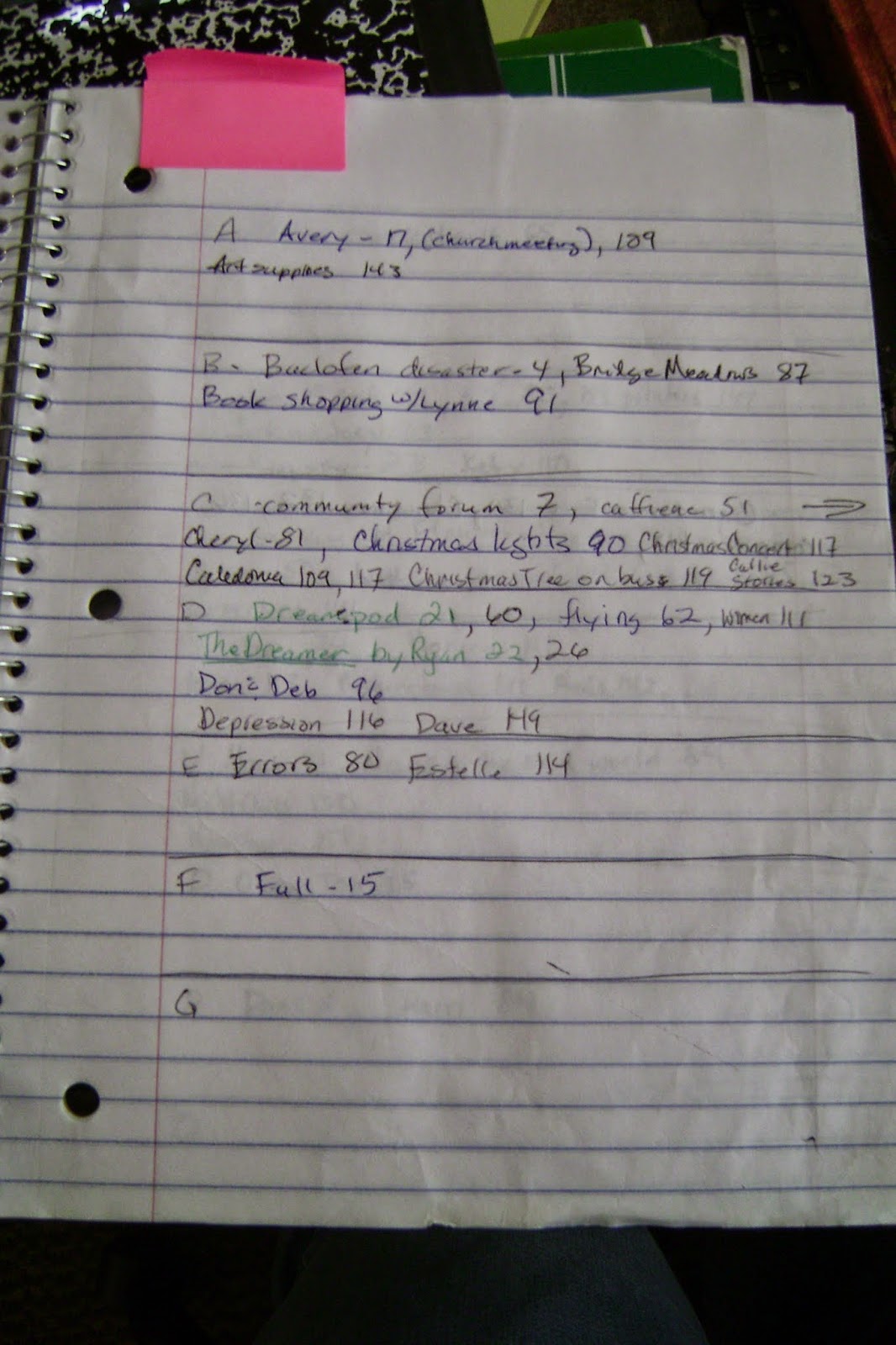
My writing partner and I discovered the book Leaving a Trace: On Keeping a Journalby Alexandra Johnson.  If you want to start or improve your writing practice, this is a great book.  It has very useful ideas on how to keep up with the information in our journals, and on using journals to reach creative goals.  The first step is finding a way to access all that writing.  Johnson has suggestions that I used to make a simple index for my composition books.  On the last few pages, I divided it into section, and marked each with a letter of the alphabet.  
Keeping it simple is key to getting it done
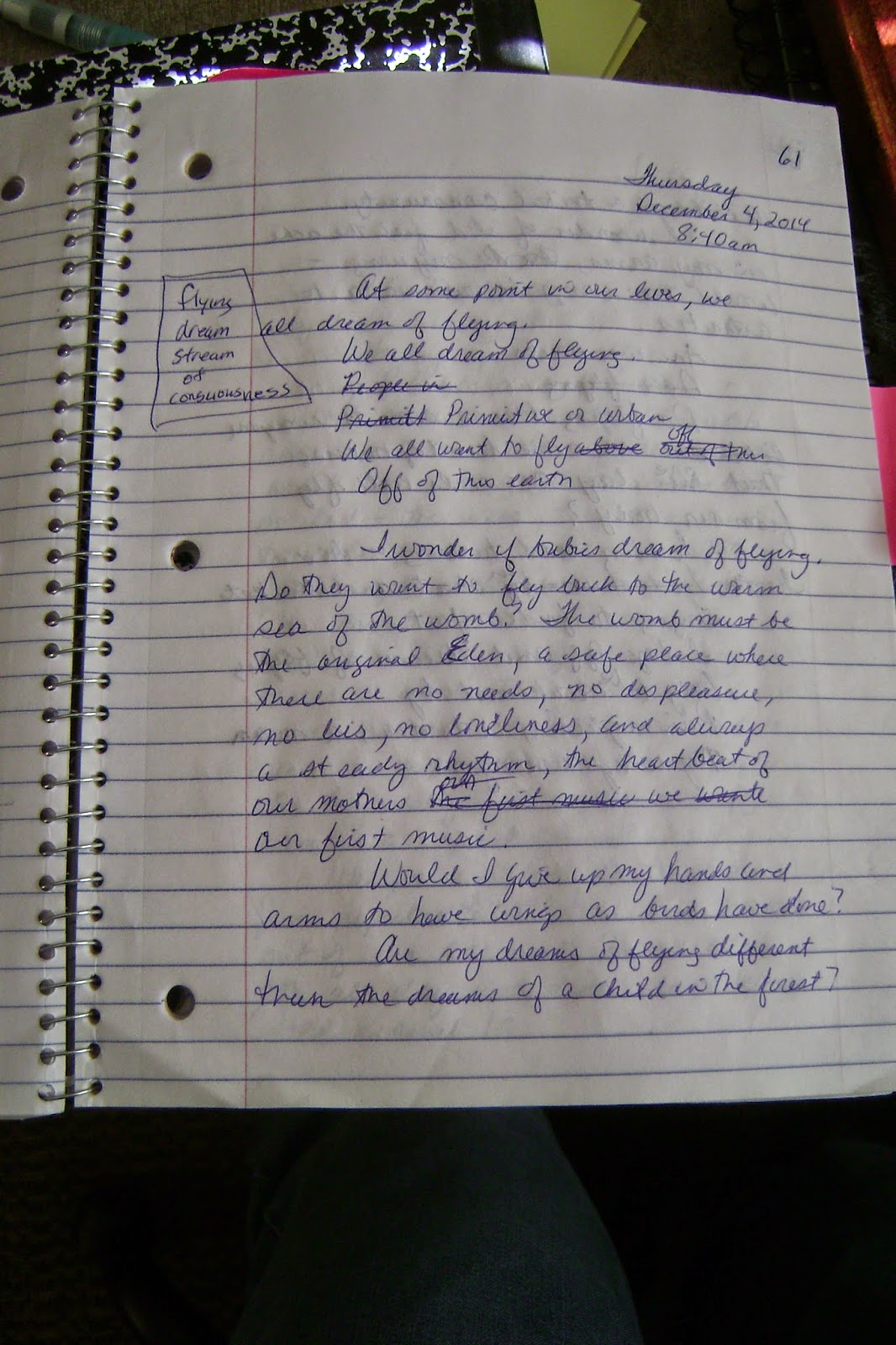
When I finished my writing session, I made a note in the margin on what it was about, put a square around it, and then wrote it in the index, too.  Some days I had one subject, some days I had several.  Now I feel like I can find what I need in them – stories, notes, dreams – without too much trouble.  It worked so well, I began to number and list my sketchbook entries, too.  Looking over the indexes, you start to notice what’s most important to you, what threads to follow.  It makes a map of your creative life.
Well, my square around my subject is usually wonky
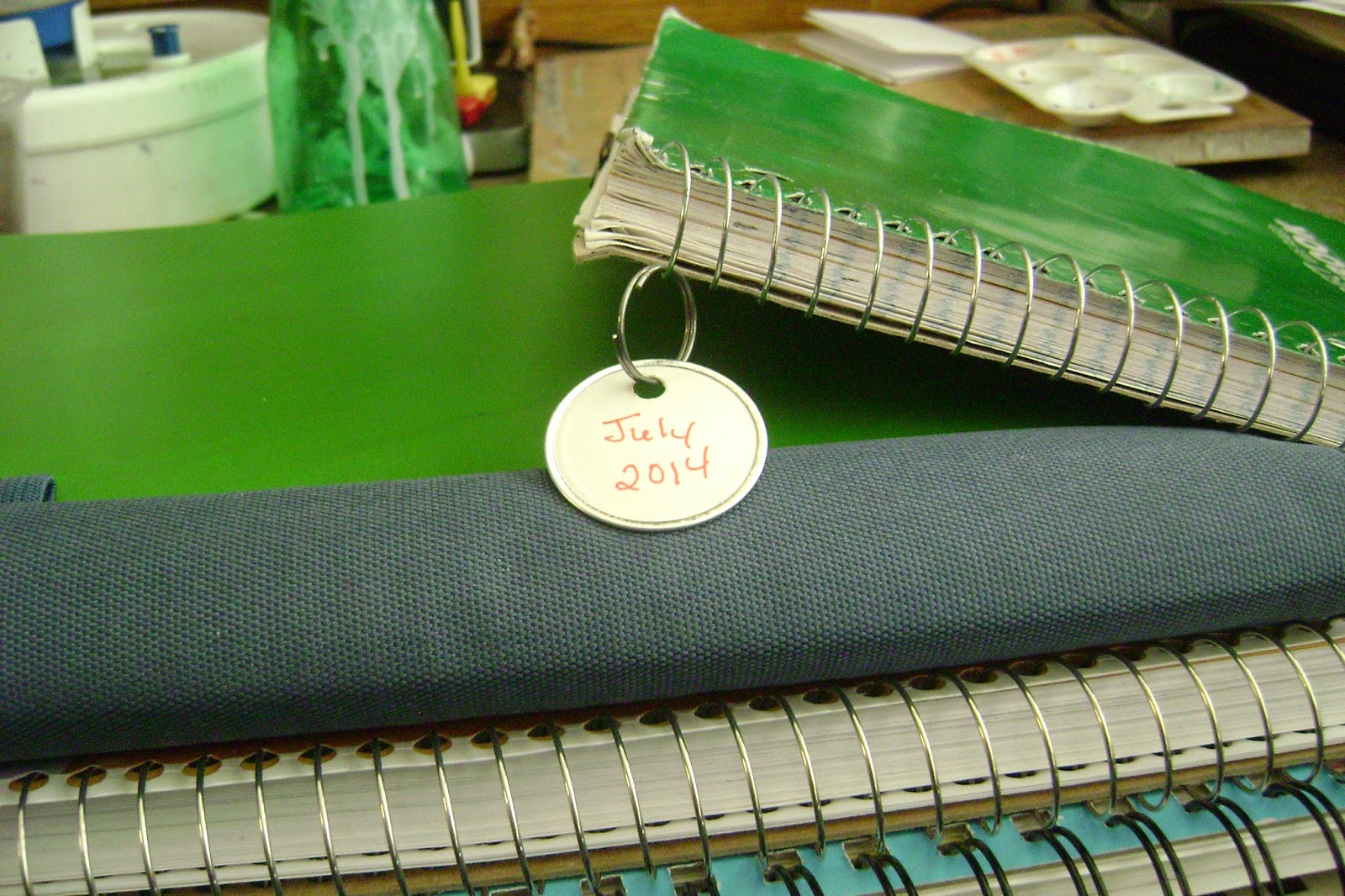
These little ring tabs are perfect for putting a date on spiral bound journals and notebooks.
My challenge this coming year is to read through my old journals and index them.  I want to glean them for stories, poems and insights.  I also want to see how much stupid blather I’ve produced.  I’m not as afraid of that as I used to be.  I’ve found that stupid blather helps the stories grow.  When the itty bitty shitty committee in my head tries to shame me, I just remind it that every garden needs fertilizer.  I ask the committee to help me find the best stuff instead of focusing on the worst.  And sometimes, it works.
As I read back through this year, I see again and again how keeping a journal and sketchbook has helped me through difficult challenges.  I made it a practice years ago to be honest about things like depression, chronic health problems, and heartache, but not to give them more attention than the things that make me happy and the goodness that’s all around me.  When I scrape myself up off the floor after a bad day or week or month, I see that I’ve not focused on the shadows.  I write to the shafts of light that peek through the seams and cracks of my darkest moments.  
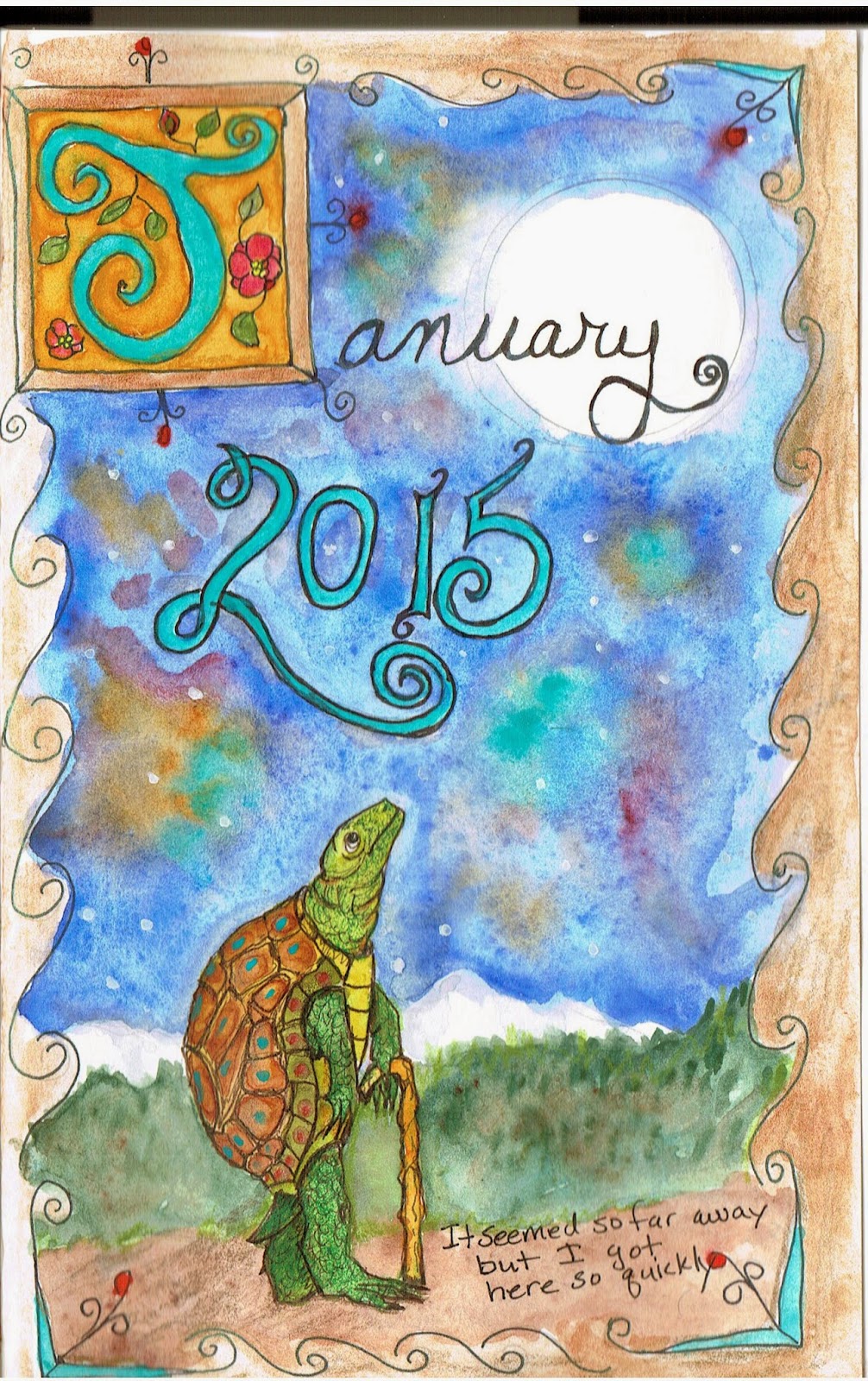
A recurring theme!
Tolstoy spoke of enlightenment as “the increase of light in oneself and attention to what it shows.”  In this coming year of 2015, the year I will turn 55, I plan to pay more attention to that light and speak of it in the language of art as often as possible. 
If you have creative goals for the year but have a lot of resistance, I urge you to read Art & Fear, Observations on the Perils and Rewards of Art Making, by David Bales and Ted Orland, which I reviewed here. 
I’ll end this last blog post of the year with my favorite quote of the year, by choreographer Merce Cunningham:  “Falling is just one of the ways of moving.”
I’d love to hear your comments. I’m linking this to the Paint Party Friday site where you can find a plethora of artists following their dreams.  Have a happy new year.

Dreams Grow Despite Droughts

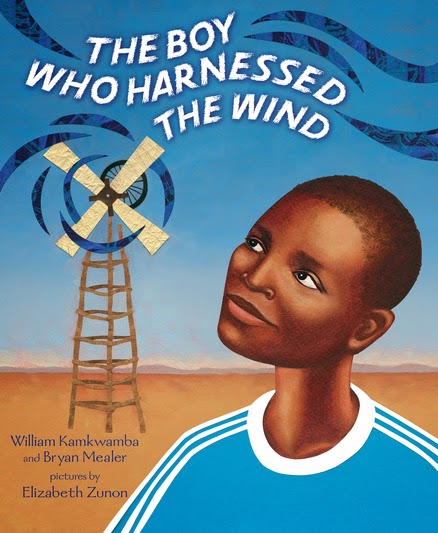
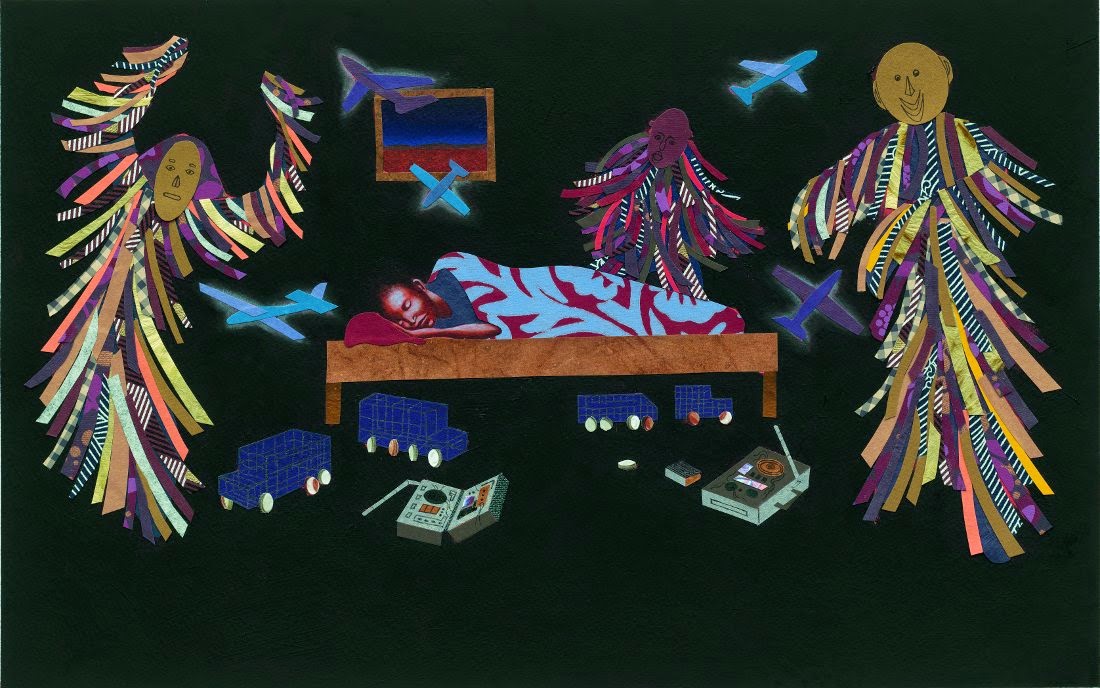
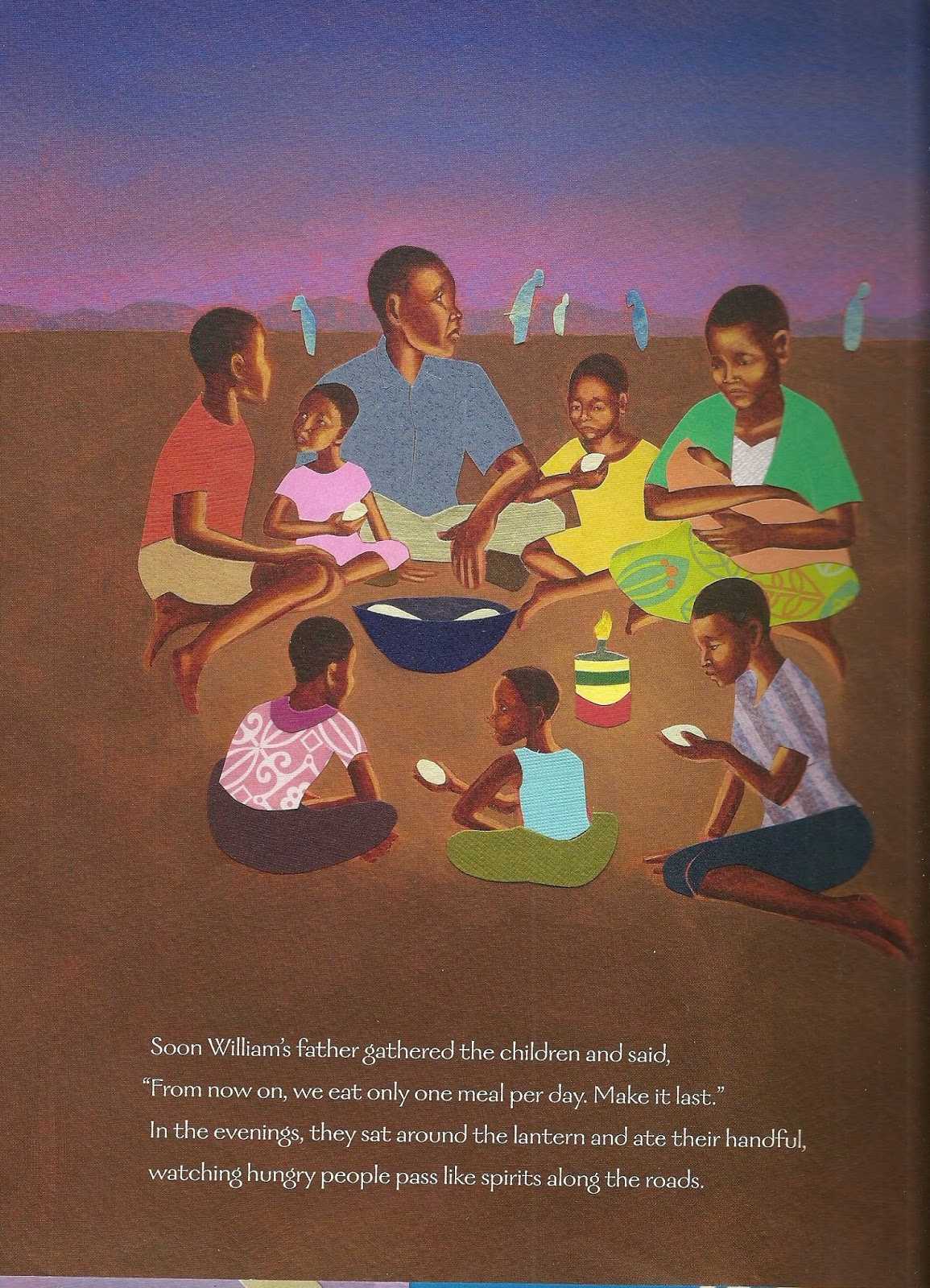
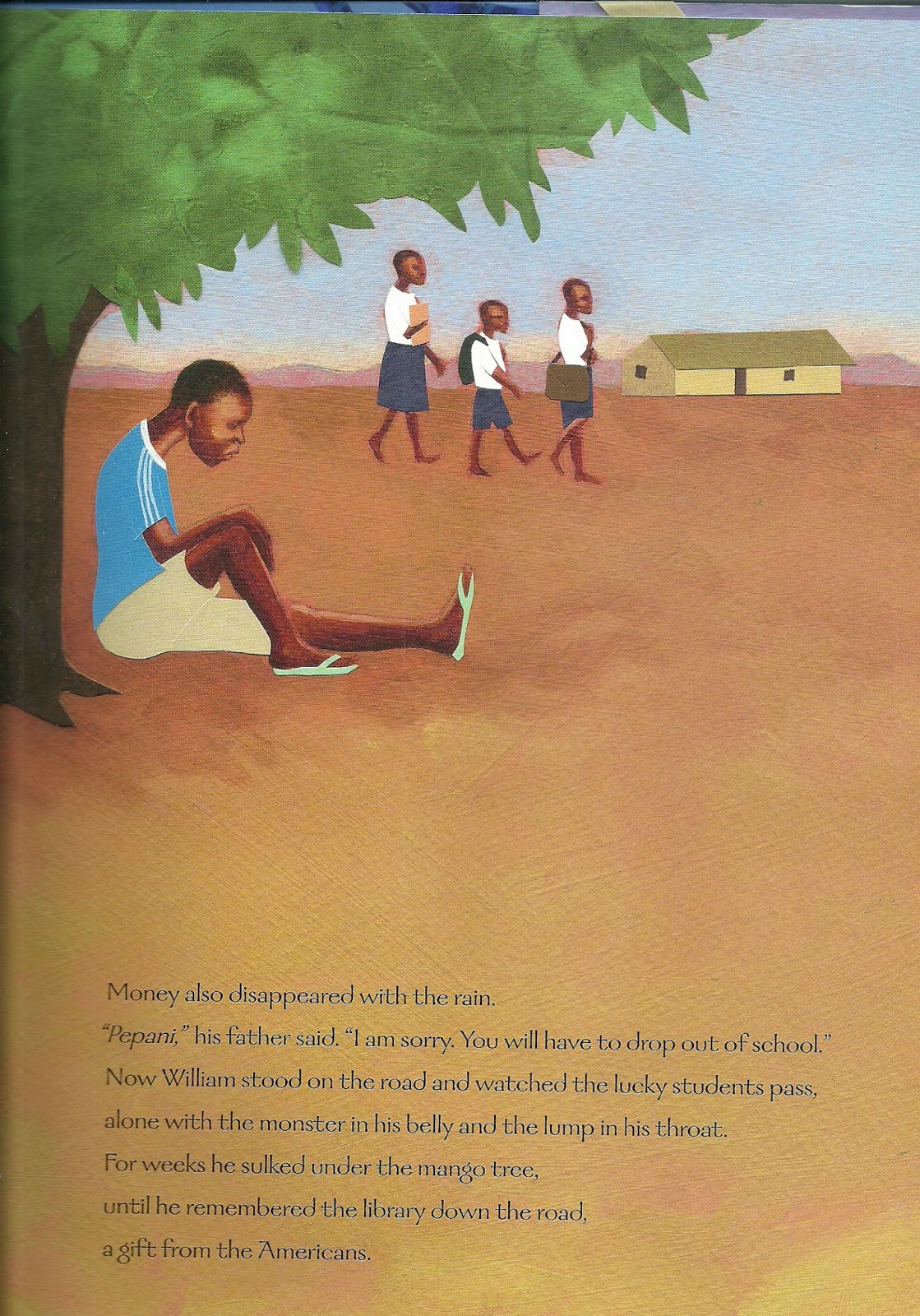
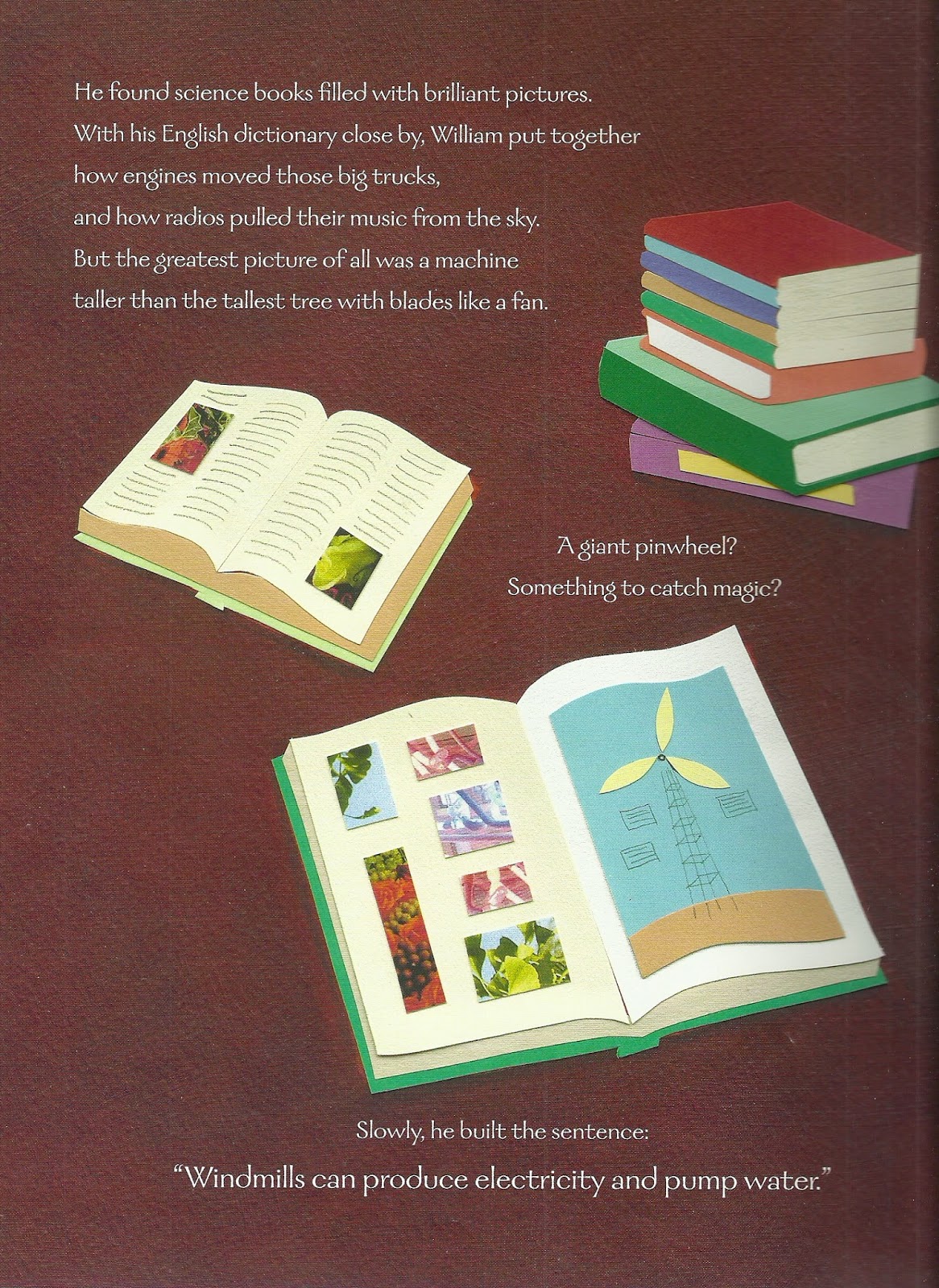
I found the book The Boy Who Harnessed the Wind by William Kamkwamba and Bryan Mealer, illustrated by Elizabeth Zunon, from a display in the children’s department at the library.  It’s where I find a lot of the books I love.  I was enticed by the illustrations.  Zunon captures so much emotion in the faces she paints.  The collages of textured paper of her backgrounds give life and motion to the illustrations, they seem rise from the page.


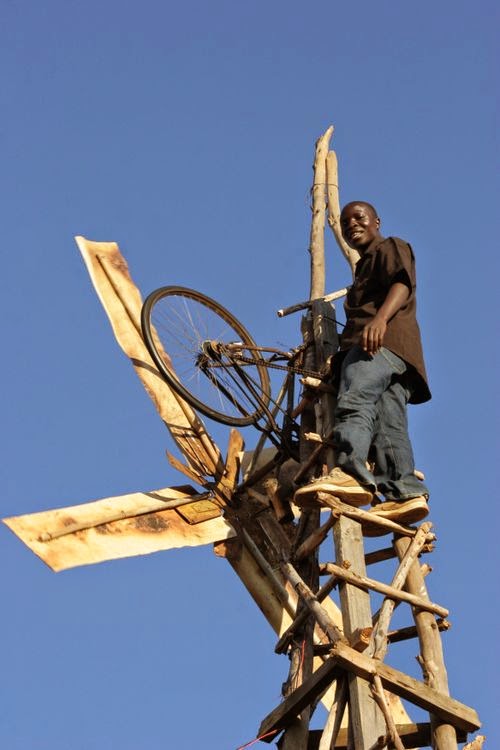
This is the true story of how William Kamkwamba, a fourteen year old boy built a windmill to give his family electricity.  What’s more remarkable is that he did this on his own after having to drop out of school because of a drought and famine.  

He lives in Malawi, Africa, and his family was down to one meal consisting of one handful of food each day.


William loved school, so he was despondent about having to drop out, and then he remembered his village’s small library.  He checked out and pored over old science textbooks, painstakingly teaching himself English.


He fell in love with the idea of a windmill and decided to build one. 


Ever resourceful, he began to gather materials from the junkyard.  His two friends helped him, but almost everyone in the village thought he’d gone a little crazy.  Even his mother was alarmed.

But William persisted


 and brought forth the electric wind. 


This is a hopeful story and is a window into life in Malawi.  We know so little about Africa here in America.  This is a great introduction to one small village.  It’s also a great book for showing how even the fiercest obstacles to your dreams can be overcome. 

I have to add that the pictures I’ve posted here don’t do the illustrations justice.  Zunon’s work pops from the pages and adds magic to the story.  You can see more of her work at her website by clicking here.  I’m looking forward to seeing her illustrations for Miranda Paul’s One Plastic Bag.

I was so impressed with the story that I wanted to find out how much of it was truly true, so I

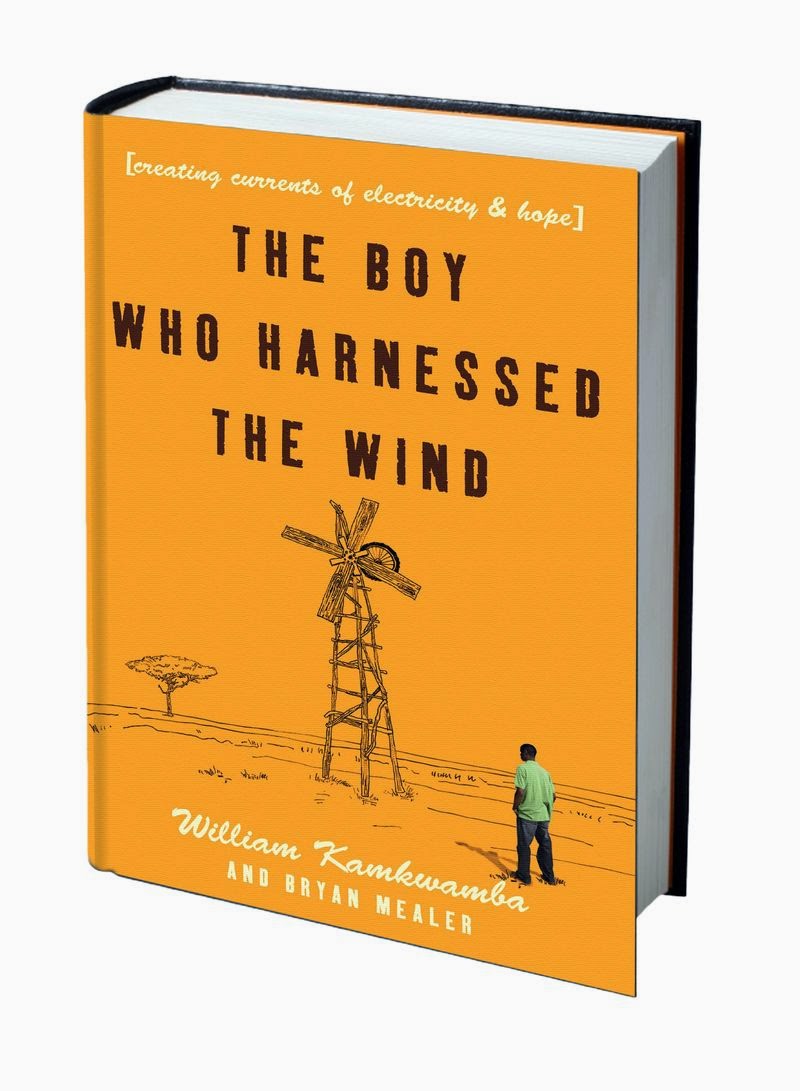
got the other book called  The Boy Who Harnessed the Wind: Currents of Electricity and Hopeby the same authors.  It’s Kamkwamba’s memoir of how he survived the drought and built the windmill.


Kamkwamba gives insight on what it’s like to believe in magic, how it feels to have a village chief, what it means to have a good father, and how hard it is to survive a famine.  

If you ever wondered about the individual lives of people you see on the news stampeding for a bagful of rice or flour, this book takes you there.  The humanity and desperation becomes more real.  The famine forced people to sell things they’d worked for all their lives–from household possessions to the roofs off their houses.

Kamkwamba’s parents kept track of how much they ate and how much they needed for literal barebones survival.  His mother sold small bits of  food that very poor people could afford and with that money she bought enough flour for the family to survive one more day. 

There is corruption and brutality, but through it all, most of the villagers remain civil and try to work at whatever jobs they can.  I was amazed to read of the family’s first corn harvest after the famine, because even though people raided the cornfields, there was enough left to harvest.
Each morning we walked the road that bordered our field and found it littered with green leaves and dowe (ripe corn) gnawed to the pith, as if a battalion had feasted all night.

“Horrible stories of revenge soon began circulating in the trading center….

“Later that night, I asked my father how we should punish those who stole from us.

“’Should we kill them?’ I asked. ‘Perhaps call the police?’

“My father shook his head.

“’We’re not killing anyone,’ he said.  ‘Even if I call the police, those men would only starve to death in jail.  Everybody has the same hunger, son.  We must learn to forgive.’”

William Kamkwamba and his parents and grandparents

The story is compelling and engaging.  It’s a classic tale of triumph over adversity, but with a modern twist.  A respected teacher became interested in Kamkwamba, a radio station did a broadcast about his windmill, a blogger wrote about it, and the next thing Kamkwamba knew, he was giving a TED talk.  


It was touching to read about his first airplane ride and his first impressions of city life.  He’d never used a computer or had the luxury of an indoor bathroom.   The publicity brought in contributions and he was able to build a windmill to power a water pump.  His family could irrigate crops and would not starve again.  He also found himself the happy spokesperson for education in Africa.

His friend Erik Hersman, one of the first people to write about Kamkwamba on his blog Afrigadget, said, “Africans bend what little they have to their will every day.  Using creativity, they overcome Africa’s challenges.  Where the world sees trash, Africa recycles.  Where the world sees junk, Africa sees rebirth.”


This book is a great antidote to what we hear in the “news” about Africa.  It’s warm, human and full of hope.  It’s honest about the problems that plague the continent but very clear that Africans are working hard to solve them, and finding renewable resources in the process.  Kamkwamba graduated from Dartmouth College and is engaged in projects to help Malawi prosper. 

Kamkwamba is a gifted storyteller, though he had help with these books from writer Brian Mealer. In the acknowledgements, Mealer says, “First of all thanks to William for never giving up and for allowing me to help him share his uplifting story with the world.”  Mealer is the author of All Things Must Fight to Live: Stories of War and Deliverance in Congo.  He’s a former Associated Press Staff correspondent and his work has appeared in Harper’s and Esquire.  Mealer thanks his wife, too, in the acknowledgements, who, he says “shared my joy of finally coming home from Africa with some good news to tell.”
I suspect there may be lots of good news in Africa, and in the world, waiting to be told.  I hope that we readers seek it out.


You can keep up with William Kamkwamba on his website.  He has links to his original TED talk and the one he did a year later.  He writes that there will be a feature length documentary about his project soon.  

Keep you light shining.  Thanks for reading my blog.  Your comments are appreciated.

It’s a Bunny Life: El Deafo by Cece Bell

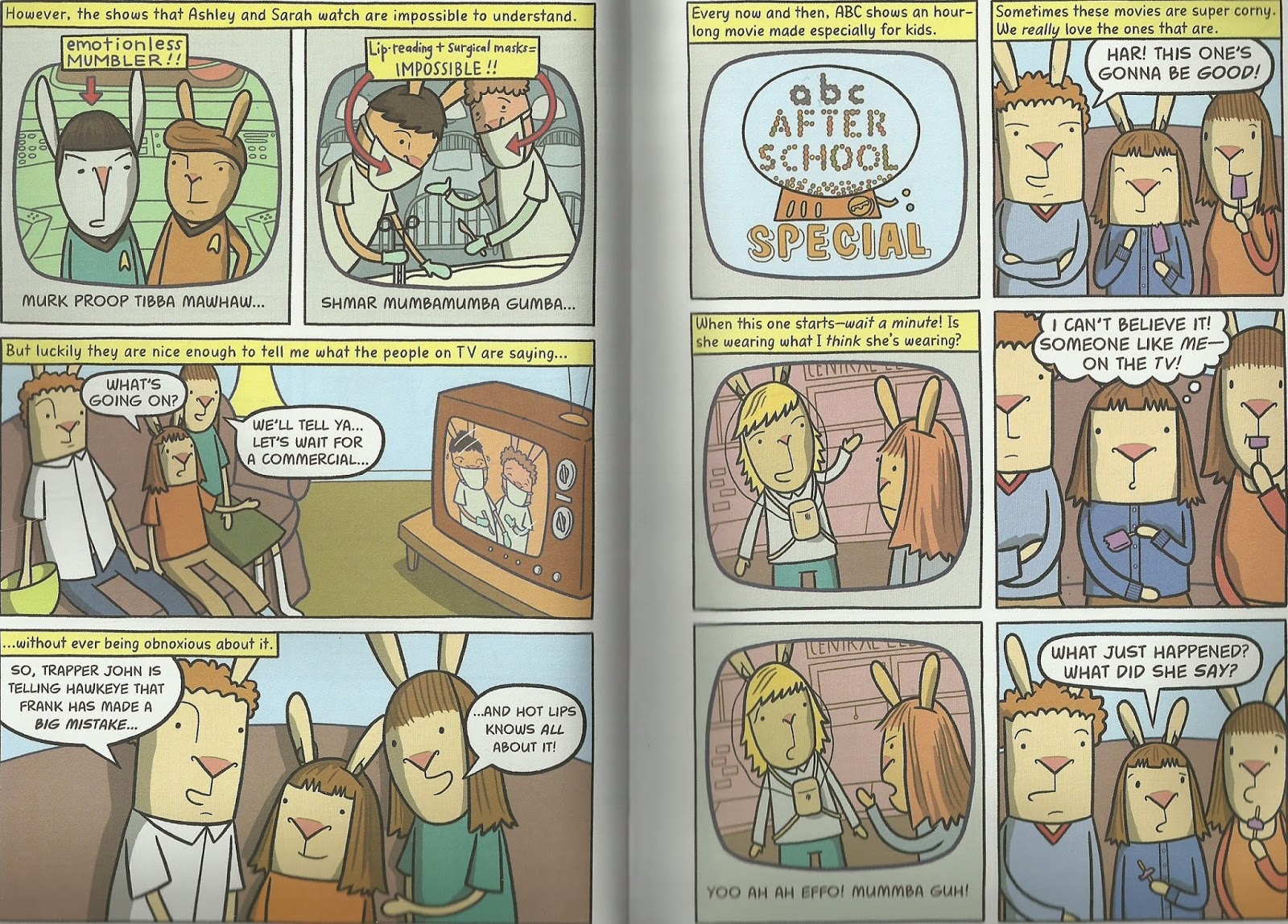
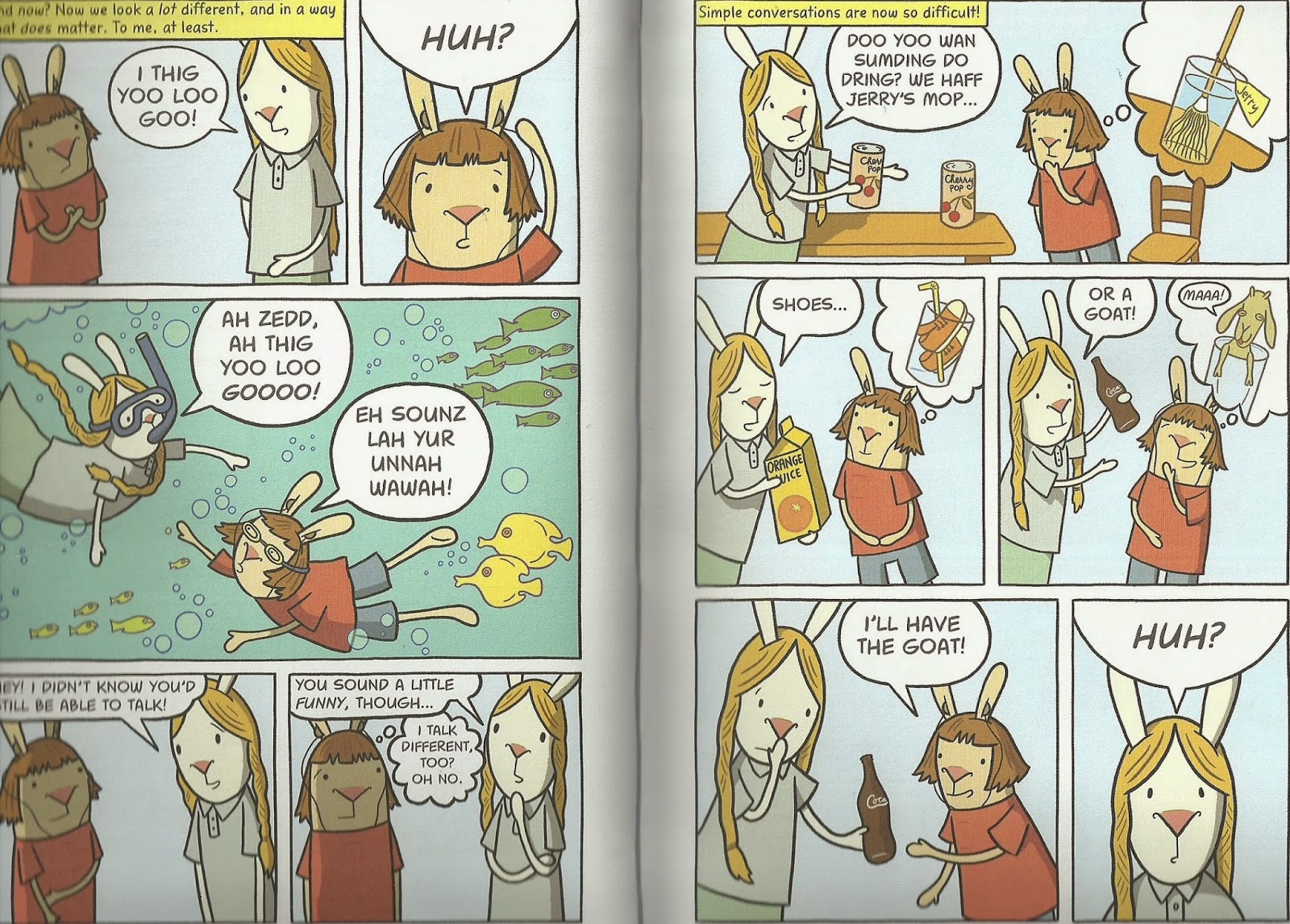
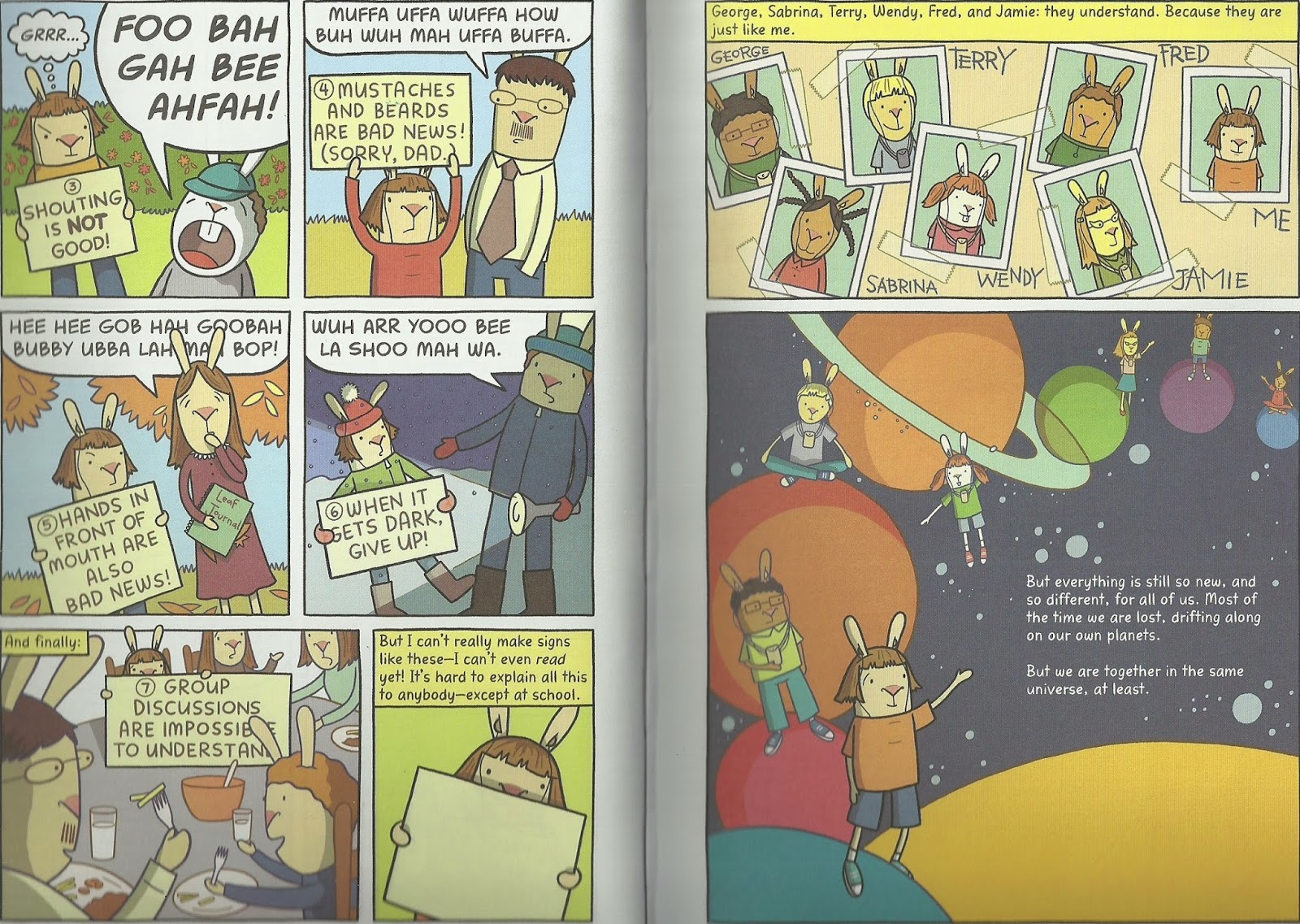
Many of the books I review I seek out, but some come to me in unexpected ways.  Along with the book Fleabrain Loves Frannie, I was given one I’d never heard of, called  El Deafo by Cece Bell, a graphic memoir novel.  I flipped through it  — bunny characters, a deaf girl, school problems, and intriguing scenes like this:
I love seeing Spock with bunny ears
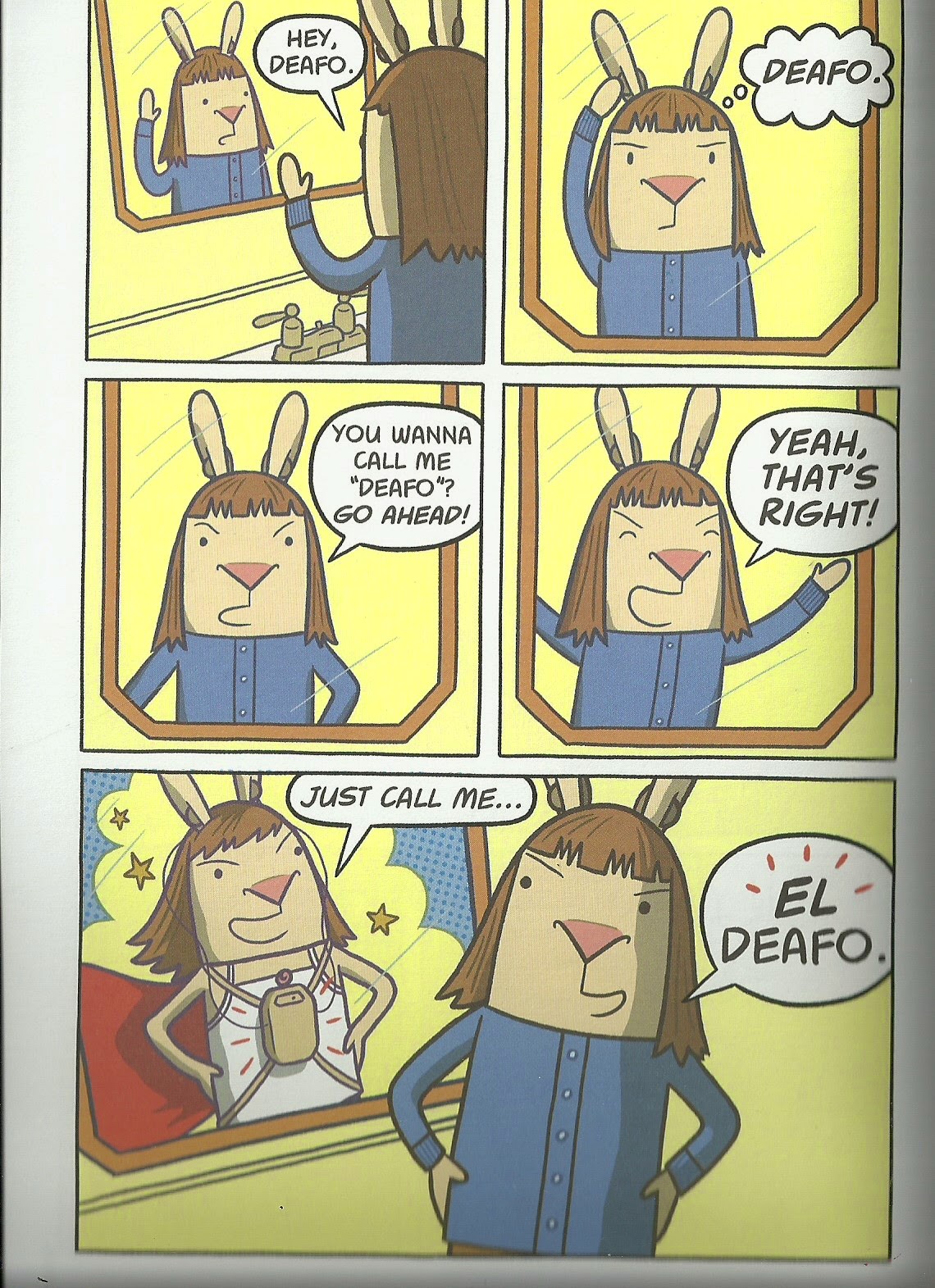
In this after school special, the character is deaf and some one calls them deafo, which causes Cece some soul searching.
I was hooked, started reading, and pretty much devoured all 230 some odd pages.  It tells the story of a girl who contracted meningitis and lost her hearing at age 4.  She gets a bulky hearing aid she wears in a pouch around her neck with wires and earbuds.  It’s only partially successful.  What she hears is not what people are saying. 
She learns lip reading, but that’s not easy either. 
At first she’s in a school with other children who have deafness.  Then she moves and enters first grade with a device called the Phonic Ear, another bulky device, this one strapped to her chest, with more wires and earbuds.  
The teacher must use a microphone, but with it, Cece can hear perfectly.  In fact, she can hear her teacher not just in the classroom, but anywhere her teacher is in the building — the teacher’s lounge, the bathroom.  When she get’s older, she finds that El Deafo, Listener for All can help mere mortals when the teacher’s out of the room:
El Deafo also urges her to defend herself against the indignities she suffers from bullies and manipulative friends.  But it’s harder to manifest her El Deafo nature outside her imagination. 
This is a funny and perceptive book and is a great read for anyone who has felt different growing up, but especially for those who have obvious physical challenges and impairments.  Cece often lives in a bubble.  Friends don’t seem to understand her.  The one close friend she has abandons her after an accident.   There are touching scenes of friendships gone sour, first crushes, and family interactions.  The drawings are so expressive — tender and sweet and melancholy like childhood itself.
 
In her author’s note, Cece Bell, says, “El Deafois based on my childhood (and on the secret nickname I really did give myself back then).  It is in no way a representation of what all deaf people might experience.  It’s also important to note that while I was writing and drawing the book, I was more interested in capturing the specific feelings I had as a kid with hearing loss than in being 100 percent accurate with the details….But the way I felt as a kid — that feeling is all true.”
Though it is her specific story, it’s got a universal feel.  We’ve all had to deal with shame and desires to fit in.  And in overcoming that, we find a source of creativity.  “With a little creativity and a lot of dedication, any difference can be tuned into something amazing.  Our differences are our superpowers.”
Marketed to children ages 8 and up, I think it will help anyone tap into their superpowers, even readers in their 50s like me.  
Cece Bell has written and illustrated several books for children, including the Geisel Honor book Rabbit and Robot: The Sleepover and The Sock Monkey Series.  She lives in Virginia with her husband author Tom Angleberger.
You can learn more about her at her website, click here,  and see some of the inspiration for El Deafo, including a picture of the Miss Bunn doll that may be the origin of Bell’s delightful way of telling stories through bunnies. 
Miss Bunn was a gift when Cece was 4 and still in the hospital
Thanks for reading my blog.  For a very different but equally as fascinating graphic novel memoir, click to read this review of The White Duck: A Childhood in China by Na Liu and Andres Vera Martinez,

 I’d love to hear your comments.  If you like this post, feel free to share it.