What’s in a Dress?

Some books come along at just the right time.  I read to kids Bridge Meadows, an intergenerational community supporting families adopting children from the foster care system,  I live there and serve as a mentor.  One of the boys here has, at age 5, had an identity revelation.  He says he is not a he or she, a boy or a girl.  He likes playing ball and drawing, he likes pink and wearing dresses.  His mother is supporting him in figuring out who he is on his own terms, so some days he wears pants and some days he wears dresses. 
As soon as she let him choose his own clothes, she noticed his behavior changed, he grew more confident, a part of him blossomed that he’d held tightly under control.  It was amazing to see.
Still, outside of his loving family and community, there isn’t a lot of support for a boy who wants to wear dresses.  There is outright disdain and worse.  It’s a worrisome situation.  
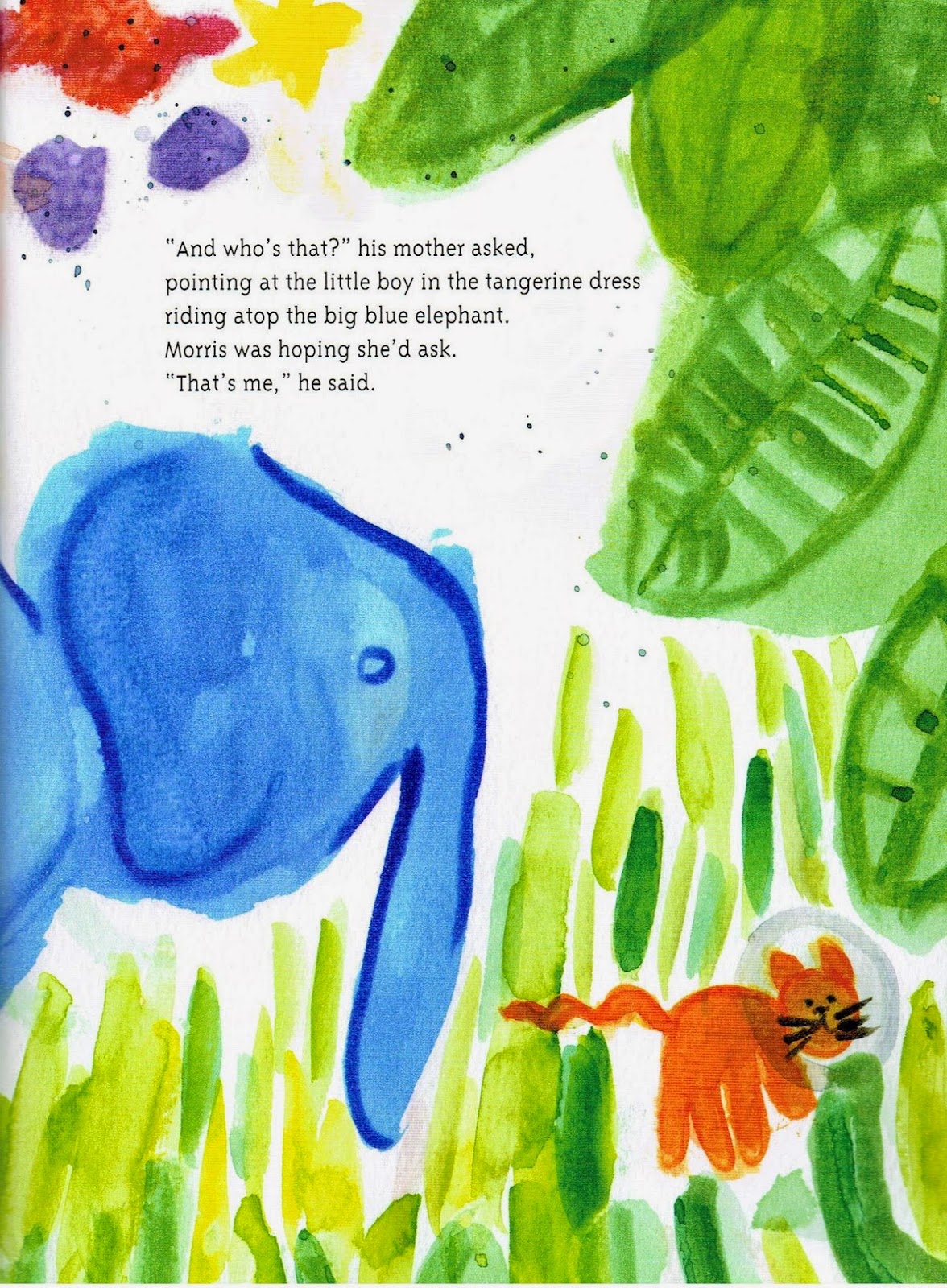
When his mother reached out to the community to explain their choices for her son, I’d recently read about the book Morris Micklewhite and the Tangerine Dress, by Chistine Baldacchino and illustrated by Isabelle Malenfant on the altogether exuberant blog Brain Pickings
I immediately got the book to share with him.  It’s a sweet and moving story of a complex boy who, in spite, of being teased, holds on to his love of a tangerine dress that he discovers in the dress-up center at school.  The dress reminds him of his mother’s hair, his cat, tigers and the sun.
Morris Micklewhite likes to paint, do puzzles and sing loud during circle time.  That’s all fine.  It’s his love of the tangerine dress that causes him trouble.  But it’s such a fantastic dress!
My young friend loved the dress, was upset at the bullying,
Malenfant’s illustration incorporate a lot of white space when the action is stark

It gets so bad that Morris eventually get sick with a tummy ache.
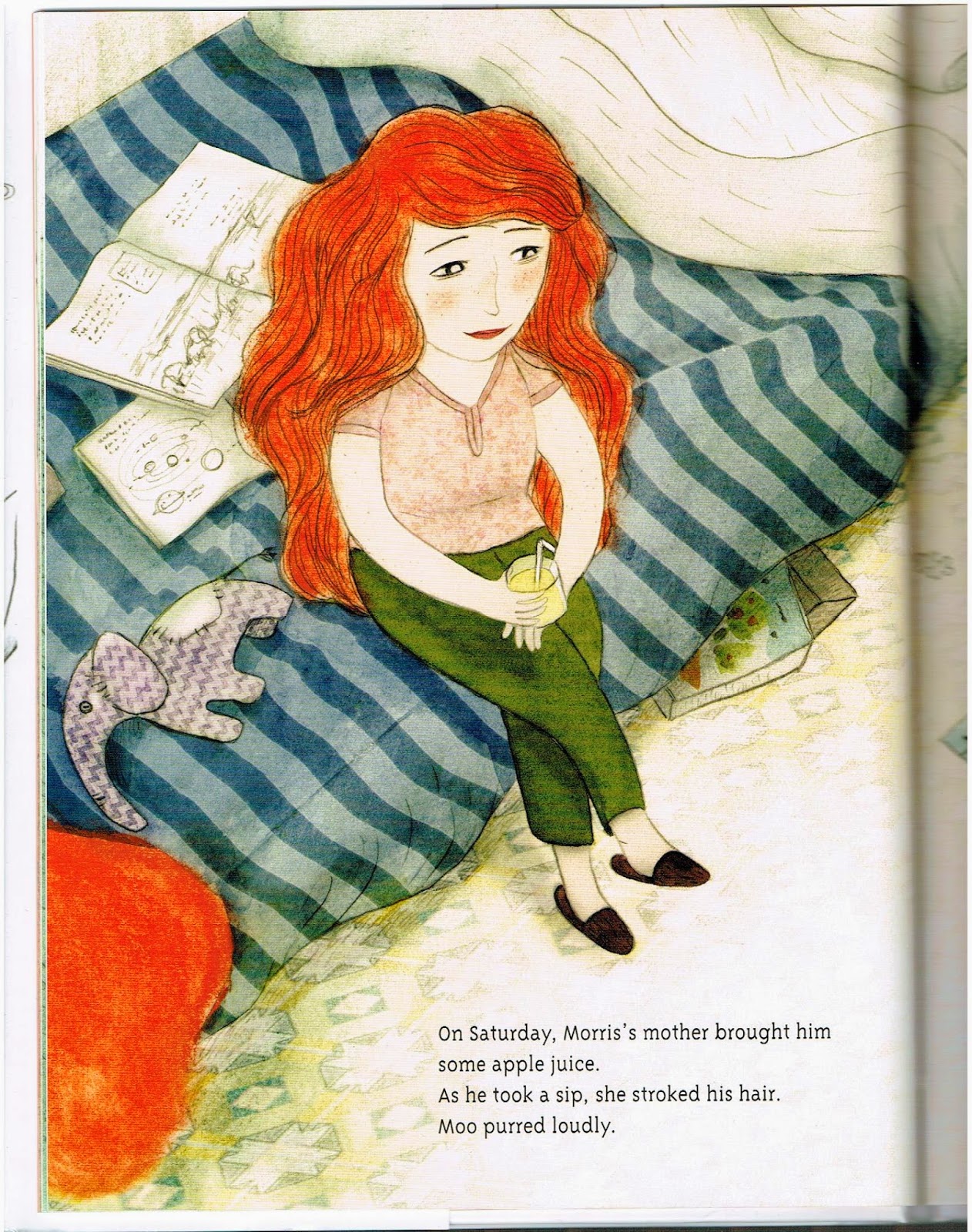
The mother’s worried look is so touching
But while he’s thinking things out, he begins to dream and finds his way to self-acceptance.
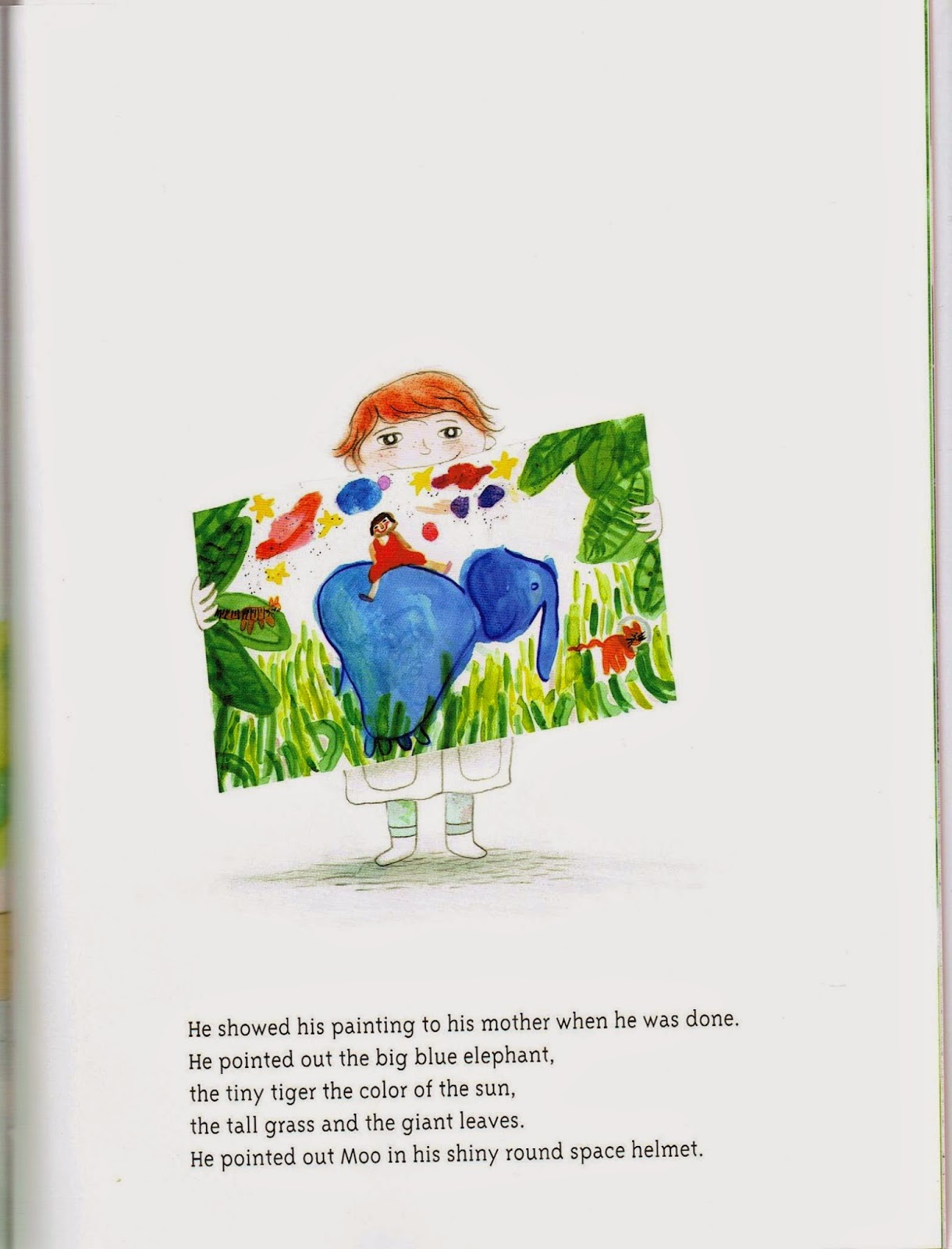
I love way the art is drawn as if by Morris
And his pride
When his friends won’t let him play with them, Morris creates his own rocket ship, one so cool that the other kids come to him to play.   The dress doesn’t matter, it’s Morris’s sense of adventure that draws the other kids to him.
My friend thought it was really cool to see a boy in storybook who was like him. “I’ve never seen a book like this before.  I like it.” The bullying made him mad, but he was so glad Morris kept wearing the dress.  
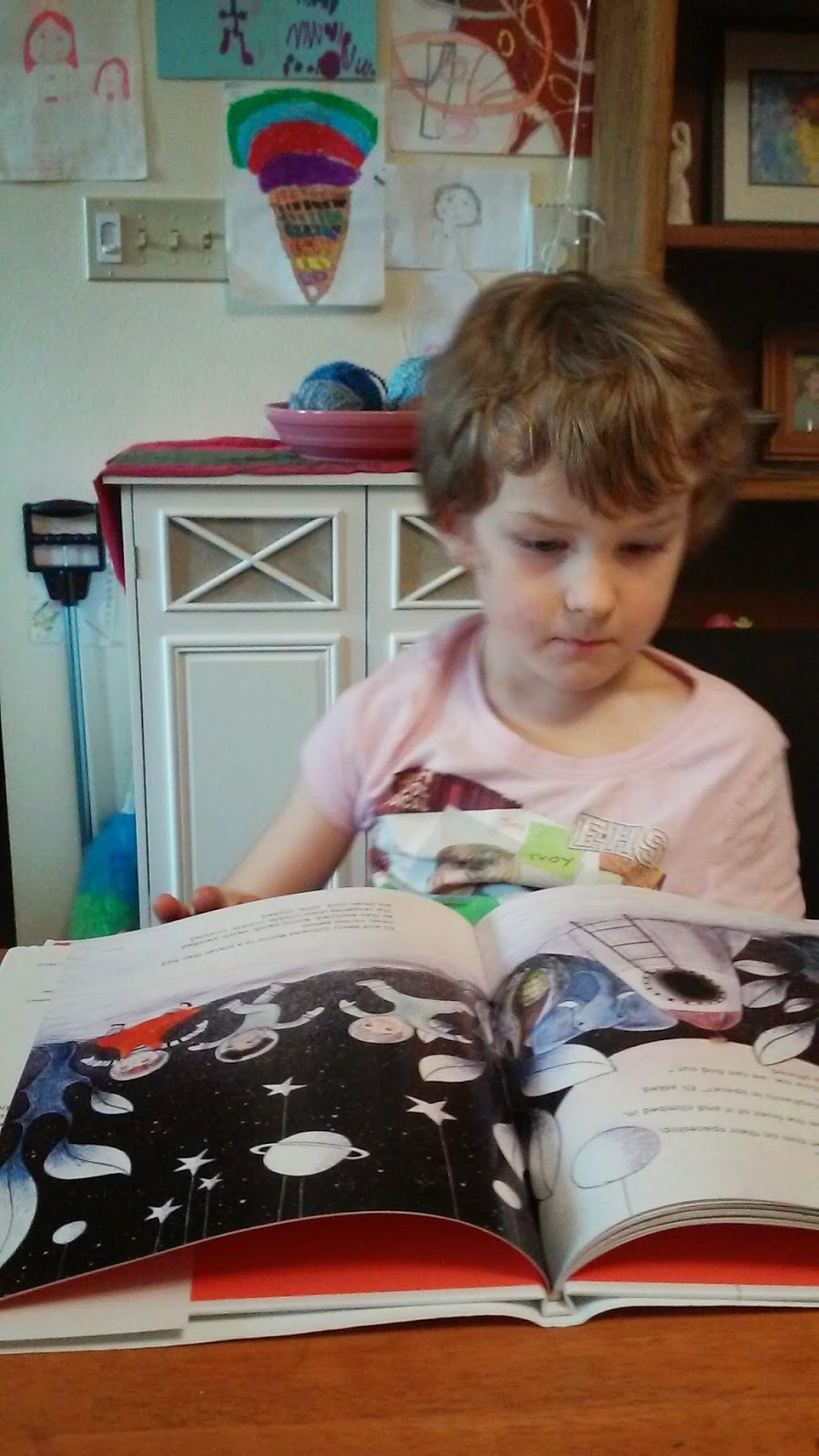
He wanted a closer look at all the picutres
I’ve been impressed at how my friend is so sure of his need to wear dresses at such a young age.  He’s teaching me a lot about when personality and identity start, if it isn’t pushed down by shame and shock.
I also read this book to a group of girls and boys.  When I showed it and read the title, one of the girls said, “But he’s a boy!”  As I read the book, though, and Morris started getting teased, the kids all commented about how mean that was.  The dress didn’t matter.  
We talked about what made something for a girl – dolls, pink, dresses—and something for a boy – action figures, beyblades, football.  We found no real reason why things are for girls or boys.  They all knew girls who were “tomboys,” but not boys who liked dresses.  They didn’t see any reason why boys shouldn’t wear dresses.  The girls felt good that they were able to wear whatever they wanted.  Why shouldn’t boys?  This is a great book to open a conversation about what bullying is, and how it hurts the person who is being bullied.  It shows that a person who is different is non-threatening, and often a lot of fun.
On another note, all the kids were impressed with the fun things that Morris Micklewhite got to do at school.  None of the children I’ve read the book to have painting stations, singing circles, or dress-up centers.  The author and illustrator of this book are Canadian.  It’s published by Groundwood Books/House of Anansi, a wonderful Canadian publisher.  (Look at their catalog here.)  It makes me wonder if there is  more emphasis on creativity in Canadian schools.  Hmmmm.
Chistine Baldacchino is a graphic artist and web designer with a background in early childhood education.  This is her first book. She lives with her husband in Toronto. Isabelle Malenfant has illustrated more than a dozen children’s books.  She lives with her family in Montreal.
Sometimes, these days, when I see young men in their very loose, long shirts and sagging trousers, I wonder why they don’t make a transition to tunics and dresses.  It’s only random cultural associations that make garments, colors, and styles seem male or female.  I now know several parents who are allowing their boys to wear dresses.  Will they face the same kind of bullying that they would have in the past?  Are we evolving a little bit out of our strict sense of what is appropriate dress? 

I think back to the furor it caused when women began to wear pants.  And in places on our beloved planet, pants are still illegal garments for women.  What a strange world.  But books like Morris Micklewhite envision a world a bit less strange, a little more colorful and kind.  I like that story.
Thanks for reading my blog.  If you’d like, leave a comment.

Wild and Happy

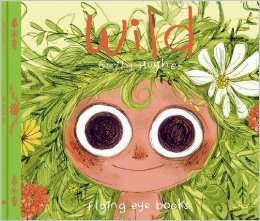
I often read with my 6 year old neighbor Karishma, here at Bridge Meadows community.  Last week, she came over and urgently asked for the book Wild by Emily Hughes.  Her shoulders were scrunched up to her ears.  I quickly found the book.  She flipped to the back and read the last page out loud.  “You cannot tame something so happily wild.”
Her shoulders relaxed and she sighed.  She then read the whole book again.
It’s been her favorite book for about a month now.  Even though she doesn’t really want to eat raw salmon from a river or sleep in a tree, she identifies with wanting to be wild.
The day she so urgently needed to see the ending was her first back at school after a week off.  She’d had a cold, then impetigo.  She got a toothache which required a visit to the dentist.  Her first day back at school didn’t go well.  I didn’t get the details but I was happy that she sought relief in a book. 
Wild tells the story of a girl who has known nothing but nature since birth.
“No one remembered how she came to the woods, but all knew it was right. 
The whole forest took her as their own.”

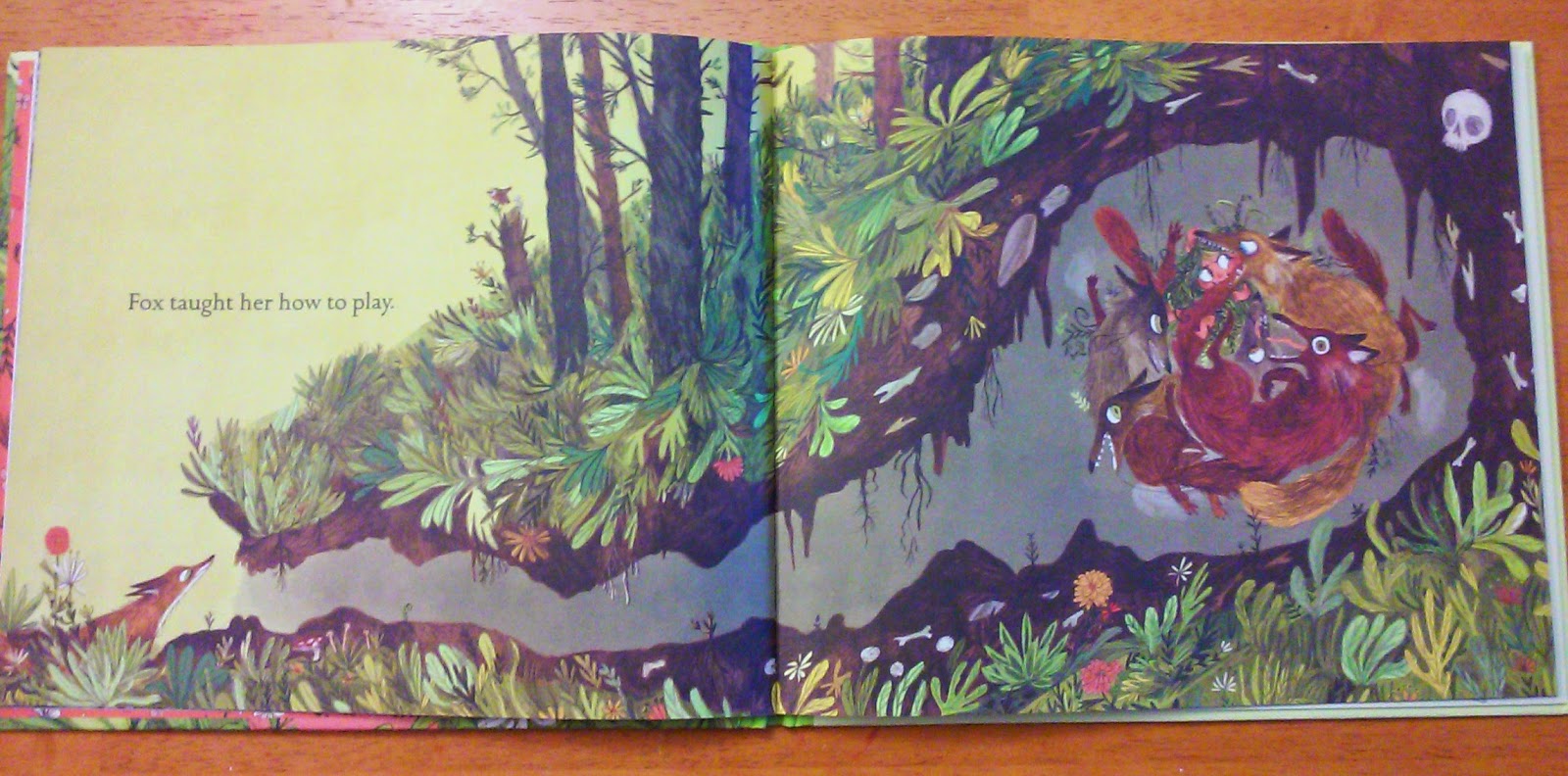
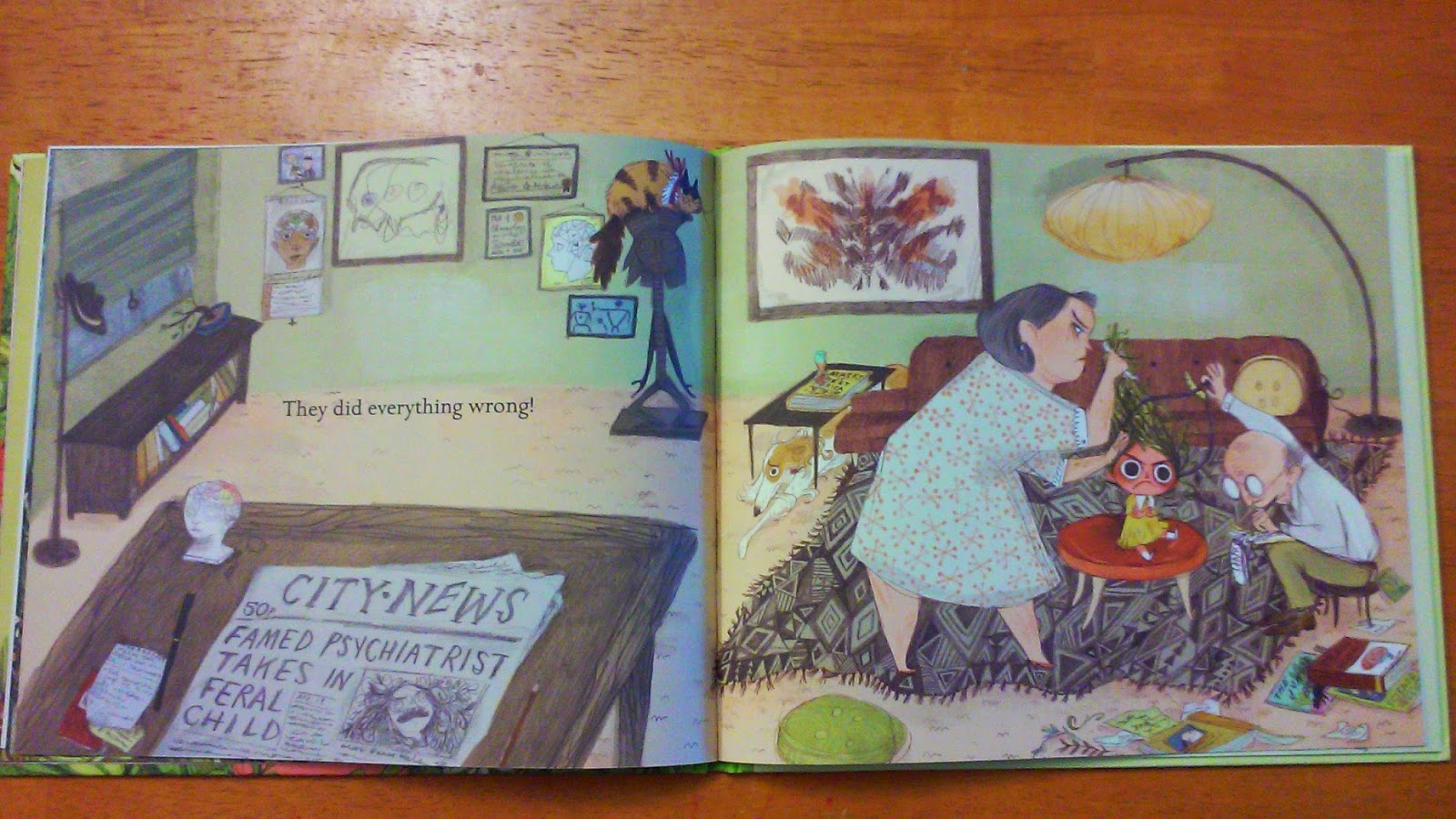
This spread is from the book but scanned in on Emily Hughes’ site.  You get better detail than on the other pictures I’ve posted
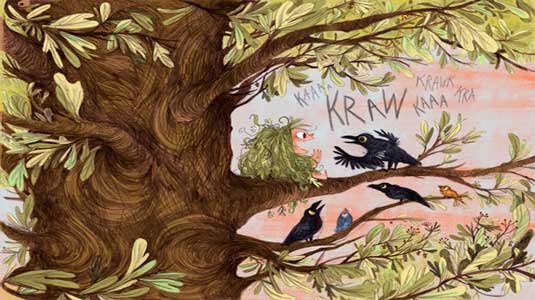
In many ways, this is a Garden of Eden story.  And I think it touches on the same desires for a peaceable garden, something not so dog eat dog, evolve or die.  In Wild, bears teach the girl to eat, birds teach her to speak, foxes teach her to play.
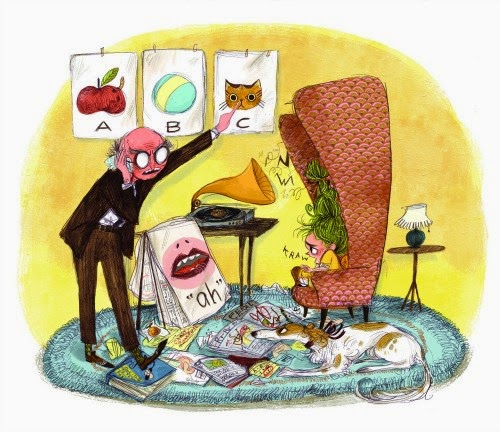
The trouble comes when she’s discovered by humans and they try to help her.  It doesn’t go well.  
from Emily Hughes Site
The girl is powerful enough to know when enough is enough and gets her freedom back.  And she takes the dog and cat with her.  This element is important to every kid I’ve read this book to – they are as concerned about the dog and cat as they are the girl.
Wild represents an idyllic family, where everyone plays together and there are no confusing rules, or school, or bad days, or shoes.
For me, it was a nod to the wild child that I once was – the one who got in trouble for jumping on furniture, climbing trees, and spitting out food I didn’t like.  I was tamed, but I like to think there is something happily wild still inside me even in my fifties (aging has helped me shed a lot of the need to please, and makes me appreciate my inner wild.)
Hughes illustrations are detailed and loose at the same time.  This wild girl’s expressions bring her to life.  I’ve never see such an accurate illustration of a child who feels she is the victim of an injustice or stupidity.  
Hughes’ style is vivid and lyrical.  The scans and photos I‘ve posted here do the book no justice.  It’s a Flying Eye book and it’s done in their usual beautiful style with a great binding and colorful endpapers.
Emily Hughes lives in London, but is originally from Hilo, Hawaii.  She earned 2nd place for the Macmillan’s Prize for Children’s Picture Books in 2012.  She is a young author and I look forward to the work she creates in the future.  Flying Eye Books is bringing out her second book, The Little Gardener, in August.  I can’t wait!
In Wild, Hughes has created a powerful and determined girl.  The girls at my community center who I read it to just love that.  They study the book, the details of the art, and get dreamy eyed about being wild.  It’s a delight to see them imagine a joyous adventure that has nothing to do with being a princess. 
Karishma loves the girl’s hair and big eyes.  And she loved the ending even more than I imagined.  What a thrill it was that she came to me frustrated and wanted to see a book instead of play on the computer.  Playing computer games might have helped her escape from her problems, but reading Wildhelped her reimagine why it’s so hard to be schooled and civilized.  It reminded her that life is sweet and there’s a whole world of nature out there for her.
You can follow Emily Hughes’ blog by clicking here.
Thanks for reading my blog.  If you’d like, leave a comment.

Review of One Plastic Bag

I was sipping coffee in a lovely café with glass walls, enjoying the light and feeling of openness.  I looked around at the sky and the winter trees, all bare of leaves, limbs like calligraphy against a gray sky.  Except the one on which a plastic bag was snagged.  It danced in the wind, an ominous trash dance.  Even though they’re banned here in Portland, Oregon, they’re still a part of our landscape.  They’re still used almost everywhere, all over the world, even in villages in Gambia.
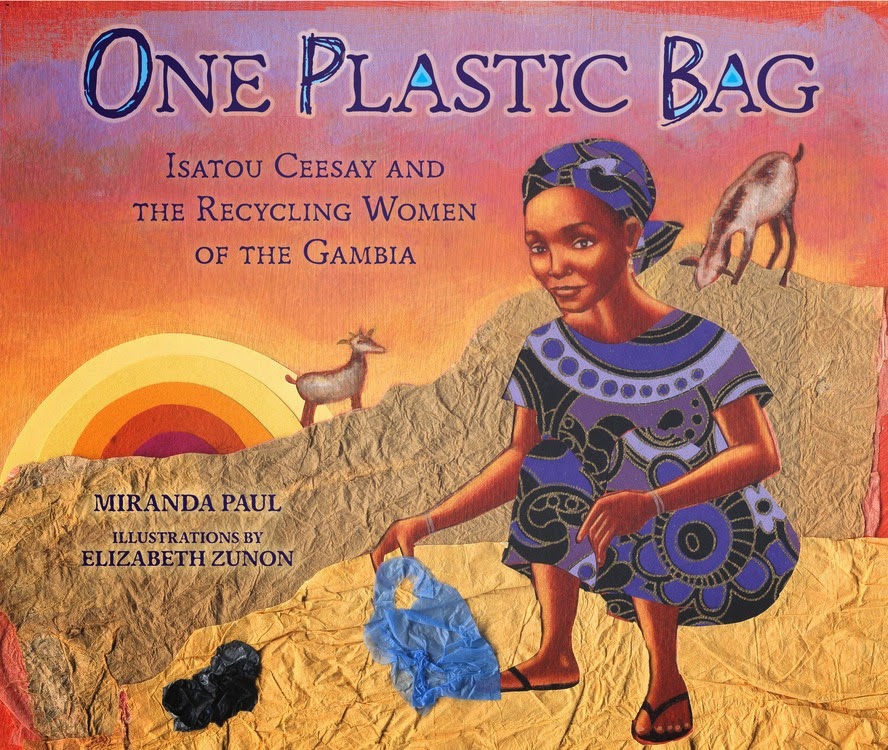
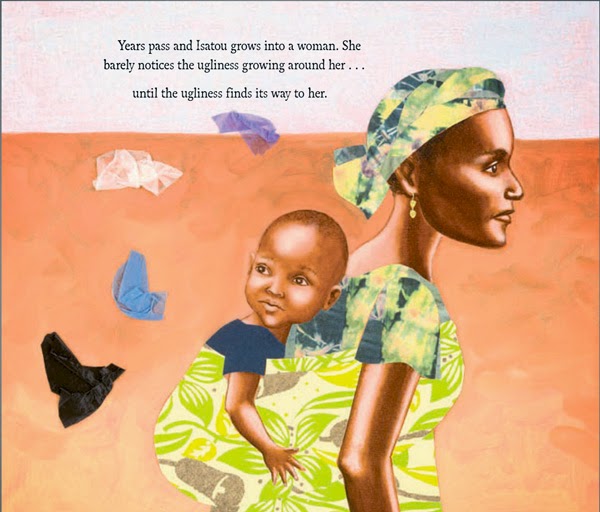
One Plastic Bag: Isatou Ceesay and the Recycling Women of the Gambia, by Miranda Paul, illustrated by Elizabeth Zunon, Millbrook Press/Lerner Books, was just released and it brings to light the depth of the plastic bag problem, as well as the innovative way one group of women are dealing with it.
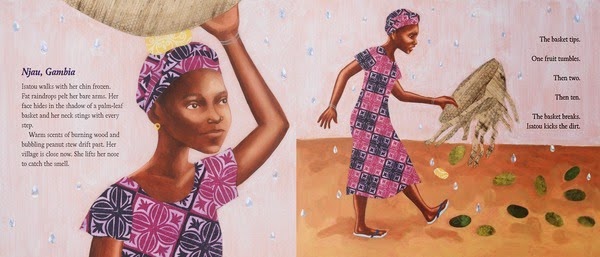
In Njau, Gambia, when the plastic bags broke or were no longer needed, people dropped them.  One plastic bag became two, then ten, then hundreds.  “The bags accumulated in ugly heaps alongside roads. Water pooled in them, bringing mosquitoes and disease. Some bags were burned, leaving behind a terrible smell. Some were buried, but they strangled gardens. They killed livestock that tried to eat them.”


But people got used to them.  We’re very adaptable, even to things that are ugly and destructive.  When I wait for the bus here in Portland, I’m amazed at how many people throw down their trash and how the rest of us wait amongst the litter and never pick any of it up.  Picking up trash is beneath us; we have other things on our mind.
But Isatou Ceesay wanted change and despite being ridiculed, she became that change.  She and a small group of women began to collect and clean the bags.  They cut them into strips and crocheted purses.  The purses were colorful and practical.  Isatou realized that the purses could be a way to help alleviate the poverty of the women in her village. 
This is a truly inspiring story and one of the reasons I keep reading “children’s books.”  There is hopefulness in them and many publishers, especially the small independent ones, are looking for unsung heroes to celebrate.
Miranda Paul’s writing is clear and lyrical.  She met Isatou while teaching and traveling in the Gambia.  Miranda is an avid recycler and conservationist.  This was a story she “had to tell.”
Her descriptions of village life are vivid and inviting.  You feel as if you’re there.
The story is beautifully illustrated by Elizabeth Zunon.  Her luminous paintings bring the book to life.  She uses collage elements that enhance her backgrounds but also make characters more vibrant.  (She also illustrated The Boy Who Harnessed the Wind, by William Kamkwamba, which I reviewed here.)  Her faces and hands are particularly beautiful and expressive.  You feel Isatou’s thoughtfulness and hopefulness through Zunon’s paintings.
Here’s a link to a short trailer of the book, so you can see a bit more of Zunon’s art, but of course, the best way to see it is in the book.  The screen does it no justice:  
The book includes bonus information such as a Wolof language glossary, timeline of actual events, and photos of the women of Njau.
It’s a beautiful book about an ugly topic, with great art, a great solution to a trashy problem, and a great woman who proves one person can make a difference.  
Here’s a link to the book’s website which includes lots of links for teachers and families.  I could see this being a great book for a family discussion night on environmental topics and different cultures:
And here’s a direct link to a 15 minute video on the Njau Recycle Centre:
Here’s Miranda Paul’s website.  She’ll have another book out this year, Water is Water, and two in 2016:
And here’s Elizabeth Zunon’s website.  She’s illustrated a book by Nikki Grimes called Poems in the Attic, which will be out in April:
Both Paul and Zunon belong to the wonderful We Need Diverse Books campaign, which you can read about here:

What are you reading these day?

First Comes Love, When Comes Marriage?

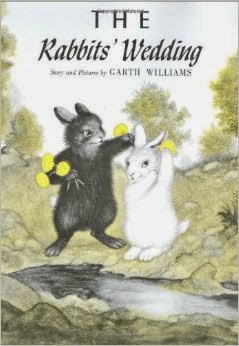
In 1959, Alabama Senator E.O. Eddins tried to ban the book The Rabbits’ Wedding by Garth Williams in his state’s libraries and schools.  Garth Williams was the beloved illustrator of such books as Charlotte’s Web, Stuart Little and the Little House series.  His book The Rabbits’ Wedding, written for children ages 3-7, showed the marriage of a white rabbit to a black rabbit.  Senator Eddins and the White Citizens’ Council of Alabama were outraged that it promoted interracial marriage.  Librarians, great heroes all throughout history, fought this.  While the fear mongers didn’t succeed in an outright ban, the book was put on special reserve shelves.  Williams was surprised by the controversy and said, I was only aware that a white horse next to a black horse looks very picturesque. 
At the time, there were 17 states where it was illegal for people of different races to marry.  
Nevertheless people of different races were falling in love.  In 1958, Richard Loving and Mildred Jeter did so in the little town of Central Point, Virginia, one of those 17 states.
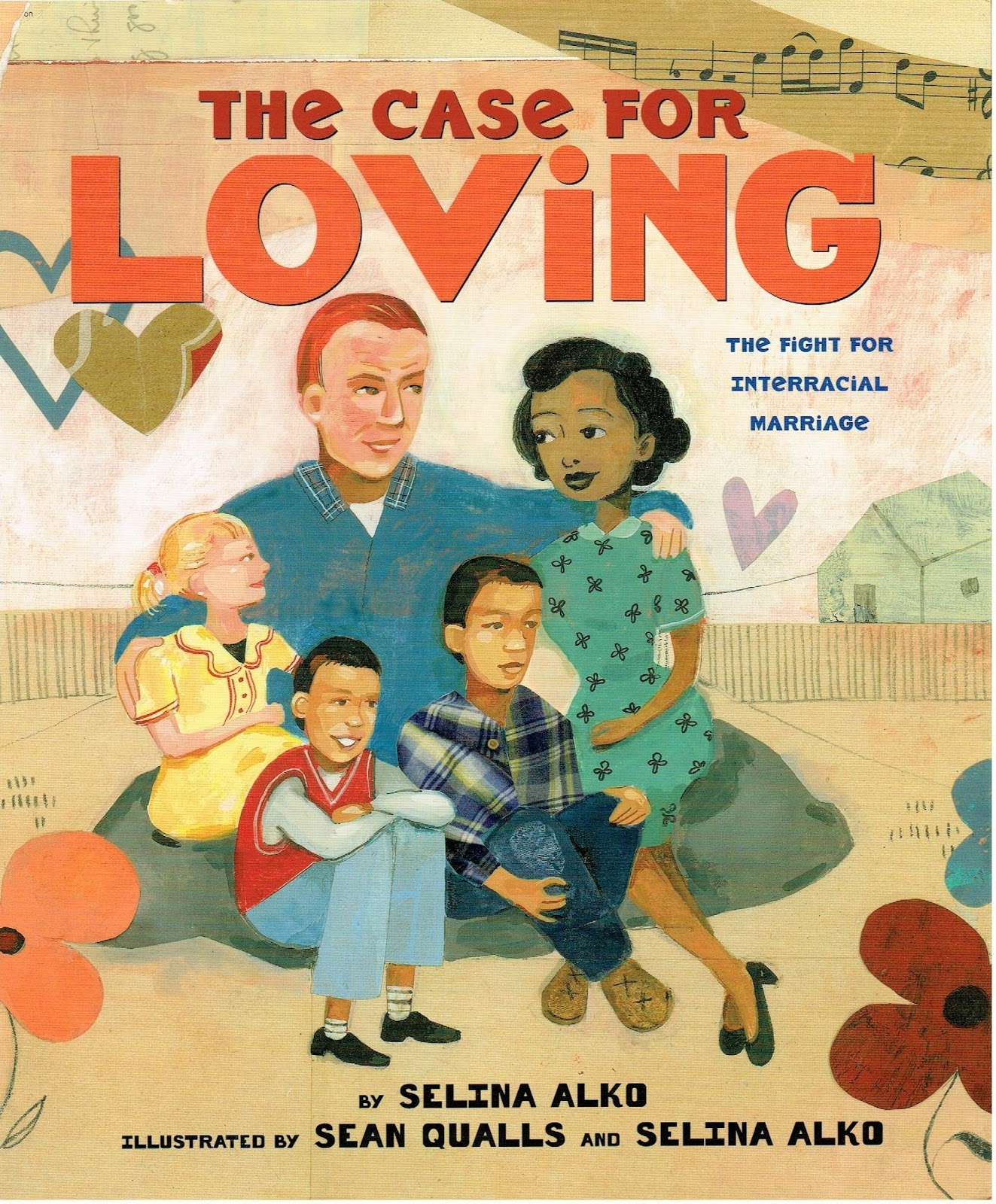
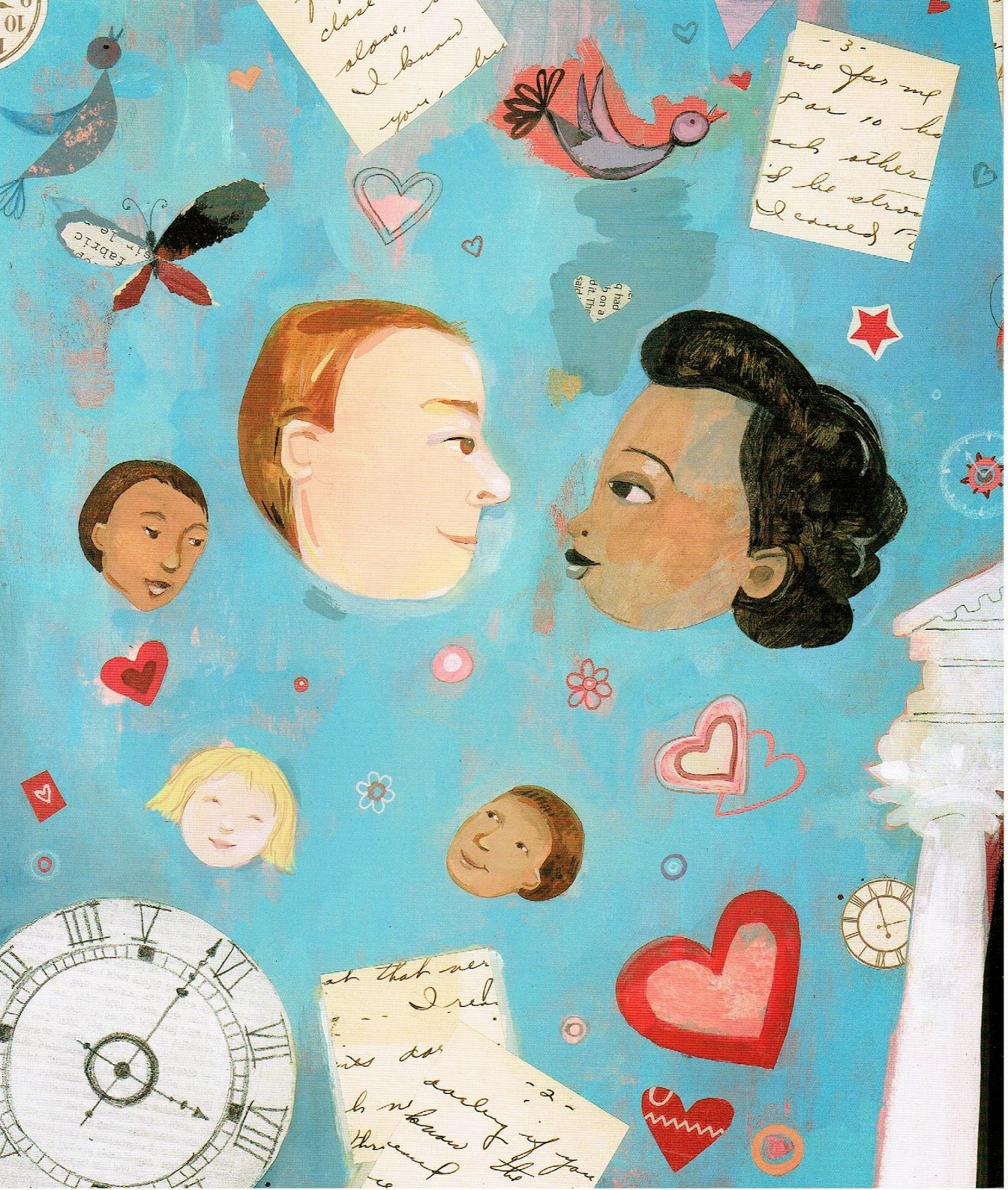
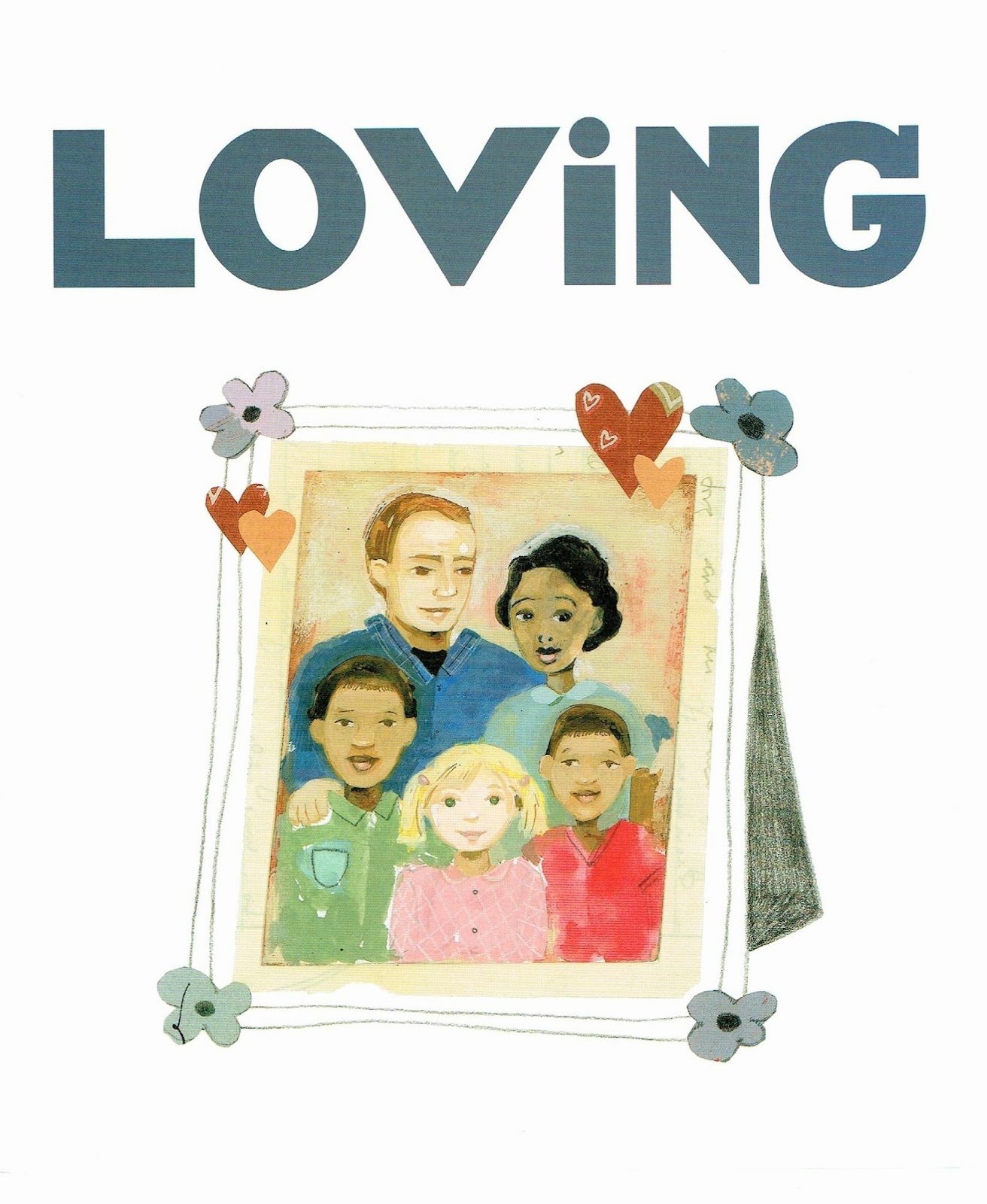
Their marriage and their determination to live in Virginia as husband and wife is the subject of The Case for Loving: The Fight for Interracial Marriage by Selina Alko, illustrated by Sean Qualls and Selina Alko.  It will be released for by Arthur A. Levine/Scholastic books on January 27th, but many booksellers are taking pre-orders for it.  Everything about this book is compelling.  It’s marketed to ages 4 to 8, but it’s really appropriate for all ages. 
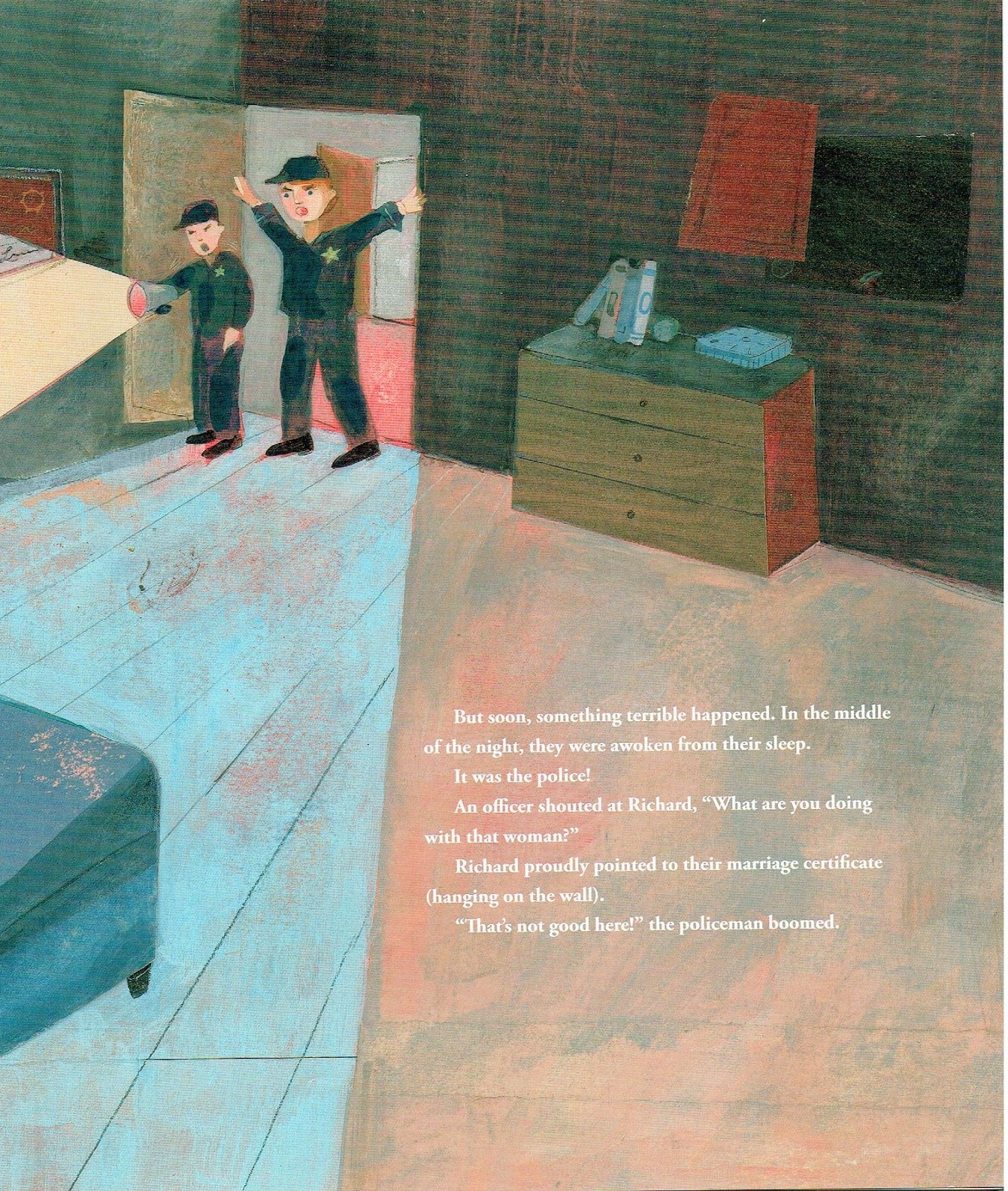
Richard and Mildred got married in Washington, D.C., but when they came back to their hometown to live, they were arrested – pulled from their bed – for violating the state’s law against interracial marriage. 
They moved back to D.C. and took the state of Virginia to court.  The case went all the way to the Supreme Court before Virginia’s law, 9 years later, was found to be unconstitutional.
I think, as a nation, we don’t like to acknowledge the more troubling aspects of our history.  But the stories therein are full of heroics.  A clearer picture of who we are as Americans is buried in the places we’re afraid to bring to light.  The more we know about and talk about our history, the more we understand the problems and tensions we see around us.  Only then can we appreciate the true beauty and complexity of life.
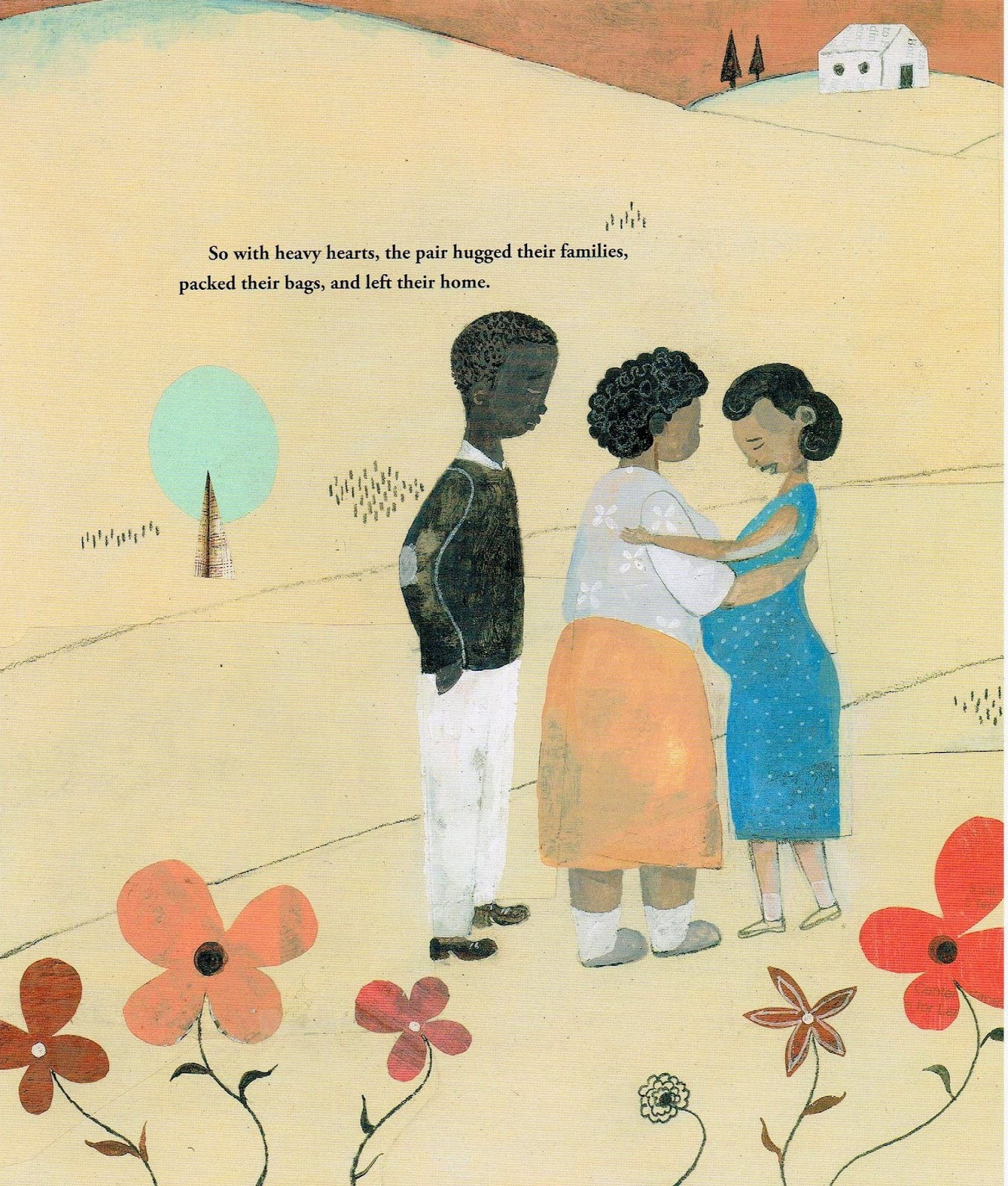
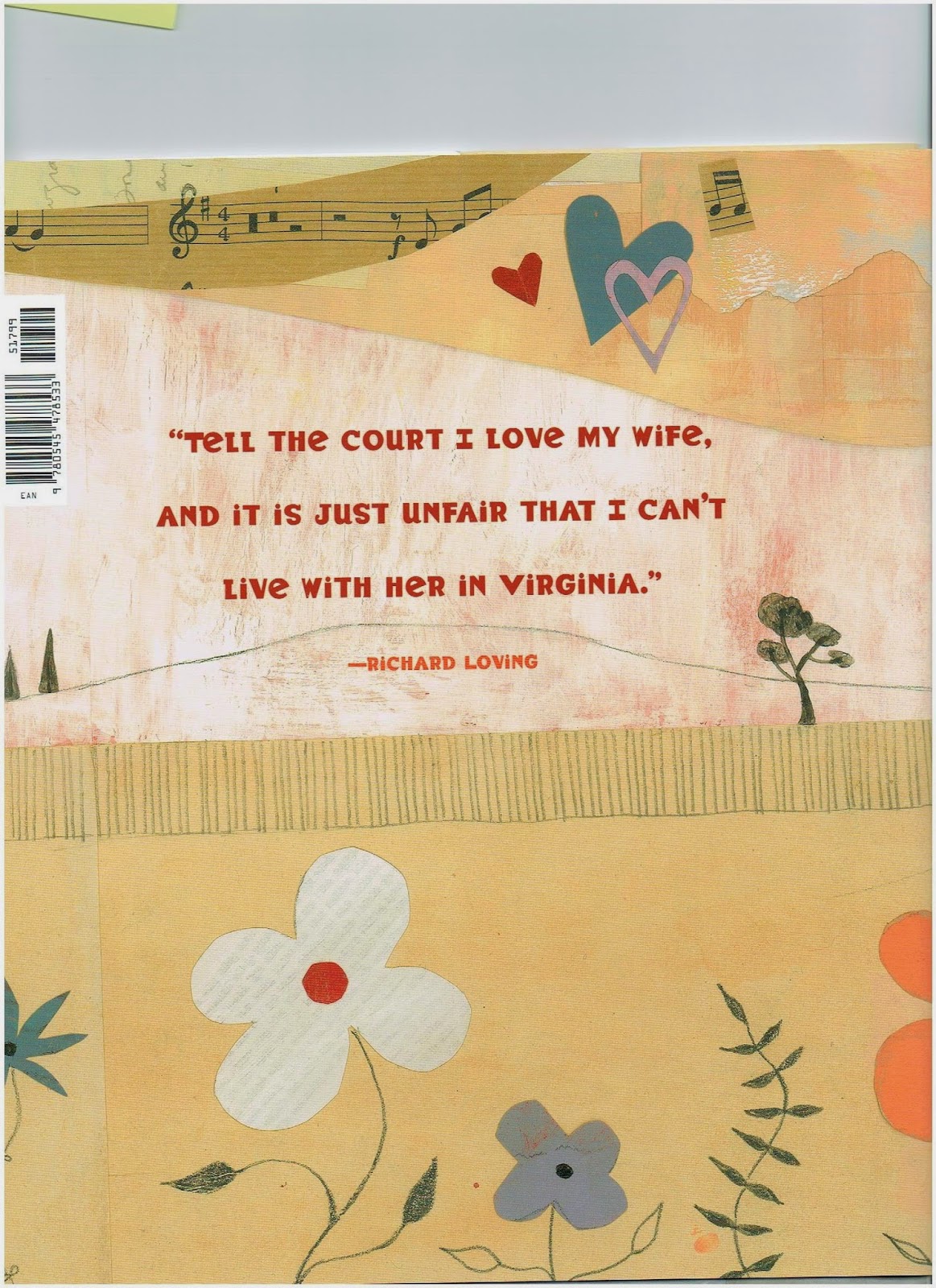
The Case for Lovingis a celebratory story of a strong family.  The expressive illustrations are strewn with hearts and flowers.  The power of love, kinship and family comes through in every page.  Racism shows itself to be strange and alien and unfair.  The writing is subtle, but you can tell what a strain the fight was on the Lovings, because they were so afraid they would lose the case, they stayed home when it was presented to the Supreme Court.  
But they did win.  And although there are still people who talk about the need for “the purity of the white race,” cases of love keep breaking out everywhere.
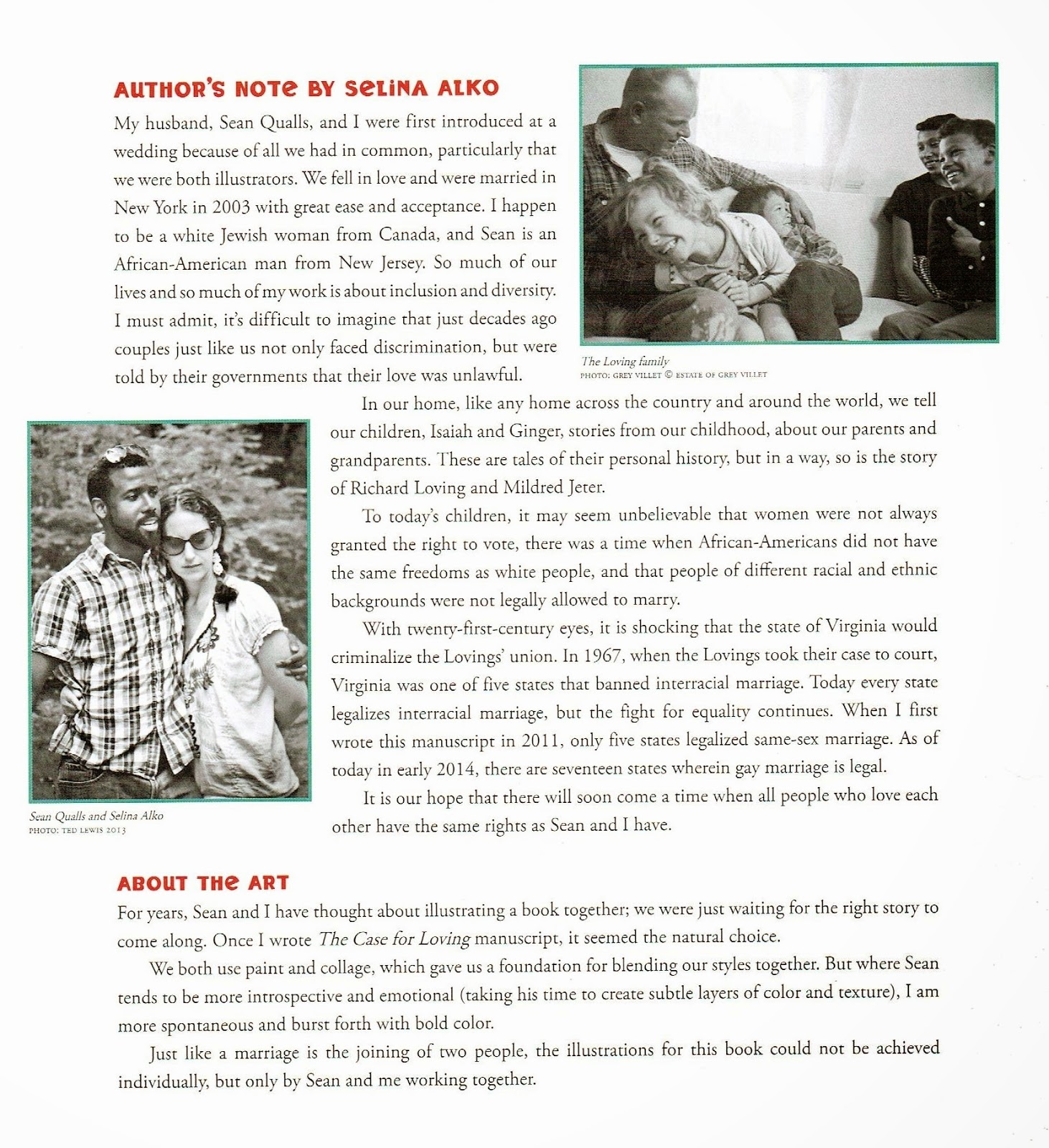
The author and illustrator, in fact, are an interracial couple. 
I wanted to review this book on Martin Luther King, Jr. Day, because it speaks so eloquently to King’s dream.  I’m a white woman who was born in Memphis in 1960 and saw the changes that took place in our divided city because of King and the people who believed in his dream.  His assassination didn’t stop that dream.  In 1972, I was bused to an all Black junior high school.  I had amazing teachers, wonderful friends, and learned a lot of new dances.  It was such a liberating thing.  I heard lot of racist talk from my white relatives, but NONE of it was true.  I know we have a long way to go until people are willing to see across the colorline, but I’m not caught in that kind of fear. 
I’ve been helped so much by African American doctors, teachers and friends.  And I know it’s because every day heroic people like the Lovings helped move our legal system forward.  And heroic leaders like King gave us all a dream.  And people like Alko and Quall are celebrating stories and illustrating how we can all learn to live and love together. 
Back in 1959, in the midst of the storm over the book The Rabbit’s Wedding, Garth Williams said, his story was not written for adults, who “will not understand it, because it is only about a soft furry love and has no hidden message of hate.”


Both children and adults will understand The Case for Loving’s strong message of hope.  It’s a book that makes it easier to understand the world as it is, and the power of love.
Selina Alko is the author and illustrator of several acclaimed books for children, including Daddy Christmas & Hanukka Mama and B is for Brooklyn.  Sean Qualls has illustrated many celebrated books for children, including Giant Steps to Change the World by Spike Lee and Tonya Lewis Lee, Little Cloud and Lady Windby Toni Morrison and her son Slade.  He received a Coretta Scott King Illustrator Honor for Before John was a Jazz Giant by Carole Boston Weatherford.  They live in Brooklyn with their two children.
You can find Alko’s website here.  And Qualls website here.  You can read a Publisher’s Weekly interview with them about the book here.
Thanks for reading my blog and let me know what you think.