Graphic Shorts

Chapbooks from Poets & Writers Magazine 
I’ve always loved chapbooks — the simple folded paper book with a staple binding.  They’re typically no more than 40 pages, seem personal and feel ephemeral.  They’ve been around since the invention of the printing press and provide a simple, elegant way to get information, songs, stories, and art published.  Often, a poet’s first book is a chapbook. 
In this age of rapidly changing publishing technology it’s interesting to see how chapbooks, zines and other small publications are evolving.  
Nobrow, an independent graphic arts and comic publisher based in London, has started a graphic chapbook series, 17×23 (for the size in centimeters of the books), giving illustrators the opportunity to show case their work and explore new ideas in a concise format.  They retail for $5.95, which is a great price for these intriguing graphic short stories.
I’ve read two and look forward to more. 
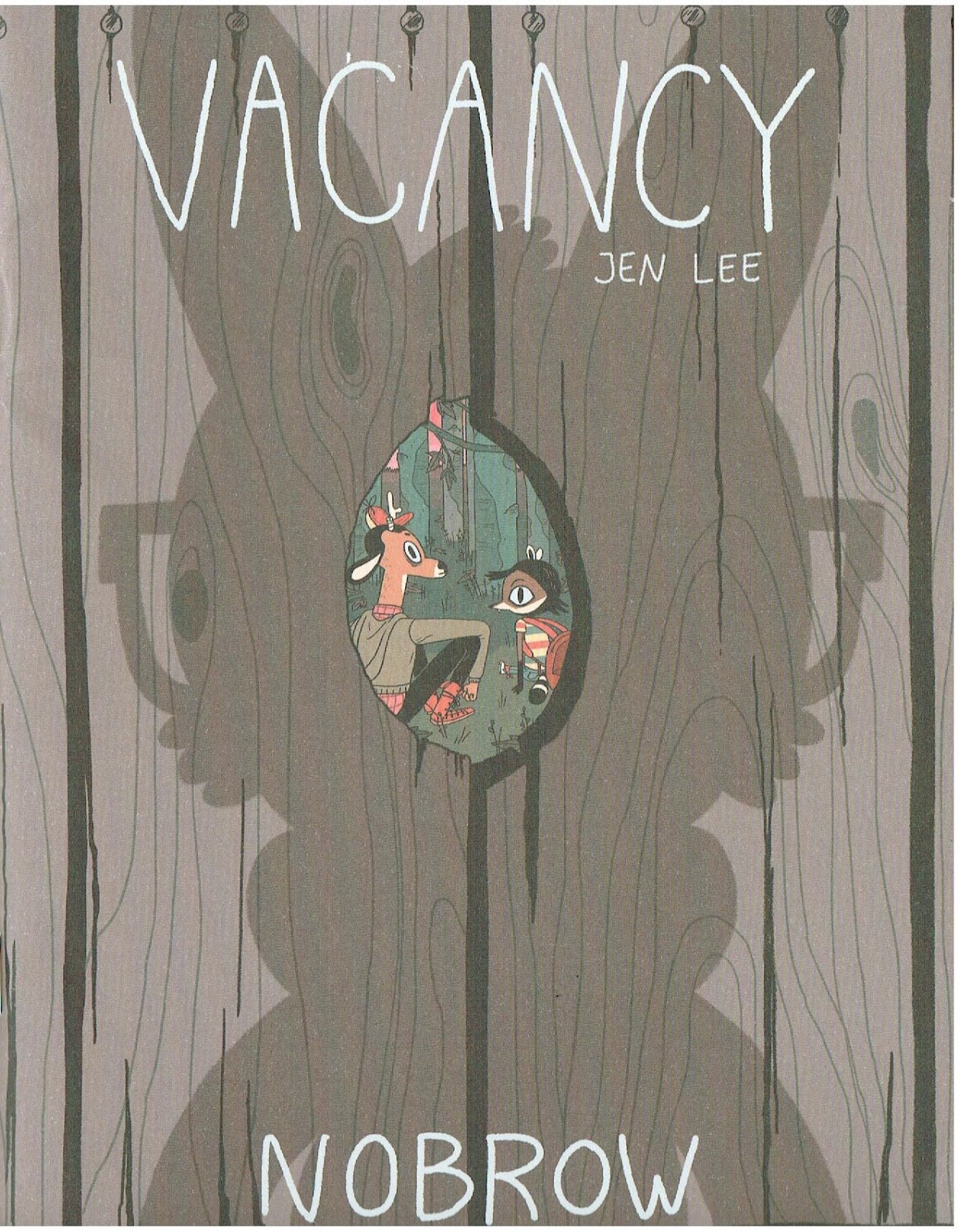
Vacancy by Jen Lee is a dystopian story about the sometimes opposing needs for safety and companionship.  Alone and forgotten in a forlorn backyard, a dog named Simon contemplates breaking free. 
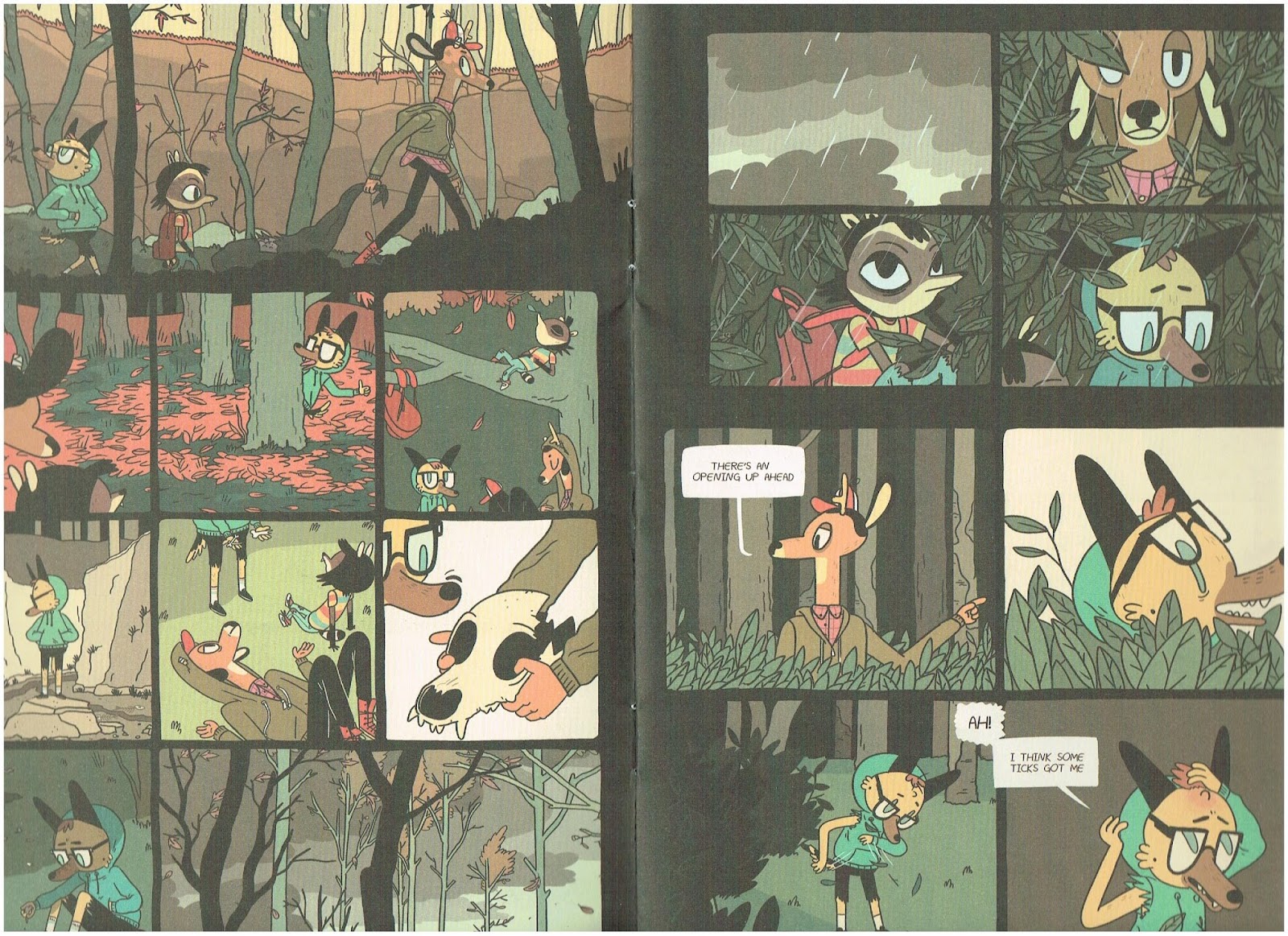
His chance comes when he partners up with a raccoon and a deer who take him into the woods.  The woods are scary and it’s hard for Simon to figure out how to live and who to trust. 
While I’m generally not a fan of dystopian outlooks, Lee’s style is bold and the action leaps through the graphic frames.  It speaks not just to the fears of survival but a deep fear of isolation.  Daytime is dim and night time has an eerie glow.  You feel need for sustenance and companionship throughout the story.  
I read a very thoughtful review of this story by Daniel Elkin at Comics Bulletin, which I urge you to read here.  I also shared this story with a 13 year neighbor of mine who loves graphic novels and he hopes it’s the beginning of a series.
Lee studied at the School of Visual Arts in NYC.  She freelances in a farmhouse in Idaho.  You can read more about her here.
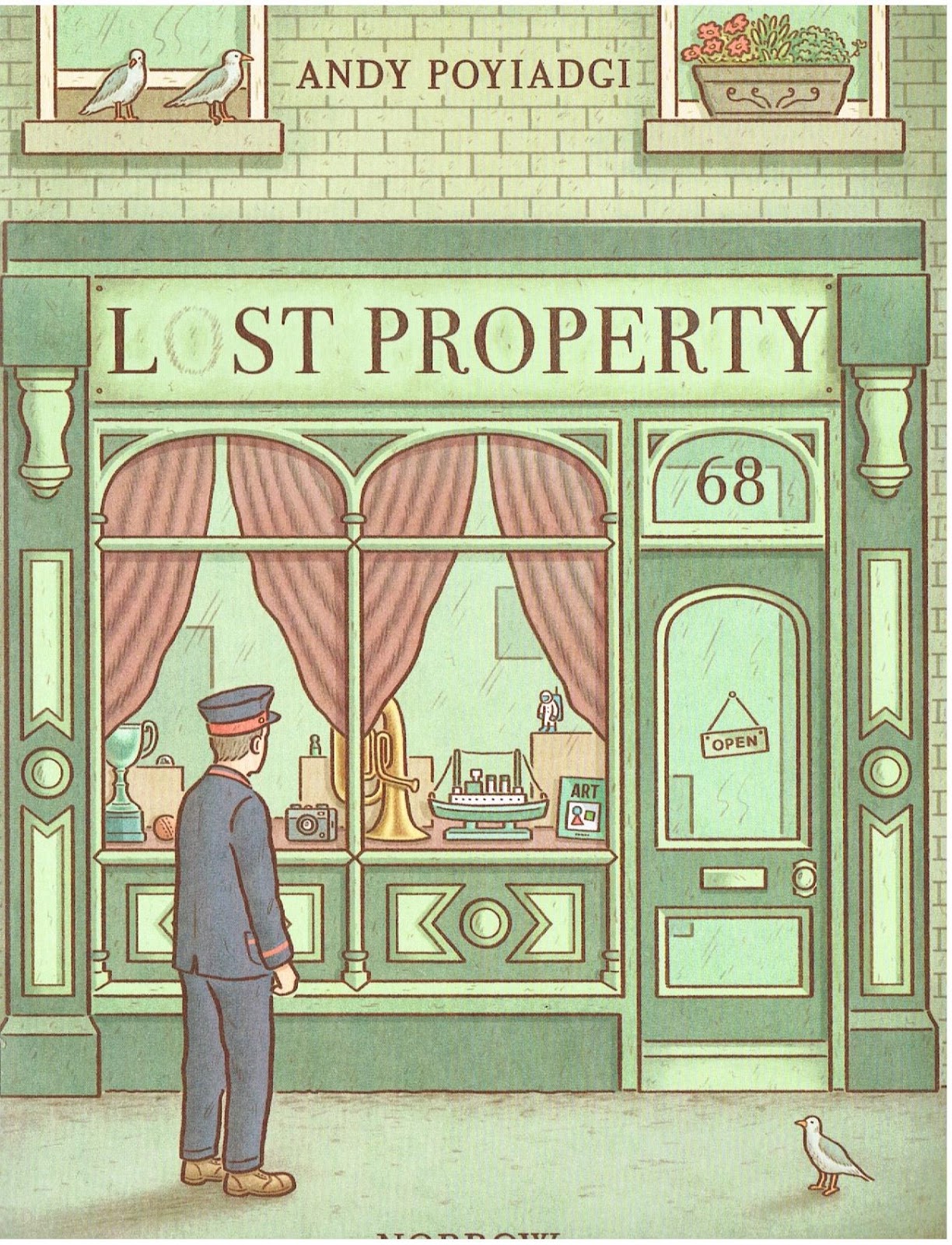
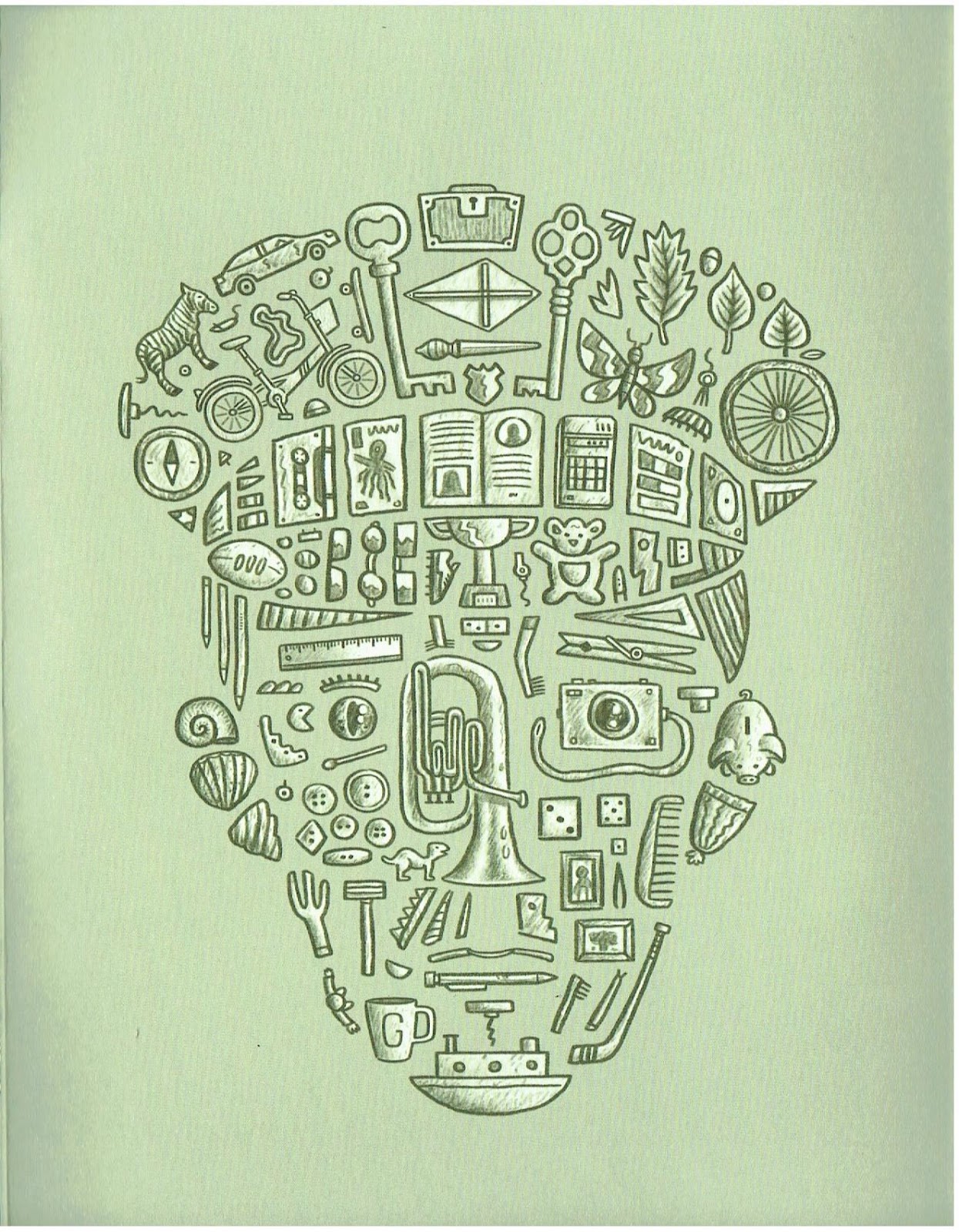
Lost Property, by Andy Poyiadgi, is almost an opposite kind of story.  It’s about a postman who is able to correctly deliver hundreds of items every day, but easily loses his own possessions.  One day, he gets a call from a lost property shop, saying they’d found a letter opener inscribed with his name.  
When he arrives, he notices a toy ship in the window that looks like one he had when he was a child.  As he looks around, he finds that the shop has every one of the objects he has lost in his life.  
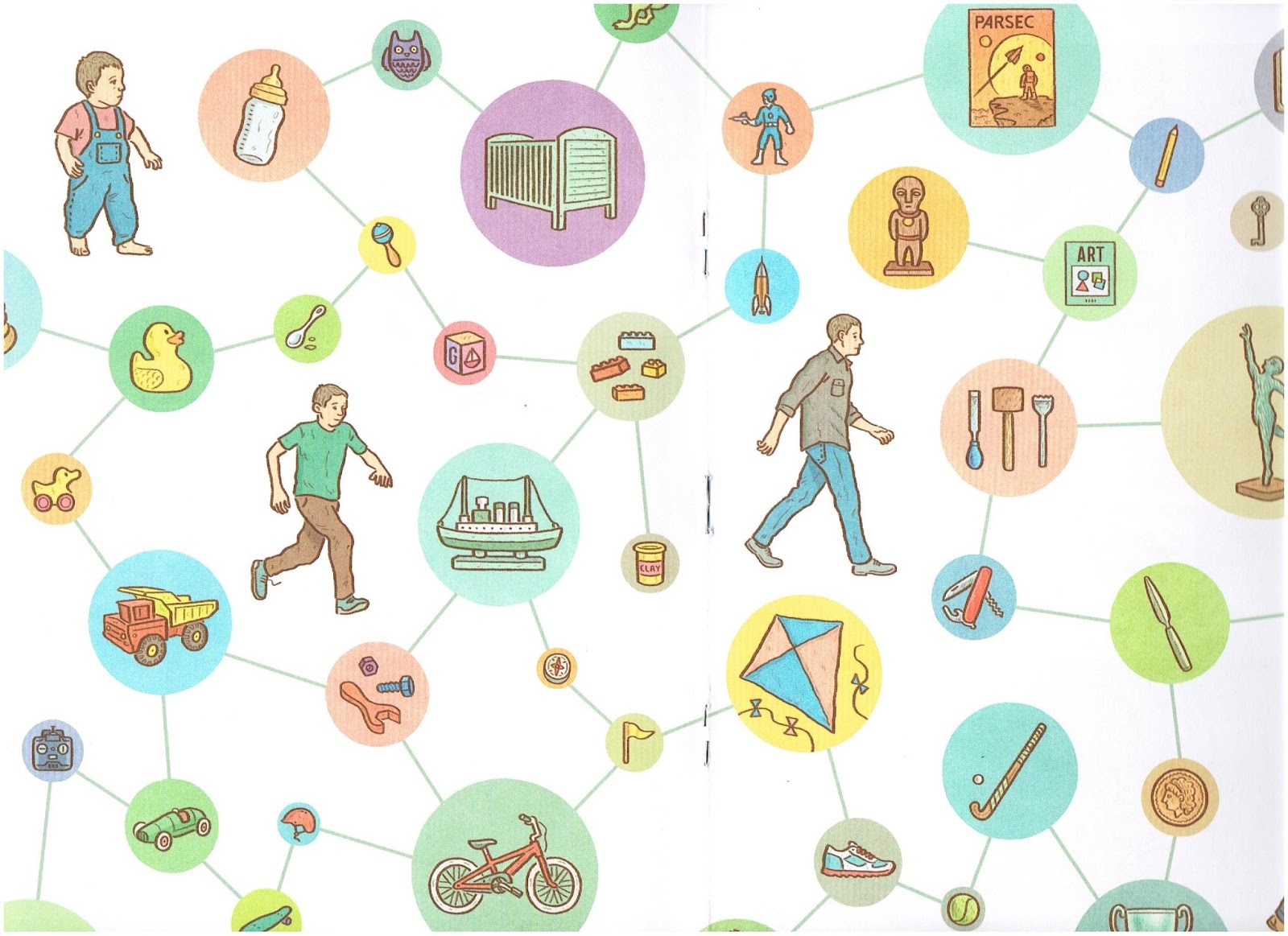
This becomes a slightly surreal and charming tale of the loss and retrieval of dreams and ideals.  When faced with the ghosts of his past, he begins to reclaim and re-imagine his own identity.  
Poyiadgi’s drawings are clean and clear, with a subtle palette.  His layouts direct your focus from detail to panorama and back again.  It’s visually intriguing and a bit of an homage to the beauty of the everyday objects of our lives, and how their presence – or absence – shape us. 
Poyiadgi lives in London.  He makes films by day and comics by night. He likes the collaborative nature of one and the solitary demands of the other.  His comic Teapot Therapy was shortlisted for the Observer/Jonathan Cape/Comica Graphic Short Story Prize.  You can find more out about him here. 
You can read more about the 17×23 series hereon Hyperallergic in an article by Allison Meier, and you can see the Nobrow list of the series here.

You can read my review of the beautiful book Neurocomic by Hana Ros and Matteo Farinella, also published by Nobrow, here.
Thanks for reading my blog.  Your comments are always welcome and appreciated.  

Rilla Alexander and Her Idea

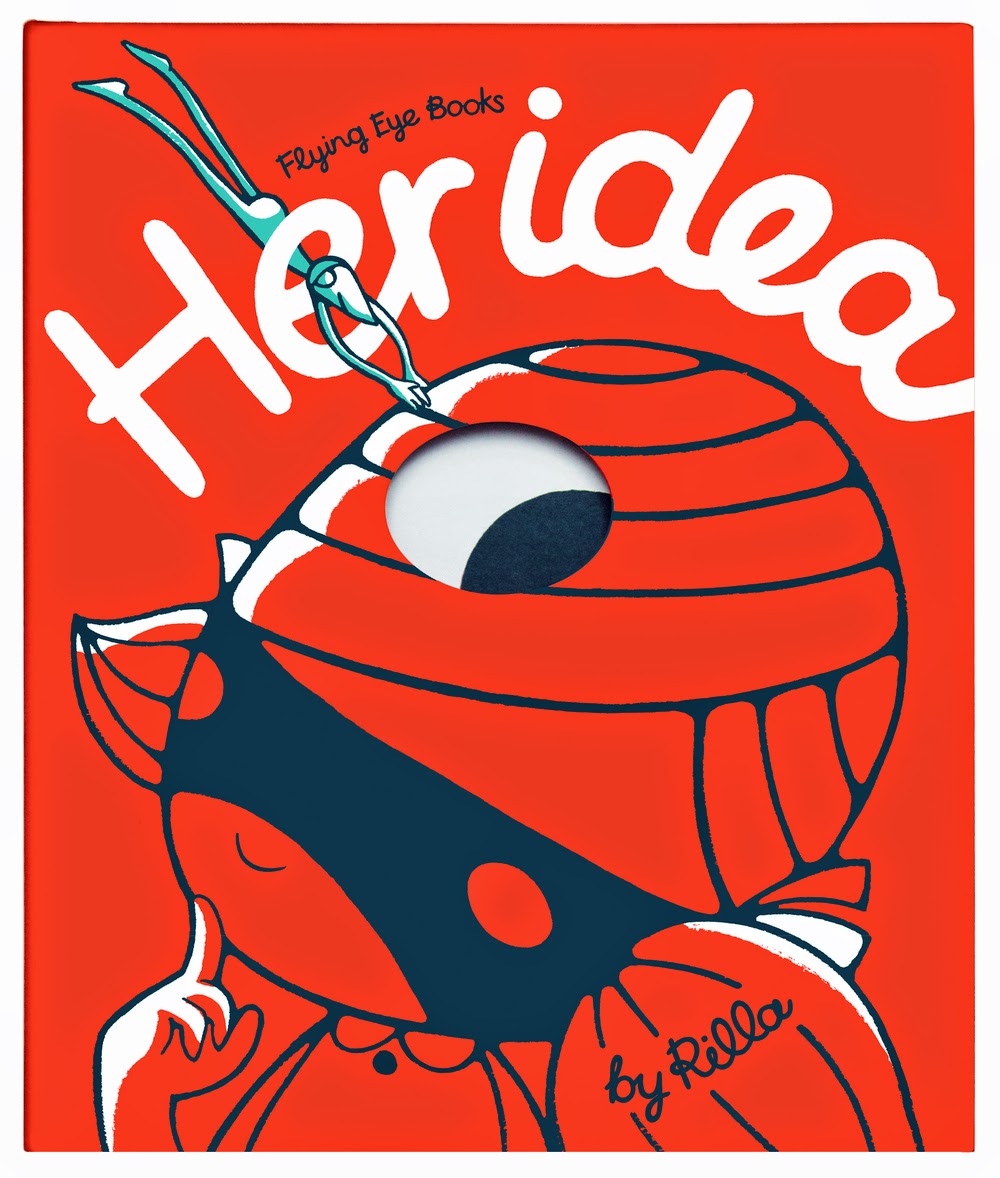
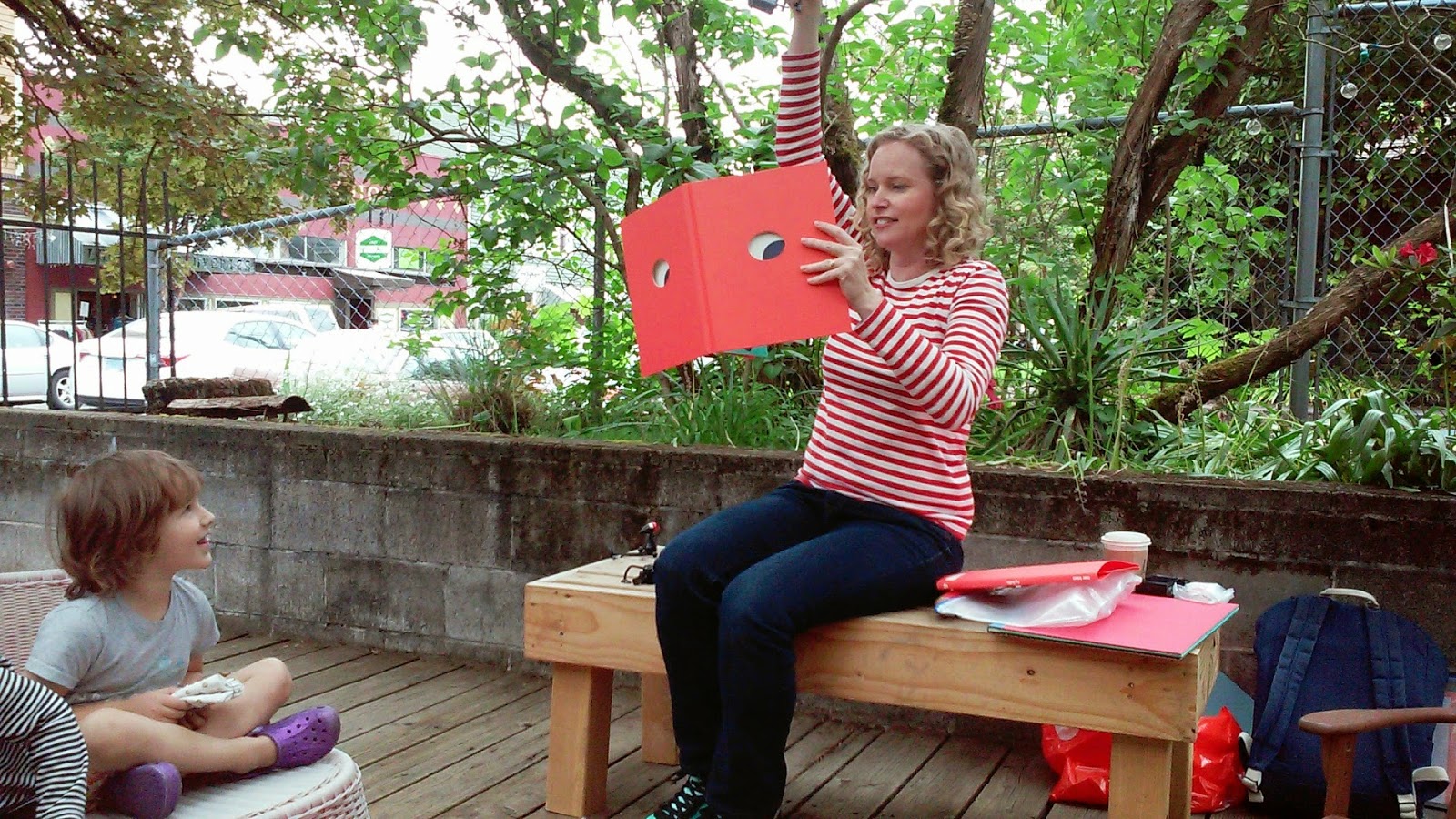
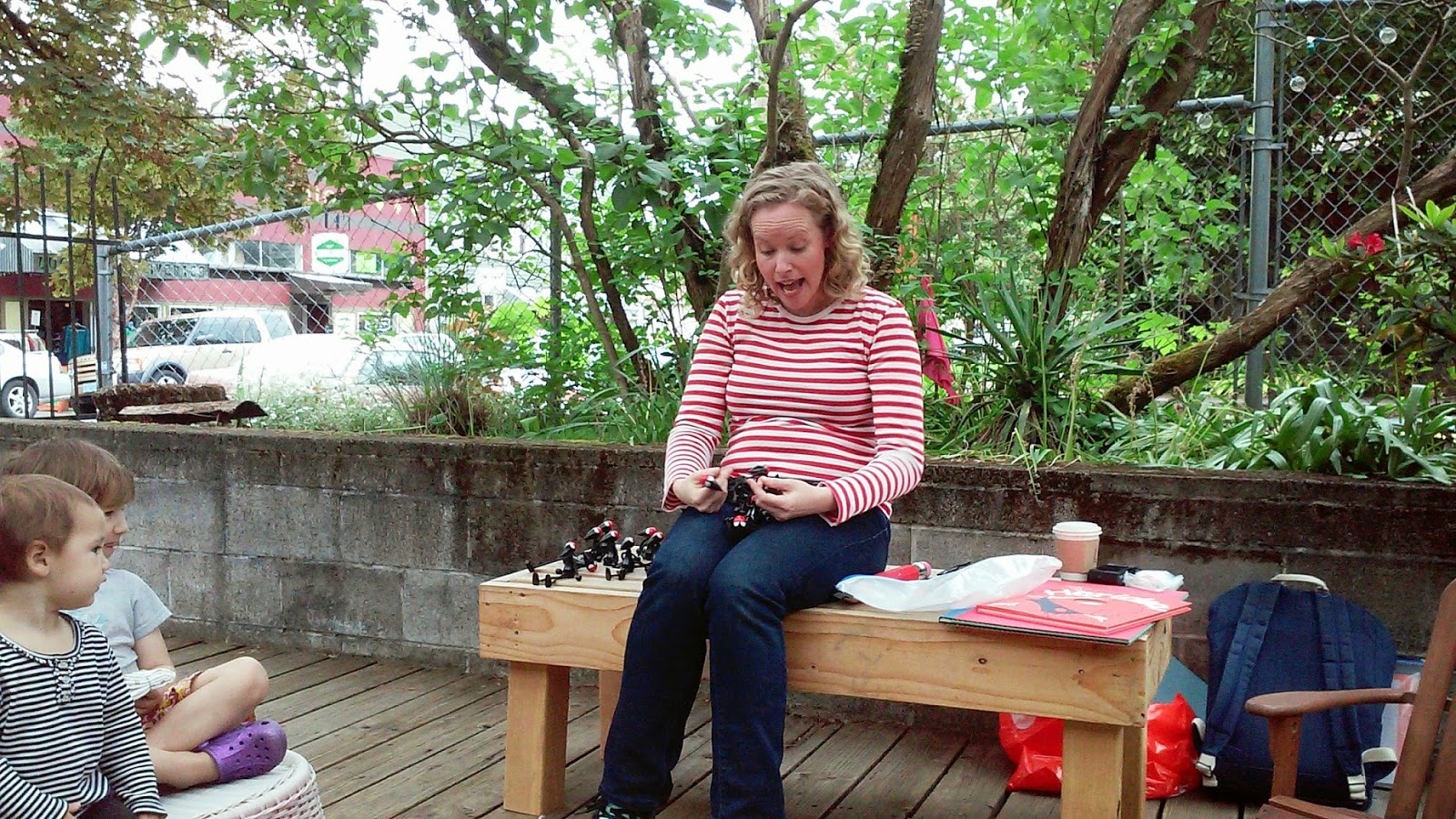
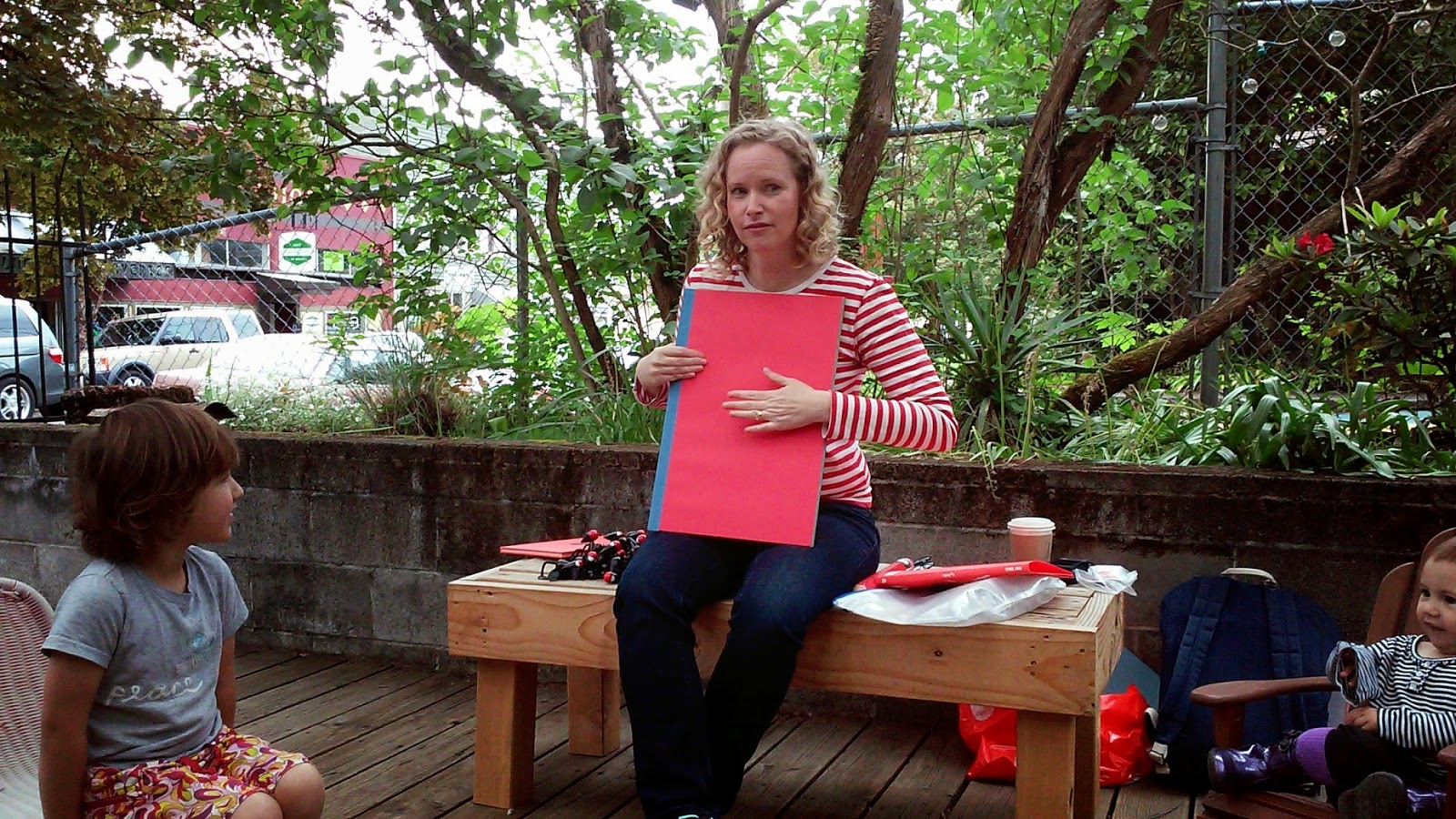
I got the opportunity to meet the children’s book maker Rilla Alexander at Green Bean Books recently.  She was there to read her book Her Idea, (from Flying Eye Books) a lively picture book about how to work on all those wonderful ideas we have.

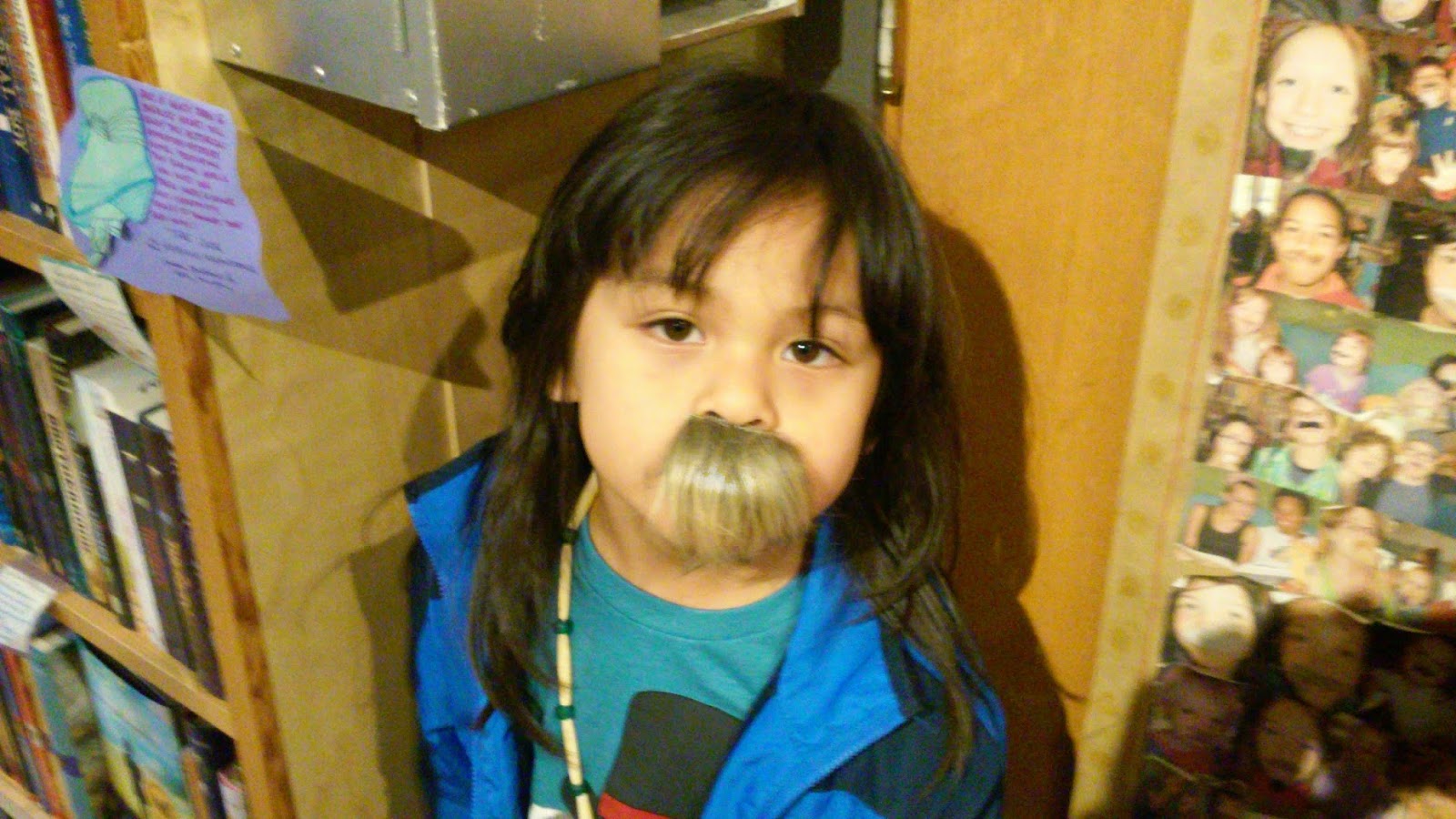
I went with two boys from my neighborhood, Bridge Meadows, Tomas and Noah Tanatchangsang, ages 5 and 9, respectively — though they look much older with their mustaches bought for $1. at the Green Bean mustache vending machine.

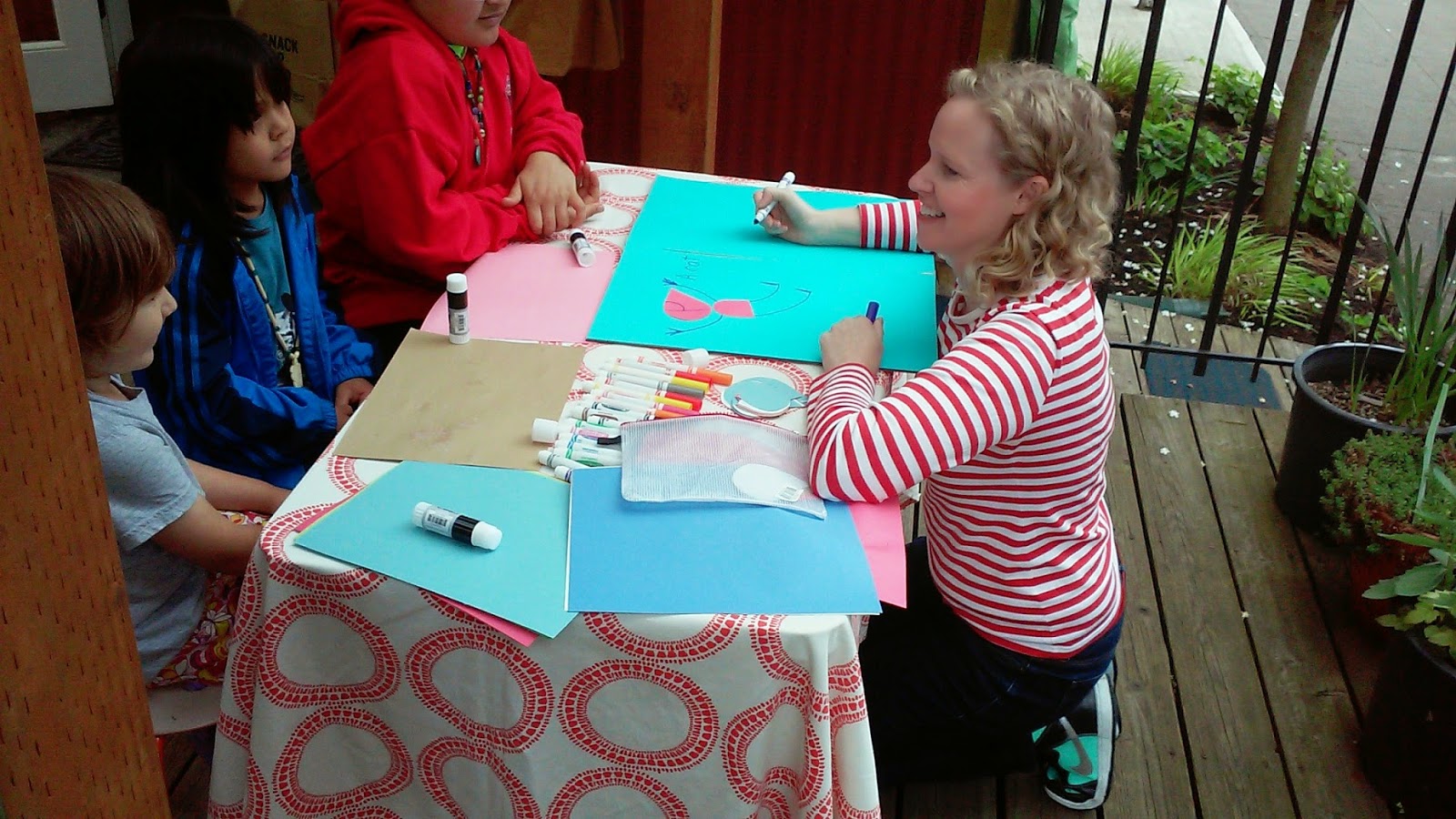
Rilla engaged the boys immediately and talked with them about their own art.  They talked about dragons, dinosaurs and making books.  She showed them a recent sketch of an alligator of hers on her cell phone.   
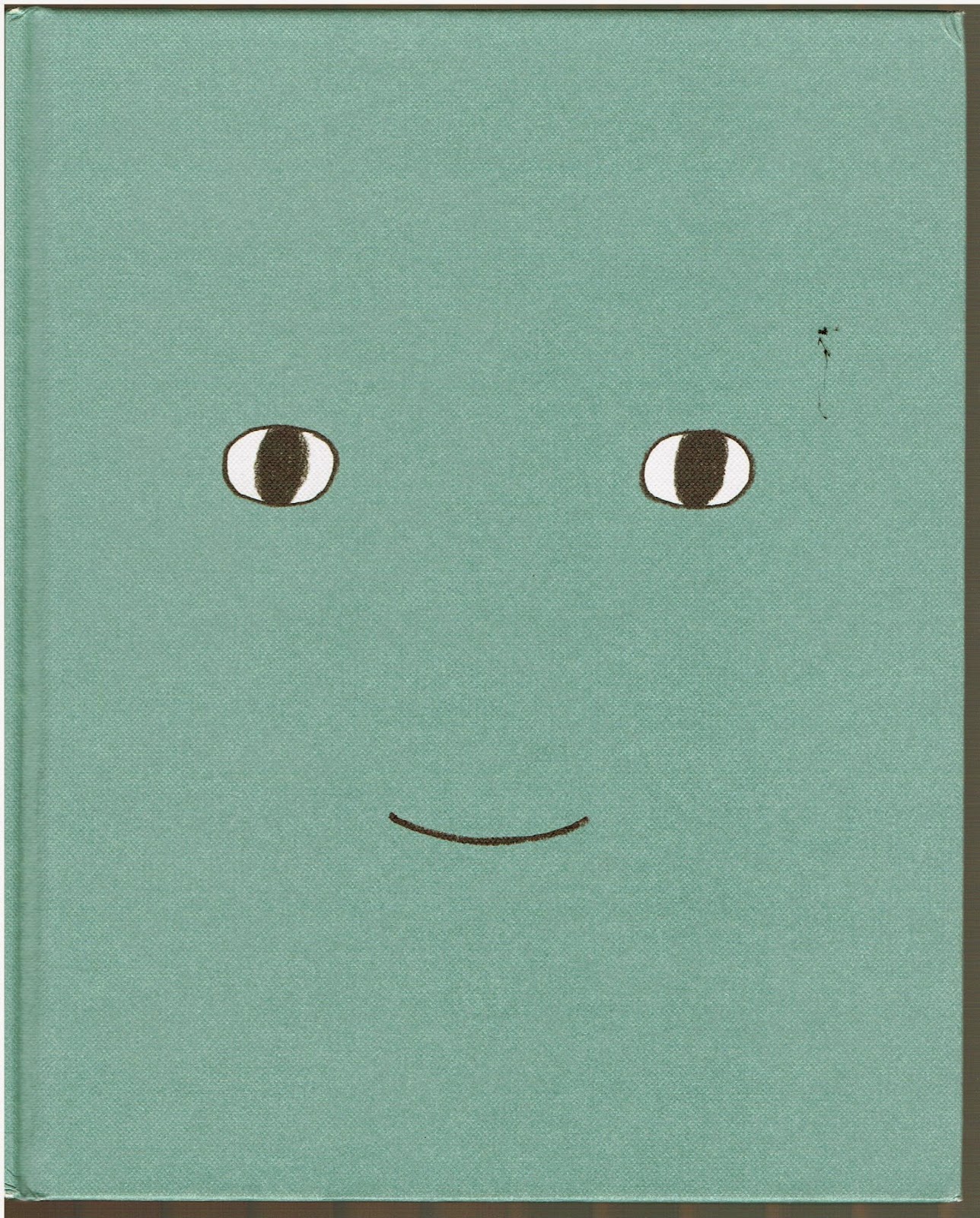
The book she was going to share with us came from ideas about a book with eyes, a book about ideas, and a book that is a book about books.  All merged together in Her Idea

It stars her alter ego, Sozi, a little masked girl, who has lots of ideas.   
Her Ideahas a die cut cover for the ideas to jump in and out of.

Karishma stopped by earlier and enjoyed the interactive elements of the cover

Take off the book cover, and you see its personality.

Sozi has boatloads of ideas.

She’s all gung-ho to work on those ideas.

But working  proves more difficult than Sozi realized.
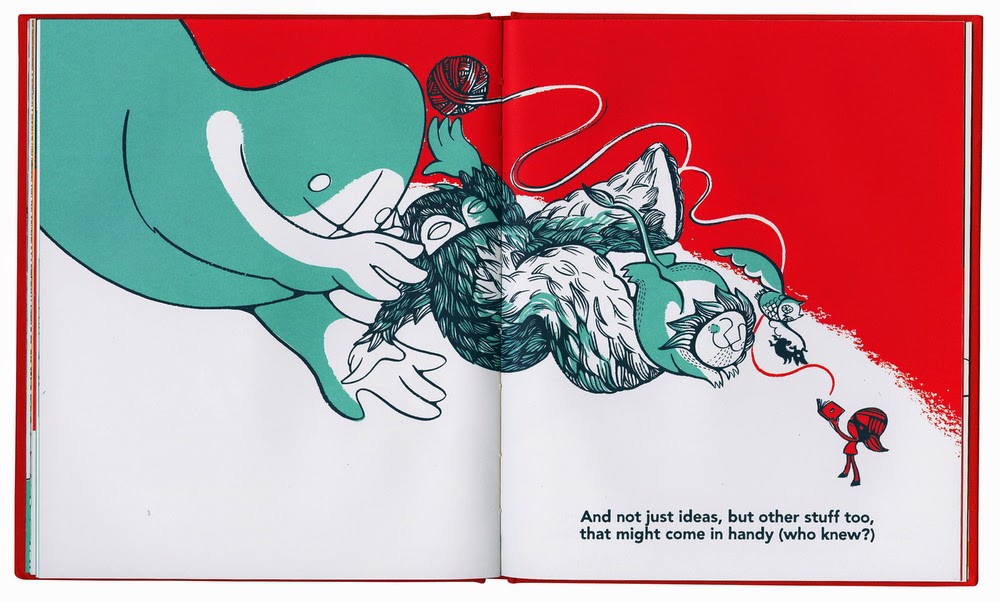
She dissolves into lethargy with so many wadded up pieces of paper they become a big beast.  But a book brings her hope and a way her capture her ideas.

And other stuff, too!

I love that Rilla writes books that honor books.  Her first book, The Best Book in the World, was about the way a book can pull you in, even in the midst of the busiest of days.

For Her Idea, Rilla designed little idea toys.

She brough squillions of ideas

She also brought a big book for us to fill with ideas.

Noah’s idea was to go to the moon to see the stars

Tomas’s idea was for a yellow tricerotops named Banana

Her Idea is a fun read for kids and former kids alike, because we all have great ideas up to the point when we have to work on them.  Rilla has a great video on the creative process and this book on Vimeo, which you can see here:
 https://vimeo.com/53424300
We had such a good time with Rilla’s presentation, Tomas asked me if we could go back next week-end to see that cool lady again.  Unfortunately, we don’t get to see Rilla right away, but we can always go to the programs at Green Bean, an independent children’s bookstore here in Portland, Oregon.

You can find out more about them and their events here; http://www.greenbeanbookspdx.com/

It’s easy to get lost in a great book

And a great book gets a good laugh!
Rilla is from Australia, has lived in Berlin and is now a resident of Portland, Oregon.  She’s a designer and graphic artist whose work has appeared on everything from “toys to teacup to busses and buildings.”  Her website is here: http://www.byrilla.com/about/  
Thanks for reading my blog.  You can subscribe by email in the upper right hand corner of this page. Please feel free to leave any comments or suggestions. 

Emotional Calculous: How to Be Human By Florida Frenz

“Emotions can be broken down into logical pieces most of the time, but what’s hard to grasp is the cause and effect relationship that comes with the emotion.  When a person is sad (the cause), they might cry, listen to slow soft music, contact friends as an effect of the sadness.  It’s a bit more complicated than simply subtracting two, isn’t it?   Still, there are even more complicated situations than that such as looking at an effect and guessing what emotion caused it.  Then, there’s the ability to do that for the feelings of others.  Honestly, don’t you think all those normal people do emotional calculous every day without realizing it?”   
~Florida Frenz
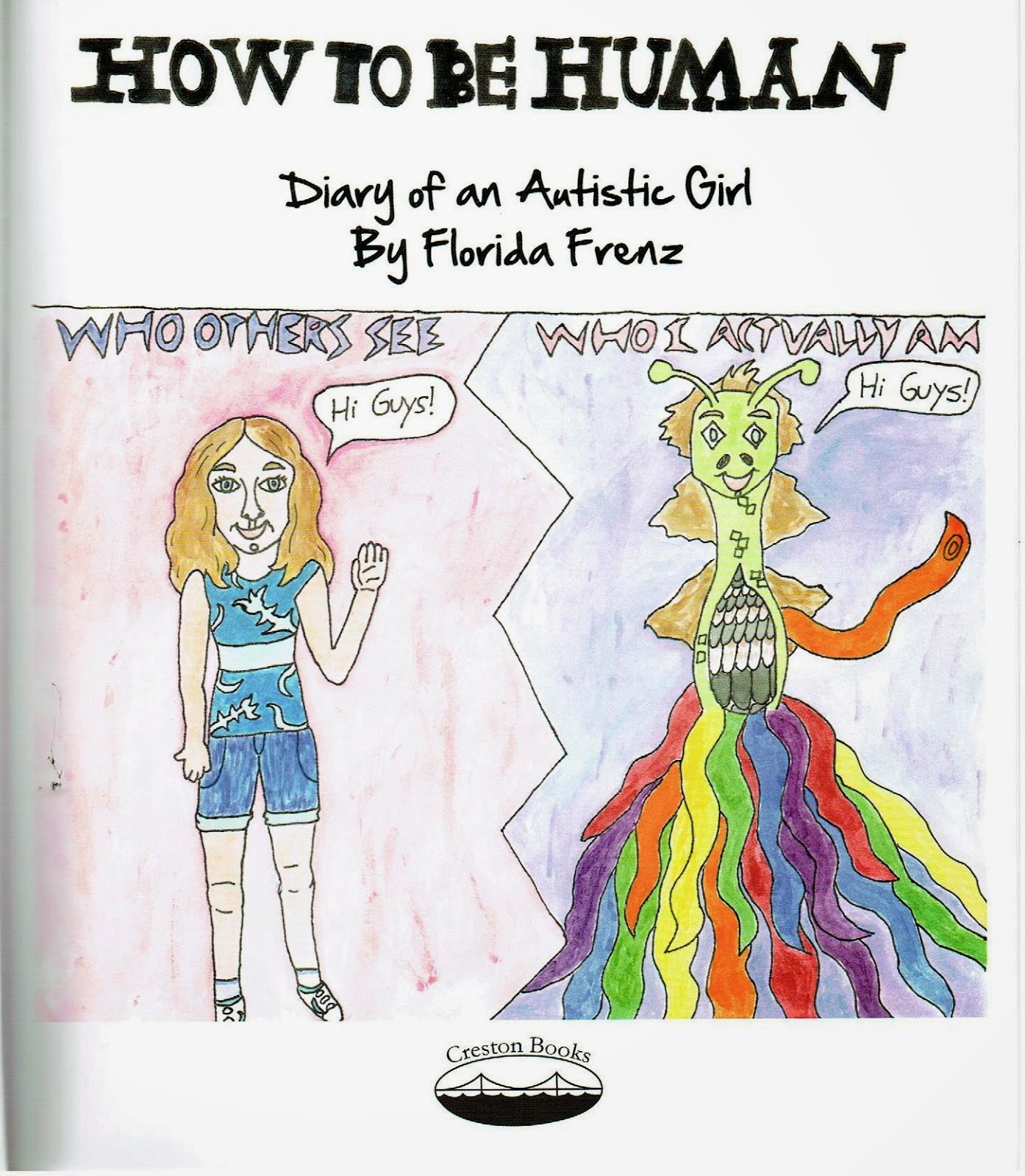
How to Be Human: Diary of an Autistic Girl, by Florida Frenz (a pseudonym), is an extraordinary look into the life of a 15 year old girl with autism.  Although her diagnosis was pretty grim at age 3, the work she did with her parents and her therapist, Shelah Moss, helped Florida become more comfortable in what she came to understand as an alien world.  She explains herself this way:
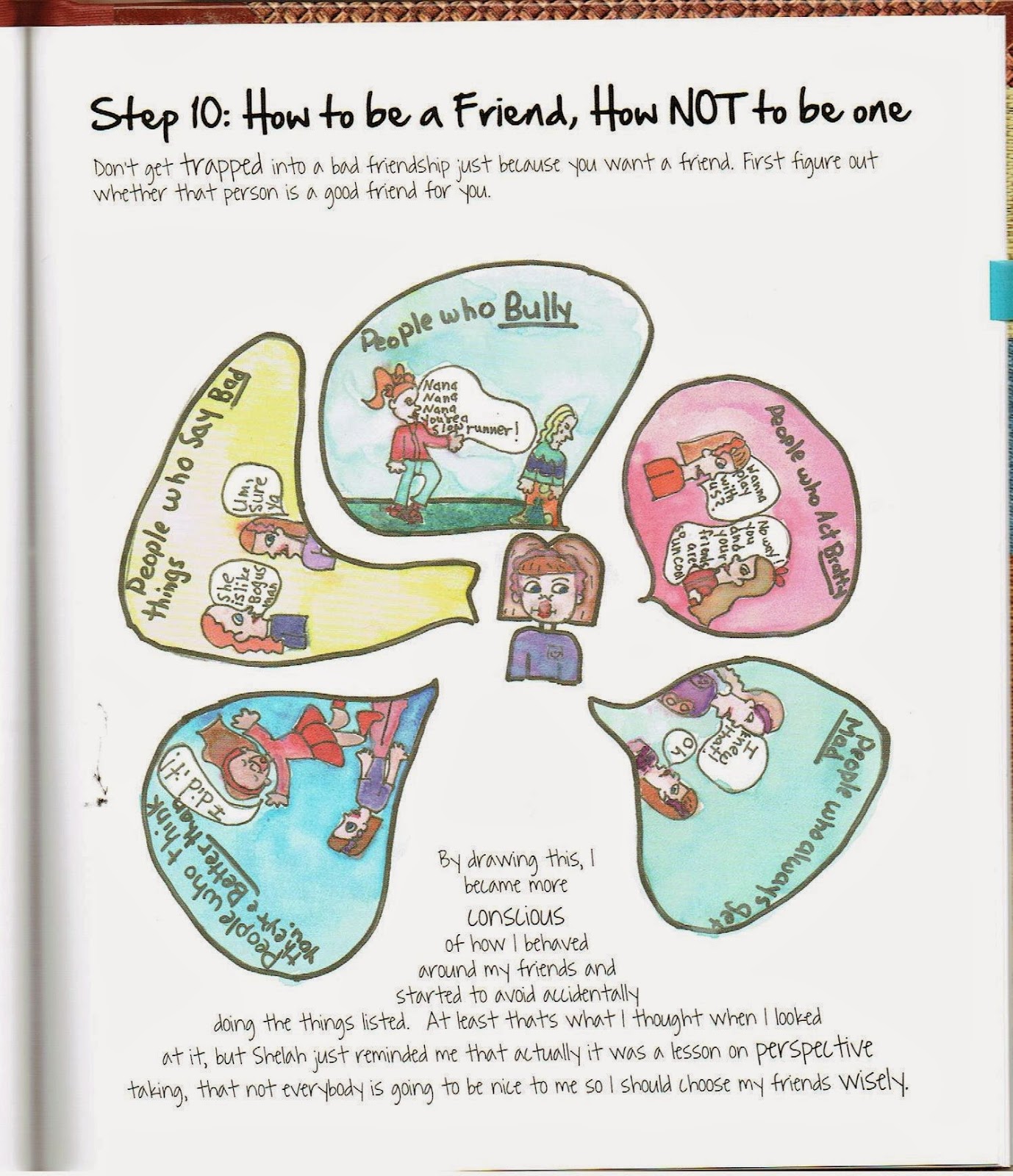
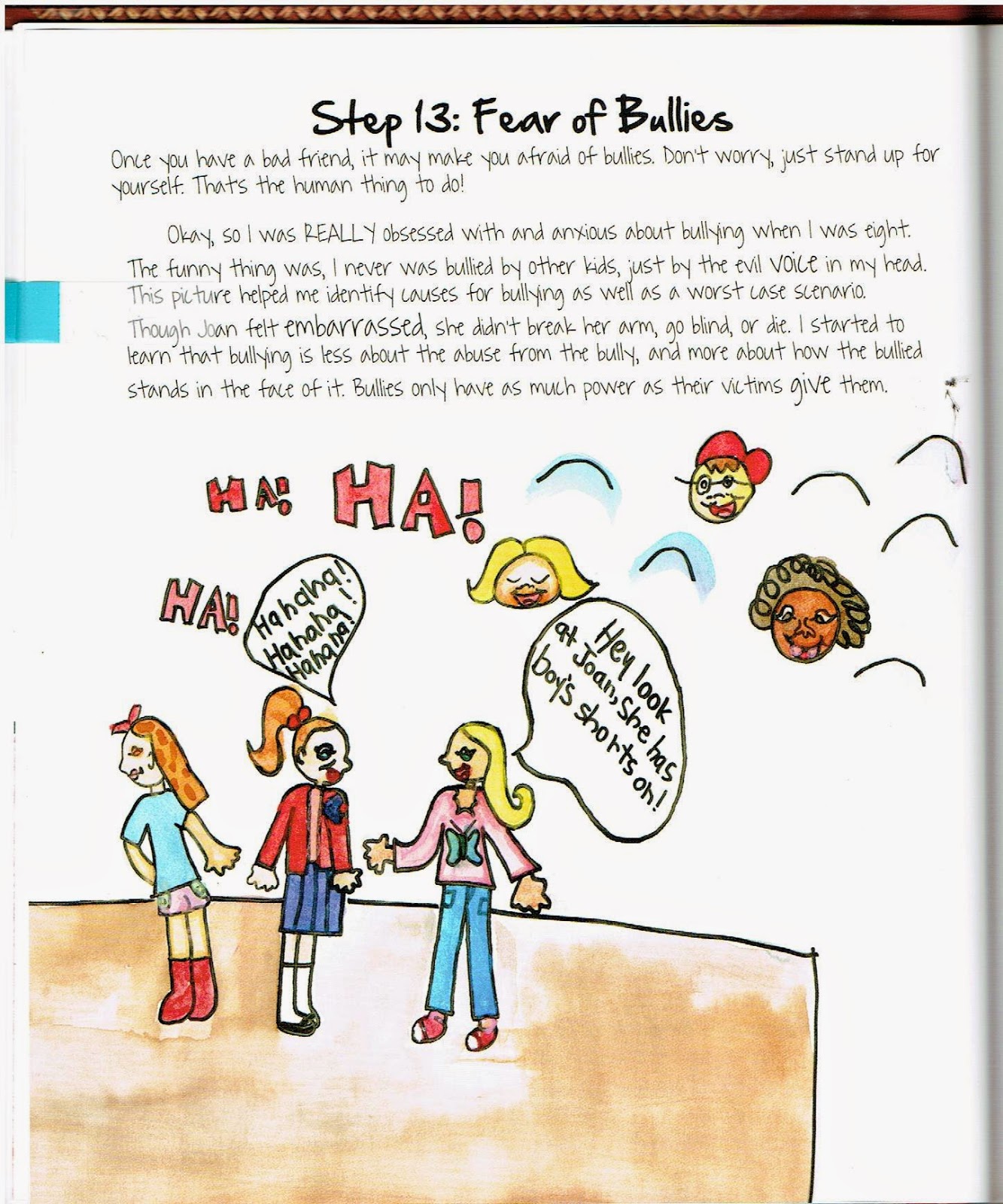
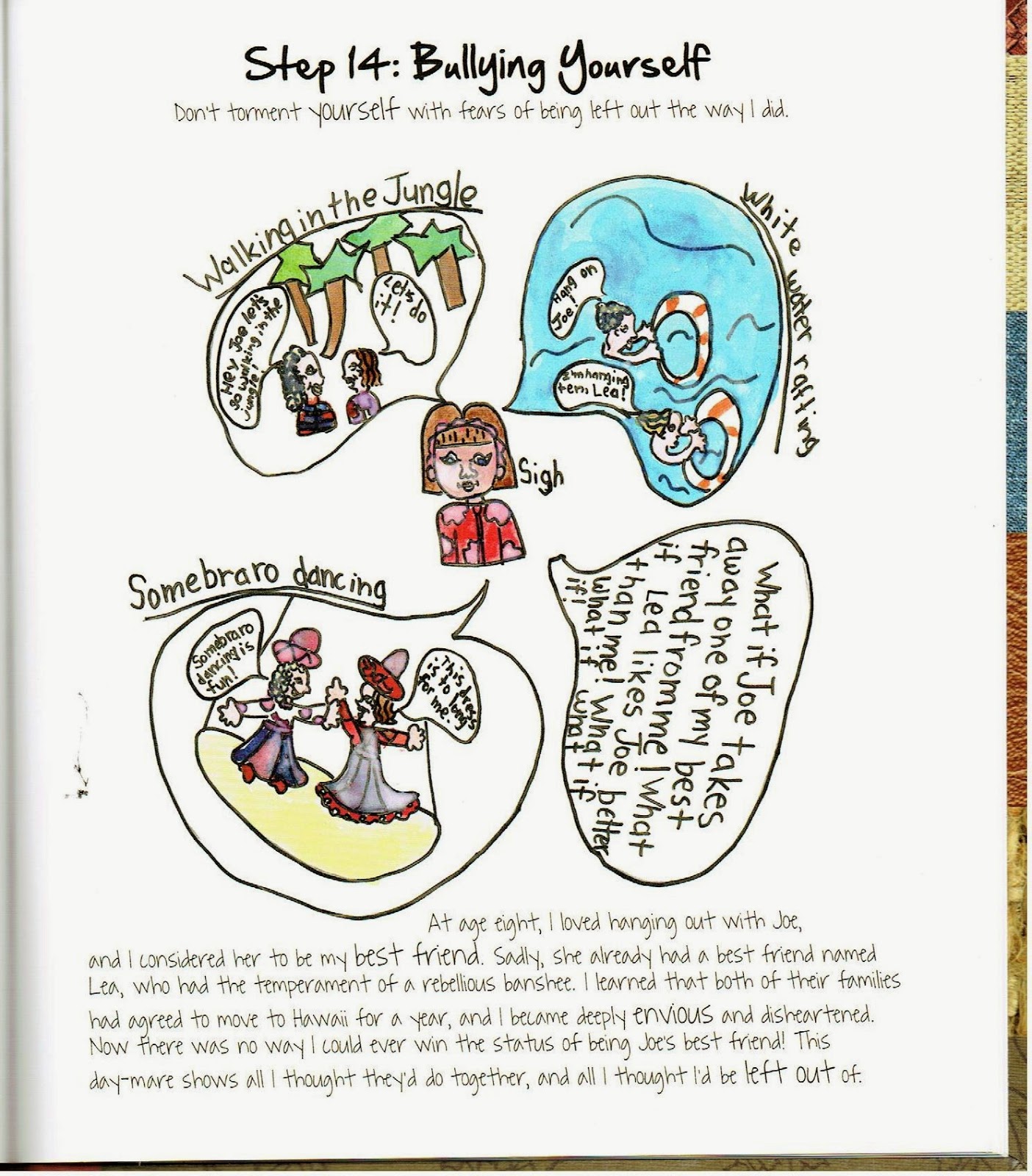
Though Florida was diagnosed with autism and “mental retardation,” her family and support team were able to break down and address each of her learning and socializing issues.  They tackled each problem as it arose.  When at age 8, Florida realized what it meant to have autism and how different she was from other children, she began working to overcome those parts of her autism that kept her isolated from the rest of the world.  How to Be Human is the result of that process.  Moss says, “She is a gifted artist and writer so using art seemed like an obvious tool to help her work through understanding what, to her, were foreign concepts.  Each picture represents hours where we discussed or read about or role-played different scenarios.  The pictures represent eight years of growth.”
Florida generously shares her hard earned lessons:
I still have trouble figuring out faces.

This is a wonderful introduction to what it’s like to have autism, but even more so, it’s re-introduction to how hard it is to be human.
We all have trouble with bullying ourselves
You can see there’s lots of humor and insight in Florida’s writing.  It humanizes her.  She has autism, she feels like an alien, but she’s a unique and lively girl, too.  I’ve read her book to 6 and 7 year old girls, and have had a 12 year old girl read it.  All of them could identify with the struggles Florida has with the calculous of human emotions.  The art is funny, inviting and inspiring to them.  I’m using it now in a class on journaling for adults to show what a powerful means of expression drawing can be.
All of us struggle with how to figure out when someone is being truthful.  Florida’s insights about bullies, cliques and true friendship are touching.  There’s a rare honesty and authenticity in this slim primer.
If you want to understand what it’s like to have autism, this books takes you right to the heart of the matter.  Of if just you feel you might have accidentally wound up on the wrong planet, it might help you feel like you belong here after all.   
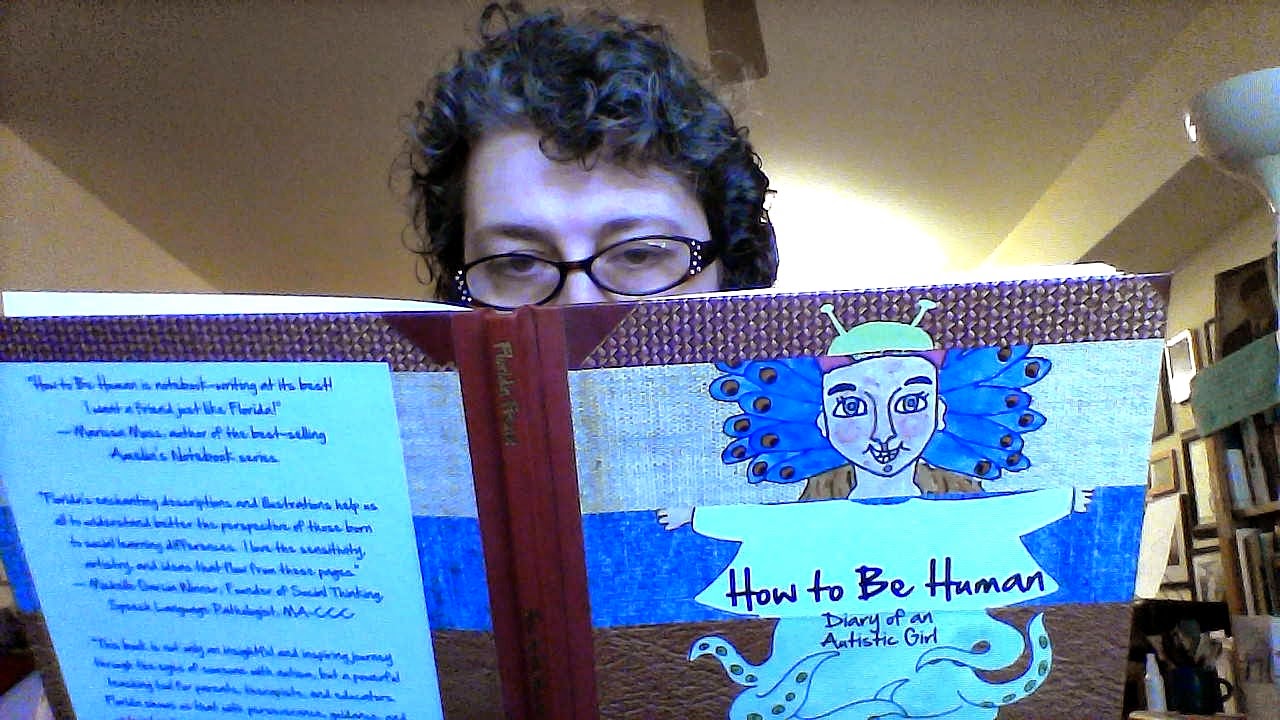
The book is beautifully bound and fits nicely into your hands.  Creston Books is a small independent press publishing beautiful and innovative books for children of all ages.  They’re having their books printed in the United States, so that’s pretty cool.  You can see their catalog by clicking here

Thanks for reading my blog.  If you’d like you can get it delivered to your email box by signing up in the upper right corner.  Please feel free to leave comments and suggestions.

How to Love and Care For a Book

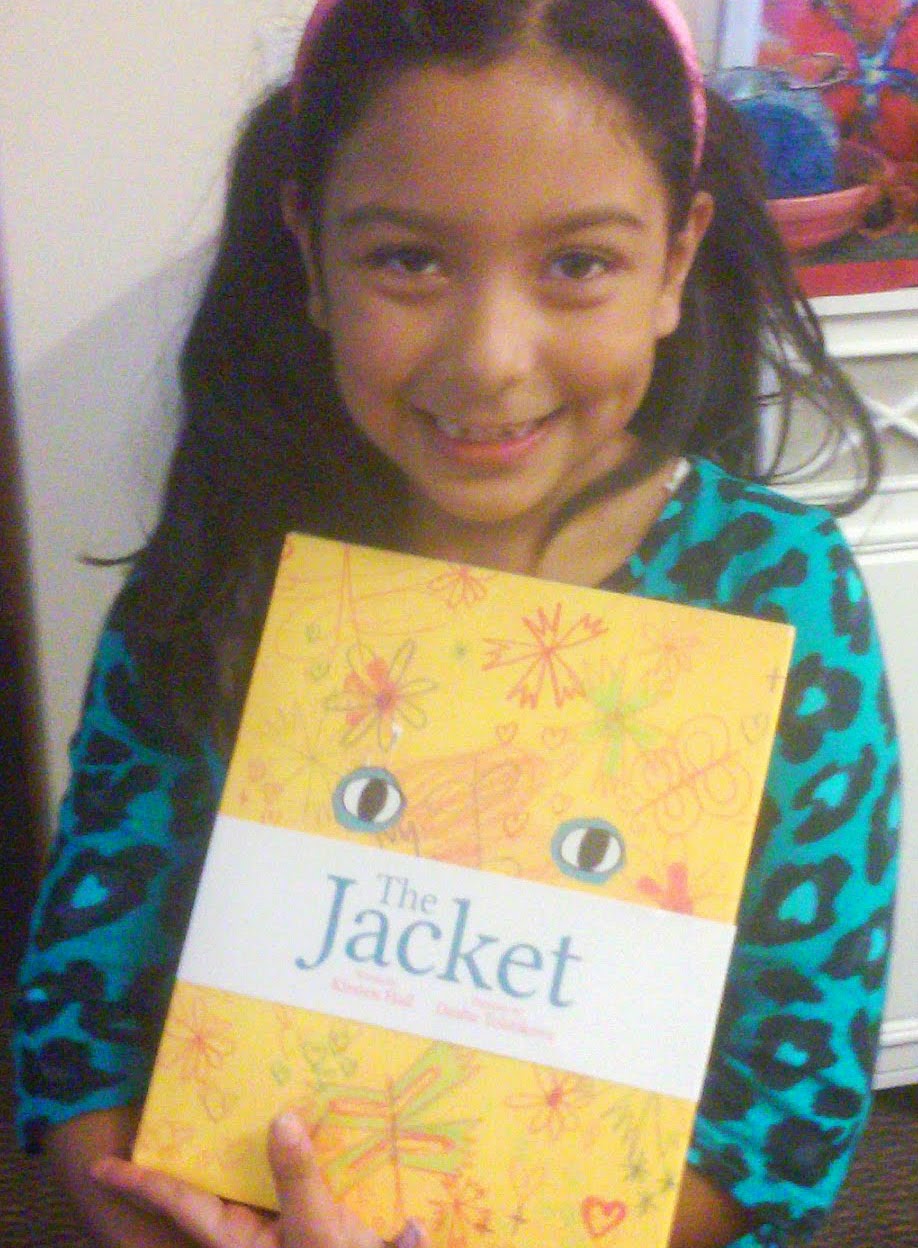
I read to children a lot, but I’ve never had a child squeal with delight when I removed the book jacket to reveal the book’s cover.  Such is the magic of the book The Jacket by Kirsten Hall and illustrated by Dasha Tolstikova, published by Enchanted Lion Books, 2014.  Actually, I don’t often take the jacket off a book, but this one is special.

I read it to Karishma, my 6 year old neighbor here at BridgeMeadows community.  She’s become my go-to girl for reading picture books.  Most kids delight in story, but Karishma seeks books out and is always working on one of her own.  She was very interested in this story about a book that is alive.
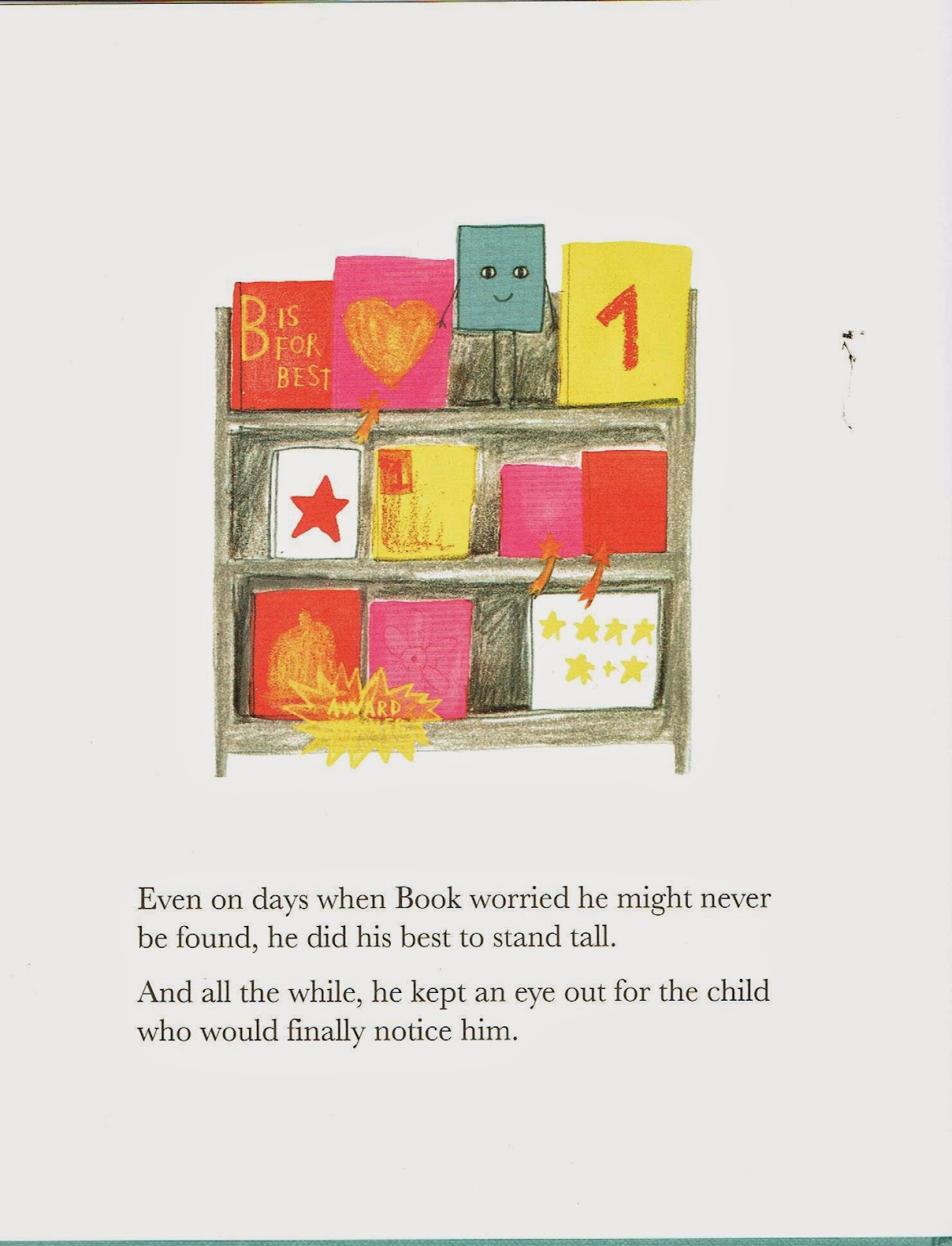
Not only is Book alive, but he’s a bit lonely and in need of someone to care about him.

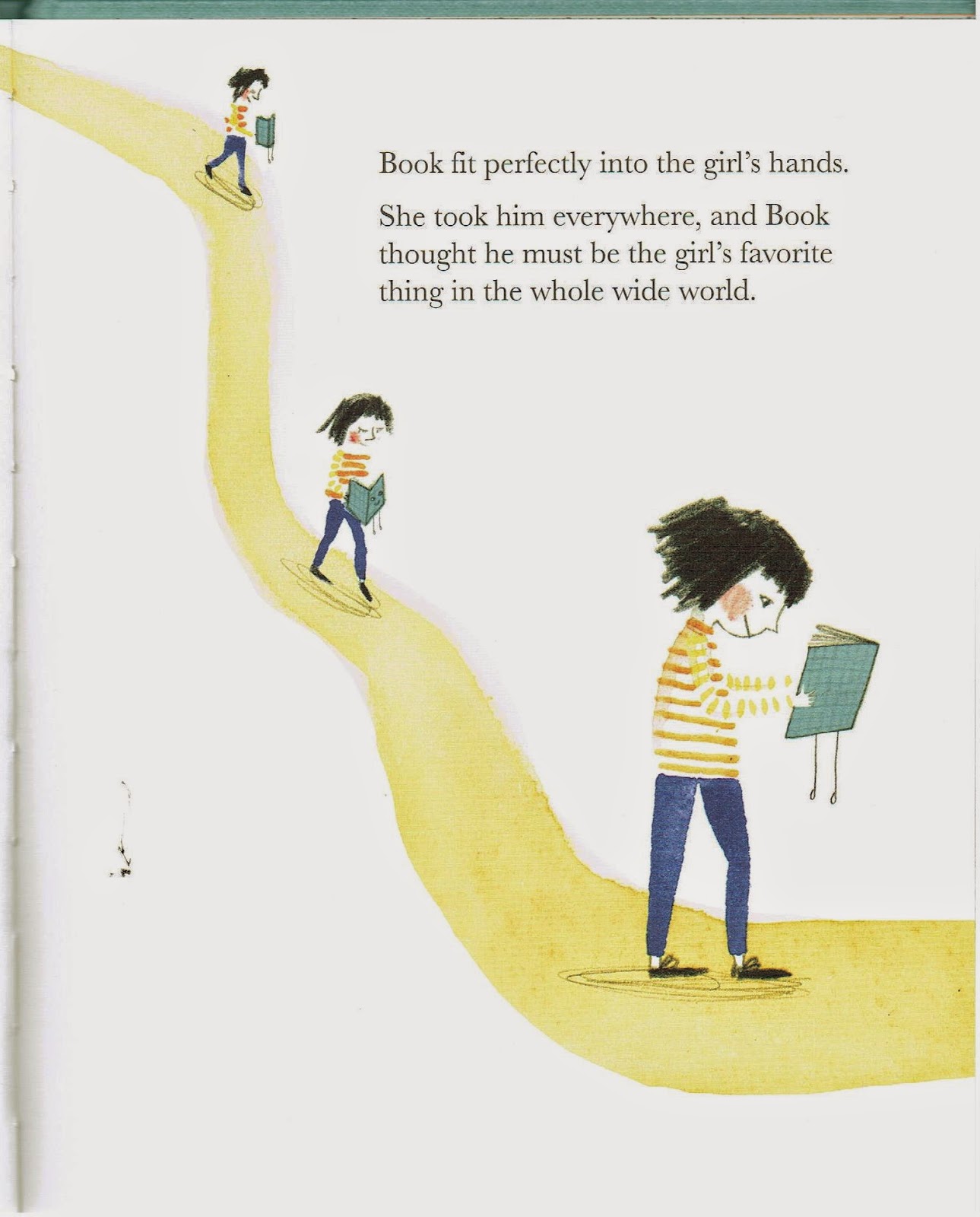
Finally, a girl discovers Book and takes him home:

The art is playful and inviting with lots of white space

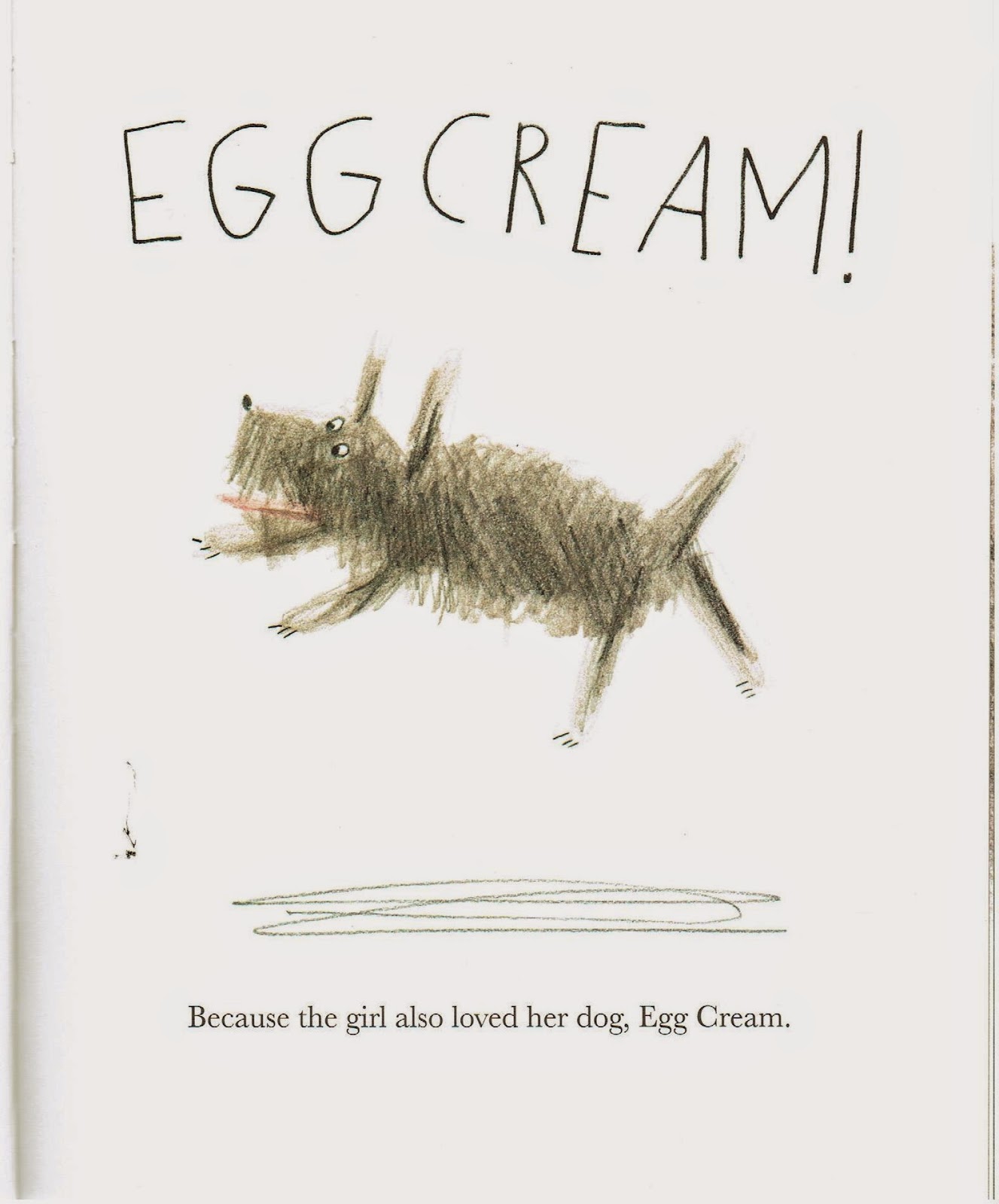
But Book isn’t the only love in the girl’s life.  There’s her dog.

The name Egg Cream always gets a laugh from kids

Book can see why the girl loves Egg Cream, but he’s a big slobbery problem to Book, and that dog’s always interrupting the girl’s reading.

Tolstikova’s creates great expressions for book and the girl

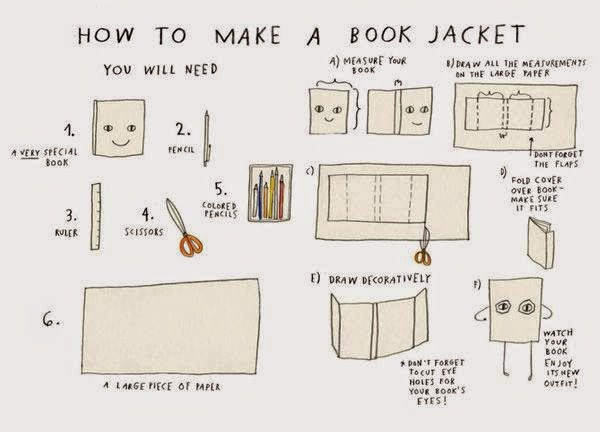
One day, a disaster happens and Egg Cream damages Book.  The girl is upset and it feels like she no longer loves Book.  The next morning, however, the girl makes Book a jacket and he is even more special to her.  The last pages of the book show how to make a book jacket for any book you love.

One of the things I loved about The Jacket was that although Book saw Egg Cream as a problem and was damaged by him, they never became real enemies.  The girl, the book, and the dog are all a kind of family, and there are ways to work out things if there is love.  The sweet way the girl repairs Book delights the children I read it to. 

It’s always a pleasure when I find books like this because the children I read to are all part of adoptive families.  Some are adopted into families, some are with their birth parents but have adopted brothers and sisters.  They need stories about creative resolutions to problems. stories that show how damaged things can be repaired – sometimes in ways that make them more colorful.

I read it to a group of children, and before I started I asked them if any of them had a very favorite book they liked to read over and over again.  None of them did.  After I read it, one girl said, “The Jacket’s my favorite book now.”
When I read it to Karishma, it was just me and her.  After I read it, I took off the jacket.

She squealed, “It’s book!” grabbed it from me and hugged it.  “Oh Book, I’m so happy you’re here.”  Then she was quiet for minute.  “Wait a minute.  This is Book.  And Book is a book about a book.  That’s awesome.”

Awesome, indeed.

Here’s a trailer for The Jacket:

Kirsten Hall is a former teacher who wrote learn-to-read books for Scholastic .  She is the proprietor of Catbird Productions, a literary agency.  The Jacket is her debut picture book.  You can learn more about her by clicking here.
Dasha Tolstikova has held many jobs including photographer, reporter, film producer and painter.  This is her debut into the world of picture books.  You can find out more about her here.
The Jacket was named a New York Times Book Review Notable Children’s Book of 2014 and a Huffington Post Honorable Mention for ‘Most Charming’ Picture Book of 2014. 
The publisher, Enchanted Lion Books, publishes LOTS of charming and thoughtful books.  You can see their catalog by clicking here.  I reviewed another of their books, The Hole, by Oyvind Torseter earlier this year and you can click here to see it.  I will review more in the very near future.
You can read reviews that Karishma helped me with here (Wild by Emily Hughes) and here(Hug Me by Simona Ciraolo).

Thanks for reading my blog.  If you’d like you can get it delivered to your email box by signing up in the upper right corner.  Please feel free to leave comments and suggestions.