Wild and Happy

I often read with my 6 year old neighbor Karishma, here at Bridge Meadows community.  Last week, she came over and urgently asked for the book Wild by Emily Hughes.  Her shoulders were scrunched up to her ears.  I quickly found the book.  She flipped to the back and read the last page out loud.  “You cannot tame something so happily wild.”
Her shoulders relaxed and she sighed.  She then read the whole book again.
It’s been her favorite book for about a month now.  Even though she doesn’t really want to eat raw salmon from a river or sleep in a tree, she identifies with wanting to be wild.
The day she so urgently needed to see the ending was her first back at school after a week off.  She’d had a cold, then impetigo.  She got a toothache which required a visit to the dentist.  Her first day back at school didn’t go well.  I didn’t get the details but I was happy that she sought relief in a book. 
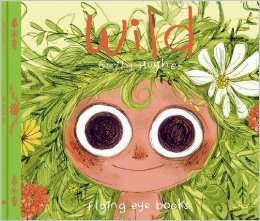
Wild tells the story of a girl who has known nothing but nature since birth.
“No one remembered how she came to the woods, but all knew it was right. 
The whole forest took her as their own.”
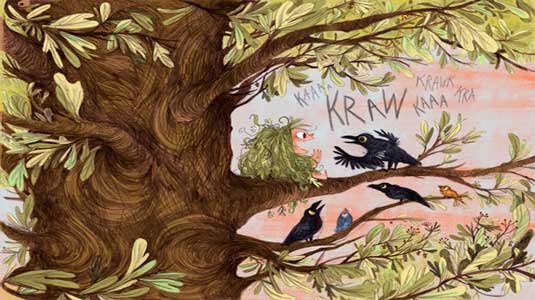
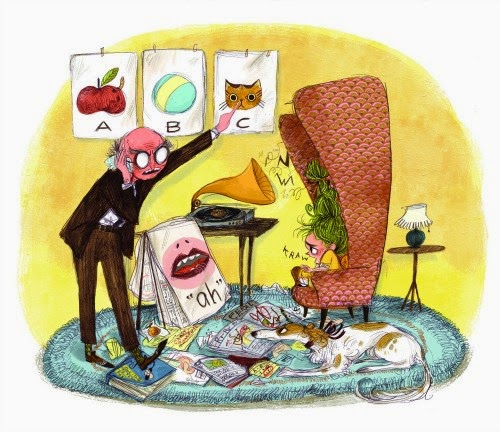
This spread is from the book but scanned in on Emily Hughes’ site.  You get better detail than on the other pictures I’ve posted
In many ways, this is a Garden of Eden story.  And I think it touches on the same desires for a peaceable garden, something not so dog eat dog, evolve or die.  In Wild, bears teach the girl to eat, birds teach her to speak, foxes teach her to play.
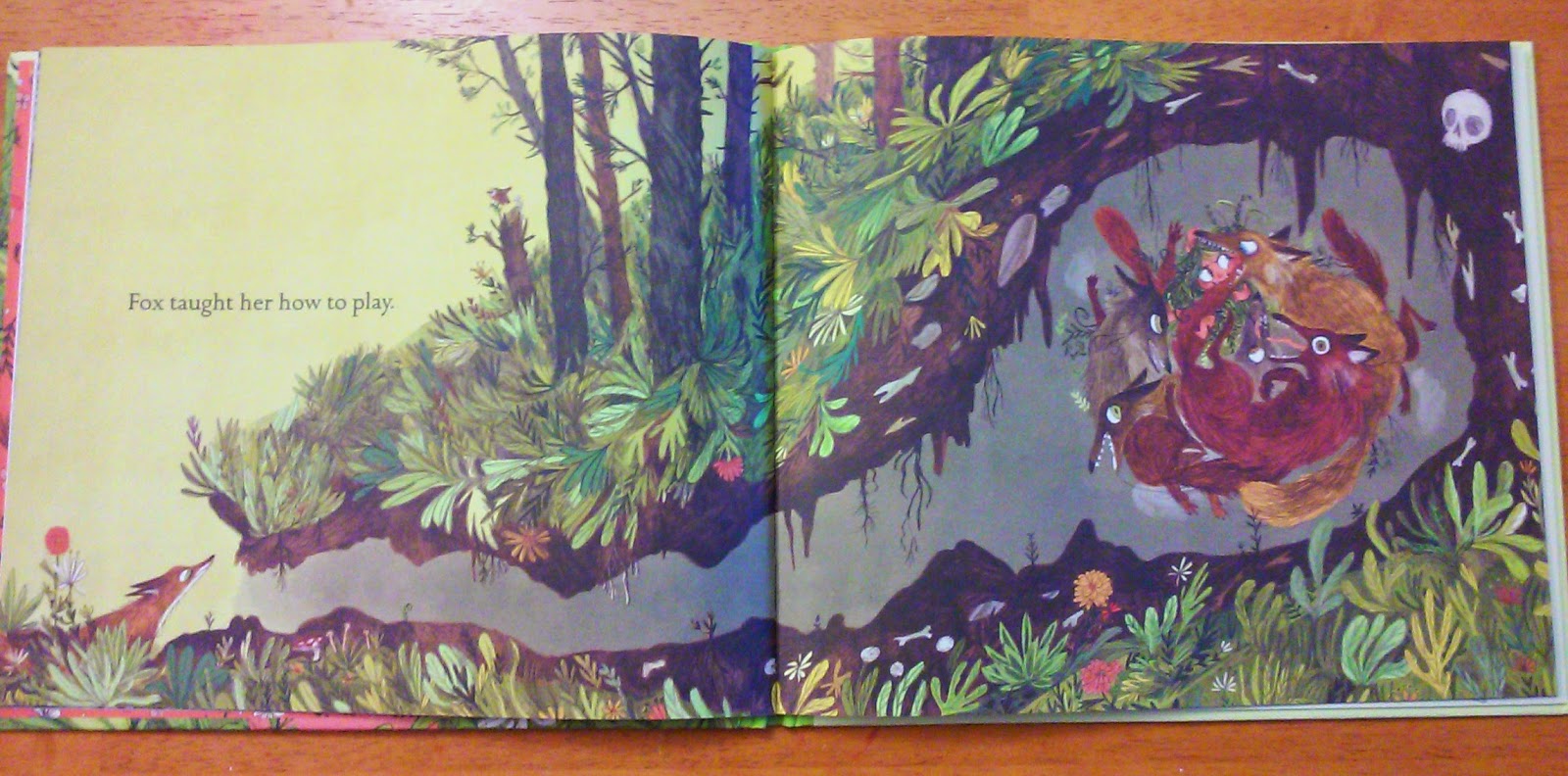
The trouble comes when she’s discovered by humans and they try to help her.  It doesn’t go well.  
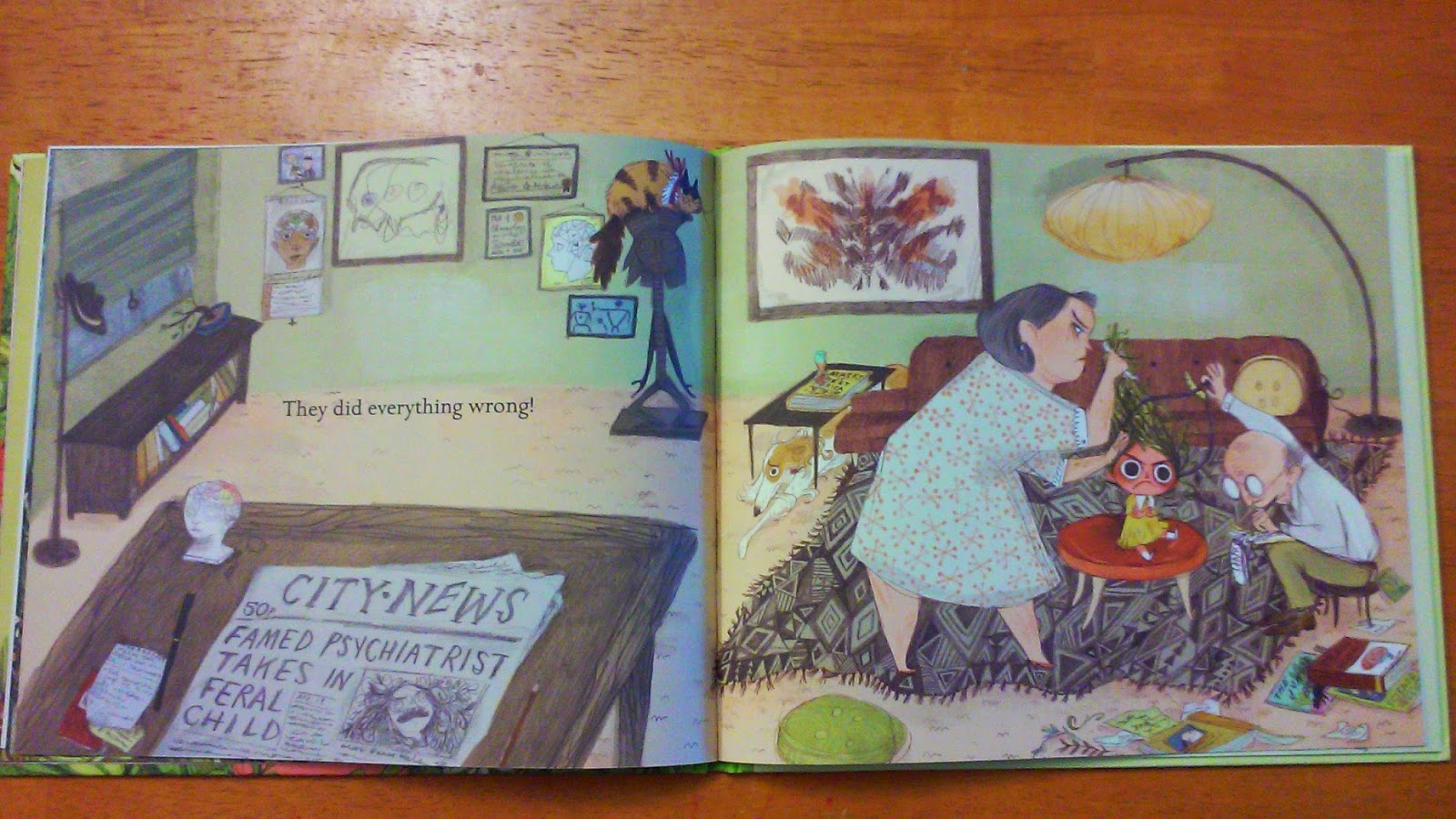
from Emily Hughes Site
The girl is powerful enough to know when enough is enough and gets her freedom back.  And she takes the dog and cat with her.  This element is important to every kid I’ve read this book to – they are as concerned about the dog and cat as they are the girl.
Wild represents an idyllic family, where everyone plays together and there are no confusing rules, or school, or bad days, or shoes.
For me, it was a nod to the wild child that I once was – the one who got in trouble for jumping on furniture, climbing trees, and spitting out food I didn’t like.  I was tamed, but I like to think there is something happily wild still inside me even in my fifties (aging has helped me shed a lot of the need to please, and makes me appreciate my inner wild.)
Hughes illustrations are detailed and loose at the same time.  This wild girl’s expressions bring her to life.  I’ve never see such an accurate illustration of a child who feels she is the victim of an injustice or stupidity.  
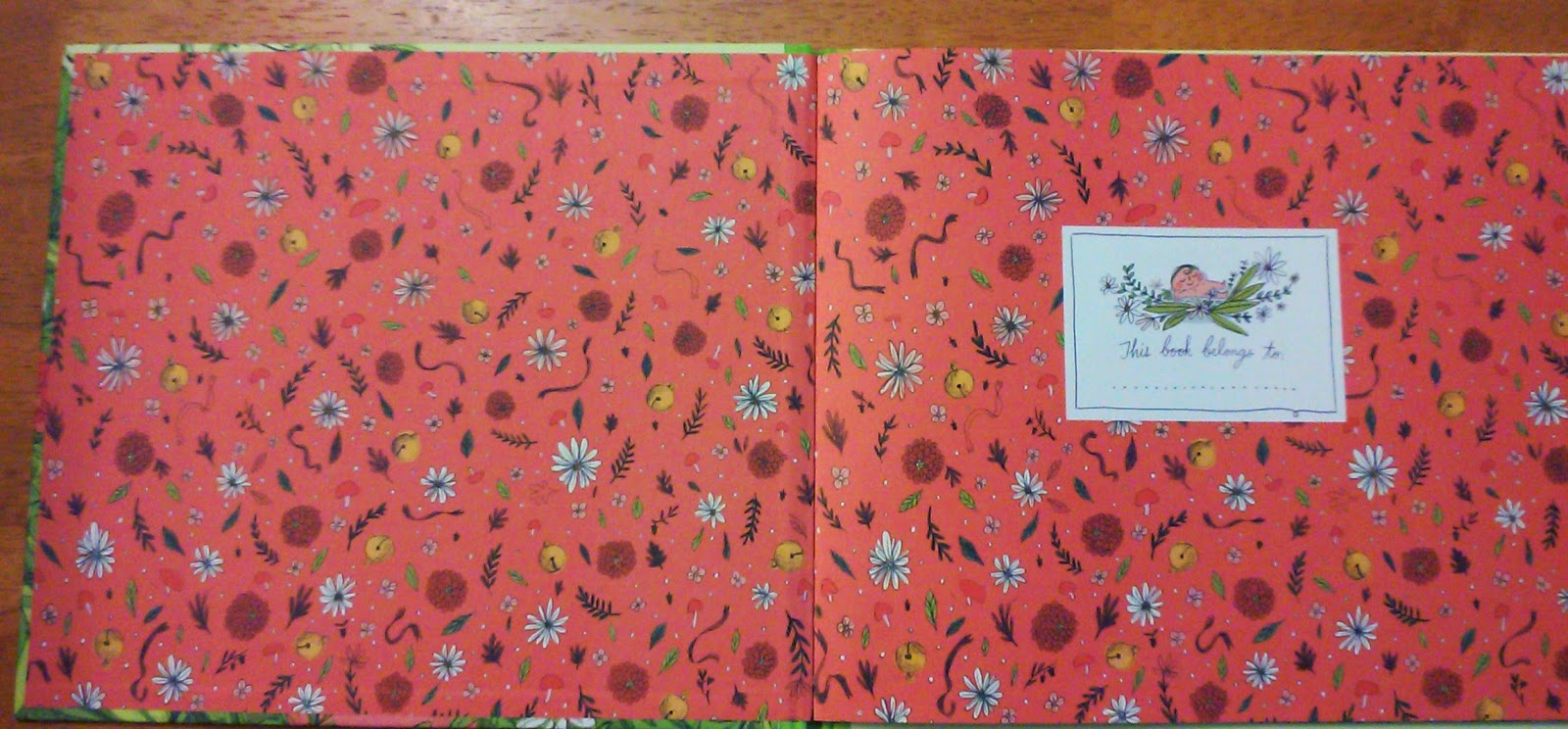
Hughes’ style is vivid and lyrical.  The scans and photos I‘ve posted here do the book no justice.  It’s a Flying Eye book and it’s done in their usual beautiful style with a great binding and colorful endpapers.
Emily Hughes lives in London, but is originally from Hilo, Hawaii.  She earned 2nd place for the Macmillan’s Prize for Children’s Picture Books in 2012.  She is a young author and I look forward to the work she creates in the future.  Flying Eye Books is bringing out her second book, The Little Gardener, in August.  I can’t wait!
In Wild, Hughes has created a powerful and determined girl.  The girls at my community center who I read it to just love that.  They study the book, the details of the art, and get dreamy eyed about being wild.  It’s a delight to see them imagine a joyous adventure that has nothing to do with being a princess. 
Karishma loves the girl’s hair and big eyes.  And she loved the ending even more than I imagined.  What a thrill it was that she came to me frustrated and wanted to see a book instead of play on the computer.  Playing computer games might have helped her escape from her problems, but reading Wildhelped her reimagine why it’s so hard to be schooled and civilized.  It reminded her that life is sweet and there’s a whole world of nature out there for her.
You can follow Emily Hughes’ blog by clicking here.
Thanks for reading my blog.  If you’d like, leave a comment.

Size Matters — or Does It?

I haven’t posted about journaling in a while, so I thought I’d write about how I keep up my writing and drawing practice.

Last year, I started keeping a morning written journal where I spent 10 to 30 minutes writing freely.  This is different than the free write some people do, or the morning pages, where you write to loosen up and just throw the pages away.  I can’t do that — I horde words and stories.  I write about what’s happening in my life and my mind, the details of the day before.  I also use that time for story beginnings.

During the day, I keep a visual journal for taking notes, practicing drawing, trying out painting techniques and giving myself a place to play.  Play is the best way to learn.

One of the things I’ve learned is that size matters.  Maybe.

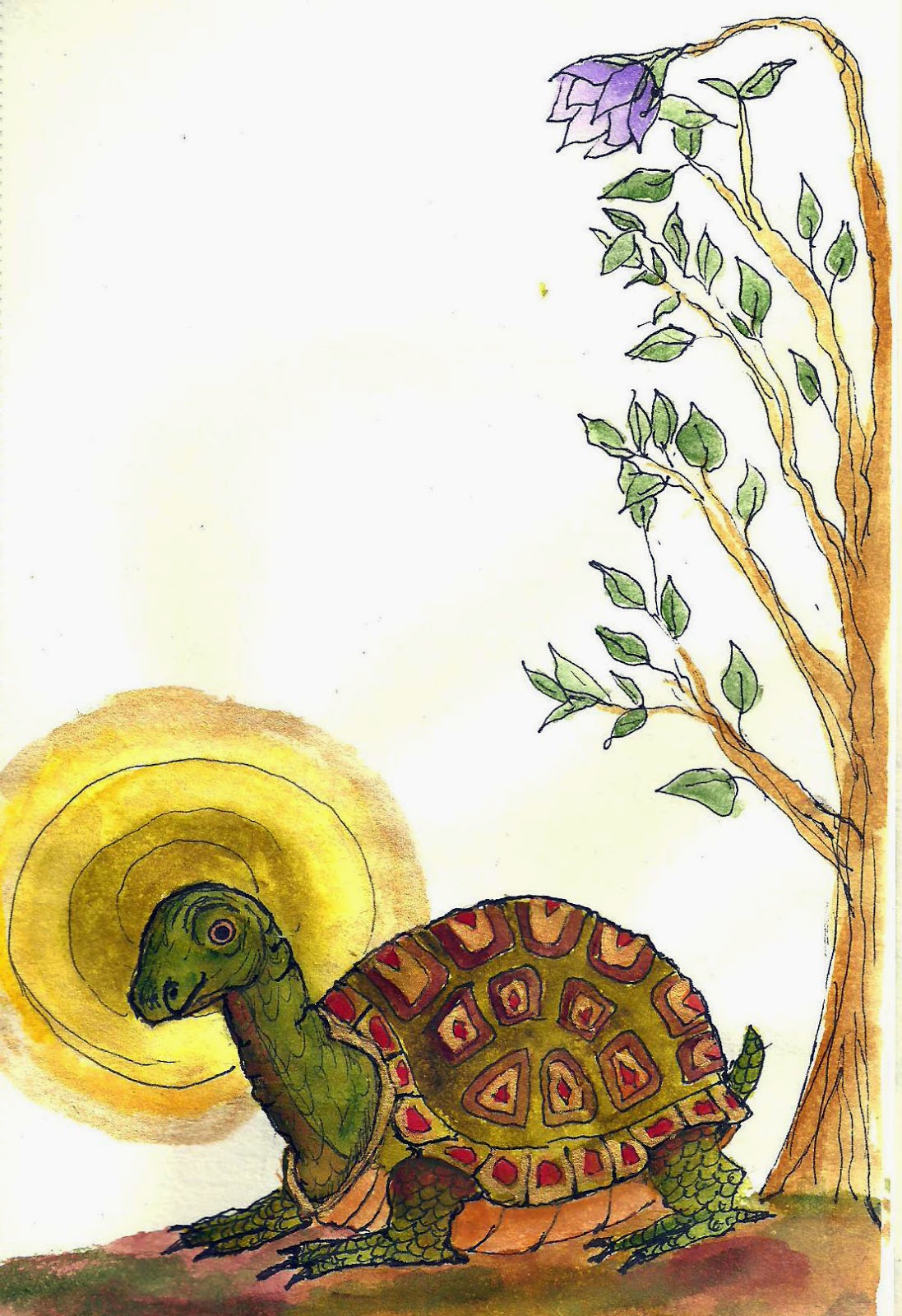
I bought a little journal with nice paper that would be easy to carry. I could sketch discreetly.  It would be light and perfect.  Except I didn’t really like it after I started using it.  It was too small. I resisted it for a while, but it was the only thing I had.  I only did one painted piece in it.  A loose tree:

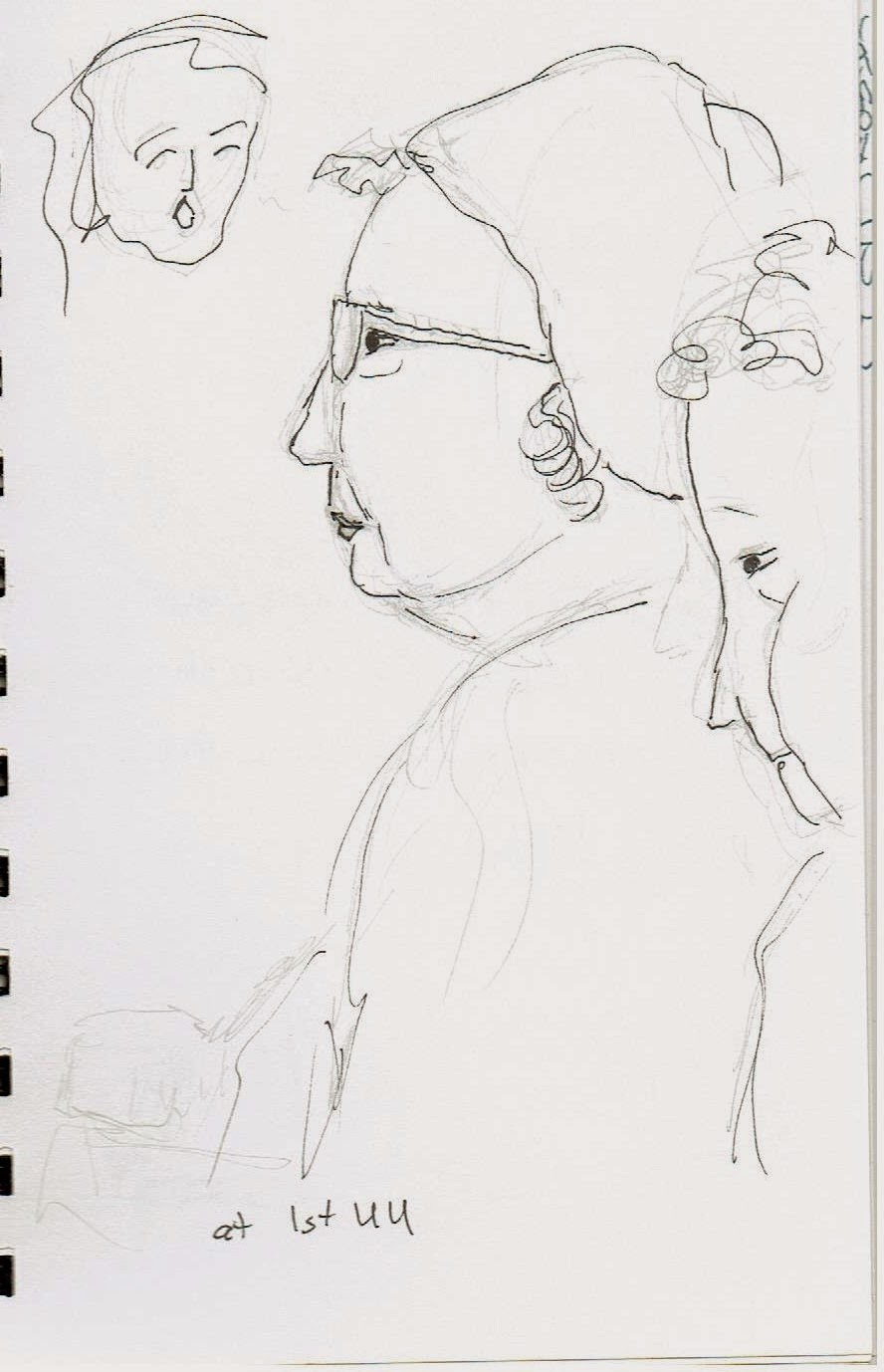
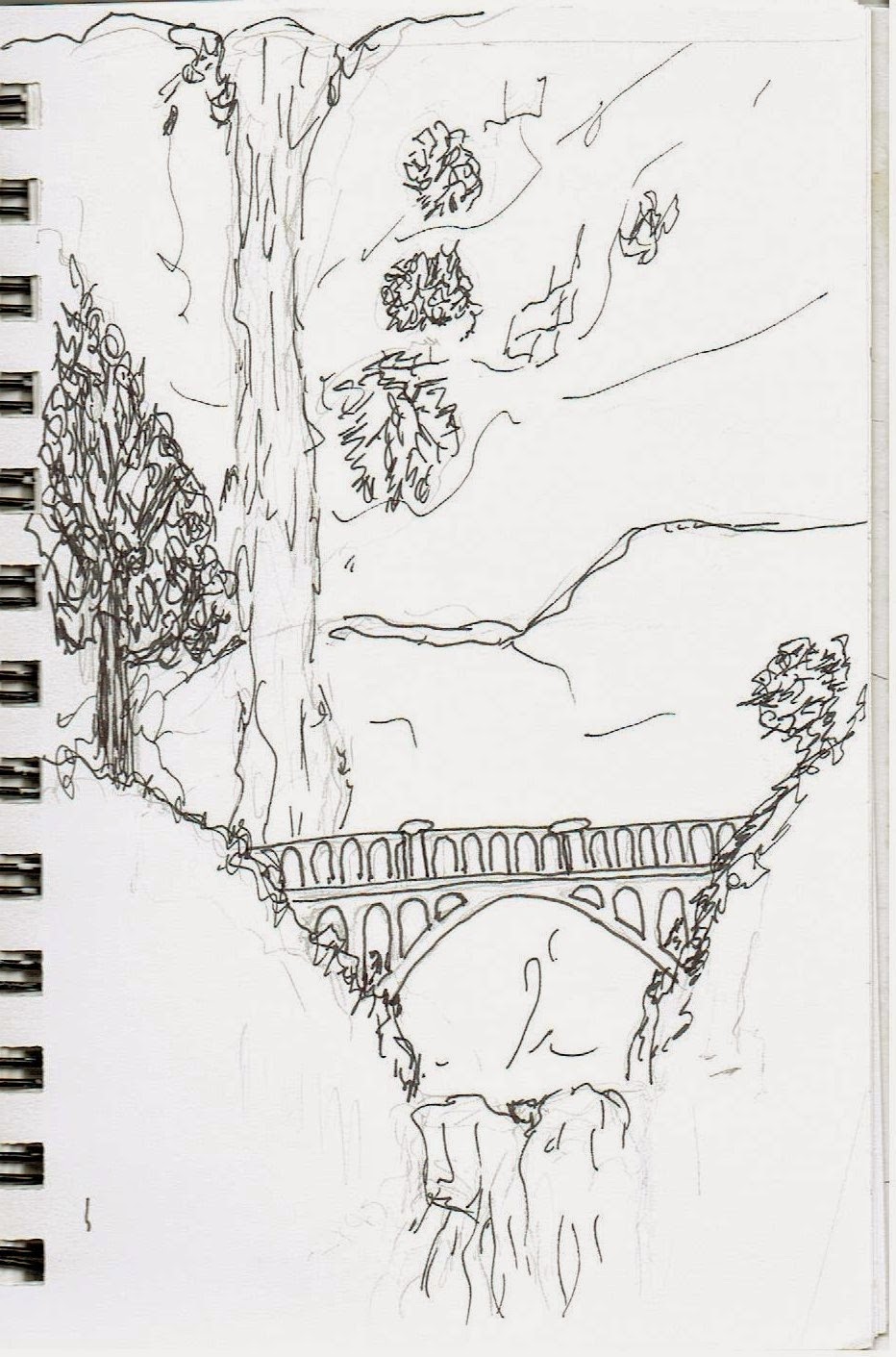
 But I used it, nonetheless, and actually wound up with a few expressive drawings:

My husband at Salty’s bar– a fish was on the wall behind him

Church notes during a music service

Further church notes

Multnomah falls

I think if I’d liked the journal better, I would have gone back and painted a few of these, but looking back, I enjoy the simplicity and these drawings bring back memories — simple visual language in a letter to my future self.

My next journal was a Strathmore hardbound 8.5 x 5.5″ watercolor journal with cotton paper.  It was a little larger and that made a big difference.  However, it was hard to use that thick paper for light sketches and writing.  It felt like I was wasting it.  It had a precious quality to it.  It did force me to try more paintings and to work across the spread.  However, that didn’t work out as well as I’d hoped.

ink sketch
Spirit Bird

I went on happily painting pages.  One thing I like is to use my leftover paint puddles to paint journal pages so I can draw or write on colored pages later.  This wonderfully absorbent paper didn’t do so well with my wet techniques:

paint seeped through

I had some seepage problems with journals before, but not to this extent.

The sun got green ooze.

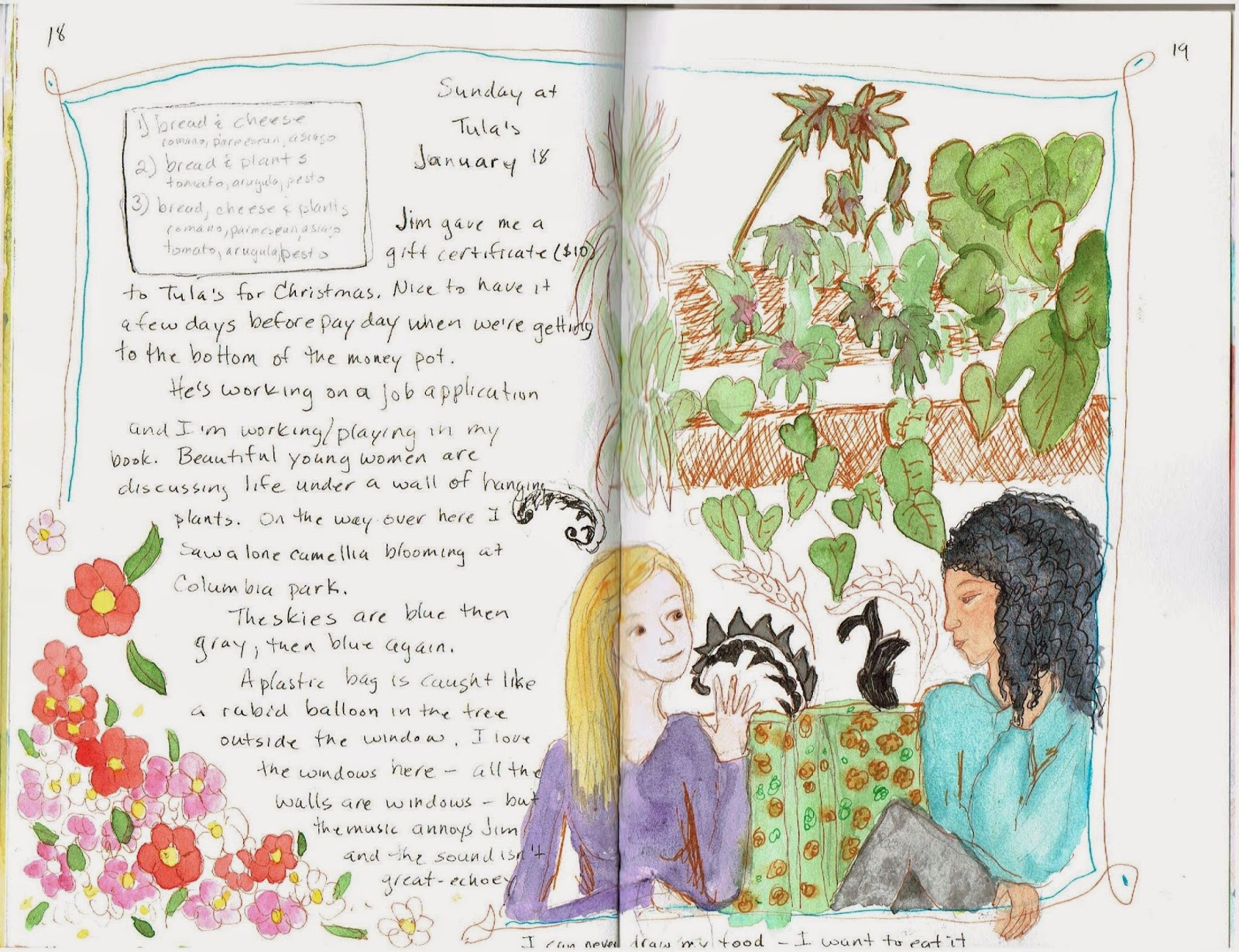
I had better luck with writing and illustrating, though the paper seemed meant for watercolor:

At the Tula’s a gluten free pasty and coffee shop
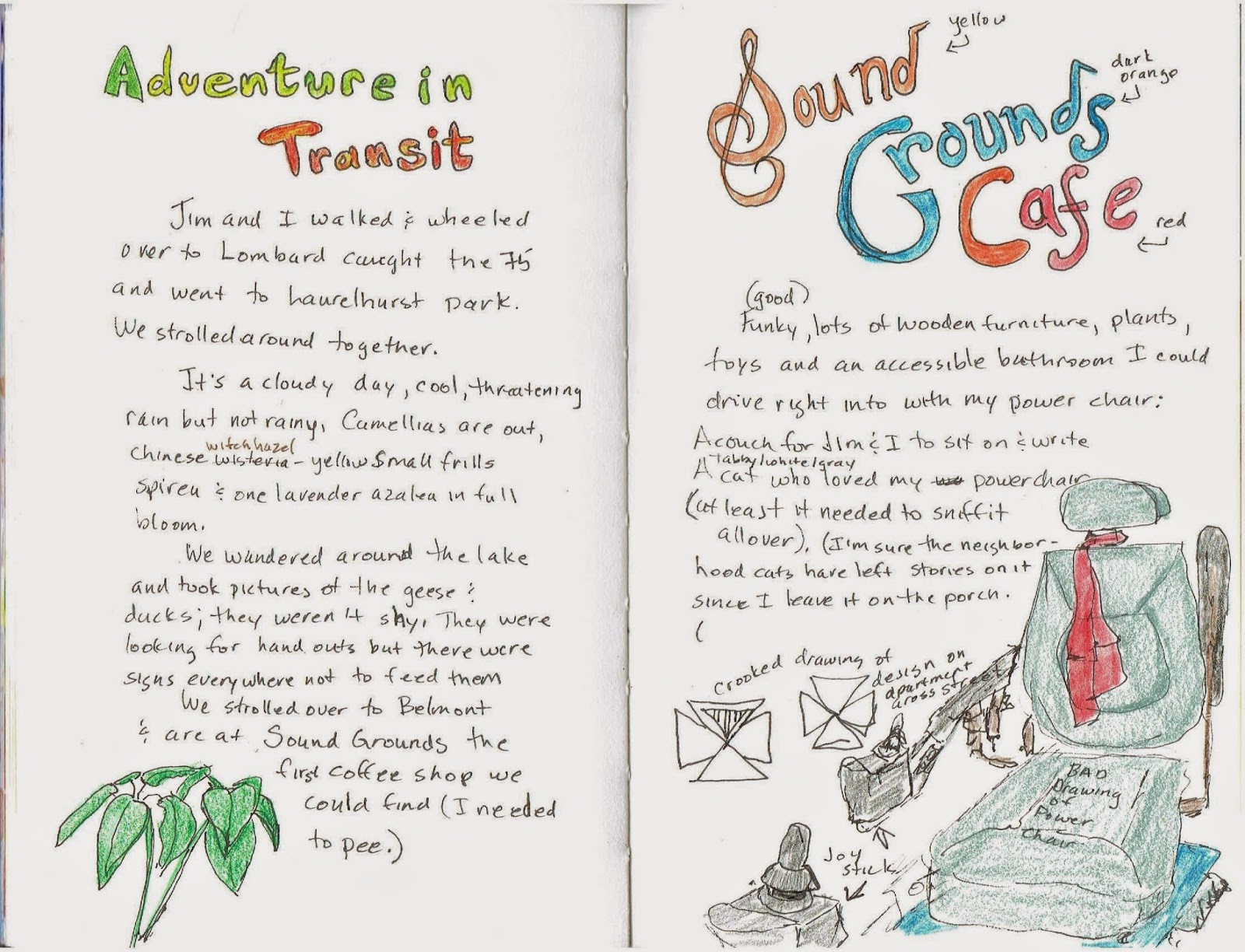
At Sound Grounds after my first venture in my power chair on the bus.  I colored their logo the wrong colors

So now I’m back to an inexpensive Canson Art Sketch book, hardbound 8.5 x 5.5.  The paper is only 65 lb.  I’ve used it before and it buckles when I paint, but the buckles flatten out after a while and there’s not the same kind of seepage.  It’s great for writing and doesn’t feel precious.

I’m most excited about trying my new Winsor and Newton inks:

I also have a big 9×12 Canson Mixed Media spiral bound book when I need to go big.  That means I’m now keeping 3 journals.  The morning write, the day and travel book, and the big journal.  I’m also considering keeping subject journals — like one for Bridge Meadows Meetings, one for concerts. one for spring flowers — I don’t know if it’ll feel as if I’m spread too thin or if it’ll help me tell the story of myself to myself a little better.

I think the different sizes and different kinds of paper bring out different styles.  It was easy to do minimalist sketches in my little journal, easy to paint in the watercolor one.  It’s fun to do collage and paint in the large journals.  But the humble 5.5 x 8.5 Canson seems to be right for everything at this point.  I wonder if I’ll feel the same 50 pages from now?

If you’d like you can read my last post on journaling in 2014 here.

How do you keep your journals and sketch books?  What’s worked and what’s not worked?

By the way, Danny Gregory, who I blame for getting me addicted to visual journaling, has a new book out, Art Before Breakfast, which I’ll review next week.  Check out his blog for inspiration to illustrate your life and to live better through bad drawing.  It works 🙂

Thanks for reading my blog.

I’m linking to Paint Party Friday, where you can find lots of enthusiastic and creative art bloggers.

Review of One Plastic Bag

I was sipping coffee in a lovely café with glass walls, enjoying the light and feeling of openness.  I looked around at the sky and the winter trees, all bare of leaves, limbs like calligraphy against a gray sky.  Except the one on which a plastic bag was snagged.  It danced in the wind, an ominous trash dance.  Even though they’re banned here in Portland, Oregon, they’re still a part of our landscape.  They’re still used almost everywhere, all over the world, even in villages in Gambia.
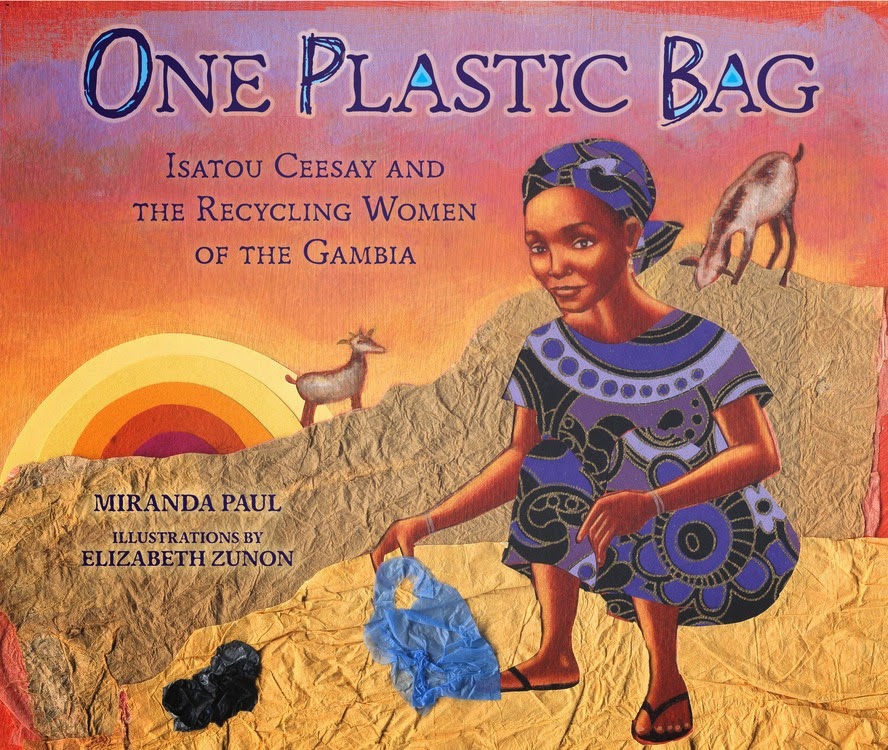
One Plastic Bag: Isatou Ceesay and the Recycling Women of the Gambia, by Miranda Paul, illustrated by Elizabeth Zunon, Millbrook Press/Lerner Books, was just released and it brings to light the depth of the plastic bag problem, as well as the innovative way one group of women are dealing with it.
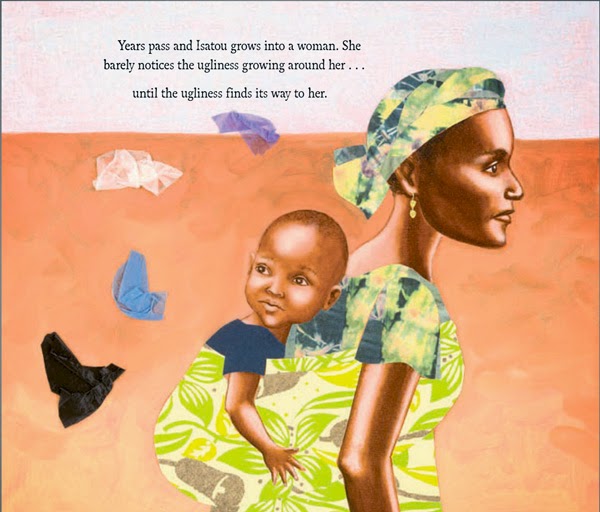
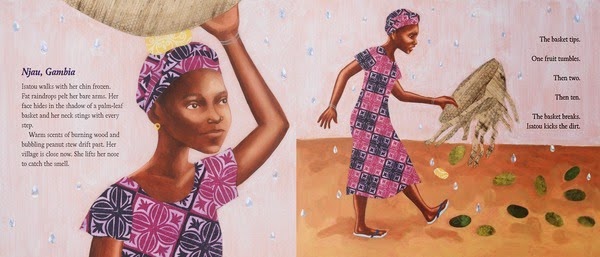
In Njau, Gambia, when the plastic bags broke or were no longer needed, people dropped them.  One plastic bag became two, then ten, then hundreds.  “The bags accumulated in ugly heaps alongside roads. Water pooled in them, bringing mosquitoes and disease. Some bags were burned, leaving behind a terrible smell. Some were buried, but they strangled gardens. They killed livestock that tried to eat them.”


But people got used to them.  We’re very adaptable, even to things that are ugly and destructive.  When I wait for the bus here in Portland, I’m amazed at how many people throw down their trash and how the rest of us wait amongst the litter and never pick any of it up.  Picking up trash is beneath us; we have other things on our mind.
But Isatou Ceesay wanted change and despite being ridiculed, she became that change.  She and a small group of women began to collect and clean the bags.  They cut them into strips and crocheted purses.  The purses were colorful and practical.  Isatou realized that the purses could be a way to help alleviate the poverty of the women in her village. 
This is a truly inspiring story and one of the reasons I keep reading “children’s books.”  There is hopefulness in them and many publishers, especially the small independent ones, are looking for unsung heroes to celebrate.
Miranda Paul’s writing is clear and lyrical.  She met Isatou while teaching and traveling in the Gambia.  Miranda is an avid recycler and conservationist.  This was a story she “had to tell.”
Her descriptions of village life are vivid and inviting.  You feel as if you’re there.
The story is beautifully illustrated by Elizabeth Zunon.  Her luminous paintings bring the book to life.  She uses collage elements that enhance her backgrounds but also make characters more vibrant.  (She also illustrated The Boy Who Harnessed the Wind, by William Kamkwamba, which I reviewed here.)  Her faces and hands are particularly beautiful and expressive.  You feel Isatou’s thoughtfulness and hopefulness through Zunon’s paintings.
Here’s a link to a short trailer of the book, so you can see a bit more of Zunon’s art, but of course, the best way to see it is in the book.  The screen does it no justice:  
The book includes bonus information such as a Wolof language glossary, timeline of actual events, and photos of the women of Njau.
It’s a beautiful book about an ugly topic, with great art, a great solution to a trashy problem, and a great woman who proves one person can make a difference.  
Here’s a link to the book’s website which includes lots of links for teachers and families.  I could see this being a great book for a family discussion night on environmental topics and different cultures:
And here’s a direct link to a 15 minute video on the Njau Recycle Centre:
Here’s Miranda Paul’s website.  She’ll have another book out this year, Water is Water, and two in 2016:
And here’s Elizabeth Zunon’s website.  She’s illustrated a book by Nikki Grimes called Poems in the Attic, which will be out in April:
Both Paul and Zunon belong to the wonderful We Need Diverse Books campaign, which you can read about here:

What are you reading these day?

A Trip Through Time and Space: Cosmigraphics by Michael Benson

Sometimes life can seem like a lot of drudgery and sorrow.  These days we don’t only have to deal with the troubles of our own life, but we have instant access to troubles all over the world.  It’s easy to start feeling oppressed and depressed.  It’s easy to forget about the wonders of the world amid so much bad news.  You might even go days and days without really looking up, seeing the sky and realizing what a miraculous planet we live on.
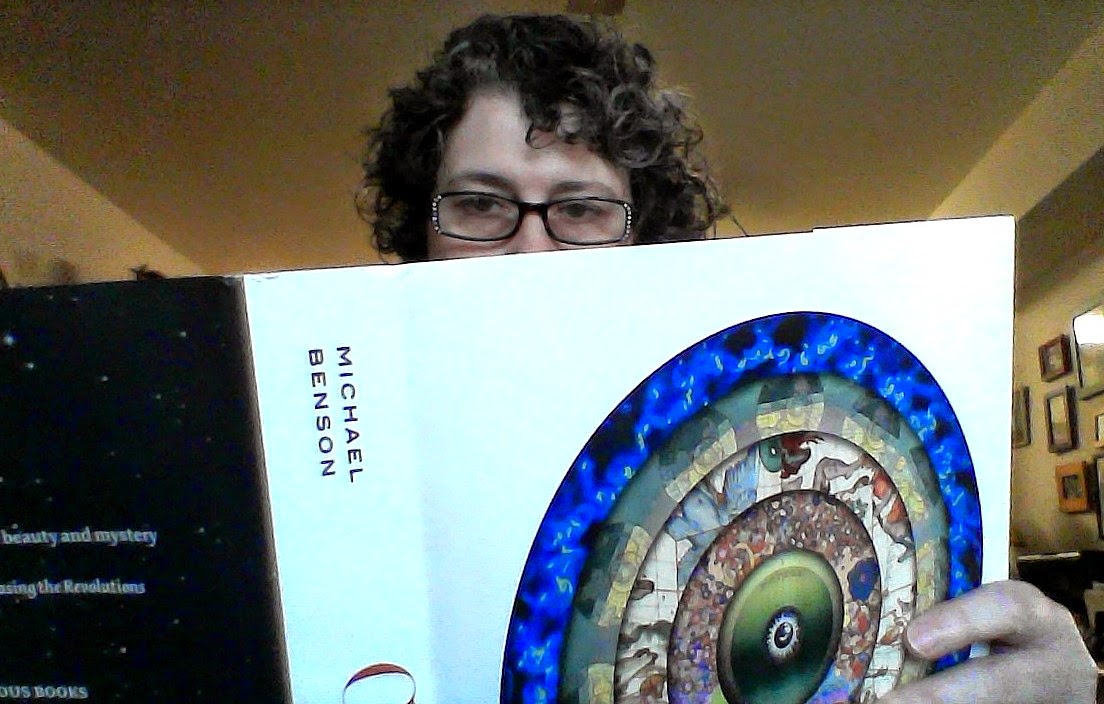
Twice in the past month, when the conversation got too dreary, I took out the book Cosmigraphics and showed it to friends.  Even the cover made them gasp a little.  The wonders inside turned the conversation from the earthly to the cosmic.
Cosmigraphics: Picturing Space Through Time, by Michael Benson, Abrams Books, 2014, is the story of how people have both imagined and documented our creation, the structure of the universe, and the earth’s place in the cosmos.  Benson is a photographer, writer, and filmmaker.  In the last decade he has staged a series of increasingly large-scale exhibitions of planetary landscape photography. He lives in Boston and Ljubljana, Slovenia
He works from the intersection of art and science, and tells the story of how we perceive the universe using illustrations, graphs and maps.  He has gathered beautiful works of art from the world’s great science libraries. 
The book take you on a journey through more than 1000 years of images, through humanity’s ever-expanding understanding of the size and shape of space.  From before the telescope was invented and people believed the earth was flat, to the most sophisticated maps and supercomputer simulations, all the beauty of our understanding comes to light. 
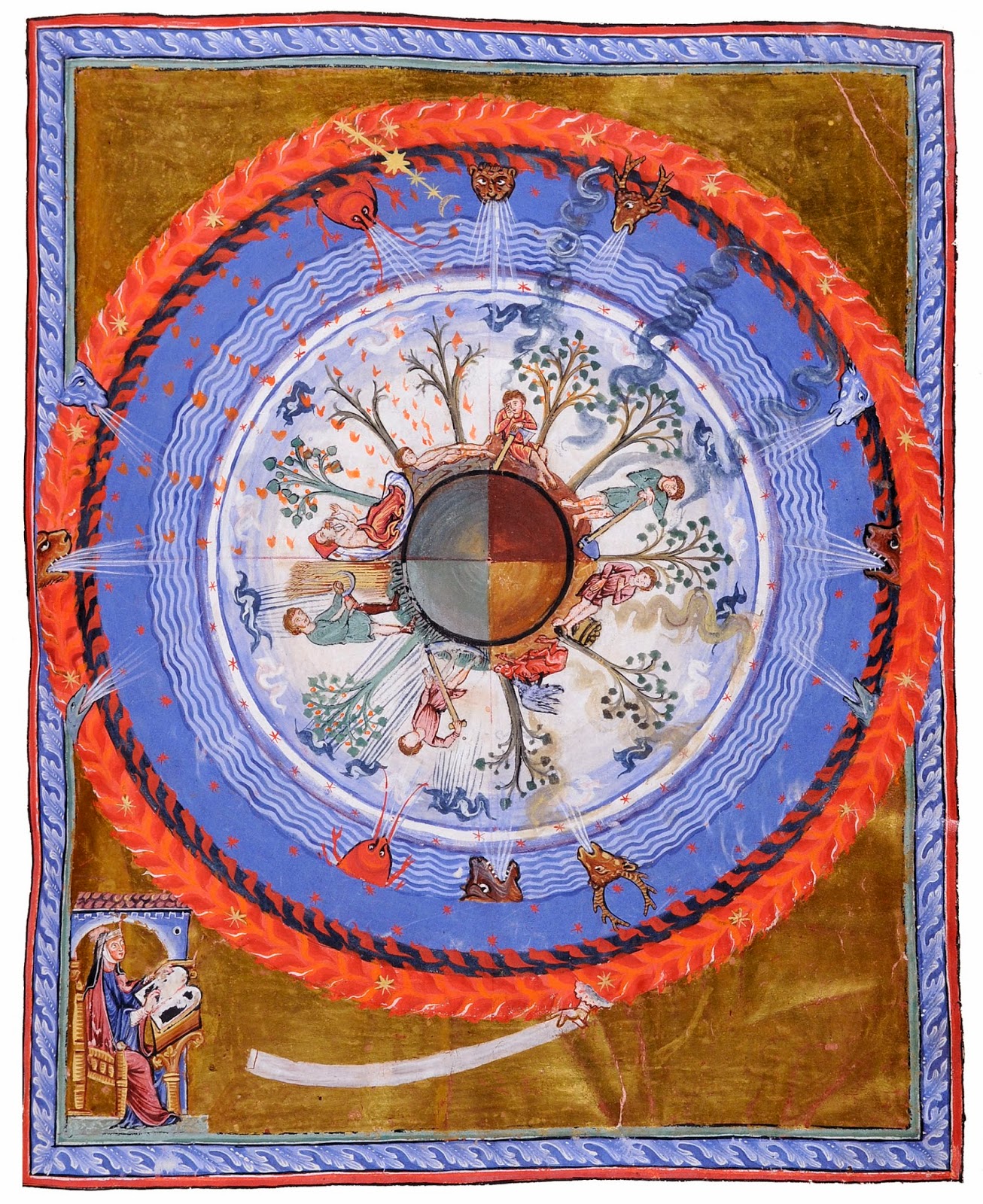
Sky Disc from 2000-1600 BC – the first known astrological instrument
This book is a literary gem, too.  Benson’s writing is lyrical and accessible, making clear the story of human thought and beliefs.  Chapters are divided into Creation, Earth, The Moon, The Sun, The Structure of the Universe, Planets and Moons, Constellations, the Zodiac and the Milky Way, Eclipses and Transits, Comets and Meteors, Auroras and Atmospheric Phenomena.  Each chapter starts with an essay from Benson on how our beliefs and thoughts about space have changed through the centuries.  Benson says:
“I have felt free to include material that would not necessarily figure in a presentation of exclusively astronomical images.  I’m interested in innovative approaches to the conundrum of how to present such a vast subject within the frame of a graphic image, even if they aren’t directly associated with scientific research and occasionally represent conservative reactions against astronomical findings.  I’m biased toward the striking and unusual, even if it restates a case that has previously been made with less visual flair.  While this isn’t an objective visual history of astronomy, I do believe that sometimes a subjective approach reveals cultural or historical truths better than a dutifully comprehensive method.”


He opens the first chapter on Creation with a quote from The Tao Te Ching:
There is something formed of chaos,
Born before heaven and earth.
Silent and void, it is not renewed,
It goes on forever without failing
It can be seen as the World-Mother.

He begins the last chapter, Auroras and Atmospheric Phenomena, with a quote from Robert Burns’ Tam O’Shanter:
But pleasures are like poppies spread,
You seize the flower, its bloom is shed;
Or like the snow falls in the river,
A moment white – then melts for ever;
Or like the borealis rays,
They flit ere you can point their place.

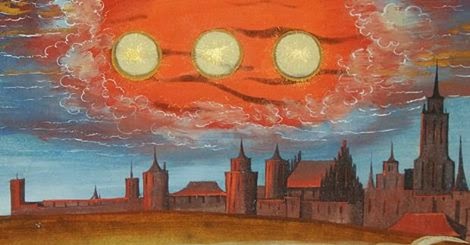
Depiction of Sun Dogs from 1533
I can’t overstate how beautiful this collection of graphics is.  Almost every page reveals a breathtaking look at the universe – from illuminated maps and manuscripts that illustrate early belief system, to a 2009 supercomputer simulation of a sunspot:  
The book is too big for me to scan pictures for you, but just Google the title and you’ll see what I mean.  That’s how I got pictures for this post.  This book has been praised in the New York Times, and hundreds of other sites, including Brain Pickings, one of my favorite book and culture sites, so you don’t have to take my word for it.  The publishers say this book “will be a revelation to space-struck Earthlings, art lovers, and readers interested in the history of science, the visualization of information, graphic design, and mapping.”
1979 geological map of the south region of the moon
I’m a big library user, but this is a book I feel you should own.  If for no other reason than to look at it with your depressed friends and take a little flight away from the tyranny of bad news into a universe of stunning mystery. 
Or for a stolen moment, when gravity seems to have you glued to the ground, to take a trip through space and time, and come back elated.