Nature Anatomy by Julia Rothman

Drawing things is an excellent way of learning their true shape and structure.  I’m always amazed at the detail of the simplest forms – leaves, shells, mushrooms. When you start to notice the details of things, you start to wonder is there a name for that?  Usually, yes.  For instance, the margin of a leaf, its edge, can be entire, undulate, serrate, lacerate or crenate.  I know this because I’ve got Julia Rothman’s gorgeous book Nature Anatomy: The Curious Parts & Pieces of the Natural World (Storey Publishing, 2015.) 
Part visual dictionary, part field guide and part celebration of life, it’s a pure delight to read.  It restores a sense of wonder about the world that’s growing all around us.  She starts with the earth itself, draws her way through the flora, fauna, weather and atmosphere of this complex planet.  She says,
“There is no way to include even a small portion of the enormous world around us in a book of any size.  Where does it end?  There is an infinite amount to learn about, from the constellations to the core of the earth.  I guess I think of this project as MY nature book.  It’s the information I was interested in learning about, the things I wanted to draw and paint.  While it is only a teeny scratch on the surface, it gave me a chance to become acquainted with plants, animals, trees, grasses, bugs, precipitation, land masses and bodies of water that I wanted to be able to name when I walked by.”
She visits Prospect Park in Brooklyn daily, which sparked her interest in knowing more about what she saw.  She had help in her quest for names from John Niekrasz, her friend and naturalist, who helped her write and formulate ideas for it.  It’s a magnificent accomplishment. 
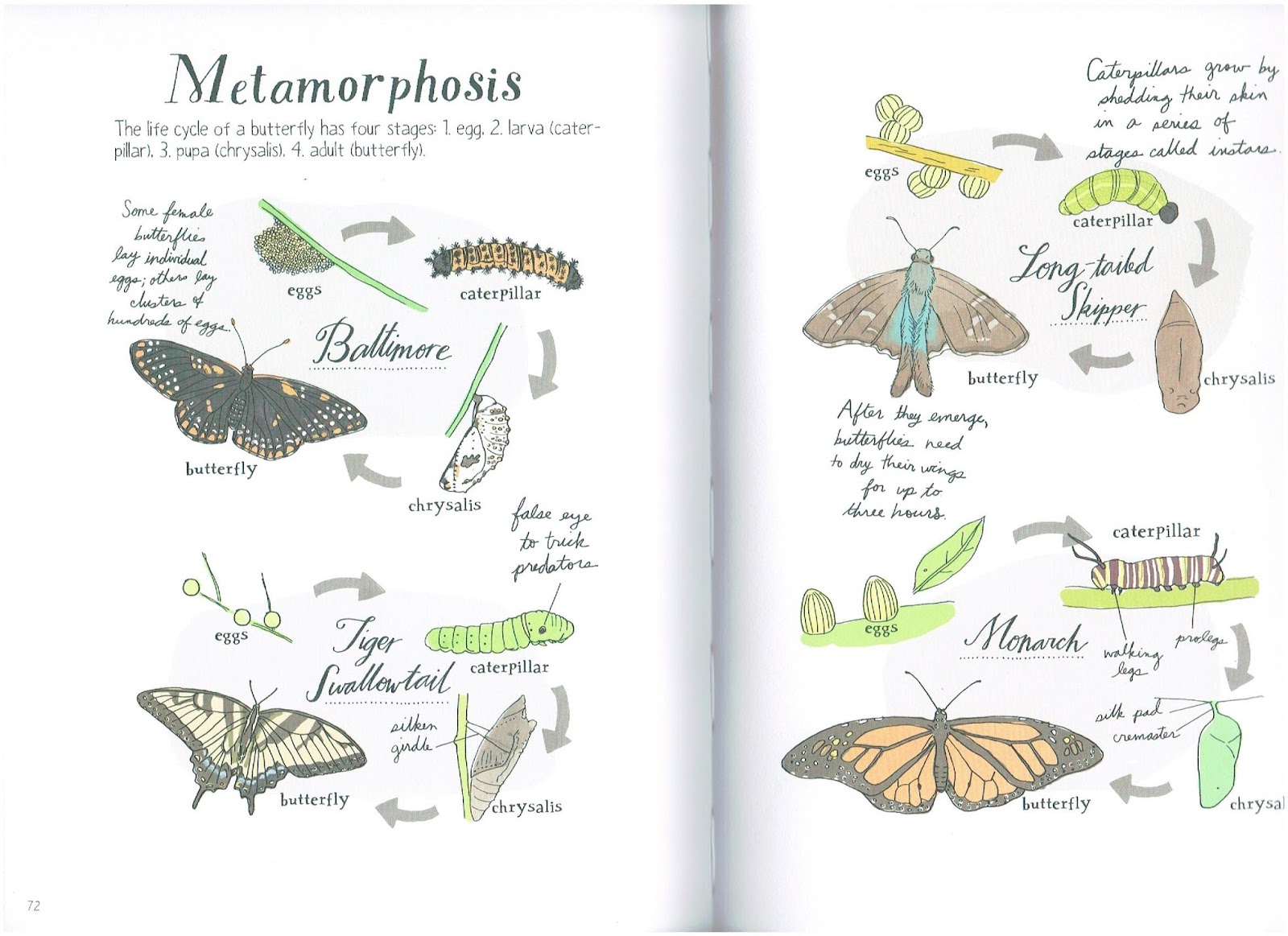
I’d never heard of water bears.  Where have they been all my life?
Rothman had undertaken a similar project in a previous book, Farm Anatomy, where she did detailed drawings of the animals, crops and components of a farm.  Understanding is at the heart of her work.  I think these “anatomy” books should be in the reference library of every writer and artist. Even if you never get to use it in conversation, there’s something satisfying in know the name of something.  And because I have such a poor memory, I love having a reference where I can look for the name again.  The book is well organized and reads almost like a story.  There is the big story of nature itself, and all the little details that make each life form unique.
In Nature Anatomy, Rothman includes lessons on how to paint a simple landscape, how to predict weather, how to make a seaweed facial, and how to make stuffed daylily buds, and many other ways to enjoy nature. The mini-essays that accompany the drawings are easily understood but provide a lot of scientific information.  You learn how mountains were formed, the different types of bird feathers, the difference between a frog and a toad.
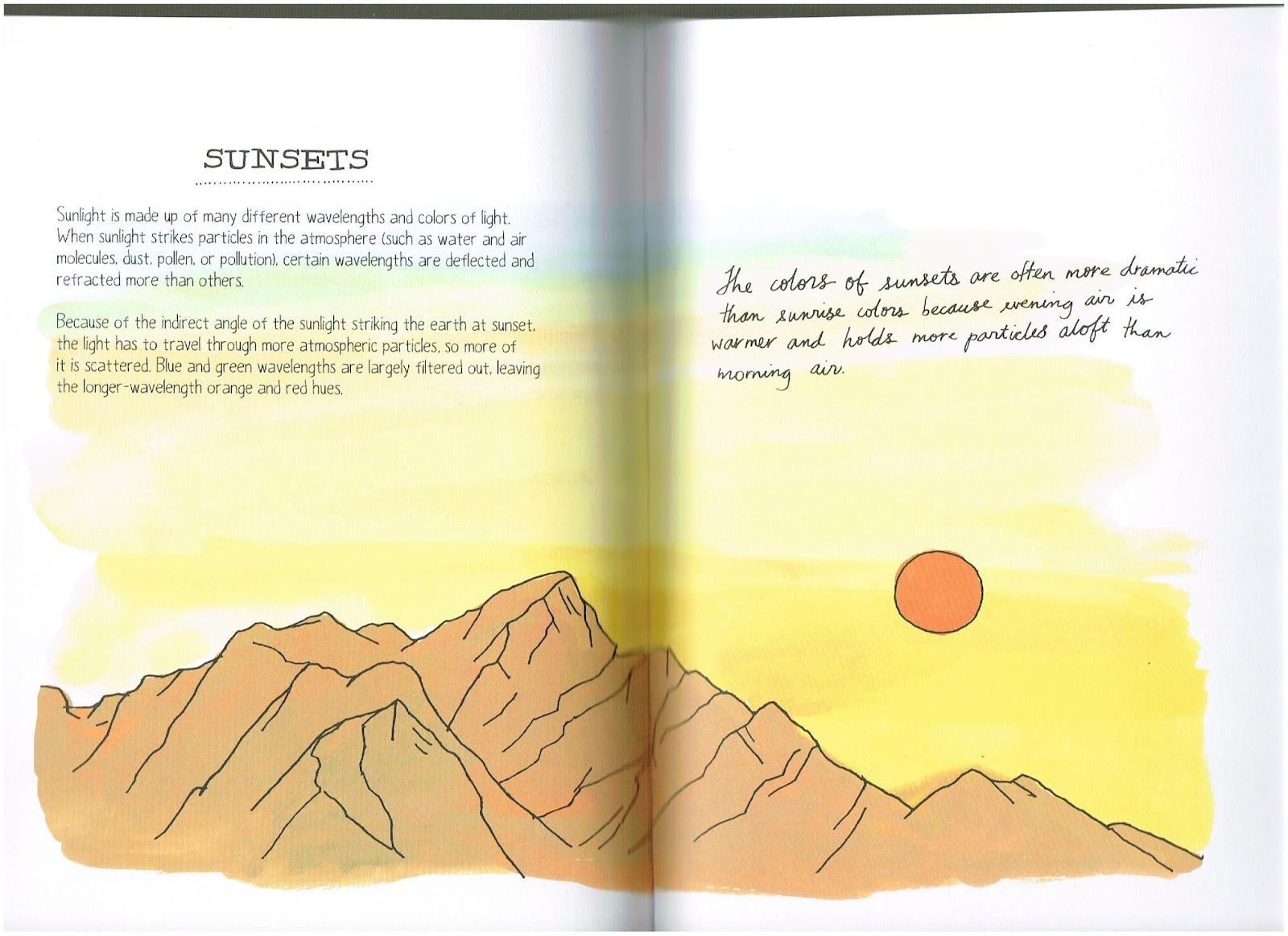
And something lovely about sunsets
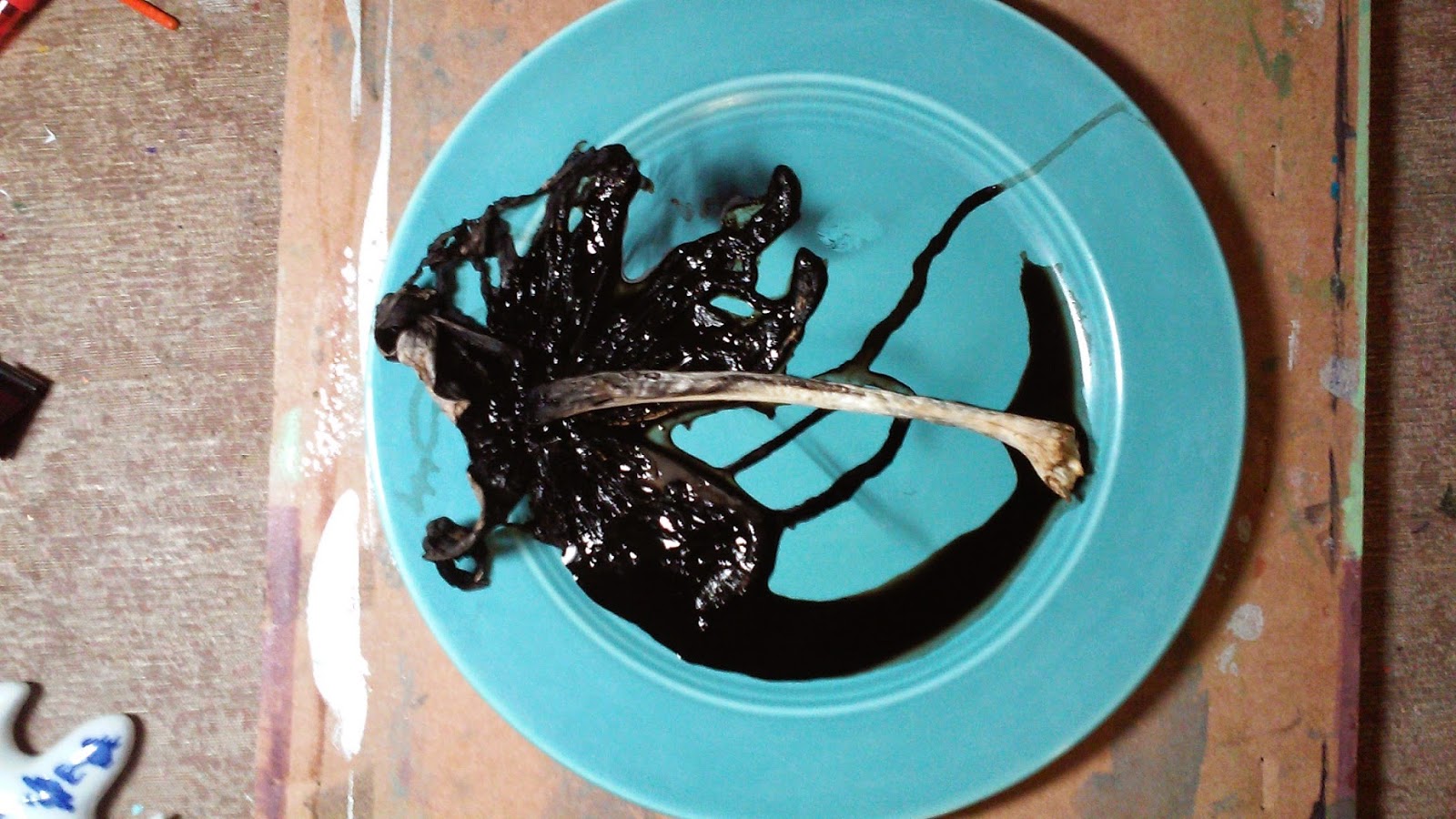
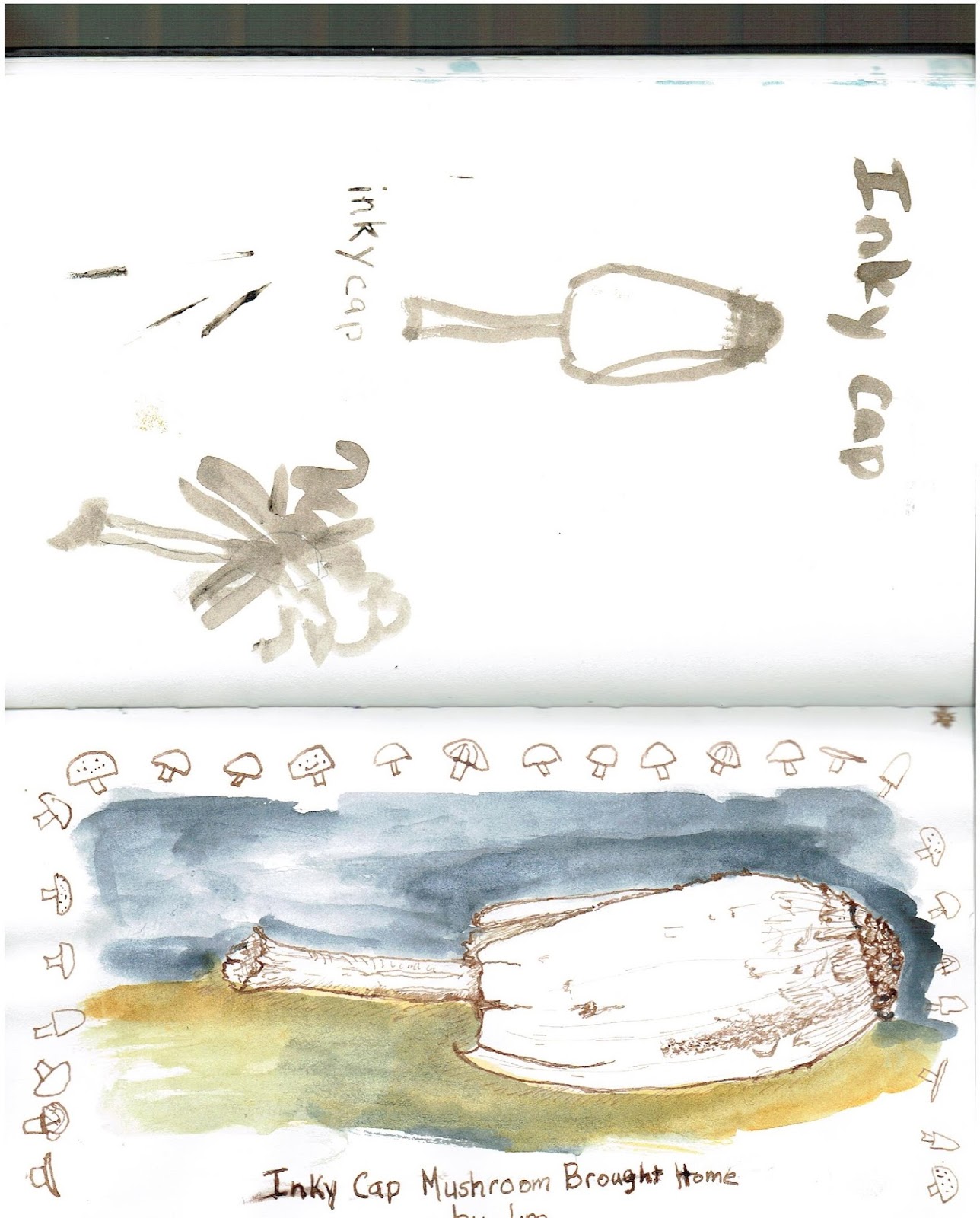
It’s a great book to share with children of all ages, to get them to start seeing the complex beauty of the world around them.  I like to take it to the art sessions I have with children and watch them gaze at the pictures then try to copy what they see.  I’m sure it’s helping them look closer at all the nature that’s springing up around them.  My 10 year old neighbor Noah and I found inky cap mushrooms and brought one home.  We had such fun watching it degenerate into a pool of sticky, stinky black ink.
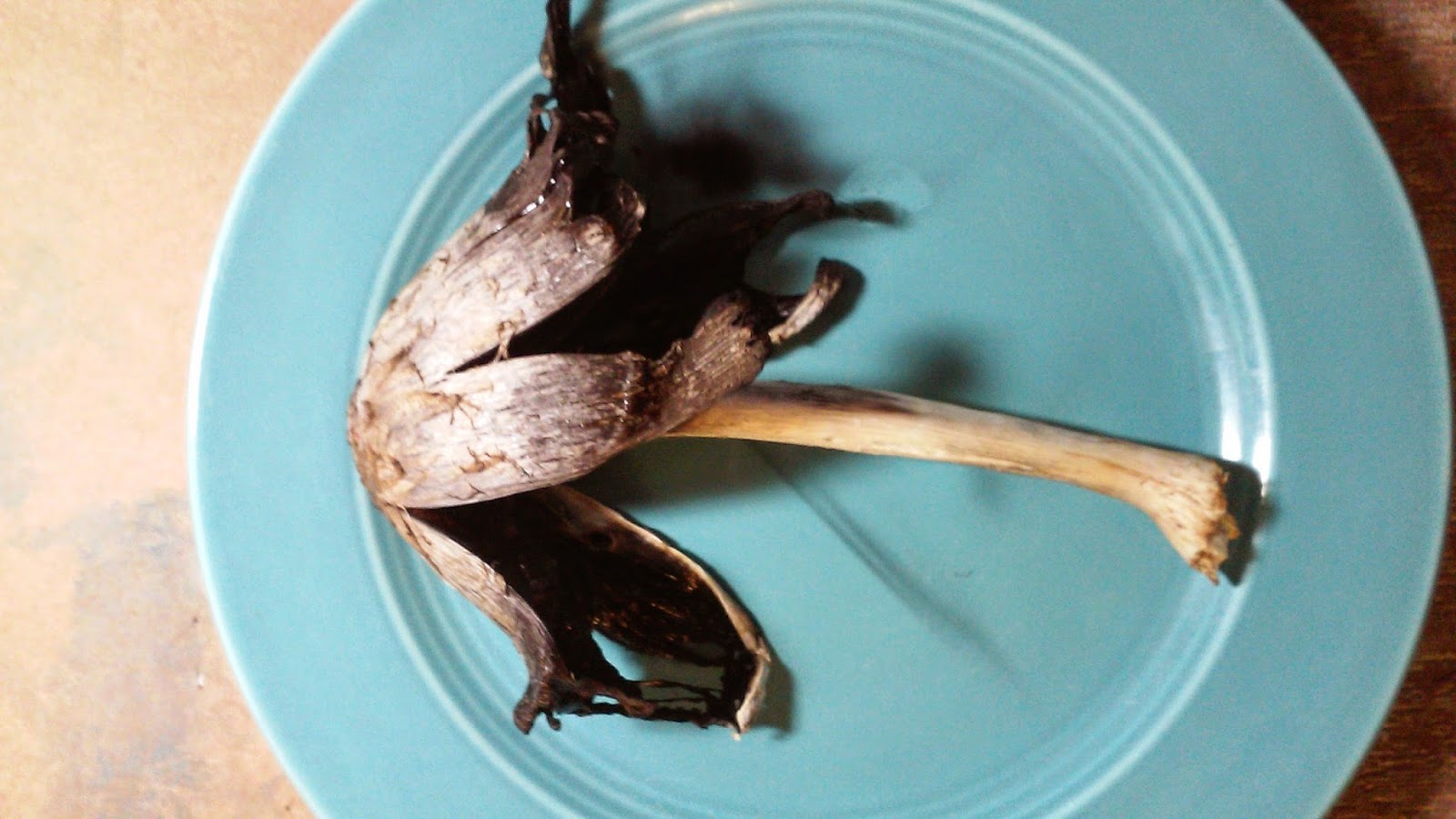
We drew a mushroom, of course
If you feel your sense of wonder has diminished, this book is just the medicine you need. 
Julia Rothman is an illustrator whose work has appeared in numerous books, magazines and newspapers.  She designs stationary and wallpaper from her studio in Brooklyn, New York.  You can learn more about her by clicking here

The book is beautifully bound by Storey Publishing. 
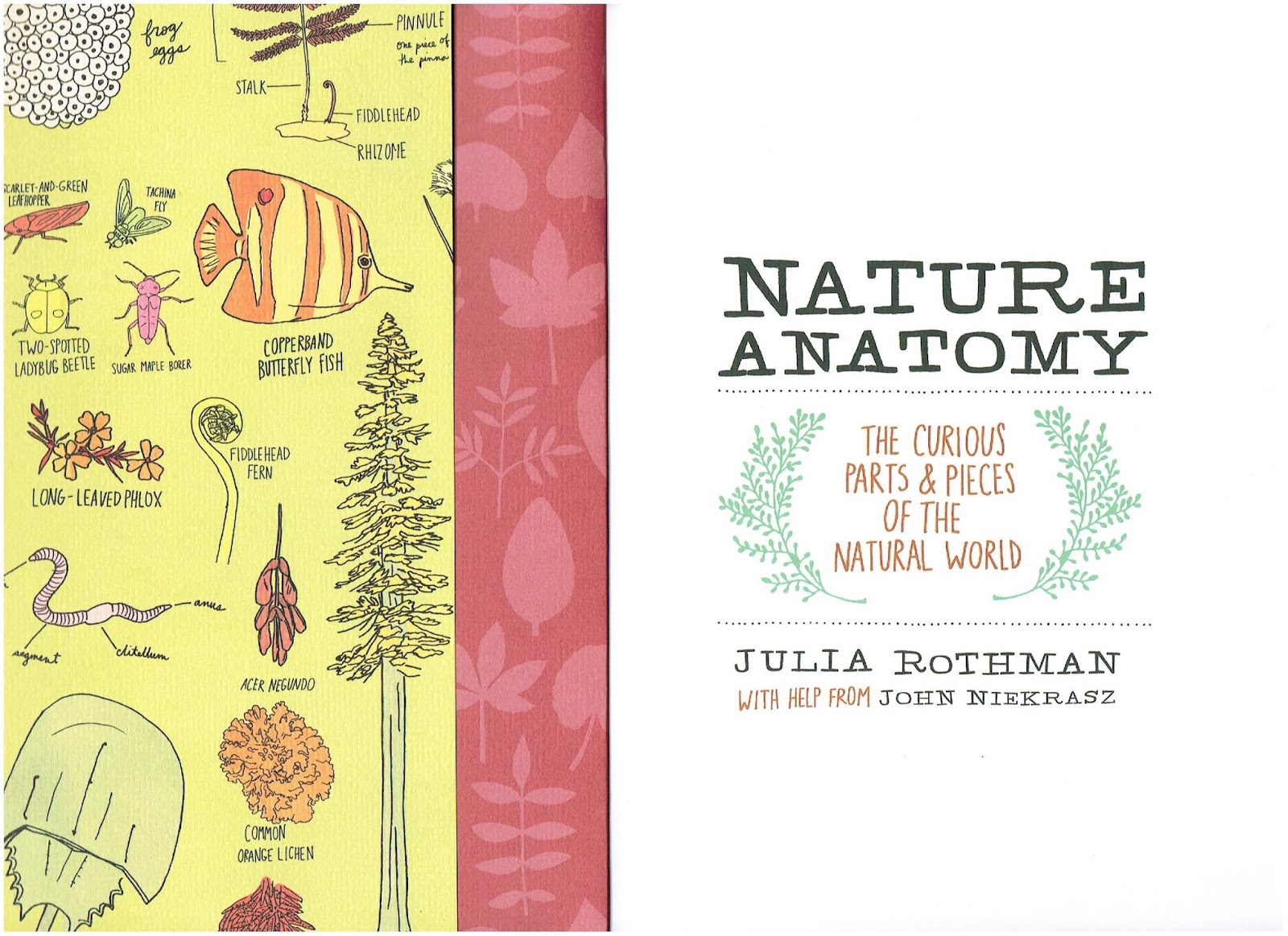
Nice folded cover

Beautiful endpapers
Storey specializes in publishing practical information that encourages personal independence in harmony with the environment.  You can learn more about their books by clicking here.   

No Girl is an Island: Moonpenny Island by Patricia Springstubb

There are times when I think it would be wonderful to live on an island in a small community, surrounded by water, abundant nature around me.  Tranquility and comfort would envelop me as surely as the waters caress the island’s shore.  In Tricia Springstubb’s novel, Moonpenny Island, the island seems like that idyllic place.  But every place has its mysterious and sometimes dangerous undergrowth.
Moonpenny is in the middle of Lake Michigan.  It’s bustling with tourists in the summer, but once tourist season is over, it’s 11 year old Flor’s beloved home.  She knows everyone.  She’s the daughter of the one island police officer.  She’s best friends with Sylvie, the island’s only other 11 year old.  The book opens:
Transparent.  That’s how Flor and Sylvie are to each other.  See-through.  Flor knows everything about Sylvie, and Sylvie?  She knows things about Flor before Flor knows them herself.
Sylvie cheers Flor up or calms her down.  Considers the same stuff funny or annoying.  Won’t tease her for still being scared of the dark, not to mention those spiders with hairy legs, and loves pretending their bikes are wild horses only they can tame….”Best friends” does not cover it.  They are each other’s perfect friend.

But Flor’s perception of this transparent and perfect friendship is suddenly altered when at the end of summer, Sylvie is sent to a boarding school on the mainland.  Then Flor’s mother leaves to take care of her sick mother and doesn’t come back.  Flor’s big sister is acting strange, sneaking out, and perhaps involved in something dangerous.  All that Flor thought she knew and could see clearly has become opaque.
 
There’s tension everywhere.  She discovers the home she thinks of as paradise is seen as a prison by many she loves.  She’s angry.  She’s confused.  Yet she can see the limits of the island community, where the town clock has been stuck at 11:16 for years.  “Flor quit paying attention to that clock long ago, but today it makes her depressed.  Time can’t stop – things are too messed up.  Time needs to get going, move along and make things better.  But the stubborn hands refuse to move.  They haven’t moved in so long, some bird made her nest behind the hour hand.”

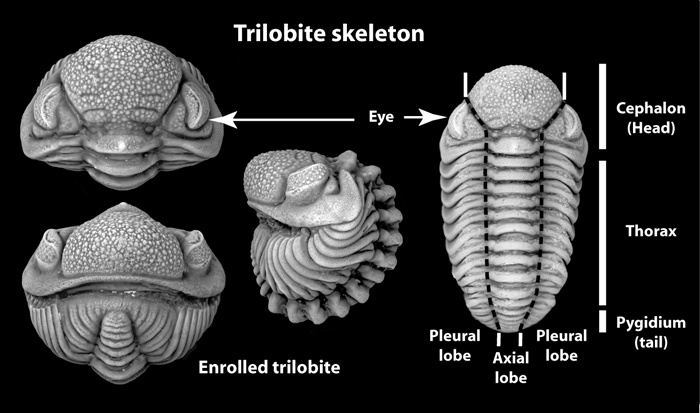
Moonpenny Island has a wealth of fossils.  A geologist, Dr. Fife, and his daughter, Jasper, arrive to excavate trilobites.  He is a fountain of knowledge and good will, and she is shy but full of information about fossils and trilobites, one of the first creatures to develop sight.  She also knows a lot about divorce and loneliness.
As the book progresses, it becomes more and more a metaphor about sight and vision.  How we see things is based not so much on what is there, but what we need and what we want to see.  Flor can’t stop the changes that life is bringing her way.  She can’t stop her own growth. 
Springstubb writes in crisp sentences that perfectly match Flor’s state of mind.  There’s a lot of depth in how Springstubb describes things and makes clear the need for adaptations even if you’re never going to leave your own island.  She has a wry sense of humor and a great eye for detail.  Here are some jewels from the book:
Flor never has bad dreams, but it’s possible she does that night.  When she wakes up, her legs feel week and crumply.  Like she’s spent hours balancing on a narrow sliver of something, and not just her own mattress.
Get used to it!  How can adults say these heartless things?  “Get used to it” belongs in the same infuriating category as “Life isn’t fair” and “Someday you’ll laugh over this.”  A horrifying thing must happen to your brain as you age.  It must grow tough and rubbery, like an old pork chop left in the back of the refrigerator.
Blindness was once a natural state.  Dr. Fife says the first eye was little more than an optic nerve.  Whatever that is.  Eyes had to develop.  Can some people’s eyes still be a more primitive variety?  Can eyes still be evolving?  Will future humans be able to see stuff we can’t? Like the insides of things?  The hidden, secret parts?
Mama says prayer isn’t asking for things.  That’s wishing, she says.  Mama!  Put all her opinions together, you’d get a book fatter than the Bible.  Real prayer is simply talking to God, Mama says.  It’s opening wide your reverent, humble heart.
Sitting on the porch swing, eyes closed and hands folded, Flor tries.  But within three seconds, she’s reverently humbly begging.
People think that evolution is all about getting stronger and bigger and faster.  But no.  Species evolve according to what they need.  Not everyone needs to be big and powerful.
Moonpenny Islandis published by Balzer & Bray of HarperCollins Publishers.  It’s marketed as a middle grade novel, but it’s a touching insightful read for anyone seeking stories that give them insight into the mysteries of growing up.

Tricia Springstubb is the author of What Happened on Fox Street, Mo Wren, Lost and Found, and Cody and The Fountain of Happiness.  You can visit her online at triciaspringstubb.com
From Common Fossils of Oklahoma — trilobites are everywhere

Thanks for reading my blog.  If you’d like, you can have this blog delivered to your email by using the form in the right hand corner of this page.  I’d love to hear any questions or comments you have.

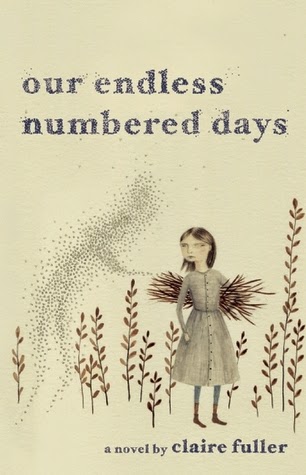
In the Deep Woods: Our Endless Numbered Days

I was a little afraid to read Our Endless Numbered Days by Claire Full (Tin House Books, 2015), because I thought it might bring up bad childhood memories.  I was also serving on a grand jury at the time and felt like I was hearing an over-abundance of traumatic family stories.  I decided to give it a go one morning as I rushed to catch a bus.  I had about 30 minutes of reading time on the ride and if it was too disturbing, I could pass it on to someone else.  Instead, I was gripped by it.  When I got out of court that day, I was grateful that I’d just missed a bus home so I had an extra 20 minutes to read what proved to a compelling novel so skillfully written that I missed my home stop twice while lost in the story.
The narrator, Peggy, was lured at age 8 by her survivalist father from their home in London for a holiday at Die Hutte, a place he’s described to her often as a perfect place to live.  Her mother, a German concert pianist, was away on tour. 
The holiday turns into an arduous journey.  Peggy wants to go home, but her father tells her his worst fears have come true.  Peggy’s mother is dead.  The whole world has been destroyed.  They are the last living humans.
Peggy, her doll and her father arrive at a decrepit cabin deep in the Bavarian woods.  It wasn’t the gingerbread house Peggy had been led to expect:
“Its wall hung with wooden shingles, and where they were missing, dark gaps grimaced like a mouth with knocked out teeth.  The front door hung open at an angle, and the single window had warped and popped its glass.  The only thing to remind me of home was the bramble that scrambled across the roof and dropped in loops through the gaps in the shingles that were nailed there too.  Searching for light, the bramble had reached the window and now stuck its blind tendrils out, beckoning us to join it inside.
“Saplings sprouted unchecked against the walls, so it appeared as if Die Hutte, ashamed of its disheveled appearance, was trying, and failing, to hide behind them.  I half expected a trail of breadcrumbs to lead off into the trees that pressed in from both sides.”

The book opens when she is back home, at age 17, trying to adjust to the fact that the world is very much alive, her mother loves her, and her father had lied.  Fuller braids past and present together in a vivid, harrowing narrative that wears the grim beauty of a fairy tale.  Peggy even changes her name to Rapunzel, or Punzel, as she and her father make their way to Die Hutte. 
Life in the woods is brutal.  Her father had already groomed her for a survivalist life – taught her how to find edible plants and mushrooms, how to trap and skin animals.  His introduction to daily life in the wild is brutal, but he also made her a piano:
“The piano was clunky and crude, but I thought that maybe it was the most beautiful thing.  Despite all the whittling, many of the keys stuck together and continual playing gave me blisters and splinters.  Several times my father took it apart to shave off a sliver and pack it all together again.  And yet I could press a key and hear the note it made, release and the key would pivot back to a resting position and the sound would stop.
“The creation of the piano had taken the summer and the best days of the autumn.  We should have been gathering and storing food and wood for the winter and, too late, we discovered that music could not sustain us.”

They come close to starvation, but they subsist.  And years pass, their sense of time reverts to sense of season.  Their teeth rot.  Punzel’s long hair becomes a mat of tangles.  One day, she finds a pair of boots and her search for the owner ultimately leads her back into civilized life.  Fuller’s plotting kept me enthralled through to the end.
As I read the book, I reflected on the human need for story, for illusion, for making sense of what may ultimately be unfathomable.  The characterization of story and music, the way Peggy uses them to make life more manageable, is part of the magic of this book.  The magic is old and not necessarily kind – more of what the old original Grimm tales were like.  They enchant and mesmerize but are frightening and troubling, too.
And as her story progresses, you see and feel how the way Peggy/Punzel has made a story for herself that has lightened her unbearable burdens. 
This is not meant to be a settling or calming book, but it’s deep and thoughtful, alive and haunting.  It captivated me as I pondered the especially challenging cases I was hearing on the grand jury, the stories people told, how a loved family member can suddenly become an abuser.  People and families are so complicated.  If we couldn’t create stories, how would we survive? 
Claire Fuller is an artist and writer who lives in Winchester, England.  This is her first novel.  You can read more about her by clicking here.

Thanks for reading my blog.  If you’d like, you subscribe and have it delivered to your email in the upper right hand corner.  Your comments and suggestions are greatly appreciated.

Rilla Alexander and Her Idea

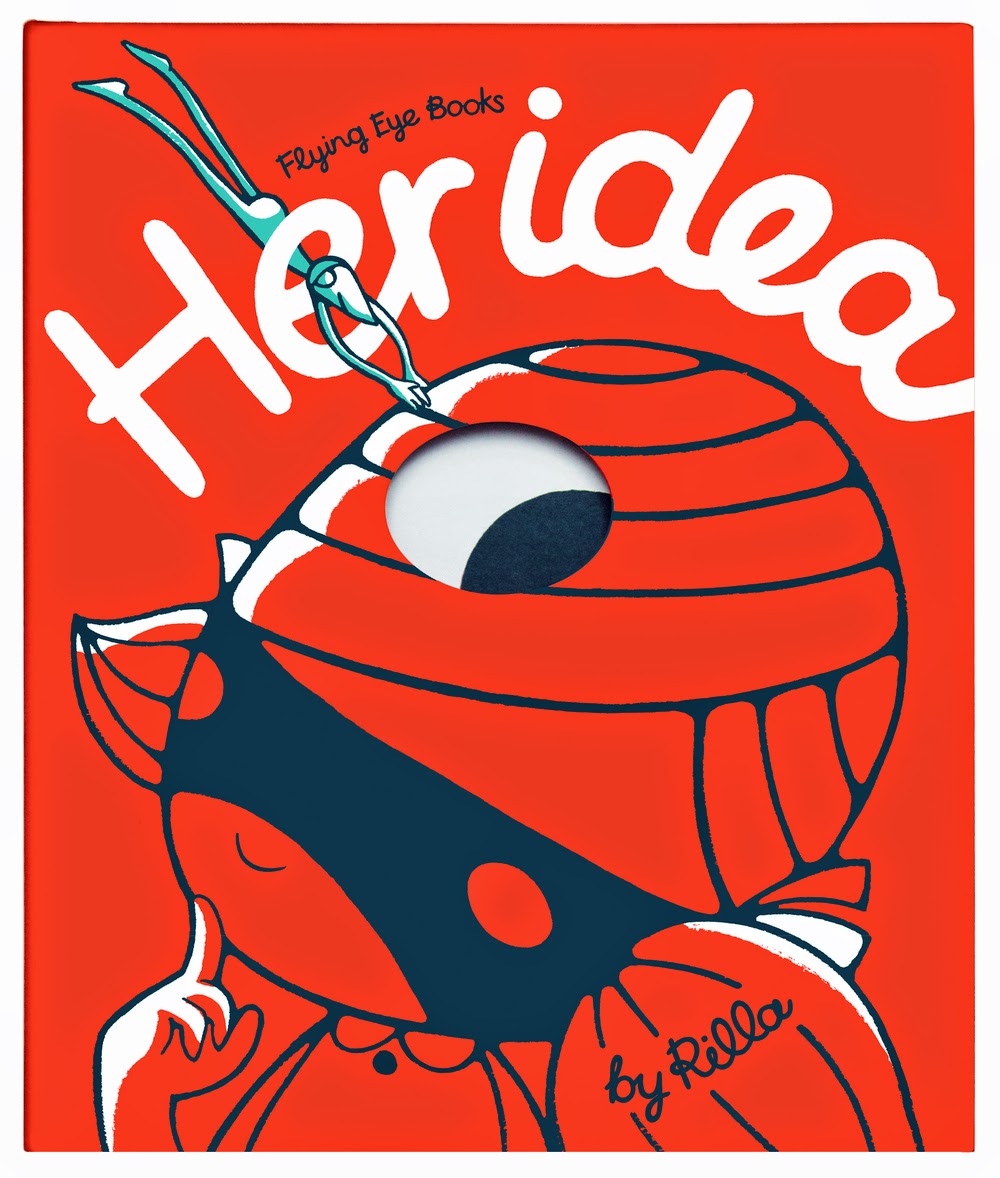
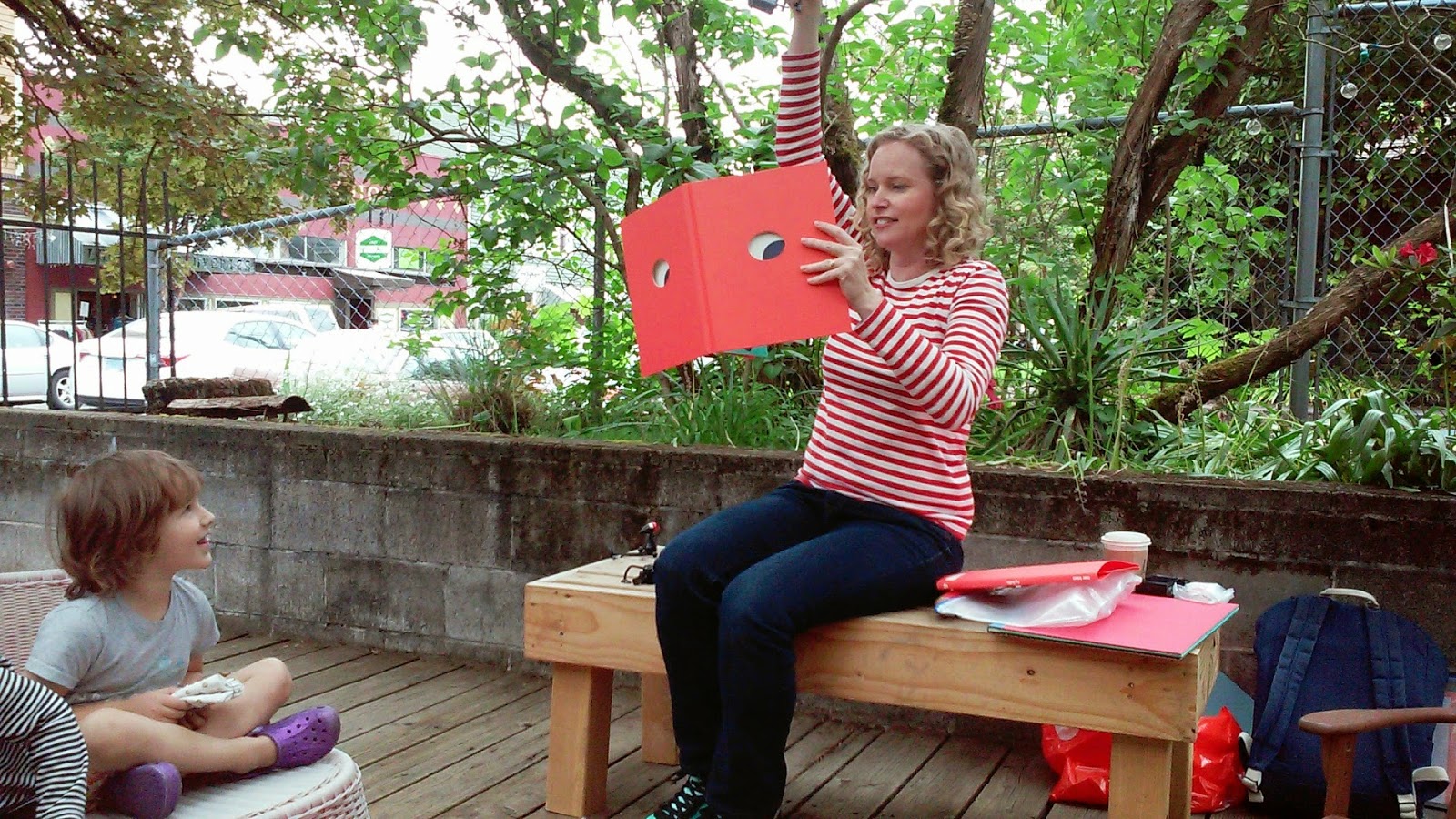
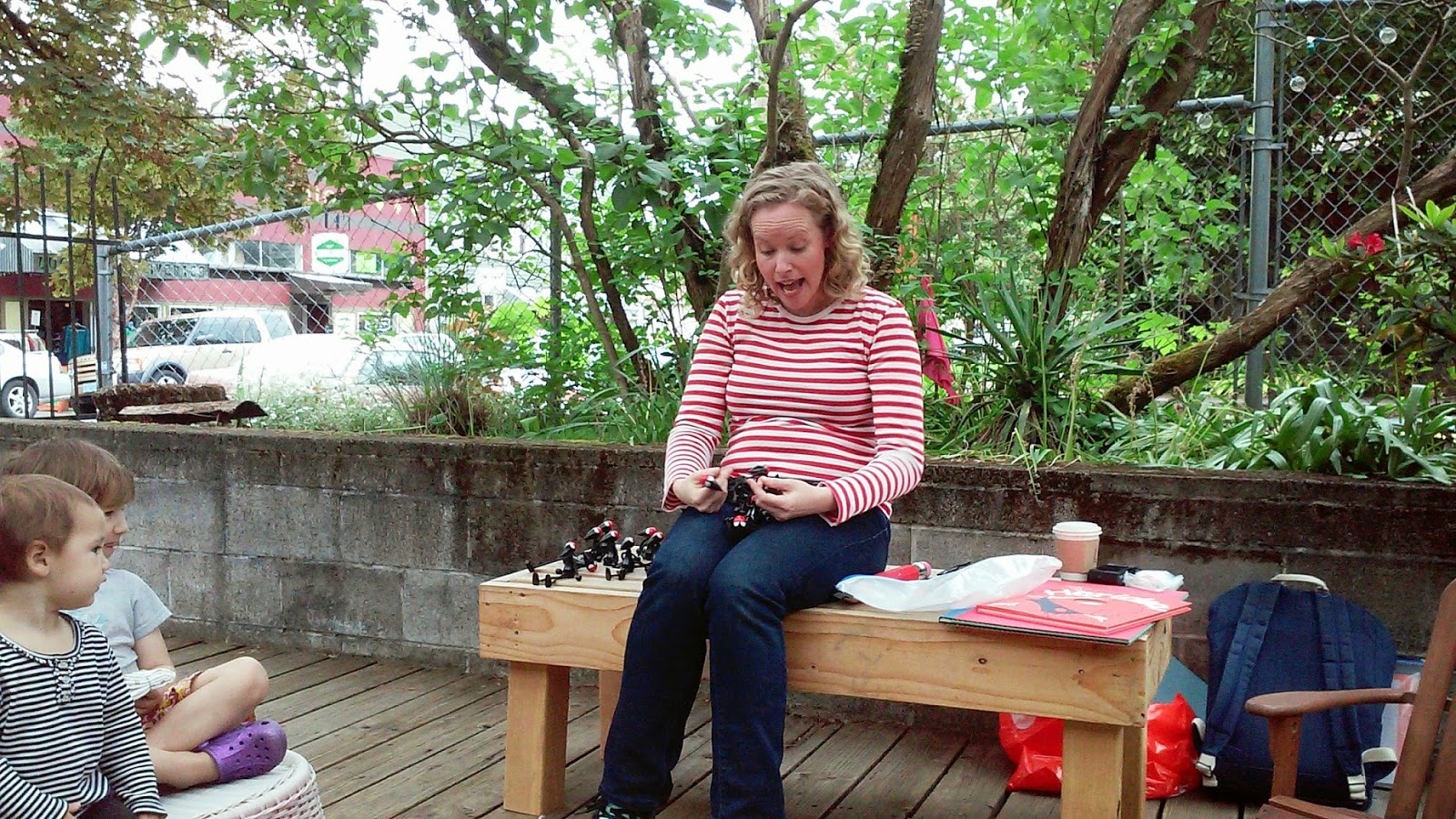
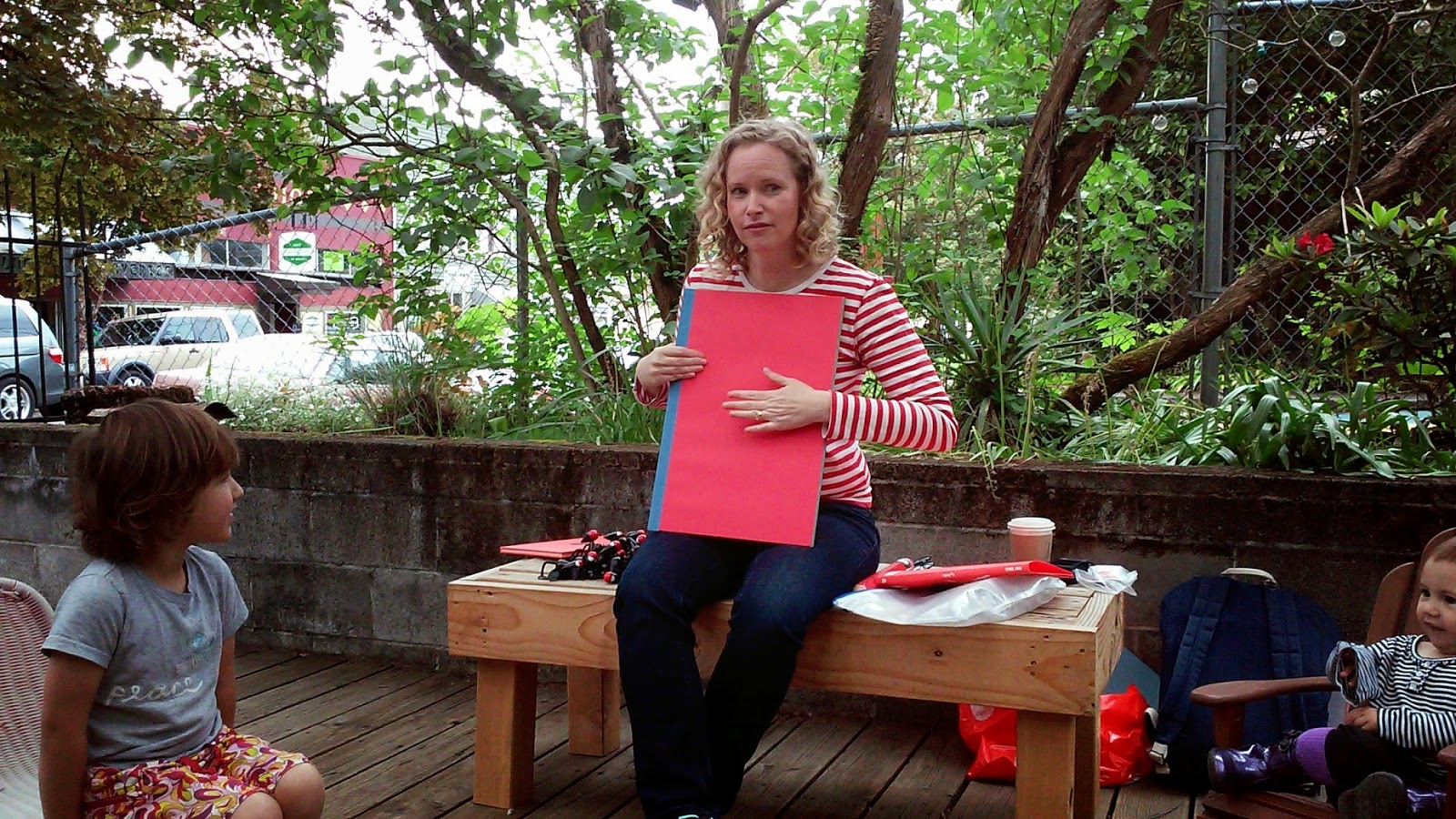
I got the opportunity to meet the children’s book maker Rilla Alexander at Green Bean Books recently.  She was there to read her book Her Idea, (from Flying Eye Books) a lively picture book about how to work on all those wonderful ideas we have.

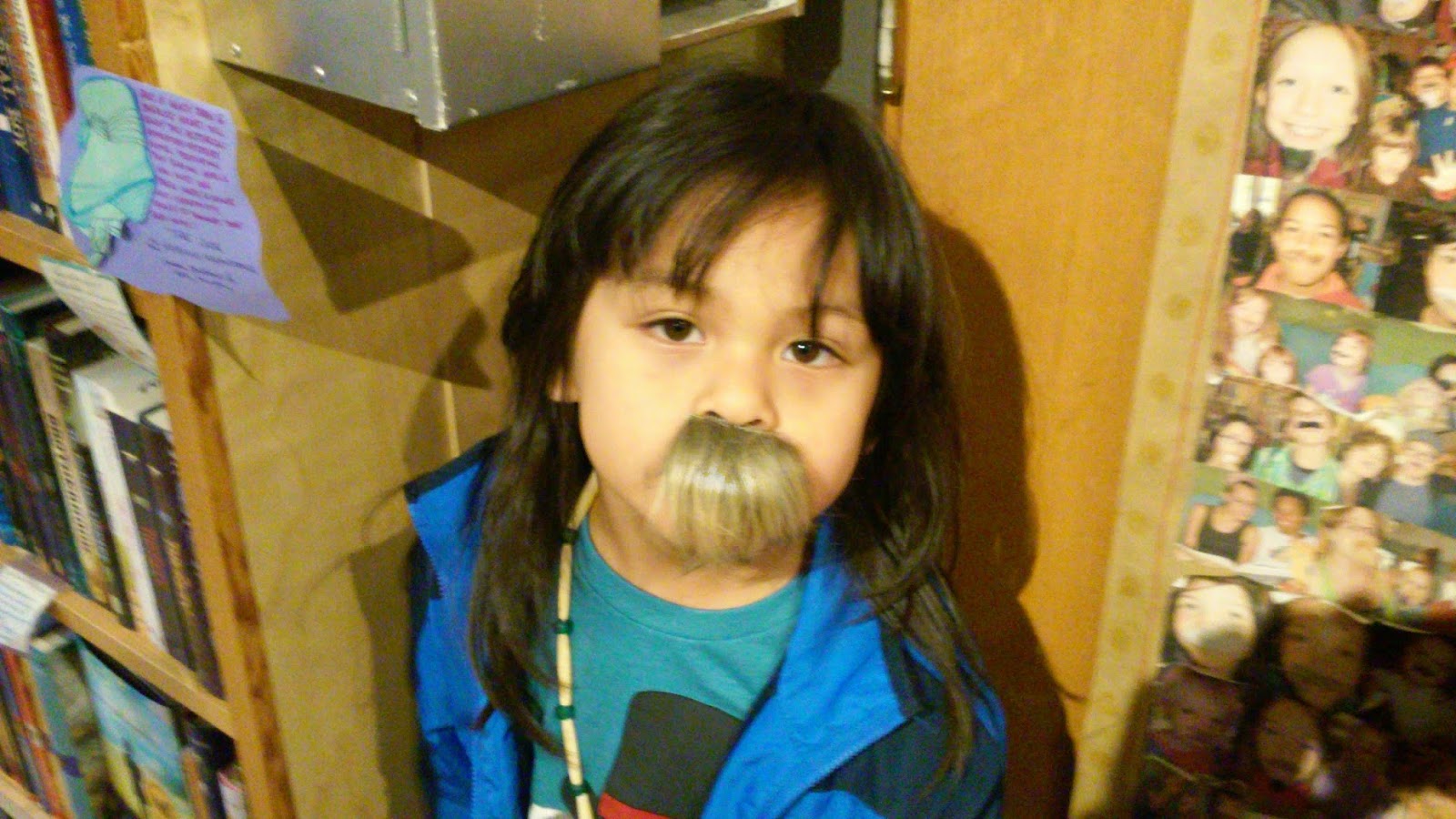
I went with two boys from my neighborhood, Bridge Meadows, Tomas and Noah Tanatchangsang, ages 5 and 9, respectively — though they look much older with their mustaches bought for $1. at the Green Bean mustache vending machine.

Rilla engaged the boys immediately and talked with them about their own art.  They talked about dragons, dinosaurs and making books.  She showed them a recent sketch of an alligator of hers on her cell phone.   
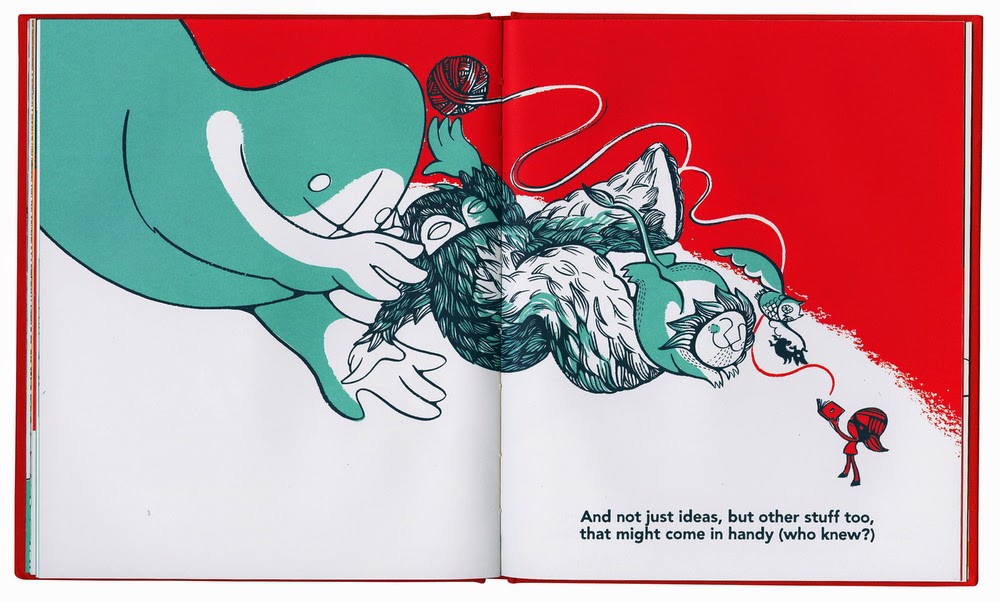
The book she was going to share with us came from ideas about a book with eyes, a book about ideas, and a book that is a book about books.  All merged together in Her Idea

It stars her alter ego, Sozi, a little masked girl, who has lots of ideas.   
Her Ideahas a die cut cover for the ideas to jump in and out of.

Karishma stopped by earlier and enjoyed the interactive elements of the cover

Take off the book cover, and you see its personality.

Sozi has boatloads of ideas.

She’s all gung-ho to work on those ideas.

But working  proves more difficult than Sozi realized.

She dissolves into lethargy with so many wadded up pieces of paper they become a big beast.  But a book brings her hope and a way her capture her ideas.

And other stuff, too!

I love that Rilla writes books that honor books.  Her first book, The Best Book in the World, was about the way a book can pull you in, even in the midst of the busiest of days.

For Her Idea, Rilla designed little idea toys.

She brough squillions of ideas

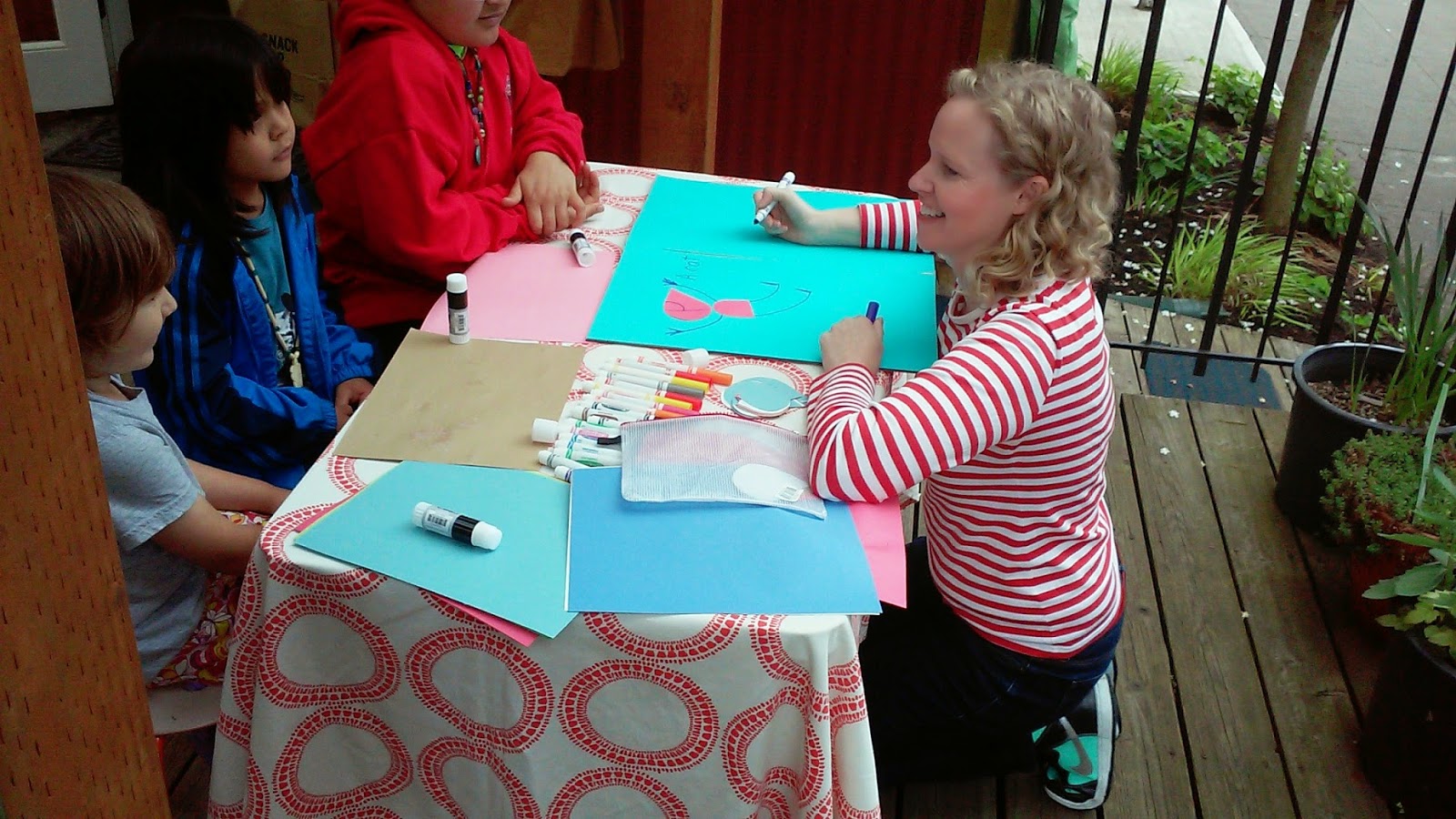
She also brought a big book for us to fill with ideas.

Noah’s idea was to go to the moon to see the stars

Tomas’s idea was for a yellow tricerotops named Banana

Her Idea is a fun read for kids and former kids alike, because we all have great ideas up to the point when we have to work on them.  Rilla has a great video on the creative process and this book on Vimeo, which you can see here:
 https://vimeo.com/53424300
We had such a good time with Rilla’s presentation, Tomas asked me if we could go back next week-end to see that cool lady again.  Unfortunately, we don’t get to see Rilla right away, but we can always go to the programs at Green Bean, an independent children’s bookstore here in Portland, Oregon.

You can find out more about them and their events here; http://www.greenbeanbookspdx.com/

It’s easy to get lost in a great book

And a great book gets a good laugh!
Rilla is from Australia, has lived in Berlin and is now a resident of Portland, Oregon.  She’s a designer and graphic artist whose work has appeared on everything from “toys to teacup to busses and buildings.”  Her website is here: http://www.byrilla.com/about/  
Thanks for reading my blog.  You can subscribe by email in the upper right hand corner of this page. Please feel free to leave any comments or suggestions.