Toys these days are so flashy and multi-faceted, I sometimes despair that children aren’t getting a chance to exercise their imaginations enough. Children’s imaginations, however, are more resilient than I give them credit for. I see they still can create whole worlds with boxes and paper. However, I’m old enough to long for simpler times, simpler toys. And I think it’s important to help spark their imaginations as much as possible.
It’s beautifully put together. It opens up from the landscape side and has the feel of a stage.
The stage is set.
The left page serves as a backdrop for the pop-ups on the right page. It’s got a little bit of a narrative.
Fire! Let’s put out the fire! Nee-nah, the siren wails. The brave fire fighters dive in. Quick the big ladder is being deployed.
I love that the child showing us toys is a girl and she likes firetruck, boats, and doll carriages alike.
ZZZ…My fireman is tired. He’s earned his rest in the little cradle next to my doll.Tuff, tuff, tuff! What noise the motor makes! Aboard my eight-speed tractor, I drive Stendhal the big sow to the pigsty.
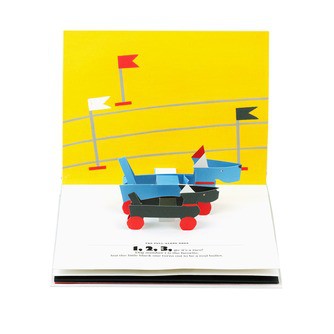
1, 2, 3, go: it’s a race! Dog number 1 is the favorite, but the little black one turns out to be a real bullet.
There’s even a movable part where you help lumberjacks saw wood. And a big mess in the child’s bedroom at the end of the day.
I’ve had such fun conversations after reading this with children about the toys I grew up with and the toys my mother saved from when she was a child.
This book is charming in every way and leads to a sense of nostalgia in the greatest sense of the word. It’s a great gift to share with a child. It’s beautifully designed with lots of clean white space so the colors pop. Mine has been read by several eager children under five and it’s still in great shape. I expect it to last for years. It’s published by Little Gestalten, a company that publishes unique books from all over the world.
Here’s a video of the original French Version of the book, posted by the author/artist:
Gérard Lo Monaco is originally from Argentina, and now lives in France. He was involved in the creation of a circus, a puppet-making company, and a wooden-horse merry-go-round—all of which toured throughout France. He’s designed album covers and posters and has been awarded a prestigious prize from the Musée des Arts Décoratifs de Paris.
Thanks for reading my blog. My favorite toy when I was under five was little pink pig I swaddled like a baby doll. What was yours?
Childhood is filled with rapid and strange changes. You’re growing, learning, and competing from the moment you arrive. You form a bond with a sibling, and then that sibling grows and changes. It seems you’ll never get a handle on it all.
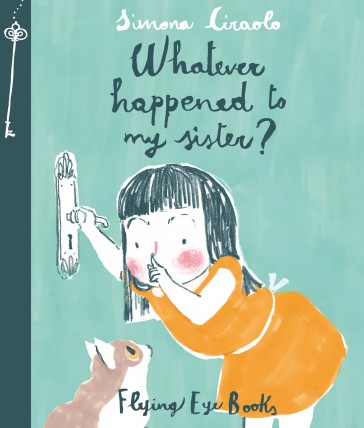
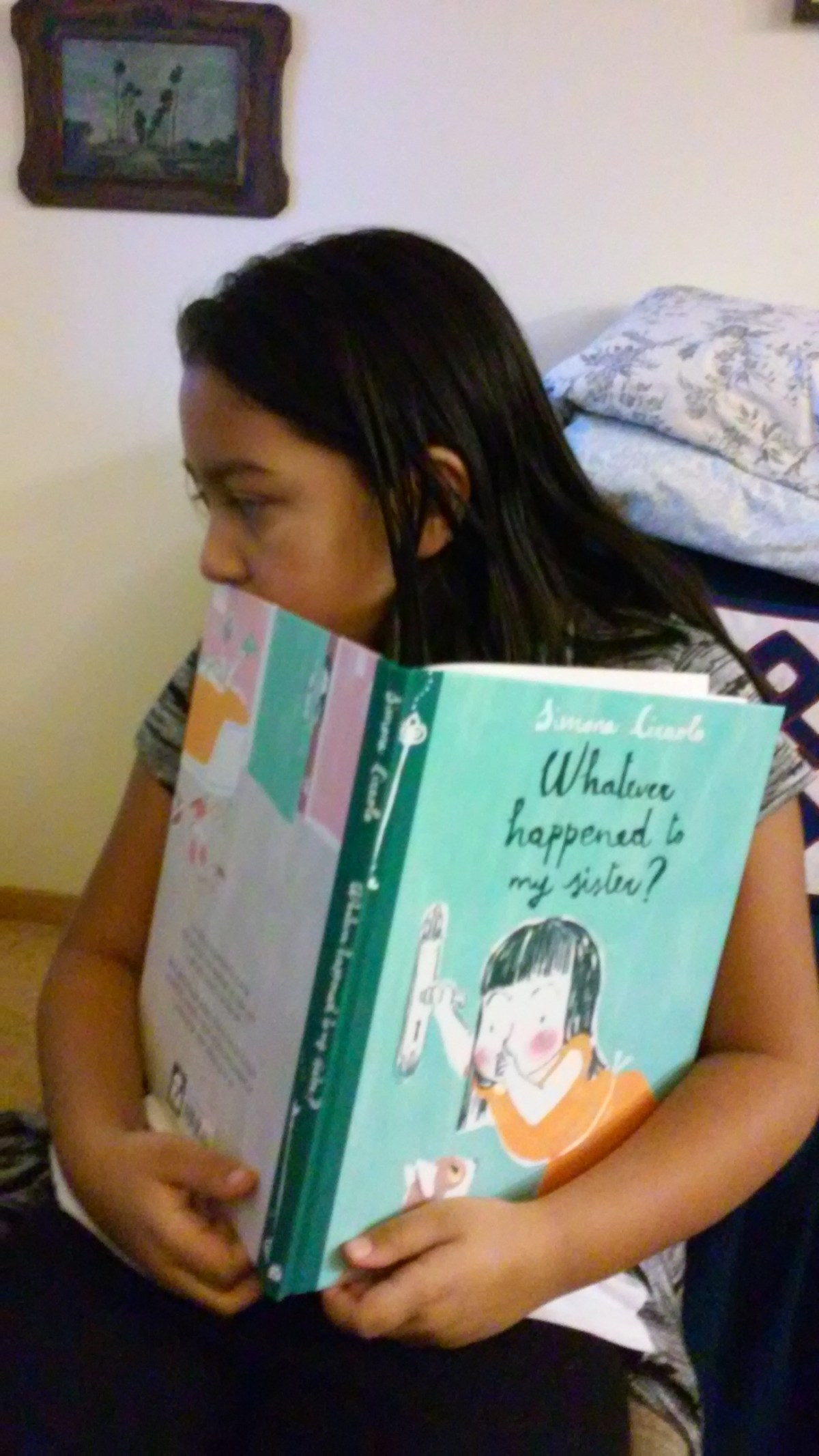
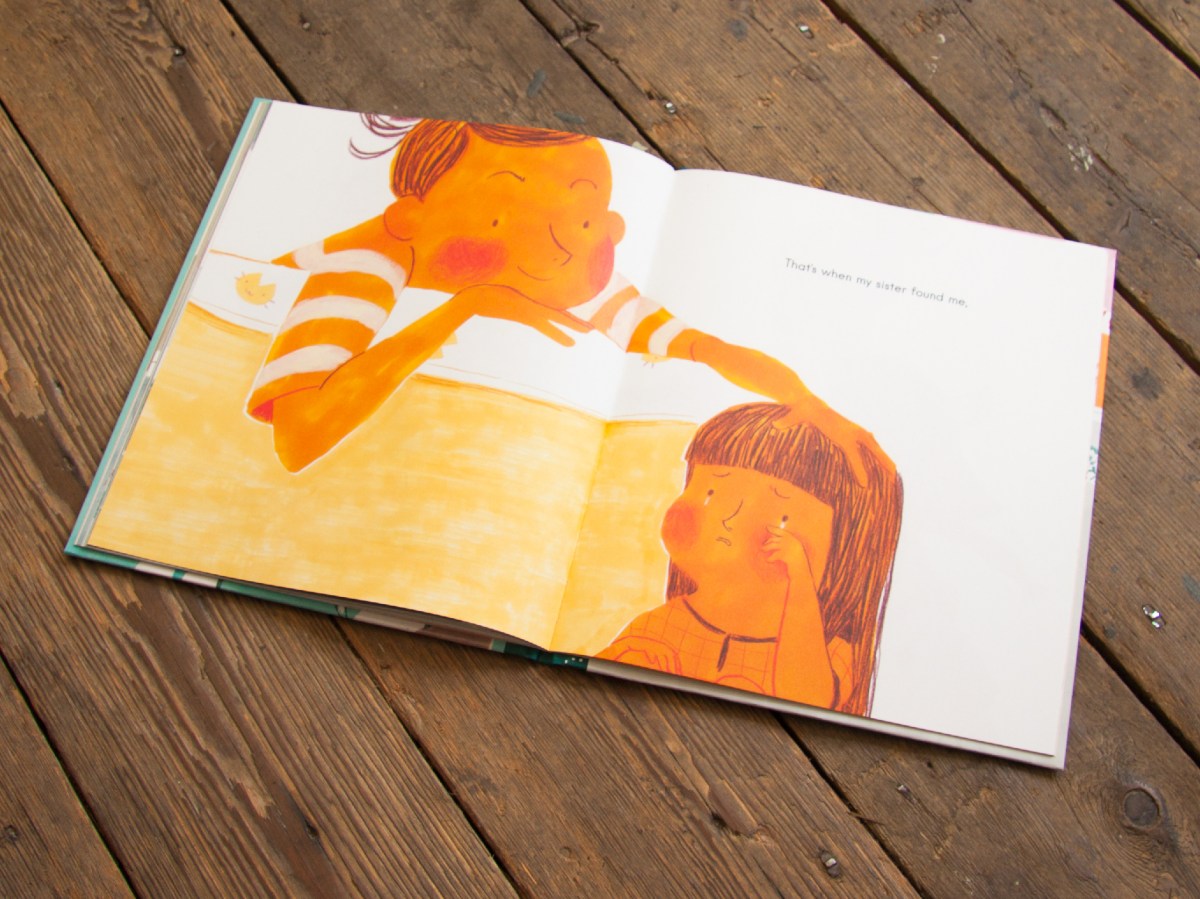
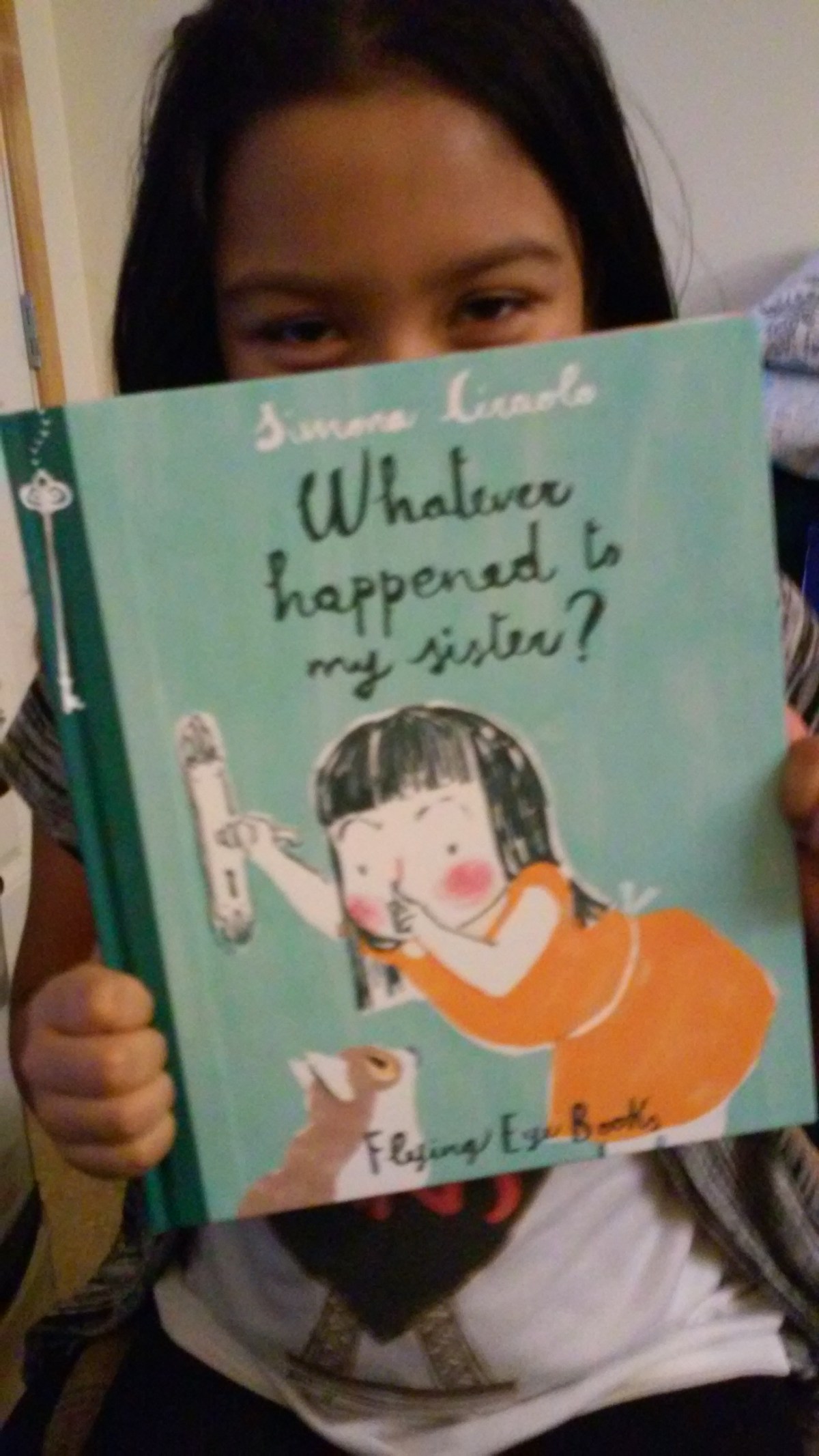
The slippery nature of sibling relationships is explored in a charming and insightful picture book Whatever Happened to my Sister? by Simona Ciraolo, published by Flying Eye Books.
It opens with a little girl puzzling over an album of family pictures showing an older and younger sister playing together.
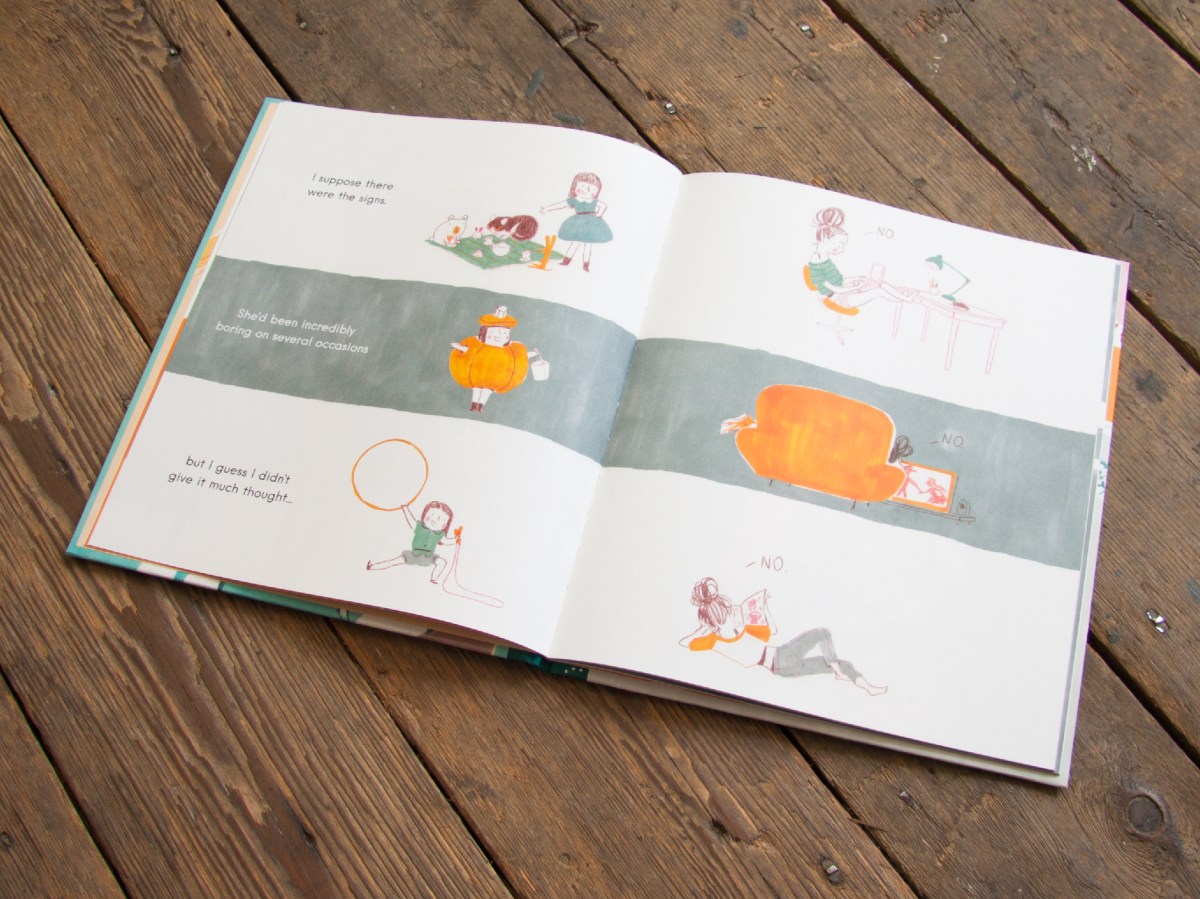
“I’d had my suspicions for a while that someone had replaced my sister with a girl who looked a lot like her.”
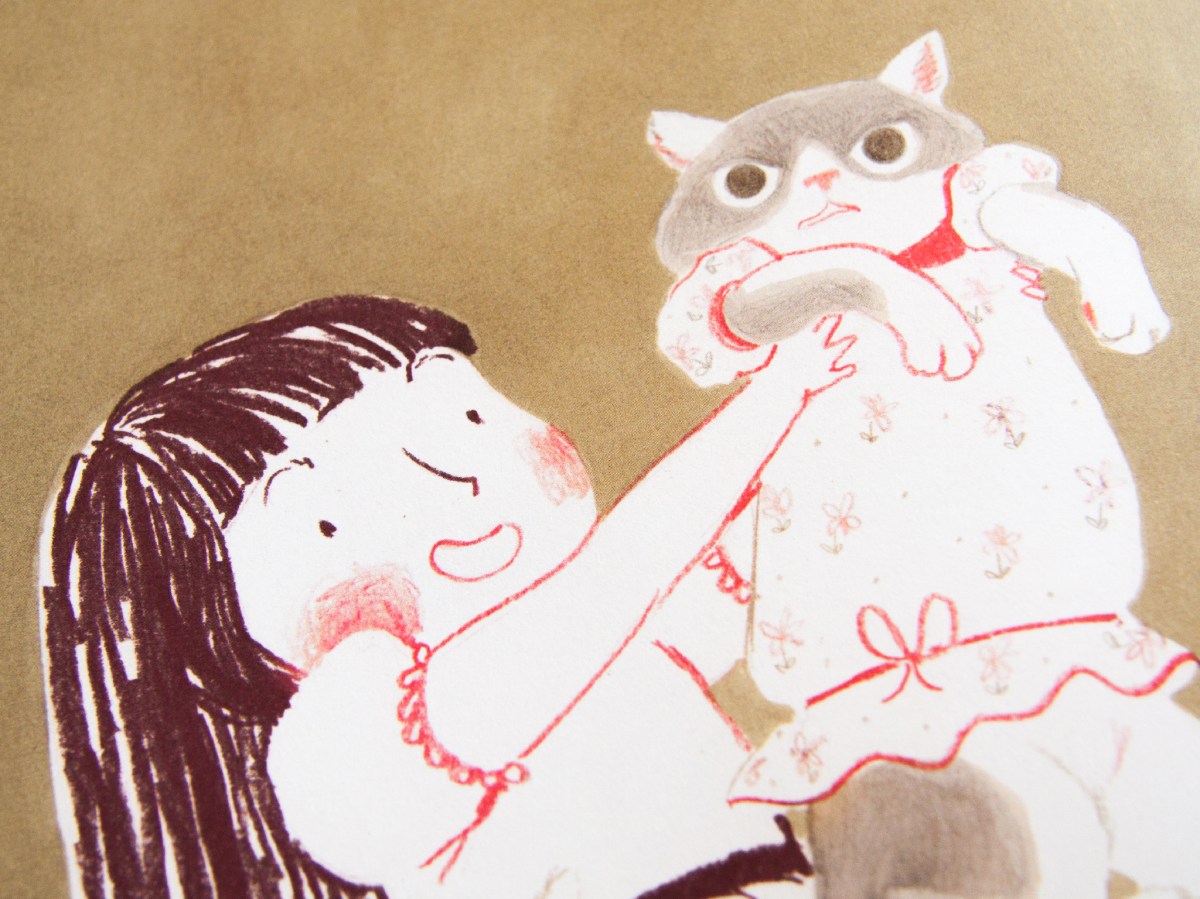
Now she’s stuck with a tall rude sister who never wants to play,
isn’t interested in cute things,
and is hanging out with boys.
This is Ciraolo’s second book. Her first, Hug Me, showed enormous but subtle sensitivity to the plight of a prickly character. In this new book, she uses a minimalist narrative to tenderly explore a difficult passage in childhood.
No, no, and no
My 7 year old friend Karishma was particularly interested in this book because Hug Me is one of her favorites, and because her sister just turned 13. Karishma has two older sisters and a younger one, so the dynamics between sisters are very much a part of her life.
The hardest part is that her older sister is no longer predictable. And things aren’t going to return to the way they were.
Whatever Happened to my Sister? doesn’t sugar coat the reality of change, but it celebrates the new ways that bonds between sisters can be formed.
After reading the book, Karishma and I had a great discussion about how much she’s grown in the last year. This year, she’s reading books to me and understanding more words and concepts.
She’s taller. Her relationship with her two year old sister has changed. Change is inevitable, but it doesn’t have to be scary. Especially when you’ve got good stories to help you out along the way.
Whatever happened to my Sister? is drawn with warmth and charm. Ciraolo uses a muted palette and expressive crayon lines. As the story closes, everything brightens and you can almost hear the giggling between sisters.
You can find out more about author/illustrator Ciraolo here.
And you can see more wonderful books published by Flying Eye here.
You can read Karishma’s and my review of Hug Mehere.
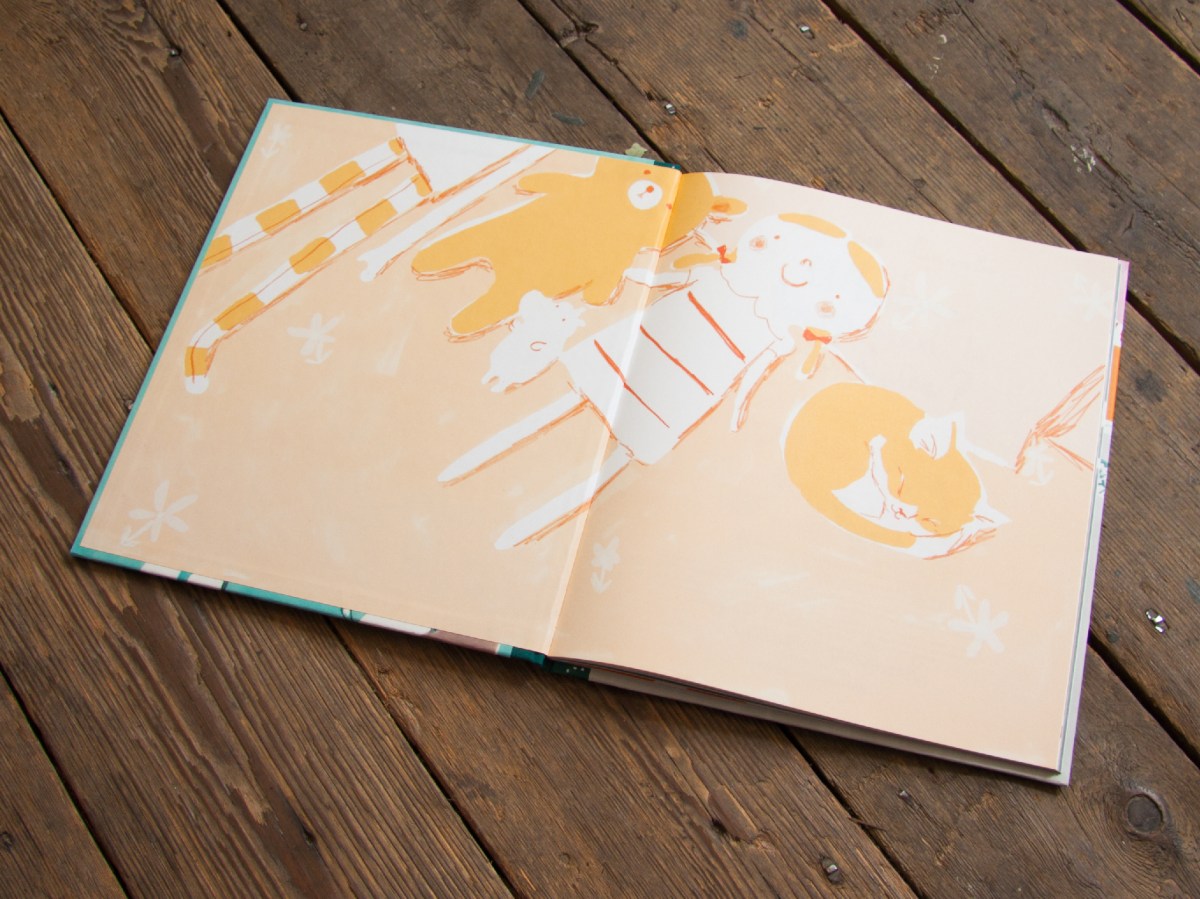
A beautifully bound book with great endpapers
Thanks for reading my blog. If you like it, share it.
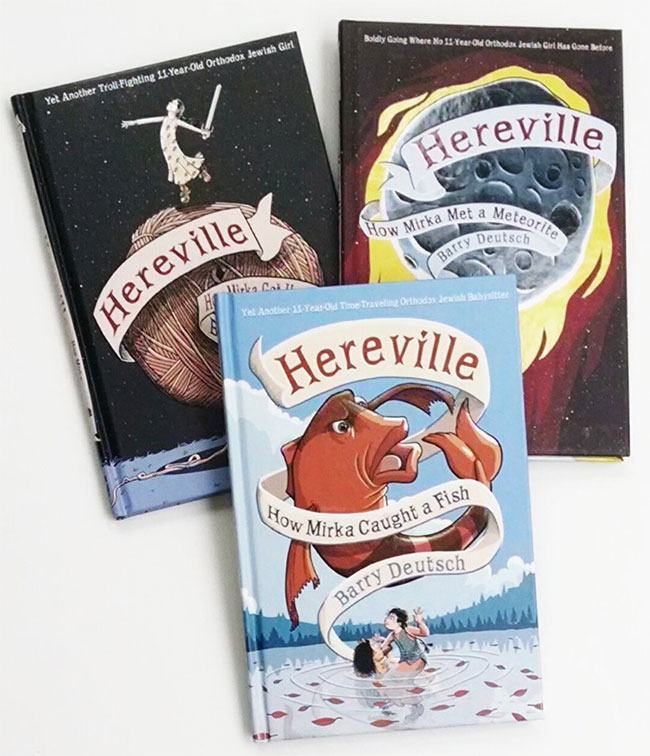
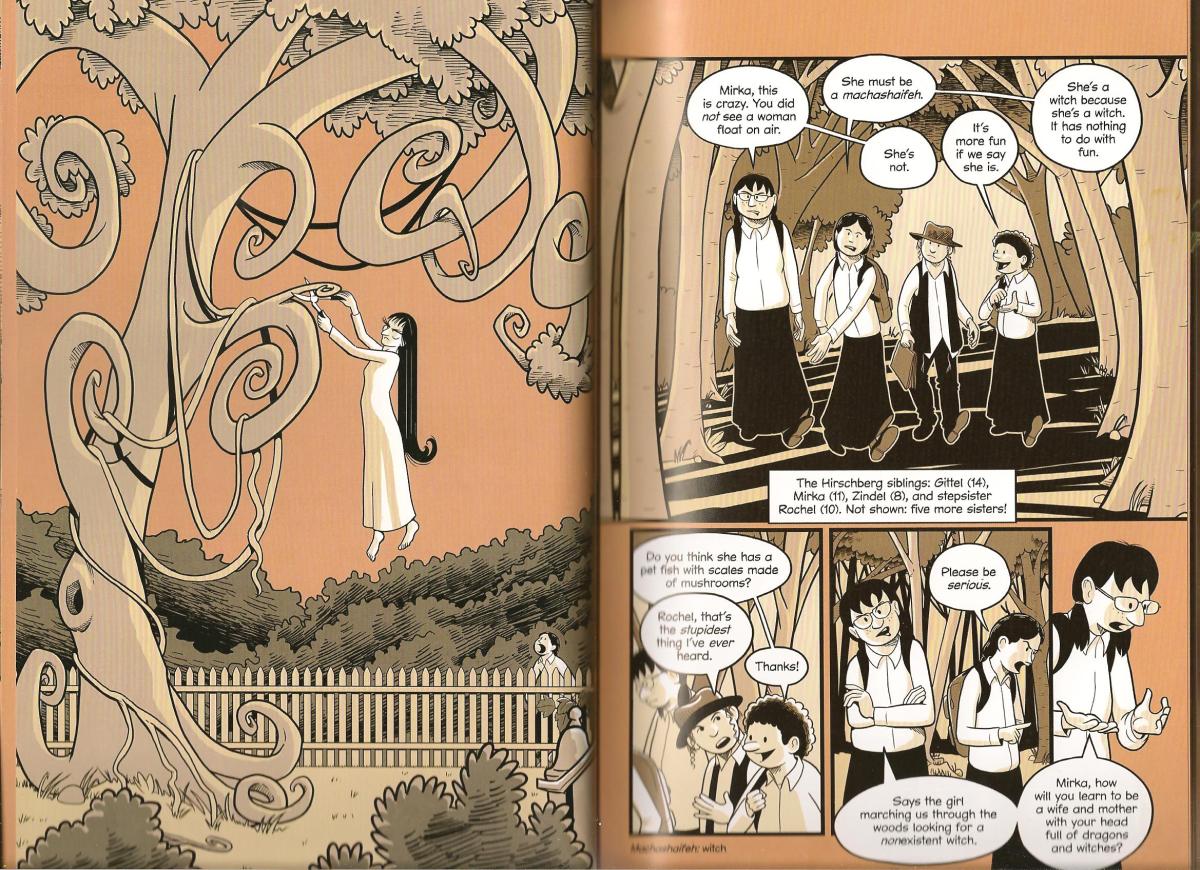
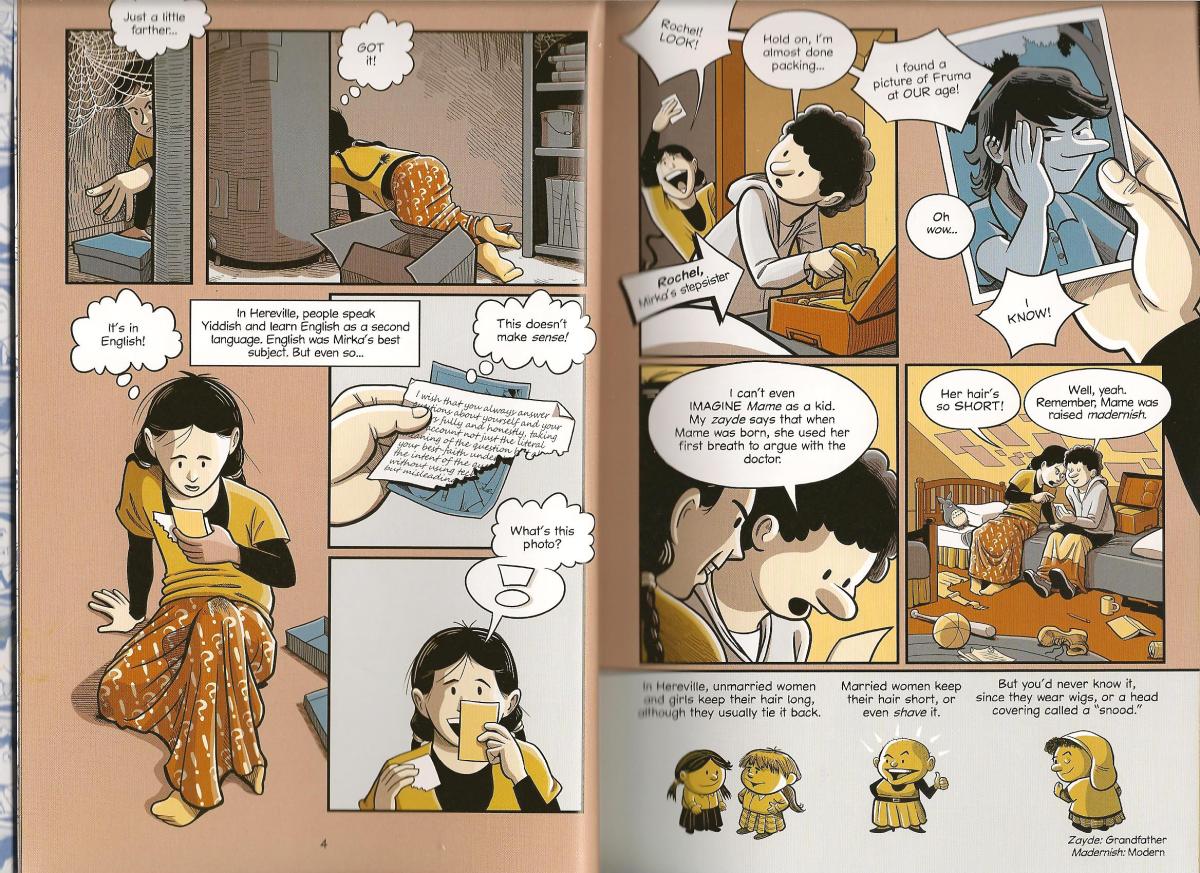
I became aware of the delightful Hereville series by Barry Deutsch through my friend Adrian Wallace. He drew the backgrounds for Hereville: How Mirka Caught a Fish, the 3rd book about “yet another 11-year-old time travelling Orthodox Jewish babysitter.” Mirka is also a troll fighter and meteor conqueror, which is amazing in that she lives in a quiet sheltered Orthodox village.
When Adrian explained to me what it was about, I was intrigued. When I read the first book, How Mirka Got Her Sword, I was totally hooked. I read the second, How Mirka Met a Meteorite, and then had to wait for the third to come out. Now it’s here! I love Mirka’s story so much I really wish it was a weekly, or even, should I be so blessed, a daily strip.
Mirka is a feisty, flawed and highly imaginative 11 year old. That she lives in a sheltered and devout community doesn’t keep her from being a universal character. She lives in a blended family, with a step-mother and step-siblings. Sometimes, she fits in. Sometimes, not so much. She’s strong-willed but her stepmother Fruma isn’t trying to break Mirka’s spirit so much as to keep focused on the skills she’ll need in life.
There’s something wonderfully mysterious about Fruma and her support of Mirka, and as the story unfolds, that mystery deepens. Deutsch is a gifted storyteller who creates adventures that are both original and hair-raising. And it’s not sword play that gets dear Mirka out of trouble. In each volume, you feel satisfied with the conclusions, but he’s planted seeds and tweaked curiosity. You’ll want more.
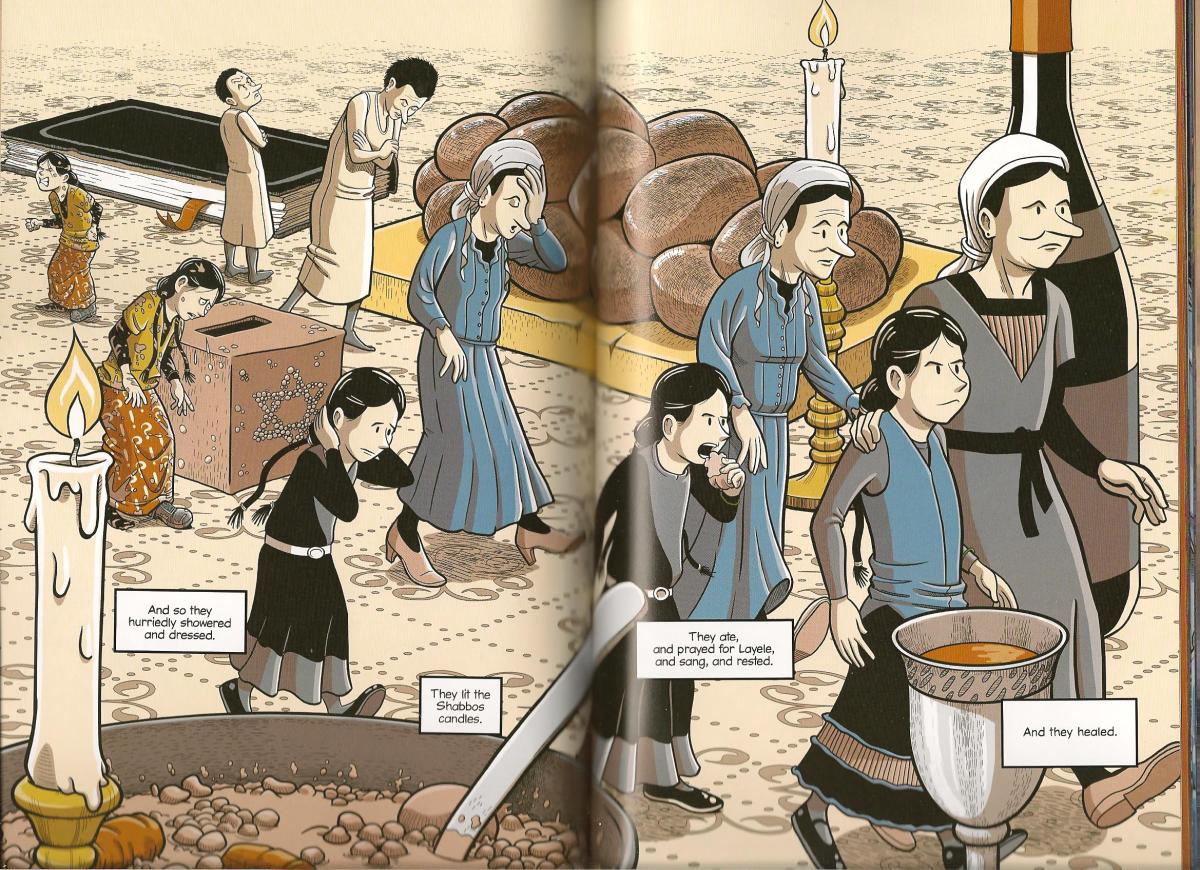
The setting in an Orthodox community is brilliant. Deutsch gives us lots of information on how the community works. The Hirschberg family is large – 8 sisters and 1 brother. There’s a lot of family dynamics to navigate. There are bullies to dodge – or to challenge, which is what Mirka chooses. When her imagination and ego fail her, magic intervenes, and, also, her devotion to Hashem.
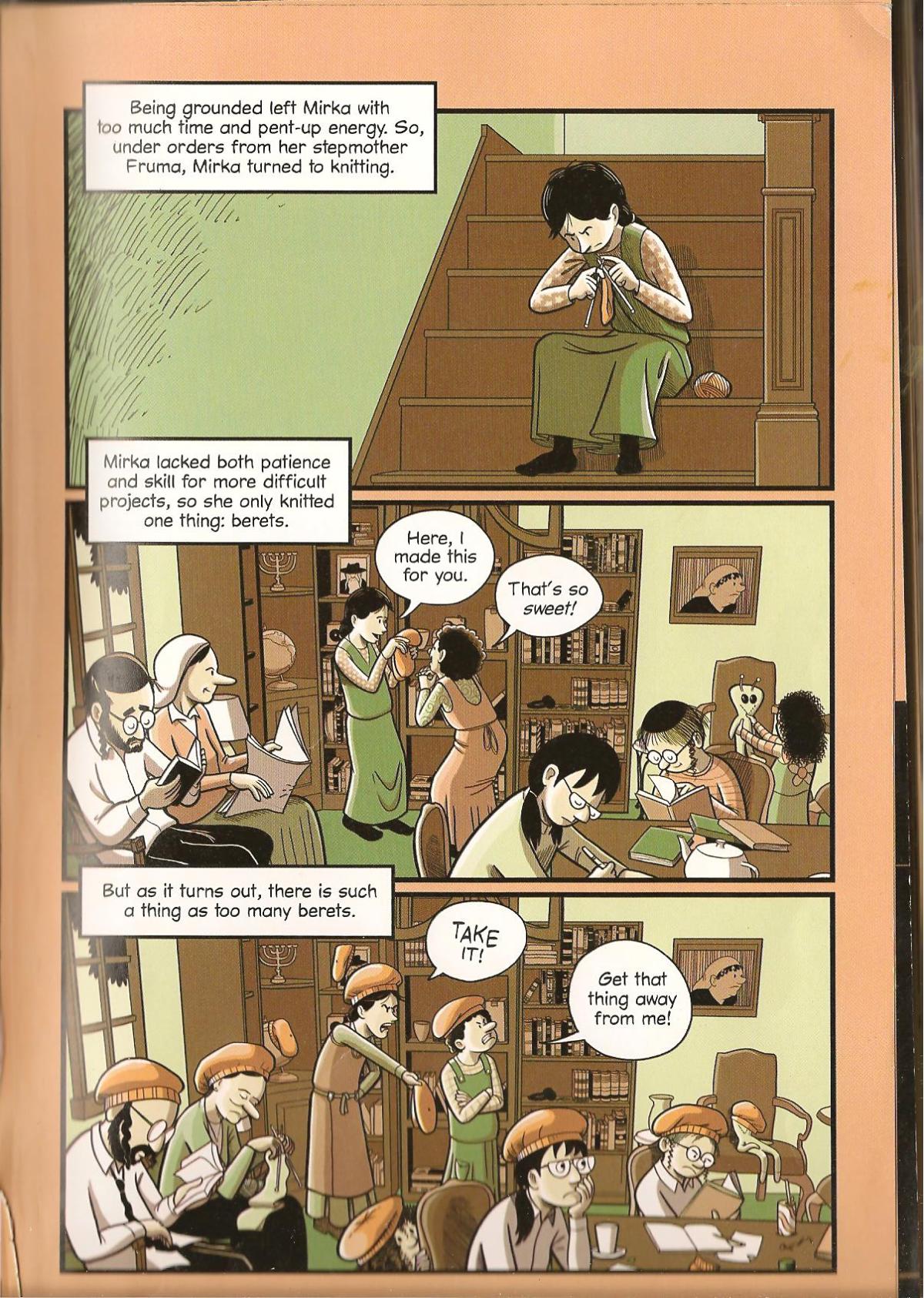
In How Mirka Got Her Sword, she encounters real magic for the first time and must outwit – and out knit — a troll. The key to victory is as surprising as it humorous.
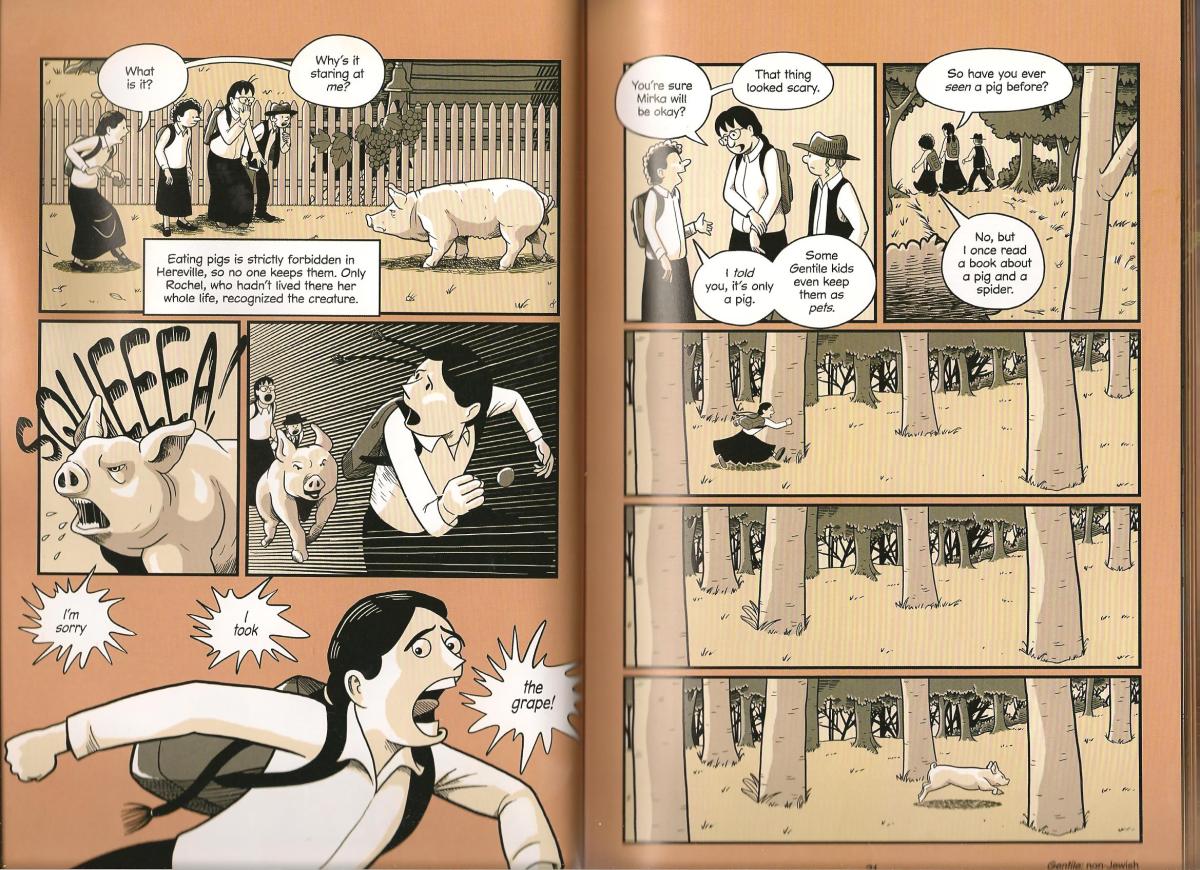
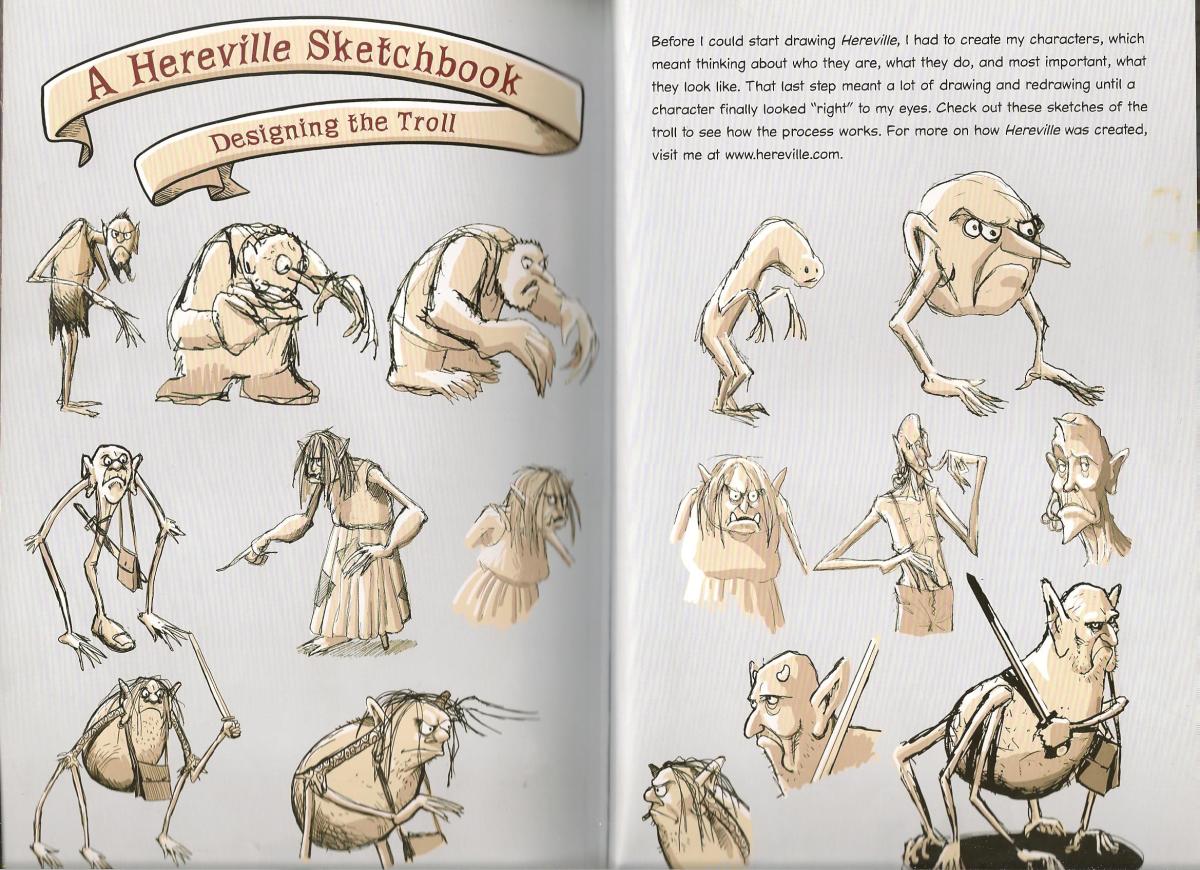
The first sign that all may not be Orthodox in HerevilleMirka is chased by a strange beast after “stealing” a grapeDeutsch shows a bit of his creative process
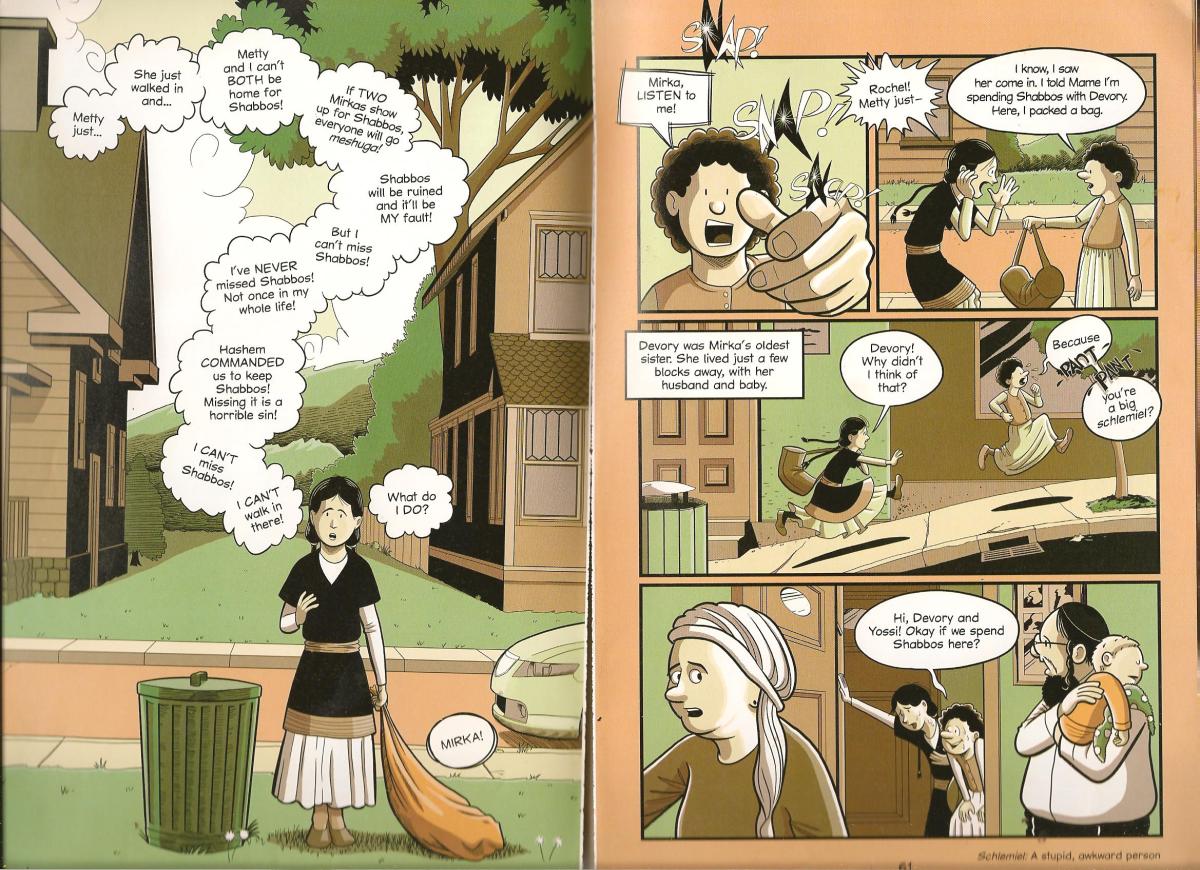
In How Mirka Met a Meteorite, she unwittingly helps bring a meteorite to life as her twin, then must figure out how to be a better Mirka than her almost perfect impersonator.
Mirka’s doppelganger has exiled her from her own house
In How Mirka Caught a Fish, published last month by Amulet Books, she faces her greatest challenge – babysitting. One would think that would be easy enough for a girl who has triumphed over so many adversaries, but she takes her little sister into the forbidden woods and rouses the ire of a fish who is on a mission to bring down Mirka’s whole family.
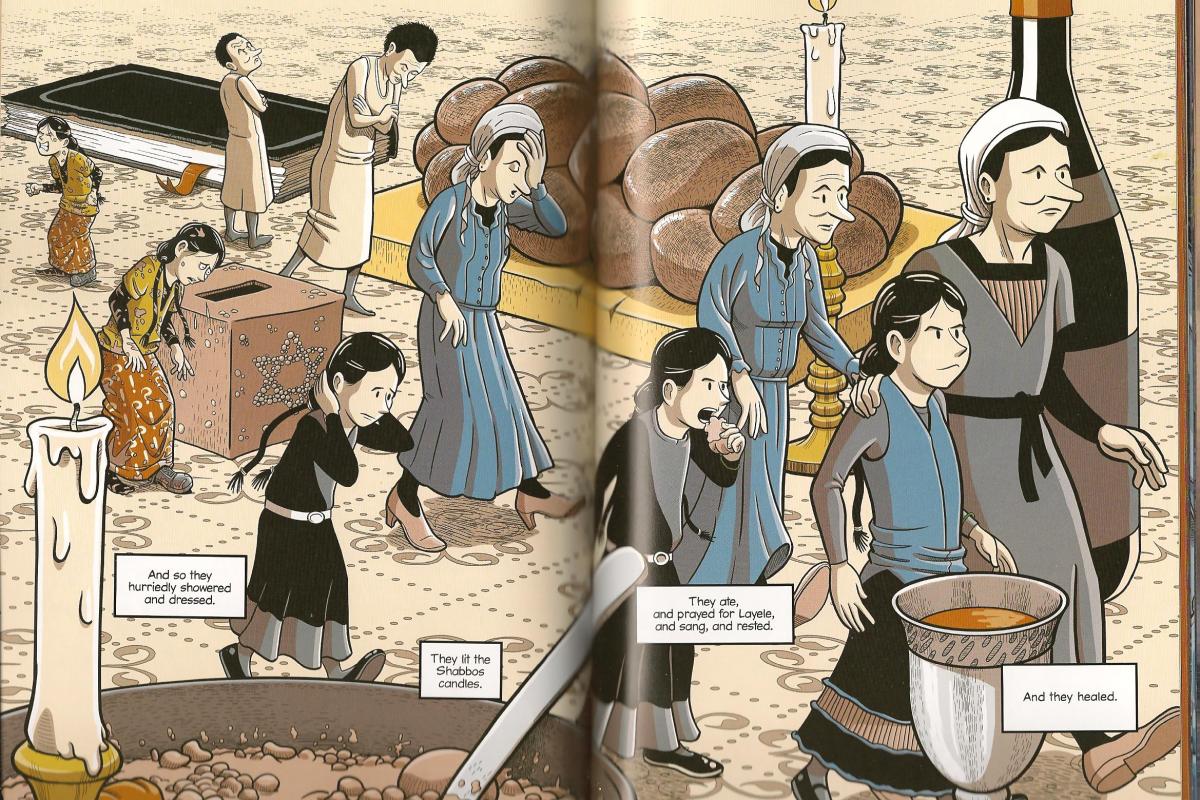
A bit of cultural infoDeutsch can make magic with the simplest objects
A lot is said without words
The artwork is crisp, expressive, and easy to fall into. Layouts change and engage the reader. The colors are warm, natural and inviting. (Jake Richmond did the colors of all three books.) You get a little more from the story with each re-read.
I think the most impressive thing about this series is that in its own circuitous way, it normalizes a way of life that may seem impenetrable to those of us who live outside it. Though the adventures are fantastical, the characters seem real. Their day to day life and the way they deal with each other shows the universal nature of family and community. Both magic and the Orthodox belief system breathe life into Hereville and, all in all, it seems a wondrous place to live.
In a world where we’re being fed fear of other cultures almost constantly, this a rare and delightful gift.
I can’t wait for the next one.
You can find Barry Deutch’s Hereville website here for more information on the series and where to buy the books.
I don’t remember a time when I didn’t enjoy going to museums. My earliest memory of a museum is the natural history museum in the old Pink Palace in Memphis, where I could see dioramas of cave people and the bones of ancient creatures. What an amazing world it offered for my childlike mind to ponder. Big bones and tiny stones were on display, each magnificent in their own way.
When I went to museums on field trips in school, I always lagged behind and longed to get lost in the various rooms. When I got engulfed by a painting, I no longer wanted to be part of the chattering school pack. I wanted many moments to look at the particular way light and color made shapes and stories in my mind. I learned early in my adult life to never go on a guided tour. If something captured my attention, I wanted to spend a long time looking at details, to get lost in what was before me, let it open my dreaming mind and give me a sense of wonder.
I’d like to go on a museum tour of the world, but that’s probably not going to happen. I love it when museums publish comprehensive catalogs that allow me to take home an exhibit and revisit it. Or to order a catalog and see it from afar, to have it to hold in a book.
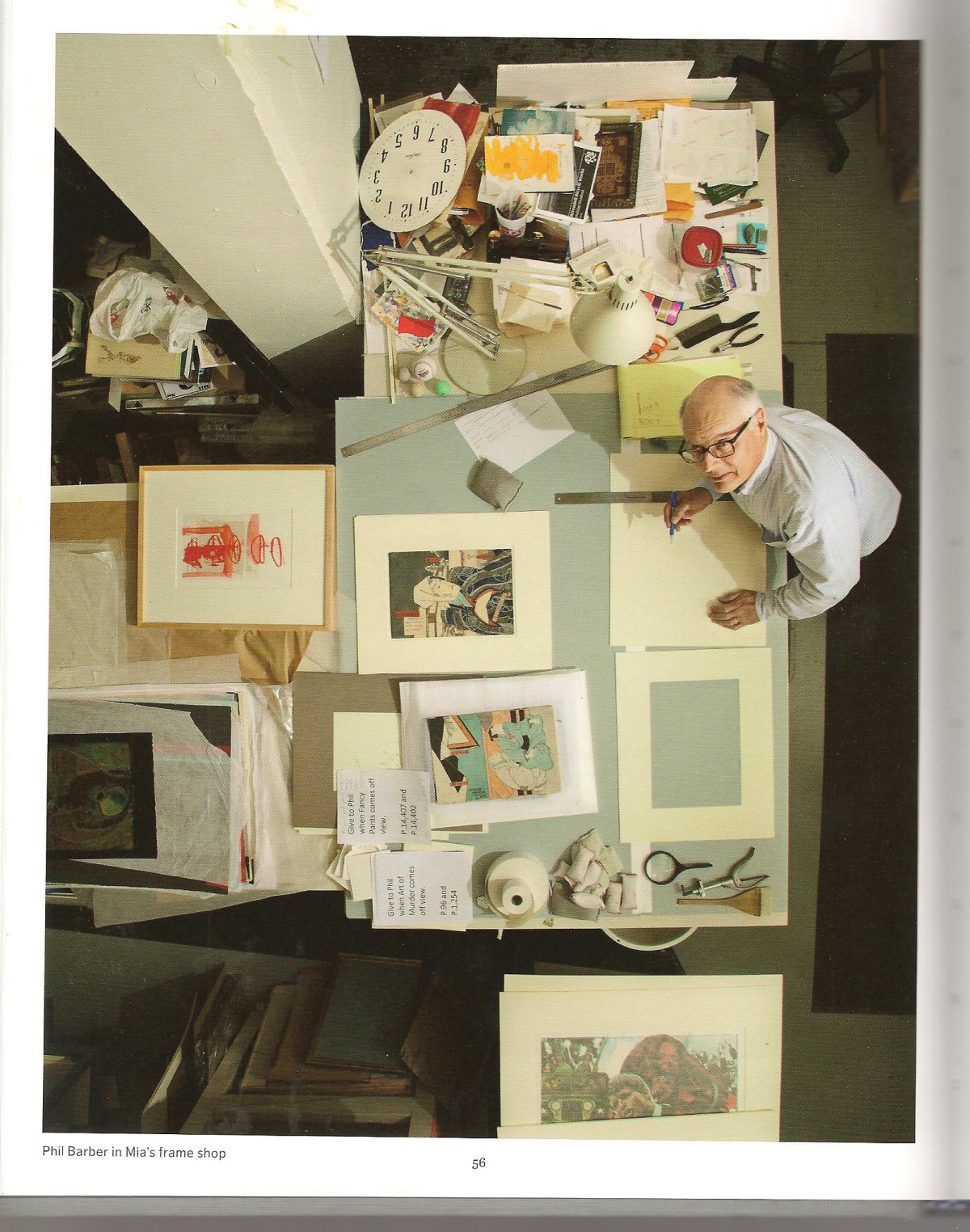
So I was delighted to find the book The Art of Wonder: Inspiration, Creativity, and the Minneapolis Institute of Art, published this year by the University of Minnesota Press.
“The Minneapolis Institute of Art opened its doors on January 7, 1915.
“We determined to mark the museum’s 100th anniversary with a book. But what kind of publication should it be? The museum’s founding, its visionary patrons and leaders, and its previous 99 years of existence have all been addressed elsewhere. On the other hand, the certainty of mission and the clarity of vision that has emerged over the years – shaped, tested, and strengthened by the almost incalculable changes of the last century – is something really worth talking about. Why are we, the Minneapolis Institute of Art, here? What place do we have – what place will we have – in the life of our community? What is the role of art in the lives of 21st-century citizens? …
“And so the purpose of what became known within Mia as “The Birthday Book” came into focus: like the museum it is meant to reflect, it would speak to the power of art to provoke wonder; to inspire creativity; to comfort; to shock; and to provide the language to say new things. The book would not be a dry retread of old photos and anecdotes, or lists of collection highlights, but something much more lively: an anthology of the best fiction, essays, graphic storytelling, thought pieces, and photography that speaks, however indirectly, to the power of creativity, curiosity, and wonder. We would turn the book over, in other words, to the creators – not to talk about our vaunted past but our true lifeblood, which opens a window onto the human experience even as it enriches it.”
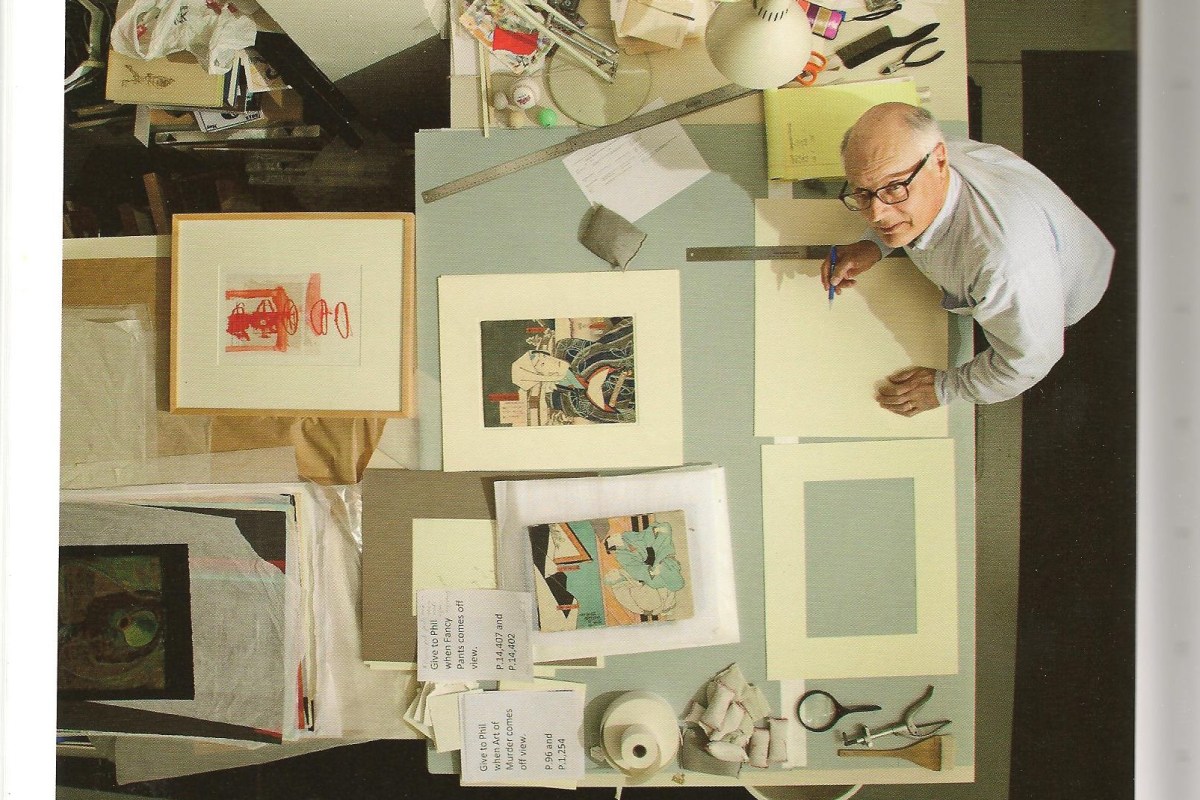
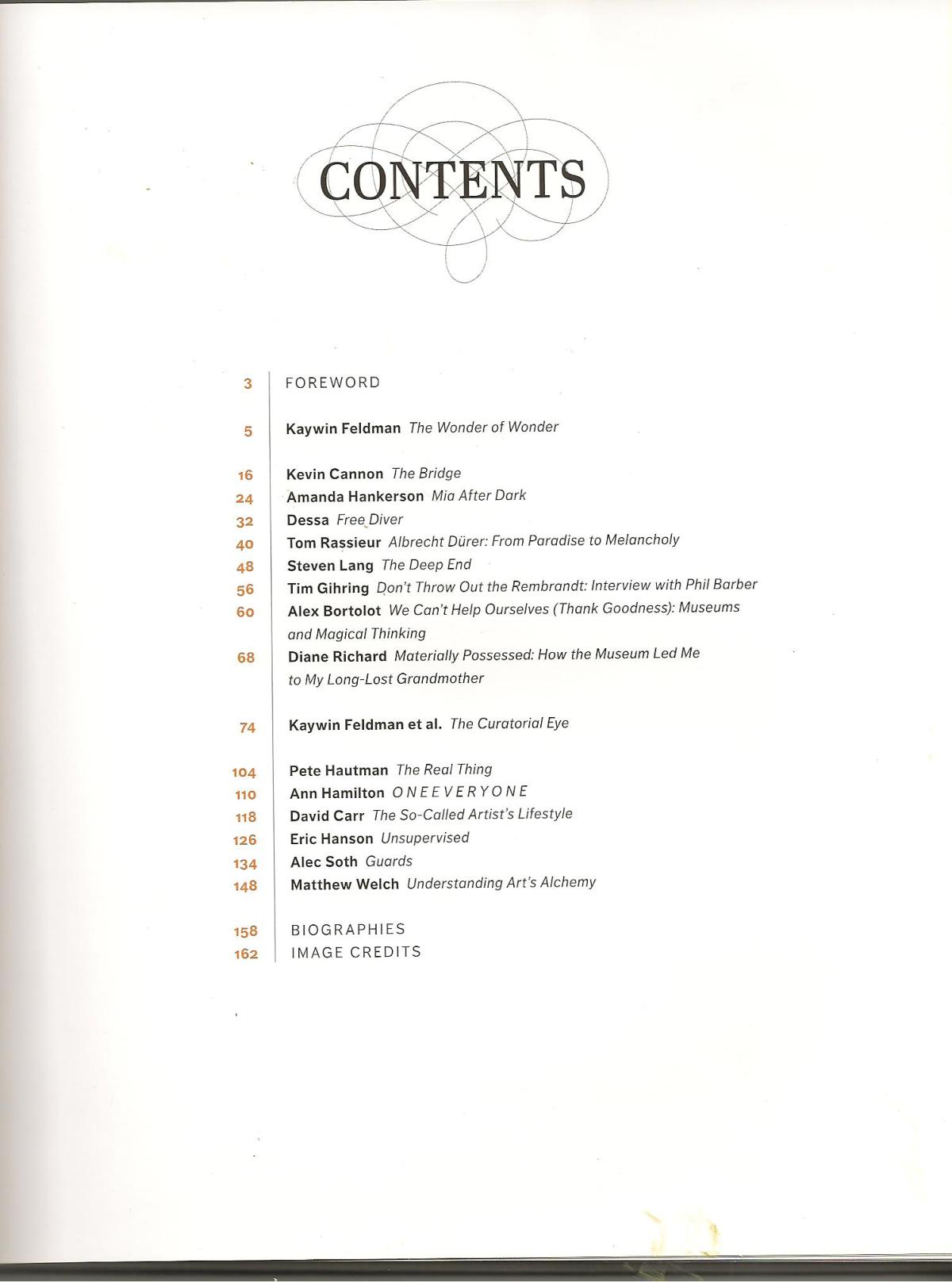
Contributors to this project include Kevin Cannon, David Carr, Dessa, Ann Hamilton, Eric Hanson, Pete Hautman and Alec Soth. Additional authors include the director, curators and staff of the Minneapolis Institute of Art, experts in their fields, on the objects of their affection and wonder.
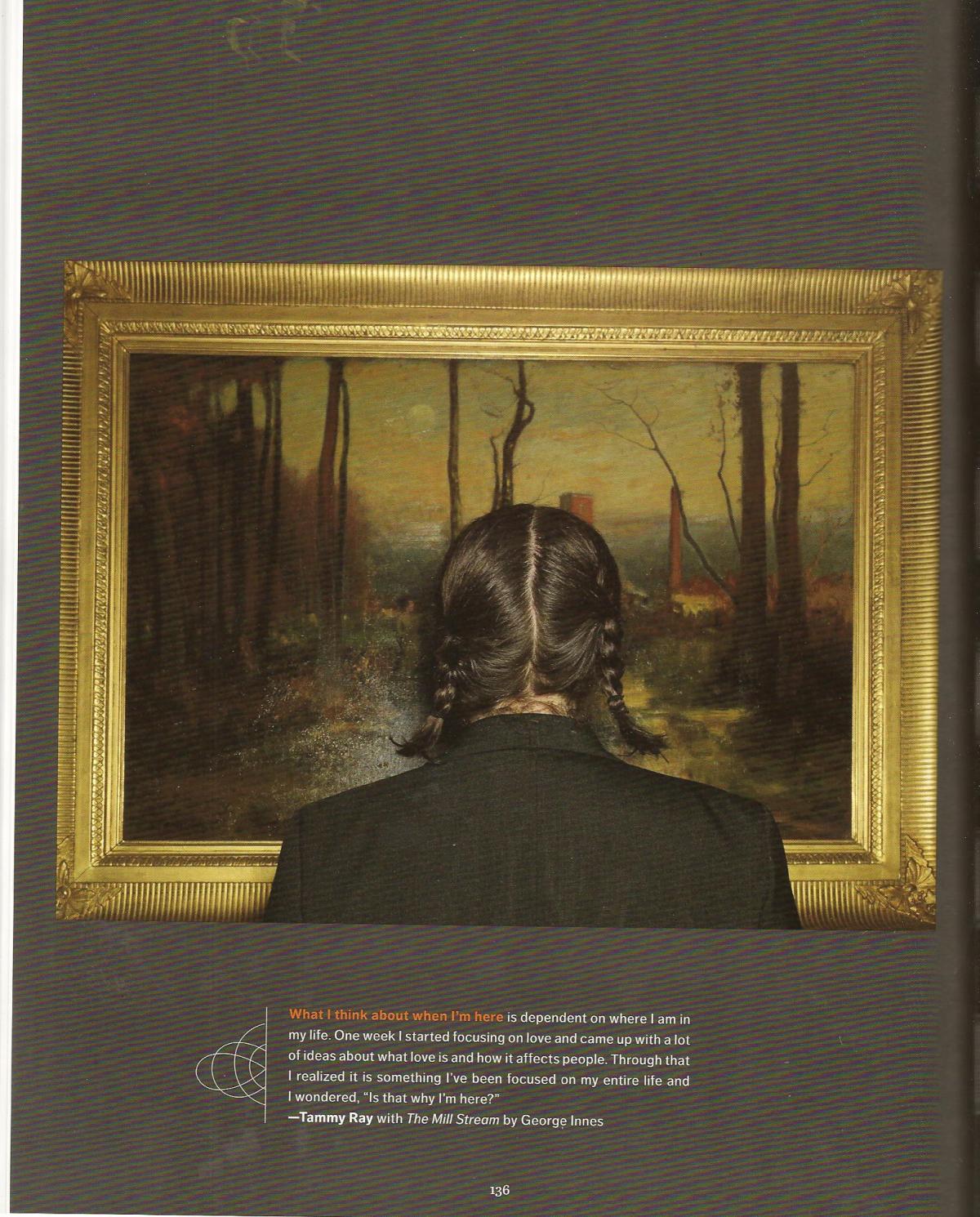
One of the more interesting photo essays is by Alec Soth, who asked the guards what they think about on the job. In 2014, he placed them close to their favorite artworks so that they almost merge with the work itself.
During a residency at Mia, Ann Hamilton photographed the museum staff behind a translucent screen holding a beloved object from the collection.
The book opens with a wonderful essay by Kaywin Feldman, The Wonder of Wonder:
“A moment of wonder is a moment of possibility. The encounter is not just a space of not knowing, but also not comprehending the boundaries of what is not known. It is the possible limitlessness of the encounter that is both exhilarating and sometimes discomfiting. In this vastness one becomes aware of a world much bigger than oneself.”
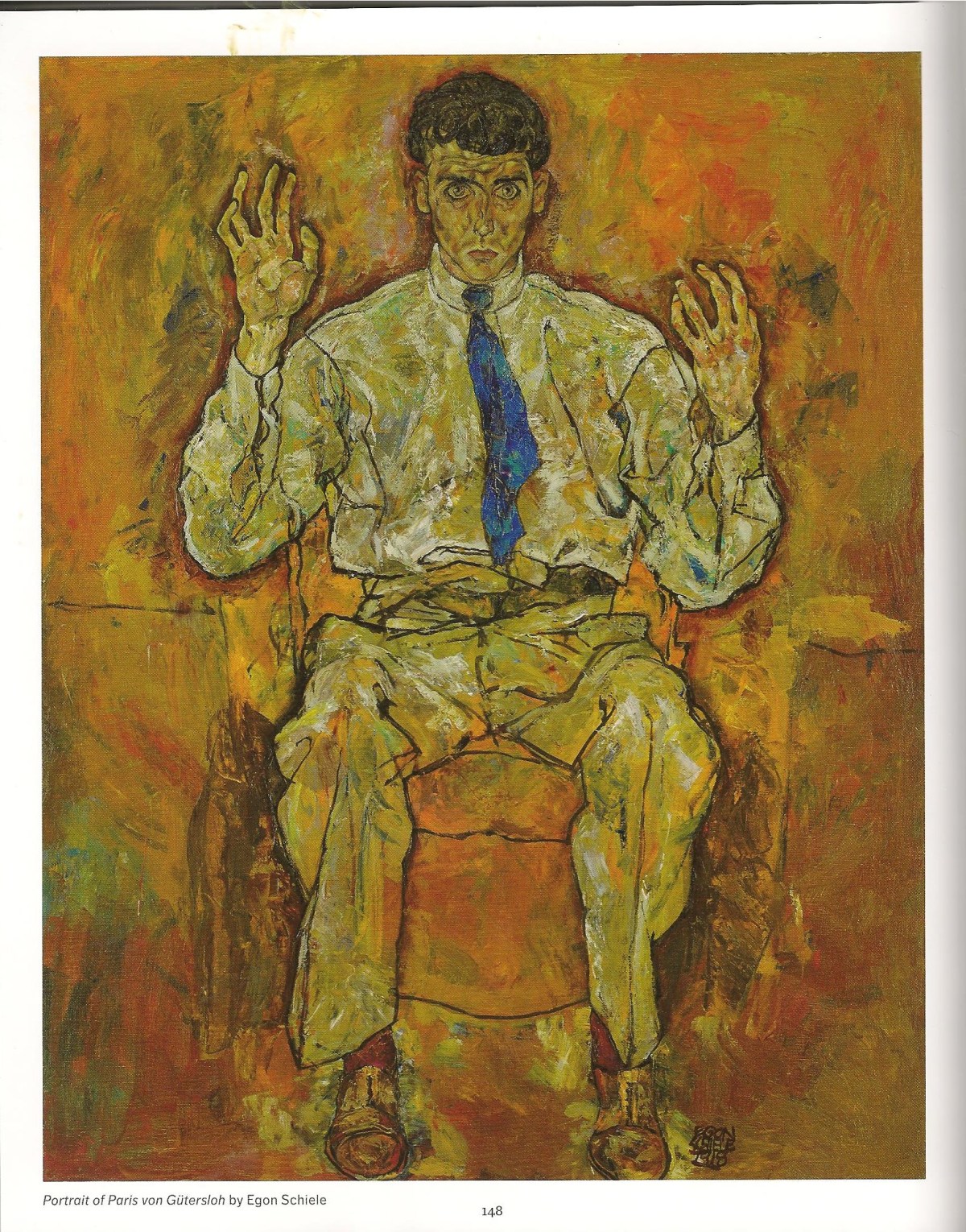
There are many delights to be found in this book – fiction, essays, and lots of great photos of art.
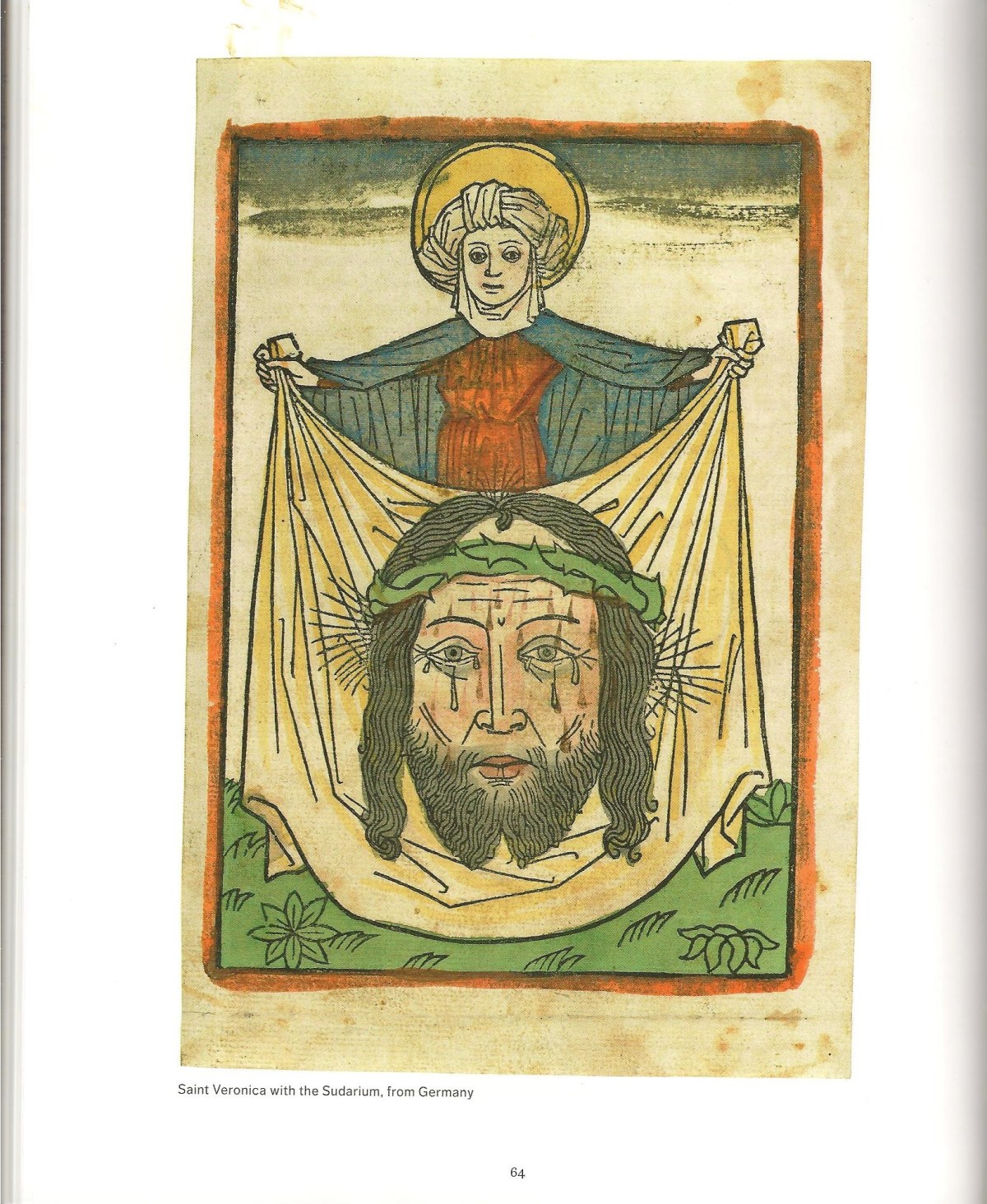
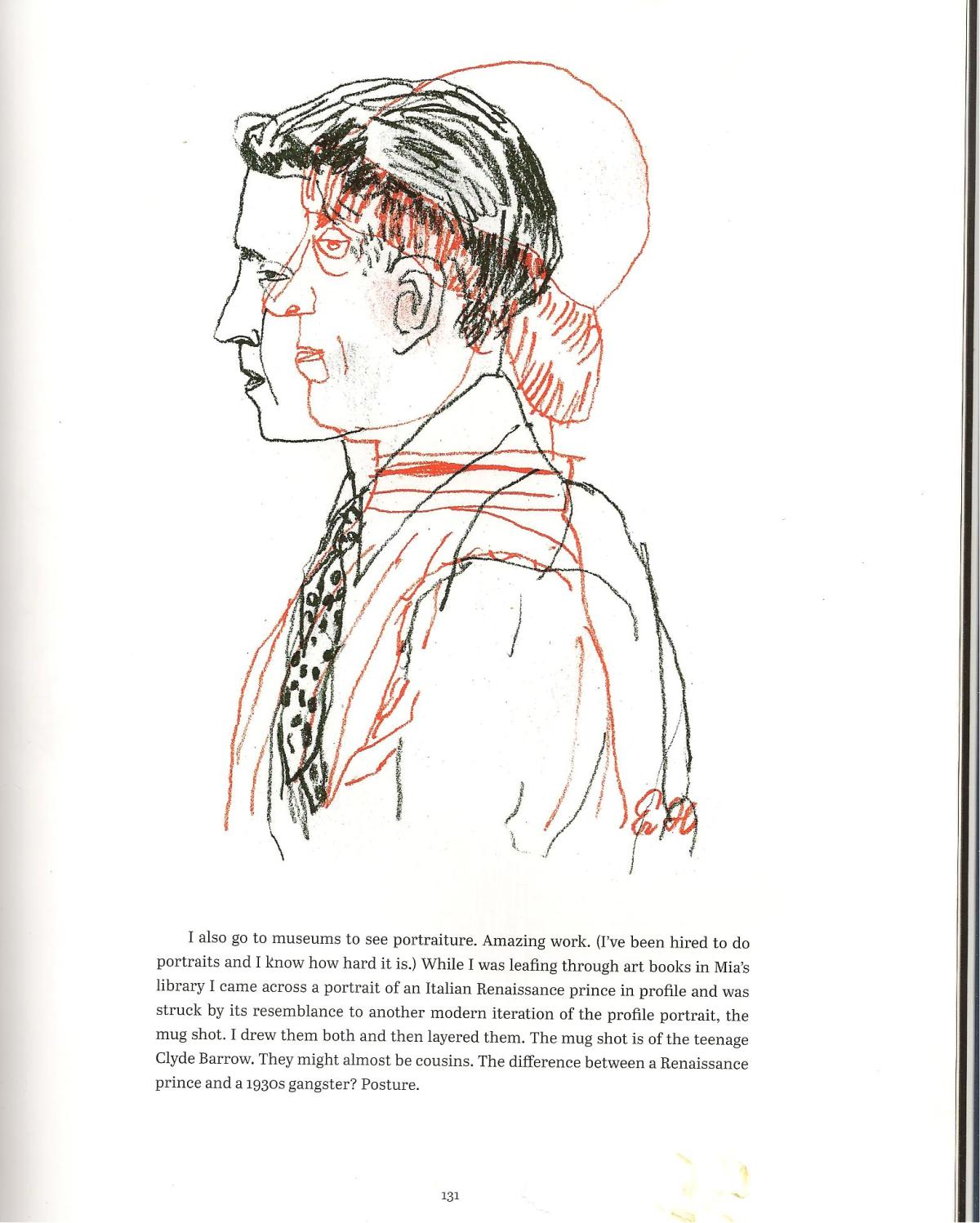
Saint Vernoica with the Sudarium from Alex Bortolot’s essay Museums and Magical ThinkingEric Hanson’s sketches from the essay UnsupervisedFantasy Coffin by Sowah Kwei
It’s a thoughtful and wide-ranging expression of what I’ve felt since I saw those first beautiful bones and paintings in museums as a child. Reading and exploring the book is like entering the waking dream that a good museum offers. It reads like a series of rooms, turning pages like passing through a doorway then finding a whole new world to ponder.
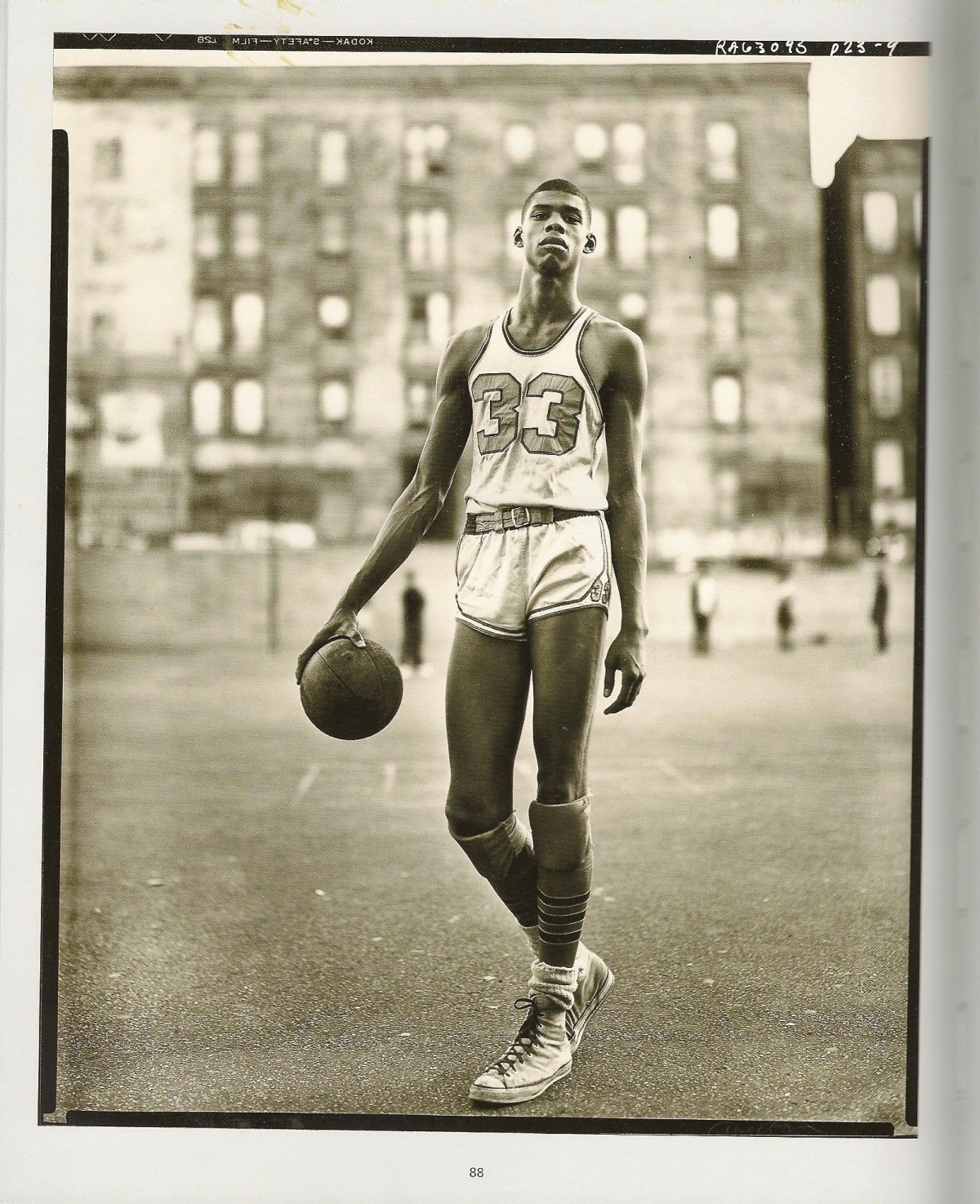
From the essay by Albrecht Durer by Tom RassieurRichard Avedon photograph from 1963
And if I never get to the museum itself, I know I have a bit of its soul on my book shelf, to open and explore again and again.
Thanks for reading my blog. What’s your favorite museum?
















 joy murray art~stories~life