What’s Your Superpower?

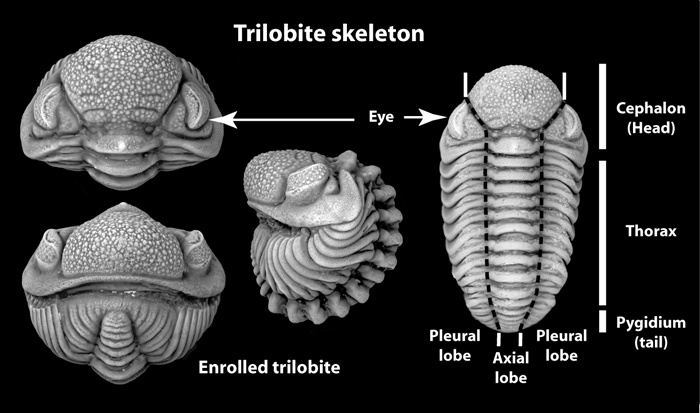
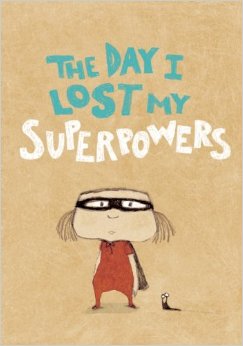
I had the most wonderful conversation recently with two 7 year-old girls about what a superpower is.  The conversation was inspired by the picture book The Day I Lost My Superpowers by Michael Escoffier and Kris Di Giacmo.  In it, a masked girl tries to explain her secret superpowers.  Like many children, she wants to be able to make magic.  Rather than stay grounded in dull reality, she creates a secret identity and lives in a world where she has the control every child craves.
Our narrator is not quite reliable, though, and her story and the pictures are at odds with one another.  
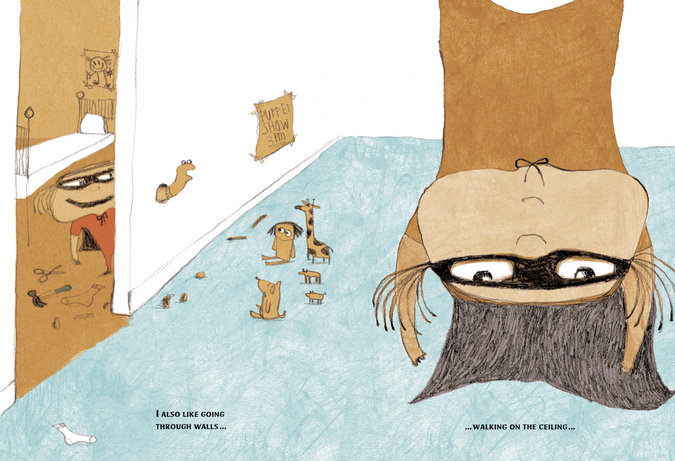
It’s a delight to see how far she goes to make her imagined powers a reality. 

 Inevitably, she finds she can’t fly when one of her contraptions fails and she get grounded in reality with a dramatic SPLAT.
At the end of the book, my 7 year old friends and I agreed that moms had true superpowers that were more important than any superhero they’d ever seen.  We discussed exactly what a superpower is.  Of course, both girls talked about superhero powers, but then we got back down to reality where things like helping friends and family seemed a bit more important than walking through walls or becoming invisible.
One of the girls decided her superpower was make her little sister laugh when she was grumpy, and setting the table before her mom even asked.  The other girl decided her power were being able to find her brother’s missing toys and drawing ponies.  I decided mine was being able to find great stories almost every day and sharing them with my friends.  We all thought we had the superpower of imagination and this book gave us lots of new ways to imagine things. 
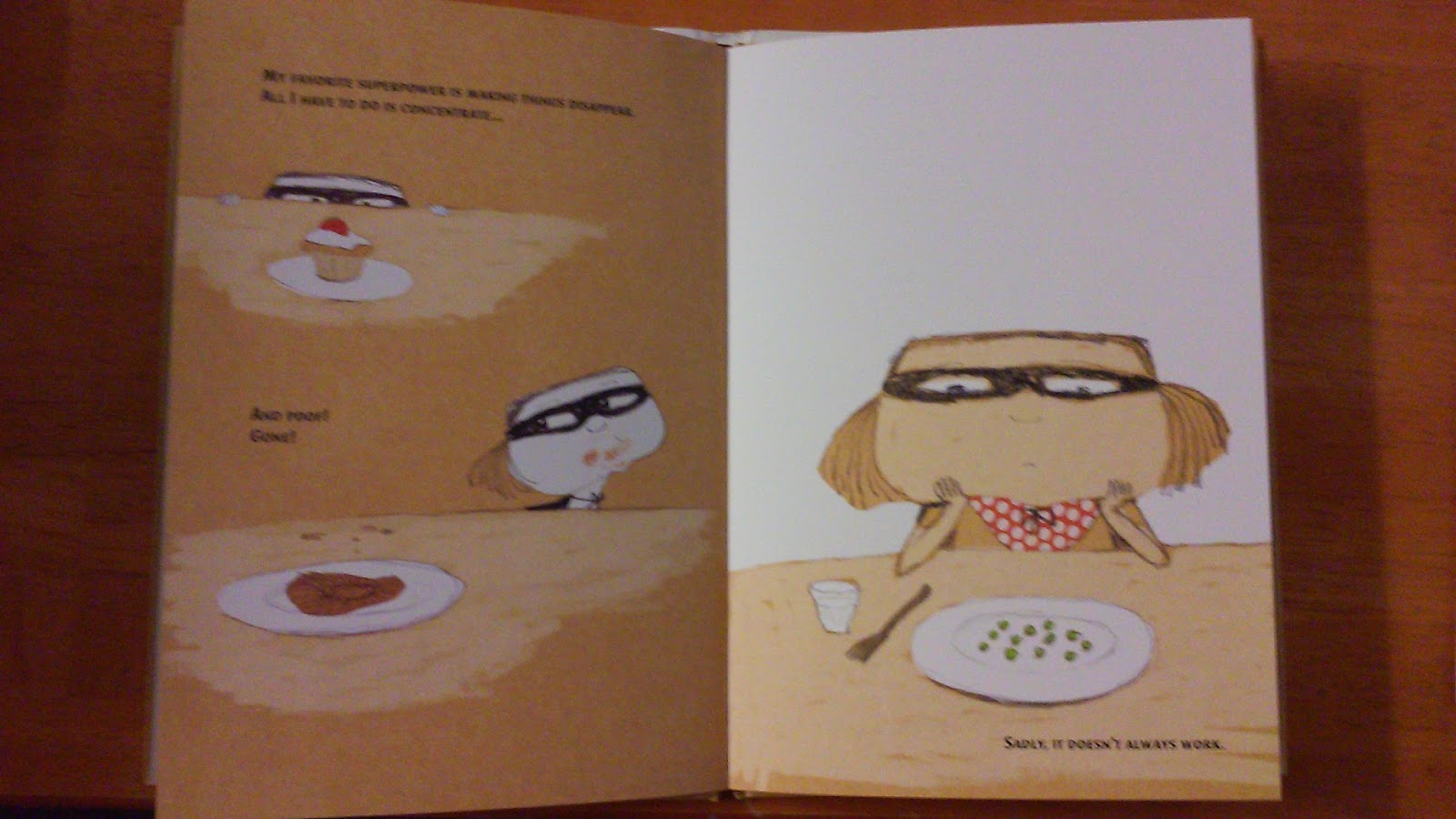
It was wonderful how the interplay of fantasy and reality sparked our appreciation of both.  The illustrations made us all want to get out our crayons and draw some of the magic in our lives. 
The Day I Lost My Superpowers is a big beautiful book.  It’s well bound and has thick pages.  Since I read and share books with kids in the Bridge Meadows community, I always love it when the book seems capable of being read over and over by dozens of little story lovers.  Enchanted Lion, the book’s publisher, consistently does a great job of making books that will stand up over generations.  They’ll be treasures passed down when kids grow up and have kids of their own.
Michael Escoffier says he was raised by a family of triceratops and discovered his love for stories as a child.  He lives in Lyon, France.  He’s the author of Brief Thief and Me First.  Kris Di Giacomo has lived in France since childhood.  She’s illustrated over 25 books, including My Dad is Big and Strong, BUT…, Brief Thiefand Me First. These two are a great team and I hope they use their super story powers for many more books. 
Here’s links to other Enchanted Lion Books I’ve reviewed:  The Hole by Oyvind Torseter and The Jacket by Kirsten Hall and Dasha Tolstikova.
Thanks for reading my blog.  May you find books that refill your sense of wonder.  

Graphic Shorts

Chapbooks from Poets & Writers Magazine 
I’ve always loved chapbooks — the simple folded paper book with a staple binding.  They’re typically no more than 40 pages, seem personal and feel ephemeral.  They’ve been around since the invention of the printing press and provide a simple, elegant way to get information, songs, stories, and art published.  Often, a poet’s first book is a chapbook. 
In this age of rapidly changing publishing technology it’s interesting to see how chapbooks, zines and other small publications are evolving.  
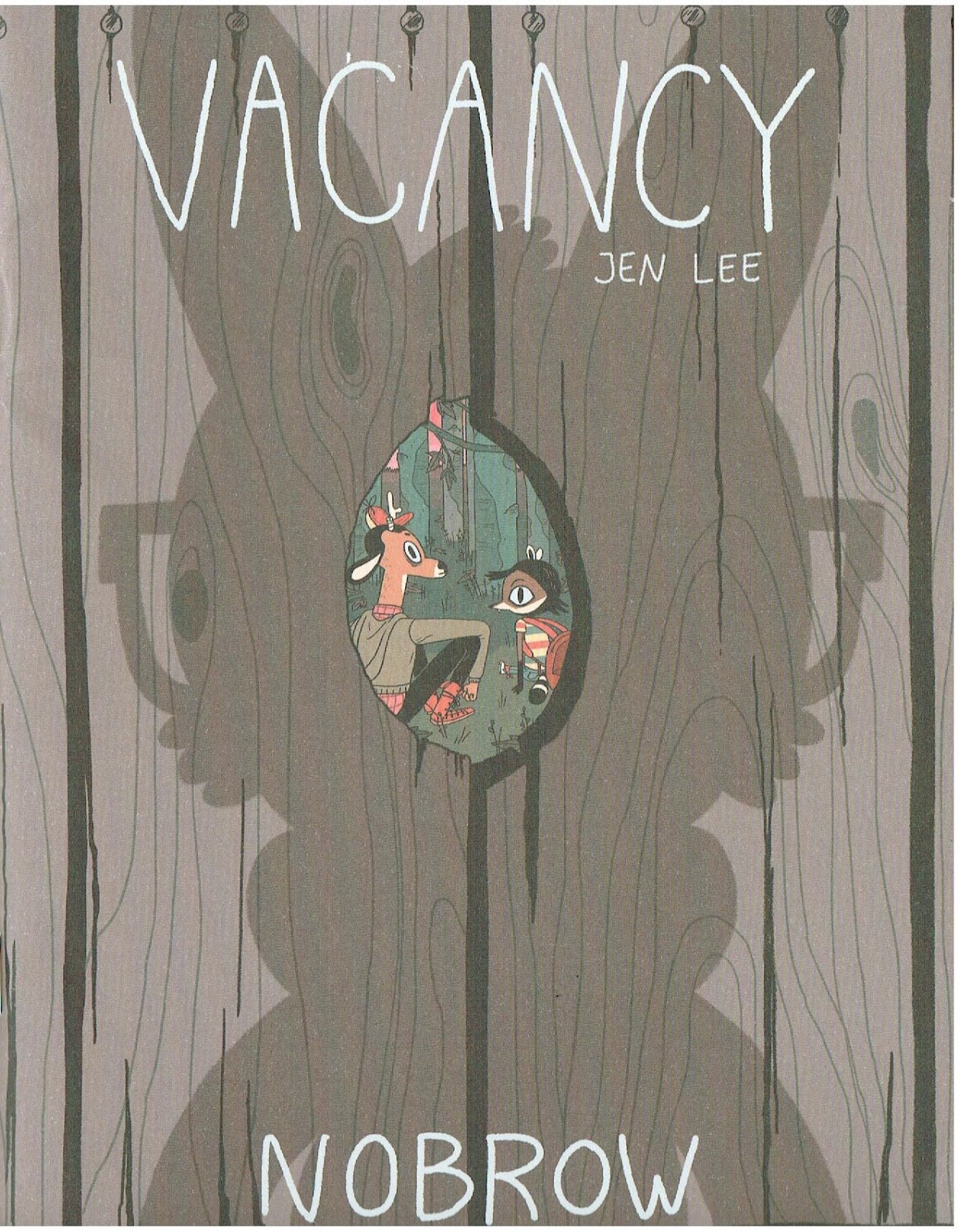
Nobrow, an independent graphic arts and comic publisher based in London, has started a graphic chapbook series, 17×23 (for the size in centimeters of the books), giving illustrators the opportunity to show case their work and explore new ideas in a concise format.  They retail for $5.95, which is a great price for these intriguing graphic short stories.
I’ve read two and look forward to more. 
Vacancy by Jen Lee is a dystopian story about the sometimes opposing needs for safety and companionship.  Alone and forgotten in a forlorn backyard, a dog named Simon contemplates breaking free. 
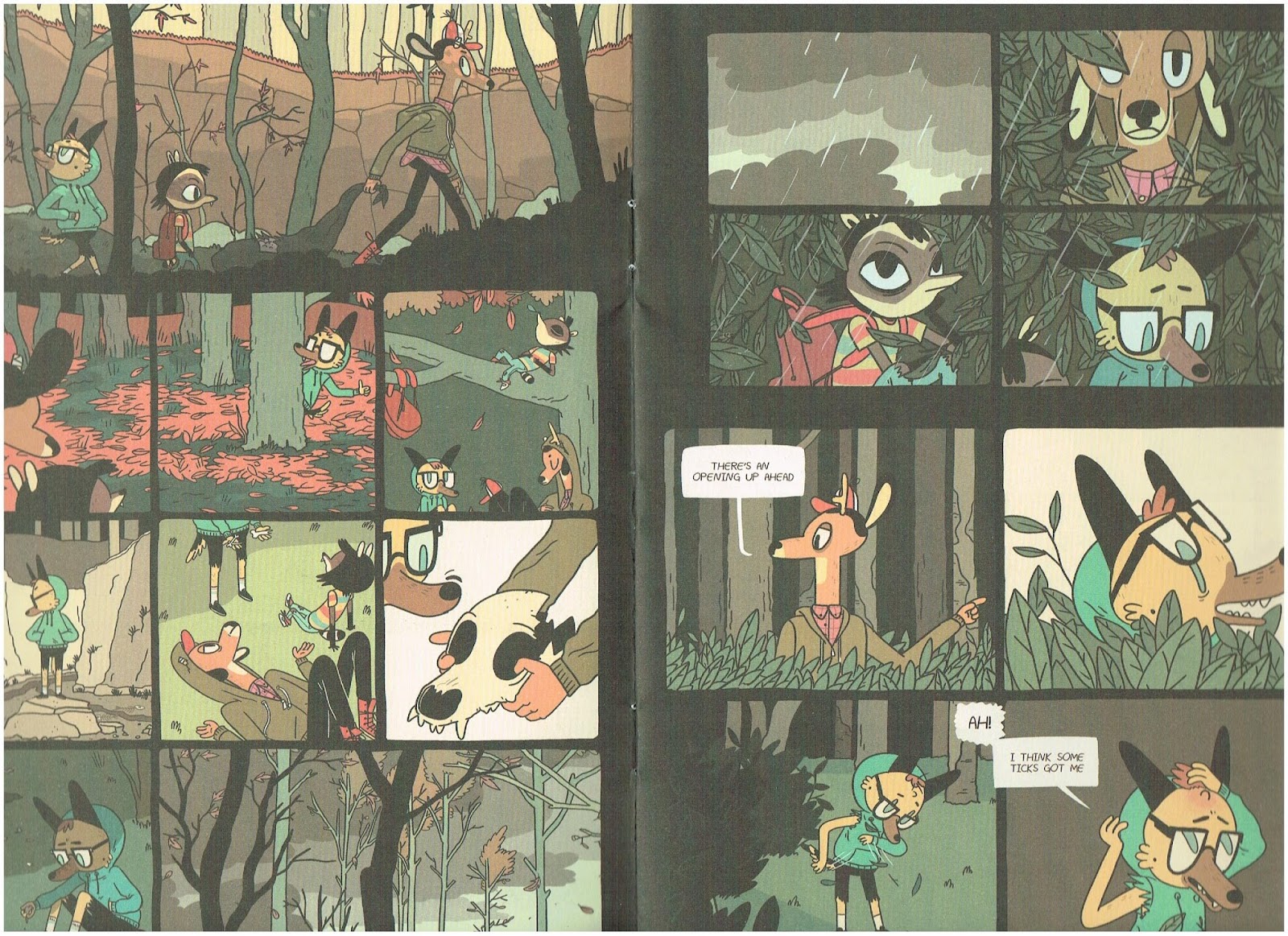
His chance comes when he partners up with a raccoon and a deer who take him into the woods.  The woods are scary and it’s hard for Simon to figure out how to live and who to trust. 
While I’m generally not a fan of dystopian outlooks, Lee’s style is bold and the action leaps through the graphic frames.  It speaks not just to the fears of survival but a deep fear of isolation.  Daytime is dim and night time has an eerie glow.  You feel need for sustenance and companionship throughout the story.  
I read a very thoughtful review of this story by Daniel Elkin at Comics Bulletin, which I urge you to read here.  I also shared this story with a 13 year neighbor of mine who loves graphic novels and he hopes it’s the beginning of a series.
Lee studied at the School of Visual Arts in NYC.  She freelances in a farmhouse in Idaho.  You can read more about her here.
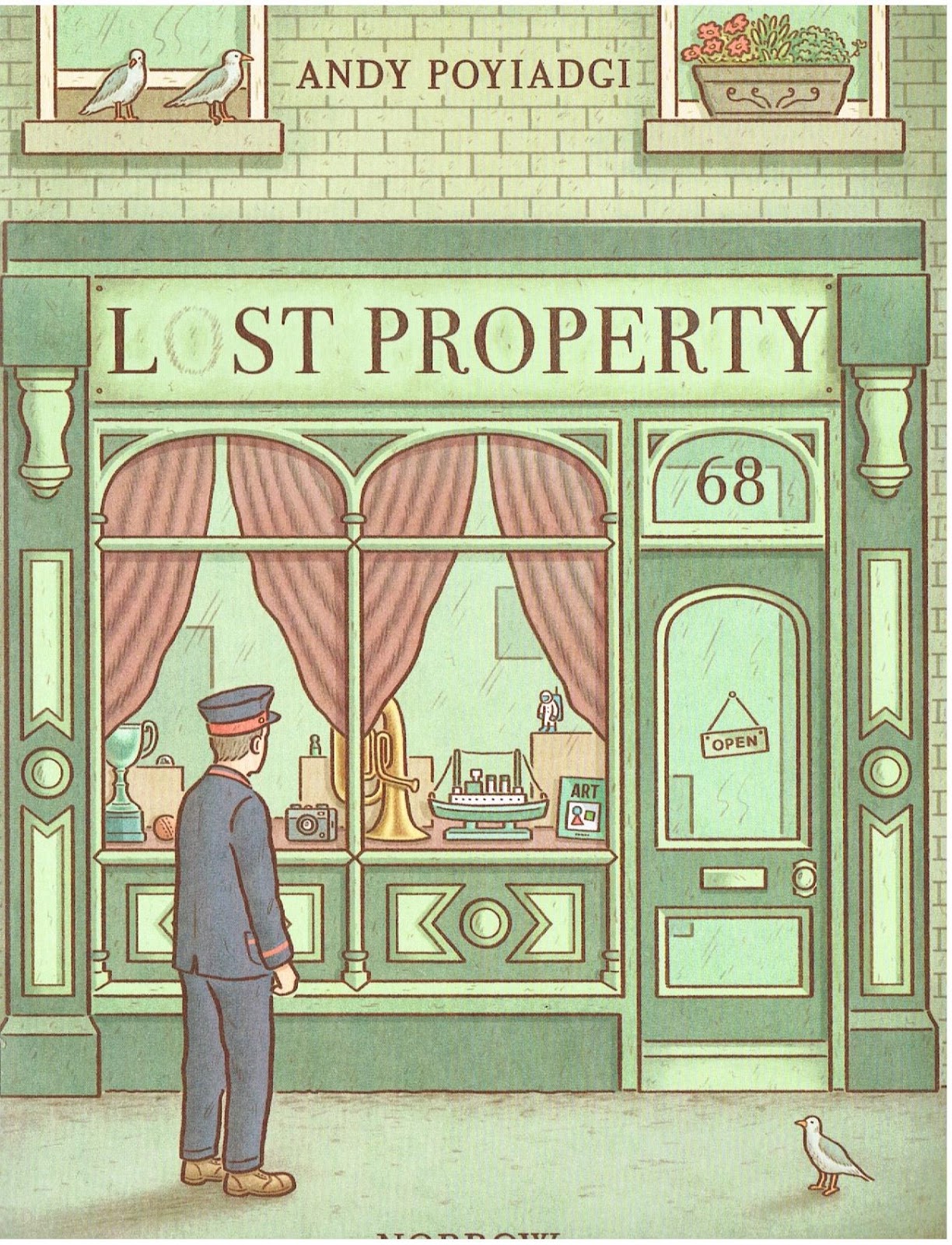
Lost Property, by Andy Poyiadgi, is almost an opposite kind of story.  It’s about a postman who is able to correctly deliver hundreds of items every day, but easily loses his own possessions.  One day, he gets a call from a lost property shop, saying they’d found a letter opener inscribed with his name.  
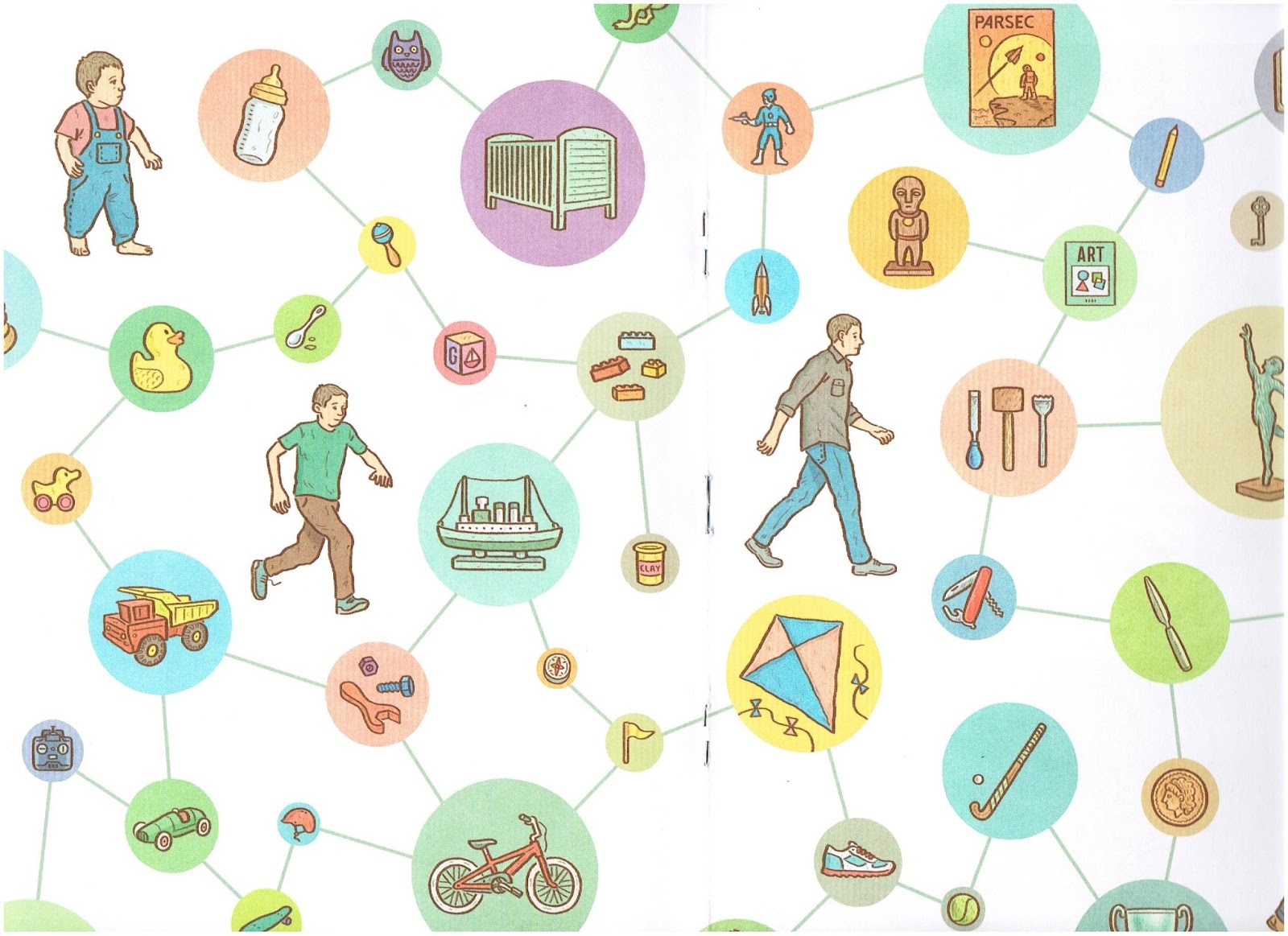
When he arrives, he notices a toy ship in the window that looks like one he had when he was a child.  As he looks around, he finds that the shop has every one of the objects he has lost in his life.  
This becomes a slightly surreal and charming tale of the loss and retrieval of dreams and ideals.  When faced with the ghosts of his past, he begins to reclaim and re-imagine his own identity.  
Poyiadgi’s drawings are clean and clear, with a subtle palette.  His layouts direct your focus from detail to panorama and back again.  It’s visually intriguing and a bit of an homage to the beauty of the everyday objects of our lives, and how their presence – or absence – shape us. 
Poyiadgi lives in London.  He makes films by day and comics by night. He likes the collaborative nature of one and the solitary demands of the other.  His comic Teapot Therapy was shortlisted for the Observer/Jonathan Cape/Comica Graphic Short Story Prize.  You can find more out about him here. 
You can read more about the 17×23 series hereon Hyperallergic in an article by Allison Meier, and you can see the Nobrow list of the series here.

You can read my review of the beautiful book Neurocomic by Hana Ros and Matteo Farinella, also published by Nobrow, here.
Thanks for reading my blog.  Your comments are always welcome and appreciated.  

Nature Anatomy by Julia Rothman

Drawing things is an excellent way of learning their true shape and structure.  I’m always amazed at the detail of the simplest forms – leaves, shells, mushrooms. When you start to notice the details of things, you start to wonder is there a name for that?  Usually, yes.  For instance, the margin of a leaf, its edge, can be entire, undulate, serrate, lacerate or crenate.  I know this because I’ve got Julia Rothman’s gorgeous book Nature Anatomy: The Curious Parts & Pieces of the Natural World (Storey Publishing, 2015.) 
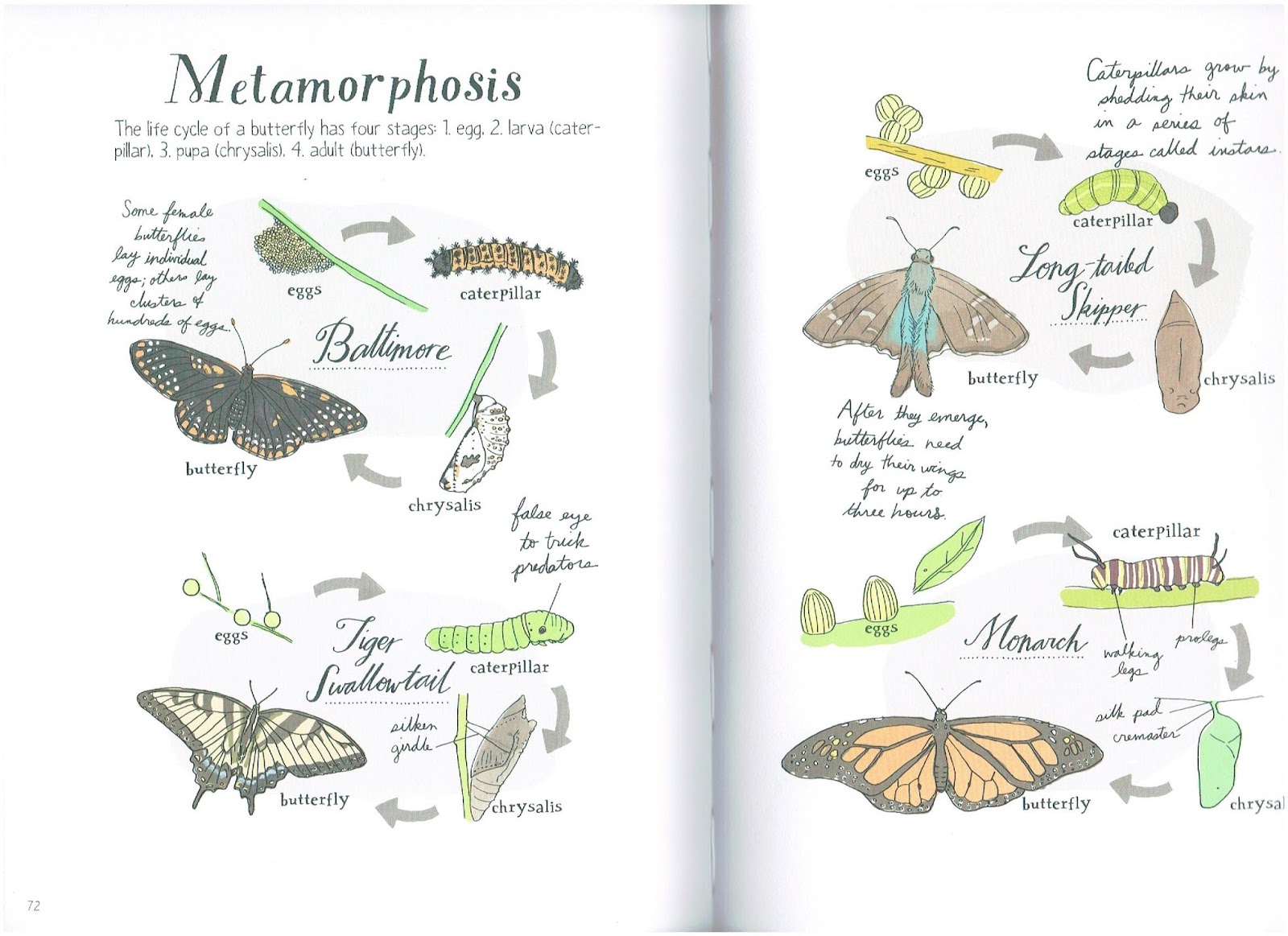
Part visual dictionary, part field guide and part celebration of life, it’s a pure delight to read.  It restores a sense of wonder about the world that’s growing all around us.  She starts with the earth itself, draws her way through the flora, fauna, weather and atmosphere of this complex planet.  She says,
“There is no way to include even a small portion of the enormous world around us in a book of any size.  Where does it end?  There is an infinite amount to learn about, from the constellations to the core of the earth.  I guess I think of this project as MY nature book.  It’s the information I was interested in learning about, the things I wanted to draw and paint.  While it is only a teeny scratch on the surface, it gave me a chance to become acquainted with plants, animals, trees, grasses, bugs, precipitation, land masses and bodies of water that I wanted to be able to name when I walked by.”
She visits Prospect Park in Brooklyn daily, which sparked her interest in knowing more about what she saw.  She had help in her quest for names from John Niekrasz, her friend and naturalist, who helped her write and formulate ideas for it.  It’s a magnificent accomplishment. 
I’d never heard of water bears.  Where have they been all my life?
Rothman had undertaken a similar project in a previous book, Farm Anatomy, where she did detailed drawings of the animals, crops and components of a farm.  Understanding is at the heart of her work.  I think these “anatomy” books should be in the reference library of every writer and artist. Even if you never get to use it in conversation, there’s something satisfying in know the name of something.  And because I have such a poor memory, I love having a reference where I can look for the name again.  The book is well organized and reads almost like a story.  There is the big story of nature itself, and all the little details that make each life form unique.
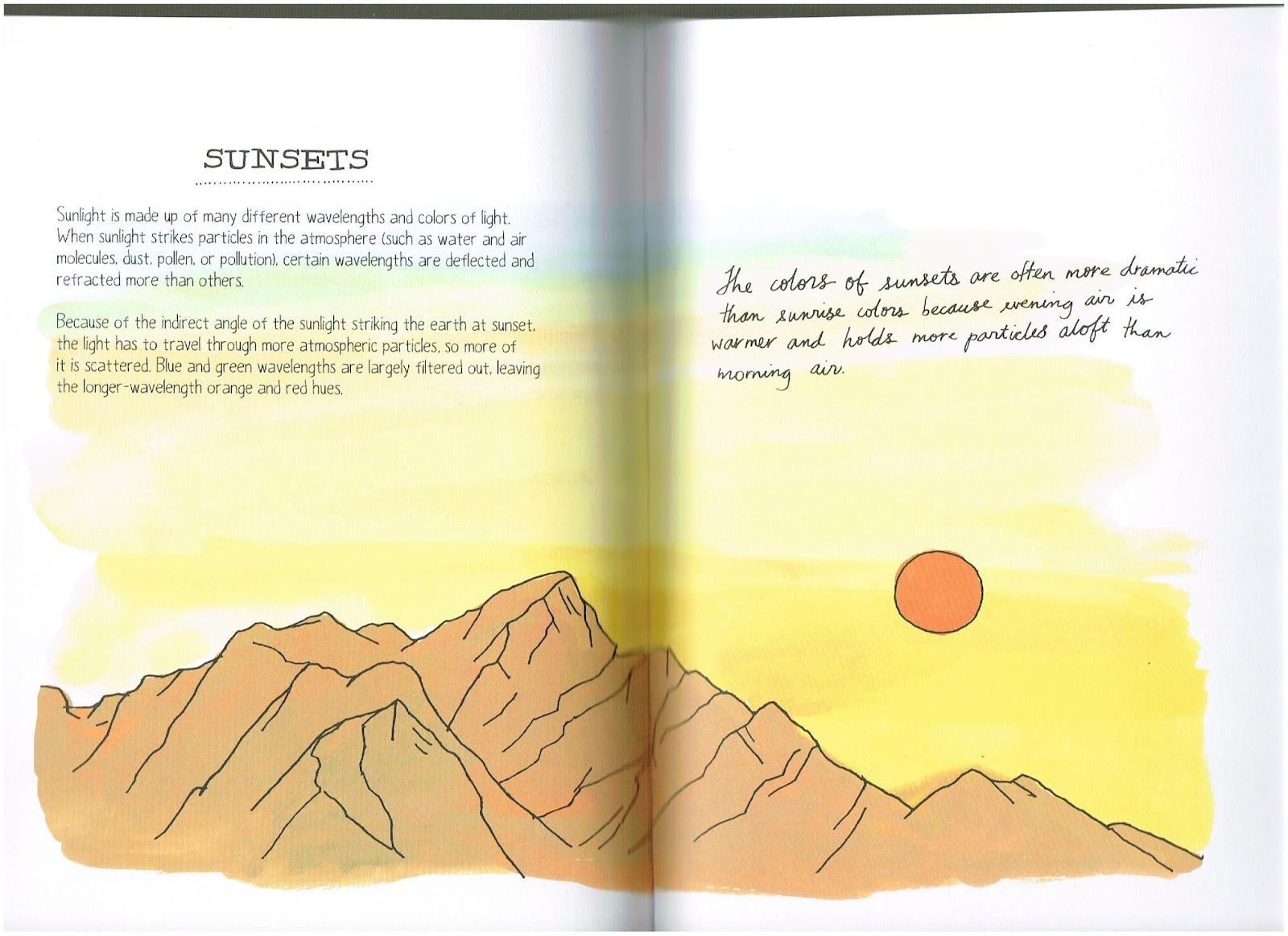
In Nature Anatomy, Rothman includes lessons on how to paint a simple landscape, how to predict weather, how to make a seaweed facial, and how to make stuffed daylily buds, and many other ways to enjoy nature. The mini-essays that accompany the drawings are easily understood but provide a lot of scientific information.  You learn how mountains were formed, the different types of bird feathers, the difference between a frog and a toad.
And something lovely about sunsets
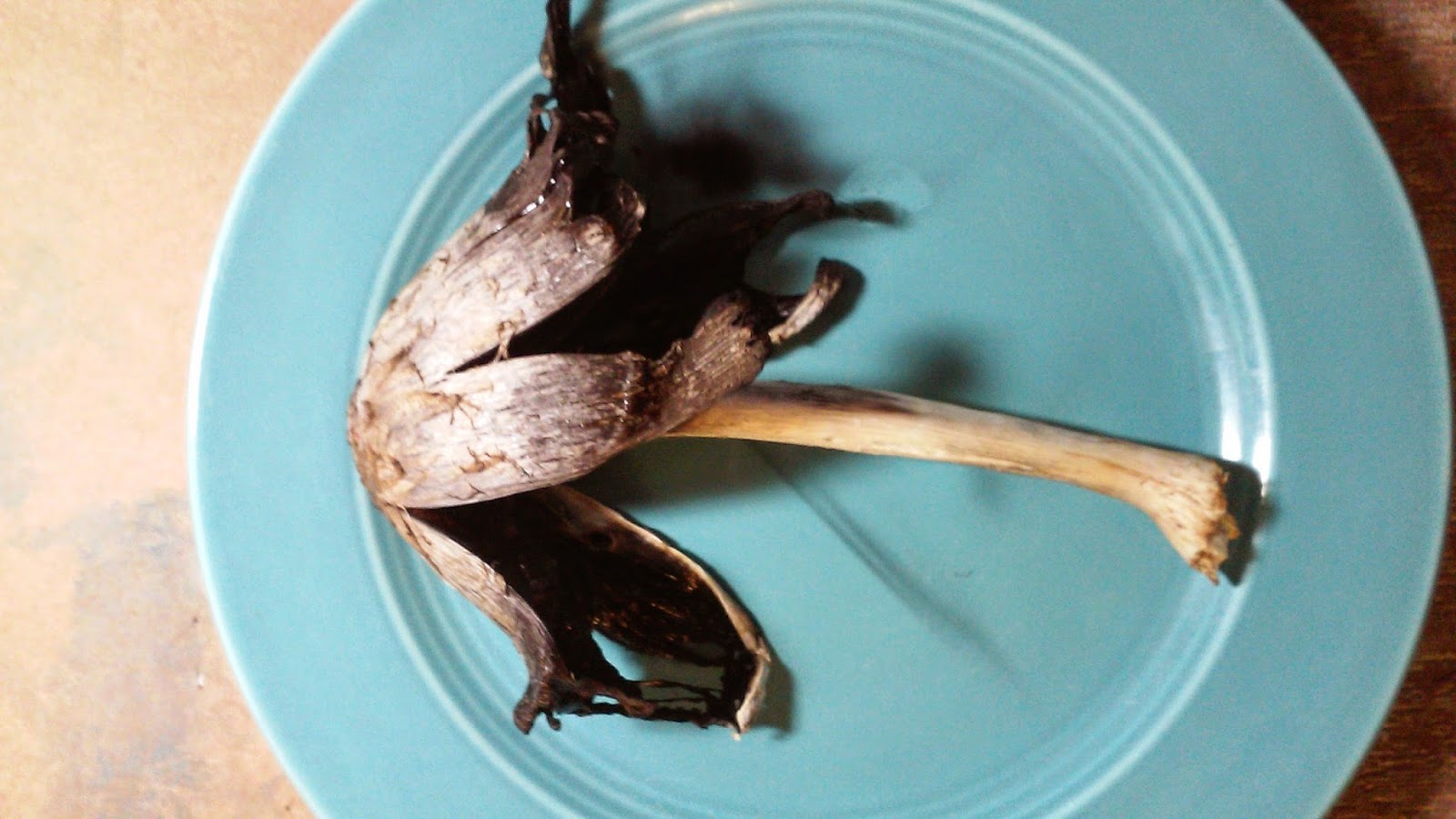
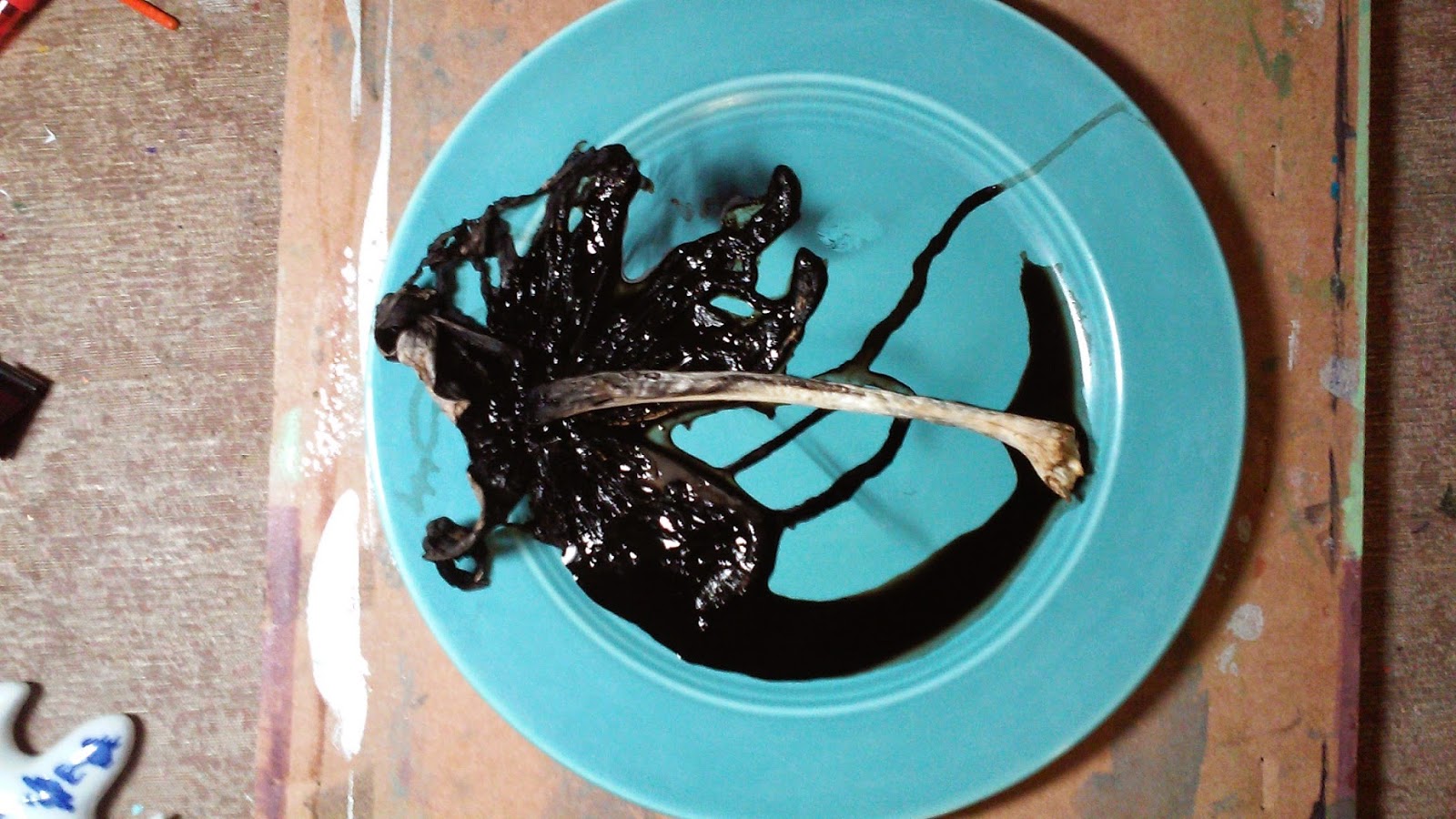
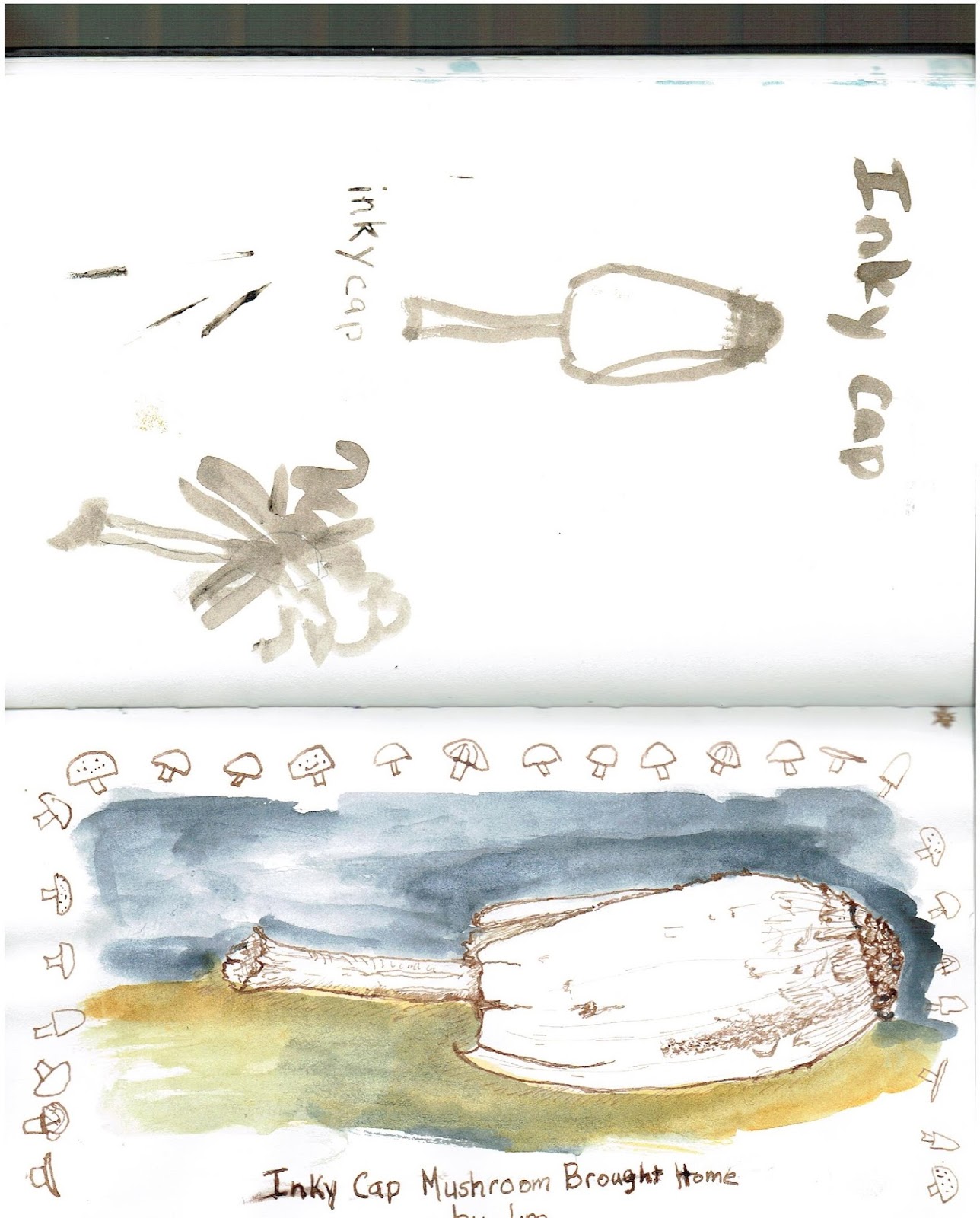
It’s a great book to share with children of all ages, to get them to start seeing the complex beauty of the world around them.  I like to take it to the art sessions I have with children and watch them gaze at the pictures then try to copy what they see.  I’m sure it’s helping them look closer at all the nature that’s springing up around them.  My 10 year old neighbor Noah and I found inky cap mushrooms and brought one home.  We had such fun watching it degenerate into a pool of sticky, stinky black ink.

We drew a mushroom, of course
If you feel your sense of wonder has diminished, this book is just the medicine you need. 
Julia Rothman is an illustrator whose work has appeared in numerous books, magazines and newspapers.  She designs stationary and wallpaper from her studio in Brooklyn, New York.  You can learn more about her by clicking here

The book is beautifully bound by Storey Publishing. 
Nice folded cover

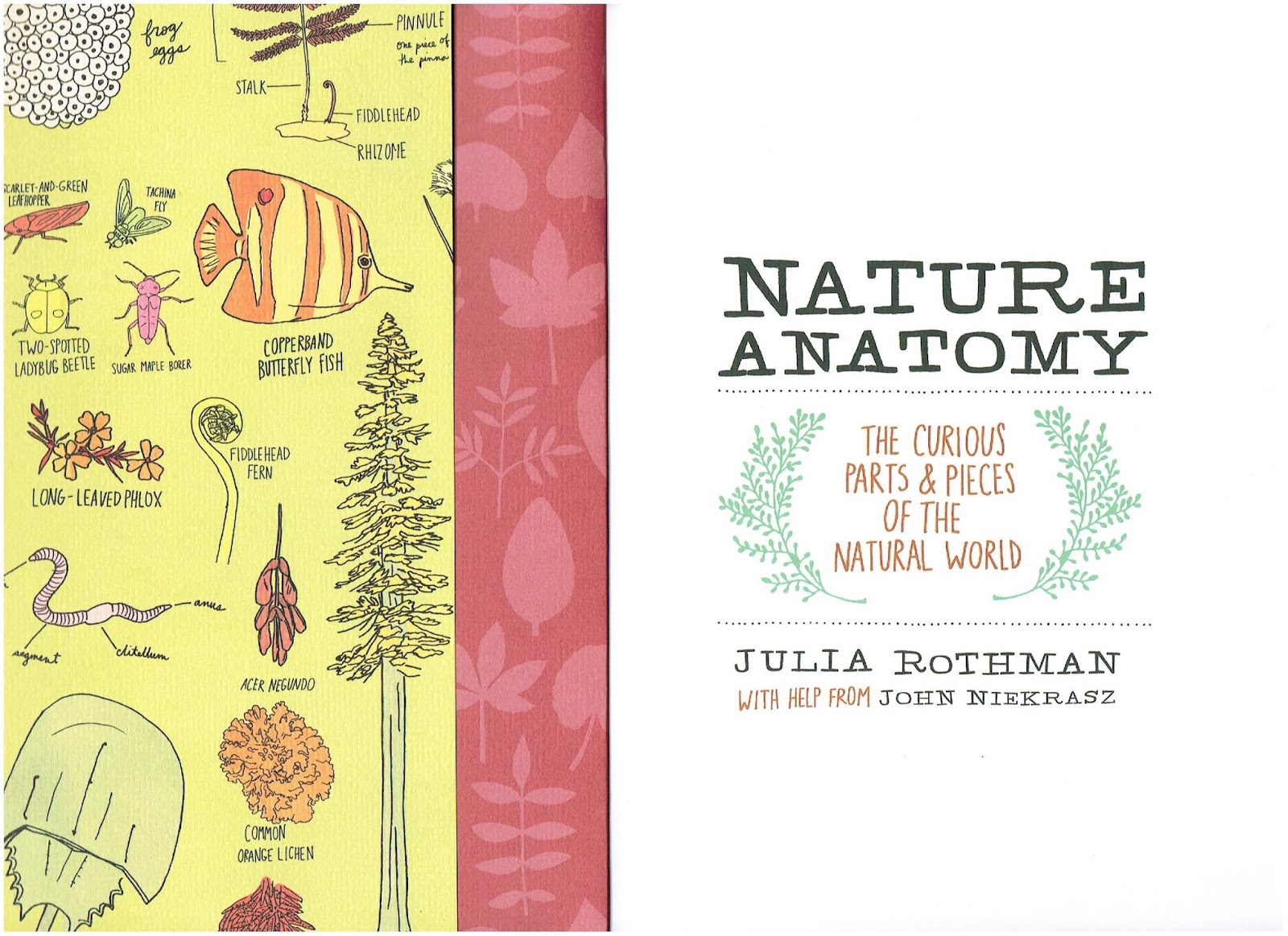
Beautiful endpapers
Storey specializes in publishing practical information that encourages personal independence in harmony with the environment.  You can learn more about their books by clicking here.   

No Girl is an Island: Moonpenny Island by Patricia Springstubb

There are times when I think it would be wonderful to live on an island in a small community, surrounded by water, abundant nature around me.  Tranquility and comfort would envelop me as surely as the waters caress the island’s shore.  In Tricia Springstubb’s novel, Moonpenny Island, the island seems like that idyllic place.  But every place has its mysterious and sometimes dangerous undergrowth.
Moonpenny is in the middle of Lake Michigan.  It’s bustling with tourists in the summer, but once tourist season is over, it’s 11 year old Flor’s beloved home.  She knows everyone.  She’s the daughter of the one island police officer.  She’s best friends with Sylvie, the island’s only other 11 year old.  The book opens:
Transparent.  That’s how Flor and Sylvie are to each other.  See-through.  Flor knows everything about Sylvie, and Sylvie?  She knows things about Flor before Flor knows them herself.
Sylvie cheers Flor up or calms her down.  Considers the same stuff funny or annoying.  Won’t tease her for still being scared of the dark, not to mention those spiders with hairy legs, and loves pretending their bikes are wild horses only they can tame….”Best friends” does not cover it.  They are each other’s perfect friend.

But Flor’s perception of this transparent and perfect friendship is suddenly altered when at the end of summer, Sylvie is sent to a boarding school on the mainland.  Then Flor’s mother leaves to take care of her sick mother and doesn’t come back.  Flor’s big sister is acting strange, sneaking out, and perhaps involved in something dangerous.  All that Flor thought she knew and could see clearly has become opaque.
 
There’s tension everywhere.  She discovers the home she thinks of as paradise is seen as a prison by many she loves.  She’s angry.  She’s confused.  Yet she can see the limits of the island community, where the town clock has been stuck at 11:16 for years.  “Flor quit paying attention to that clock long ago, but today it makes her depressed.  Time can’t stop – things are too messed up.  Time needs to get going, move along and make things better.  But the stubborn hands refuse to move.  They haven’t moved in so long, some bird made her nest behind the hour hand.”

Moonpenny Island has a wealth of fossils.  A geologist, Dr. Fife, and his daughter, Jasper, arrive to excavate trilobites.  He is a fountain of knowledge and good will, and she is shy but full of information about fossils and trilobites, one of the first creatures to develop sight.  She also knows a lot about divorce and loneliness.
As the book progresses, it becomes more and more a metaphor about sight and vision.  How we see things is based not so much on what is there, but what we need and what we want to see.  Flor can’t stop the changes that life is bringing her way.  She can’t stop her own growth. 
Springstubb writes in crisp sentences that perfectly match Flor’s state of mind.  There’s a lot of depth in how Springstubb describes things and makes clear the need for adaptations even if you’re never going to leave your own island.  She has a wry sense of humor and a great eye for detail.  Here are some jewels from the book:
Flor never has bad dreams, but it’s possible she does that night.  When she wakes up, her legs feel week and crumply.  Like she’s spent hours balancing on a narrow sliver of something, and not just her own mattress.
Get used to it!  How can adults say these heartless things?  “Get used to it” belongs in the same infuriating category as “Life isn’t fair” and “Someday you’ll laugh over this.”  A horrifying thing must happen to your brain as you age.  It must grow tough and rubbery, like an old pork chop left in the back of the refrigerator.
Blindness was once a natural state.  Dr. Fife says the first eye was little more than an optic nerve.  Whatever that is.  Eyes had to develop.  Can some people’s eyes still be a more primitive variety?  Can eyes still be evolving?  Will future humans be able to see stuff we can’t? Like the insides of things?  The hidden, secret parts?
Mama says prayer isn’t asking for things.  That’s wishing, she says.  Mama!  Put all her opinions together, you’d get a book fatter than the Bible.  Real prayer is simply talking to God, Mama says.  It’s opening wide your reverent, humble heart.
Sitting on the porch swing, eyes closed and hands folded, Flor tries.  But within three seconds, she’s reverently humbly begging.
People think that evolution is all about getting stronger and bigger and faster.  But no.  Species evolve according to what they need.  Not everyone needs to be big and powerful.
Moonpenny Islandis published by Balzer & Bray of HarperCollins Publishers.  It’s marketed as a middle grade novel, but it’s a touching insightful read for anyone seeking stories that give them insight into the mysteries of growing up.

Tricia Springstubb is the author of What Happened on Fox Street, Mo Wren, Lost and Found, and Cody and The Fountain of Happiness.  You can visit her online at triciaspringstubb.com
From Common Fossils of Oklahoma — trilobites are everywhere

Thanks for reading my blog.  If you’d like, you can have this blog delivered to your email by using the form in the right hand corner of this page.  I’d love to hear any questions or comments you have.